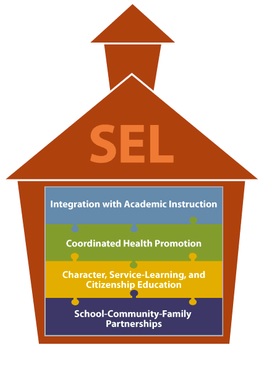
Part 1: Analysis of Context
1. What do we know about our learners?
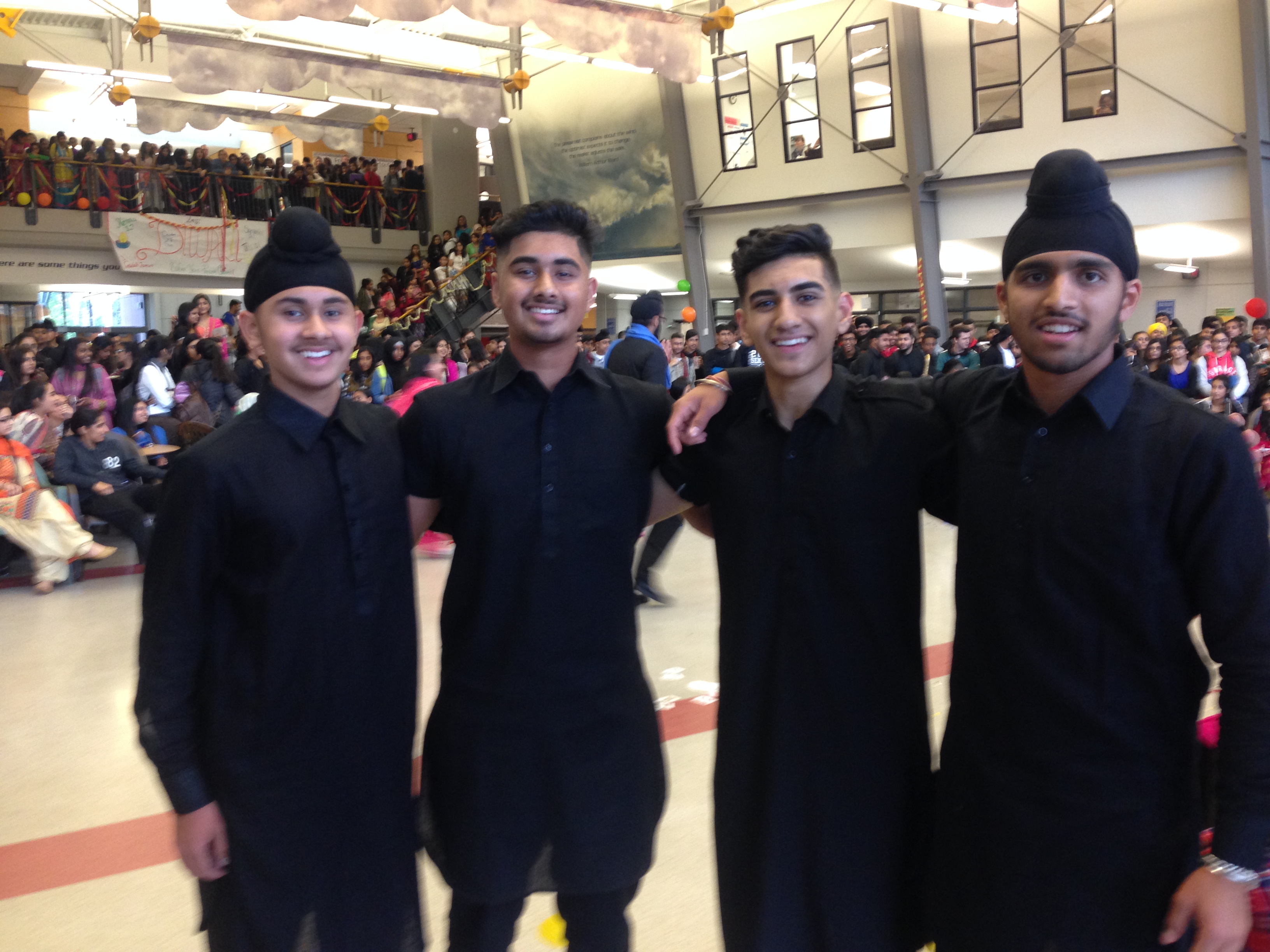 Learners at École Panorama Ridge value and are proud of their heritage and culture. While students of South Asian descent are the largest ethnic group, diversity and difference is celebrated by the entire school community. Ecole Panorama Ridge celebrates and supports this diversity by providing both a variety of curricular and extracurricular opportunities. Some opportunities include: A French Immersion Program which allows students the opportunity to graduate with diplomas in French Immersion and English; a variety of Advanced Placement courses, as well as a large and vibrant Fine Arts Program offering opportunities for our learners in Dance, Theatre, and Music; Co-op and Work Experience opportunities that support our students’ personal growth; and opportunities.
While diversity and providing a variety of experiences is welcomed by both the students, staff and parents of Panorama Ridge, our school community recognizes the need for continual growth and development in the areas of: Self-Awareness, Social Awareness, Responsible Decision Making.
2. What evidence supports what we know about our learners?

 Observations from the following sources were used to determine the needs of our learners:
- Administration Day 2016 – “Heart and Mind” Theme Day. On this day we gathered input and reflections from teachers on the needs of our learners.
- School Community Survey
- Student Interviews Students were interviewed and asked about their experiences at school.
- Grade 8 Personal Social Competency/SEL Core Competency Survey:
- Grade 8 Survey Link
- Student Profiles of Learning
- Humanities 8 teachers created Student Learning Profiles
- Student Learning Profile
- School Based Team
- Counsellor Data
- Department Inquiry Questions
Through qualitative data collected from staff, it was indicated students were accepting, sociable, spirited and success oriented generally self-aware, and had good relationship skills.
Quantitative and qualitative data collected from students, indicated they generally felt there is a warm and welcoming atmosphere at Panorama Ridge. Students feel a sense of belongingness to the school community, that school rules and expectations are clear, there is a safe and comfortable learning environment and, they are respected by staff and fellow classmates.
Part 2: Focus and Planning
3. What focus emerges as a question to pursue?
 Our Beliefs
- An effective learning community integrates the academic, social and emotional dimensions of teaching and learning.
- When students feel safe and connected to their school community, academic achievement improves.
- Self-awareness, self-management, social awareness, positive relationships, and responsible decision making provide a foundation for better adjustment and academic performance.
- At-risk behaviours can be prevented or reduced when students’ social and emotional skills are attended to and developed.
- Using the Personal and Social Core Competency language in the classroom will help students in their personal growth.
Given the data and evidence collected from staff and students, our school community is focused on a high level of learning for all students. However, in order for high levels of learning to take place students’ need to be in an environment where they feel supported, cared for, and safe.
Our Question
How does a learning environment that embeds self-awareness, social awareness and responsible decision-making impact:
- school climate/social behaviours?
- emotional well-being?
- academic success?
4. What professional learning do we need?
Our staff and professional development committee is committed to improving overall teacher knowledge in the areas of the District Priority Practices.
- Technology & New Literacies (2015)
- Aboriginal Perspectives and Ways of Knowing (2015)
- Engaging the Emotional Brain (2015)
- Grade 8 Project/Design Based Learning Group (2016)
- Engaging the Digital Learner Series (2016)
- Department Head Series 2016/2017
- Formative Assessment Series 1.0 (2016)
- Formative Assessment – Lunch Bites (2014 – 2016)
- Communicating Student Learning Working Group (2014 – 2017)
- Heart and Mind – School Planning (February 2016 )
- Asking Essential Questions (Aug 2016)
- Inquiry Based Teaching (Aug 2016)
- Explicit Use of Core Competencies (May 2017)
The introduction of the new curriculum and the Personal and Social Core Competency, has fostered and promoted a greater focus of our inquiry question. We are continually examining ways to increase our shared understanding of Core Competencies and to explicitly use the Core Competency language while teaching, specifically focusing on the Personal and Social Competency.
5. What is our plan?
The ways we are continuing to support our plan.
- Continue conversations at staff meeting and Department Head meetings exploring ways that Social and Emotional Learning can support academic success.
- Continue to support and keep our Aboriginal students connected to the school community.
- Action Research Team and Explicit Teaching of the Personal Social Competency
- A cross-curricular team of teachers started exploring what impact project/design-based learning and peer‑mentorship have on students’ personal and social competencies: Humanities, Math, Science and ADST (Applied Design Skills and Technology) departments collaborated and planned cross-curricular project based learning experiences that include a sustained inquiry with open-ended design possibilities. To allow for fluidity and flexibility in students’ and teachers’ 2016-2017 schedules, Humanities classes were podded with math/sciences classes, allowing teams of teachers to work with the same students over an extended period of time. Similarly, to allow for team-planning, teachers’ preparation time was aligned so they could meet every second day throughout the year. Also, included in the structure are senior ADST classes. These classes allowed grade 8 students to work with senior ADST mentors and teachers. This structures allows grade 8 students to access the required space, resources and tools for their project/design-based learning. The team of teachers obtained an Action Research Grant based on the inquiry question: How does a flexible learning environment that embeds cross curricular learning, project based learning and peer-mentorship impact students’ development of the core competencies identified in BC’s New Curriculum; Communication, Thinking and Personal and Social Competency?
- Curriculum and Transformation: Collaborative Inquiry in Priority Practices Grant: A large group of teachers are developing inquiry questions along common threads of interests. Examples of interests include: Student Self Assessment, Aboriginal Perspectives and Student Engagement.
- Outside Agencies Presentations to students: Green Thumb Theatre for all Grade 9 Students: Exploring Issues of Self-regulation, self-determination and managing personal well being; Spencer West Presentation around resiliency, SOAR Philanthropic Society Presentation for Grade 10-12’s (Leadership, overcoming adversity, and dealing with stress)
- Digital Citizenship taught in our Leadership Curriculum: Students continue to explore making our local and global community a better place, through fundraising causes supporting the community:
 Terry Fox Foundation for Fundraiser for Cancer
- Free the Children SOS Village Fundraiser
- Clothing Drive
- Support with the Orange Games to helping students with disabilities events
- Toy Drive for Surrey Christmas Bureau
- Food Drive for Surrey Food Bank
- Sporting Equipment Drive for REC for Kids
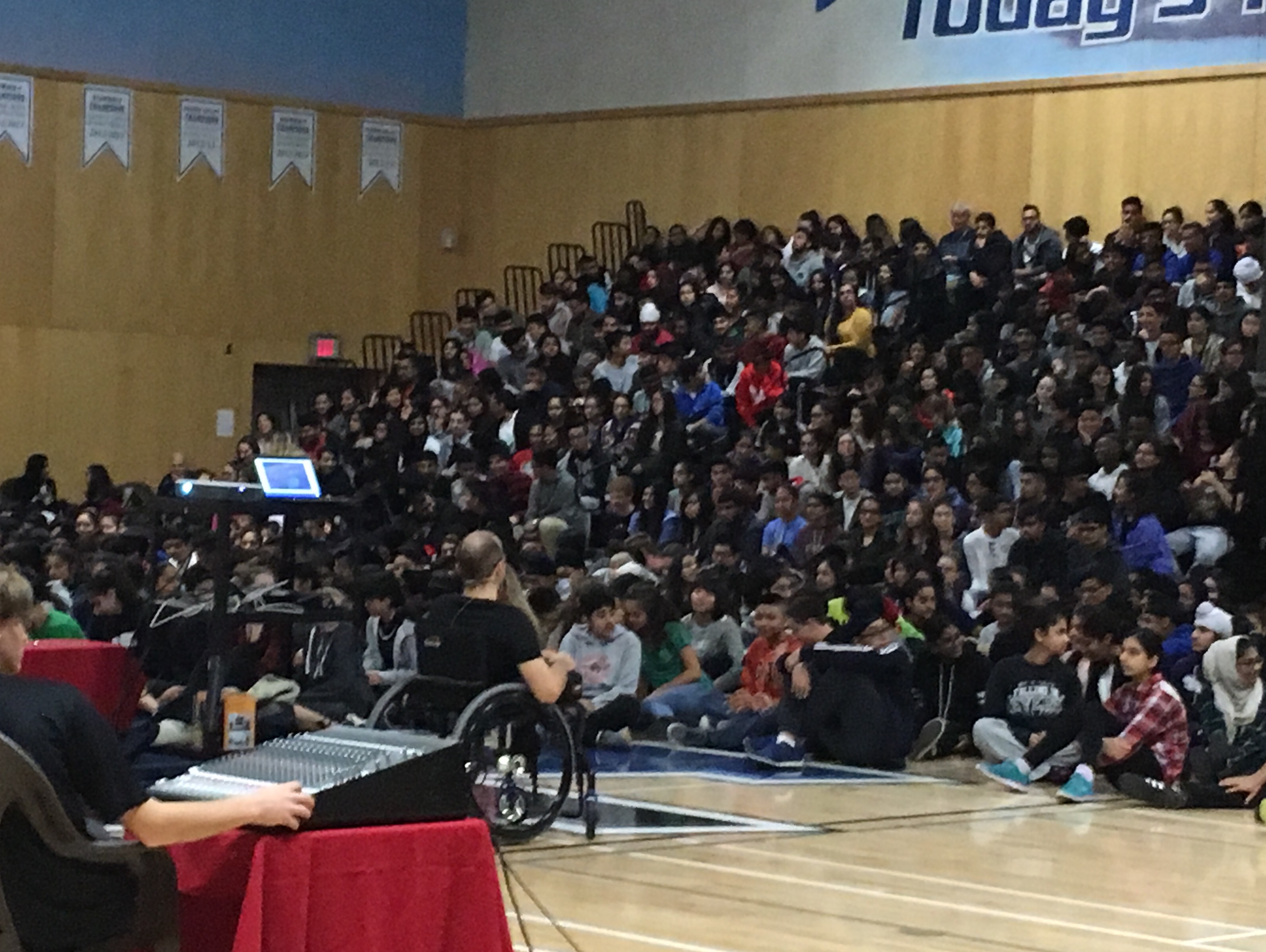
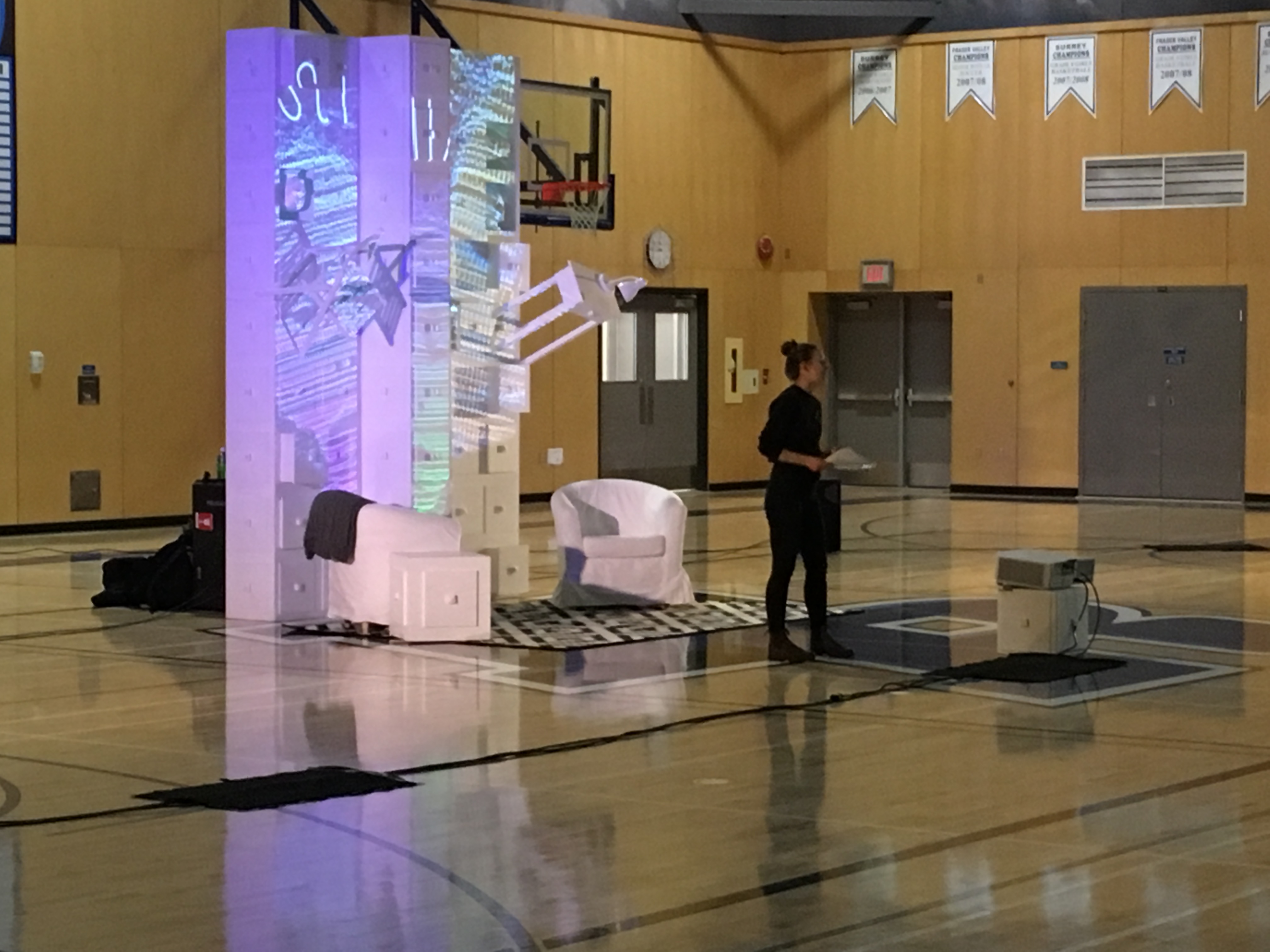
- Grade 8 day
- Build community and provide students with strategies around self-awareness, social awareness, responsible decision-making and self-management.
- Students attended sessions around three major themes: community and self; community and the school; community and the world. Guest speakers presented to students around these themes. Students also were involved in community building activities
 with the purpose of connecting them to the school.
 - For the purpose of improving new literacies, Leadership 8 and 10 students were provided with personal iPads for the semester in order to developing their research and information skills, critical thinking, problem solving and decision making.
Moving Forward
- Develop programs to support at risk students, that would increase their self regulation, self determination and personal well being.
- Develop a structure to provide positive reinforcement of School Code of Conduct
- Changing the structure of our assemblies to better support our inquiry question.

Part 3: Reflect, Adjust, Celebrate
6. How will we know our plan is making a difference? (evidence / success criteria)
We will use the following sources to adjust our supports and structures:
- Monitor Counselling referrals around students with anxiety and mental health issues
- Student Self Reflection of Core Competencies
- Student/ Teacher/ Parent Surveys
- Office Referrals
- Suspension Data
- Graduation Rates
- Work Habit Trends
7. Based on the evidence, does our inquiry require adjustment?
We will continue to monitor the effect of explicit teaching of the Personal Social Core Competency on student learning. From our reflections/evidence collected last year from staff indicated that including more targeted interventions with direct teaching in the classroom was necessary. We will continue to monitor, and scan to see if our inquiry requires further adjustment.