William F. Davidson Elementary 25-26
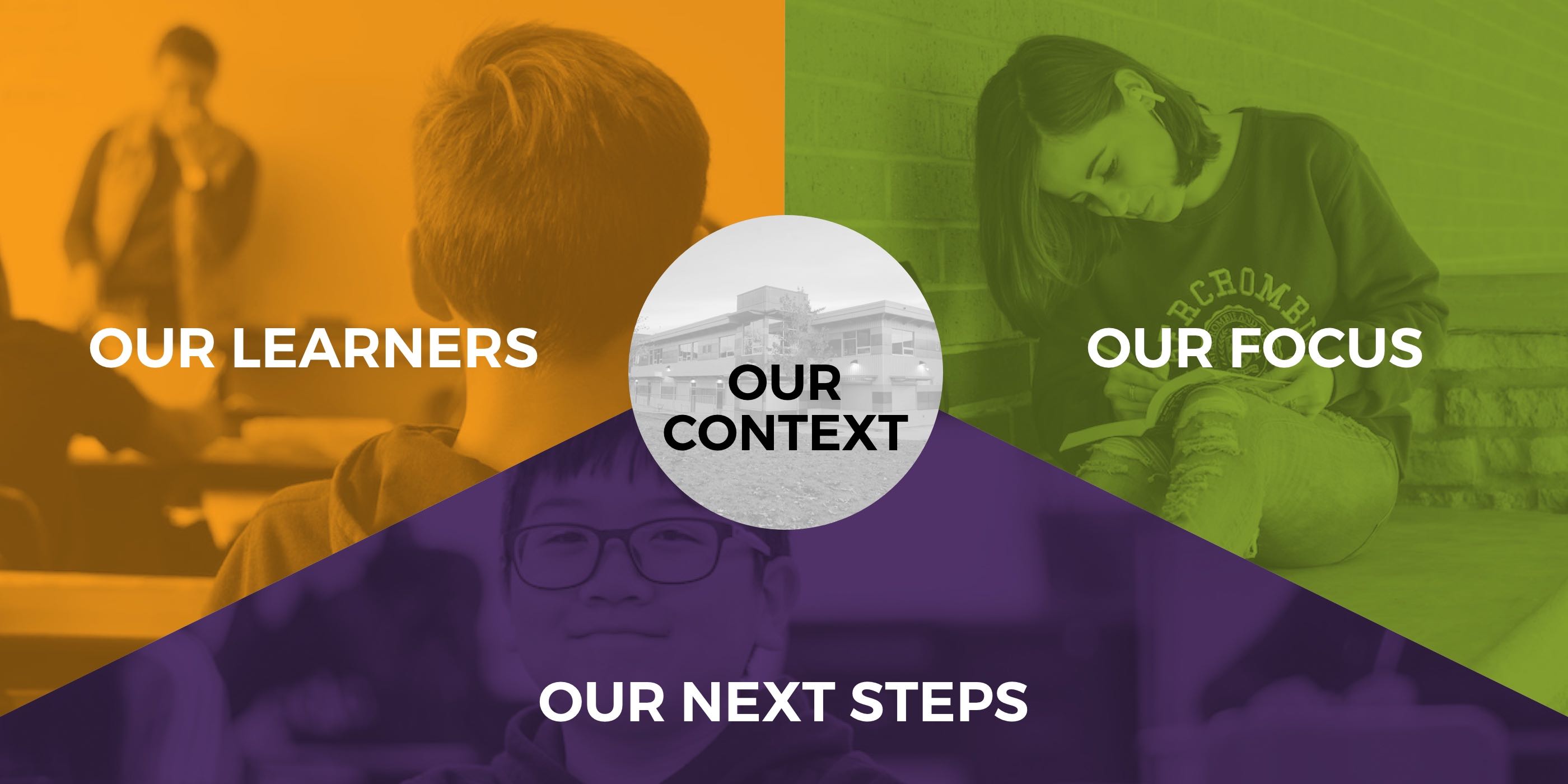

OUR CONTEXT
William F. Davidson Elementary is a diverse and inclusive K–7 school in Guildford, serving approximately 440 students supported by 60 staff and engaged families.
With over half of our students speaking a language other than English at home, our community is rich in culture, language, and lived experiences. We are committed to creating a safe, welcoming environment where all students feel valued and connected.
We are grateful to learn and grow on the unceded and traditional territory of the Katzie, Kwantlen, and Semiahmoo First Nations.

Grounded in the First Peoples Principle of Learning—“Learning is embedded in memory, history, and story”—our school prioritized a literacy initiative focused on storytelling. By welcoming family members and authors into classrooms, students engaged with diverse voices and perspectives, strengthening vocabulary, comprehension, and connections between home, school, and community. This work honoured storytelling as a meaningful way of knowing while supporting both literacy development and a strong sense of belonging.

Students participate in a variety of learning experiences both inside and outside the classroom. These include buddy class activities to build connections across grades, opportunities to contribute ideas that strengthen our school community, field studies that extend learning beyond the classroom, and participation in sports teams such as soccer, badminton, basketball, and track.
We are also grateful for the ongoing support of our Parent Advisory Council (PAC). Through their time, energy, and fundraising efforts, they help provide enriching opportunities such as school-wide events, arts experiences, field study support, classroom resources, and community-building activities.
OUR LEARNERS
At William F. Davidson, our learners are diverse, engaged, and bring a wide range of identities, experiences, and perspectives to their learning. Literacy has been a central focus this year, with reading embedded in daily classroom routines and explored through a variety of texts and formats to support comprehension, critical thinking, and communication skills.

Guided by the First Peoples Principles of Learning—particularly that learning is embedded in memory, history, and story—students have engaged in meaningful storytelling experiences through connections with authors, Indigenous storytellers, and community members. These opportunities have supported learners in seeing themselves reflected in stories, strengthening their sense of identity, belonging, and understanding of diverse perspectives.


Through reading, writing, and creative expression, students have shared their own voices and experiences, building confidence and strengthening connections with others. The integration of literacy and the arts, alongside the First Peoples Principles of Learning, has supported students in making meaningful connections between learning, identity, culture, and community.

Collaborative learning experiences have continued to foster a strong sense of community, supporting the growth of respectful, inclusive, and connected learners.
OUR FOCUS
Our focus in recent years has been growing writers through literacy.This year, we have intentionally shifted our focus to growing readers through literacy.
At our school, each day is filled with rich learning experiences that support students in developing as thinkers, creators, and communicators. The Ministry of Education and Child Care (2024) defines literacy as “the ability to understand, critically analyze, and create a variety of forms of communication, including oral, written, visual, and multimedia, in order to accomplish one’s goals.”


Based on our school data, we have identified reading as an area for growth, and this has guided our instructional focus. Strengthening reading skills is essential, as it forms the foundation for lifelong literacy and learning.
This year, the Ministry introduced mandatory universal screening for all Kindergarten students. In response, many teachers in Grades 1–7 have also begun exploring universal screening practices to strengthen our data collection and better target instruction. This work supports a more intentional approach across all tiers of instruction, enabling staff to address specific student needs and improve learning outcomes.
To further foster a culture of reading, we have hosted author visits and organized school-wide literacy events to build student engagement, excitement, and a love of reading. 


 The data from Universal Screening in Kindergarten
Kindergarten students demonstrated strong growth from BoY to MoY, indicating effective early instructional practices and rapid skill development.

Kindergarten Composite Score Summary with Intervention Plan (BoY → MoY)
Between the Beginning of Year (BoY) and Middle of Year (MoY), the majority of students demonstrated meaningful growth in composite scores. Class-wide averages increased from approximately 22 at BoY to 84 at MoY, indicating strong overall progress in early literacy and numeracy development.
Approximately 80% of students showed measurable gains, with several students demonstrating significant improvement from low starting points. This suggests that core instructional practices are effectively supporting early skill acquisition.
A small group of students (approximately 20%) demonstrated limited or inconsistent progress. These learners will require additional targeted support to ensure equitable growth and access to learning outcomes.
The data from Universal Screening in a cohort of Grade 1-3
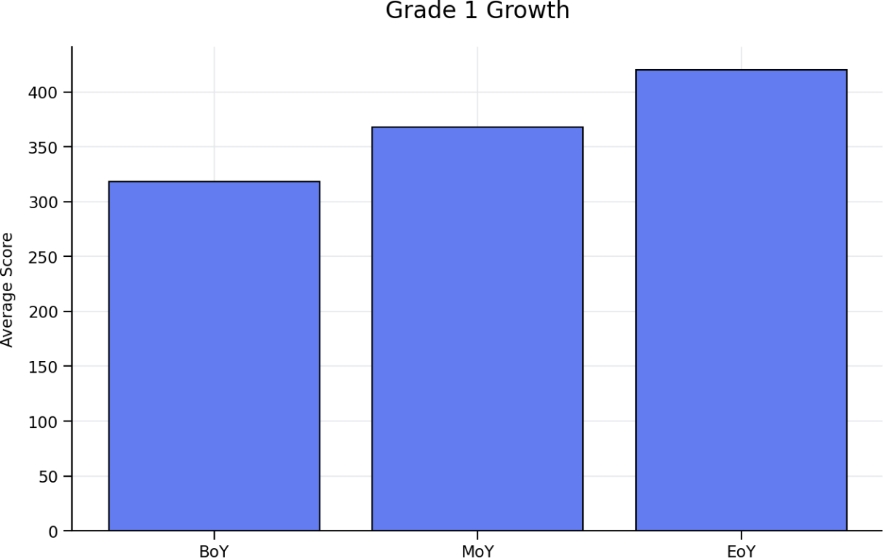
Beginning of Year (BoY), Middle of Year (MoY), End of Year (EoY)
Analysis of composite score data across Grades 1–3 reveals distinct patterns of student growth over the course of the school year, as well as important insights to inform future instructional planning.
Grade 1
Grade 1 students showed consistent and steady growth across BoY, MoY, and EoY. This reflects strong instructional alignment and sustained learning throughout the year.
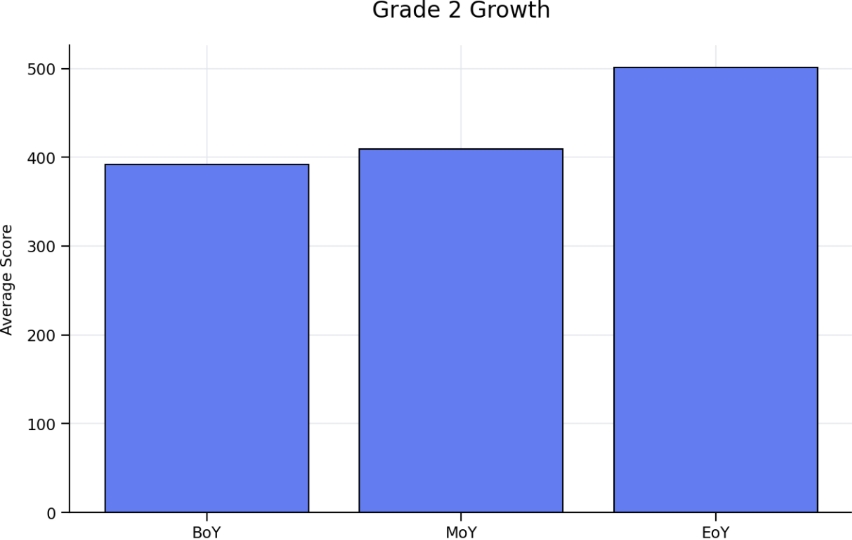
Grade 2
Grade 2 students demonstrated uneven mid-year progress, followed by strong growth by EoY. This suggests the need for earlier intervention and alignment in instruction.
Grade 3
Grade 3 students showed a slight mid-year decline followed by strong recovery, highlighting the importance of timely instructional adjustments.

Overall, Grades 1–3 data demonstrates strong end-of-year growth, with evidence that instructional practices are effective, particularly when adjustments are made. Moving forward, a key focus will be strengthening early-year instruction and intervention to ensure consistent progress across the entire year.
This cohort provides an important foundational dataset that will support data-informed decision-making and continuous improvement as mandatory K–3 screening is implemented across the province.
Across Grades K–3, students demonstrate strong end-of-year growth. However, Grades 2 and 3 show mid-year dips, suggesting a need for earlier intervention. The upcoming mandatory screening will provide valuable longitudinal data to refine instruction and improve outcomes.
OUR NEXT STEPS
Overall, student achievement across K–3 demonstrates strong end-of-year outcomes and effective instructional practices. Moving forward, the school will focus on improving consistency of growth throughout the year, particularly in the early months, to ensure all students are supported in meeting expected learning outcomes.
This initial dataset provides a critical foundation for future comparison and continuous improvement as mandatory screening is implemented across the province.
We will continue to gather data across all kindergarten to grade 3 and begin to explore more universal screening amongst grades 4-7
With the implementation of mandatory screening beginning in September 2026:
The school will be able to track longitudinal data across multiple years
Comparisons can be made across cohorts to identify trends and refine practices
Instruction can be more precisely tailored to cohort-specific needs
Earlier identification of learning needs will support more timely and effective interventions
As part of our Surrey Schools Student Learning Plan, K–3 staff will continue to deepen early literacy practices through a professional inquiry using Reading Assessment Done Right (Stollar & Winn) alongside expanded participation in the Responding to Readers initiative in its second year.

Using DIBELS and Acadience as universal screening tools, teachers will strengthen their understanding of how screening, diagnostic assessment, and progress monitoring align within an MTSS framework to support early identification and targeted intervention.
Staff will engage in collaborative data-informed conversations to flexibly group students, implement structured literacy practices, and adjust instruction based on ongoing evidence of student learning.

This work aligns with Surrey’s K–12 Literacy Framework and the BC Ministry’s Literacy Initiative, supporting the development of equitable, evidence-informed practices and learning environments that improve literacy outcomes for all learners.
Surrey Schools
Formed in 1906, the Surrey School District currently has the largest student enrolment in British Columbia and is one of the few growing districts in the province. It is governed by a publicly elected board of seven trustees.
The district serves the cities of Surrey and White Rock and the rural area of Barnston Island.