Walnut Road Elementary 24-25

OUR CONTEXT
Please click on the video link below to learn more about Walnut Road Elementary:
OUR LEARNERS
Learning is a collaborative and life-long process that involves time, engagement, curiosity, and the contributions of all members involved in the education of our children. A key component of this learning process is the development of literacy skills, which includes the ability to read, write, speak, and think in a way that allows us to communicate effectively and make sense of our lived experience. The BC curriculum plays a key role in supporting our learners in the development of these skills as it paves the way for collaboration, problem solving, sharing of information, and expressing individuality. Evidence of the diverse, creative, meaningful, and inspiring ways in which our students engage in the literacy learning process are highlighted below:
Our learners can engage in a variety of oral storytelling processes.
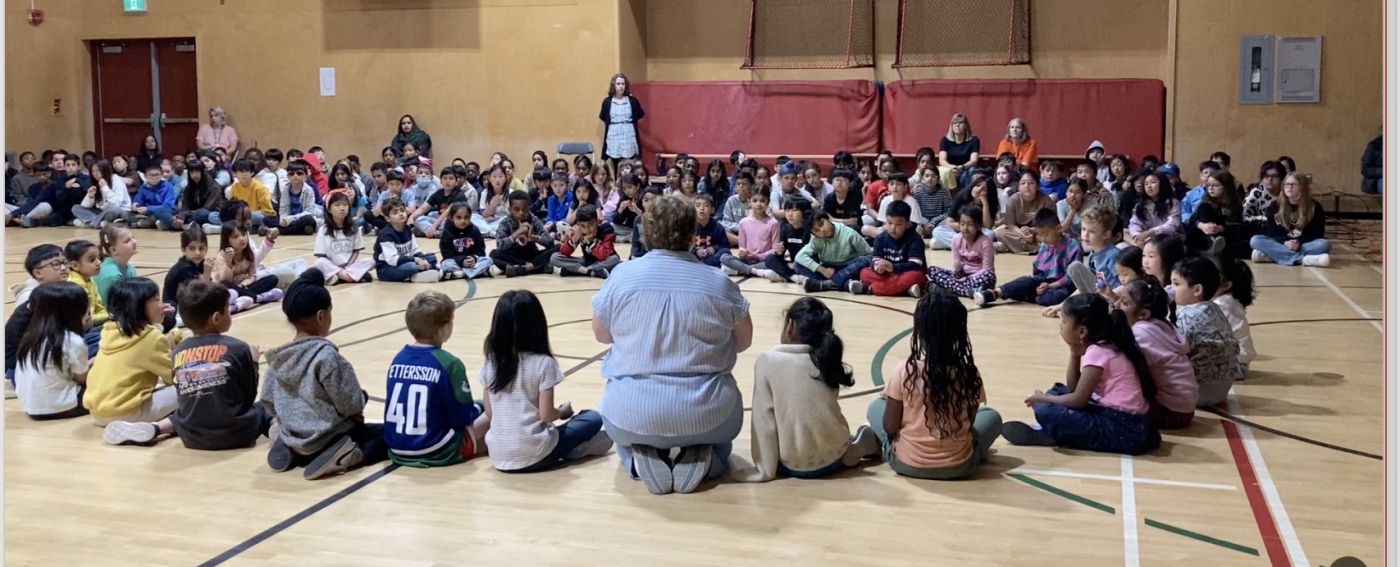
Oral storytelling is a powerful and engaging way of creating connections with one another through the sharing of ideas and experiences. In the example above, students shared a song during our National Indigenous Peoples Day assembly as we celebrated and recognized the traditions, cultures, and contributions of the First Nations, Inuit and Métis people. Storytelling through song is a very immersive experience that creates the space for connection, understanding, and joy within our school community.
Our learners can use language in creative and playful ways to develop style.
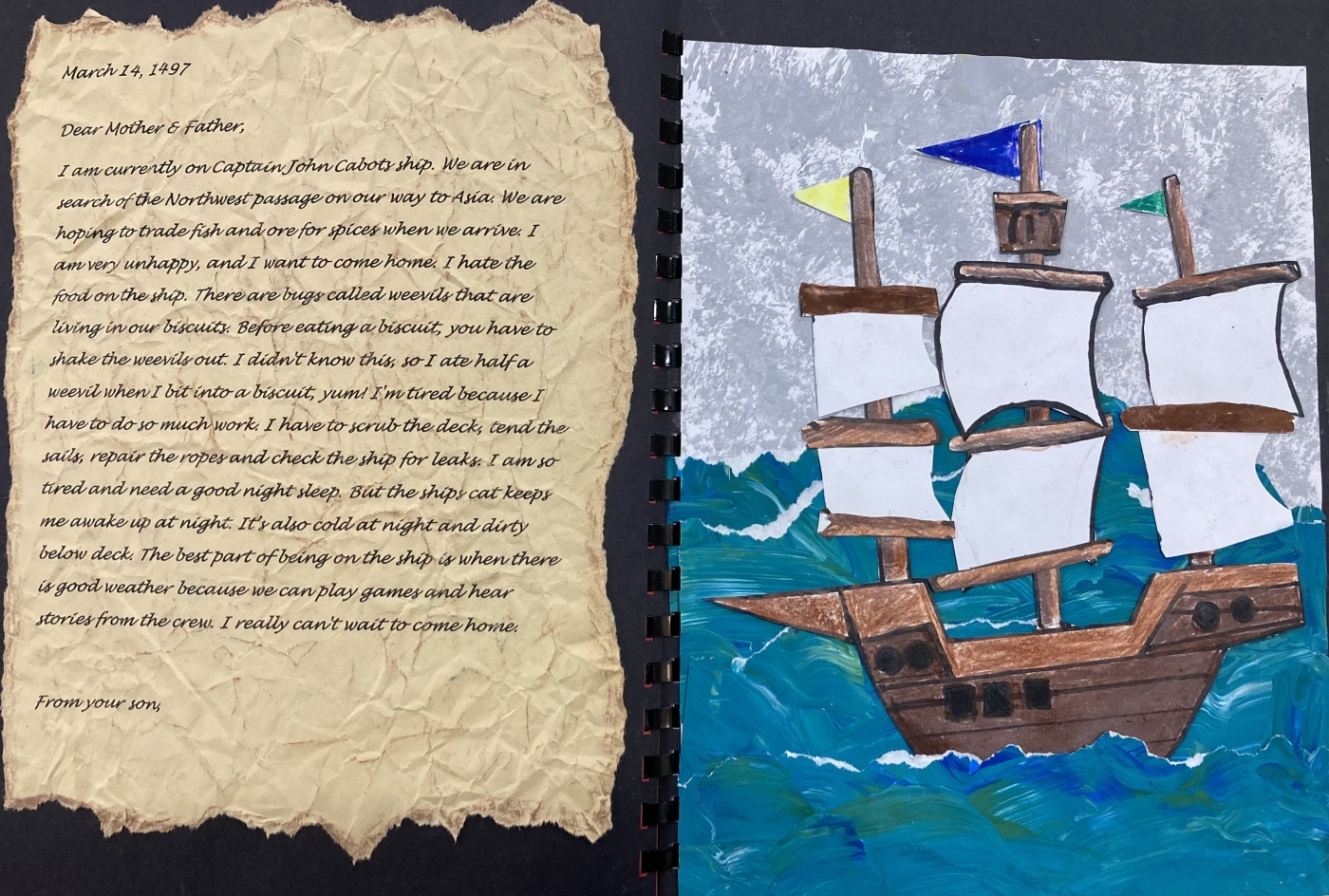
Both the process of writing and the creation of a piece of visual art can serve as meaningful inspirations for one another. In the example above, students described the journey of an early explorer through an engaging first-person perspective, recounting the joys and hardships along the way. This vivid description, along with the emotion within the writing, is also felt within the painting as colour, form, texture, and line invites us to imagine what a voyage of this significance was like.
Our learners understand the power of exploring their identity and taking pride in who they are through both images and written language.
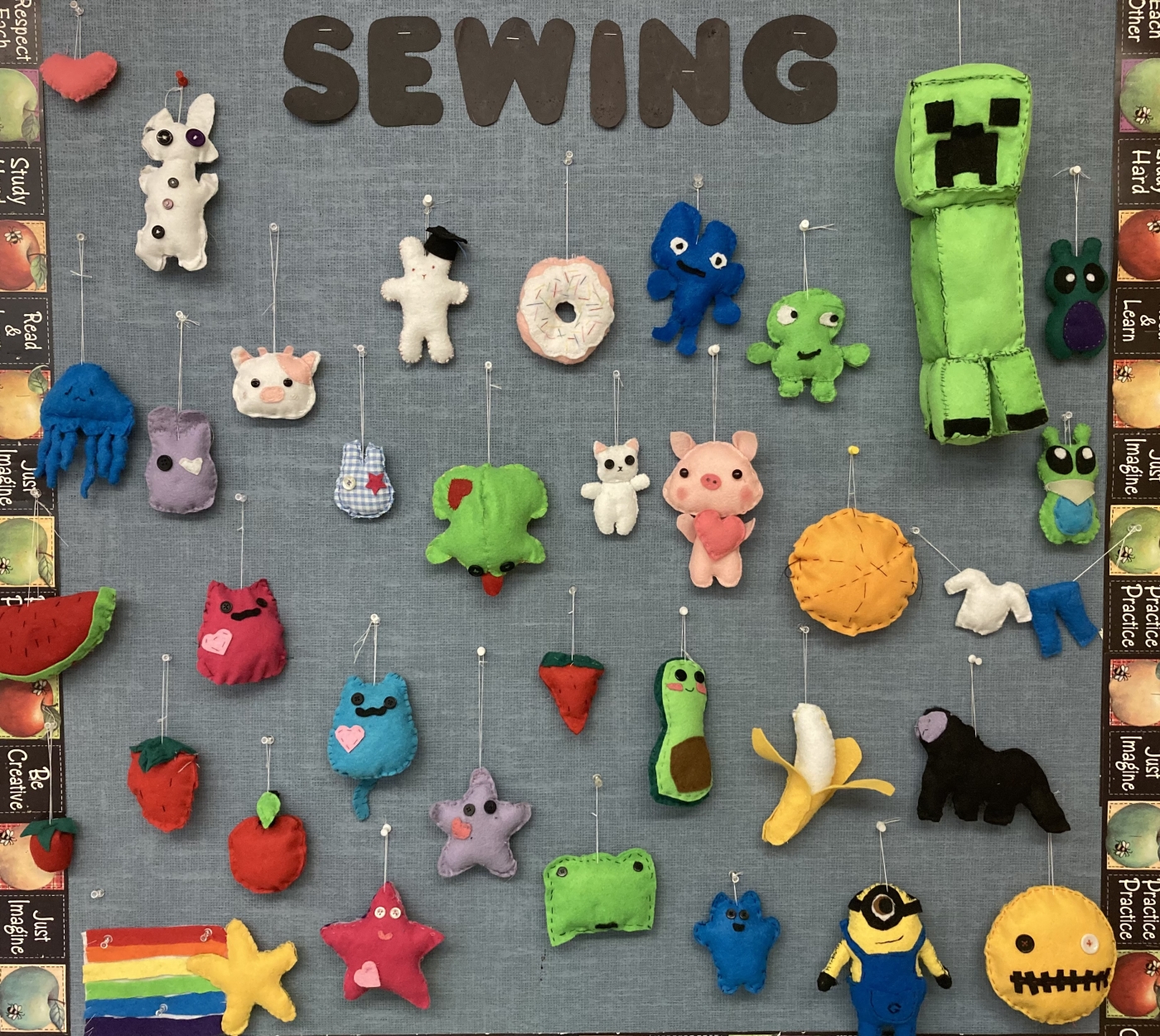
A core value of our school community is creating a space where each person feels valued, a sense of belonging, and freedom to celebrate who they are. Creating this safe space is a daily focus that can be fostered in a variety of ways. In the example above, students had the opportunity to create an object of their choice that creatively expressed themselves in some way. In doing so, not only did students learn the practical steps of sewing, they also engaged in a process that encouraged artistic expression, personal interests, and the opportunity to share this process with one another. Exploring our identities and taking pride in who we are, is a consistent process that can be nurtured in a variety of creative ways.
OUR FOCUS
Literacy is a key focus for all of our learners as it plays an instrumental role in the ways in which our students experience and engage in the world. It is our desire that each learner meaningfully develops reading, writing, thinking, listening, and speaking skills in order to facilitate effective communication and understanding throughout their lives. Continually working to develop the literacy skills of our learners, with a particular focus on writing, is our main focus.
Our student learning goals, as they relate to writing, include:
- Using writing and design processes to plan, develop, and create text for a variety of purposes and audiences.
- Using the features and conventions of language to express meaning in their writing and representing.
- Exchanging ideas and perspectives to build shared understanding.
All of our learners, across all grades, are provided with a variety of creative and relevant opportunities in the area of writing development. These opportunities include various strategies and processes that work to support this. In order to discover both the key successes and areas for further growth in this area, we monitored the progress of a cohort of early intermediate students in relation to the student learning goals listed above.
Writing and Communicating
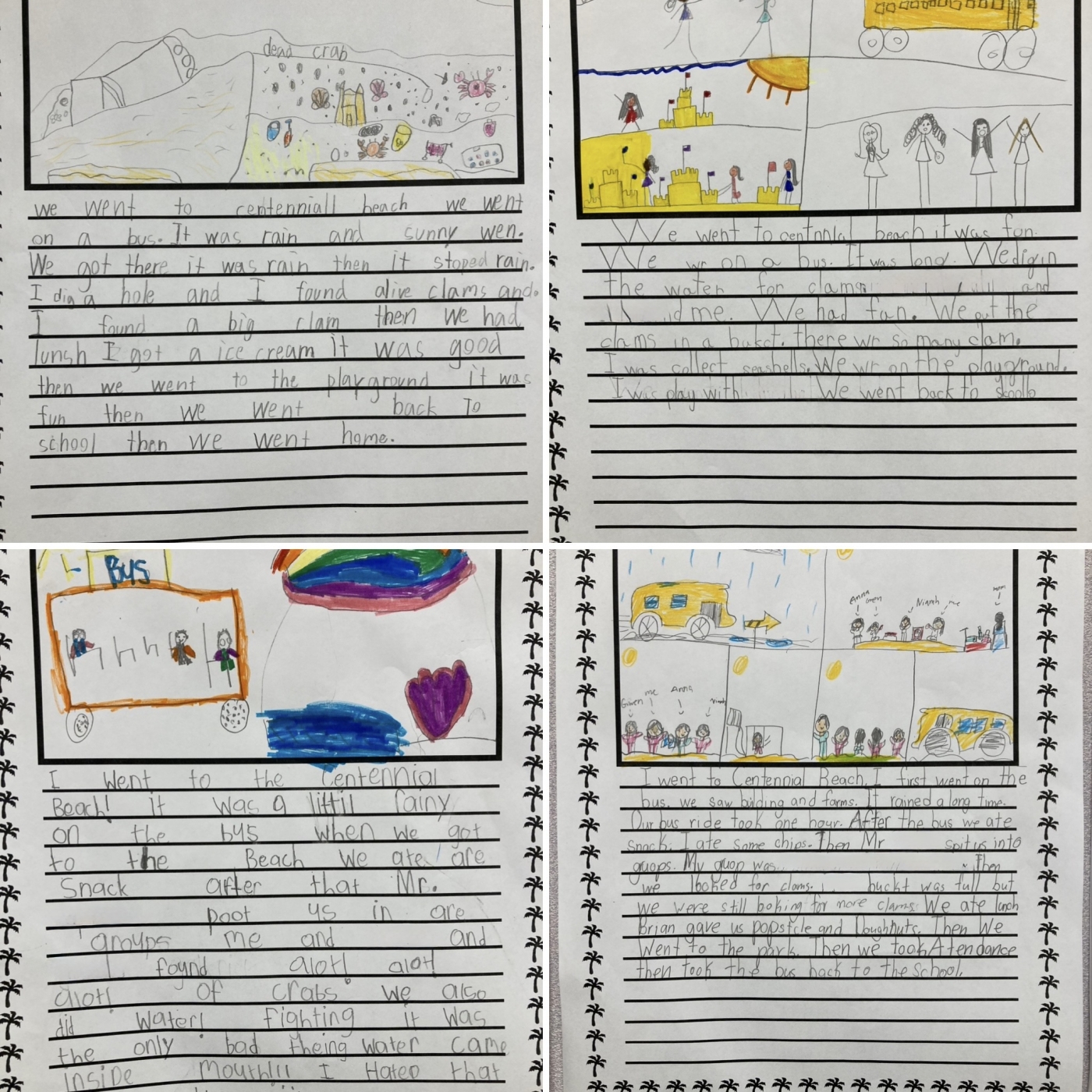
Our students actively engage in the writing process in all areas of the curriculum. In doing so, they use various planning techniques such as brainstorming, drawing, and communicating with their peers to draw inspiration and a solid base for their writing piece. With this foundation in place, they then begin the process of expressing their thoughts through various written forms such as paragraphs, poems, essays, or newspaper articles. This process is consistently being refined through various revision processes such as peer editing and conferencing.
Hands-On Learning
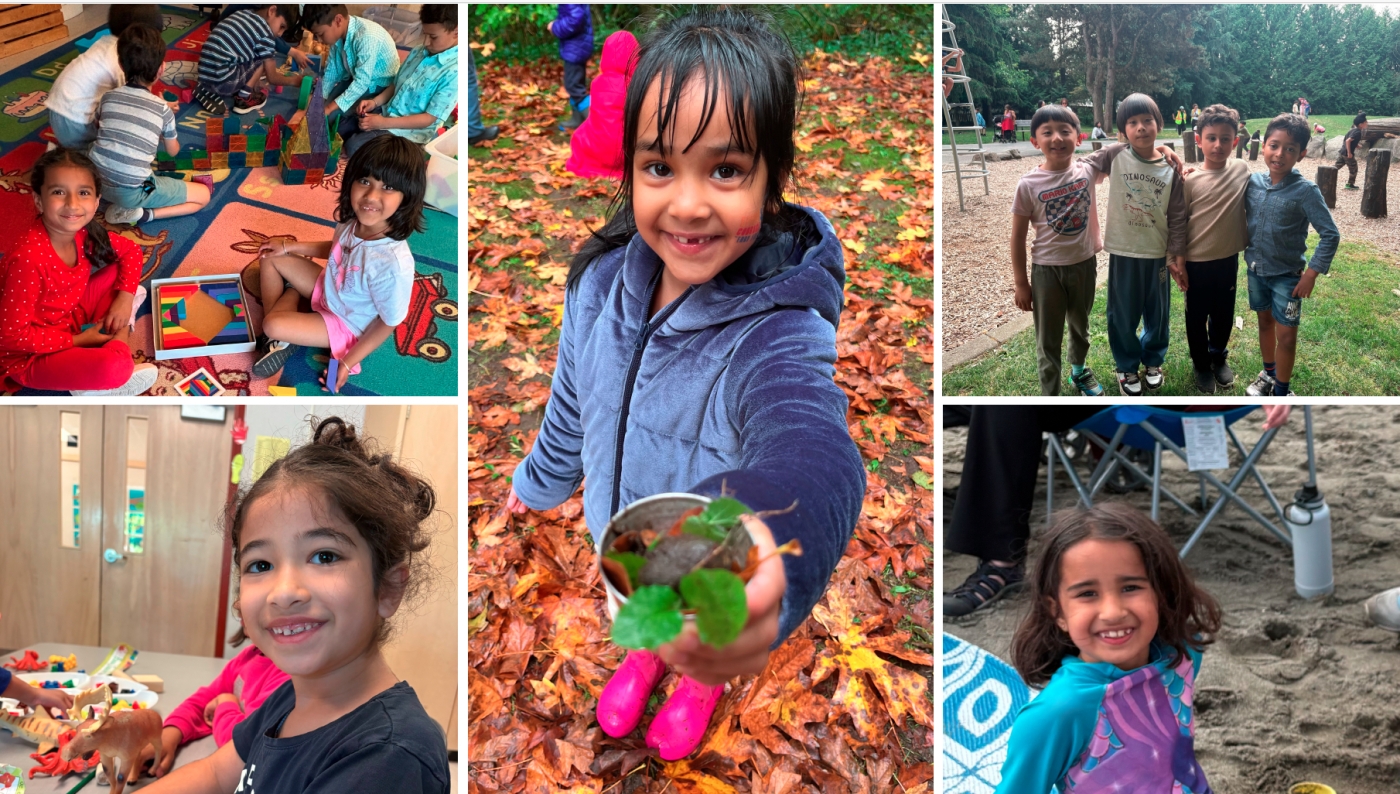
Our learners love to explore and create! They value the creative process which includes thinking outside-the-box, brainstorming various possibilities, refining their ideas through trial-and-error, asking questions, communicating their thinking with others, being open to feedback, and putting their ideas into action. Learning takes place both inside and outside the classroom and the possibilities for growth and development are endless.
OUR NEXT STEPS
Through actively engaging with our literacy focus, specifically as it relates to writing, evidence of our students' learning demonstrates that our cohort of learners have been positively impacted by this focus as the majority of students have demonstrated growth in relation to our three literacy goals, particularly in the area of building shared understanding through the exchanging of ideas and perspectives:
- Using writing and design processes to plan, develop, and create text for a variety of purposes and audiences.
- Using the features and conventions of language to express meaning in their writing and representing.
- Exchanging ideas and perspectives to build shared understanding.
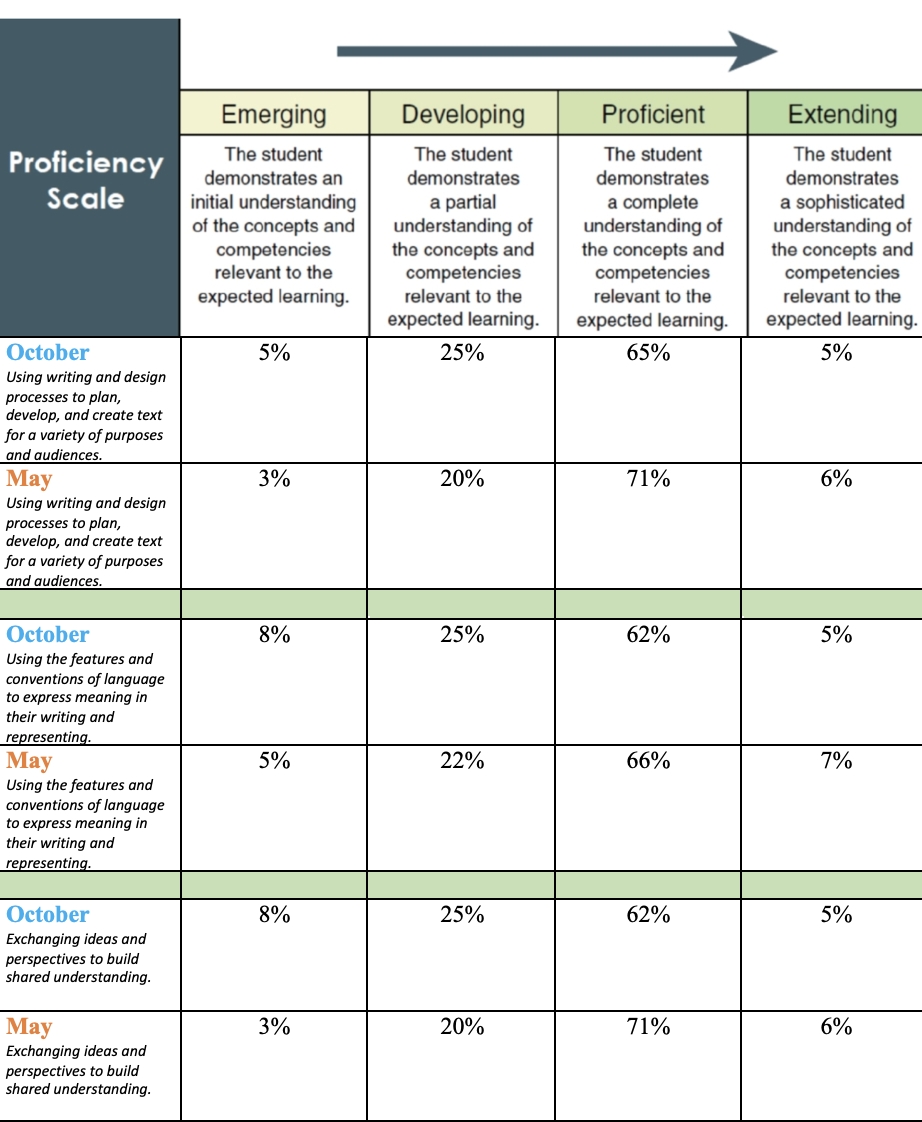
Our results indicate that in relation to our three writing goals (as stated above), the most significant growth continued to occur for our students who were developing in these skills at the beginning of the year. By the end of the year, some of these students demonstrated proficiency in the writing and design progress, in their ability to use the conventions of language in meaningful and creative ways, along with their ability to refine their writing through peer collaboration. It is also important to note, however, that approximately 25% of students are not yet proficient in our three writing goals, including a slightly higher percentage of emerging learners in the month of May as compared to last year. With our rapidly growing population at Walnut Road, we welcomed more students into the school this past year, several of which are English Language Learners. As a result, this slight increase in our emerging learners as compared to last year, is not a complete surprise and highlights the continued importance of supporting these learners in their English language development.
Our learners use writing and design processes to plan, develop, and create text for a variety of purposes and audiences.
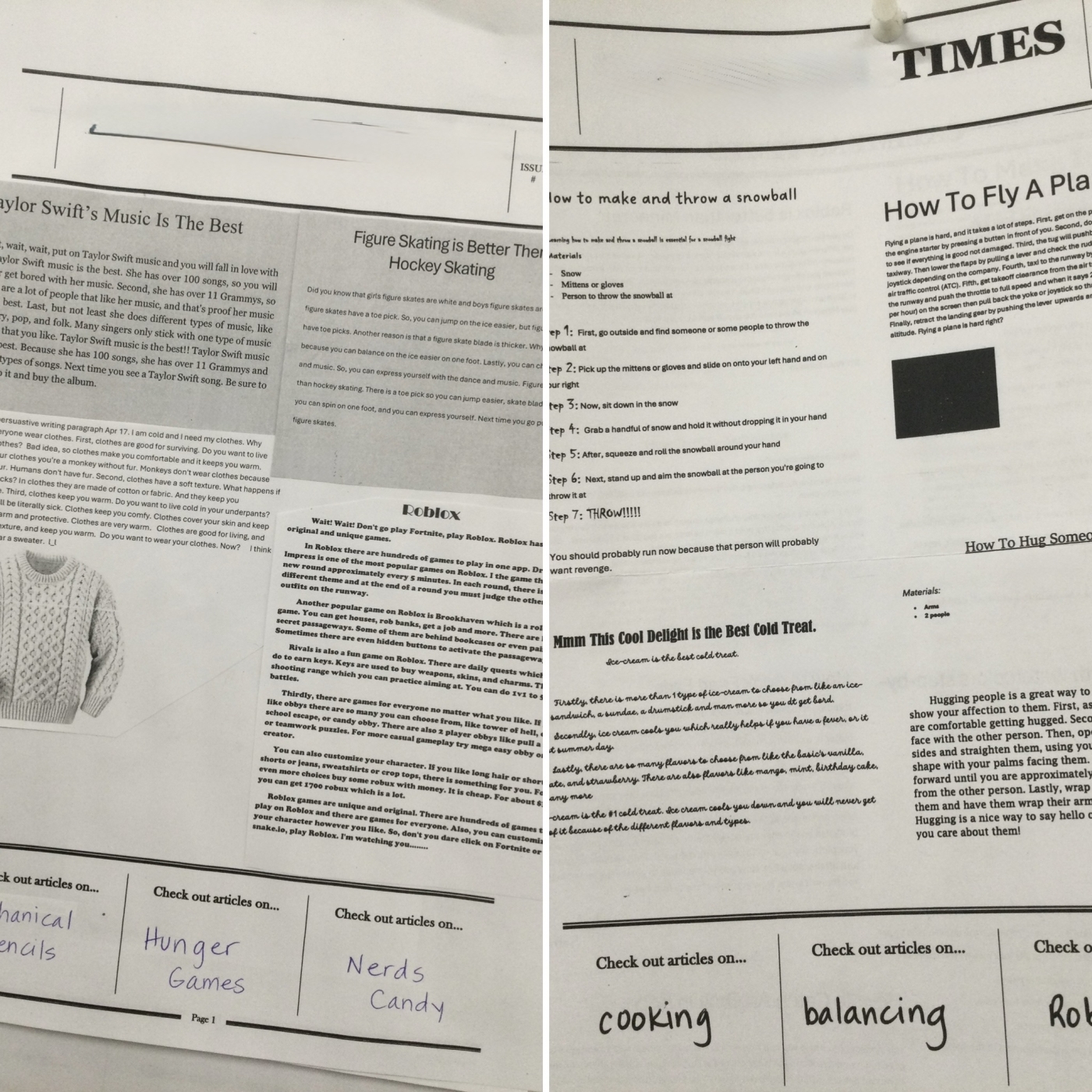
Student learning evidence is gathered in a variety of ways. For example, in one method, student strengths and challenges in relation to writing samples are identified and comments are provided. The following assessment is based on writing conferences, conversations and student work:
In their work related to writing a persuasive paragraph for a class newspaper, 77% of students were able to use writing and design processes to plan, develop, and produce a high-interest persuasive topic about a current passion. There remains 23% of the cohort, however, who require further attention and development in this area. As such, focusing on the writing process, along with developing skills and confidence in using the conventions of writing, will remain a priority moving forward.
Moving Forward
Based on the evidence of our students’ progress in relation to our three learning goals, our next steps will include:
- Continuing to build upon the work that has been focused on during the past three years related to: using writing and design processes to create various pieces of writing, understanding and applying the conventions of language, and exchanging ideas and perspectives to build understanding, with a particular emphasis on supporting our English Language Learners within this process.
While literacy will always remain a key priority in our daily instructional practice, moving forward into the new school year, our Student Learning Plan will shift to a numeracy focus. The decision to focus on numeracy has been a process grounded in thoughtful consideration, consistent collaboration and conversation, and most importantly, knowing our learners. We are excited for the opportunity to devote thoughtful and focused time to the development of our students' mathematical understanding and thinking as we continue to respond to the needs of our learners in meaningful and tangible ways.
Surrey Schools
Formed in 1906, the Surrey School District currently has the largest student enrolment in British Columbia and is one of the few growing districts in the province. It is governed by a publicly elected board of seven trustees.
The district serves the cities of Surrey and White Rock and the rural area of Barnston Island.