Sullivan Heights Secondary 25-26

OUR CONTEXT

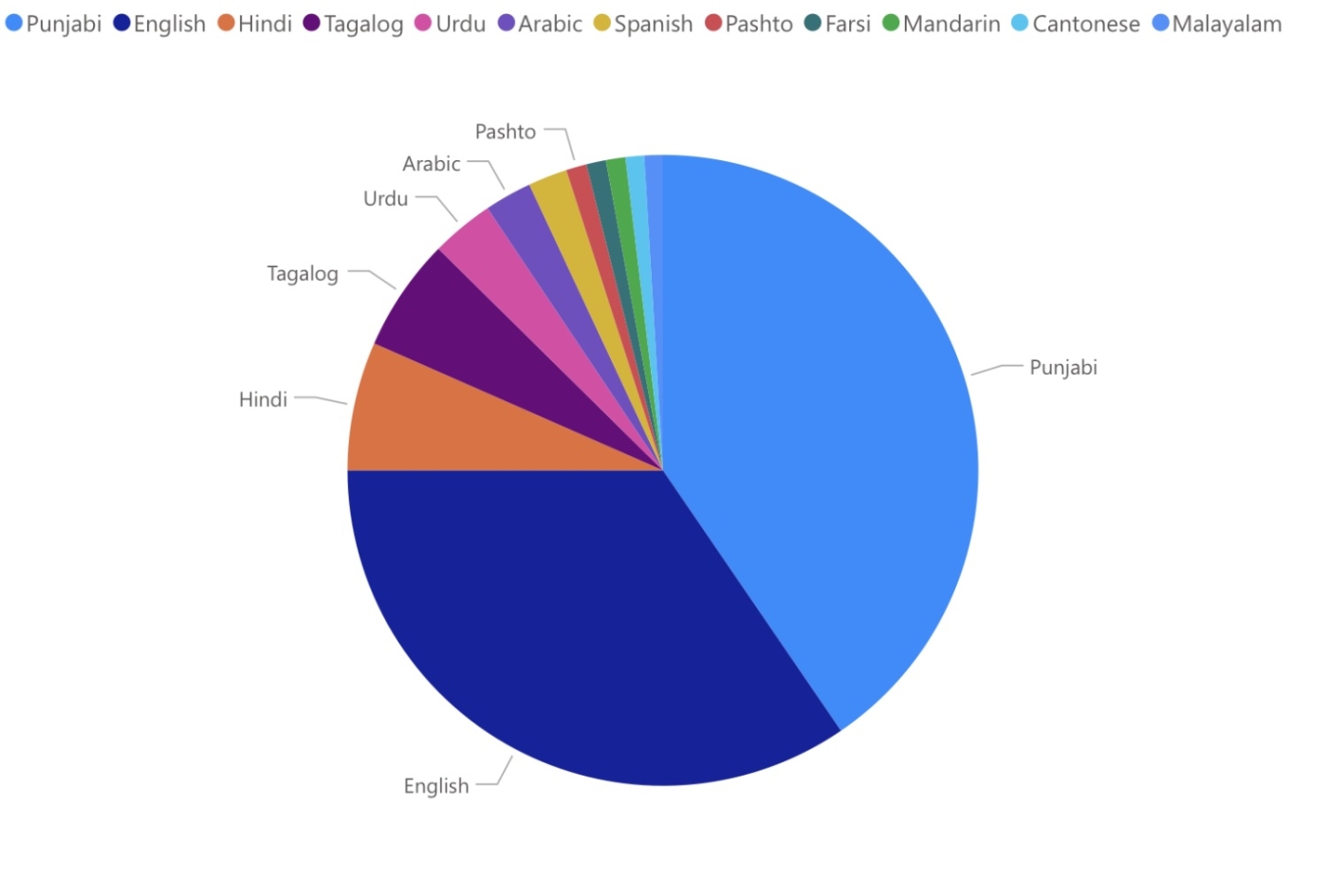
Sullivan Heights Secondary School is a large and diverse secondary school located in the heart of Surrey. The school has experienced significant growth over the past years, with a student population of nearly 2100 students for the 2025-2026 school year and over 2200 students projected for the 2026-2027 school year. The school population is diverse, including more than 68% of students for whom English is not the primary language spoken at home. Many of the newly registered students at Sullivan Heights are also new to Canada. The students and their families bring this rich diversity to the school.
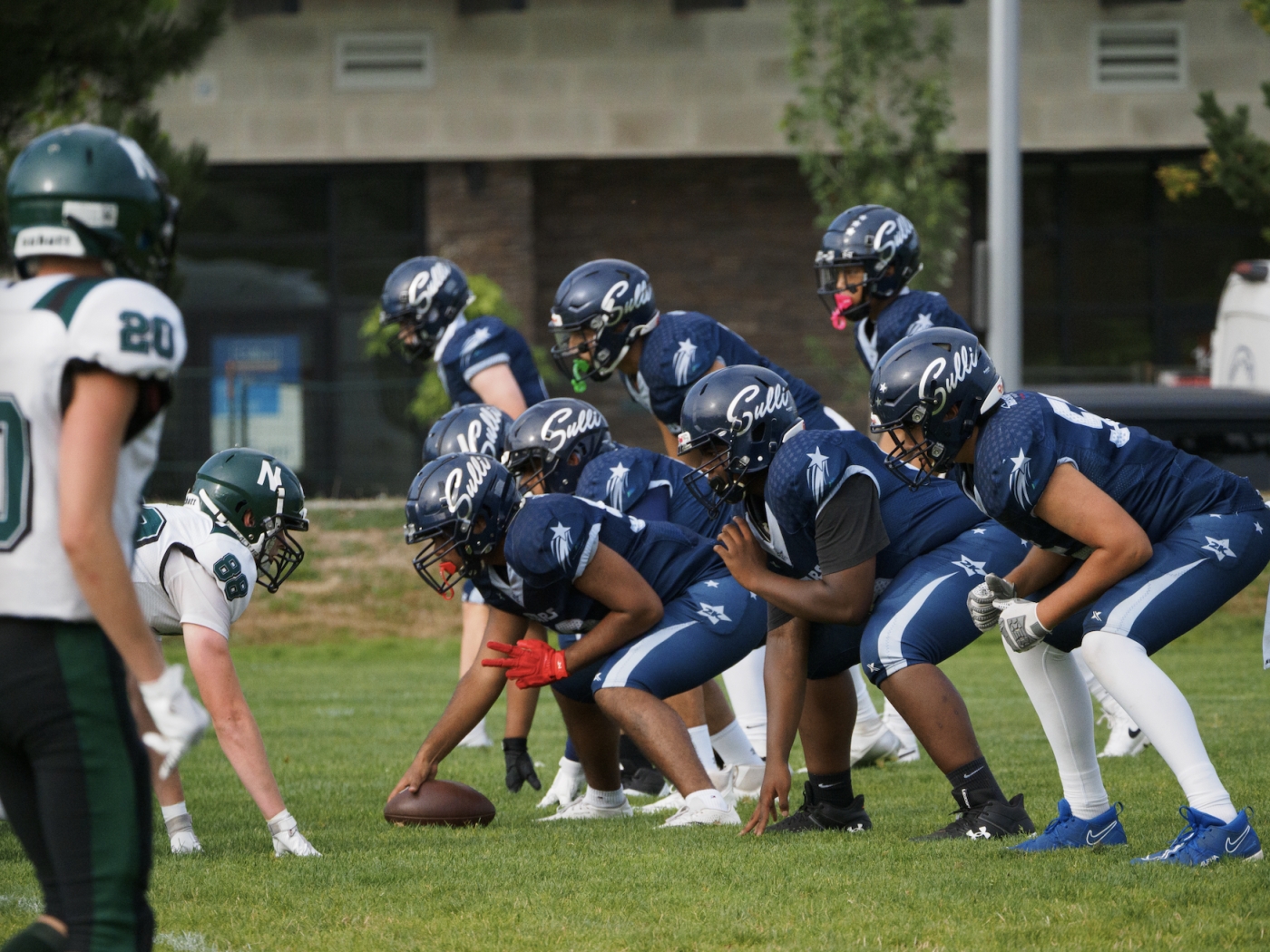
Sullivan Heights provides learning experiences for a wide variety of curricular and extracurricular interests ranging from academics disciplines, to extensive opportunities in Performing Arts such as dance, theatre, and music, to opportunities for student athletes to shine. In 2024 , Sullivan Heights was awarded the BC School Sports Most Inspirational School award for the school’s commitment to positive school culture through athletics. Students have opportunities to extend their learning in a number of unique ways, such as through the English Department’s Rebel Poets initiatives, various Mathematics contests, trade skills-related courses, and many additional opportunities.

Over 40 official school clubs and interest groups provide supported ways for students to express and explore their interests and passions outside of class experiences. Some of these groups, including Changemakers, GSA, the Black Student Union, and Global Issues Club actively work to ensure that students with a variety of passions and identities have opportunities to collaborate, support one another, and bring diverse views and excellence to the school. Sullivan Heights' Student Council and Leadership programs are very active in the school supporting a wide variety of special events, from school dances to spirit weeks.

OUR LEARNERS
At Sullivan Heights, we recognize that numeracy is a foundational skill that supports student success across all areas of learning. While often associated most directly with Mathematics, numeracy encompasses a broader set of competencies, including reasoning, problem-solving, and the ability to interpret and apply quantitative information in a variety of contexts. Whether students are analyzing data in Science, evaluating trends in Social Studies, or managing personal finances, their confidence and fluency with numbers significantly influence their ability to engage meaningfully with content throughout our school and beyond. By initiating a focus on numeracy as a multi-year school-wide priority, we aim to strengthen our learners’ capacity to think logically, make informed decisions, and approach complex problems with confidence.

We understand that strong numeracy skills must be intentionally developed, particularly in the junior grades, where foundational understanding is critical for future success. As students transition into the Graduation Program, they are presented with pathways in Mathematics that require both confidence and competence in core skills. Our Student Learning Plan therefore emphasizes targeted, responsive instruction in junior numeracy to ensure students are well-prepared to make informed choices on Mathematics pathways and options based on both their interests and their readiness. Through creative and collaborative planning, teachers will identify key areas of need and implement strategies such as explicit instruction in number sense, structured problem-solving approaches, and opportunities for applied learning across disciplines, as well as in a variety of targeted junior Mathematics delivery models. By building a consistent and supportive approach to numeracy development, we are preparing our learners to enter secondary mathematics pathways with both the skills and the self-assurance to succeed.
OUR FOCUS

To ensure our focus on numeracy results in meaningful and measurable growth, our school is implementing a coordinated, department-wide approach to instruction and assessment in Mathematics 8 and 9. Grounded in the British Columbia curriculum’s emphasis on reasoning, understanding, and application, teachers are using consistent, skills-based instruction, as well as assessment, to identify student strengths and areas for growth. These shared and consistent approaches, paired with ongoing formative practices, allow for targeted instruction that is responsive to learner needs. Through strong instructional leadership, our Mathematics department engages in collaborative planning, moderation of student work, and the sharing of effective strategies aligned with Surrey’s Priority Practices, including clarity of learning intentions, descriptive feedback, and responsive instruction. This cohesive approach ensures that students experience consistent expectations and high-quality numeracy instruction across classrooms.
In addition, we are providing differentiated opportunities within our Grade 8 and 9 programs to better support diverse learners in developing essential mathematical competencies. Based on identified needs, some students are enrolled in specialized mathematics classes designed to offer more intensive, scaffolded instruction and increased opportunities for practice and application. These classes emphasize conceptual understanding, flexible thinking, and real-world problem solving, reflecting best practices in mathematics education and supporting the development of mathematical proficiency. By intentionally aligning instruction, assessment, and support structures, we aim to ensure that all students enter Grade 10 with a strong foundation in numeracy, well-positioned to choose pathways in the Graduation Program that reflect both their interests and their readiness.

OUR NEXT STEPS
Reviewing our initial shift toward a focused approach to junior numeracy, we anticipate that consistent, skills-based assessment and targeted instruction in Grades 8 and 9 will provide clearer insight into numeracy learning, as well as readiness for the Graduation Program. Early indicators from classroom-based evidence, common assessments, and student feedback will help us better understand both student confidence and competency in key areas such as number sense, proportional reasoning, and problem solving. As with our previous literacy work, we expect to see variability across cohorts and will need to interpret data carefully, particularly in relation to provincial assessments and classroom performance. These early findings will serve as a baseline for refining our approach and ensuring alignment with the BC curriculum’s emphasis on conceptual understanding, communication, and application.
Mathematics learning and achievement was tracked this year for a cohort of students who are enrolled in some of our targeted Mathematics 8 and 9 sections. In this cohort, 65.4% of students achieved similar or improved mathematical competencies aligned with British Columbia Mathematics curriculum as assessed using the provincial proficiency scale compared to their achievement last year. This, of course, also means that 34.6% of students have shown that their learning has not stayed at the same level or improved. There are many contributing factors - the increased complexity students experience year-to-year across curricular areas, increased absenteeism in progressive years - these are challenges not unique to this cohort.
On a more personal level, students in this cohort report feeling as though their numeracy skills are improving and that they are increasingly comfortable with their engagement in Mathematics learning. They report that, even as the curricular competencies and learning they are engaged in are increasing in complexity, that they are developing both the numeracy skills and competencies, as well as the ability to self-advocate, seek supports, and work collaboratively to move their learning forward.
As part of our three-year numeracy goals, we will continue to monitor the learning and progress of this cohort, with specific goals to review the achievement of these students on the Numeracy 10 assessment. While only a single snapshot of Numeracy proficiency, we believe that this data will give us insight into the achievement of this cohort as compared to other students in our school, in Surrey, and across the province.
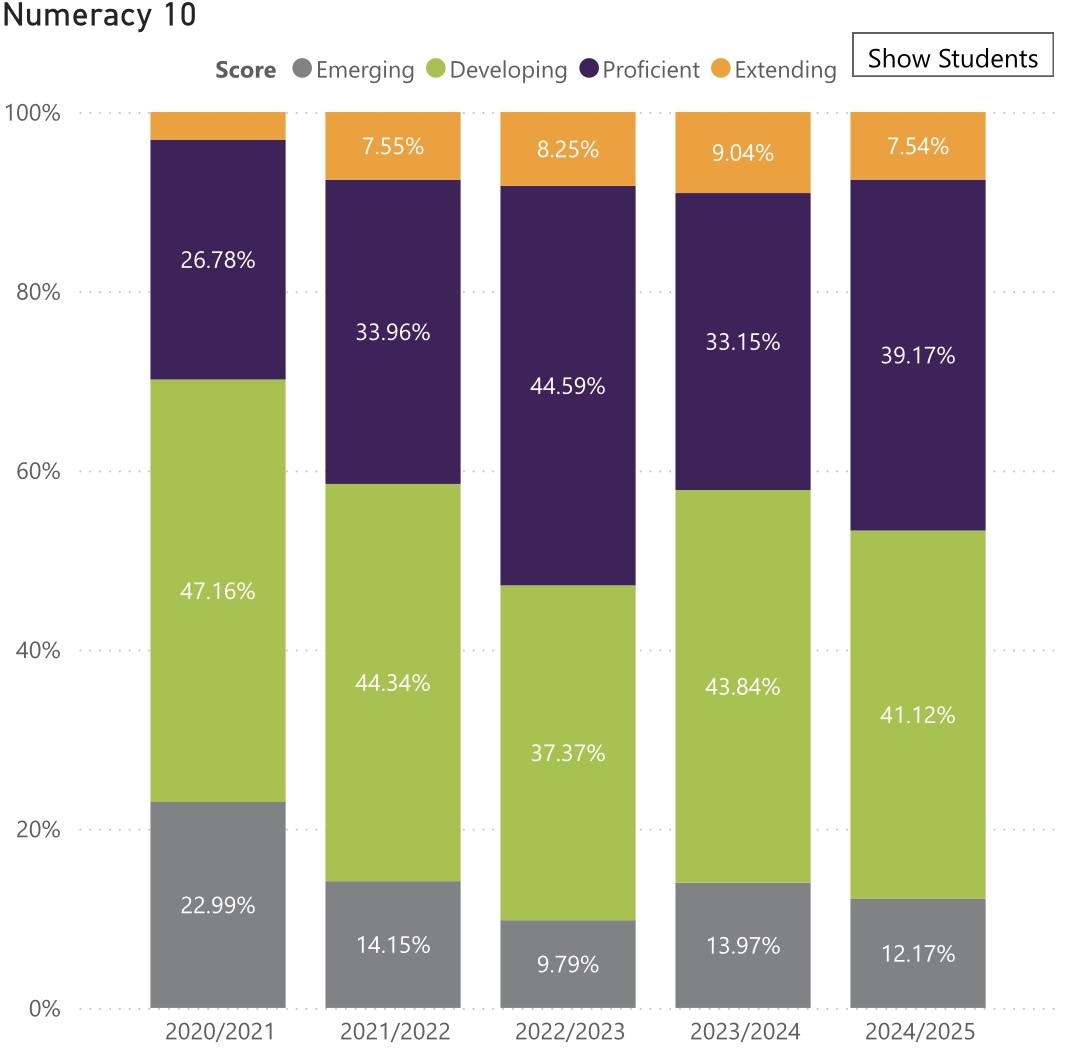
In the next phase of this work, our focus will be on strengthening instructional precision and deepening teacher collaboration. This includes expanding the use of formative assessment practices, such as ongoing check-ins, student self-assessment, and responsive re-teaching, as well as incorporating research-informed strategies drawn from approaches such as Peter Liljedahl’s work on thinking tasks and visible problem solving and the use of rich, open-ended tasks to scaffold, promote, and teach mathematical reasoning. We will also continue to develop common assessment structures and moderation practices to ensure consistency and equity across classrooms. Targeted professional learning will support teachers in differentiating instruction, scaffolding complex concepts, and effectively integrating numeracy across subject areas where appropriate.

Over the following three years, we aim to refine and sustain a cohesive, school-wide numeracy framework that is responsive to student needs and reflective of Surrey’s priority practices. This will include strengthening intervention systems for students requiring additional support, such as flexible grouping, specialized classes, and just-in-time instructional strategies, while also extending opportunities for students ready for enrichment and deeper exploration. We will work toward establishing more specific and measurable targets related to student achievement and course pathway selection in Grade 10, ensuring that students are both prepared and confident in their choices. Ongoing collection of student voice, combined with analysis of achievement data, will guide iterative improvements. By maintaining a clear focus on both skill development and student agency, we will continue to build a numeracy program that equips all learners with the foundation necessary for success in secondary mathematics and beyond.
Surrey Schools
Formed in 1906, the Surrey School District currently has the largest student enrolment in British Columbia and is one of the few growing districts in the province. It is governed by a publicly elected board of seven trustees.
The district serves the cities of Surrey and White Rock and the rural area of Barnston Island.