Strawberry Hill Elementary

OUR CONTEXT
OUR LEARNERS
Literacy skills are fundamental to student learning and engagement across all curricular areas. Students use literacy skills to seek out information, explore subjects in-depth and gain a deeper understanding of the world around them. At Strawberry Hill, our learners are learning to communicate their understanding and opinions of subjects they explore. They are learning to think critically and reflectively as they read and view text. Students are encouraged to analyze, and question their own ideas, thoughts, and assumptions and challenge those of others. They understand that their opinions, thoughts, and ideas can change, grow, and deepen based on what they learn and through collaboration with others. Our learners use creative and critical thinking to make sense of their world and communicate their thoughts orally and through their writing.
Our learners use reading strategies to make meaning.
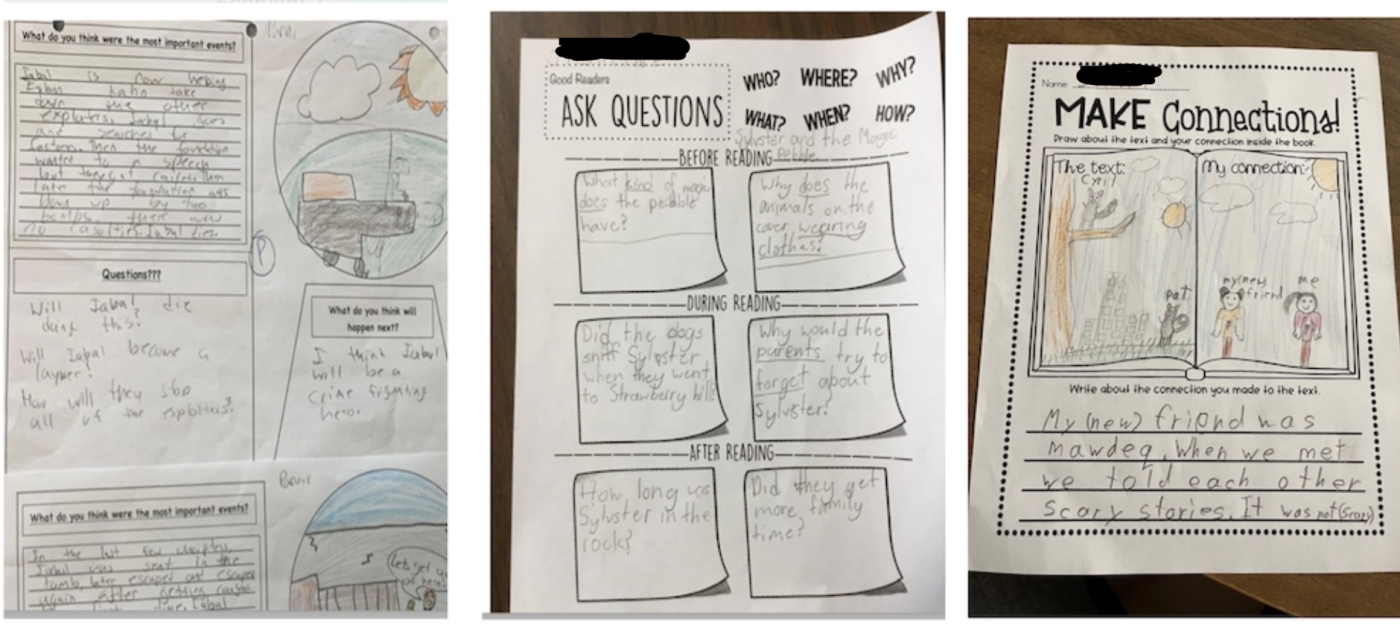
Our learners make their thinking visible by using many different reading strategies. In this sample, our students show their understanding of text they read by summarizing, asking questions, making connections and predicting.
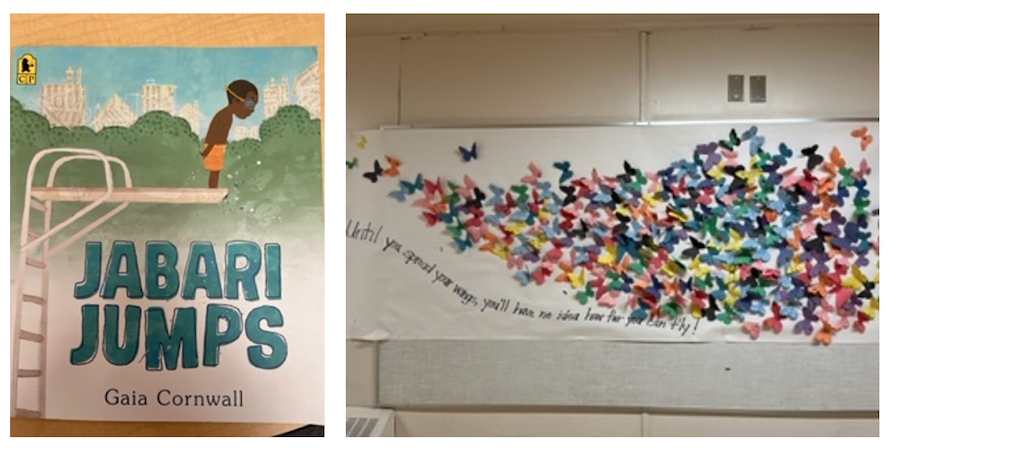
Below all our primary students listened actively to the story Jabari Jumps by Gaia Cornwall. Our students learned to make connections between ideas in the story and to their personal stories and experiences to build understanding of the story. Students also discussed what the quote below meant and how they can use it to help them make choices for themselves.
“Until you spread your wings, you’ll have no idea how far you can fly”- by Napoleon.
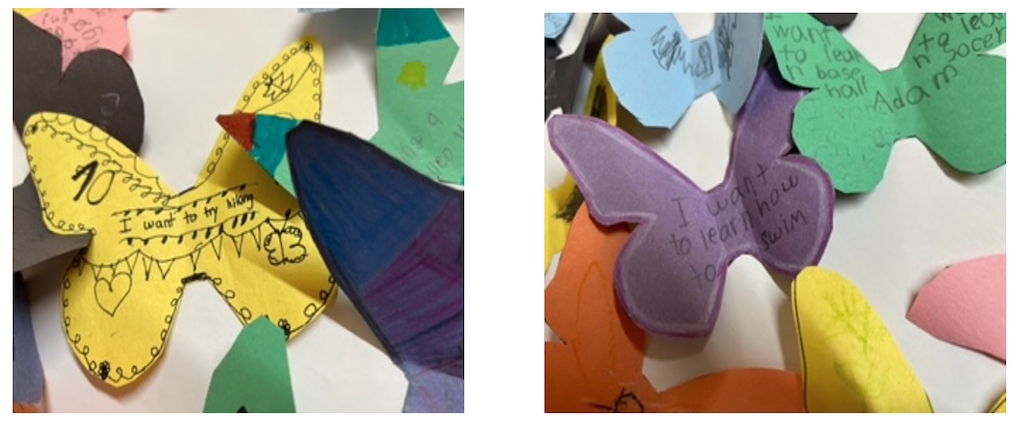
Our learners can communicate their thinking about text they read. They state their opinions, questions, insights in a variety of forms- written, book talks, oral discussions, and story workshop.
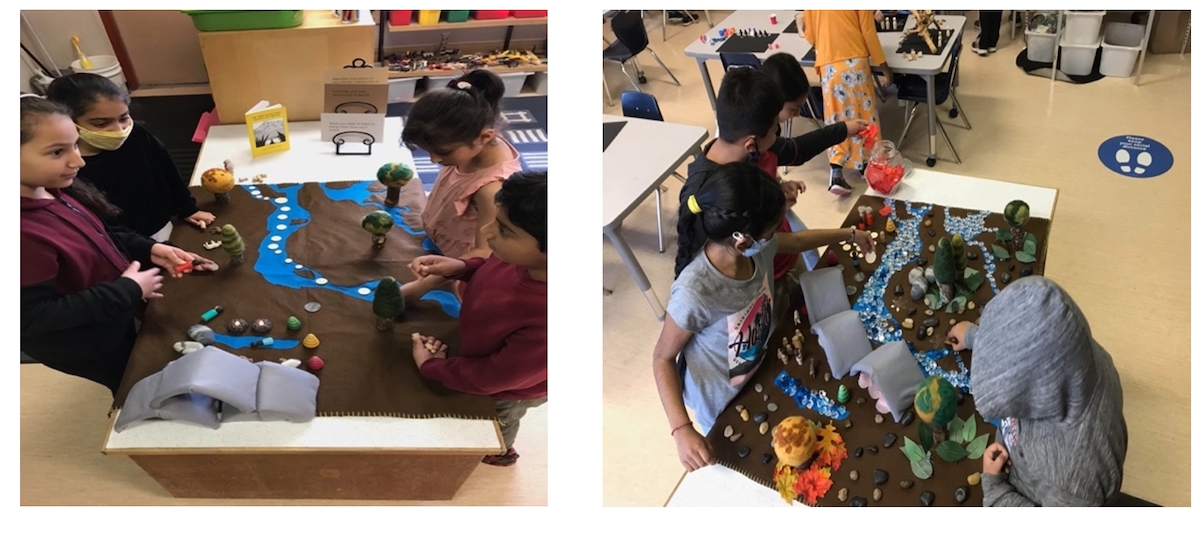
Students read non-fiction books about animal habitats and used loose parts to recreate the habitats they read about in the books. They are sharing their opinions, insights, and any questions they have.

Students write book reviews, predictions, and facts about text they read.
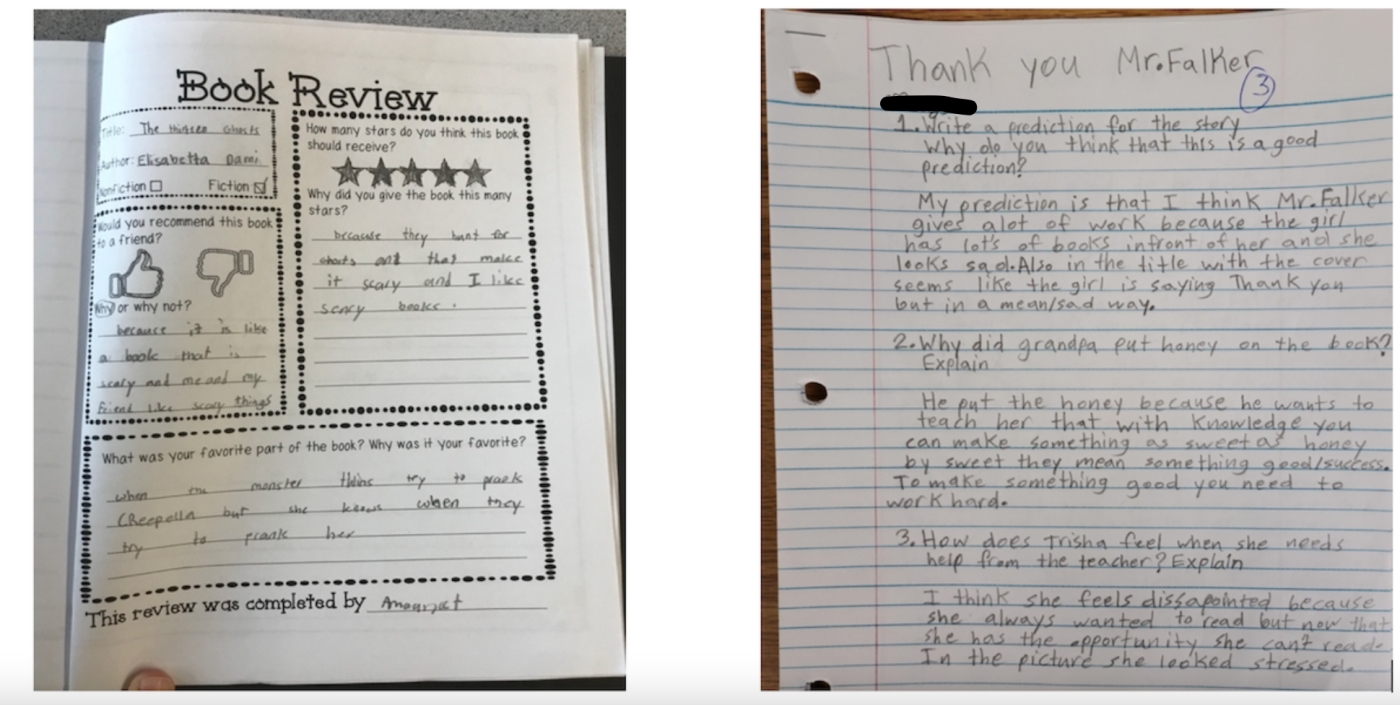
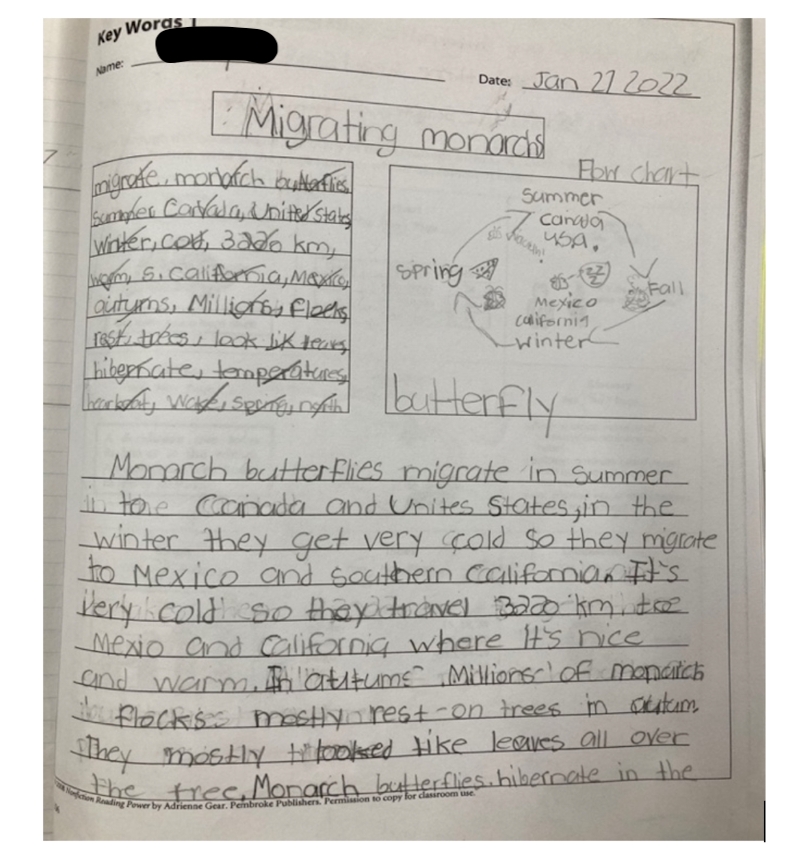
Our learners engage in purposeful, authentic conversations about text they view and read.
Students participate in a book talk with their classroom teacher.
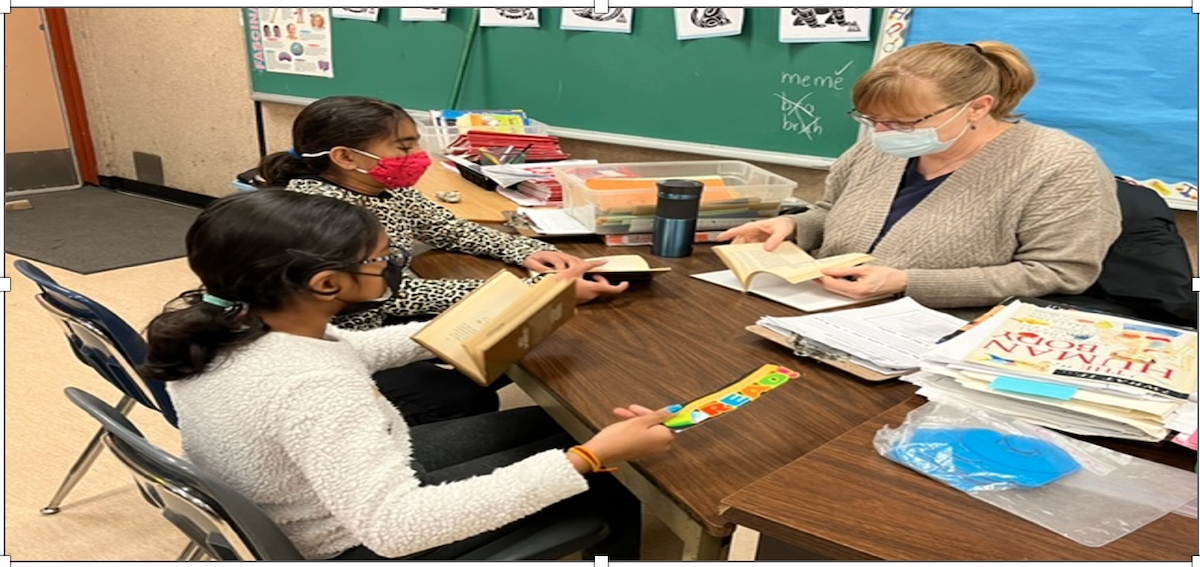
Students are having thoughtful discussions after reading about Food Chains and Food Webs.

Students read with their big buddies and discuss books they read.

Our learners understand that learning involves understanding their own cultural identity. They have a deep understanding of their family backgrounds, heritage, language, and beliefs and at the same time understand and respect the different cultures that make up our community.
Students learned about the Stó:lō true tellings and used story workshop to recreate the stories. They had the opportunity to make meaning of their own relationships and connections to place, while experiencing the oral retelling of The Mountain Goat People of Cheam in a collaborative experience.
OUR FOCUS
Every day at Strawberry Hill our team of educators provide a variety of educational experiences that prepare our learners for a world in which they think creatively and critically and communicate skillfully. To fully engage in the variety of learning experiences across all curricular areas, our students require reading skills to make meaning of text. Our aim is to focus on building our students' reading comprehension skills, so they are equipped with the tools necessary to make sense of the curricular content taught in all subject areas.
Our students’ learning goal is to:
- Use reading, listening, and viewing strategies to make meaning of text
All teachers, across all grades provide students with learning opportunities aimed at increasing reading comprehension skills. To highlight and determine overall successes and gaps, we monitored the progress of a cohort students from three of our primary classes (grades 2 and 3).
In our cohort, teachers explicitly taught reading strategies and used the gradual release of responsibility model. This model can also be described as the “I do, we do, you do” model. Initially our teacher modeled how reading strategies are employed while reading and then through a series of steps, teachers relinquished more and more of the responsibility to the student, so our learners used the strategies independently. Teachers used instructional strategies such as read alouds, shared reading, buddy reading, book discussions as a class and in small groups, guided reading, and graphic organizers to help students organize their thinking about reading. Students were provided longer periods of time to read, which allowed them to gain vocabulary, increase their background knowledge, and to learn how reading material is structured.
Students are read to daily
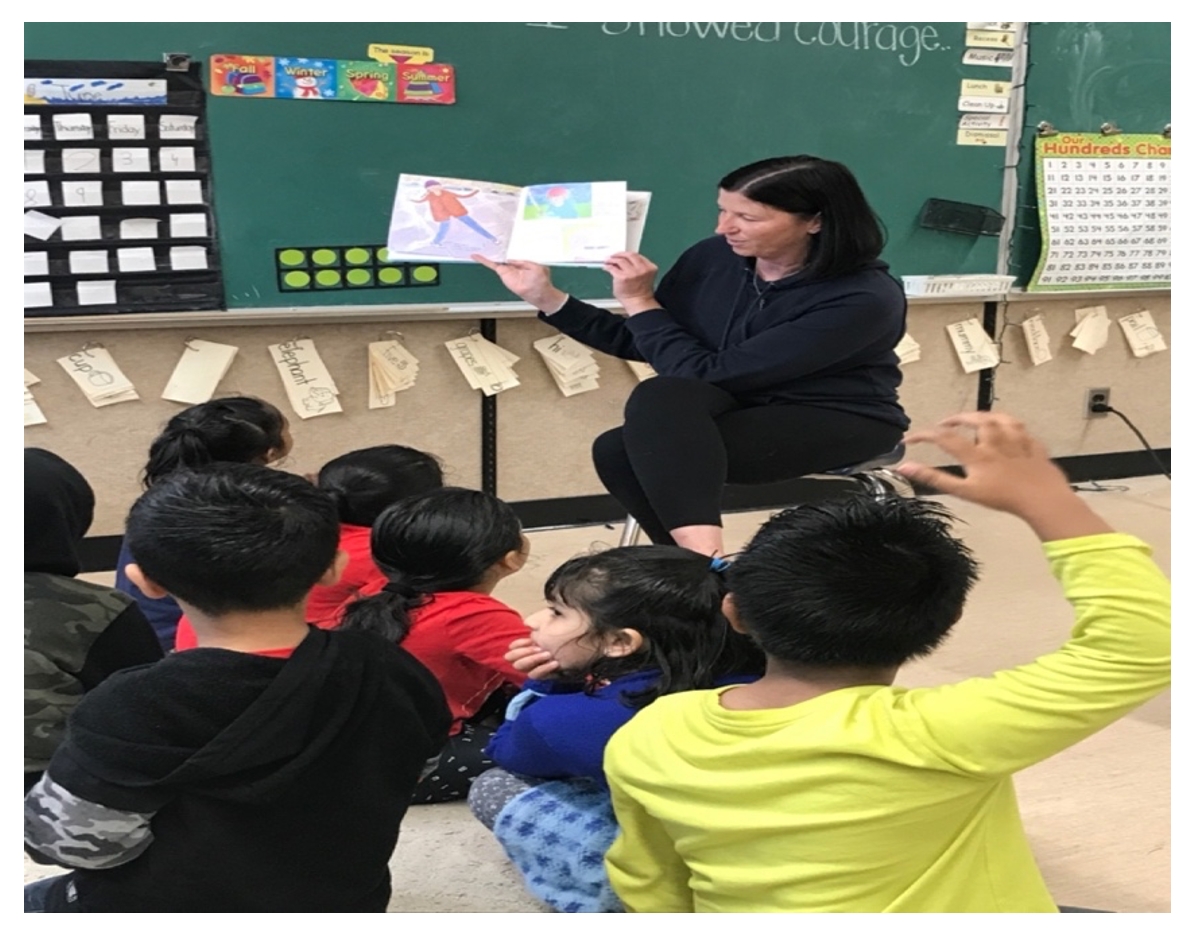
Our learners read daily
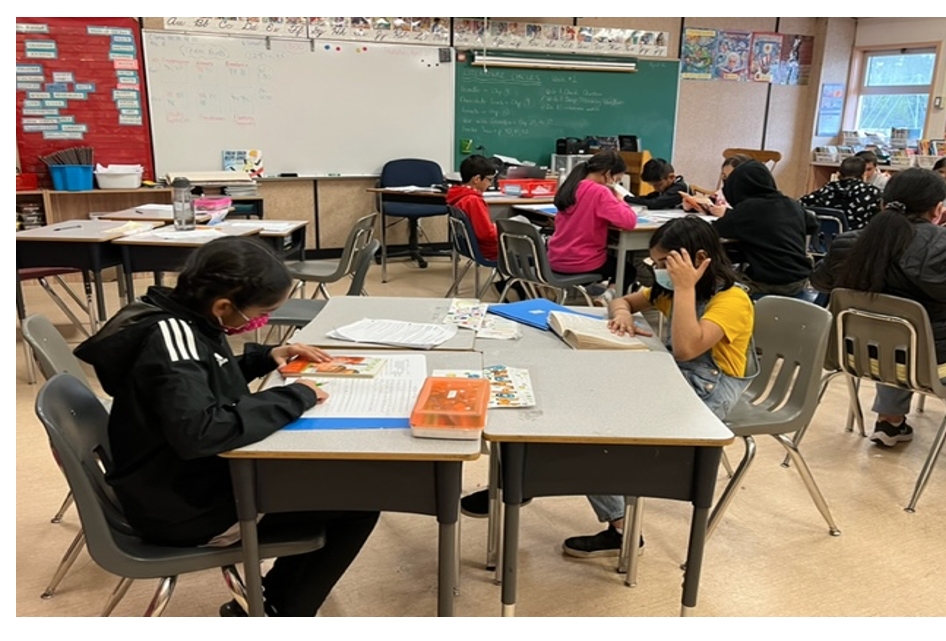
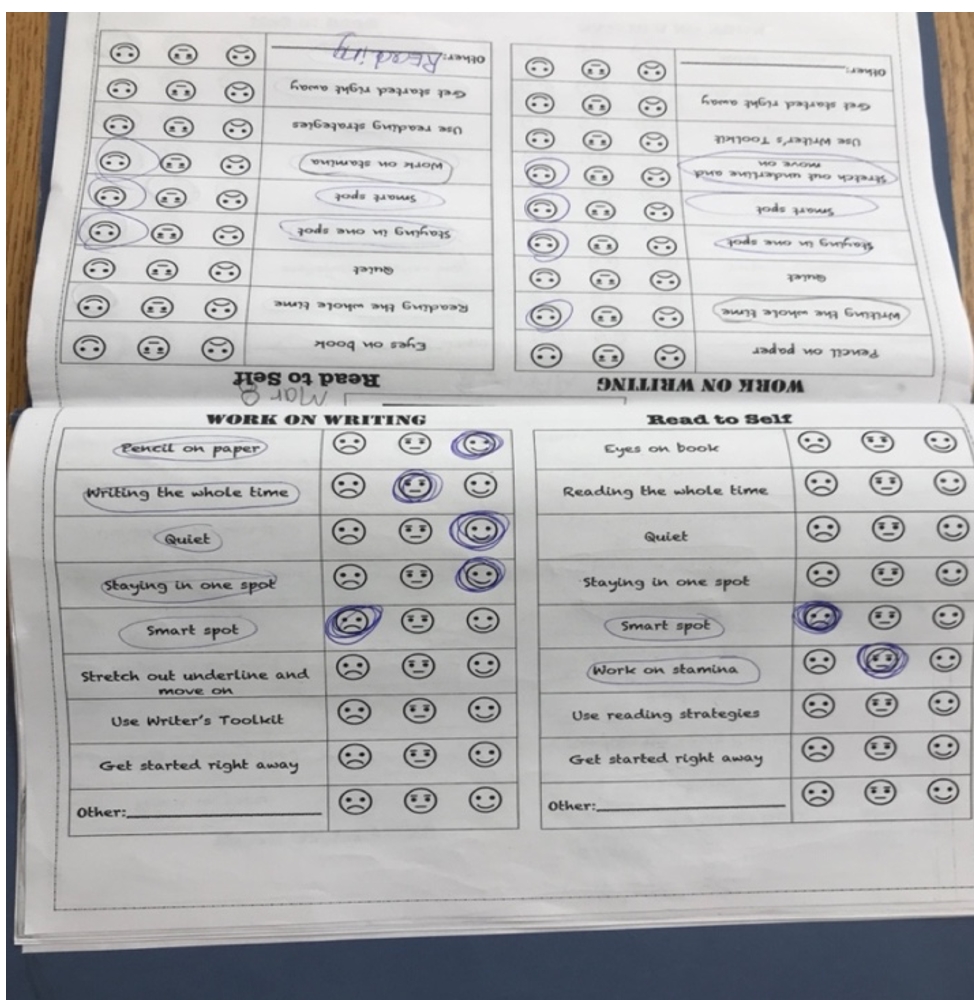
Daily Five Literacy Framework: This framework allows students to engage in reading and writing daily and for the teacher to meet with small groups of students to meet their diverse literacy needs.
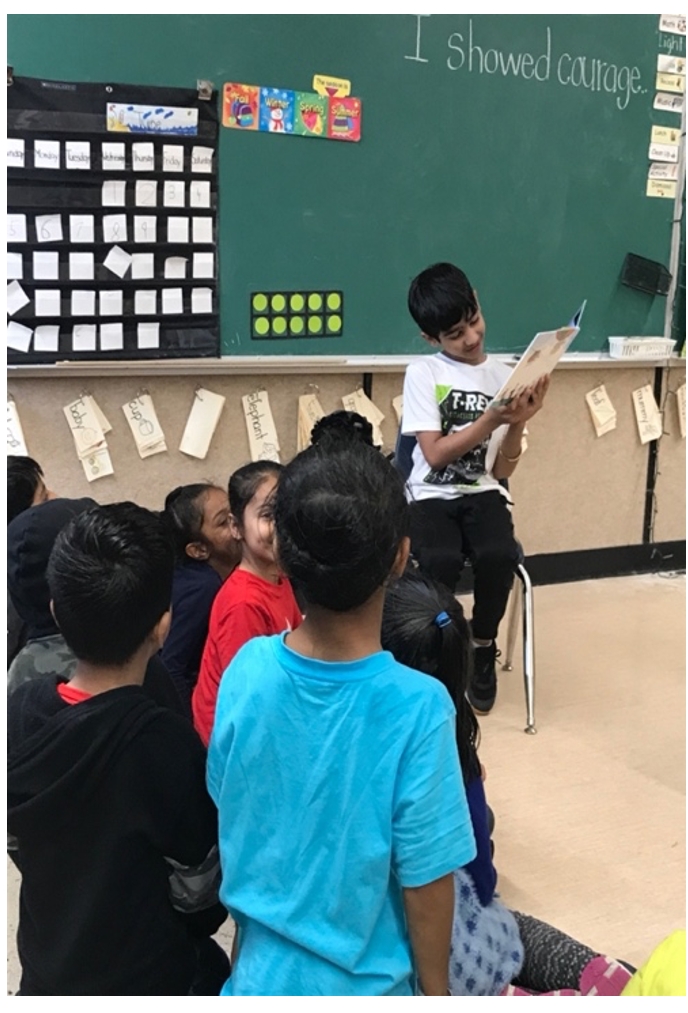
Students sharing their favourite books. Reading aloud to classmates.
OUR NEXT STEPS
Evidence of our students’ learning demonstrates that our focus on improving reading skills has positively impacted our cohort of primary classes. Our teachers tracked the progress of their students’ reading learning goals:
- Using reading, listening, and viewing strategies to make meaning of text
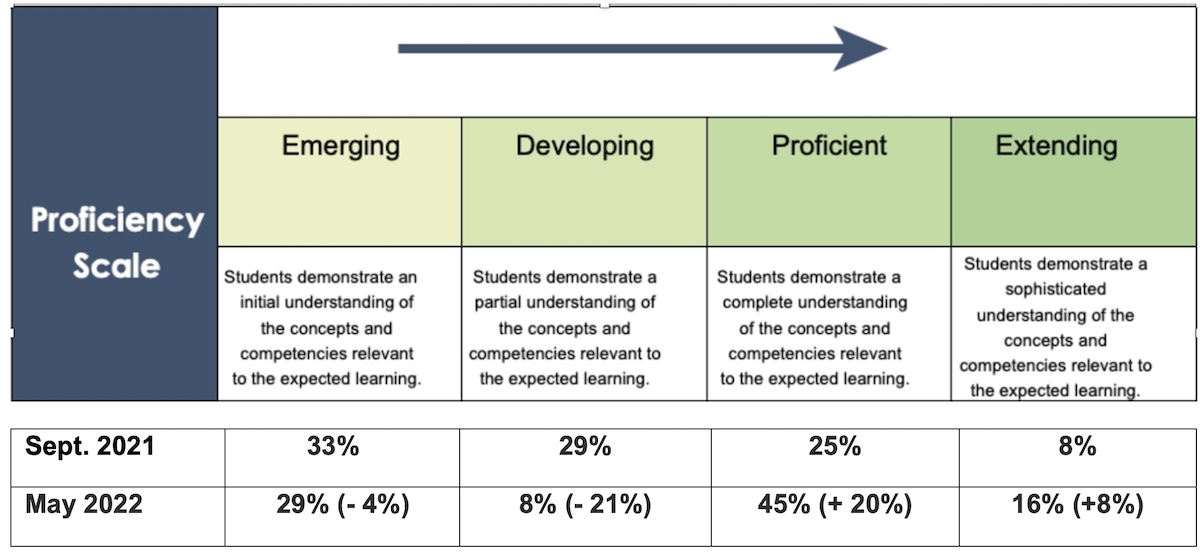
Growth was demonstrated in our September to May results. For our reading comprehension goal, we saw a decrease in the percentage of students who are Emerging (-4%) and a decrease in those who are Developing (-21%). Similarly, we saw an increase in the percentage of students who are Proficient (+20%) and an increase in those who are Extending (+8%). More descriptive evidence of learning that is specific to our literacy goal is highlighted below.
Using Reading, Listening, and Viewing Strategies to Comprehend
Our learners ask questions before, during and after reading, they make predictions, monitor their comprehension while reading, make connections, infer, visualize and explain transformation in their thinking to make sense of text they read. Our students describe their thinking, and develop conclusions using a variety of reading strategies. In our cohort, all students experienced some level of success. Sixty-five percent of the students are now proficient in their ability to comprehend text and use strategies to help them build deeper levels of understanding – compared to 25% who demonstrated proficiency earlier in the year.
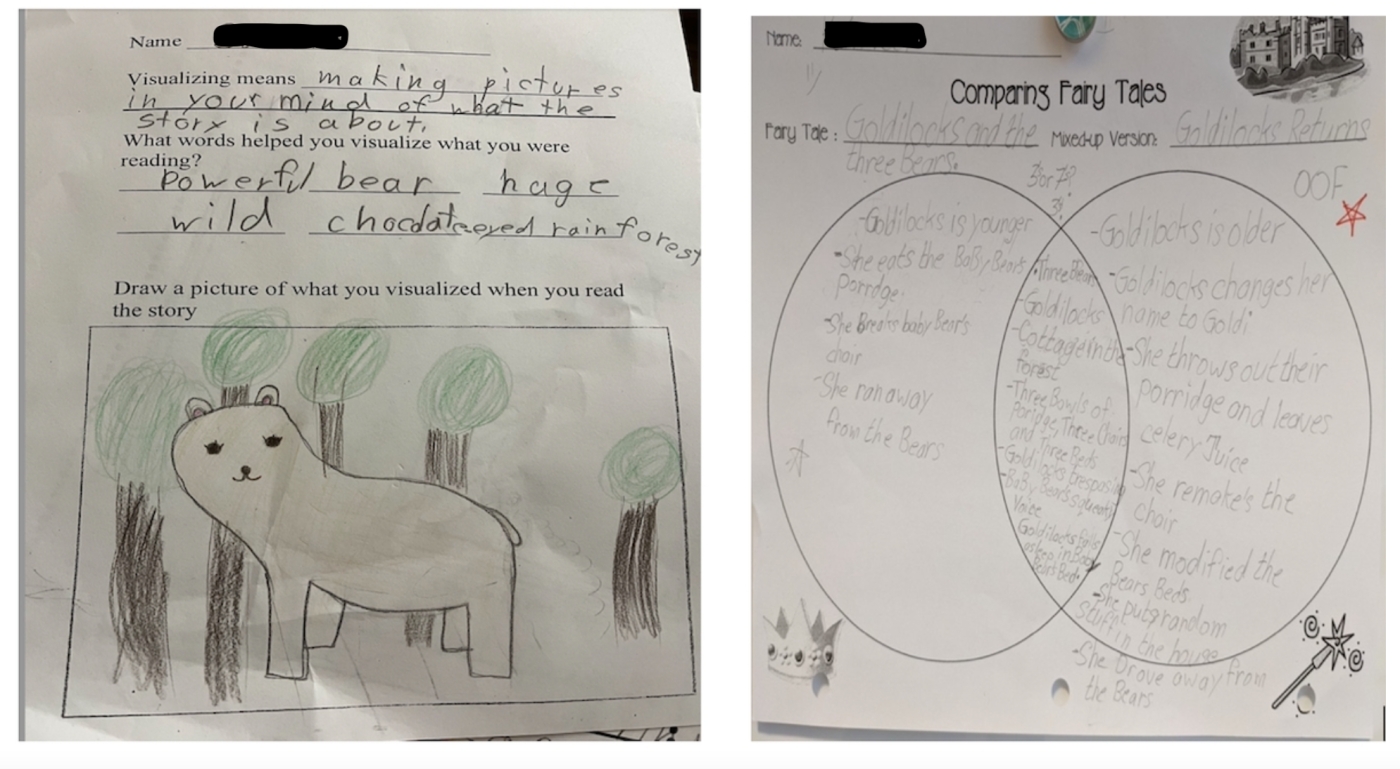
The examples below show how our students are using reading comprehension strategies to make sense of text they read. Students are visualizing and analyzing text.
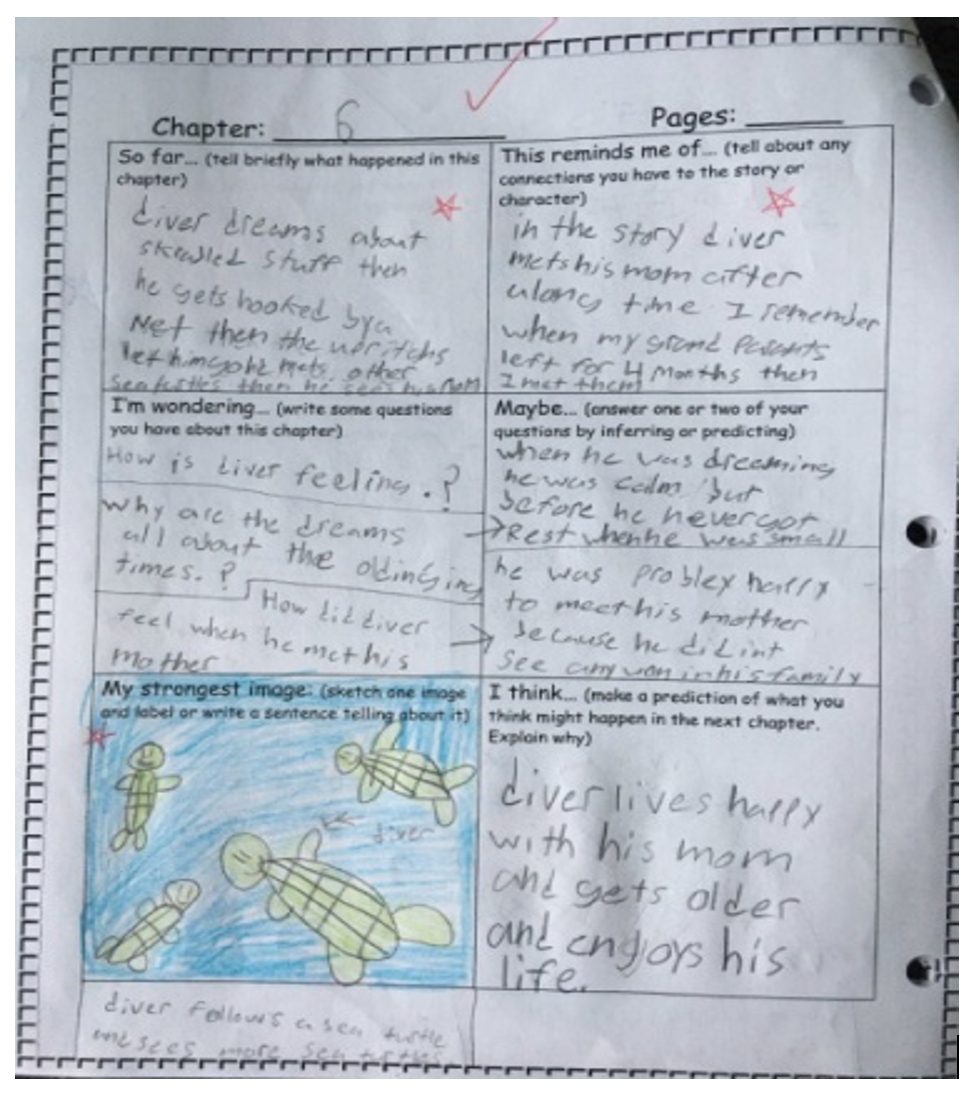
The students used reading, listening and viewing strategies they have been practicing, to complete a reading response for each chapter, a setting map, and then write about how their thinking transformed after reading an info-fiction story about leatherback sea turtle’s.
Students were given the task to use loose parts in the discovery room to create a setting map of the novel, Diver. the story map showed the journey of a leather back sea turtle from Costa Rica to Nova Scotia. Students used the setting map to orally share the important events and story elements.

Student use questioning to make sense of text:
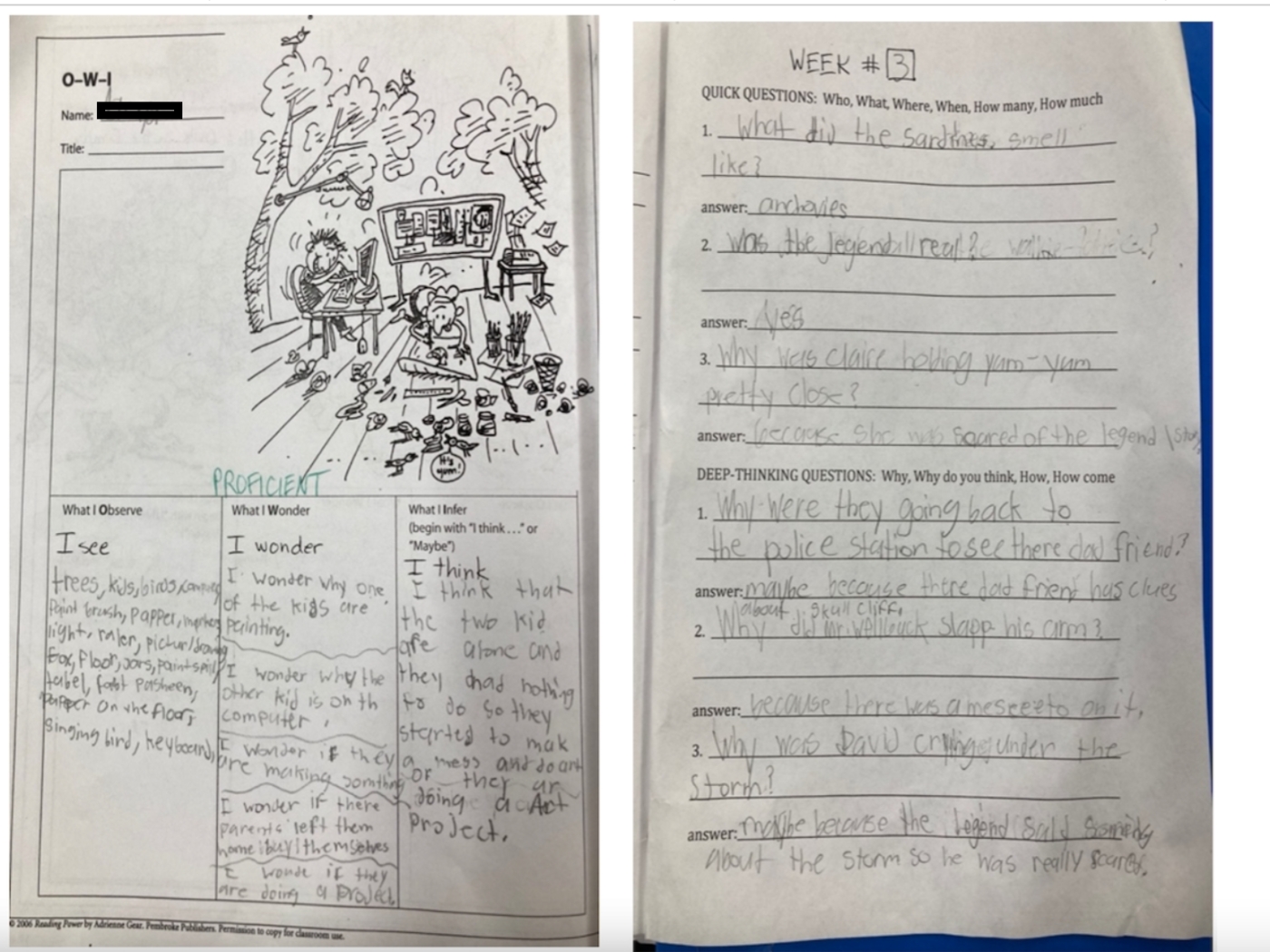

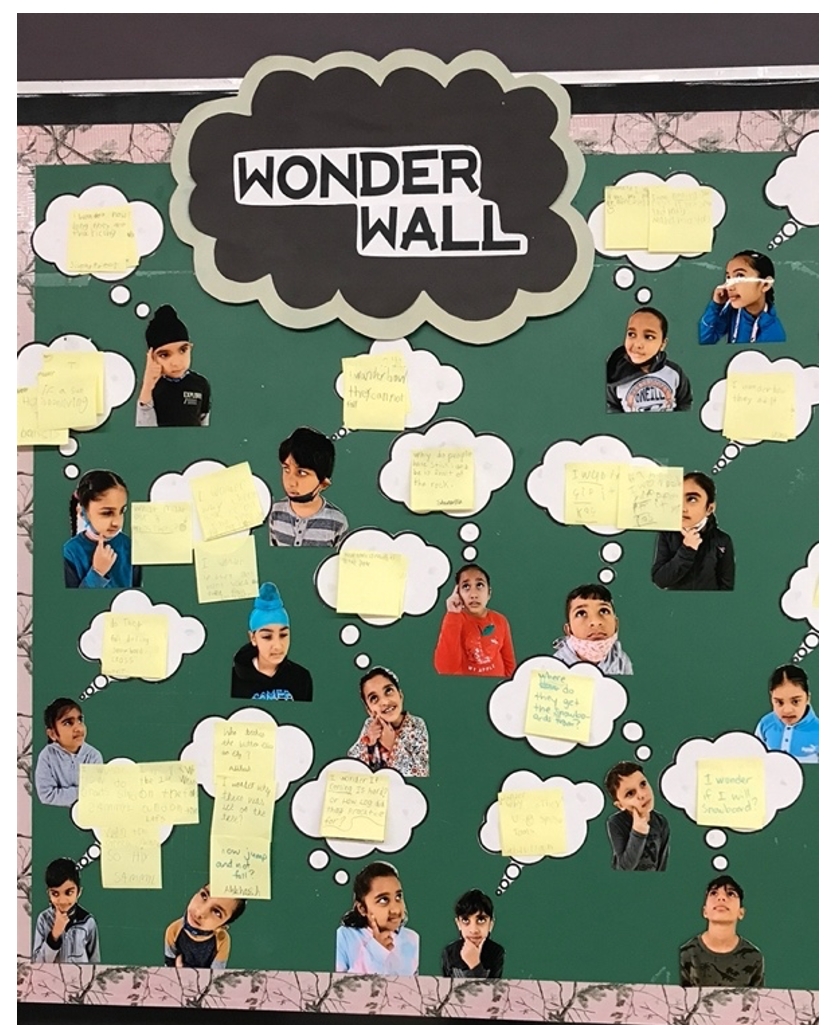
Student use connection to make sense of text:
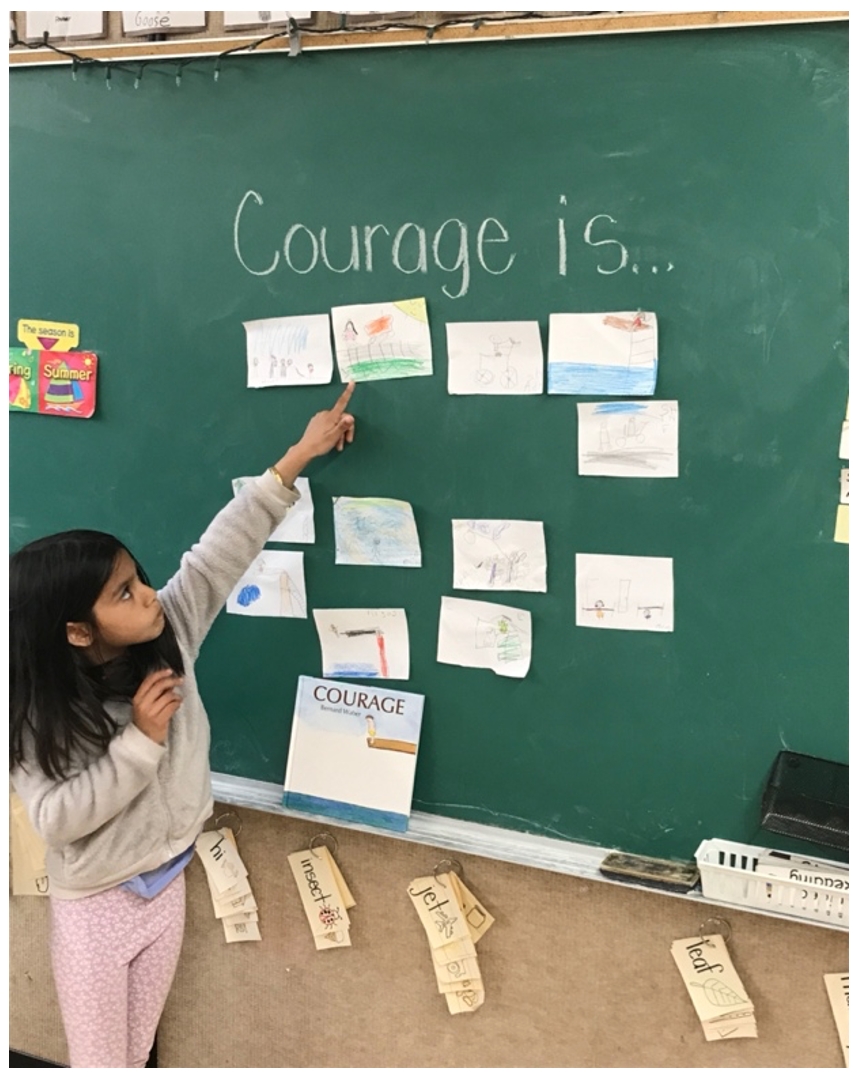
Moving Forward;
Continue:
After seeing the growth our students have made with their reading, we will continue to use the gradual release of responsibility model to teach reading comprehension strategies, along with the following instructional strategies; read alouds, shared reading, buddy reading, book discussions as a class and in small groups, guided reading, and graphic organizers to help students organize their thinking about reading. Students need time to practice reading skills and we will continue to provide longer periods of time to read.
Area we want to go deeper:
Our learners have shown that they are able to use reading strategies to make sense of text read. We would like to support our learners to dive in even deeper into their reading comprehension by making connections between the big idea of the text and to real world contexts. What is the author's message and how does it relate to real world situations? What is the text saying about life and society? How does this text transform thinking? We need our learners to analyze, think critically, and apply understandings beyond the text.
Explore:
Through the Science of Reading research, we have learned the importance of intensive phonemic awareness and phonic decoding training. Instruction in these skills leads to efficient decoding and fluency when reading, which ultimately leads to better reading comprehension. In our next steps we would like to implement intensive phonemic awareness training and phonic decoding in all our classrooms.
Surrey Schools
Formed in 1906, the Surrey School District currently has the largest student enrolment in British Columbia and is one of the few growing districts in the province. It is governed by a publicly elected board of seven trustees.
The district serves the cities of Surrey and White Rock and the rural area of Barnston Island.