South Meridian Elementary 24-25

OUR CONTEXT
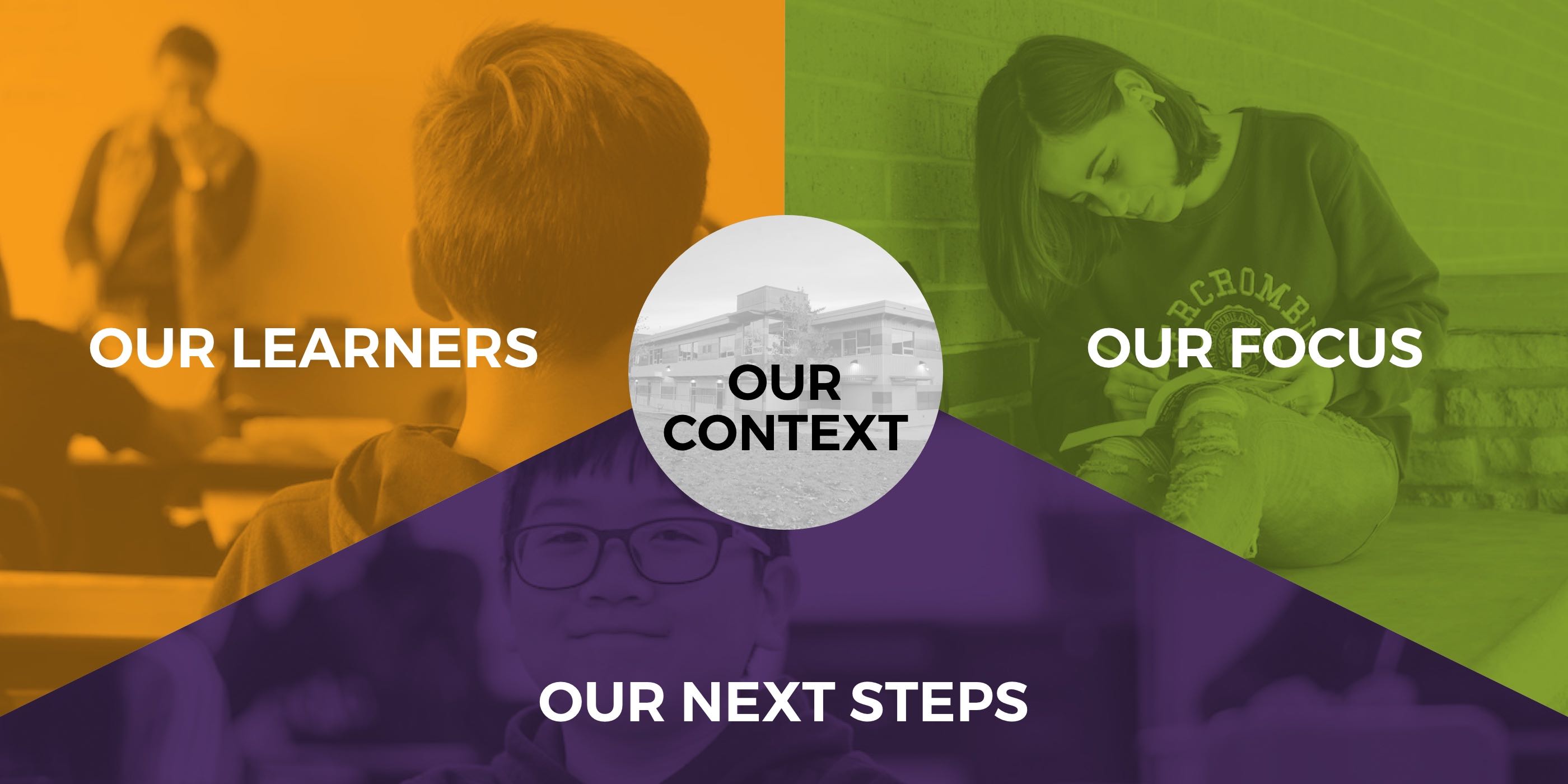
South Meridian Elementary is situated on the unceded traditional territory of the Kwantlen, Katzie, Semiahmoo and other Coast Salish people. It is a privilege for us to gather on the land that has been stewarded by these people groups since time immemorial and we aim to learn about and care for the land in a way that is honouring to them.
Our learning community is cohesive, connected, and inclusive. We learn from each other's strengths, work together to build an environment of respect, and gather in many ways to develop our personal and social identities.
At South Meridian, students are encouraged to grow both inside and outside the classroom. Through purposeful instruction, engaging clubs, athletics, fine arts, leadership opportunities, and school-wide events, students build skills and knowledge that connect to the curriculum, while also exploring their passions and developing their unique talents.
Together we grow with curiosity, adapt with courage and lead with integrity.
OUR LEARNERS
Reading comprehension is a cornerstone of academic growth and a key to unlocking student potential across all areas of learning. When students can make meaning from text, they are better equipped to explore ideas, engage deeply with content, and apply their understanding in meaningful ways. Strong comprehension skills empower learners to think critically, communicate effectively, and become independent, curious thinkers. Fostering reading comprehension is not just about teaching a skill—it’s about nurturing confident, capable learners who are prepared to thrive both in the classroom and beyond.
Building vocabulary is a vital component of reading comprehension because it equips students with the language tools they need to understand and engage with text. When students recognize and understand a wide range of words, they can more easily grasp the meaning of what they read, make inferences, and connect ideas across sentences and paragraphs. A strong vocabulary not only enhances comprehension but also boosts confidence, allowing students to tackle more complex texts with curiosity and independence. By intentionally growing vocabulary, educators lay the groundwork for deeper learning and lifelong literacy.
Vocabulary development is embedded within the "Comprehend and Connect" curricular competencies, which focus on how students make meaning from texts” (BC ELA - BC English Language Arts Curriculum). These competencies encourage students to:
Use strategies to understand and expand vocabulary.
Make connections between texts and their own experiences or background knowledge.
Engage with a variety of texts to build language and comprehension skills.
In relationship to this goal, our students can:
- Identify and understand the meaning of new vocabulary.
- Apply the new vocabulary in accurate and meaningful ways.
- Comprehend new vocabulary words when found in text or when listening or viewing information.
OUR FOCUS
Building a strong vocabulary is essential to helping students become confident, capable readers. As students encounter new words through stories, informational texts, and classroom discussions, they expand their ability to understand and engage with increasingly complex ideas.
At South Meridian, we are intentionally supporting vocabulary development to deepen reading comprehension. Our teachers have collaborated to select developmentally appropriate vocabulary, explore effective instructional strategies, and create meaningful opportunities for students to use new words in context.
From Kindergarten through Grade 7, every class dedicates time to vocabulary learning as part of a broader focus on literacy. To track growth and celebrate progress, we monitored two student cohorts over time, highlighting the impact of this focused approach.
OUR NEXT STEPS
This year at South Meridian, we measured the progress of one primary and one intermediate cohort in relationship to our learning goal.
Teachers intentionally selected developmentally appropriate vocabulary and administered a pre and post learning assessment using a four-point scale as follows:
- I have never seen the word
- I have seen the word but do not know what it means
- I know what the word means
- I know the word means and can use it accurately
Between vocabulary assessments, teachers provided explicit instruction focused on chosen vocabulary. They offered frequent opportunities for students to practice using new words in meaningful contexts and supported vocabulary growth through targeted feedback. Instruction was designed to be engaging and relevant, connecting vocabulary learning to students’ interests and providing authentic opportunities to use new language in both spoken and written forms. This intentional approach helped students build a deeper understanding of words and their use, strengthening overall language and literacy development.
Primary Cohort
The following chart shows the progress of all students in their understanding and use of each vocabulary word learned:

Notably, all but one student was able to identify the new vocabulary words in the post-test and well over half of the students could accurately use each word as well as explain its meaning.
Primary Student A
Looking at one students’ progress helps us understand the growth over time. Before instruction, Student A was able to give meaning and accurately use only one of the selected vocabulary words. Student A did not recognize 3, recognized only 3 and could give a meaning for 2 of the selected vocabulary words. After instruction, learning opportunities and practice, Student A could give an accurate meaning and effectively use all but one of the new vocabulary words and could provide a meaning for that last word.

Intermediate Cohort
The following chart shows the progress of all students in their understanding and use of each vocabulary word learned:

After intentional instruction, all students at least recognized all the vocabulary words selected and most students could use all the words in a meaningful sentence.
Intermediate Student M
Looking at one students’ progress helps us understand the growth over time. Before instruction, Student M was able to use recognize and give a definition for two words. While only recognizing or not recognizing the others vocabulary words. After instruction, Student M was able to accurately define and use all but one of the vocabulary words in meaningful sentences showing a strong ability to transfer learning of each word.

Reflections and Next Steps
As a result of the data, one question that arises is, what instruction and learning opportunities need to be provided to support students in a continuous use of newly learned vocabulary words and to expand exposure to new words. We also wonder how increasing vocabulary will impact reading comprehension over time.
Moving forward, we will continue to:
- increase student vocabulary through intentional instruction
- give students a variety of opportunities to practice their new vocabulary
- explore what is necessary to support students at all competency levels to continue to growth in their reading comprehension
We will also begin to explore:
- how can vocabulary development support reading comprehension over time?
- how could accessing background knowledge increase reading comprehension?
Surrey Schools
Formed in 1906, the Surrey School District currently has the largest student enrolment in British Columbia and is one of the few growing districts in the province. It is governed by a publicly elected board of seven trustees.
The district serves the cities of Surrey and White Rock and the rural area of Barnston Island.