Serpentine Heights Elementary 25-26

OUR CONTEXT
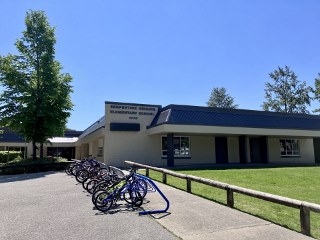
Serpentine Heights is a vibrant and diverse learning community located on the shared traditional territory of the Kwantlen, Katzie and other Coast Salish Peoples. Our students consistently show care for themselves, one another, and their school by being kind, empathetic, and helpful. They express a strong sense of safety, belonging, and joy in coming to school each day. Their learning journeys are supported by caring families who work closely with the school.
Our school is a dynamic and inclusive learning environment that serves over 400 students from a wide range of cultural and linguistic backgrounds. With 32 different languages spoken in our community and approximately 60% of students experiencing a language other than English at home, we are proud to reflect the diversity of the families we serve. In addition, 40% of our students are identified as English Language Learners, developing English language skills in oral language, reading and writing and six of our students identify as Indigenous. .

Our learners are active, curious, and engaged. They enjoy outdoor play, athletics, and learning experiences that involve creativity, collaboration, and hands-on exploration. Movement and social interaction are important parts of their daily experience. Students also benefit from extra-curricular opportunities in sports, clubs, and leadership. We encourage and support opportunities for growth through our annual Jingle Bell Walk, the Heritage Fair, whole school musical and SEL (Social Emotional Learning) themed assemblies organized and lead by our Student Leadership team.
We place a strong emphasis on equity, diversity, and inclusion. Events such as the Terry Fox Run, First Peoples in Residence Week, spirit days, and cultural awareness days and morning messages help foster a positive school climate. These initiatives build empathy, celebrate student identity, and strengthen our shared sense of community and global citizenship.
With strong partnerships between staff, families, and community, our school is committed to creating a supportive and engaging learning environment where every student can feel a sense of belonging and grow as a learner and person.
OUR LEARNERS
At Serpentine Heights Elementary, we are committed to nurturing the whole child—academically, socially, and emotionally. Through ongoing reflection, classroom observations, and school-wide assessments, we have developed a deeper understanding of our learners and the environments that best support their growth.
Over the past year, we have noticed the following key trends in Numeracy among our students:
Grade | Strengths | Stretches | Opportunities | Measure |
K | - engagement - participation | - recognizing numbers/dot formations - writing/fine motor - 1:1 correspondence | - building stamina - developing fine motor skills - developing listening skills - building number sense | - observation - WDTK – What Do They Know assessment - SNAP assessment |
1/2 | - strong interest in math - love hands on activities - receptive to learning | - computation skills - # formation - 1:1 correspondence - counting on/before and after - working together as a team | - math games - # talks - group activities - math in the world – real life situations - daily calendar - math songs/stories/dance - collaborative learning | - observation - formative and summative assessment - calendar time - # talks - response to lesson - SNAP assessment |
2/3 | - visualizing - number sense - using manipulatives - enjoy math games - hands on activities - place value | - fact families - number sense - operations - range - consistency - mental math - following the written instructions - focus - engagement | - K-7 continuum - same math vocabulary - school wide consistency - keep reviewing strategies - engage in fun ways - lots of visuals - shorter instruction with more hands on activities - more math games - iPad games ex. Math prodigy for early finishers, Zorbits | - exit slips - orally ask students to show - playing games - unit assessment
|
4/5 | - number talks - using manipulatives (counters, base ten blocks) - math games | - math facts - regrouping - multi-step problems - neatness - listening to lessons - word problems - place value, which leads to difficulty in all areas - attitudes towards math -independent work | - involve parents, communicate - at home practice - classroom teachers need updated math resources and adapted work | - math logs (math facts) - incentives if completed weekly or monthly - monitor progress to see if it’s helping |
6/7 | - number talks (different ways to represent numbers) - taking risks
| - fact fluency - showing their thinking
| - fact fluency in all grades (K-3 addition and subtraction, 4-7 multiplication and division) | - running record for facts - 4 question quizzes to check for understanding |
We recognize the importance of creating supportive, inclusive learning environments that honour individual strengths and diverse experiences. As a result, our instructional focus includes:
- Strengthening numeracy through small-group instruction and targeted supports
- Encouraging student voice and agency in both classroom decisions and learning tasks
- Promoting core competencies—communication, thinking, and personal/social awareness—across subject areas
We are proud of the progress our students have made and remain committed to continuous learning and growth for all.
OUR FOCUS
At Serpentine Heights, educators provide daily opportunities for students to build confidence and flexibility with number concepts through communication, collaboration, and hands-on mathematical thinking. Students deepen their understanding of number concepts when they can explain their thinking, represent ideas in different ways, and make connections between strategies and solutions. Through regular discussion and reflection, students develop the ability to communicate mathematical understanding clearly and confidently.
Strong communication in mathematics helps students to:
- explain and justify their thinking
- make connections between mathematical ideas and strategies
- represent their understanding using numbers, pictures, words, and models
- develop confidence in solving unfamiliar problems
- collaborate and learn from the thinking of others
Our students’ learning goal: In Mathematics, students can communicate and represent their understanding of number concepts.
Teachers across grade levels provided students with rich learning opportunities aimed at strengthening numeracy skills and mathematical communication. Staff focused on creating classroom environments where students could share strategies, ask questions, and reflect on their learning through a variety of engaging experiences.
What did this look like in classrooms?
Communicating Mathematical Thinking
Students regularly participated in Number Talks to strengthen mental math skills and communicate their reasoning. During these discussions, students solved problems mentally and shared the strategies they used, while listening to and reflecting on the thinking of others. Teachers selected purposeful questions and encouraged students to explain, justify, and compare different approaches to solving problems. During our school wide Math Passport event, students explored different math problems displayed on bulletin boards outside each classroom, and students recorded their thinking and solutions in their "math passport". It was a lively event that created opportunity to problem solve in a communal way!


Representing Understanding
Students used Math Journals to record and reflect on their mathematical thinking. Through drawings, equations, written explanations, and models, students demonstrated their understanding of number concepts in multiple ways. Journaling supported students in organizing their thinking and communicating their learning clearly over time. Students also used white boards and tables to showcase their problem solving strategies, to allow for flexible thinking and shared communication.


Learning Through Play
Teachers incorporated Math Games into classroom learning to provide engaging opportunities for students to practise number concepts, apply strategies, and collaborate with peers. Games encouraged flexible thinking, problem solving, and mathematical discussion in meaningful and enjoyable ways.
Strengthening Home-School Connections
Families were invited to participate in our monthly “Come Play Math with Me” events. These evenings provided opportunities for students and parents to play math games together and explore number concepts in a fun and supportive environment.


OUR NEXT STEPS
At the beginning of the school year, we explored students' overall math proficiency (using the previous school year's end of year proficiency indicators). This prompted our inquiry into students' ability to communicate mathematical thinking regarding number concepts.
📊 Cross-Grade Trends
1. Proficiency Declines in Middle Grades
- Starts strong in Grades 1–4 (65–86%)
- Drops significantly in Grade 6 (44%)
- Slight recovery in Grade 7 (52%) ➡️ Suggests a learning dip or increased difficulty around Grades 5–6
2. Developing Category Increases Over Time
- ~12–27% in early grades
- Peaks at 31.5% (Grade 3) and again 31.1% (Grade 7) ➡️ Indicates a growing group needing targeted support
3. Extending Appears More in Upper Grades
- Minimal or none in Grades 1–3
- Peaks in Grade 6 (~17.8%) ➡️ Stronger differentiation later—more high-achieving students emerge
4. Emerging Remains Relatively Low but Increases Slightly
- Very low in early grades (~0–6%)
- Rises to ~8–9% in Grades 6–7 ➡️ Slight concern: more students struggling in later grades
🧠 Key Insights
✅ Strengths
- Early grades (1–4) show strong foundational learning
- Grade 4 stands out as a high-performing cohort
- Increasing “Extending” in upper grades suggests strong enrichment opportunities
⚠️ Areas for Attention
- Grade 5 → 6 transition appears to be a critical drop point
- Growth in “Developing” students suggests need for targeted interventions
- Slight rise in “Emerging” in intermediate grades
After focused instruction and learning activities, evidence of our students’ learning demonstrates that our Numeracy focus positively impacted our cohorts of learners. Teachers were surveyed and asked to communicate their students’ progress using rubrics created in collaboration with district staff, at the end of term one and at the end of term three. Teachers based their assessments on a triangulation of evidence, including anecdotal comments taken during whole class Number Talks, digital recordings of students sharing their thinking aloud, written work, and student self-assessment of their understanding of number concepts.


Although all students were monitored and assessed, because initial data showed that the Grade 5 → 6 transition appears to be a critical drop point, a cohort of grade 6 students were followed from November to June.

📈 Quick Insight
- Proficient increased significantly (21% → 37%)
- Developing decreased (63% → 41%) ✅ (movement in the right direction)
- Emerging slightly increased (17% → 22%)
📊 Overall Story: Clear Progress, with a Remaining Support Group
✅ 1. Strong movement toward proficiency
- Proficient increased from 21% → 37%
- That’s a +16 percentage point gain
👉 This tells us:
- A significant number of students improved their ability to communicate mathematical understandings
- Instruction and supports are having a positive impact
- Students are moving in the right direction across the year
✅ 2. Developing decreased substantially
- Developing dropped from 63% → 41%
- That’s a -22 percentage point decrease
👉 This is the most important shift:
- Students are not staying stuck in the middle
- Many students in Developing likely moved up into Proficient
- This suggests effective teaching, intervention, and practice opportunities
⚠️ 3. Emerging increased slightly
- Emerging increased from 17% → 22%
👉 This tells us:
- A small group is still struggling
- Some students may have:
- Not progressed at the same rate
- Entered the class later
- Found later number concepts more challenging
This group now represents about 1 in 5 students, which is important to monitor.
Over the course of the year, there has been a strong shift from Developing to Proficient, indicating effective instructional practices and student growth. While proficiency has increased significantly, a small group of students remains in the Emerging category, and no students have yet reached the Extending level, highlighting next steps for targeted support and enrichment.
Moving Forward
🎯 1. Targeted Support for Emerging Learners
- Implement focused small-group instruction
- Reinforce foundational skills
- Increase frequency of formative assessment and feedback
🎯 2. Continued Support for Developing Learners
- Maintain effective instructional strategies currently in place
- Strengthen gradual release and guided practice models
- Monitor student progress closely to ensure continued growth
🎯 3. Extension and Enrichment Opportunities
- Introduce more opportunities for:
- Critical thinking
- Problem-solving
- Application of learning in new contexts
- Provide differentiated tasks for students ready to exceed expectations
🎯 4. Balanced Differentiation Across All Levels
- Ensure instruction supports:
- Students requiring intervention (Emerging)
- Students consolidating understanding (Developing)
- Students ready for challenge (Proficient → Extending)
Conclusion
Overall, the data reflects strong instructional impact and meaningful student growth over time. The clear movement toward proficiency demonstrates that focused instructional practices are effective.
The next phase of numeracy improvement will focus on:
- Reducing the Emerging category through targeted intervention and mathematical fluency building, and
- Expanding opportunities for students to reach Extending levels of learning
This balanced focus will support continued growth and excellence for all learners.
Surrey Schools
Formed in 1906, the Surrey School District currently has the largest student enrolment in British Columbia and is one of the few growing districts in the province. It is governed by a publicly elected board of seven trustees.
The district serves the cities of Surrey and White Rock and the rural area of Barnston Island.