SAIL Surrey Academy of Innovative Learning 25-26

OUR CONTEXT
Surrey Academy of Innovative Learning (SAIL) is a Provincial Online School located in the diverse learning community of North Surrey, residing on the traditional, unceded and shared territories of Coast Salish peoples: The q̓íc̓əy̓ - Katzie, the q̓ʷa:n̓ƛ̓ən̓ - Kwantlen and the SEMYOME - Semiahmoo First Nations. As a Provincial Online School, SAIL offers a comprehensive range of flexible learning programs for students and adults across British Columbia. SAIL provides both accredited online learning opportunities—full-time and part-time—and innovative, blended in-person academies, including STEAM and STEAMX, designed to empower diverse learners in today’s dynamic world.
Provincial Online Learning
As a Provincial Online School, SAIL enables students who are ordinarily resident in B.C. to access classroom alternatives that support learning at home while fulfilling all provincial education standards. Enrollment is available for full-time and part-time students (including adults), with online courses for secondary school and a structured Learning Management System (Brightspace). Students benefit from personalized teacher support via digital tools, email, and face-to-face opportunities, and may cross-enroll with SAIL while attending their regular school.
STEAM and STEAMX Academy
STEAM K-7 is a multi-age program emphasizing Science, Technology, Engineering, Arts, and Mathematics, with daily attendance and a home-based component each Friday. Students collaborate in a dedicated Makerspace, engaging with advanced technology and creative projects.
SAIL also offers the STEAM (8-10) and STEAMX (Accelerated 8-10) academies—blended, interdisciplinary programs running from September to June. These in-person academies foster inquiry, experimentation, and project-based learning in a collaborative, contemporary setting. STEAM students develop core and curricular competencies and strengthen inter- and intra-personal skills by practicing “two-eyed seeing”—a concept by Mi’kmaq Elder Albert Marshall, which honours both Indigenous and Western ways of knowing for research and learning.
Commitment to Diversity and Inclusion
SAIL students celebrate diversity, recognizing that shared perspectives, backgrounds, and experiences fuel innovation and creativity for more unique solutions. The community is dedicated to Reconciliation and anti-racism education—encouraging reflection, cultural awareness, and a deeper understanding of the lasting impacts of colonization. Drawing on the words of Ts’msyen speaker Jo Chrona, SAIL engages students in learning about historical legacies and how these truths guide positive change.
As part of this commitment, SAIL upholds the First Peoples Principles of Learning, increasing Indigenous language, culture, and history in courses and guiding BC curriculum planning.
Our courses at SAIL are designed to transform curriculum through inquiry, leadership, problem solving, and digital citizenship—helping students build competencies for current and future success.
OUR LEARNERS
SAIL upholds the First Peoples Principles of Learning and so do our students. Below, some of our students speak about how their learning is supported at SAIL through the principles.
Learning ultimately supports the well-being of the self, the family, the community, the land, the spirits, and the ancestors.
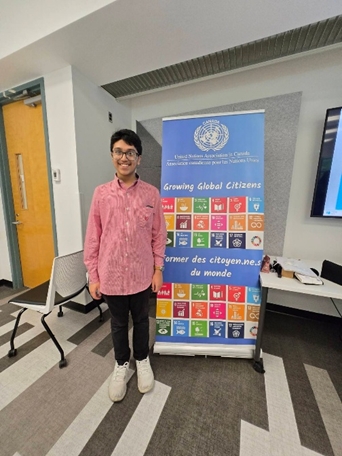
Aaraf: Compass 11 Student
I realized that being a SAIL student allows me to embody this First Peoples Principal of Learning as the variety of projects, assignments, and support from teachers, provide me with opportunities to strengthen the interests and skills I bring to school, supporting different learning styles and ways of knowing.
By starting an Eco Club through the United Nations Association in Canada (UNAC), I am able to connect with peers to further embody this principal by applying or developing new skills and perspectives through experience, discussions, workshops, and each other. Additionally, by collaboratively organizing an environmental initiative at our school, we are able to connect our learning and knowledge to serve and share our skills with our wider community.
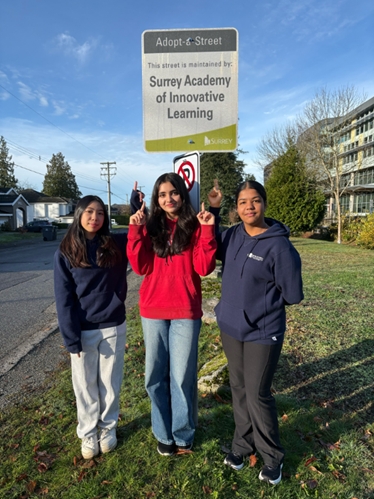
Learning is holistic, reflexive, reflective, experiential, and relational (focused on connectedness, on reciprocal relationships, and a sense of place).
Tarandip: STEAMX YR 2 Student
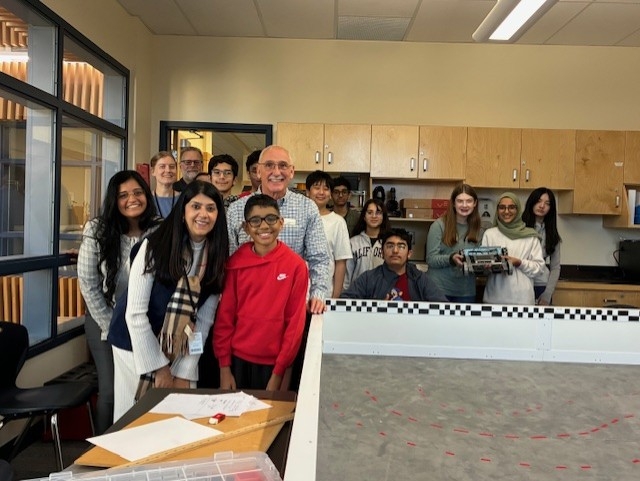
Learning at SAIL Academy reflects holistic, reflexive, reflective, experiential, and relational values; these are consistently reflected in the work we do. Our inquiry projects are a great example of holistic learning as they are an authentic part of each student's learning journey. Under the umbrella of a main theme, we are able to explore topics we are passionate about, as SAIL embraces experiential and reflective learning through activities such as robotics, and science labs. At SAIL, we have a small cohort of 60 students which fosters close relationships with our teachers and peers. Our school is a place where we continually build on foundational knowledge and demonstrate reflexive learning.
Learning requires exploration of one’s identity.
Taiba: STEAMX YR 2 Student
At SAIL Academy, it is strongly believed that true learning begins with understanding who we are. Our self-paced environment gives me the freedom to learn in a way that actually matches my personality, whether I need time to reflect, to experiment, or to dive deep into something I’m passionate about. Being Student Council President has pushed that even further; leading a team, listening to different voices, and shaping events for our school has made me much more aware of my own strengths and the kind of person I want to be. Since everyone works at their own rhythm, I’ve had the room to discover my strengths, notice my habits, and understand the kind of learner I’m becoming. Learning at SAIL feels less like checking boxes and more like slowly uncovering layers of my identity through reflective projects and meaningful conversations in classrooms.
Flora: STEAM 10 Student
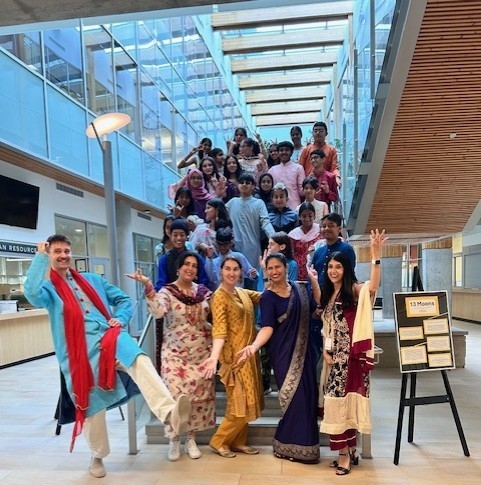
At SAIL Academy, learning reflects the exploration of our identity because of its unique environment. As a small and close-knit community, teachers and classmates truly get to know and resonate with each other, helping us grow through a self-paced approach that encourages us to discover our interests, work habits, and academic identities. Our strong focus on STEM lets us explore, experiment, create, and ultimately find what kinds of impacts we want to have on the world. As Student Council president at SAIL, I am already taking a step towards that: leading many cultural traditions such as Diwali, Eid, and Lunar New Year, celebrations that remind us that our backgrounds are valued and shared, bringing us together as a supportive community. At SAIL, learning is not only about grades and mastering subjects – it's about discovering who you are and becoming the person you want to be.
OUR FOCUS
Surrey Academy of Innovative Learning’s 2025–2026 focus is to build educator and student capacity to use generative AI thoughtfully, ethically, and creatively—especially within the STEAMX Humanities 8–10 cohort. In these courses, teachers and students co-develop routines and shared language so AI supports inquiry, reading, writing, and project-based learning while fostering curiosity and critical thinking.
Students engage with “Learning with GenAI – Guiding Principles” throughout the year as they use AI for brainstorming, drafting, feedback, and reflection. Together, they practice academic integrity, respect intellectual property, and take personal responsibility for when and how AI contributes to their learning—strengthening self-awareness and ethical decision-making aligned with BC’s social-emotional competency.
SAIL’s interdisciplinary, inquiry-driven model positions learners to use digital tools authentically across programs. As AI becomes part of daily life, shared practices ensure students treat AI as a thinking partner, not a shortcut, deepening assessment, digital citizenship, and independent, critical thought.
Our Guiding Principles for Learning with GenAI
To support consistent practice across courses and programs, SAIL uses shared guiding principles for student use of generative AI, adapted from the UBC “Learning with GenAI – Guiding Principles” document. These principles are referenced in course syllabi and revisited in advisory, core classes, and student-led conferences.
Learning with GenAI Guiding Principles.pdf
Our Next Steps
In the coming school year, SAIL will embed GenAI routines into student learning plans and conferences, inviting learners to articulate how AI fits into their personal learning strategies and goals. Staff will continue to refine shared language, exemplars, and classroom resources that model responsible AI use, including short student-facing versions of the guiding principles that are co-created and displayed in classrooms and online spaces.
OUR NEXT STEPS
During the 2025-2026 school year, teachers participated in an SFU professional development workshop to explore artificial intelligence (AI). Teachers learned about what AI actually is and how it works. The workshop covered how it can be (or is being) used by both teachers and students, today and in the future.
For further exploration, teachers will be exploring assessment with AI during their summer Pro-D days, so they may continue to support students to embrace AI in a responsible way.
In the STEAMX Humanities 8-10 class, students had the opportunity to work with AI during their current events discussions. Their teacher explicitly gave instructions on ways AI could be used to help them understand and research on more complex topics in order to help them actively learn from each other and help them participate more confidently in discussions.
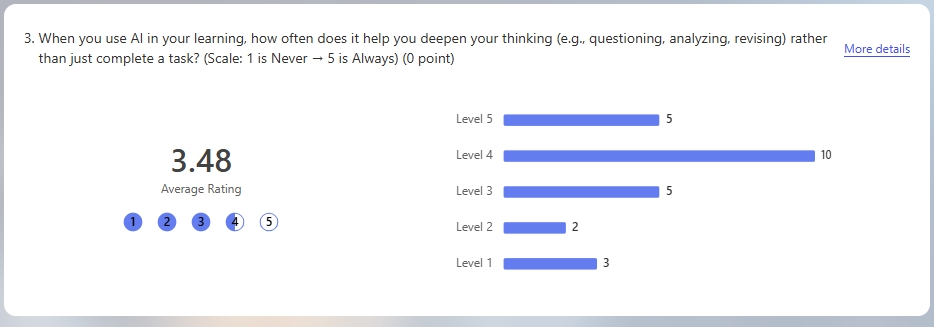
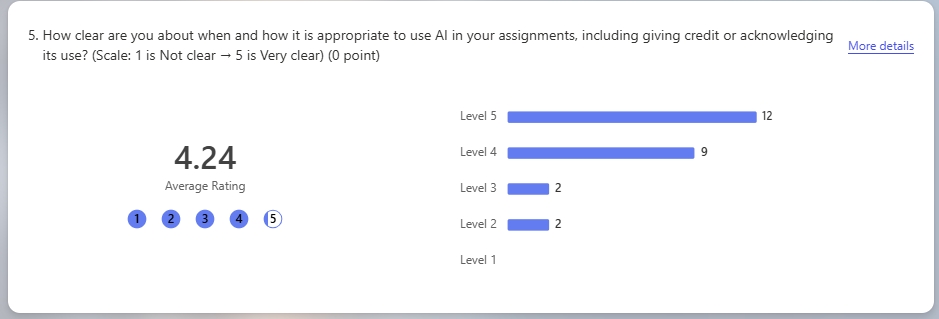
Students also were given explicit ideas and scaffolding of how to use AI responsibly during the research and planning process of their inquiry projects. At the end of the year, students participated in a survey to help teachers understand the next steps for the 2026-2027 school year. Here were some of the insights gained from the survey:
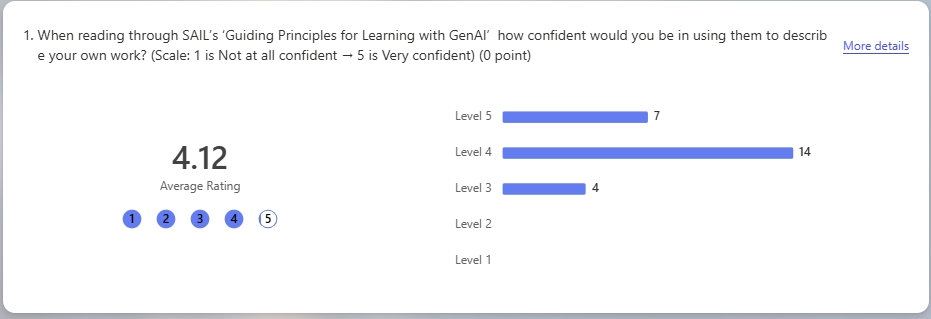
1. Impact of AI on inquiry and current events
Overall, students report that AI has had a limited impact on how they approach inquiry and almost no role in current events, with many choosing not to use it because they value forming their own opinions and worry about bias or “soulless” answers. A smaller group, however, do use AI in current events to quickly clarify unfamiliar terms, summarize dense articles, explain long discussion questions, or help them organize their own thoughts into clearer written responses while still contributing original ideas in class. Others use AI in similarly narrow, task-focused ways for inquiry—such as summarizing complex texts, organizing notes, generating outlines, or helping with citations—while still doing their own reading and analysis.
2. What students want from teachers
Students consistently ask for very clear expectations about when AI is allowed, when it is not, and what responsible use looks like in Humanities and current events. Many want concrete teacher modeling and examples of “appropriate vs. inappropriate” use, while a substantial group prefer that teachers discourage or strictly limit AI—especially for analysis, art, and opinion-based work—so that original thinking and research remain central. A number of students also say that current guidance already feels clear and supportive, and they mainly want continued communication and occasional feedback on how they are using AI.
3. Underlying attitudes and tensions
Student attitudes cluster into three broad camps: strong skeptics who see AI as harmful to media literacy, deep reading, and even the environment; pragmatic but cautious users who see it as a useful tool for specific tasks; and students who feel current practices strike a reasonable balance. Many express concern that normalizing or promoting AI could increase dependence, erode research and writing skills, and shift learning toward speed and efficiency rather than thoughtful engagement with texts and ideas. At the same time, some students appreciate that AI can reduce workload for repetitive tasks and support accessibility, provided expectations remain anchored in their own thinking and voice.
Next steps for next year
Clarify and codify boundaries: Create and share a simple, student-facing framework that distinguishes acceptable AI uses (e.g., organization, citation help, limited summarizing) from non-acceptable uses (e.g., generating current event responses, full analyses, or creative products), and adjust by grade level.
Model “good use” in context: Build in a few short, explicit lessons where teachers demonstrate strong and weak examples of AI use in Humanities, including how to prompt, how to cross-check, and how AI can introduce bias or flatten nuance.
Protect core thinking spaces: Design certain tasks (especially current events, discussion, and key inquiry checkpoints) as “AI-free” or “low-AI” zones, so students can practice independent reading, argument, and synthesis without technological shortcuts.
Invite critical AI literacy: Use some of the more critical student perspectives as starting points for inquiry into AI’s impacts on media literacy, environment, labour, and democracy, aligning this with social studies competencies.
Monitor and iterate: Check in mid-year with students about how the guidelines are working, and use their feedback to tune the balance between leveraging AI for support and safeguarding genuine, student-driven thinking.
Surrey Schools
Formed in 1906, the Surrey School District currently has the largest student enrolment in British Columbia and is one of the few growing districts in the province. It is governed by a publicly elected board of seven trustees.
The district serves the cities of Surrey and White Rock and the rural area of Barnston Island.