Royal Heights Elementary 25-26

OUR CONTEXT
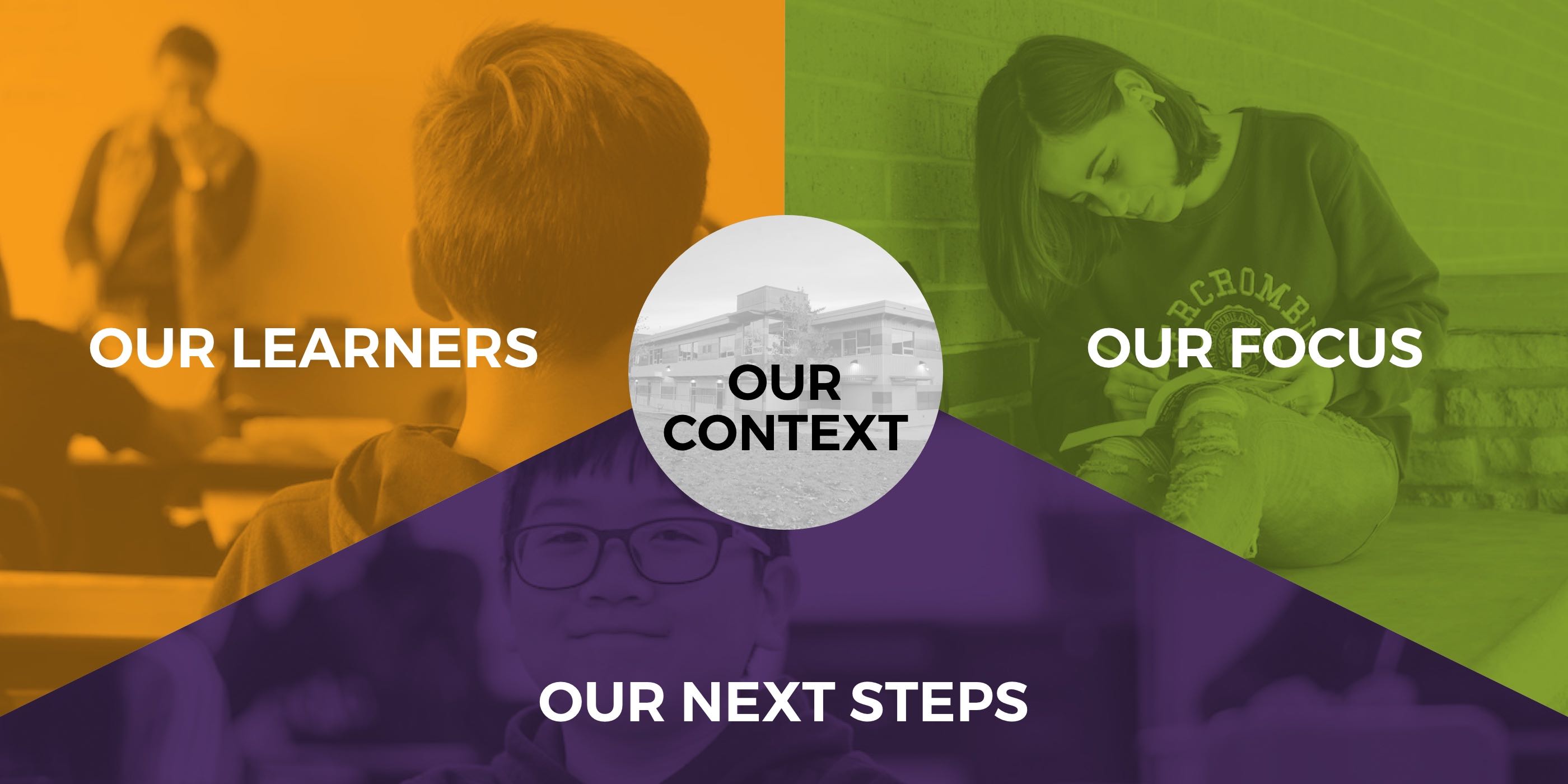
Royal Heights Elementary is a K-7 school located in North West Surrey. Although small in size (population 205) we have been fortunate to attract a highly committed teaching staff with diverse skill sets and areas of interest. Through this knowledge, along with a supportive PAC, successful grant applications and the generous support of Pacific Custom Brokers, students are provided with the resources (e.g., technology; presenters; field trips) they need to engage in the 21st Century learning.
We welcome families into the school to be part of our many social activities throughout the year. Attendance at our community events (e.g., assembles; pumpkin patch and carving; pancake breakfasts; performances; field trips; Spirit Days; ArtStart and our Parent Advisory Committee) indicates that students and their families seek to expand and deepen their connections with the school. Given the known impact of family-school connections on students’ learning outcomes, we consider community connections to be an essential element in supporting student success.
Some Royal Heights students participate in our breakfast and lunch program in order to ensure they receive healthy and nutritious meals throughout the week. We know how important food is to fuel the brain and body to work and learn. Our generous donors from Pacific Custom Brokers and Feeding Futures provide the resources that allow us to make this program possible. The breakfast and lunch program is an important support for many families in the Royal Heights community.
OUR LEARNERS
Our learners come from diverse cultural, social, and economic backgrounds. We also know commonalties and shared experiences amongst our students serve to bridge this diversity. These commonalities include: students’ need to feel connections with others and their enjoyment of outdoor/nature-based experiences. We believe it is important to emphasize these connections and provide students with ongoing opportunities to engage in outdoor, inquiry-based forms of learning. To this end we have worked closely with our local community, researchers from SFU and UBC and the District to provide students with learning opportunities that are aligned with these goals (e.g. First People’s in Residence; Salmon in the Classroom; School Garden; Farm to School; Plant a Seed Foundation, Classroom Champions, and use of nature journals).
Students of all cultural, social, and economic backgrounds are inspired by experiential and hands-on learning opportunities that tap into natural curiosities about the world around them. Opportunities to learn by doing are highly valued at Royal Heights. Students’ positive feedback and active participation in collaborative, experiential and inquiry-based forms of learning serve as a guide to help us determine future directions for our school. Evidence from documents pertaining to communicating student learning and Spaces posts clearly indicate that students are beginning to shift their learning from the stance of “waiting for directions” to becoming directors of their learning, thereby increasing their accountability and engagement in the learning process. This shift in students’ orientations has been demonstrated by students’ active engagement in extended learning projects and by their eagerness to attend and participate in diverse, on-going learning experiences (e.g., coding workshops; passion projects, gardening). Additionally, students self-evaluations demonstrated that they enjoy and value opportunities to share their learning and engage in on-going forms of self-assessment.
OUR FOCUS
Our focus is to create enthusiam, excitement and confidence in reading for children, and to support their development of new literacy skills. Our goal is to have students develop a growth mindset with respect to reading, and foundational skills they can build on. We want students to feel confident taking risks in their learning and to know that making mistakes is part of learning. We want them to know that asking for help is a strength and reading is all around us in our daily lives. Once students start recognizing written language in the world around them, they begin practicing their reading throughout the day, every day. We do our best to spark that curiosity and teach the skills they need to make it possible.
We also focused on fostering social, emotional learning. Self-regulated learners are students who are able to monitor, direct, adapt and regulate their actions and emotions, to achieve learning goals. Self-regulated learners possess a growth mindset and are aware of their learning strengths and needs. When needed they seek support for their learning and with time, develop repertoires of general learning strategies that can be applied to diverse learning situations, and seek appropriate supports for their learning when required. Self-regulated learners have a deep interest in learning and seek learning challenges (see: Zimmerman & Schunk 2003; Perry 2006). To support students in their journey to become self-regulated learners, we are also supporting staff to guide in this process.
Teachers continued to develop an understanding of social-emotional learning through a trauma lens using low arousal techniques. To this end, teachers who promote self-regulated learners within their classroom first develop a safe learning environment where every child can be successful. Teachers then design complex, open-ended learning activities that are accessible for all students, and celebrate the accomplishments of each individual based on evidence of their own personal growth. Embedded within learning activities are opportunities for students to: engage in choice; monitor their progress; receive peer and teacher feedback; experience appropriate levels of challenge; share their learning with others; and develop new strategies for learning. Our collaborative teaching team is constantly finding ways to share their learning and to learn from one another in the Royal Heights community.
Developing reading skills and strategies is our main area of focus for academic school-wide learning at present. Reading is a foundational skill that influences student success in every curriculum area, and we understand the importance of preparing our students to be able to access information independently. We believe we have to learn to read before we read to learn. Teachers participated in a day of discovering the science of reading, and the majority of staff also participated in a year long book club for Reading Shifts. This provided a foundation for ongoing learning and discussion on the topic of reading throughout the year, and teachers are applying this knowledge to their lessons. School-wide assessments in September allowed staff to identify students needing additional support from Classroom Teachers, Learner Support Teachers, and Early Literacy Teachers. Year end assessments will inform us of the progress students have made and where we need the learning to go next.
Outdoor Learning includes discovery, experimentation, learning about and connecting to the natural world. Research shows us Outdoor Learning helps students develop their abilities to reflect and learn about themselves, each other and their environment, and builds relevant and meaningful connections to the First People's Principals of Learning. The outdoor learning experience is also connected to emotion and physical movement, which promotes self-regulation and retention of ideas and information.
OUR NEXT STEPS
During our summer Professional Development sessions in 2023, teachers deepened their understanding of the science of reading. Throughout the year further ProD was scheduled to examine teachers’ implementation of their plans and how plans need to be adjusted/revised. In 2024 staff focused on using school-wide reading assessments for learning . These opportunities will also serve as a baseline for teachers to understand where their students are in their learning and how to best plan for the year ahead.
Along with examining teachers’ implementation of literacy practices, we gathered data about students foundational literacy skills. To this end, we will ask students to complete assessments of learning at the end of the school year. Together, this data will provide information about students progress over time and the effectiveness of the teaching strategies used.
We also participated in a series of Lunch and Learns around the new reporting platform, Spaces. This resulted in rich discussions about purpose, intention, and creating a shared vision school-wide, in addition to fostering meaningful collaboration.
Teachers within our school are continually engaging in on-going District-Based Professional Development to ensure students have access to diverse learning opportunities and the resources they need to engage successfully within them. These Pro-D experiences have allowed teachers to develop and explore their own inquiry questions about how they can promote students’ development of literacy learning.
Our LST team assessed the reading level of each student in September of 2023 and again in June of 2024. Results demonstrated:
- The information from the universal screener done at the beginning of the year for the whole school allowed us to target our tier 1 instruction to the needs of the class. It also allowed us to identify students who needed more intensive support, that previously did not receive support.
- The biggest change in the students is the confidence gained. The students have concrete strategies to decode words and see themselves as readers.
- Students who struggled to read CVC words fluently are now reading passages with long vowels.
- For the students that have made more limited progress, we have invested in a new intervention (Wilson), with the intention of better meeting their needs.
- In terms of staff knowledge, the book study and the conversations we’ve been having have been rich. Deep questions have been asked and pondered about the best way to support our diverse literacy needs. The primary team collaborated on a proficiency document to align our reporting.
- By doing the universal screener, ELPATS and showing staff some assessments like the Core Phonics screener, LST and classroom teachers have aligned their practices.
Teachers continued to develop their understanding of the science of reading at all levels in the summer of 2024, in order to support students in their reading journey. We will continue to learn to read, even in the intermediate grades, rather than just reading to learn.
We enjoy hosting Inclusive Education Support Worker students in our school. These visitors create an opportunity for teachers and IESWs to keep abreast of current, effective teaching practices and theory. In turn, teachers and IESWs are able to give back to the research community by rooting current theory within the “language of practice”. We look forward to further expanding these connections and will continue to open our doors to provide an embedded learning experience for IESWs working towards certificate completion.
Surrey Schools
Formed in 1906, the Surrey School District currently has the largest student enrolment in British Columbia and is one of the few growing districts in the province. It is governed by a publicly elected board of seven trustees.
The district serves the cities of Surrey and White Rock and the rural area of Barnston Island.