Rosemary Heights Elementary 24-25

OUR CONTEXT
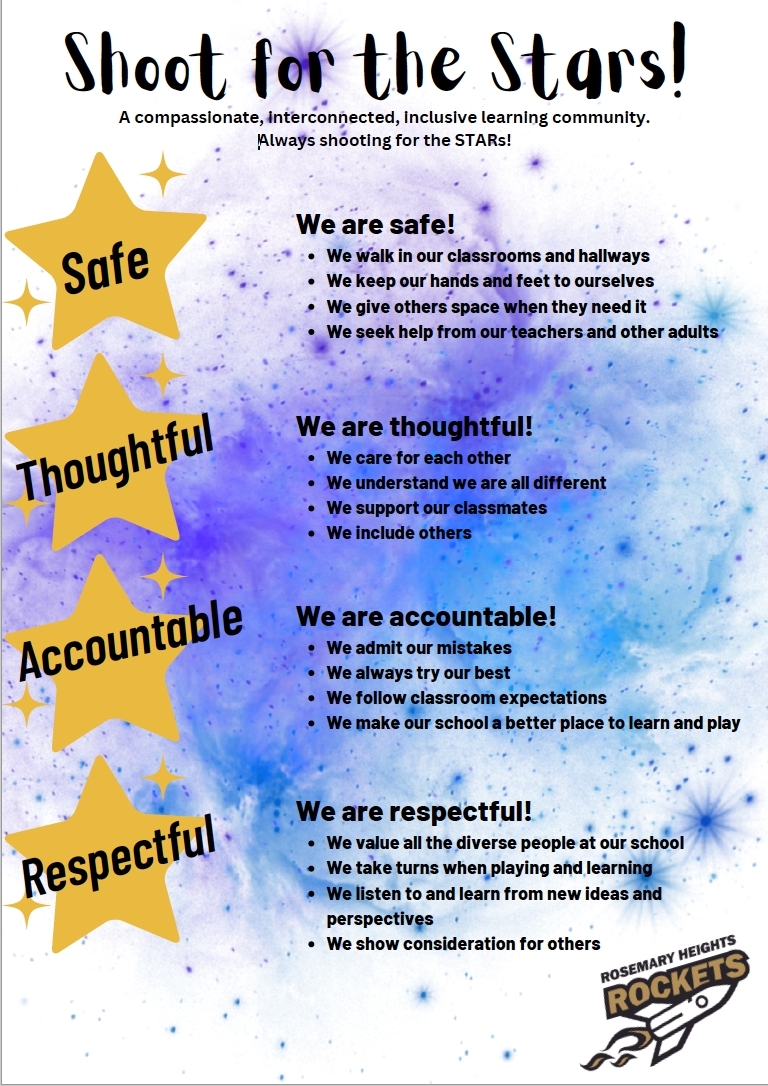
Rosemary Heights Elementary Vision Statement: Rosemary Rockets: A compassionate, interconnected, inclusive learning community. Always Shooting For The Stars!
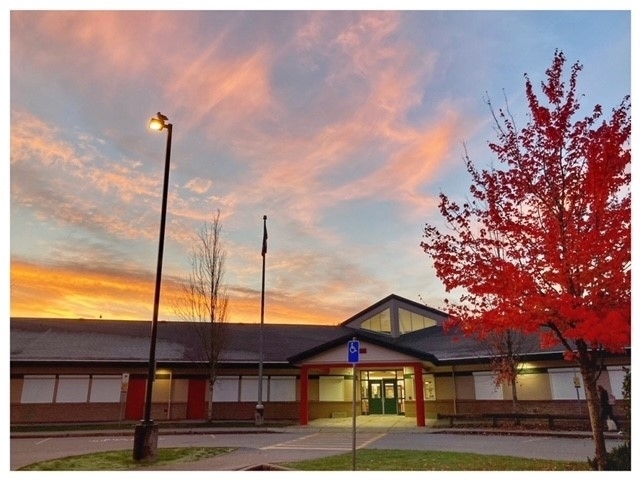
Our students are kind, caring and dedicated learners who come to school loved and cared for; ready to engage in learning. We are excited to observe the ways in which our community is growing in diversity. Students are active in many leadership opportunities throughout the school context. Our student leaders do morning announcements, help supervise classrooms during lunch time and are MCs and run technology during assemblies. Our students organize and lead spirit days, are student coaches during basketball season, and design our yearbook. Our intermediate students are big buddies to our primary students and act as mentors.
Our students work with a variety of evidence-based programming, including Second Step and Mind Up, and other universal SEL programs and supports, including the Zones of Regulation in their classrooms. They apply their foundational SEL learning in both academic and social setting helping to create a supportive Rosemay Heights community of learners.
The families within our Rosemary Heights community want the best for their children. Our families are strong advocates for the learning journeys of all students. As a supportive network, families work to uplift one another. They promote and aid staff in providing rich and diverse learning opportunities for our students. The PAC is highly skilled, creative, dedicated and engaged. Last year, the PAC funded a capital project of an Outdoor Classroom, which will be ready for our learners soon! Our PAC helps to provide many opportunities for the school community, such as yoga, dance, futsol, roller blading, fine-arts presentations, a Halloween dance, weekly hot lunches, and special treats. Upgrading technology is also a priority with our PAC, and each student benefits from these learning tools. Families have the ability to contribute to the Rosemary community in various forms. For example, our Lunar New Year committee provides learning experiences for our children through assemblies, cultural stations, lion dances and parades. Together with staff, families create a safe and caring space for all.
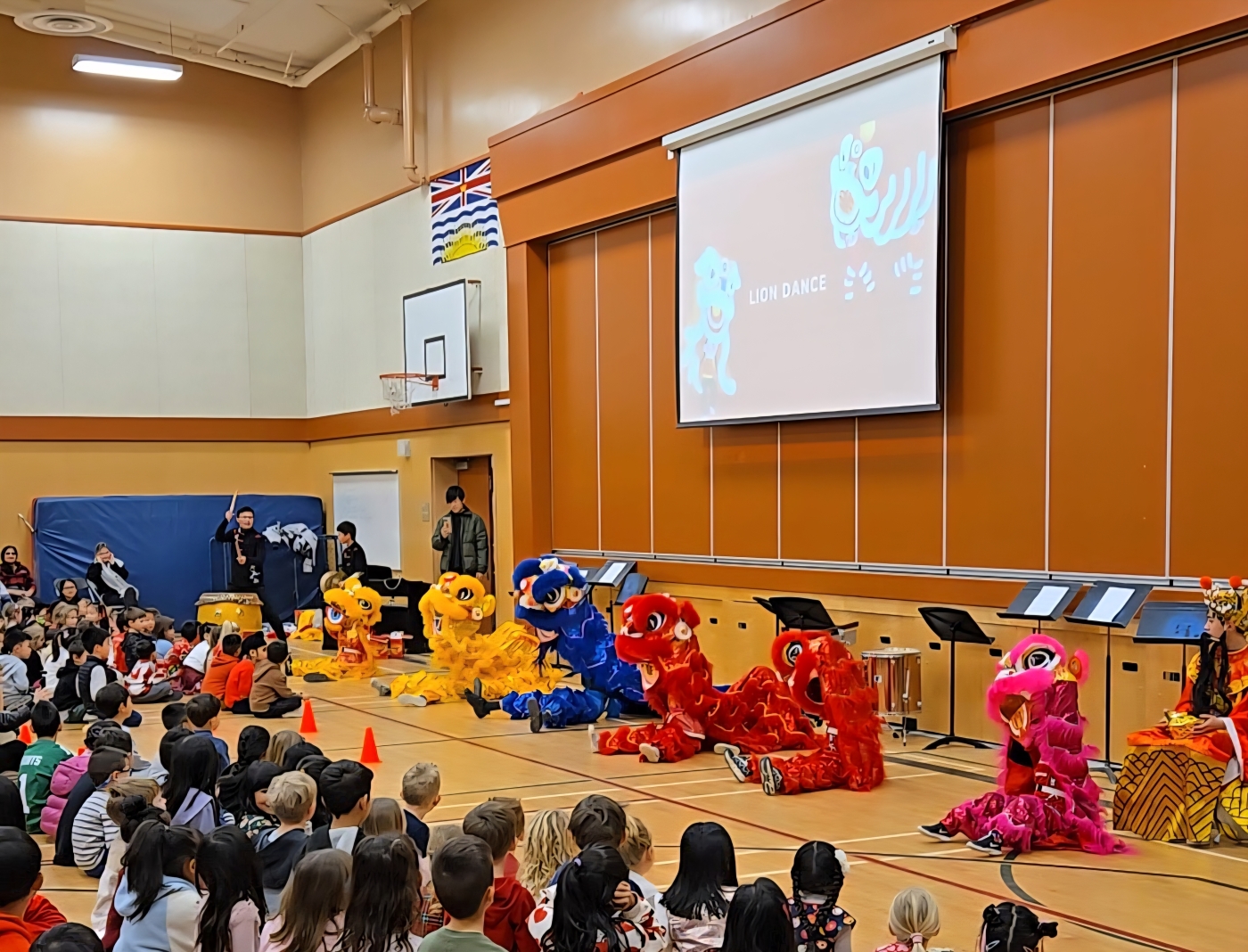 Celebrating Lunar New Year
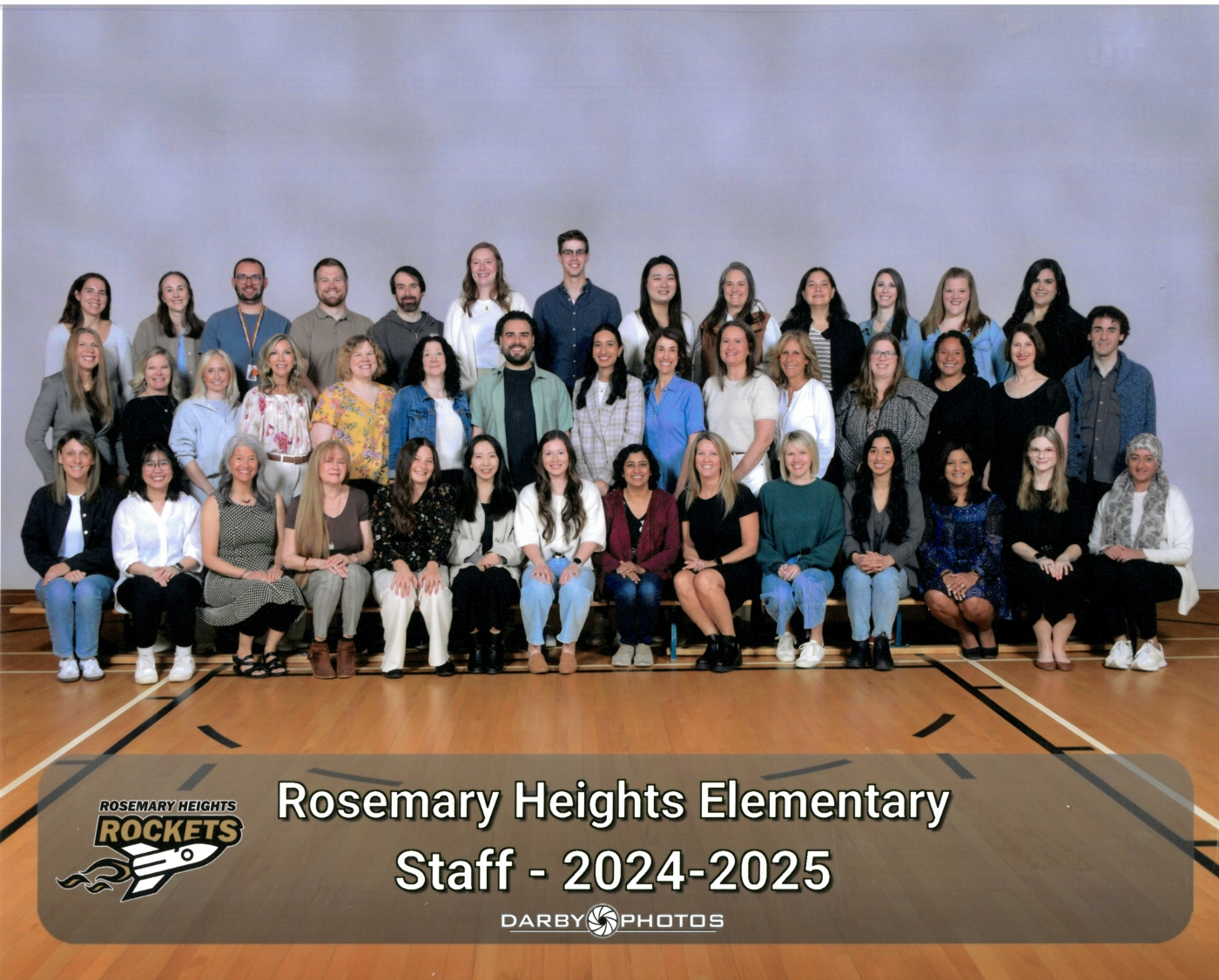
As a staff, we go beyond the responsibilities of the classroom and support students through extracurricular activities, including leadership and coaching. By caring and supporting each other, we are better able to support and care for our school community. Three years of participation in the Elementary Mentoring Pilot Program (EMPP) has contributed greatly to our positive and safe learning culture at Rosemary. Through EMPP, our shared learning and mentoring of each other provides a model for students to see collaboration and care in action. As a host school for both Student Teachers and Integrated Education Support Workers (IESW) practicum students, Rosemary staff utilize their leadership skill set to foster early career educators and continue our own professional learning. Our diverse educational backgrounds allow us to bring a variety of experiences to our community through a welcoming and inclusive environment where relationships are valued.
OUR LEARNERS
At Rosemary Heights, our students are a compassionate, interconnected, inclusive learning community developing their Social-Emotional and academic learning. Through professional dialogue, collaboration, observation and assessment of student learning over time, staff have identified a need to focus on strengthening students’ skills in the area of writing; specifically in sentence structure, paragraphing, grammar, and punctuation.
According to the BC Ministry of Education, Core Competencies are domains of intellectual, personal, social and emotional proficiencies that all students need in order to engage in deep, lifelong learning. The communication competency encompasses the knowledge, skills, processes and dispositions we associate with interactions with others. Through their communication, students acquire, develop and transform ideas and information and make connections with others to share their ideas, express their individuality, further their learning, and get things done. The Communication competency is fundamental to finding satisfaction, purpose and joy (2023). Incorporating all the competencies, in particular communication, Rosemary students are working towards strengthening their skills in the area of writing.
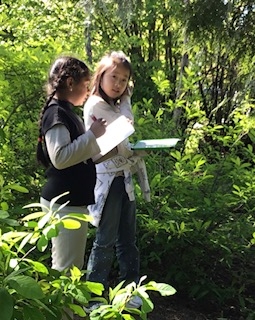
Our learners have a vast store of background knowledge, can identify the purpose of their writing, have the willingness to share orally and exhibit the beginning stages of the writing process.
Throughout our work, learners understand that meaning, style, form, and conventions allow for their writing to communicate, influence, entertain, teach, inspire, and help us make sense of the world and our experiences.
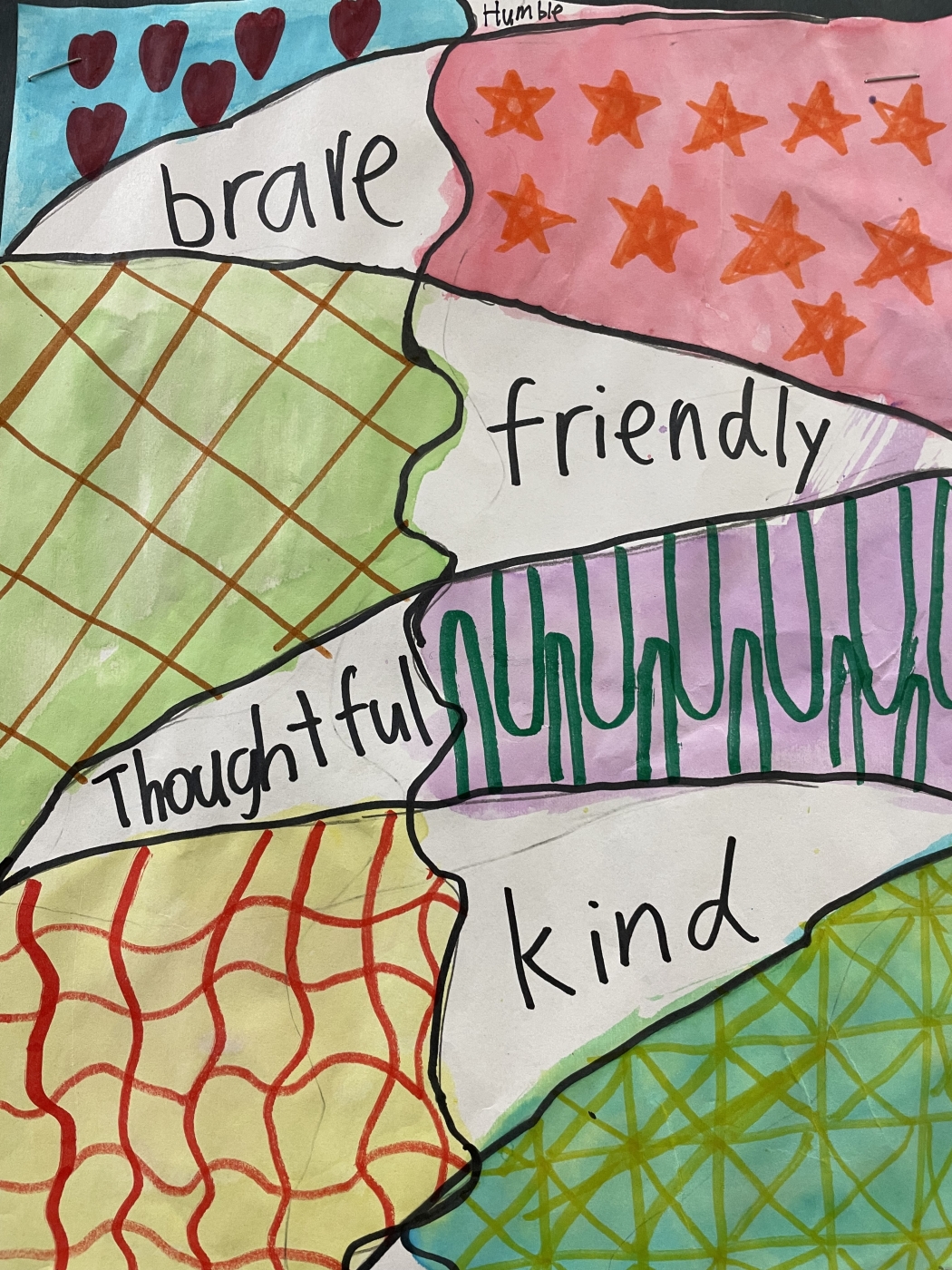
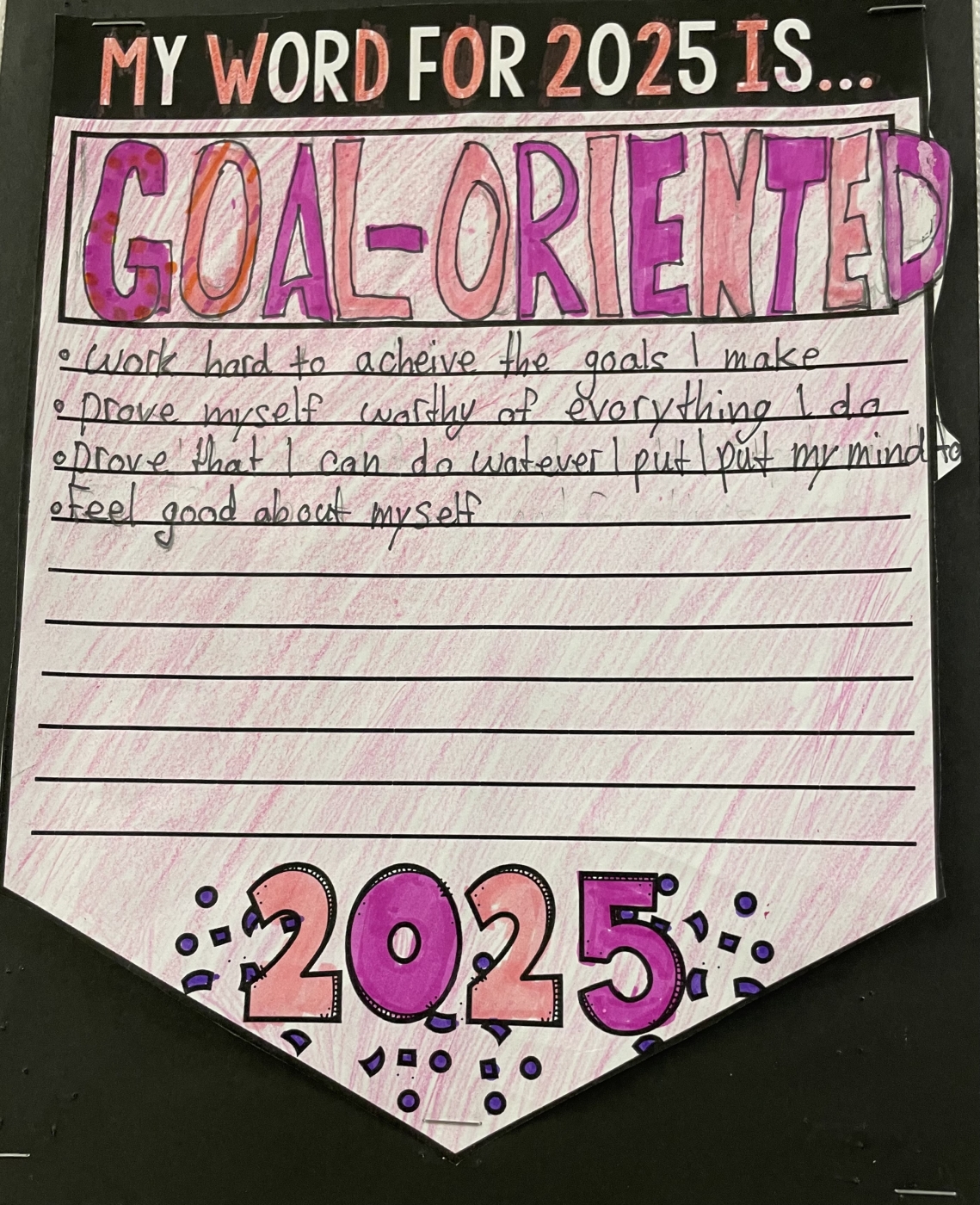
With direct modelling and teaching of the writing process, both with personal narratives and informative writing, our learners are excited to reflect and receive feedback on their writing, allowing for growth to be identified and celebrated. There is now a sense of trust established within the classrooms, demonstrating student pride and ownership of their work.
OUR FOCUS
At Rosemary Heights, our students are working towards strengthening their skills in writing using grade appropriate organization and conventions of spelling and grammar. This is important since writing is a medium in which students can express themselves to others, meeting the needs of the core competency of communication.
As a whole school staff identified common writing stretches at each grade level through the implementation of school-wide writes, once in the Fall and again in the Spring. Using the information gathered from the first write, teachers created meaningful learning experiences to foster students' abilities. Through explicit writing instruction, mentor texts, scaffolding lessons and writing organizers our learners began growing in their abilities to organize their thoughts and ideas effectively and to use appropriate spelling and grammar. Using the second school-wide write, teachers were able to identify areas of growth and celebrate the improvements with students and their families.
To assess writing samples a rubric was created using the following Language Arts Curricular Competency from the BC Curriculum:
“Show an increased understanding of how to write using sentences or paragraphs that include language features and structures, while applying conventions of Canadian spelling, grammar and punctuation.” (writing, speaking, representing).”
As a staff, we recognized student stretches in the following areas:
- Applying organization to their sentences
- Separating ideas into paragraphs (intermediate)
- Developing punctuation and grammar
- Receiving constructive feedback
- Self-advocating and problem-solving during revision and self-editing
Our goal was for students to enrich their writing in the key areas of sentence structure, paragraph structure, grammar, and conventions. Modelling and scaffolding in these core areas allow students to express themselves more meaningfully. Students from grade 2/3, grade 5/6, and grade 6/7 classes make up the group of students who provided the evidence of learning that supports this goal. Students are working within a variety of contexts, including Daily 5 routines, using exemplars, writing from an outline, and small group explicit modelling through the gradual release of responsibility model.
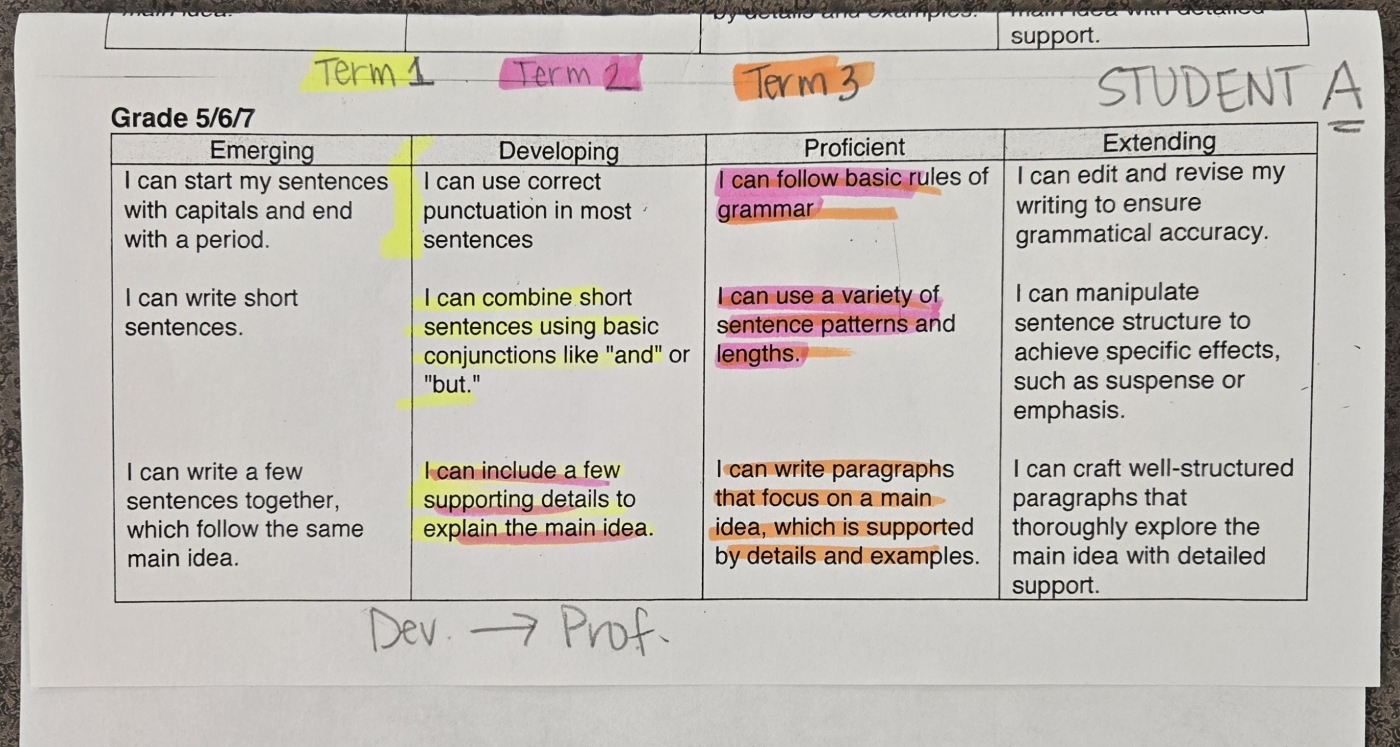
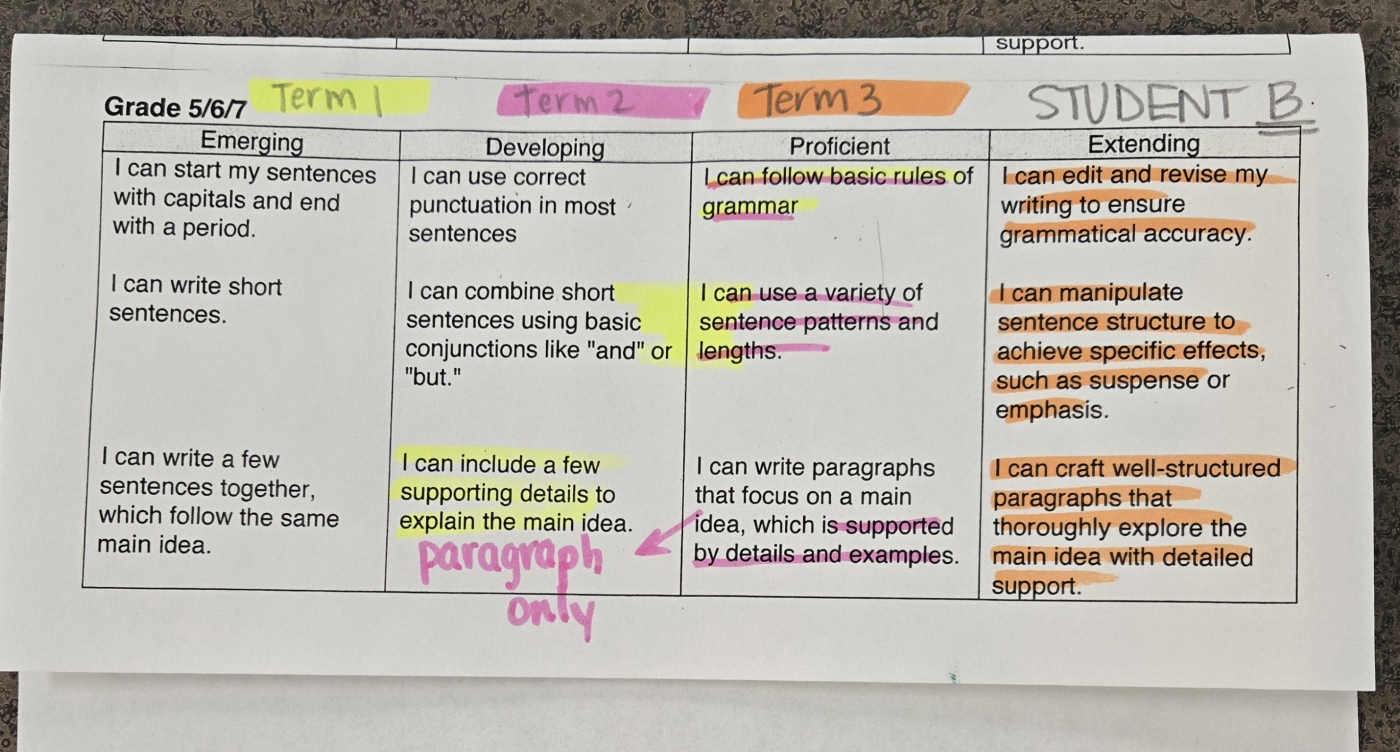
Looking at the data, one can clearly see the improvements in our students' learning over time. In September, our students were in the Emerging and Developing areas of the rubric. After months of practice and targeted instruction, the Spring assessment provides compelling evidence of growth in each of our students, showcasing their progress and the effectiveness of our teaching strategies. By examining the rubrics and writing below, we can observe student growth in their writing, highlighting their advancements in skills such as sentence structure, punctuation, and paragraphing.
For both the primary and the intermediate cohorts, the teachers tracked progress in the first and third terms, observing significant growth over time.
Intermediate Cohort:
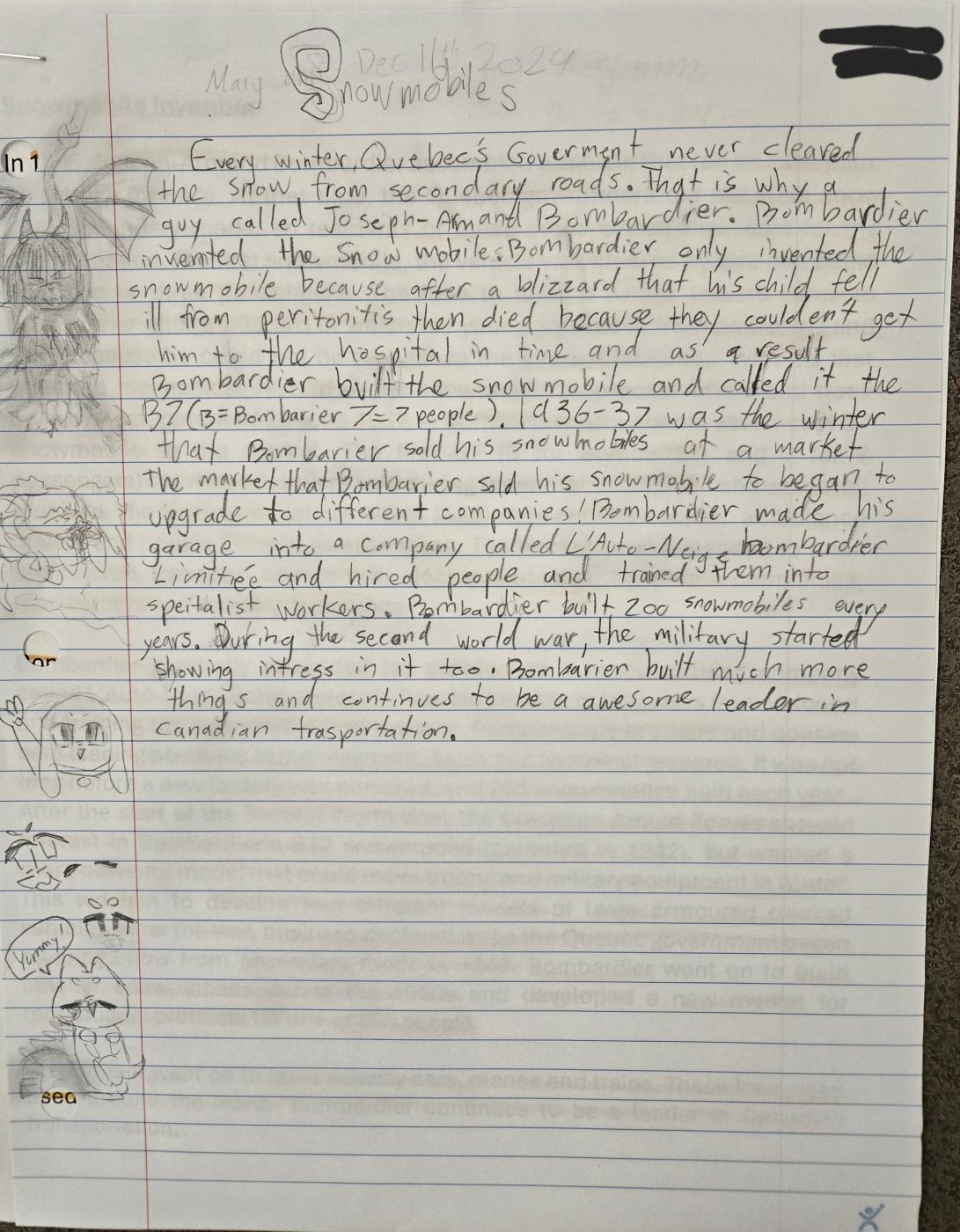
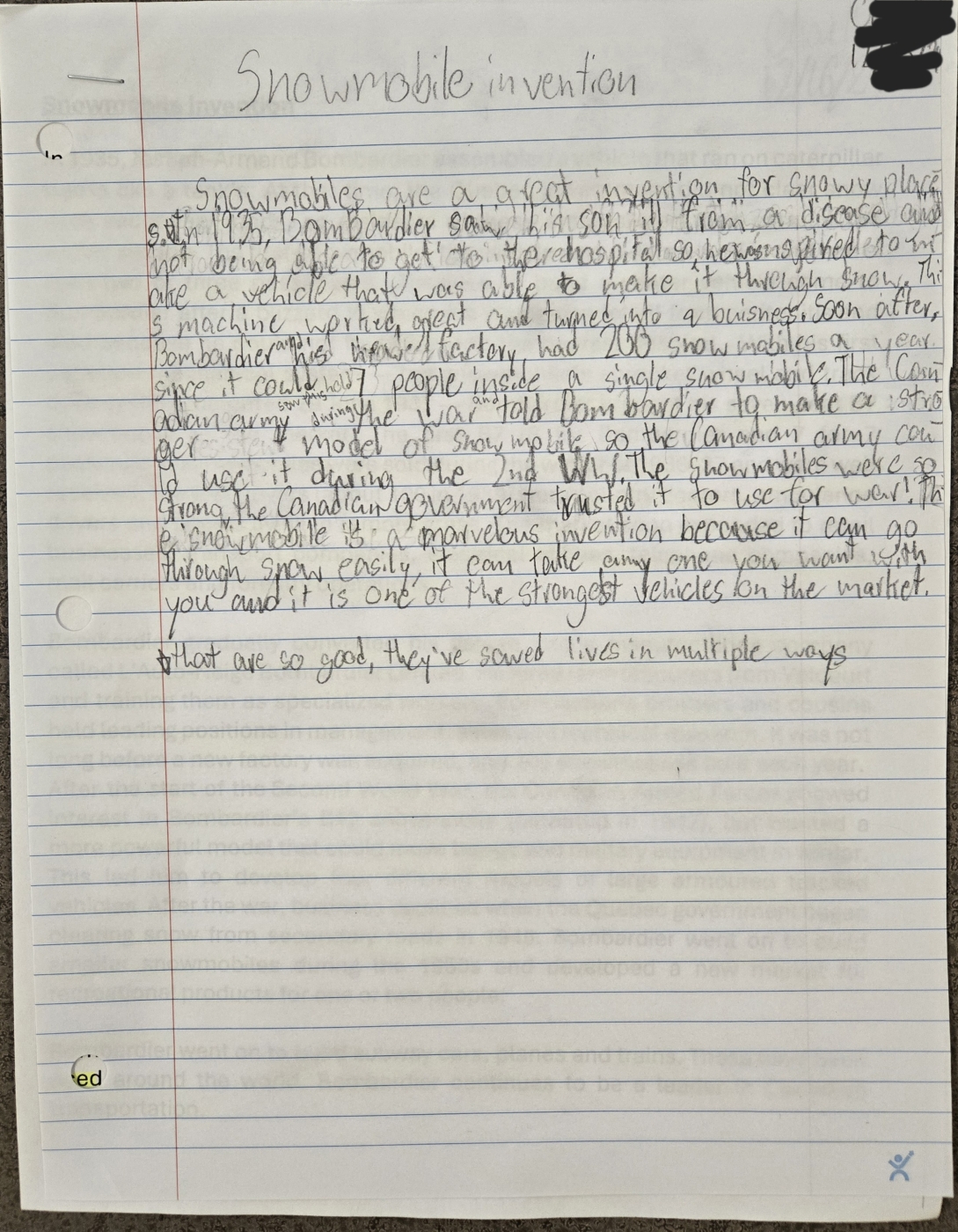
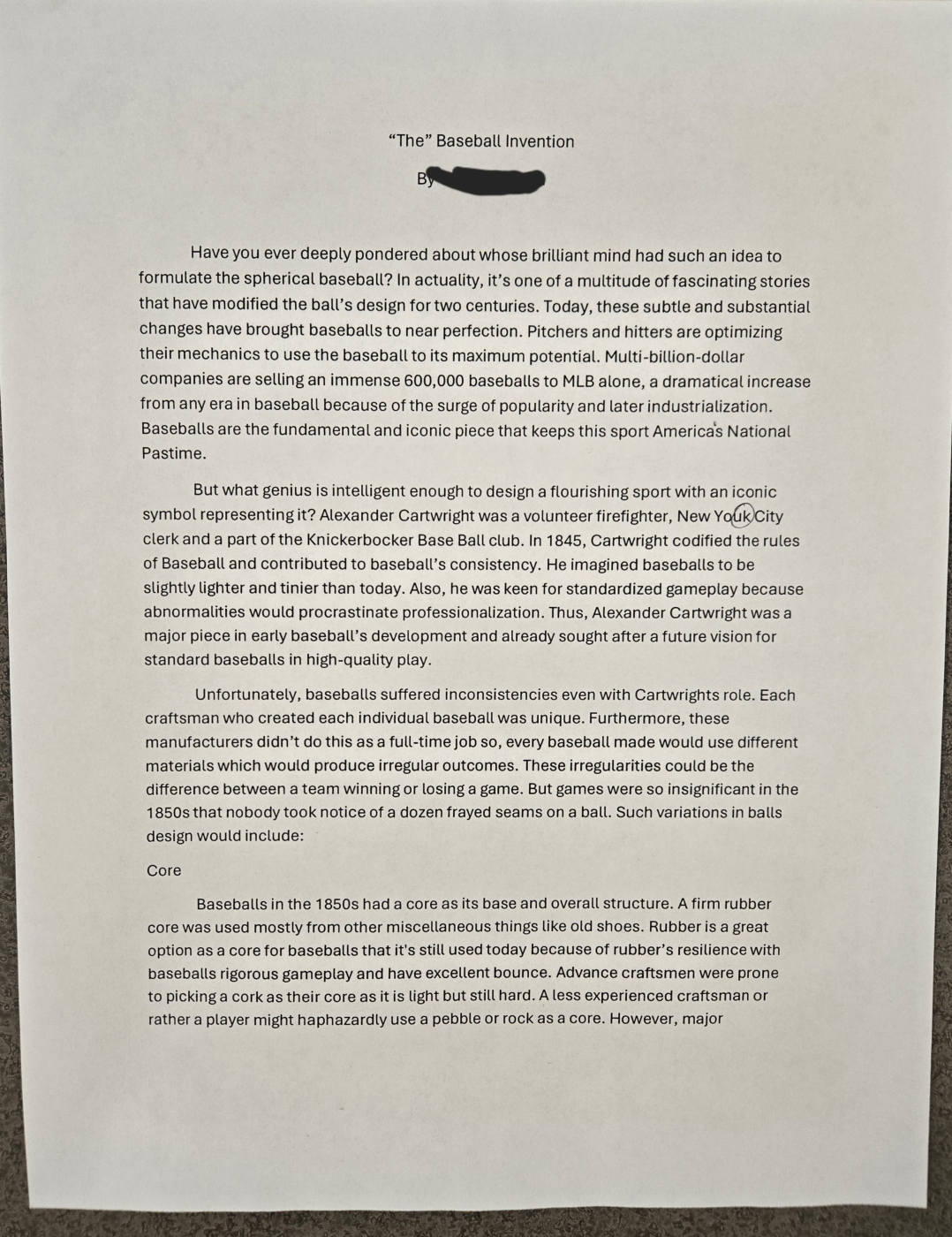
Student A began an informational writing unit, where the classroom teacher used a release of responsibility model. In the first example, all information was provided, and Student A was able to write a paragraph with relevant information and some supporting detail. However, Student A lacked punctuation to form complete sentences, showed a limited ability to vary their sentence structure and lacked a topic sentence to introduce the main idea. After direct instruction, providing a graphic organizer to organize information, and an outline to organize ideas, Student A was able to write paragraphs with basic conventions of spelling and grammar using a variety of sentence patterns. Paragraphs were written with topic and concluding sentences that focus on one main idea with supporting details.
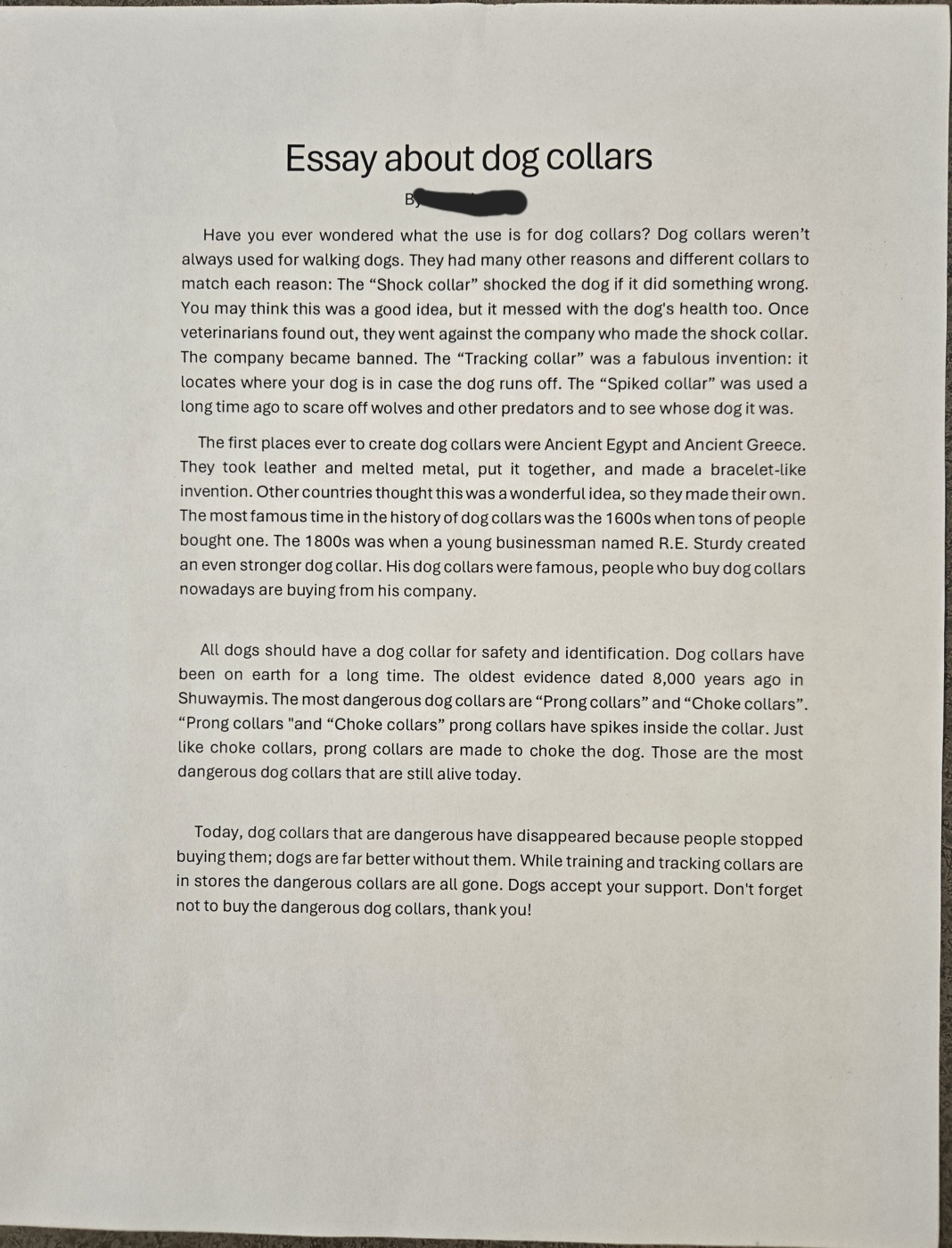
Student B also began an informational writing unit, where the classroom teacher used a release of responsibility model. In the first example, all information was provided, and Student B was able to write a detailed paragraph using basic grammar and sentence structure. Their paragraph included a topic and concluding sentence but lacked any organization to the structure of their information and supporting details. After direct instruction, providing a graphic organizer to organize information, and an outline to organize ideas, Student B was able to write a well-organized multiply paragraph informational essay, complete with structured paragraphs that included both topic and concluding sentences, linking sentences between paragraphs and detailed support to achieve a personal style and voice as a writer.
Primary Cohort:
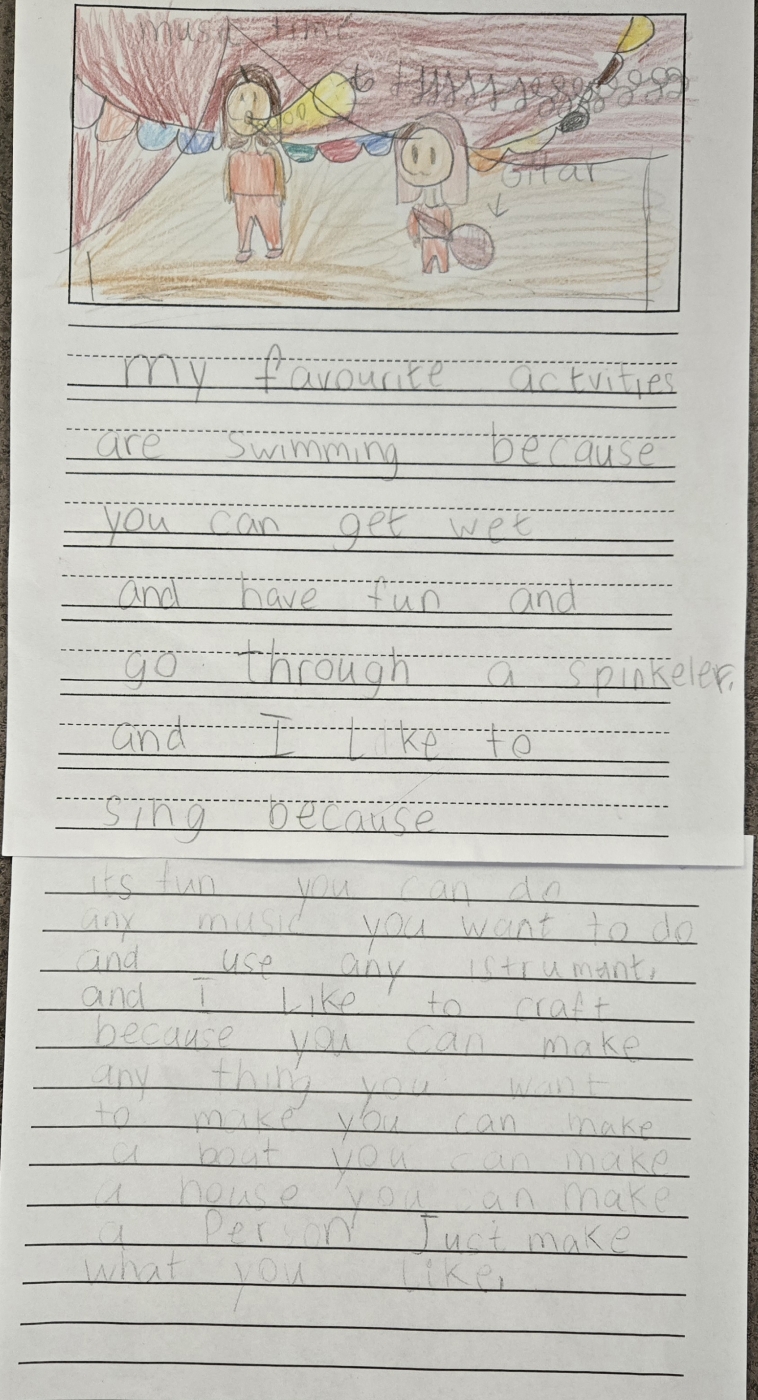
For the first write, students were asked to write about their favourite activities. They were to think about: What it is? Why do you like it? Who do you do it with? How do you do it? Where do you do it? After the first write the teacher used a variety of strategies to work on which needed support. These included: teacher examples (written together as a class, modeling brainstorming ideas, sounding out unknown words, spaces, and re-reading to check for mistakes), completing pre-writing webs, editing examples together, writing strengths and goals, reminders to re-read before handing it in or reading their writing to a friend before handing in.) In the Spring for the second write, students were again asked to write about their favourite activities. The goal for this write was to continue to think about expanding their sentences (Who, What, Where, When and Why), as well as remembering punctuation. In class they worked on re-reading each sentence after writing as well as re-reading (editing) when they were done.
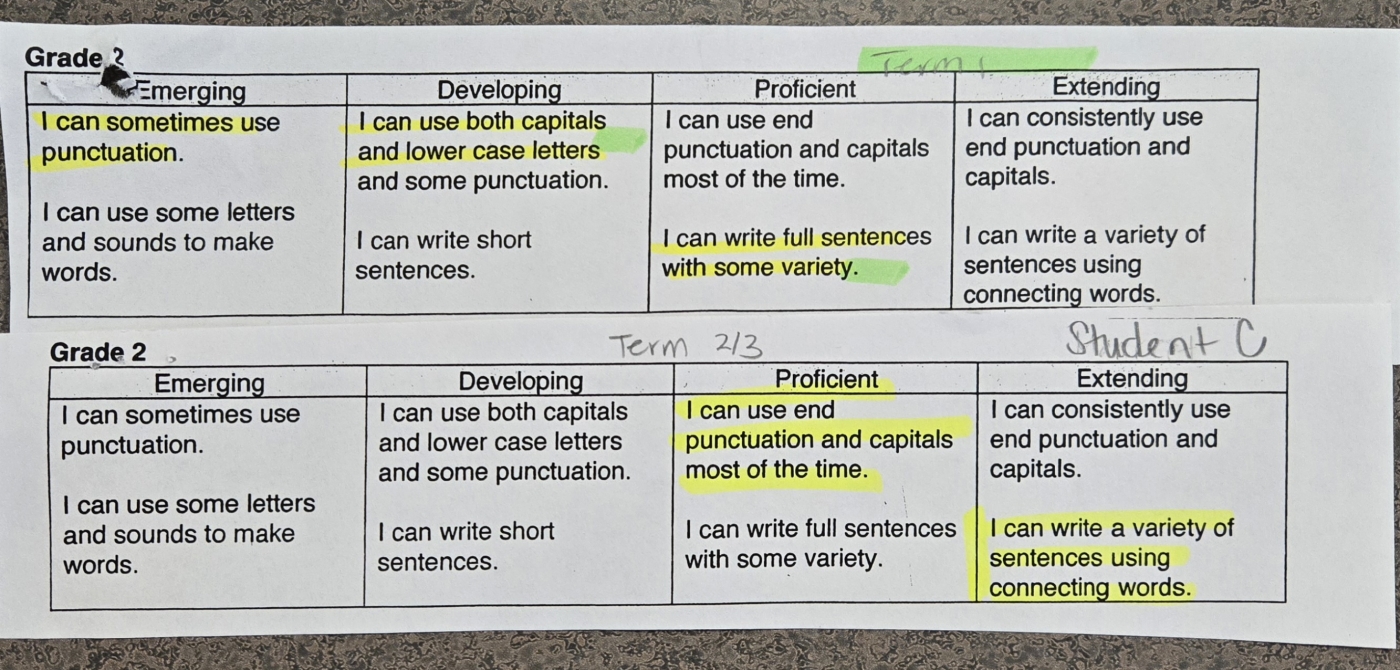
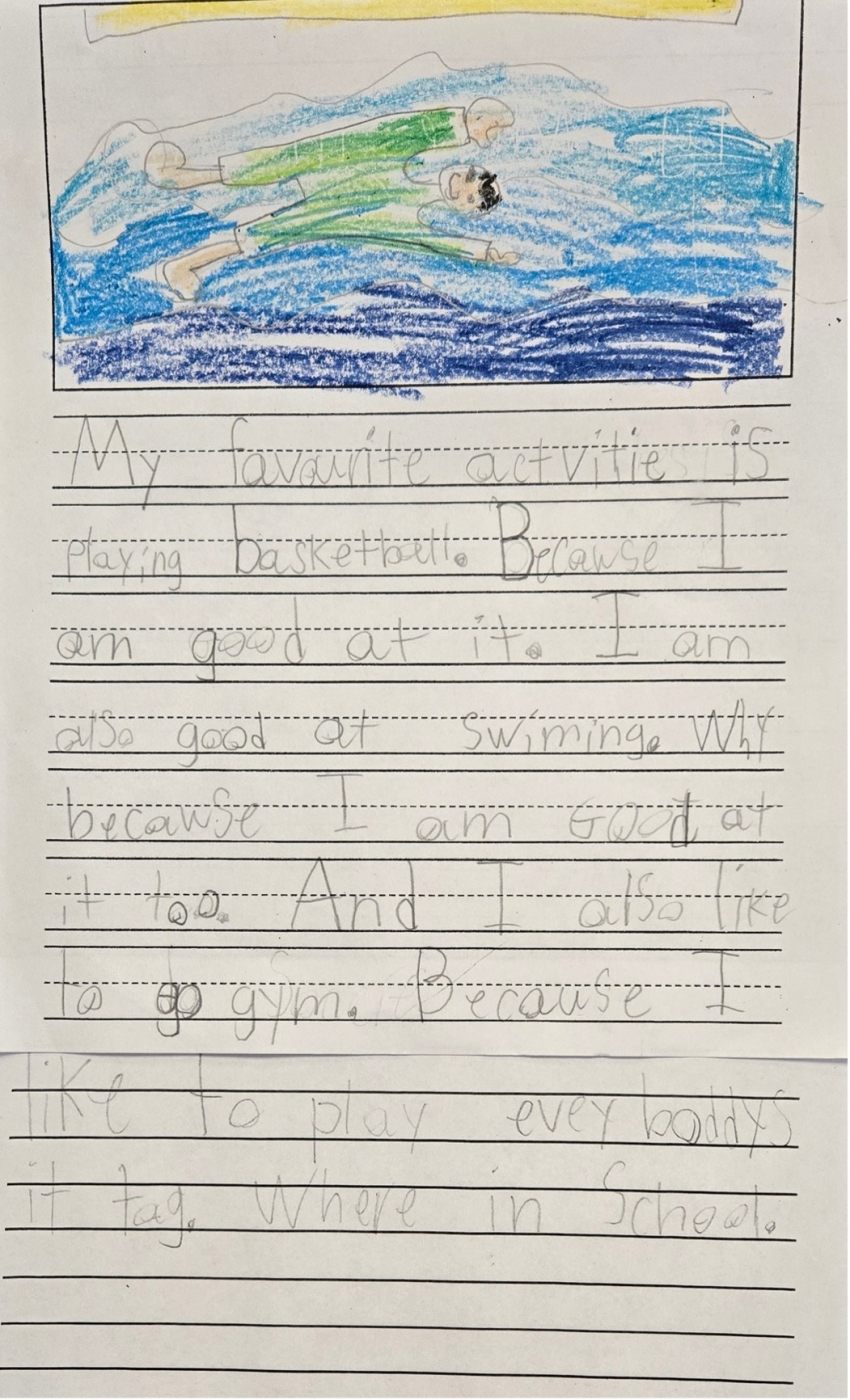
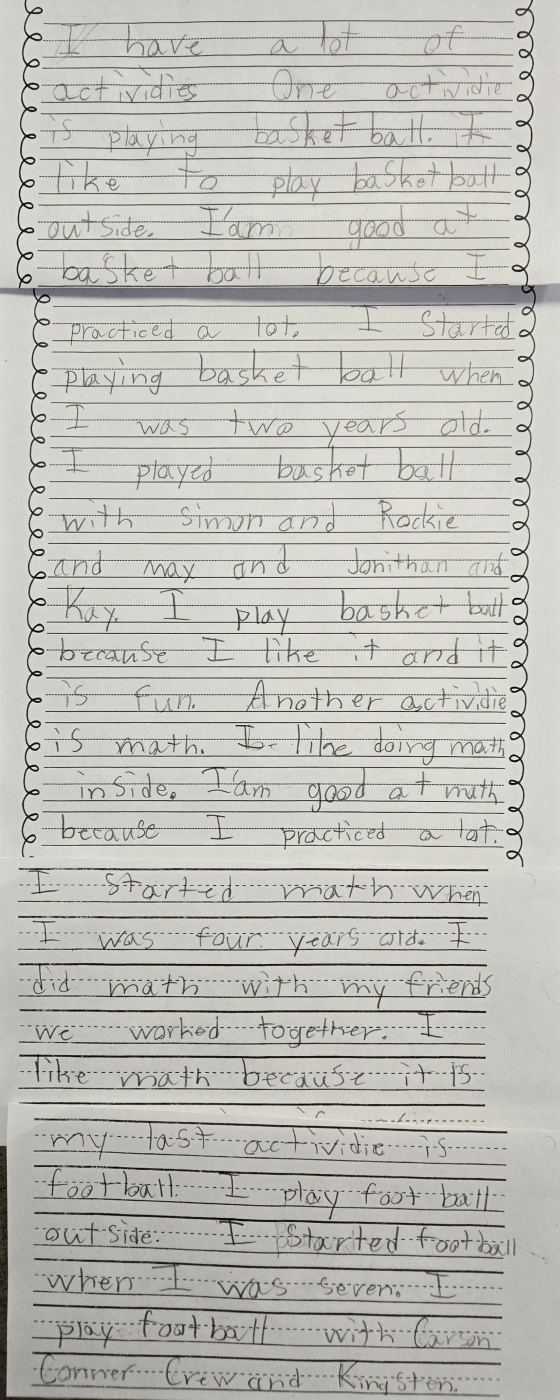
Student C’s first writing sample was missing punctuation. They were able to write down many ideas and explain why they liked each activity. After targeted instruction and practice student C showed growth in using punctuation and capitals, as well as expanding their ideas into multiple sentences.
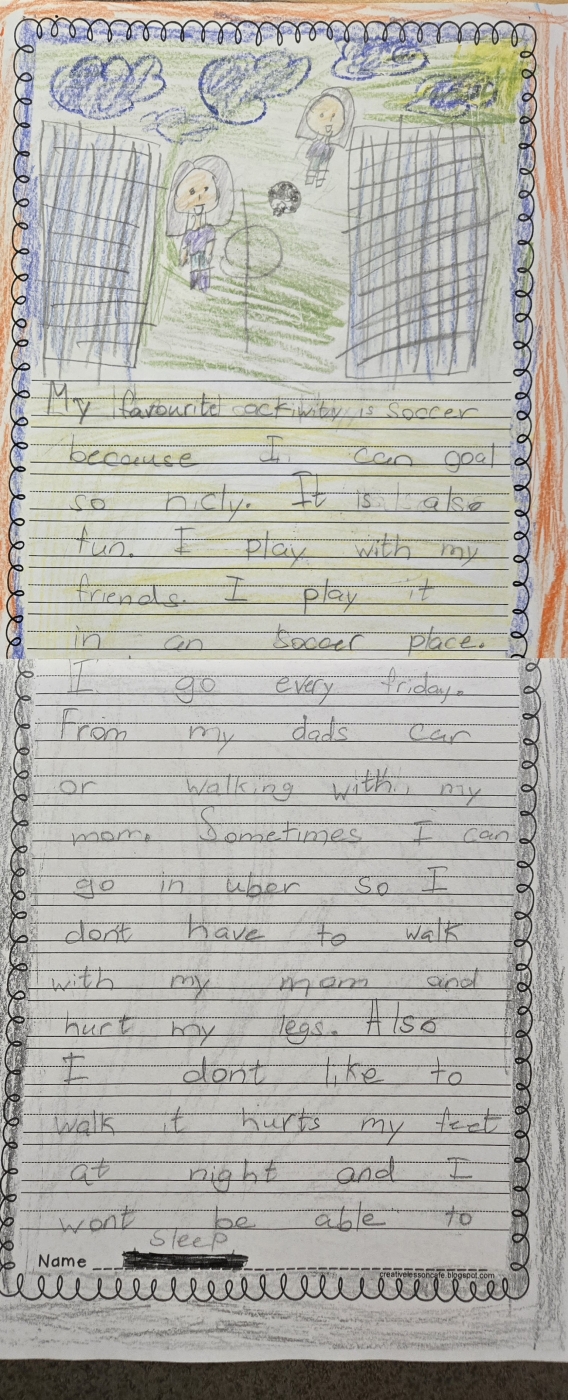
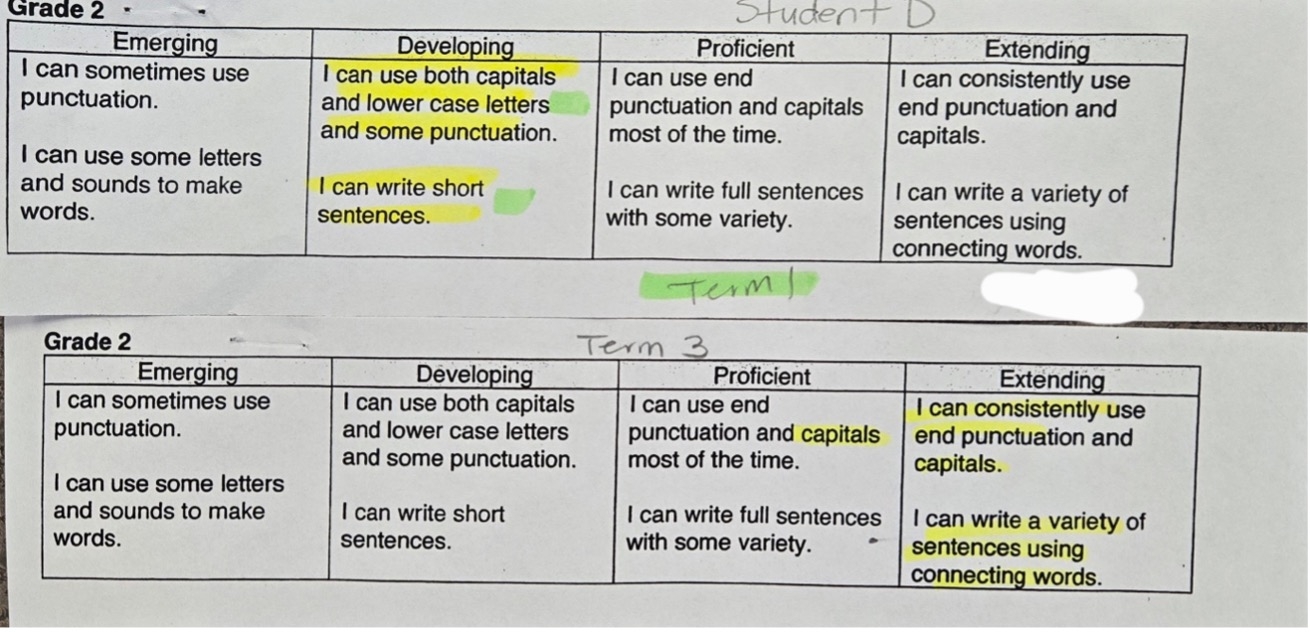
Student D’s first write showed they were attempting to try to add details as to why they liked each activity. They had simple sentences and many starting with joining words (‘and’ and ‘because’). After targeted instruction and practice student D showed growth in using punctuation and capital letters, as well as adding depth to their writing.
Teachers are continually finding ways for students to practice and refine their writing skills, employing Universal Design for Learning (UDL) and differentiated instruction to meet the needs of diverse learners. By integrating UDL principles, educators create flexible learning environments that accommodate individual learning differences, ensuring all students have equal opportunities to succeed. Differentiated instruction further supports this by tailoring teaching methods and materials to the varying abilities, interests, and learning styles of students.
Teachers have supported students through professional development and collaboration as school team, building on strategies put in places last year. These efforts ensure that instructional strategies are inclusive and effective, addressing the unique needs of each student. By leveraging UDL and differentiated instruction, educators can provide multiple means of engagement, representation, and expression, fostering a more inclusive and supportive learning environment that enhances all students' writing abilities.
OUR NEXT STEPS
Throughout this year, teachers identified areas of stretches to respond to class needs, met the students at their level, and addressed individual needs, as well. Through differentiation and offering all students universal learning supports, student needs were examined and responded to. Diverse student needs will continue to be met using the UDL model and teachers employing various strategies to further student learning.
As we think of our learners, we are focusing on the next steps in their learning journeys. Transferring of skills acquired, such as convention of spelling and grammar, constructing a variety of sentence patterns and organizing ideas into structured sentence or paragraphs, is the next natural step to ensure our students can use these writing skills effectively across all subject areas. Using evidence of skill progression and learning, students have more intention in their writing, are taking more risks, and are learning valuable skills to develop them as writers.
Rosemary staff will continue to engage students in the writing process moving forward into the next school year and beyond. Our evidence of learning this year has reinforced for our teaching team the importance of directed, targeted and deliberate instruction around structure and organization of writing.
While we do not plan to formally continue with writing as a school goal next year, our school team values the work we have done, to have our students see themselves are successful writers. By continuing to collect student writing samples in the fall and spring, our team of teachers will be able to use the data to refine their teaching strategies to meet the needs of their learners providing a more cohesive and comprehensive educational experience that supports and enhances student learning across the board.
Next year our school plans to continue with a focus on literacy, this time focusing on reading. As we begin the year and teachers identify areas of need, a school wide goal will be determined.
Surrey Schools
Formed in 1906, the Surrey School District currently has the largest student enrolment in British Columbia and is one of the few growing districts in the province. It is governed by a publicly elected board of seven trustees.
The district serves the cities of Surrey and White Rock and the rural area of Barnston Island.