Regent Road Elementary 25-26

OUR CONTEXT

Welcome to Regent Road Elementary! We are a school in the Cloverdale-Clayton area of Surrey. Regent Road Elementary first opened its doors on September 6th, 2022. Since then, the school has proudly welcomed students and families to this new school community.
Regent Road Elementary is located on the unceded, shared traditional territory of the Katzie, Kwantlen, Semiahmoo and other Coast Salish People. We honour our relationship with Indigenous Peoples and infuse the First Peoples Principles of Learning throughout the curriculum.

When Regent Road first opened its doors, many of the staff and student population had moved from the old Clayton Elementary School. That school was steep in tradition as one of the first schools in Surrey. Since 2022, Regent Road has developed its own traditions, values and identity.
The pace of change continues to be quick at Regent Road Elementary. Our school population is projected to grow rapidly as our neighbourhood welcomes many new families to the area. The staff at Regent Road are excited to embrace this change and for the school to be a hub of the community.
As a new school, community building and social – emotional learning are areas of focus for Regent Road Elementary as we work towards building this new learning organization’s culture and identity.
OUR LEARNERS
Literacy is a fundamental life skill. It is the ability to read, write, speak, and think in a way that lets us communicate effectively and make sense of the world. Communication is embedded across all areas of learning in BC's curriculum central to supporting our learners develop their literacy skills as they collaborate, problem solve, share ideas, share and exchange information, and express their individuality.
Our learners can engage actively as listeners, viewers, and readers, as appropriate, to develop understanding of self, identity, and community.

Our learners can use developmentally appropriate reading, listening, and viewing strategies to make meaning.
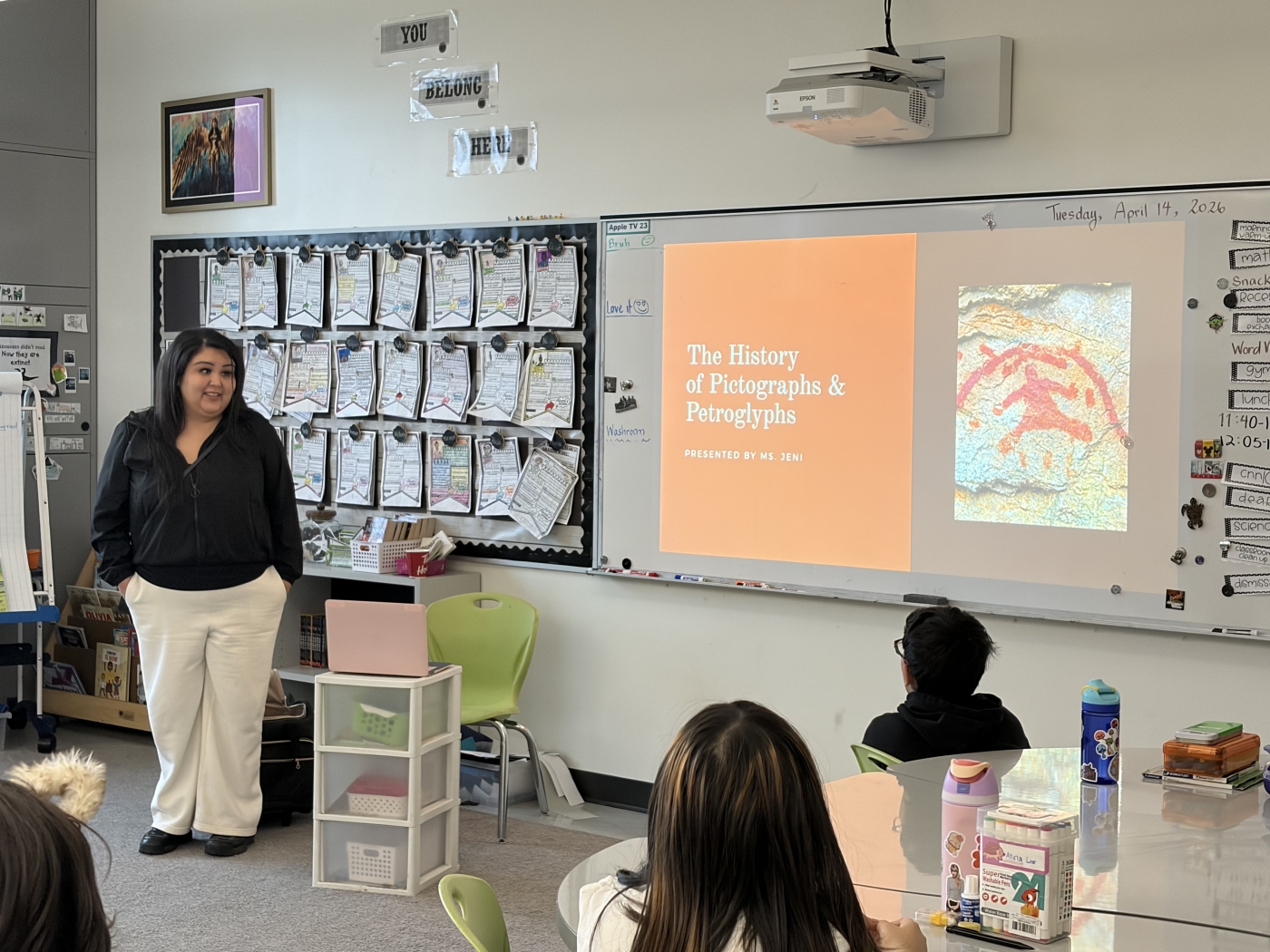
Our learners can exchange ideas and perspectives to build shared understanding.

OUR FOCUS
Our intended learning impact is to increase literacy competencies in our students by enhancing their ability to comprehend and make connections to text. Our plan is to improve fluency, accuracy and retell abilities for grade two students through use of evidence-based reading interventions that focuses on foundational skills such as phonological awareness, phonemical awareness, reading fluency, and comprehension. Although literacy is a school wide goal, this plan focuses on the impact for our grade two students. The hope is to help students develop the literacy skills they need to feel successful in all areas of their education, thus improving how these students feel about themselves as learners and how they feel about their ability to learn.
Our students are improving their reading skills in all areas. Retell is improving at a greater rate than fluency and accuracy.
English Language Arts Curricular Targets:
- Read fluently at grade level: reading with comprehension, phrasing, and attention to punctuation
- Use foundational concepts of print, oral, and visual texts: concepts include directionality of print, difference between letter and word, difference between writing and drawing, spacing, letter-sound relationship, understanding that pictures convey meaning, taking turns, and phonological awareness
Ways of meeting goal:
- Tier one support: Classroom teachers will utilize strategies with all grade one students – learning will include:
- Small group instruction
- Facilitated conversations
- Shared reading experiences
- increased reading volume by engaging students in large amounts of targeted daily reading
- Tier two support: LST will support targetted learners with five day per week pull out (groups of 3-4 students)
- Will echo strategies used in classroom
- Targeted instruction to support areas where students need additional support
- Beginning of year: all students in cohort were assessed for accuracy, fluency and comprehension
- Mid year:: all students in cohort assessed for accuracy, fluency and comprehension.
- End of year: all students in cohort assessed for accuracy, fluency and comprehension.
Some of the strategies that are employed for our cohort as well as the larger school population included:
- Exploring literature
- Class discussions
- Writing experiences
- Classroom based group work
- Small instructional group work with LST support
- Targeted home reading program
OUR NEXT STEPS
It is demonstrated, through evidence provided by our cohort of students and reflected through the larger group of students, that our reading focus is positively impacting learners.
Language from the provincial assessment scales was used to identify successes and remaining challenges. There was a noted improvement for most students identified in the sample cohort in relation to the literacy goals. These goals included:
- Students becoming more proficient in making connections to their world
- Students improving their reading fluency at grade level: reading with comprehension, phrasing, and attention to punctuation
- Use foundational concepts of print, oral, and visual texts: concepts include directionality of print, difference between letter and word, difference between writing and drawing, spacing, letter-sound relationship, understanding that pictures convey meaning, taking turns, and phonological awareness
- Communicate using letters and words and applying some conventions of Canadian spelling, grammar, and punctuation: common practices in writing, such as capitals and small letters printed legibly; familiar words spelled correctly; and correct use of periods, question marks, and capitals (including capitalized I); introduction to Canadian spelling
Learners in our cohort showed improvements in their self image of being readers and active learners. Some of the successes shown by these students include being newly able to follow pictures and pattern of a story, demonstrated growth in recognizing one to one correlation of words on the page to sounds, increased word recognition, recognition of word pattern, and more focused time on text. These enhanced skills have had a positive effect on the students' learning across all subject areas as their confidence and mastery has increased.
The skills that our students are developing are contributing to success in their ability to express themselves and make sense of the world around them.
Snapshots of 2025-2026 Literacy progress for cohort group of Grade 2 students


After collecting and analysing student achievement, we have seen an improvement in student understanding as indicated by benchmark universal screening and progress monitoring assessments, student self-assessment and teacher assessment.
Our next steps are to extend the focus of literacy acquisition using a variety of strategies. We will do this by engaging in further opportunities, investing in more resources, and reaching out to the literacy district helping teacher to explore further strategies in improving student learning opportunities in literacy. Expanding the cohort in future years will assist us in reaching out to learners to improve the rate of proficiency.
Surrey Schools
Formed in 1906, the Surrey School District currently has the largest student enrolment in British Columbia and is one of the few growing districts in the province. It is governed by a publicly elected board of seven trustees.
The district serves the cities of Surrey and White Rock and the rural area of Barnston Island.