Ray Shepherd Elementary 25-26

OUR CONTEXT
 At Ray Shepherd, we take pride in building a strong sense of school culture that includes the greater community to provide authentic and meaningful learning opportunities for our students. We engage in collaboration in a variety of ways and seek participation from our families and the greater community.
We understand that learning happens within a social context, and that there is a cultural component of knowledge. With the support of our PAC, we continue to seek ways to highlight cultural celebrations, and honour cultural knowledge from those within our community. We acknowledge that there is no one way to do anything, and the more opportunities we have to learn from others, the more we will learn about the world, and ultimately ourselves.
Please see the following highlights of our learning community:
Social Emotional Learning
We are proud of our focus on social and emotional learning and how we integrate these concepts into our daily routines, curriculum, and school goals. Some examples of our focus on Social Emotional Learning include: our positive behavioural support plan (SOAR), evidence-based SEL programming, and Social and Emotional Learning spaces.
Identity and Sense of Belonging
Our identity as hawks is used as a tangible metaphor for the qualities we want to celebrate within our community.

Encouraging Positive Behaviour
Our goals for student behaviour (acceptable behaviour) are outlined in the acronym "SOAR". Students are acknowledged with a "hawk feather" by a staff member when they are noticed demonstrating this positive behaviour. Students then enter these feathers into a draw box for a chance to win gift cards on the last day of each week. Thank you to our PAC for supporting this initiative by providing the gifts cards each week!

Student Leadership
Our school offers multiple access points for all students to contribute based on interests and strengths (social responsibility). Student leadership opportunities door monitors, lunch monitors, tech helpers, fundraising, grounds clean-up, big buddies, recycling team, and more.
Outdoor Learning
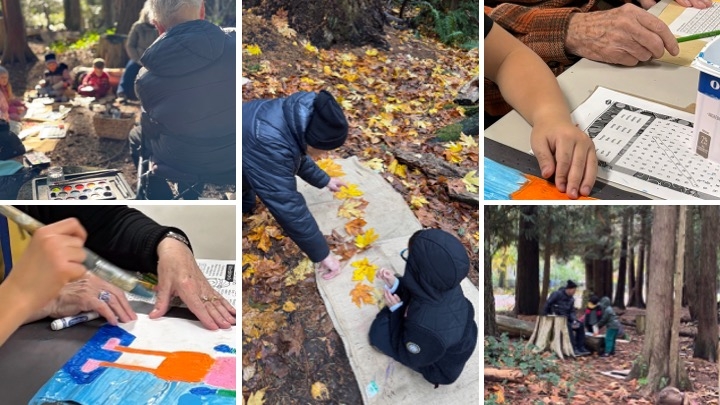
Outdoor learning opportunities have become heavily embedded in our educational programming here at Ray Shepherd. We are fortunate to have some pockets of natural space including a "mini forest" on our property. Other outdoor spaces frequently used include Bell Forest Park which is adjacent to our school property. Classes utilize this space to engage in hands-on, place-based learning. Our classes also participate in off-campus excursions to our neighbouring beaches, our neighbourhood care home and even to further destinations like Surrey Nature Centre, Stable Harvest Farm and Granville Island.

Indigenous Learning
The First Peoples Principles of Learning are embedded in announcements, gatherings, and classroom activities. At Ray Shepherd, we acknowledge that learning happens in a social setting, is based in relationship, and should reflect the history of the land and its original peoples.

Intergenerational Learning
Some of our students participate in an intergenerational program called G Is for Grandfriends. In this program, Grandfriends volunteer daily, joining kindergarten students in their exploration of the forest. Each month, our primary students also visit a nearby care home, where they build meaningful connections—sharing their learning while learning from and alongside their Grandfriends. Since 2018, this program has received the BCRTA Golden Star Award four times, recognizing the outstanding work our students do in fostering relationships with seniors in both the local community and the neighbourhood care home.
PAC
Our dedicated and involved parent community actively fundraise to support learning opportunities for students throughout the school year. Without the support of our PAC, many of our amazing learning opportunities would not be possible.
OUR LEARNERS
At Ray Shepherd, we believe that strong literacy skills are the foundation for lifelong learning and meaningful participation in society. We strive is to empower learners to understand and engage thoughtfully with the world and the people around them. By developing their ability to make meaning, think critically and creatively, and communicate effectively, students are supported in reaching their full potential. Literacy is integrated across all areas of the curriculum and is strengthened through explicit, intentional instruction.
Our focus group includes students in kindergarten, as well as Grades 3, 5, and 6. This year, we prioritized gathering data to better understand our students’ current literacy competencies. Below is a chart showing our focus group’s proficiency scale in literacy.
| Gr. 3 | Gr. 5 | Gr. 6 |
Emerging | 5% | 7% | 36% |
Developing | 58% | 30% | 40% |
Proficient | 32% | 63% | 24% |
Extending | 5% |
For our Kindergarten students, 70% of the students are on track, while 30% require additional literacy support.
From the data, we also observed that students identified as emerging or developing in proficiency were more likely to be represented within several groups, including English Language Learners (62%), students with social and emotional needs (43%), Ministry-designated students (28%), those experiencing high absenteeism (13%), and Indigenous students (4%).
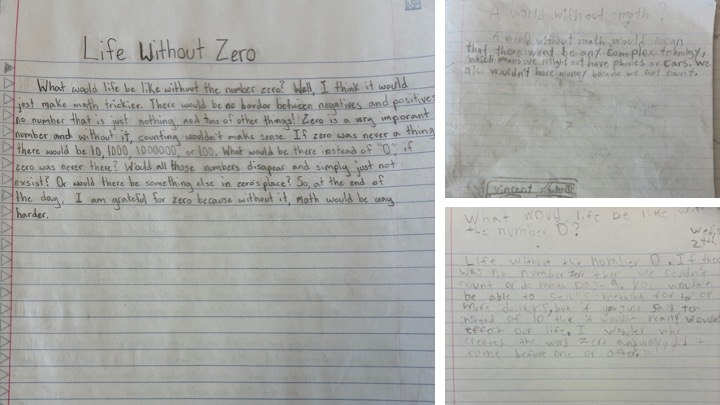
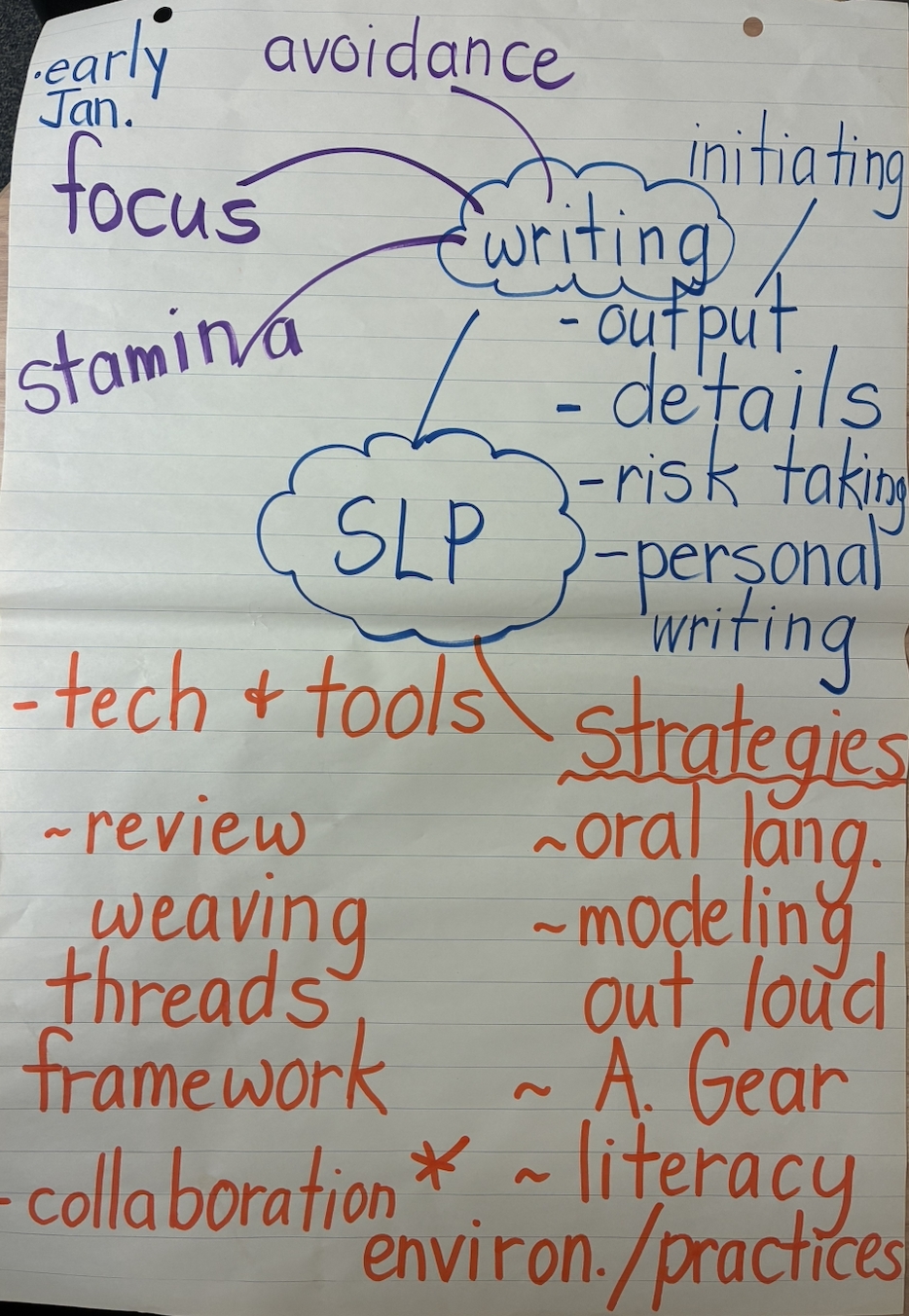
As a collaborative team, we analyzed the data above and reflected on our literacy instruction, as well as on ways to strengthen our efforts to foster an inclusive learning environment through intentional, responsive teaching practices. Through our reflection, we identified several instructional practices that are supporting student success in writing. These include strong teacher modelling and think-aloud to demonstrate how to organize and sequence ideas, along with the use of clear examples, anchor charts, and guided templates. Students benefit from explicit instruction in grammar, sentence structure, spelling patterns, and different forms of writing, taught step by step. Targeted lessons focus on key skills such as developing topic sentences, using varied sentence patterns, and organizing ideas effectively, supported by planning tools and writing checklists. Opportunities for choice, free writing, and a focus on oral language and vocabulary development further strengthen engagement. In addition, clear assessment practices—such as rubrics, co-created success criteria, and individualized goal setting—help guide student progress, while differentiated instruction ensures learning is responsive to individual needs.
We also identified areas for continued growth. Students will benefit from more explicit teaching of editing and revision, including proofreading, grammar, and writing conventions, as well as structured peer feedback opportunities. Increasing engagement and independence will involve encouraging students to expand their ideas and using a gradual release model to better support independent writing. More frequent, targeted mini-lessons and small-group instruction will address specific skill gaps, alongside intentional grouping of students based on need. Continued emphasis on foundational skills, particularly sentence-level writing, will support developing writers. Finally, increased use of guided frameworks.
Based on the data and our reflections, we have identified clear next steps as a collaborative team. Please see the “Next Steps” section for our plan for the coming year and beyond.
OUR FOCUS
Support Students in developing their competencies in writing by fostering inclusive learning environments.
This focus aligns with our school district’s Literacy Framework (Literacy Framework.pdf) by emphasizing effective literacy practices, supportive learning environments, and ongoing assessment. We prioritize explicit instruction in key literacy skills to support students in making meaning and creating a variety of texts across different contexts. We also work to reduce barriers to learning by providing accessible materials and supports that respond to the diverse strengths and needs of our learners as writers. Ongoing monitoring of student progress allows us to adjust instruction and respond thoughtfully to student learning.
Our focus also aligns with the British Columbia Curriculum, particularly in the following areas:
Big Ideas
- Language and story (K–3), and text (4–7), are sources of creativity and joy.
- Stories and texts help connect us to ourselves, our families, and our communities (K–3).
- Using language in creative and playful ways helps students understand how it works (Grades 3–5).
- Developing an understanding of language enables students to use it purposefully (Grades 6–7).
- Exploring and sharing multiple perspectives extends thinking (Grades 6–7).
Curricular Competencies
- Create stories and texts to deepen understanding of self, family, and community (K–3).
- Plan and create a variety of communication forms for different purposes and audiences (K–3).
- Use writing and design processes to plan, develop, and create texts (Grades 4–7).
- Assess and refine writing to improve clarity, effectiveness, and impact (Grades 6–7).
- Apply conventions of Canadian spelling, grammar, and punctuation (Grades 1–7).
- Select and use appropriate forms, features, and genres based on purpose and audience (Grades 6–7).
- Transform ideas and information to create original texts (Grades 4–7).
For more detailed information about our student learners and how we plan to continue supporting their growth, please see the “Our Learners” and “Next Steps” sections.
OUR NEXT STEPS
It is demonstrated, through evidence gathered from our focus group and reflected in the wider school community, that our literacy focus aligns with students’ need to further develop their writing competencies.
After collecting data from our focus group, we established a baseline and collaboratively identified the following next steps:
Professional Development
- Workshops and Training: Provide targeted professional learning opportunities for staff focused on effective strategies for teaching and assessing writing, exploring the district Literacy Framework, and developing inclusive instructional practices that support all learners.
- Collaborative Planning: Establish Professional Learning Communities (PLCs) with a focus on literacy, where teachers can share best practices, analyze student work, and co-develop lessons to strengthen student writing.
Forms of Data
- School-Wide Writes: Conducted in the fall and spring to gather information on students’ current abilities, growth, and areas for improvement.
- Student Surveys: Completed in the winter to better understand students’ social and emotional well-being.
Assessment Practices
- Rubrics for Writing: Develop and use clear, competency-based rubrics, and share them with students to support self-assessment and understanding of expectations.
- Formative Assessment Techniques: Implement regular formative assessment practices to provide timely feedback and inform instruction.
Data-Informed Instruction
- Analyze Patterns: Regularly review assessment data to identify trends in student achievement and guide targeted supports for students needing additional assistance.
- Explicit Writing Instruction: Use data, collaborative planning, and ongoing assessment to adjust instructional strategies and strengthen writing instruction.
- Cultivate Inclusive Environments: Use student feedback and survey data to create consistent opportunities that foster a strong sense of belonging.
- Goal Setting with Students: Support students in setting personal writing goals to build ownership and engagement in their learning.
By embedding these strategies, we aim to foster inclusive learning environments that enhance student achievement and deepen students’ writing competencies.

Surrey Schools
Formed in 1906, the Surrey School District currently has the largest student enrolment in British Columbia and is one of the few growing districts in the province. It is governed by a publicly elected board of seven trustees.
The district serves the cities of Surrey and White Rock and the rural area of Barnston Island.