Princess Margaret Secondary

OUR CONTEXT
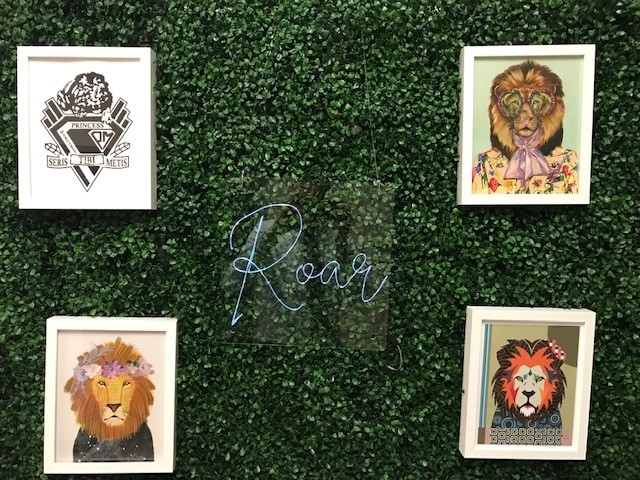
Once a Lion, always a Lion!

Student centered learning through kindness, inclusion, community, & teamwork.
Princess Margaret is committed to truth and reconciliation. We acknowledge that we work, learn, un-learn, and play on the traditional and un-ceded territories of the Katzie, Kwantlen, Semiahmoo and other Coast Salish Peoples. In working with these communities, we have a vision for learning that is inclusive of the First People's Principles of Learning.
We are a diverse community of learners that prides itself on having a culture of care and inclusion. Our students and staff are continuously challenged to be the best version of themselves. In addition to our teachers, counsellors, and administration, our learners also benefit from wrap-around support from Youth Care Workers, Safe School Liaisons & School Resource Officers, YES workers, Check & Connect staff, Yo Bro, Yo Girl, and REACH workers.
Our students come from a diversity of cultures and ethnicities, making our community a vibrant one which is proud of its multi-cultural context. Students at Princess Margaret are multi-lingual, often speaking two and sometimes three or more languages. They are resilient, focused, and highly motivated to go to university, college or apprenticeship programs. Many of our families are new Canadians or refugees, and almost all of them graduate on a traditional or adult education graduation certificate. We also offer a strong ELL program to incoming students who are wanting an experience in a Canadian high school before transitioning to Invergarry Education Center.
Put in something from Middle Years survey from BI
Put in something from Power BM on ELL stats and graduation stats
OUR LEARNERS
Literacy is a fundamental life skill for all our students. It is the ability to read, write, speak, and think in a way that lets us communicate effectively and make sense of the world. Communication is a core competency embedded across all areas of learning in BC’s curriculum; it is central to supporting our learners in developing their literacy skills as they collaborate, problem solve, share ideas, exchange information, and express their individuality.
Literacy (communication) is a core skill to help our students do this. Evidence of our students' ability to learn these competencies is highlighted below.
Our learners can make sense of what they read by inferring, questioning, and using strategies (including assistive technology) to access and engage in curriculum, deepen their understanding and communicate their thinking to others.
Our learners can collaborate and develop their ideas through interactive group, class, and project-based learning experiences, in order to communicate their thoughts and ideas about who they are through written, oral, and visual expression.
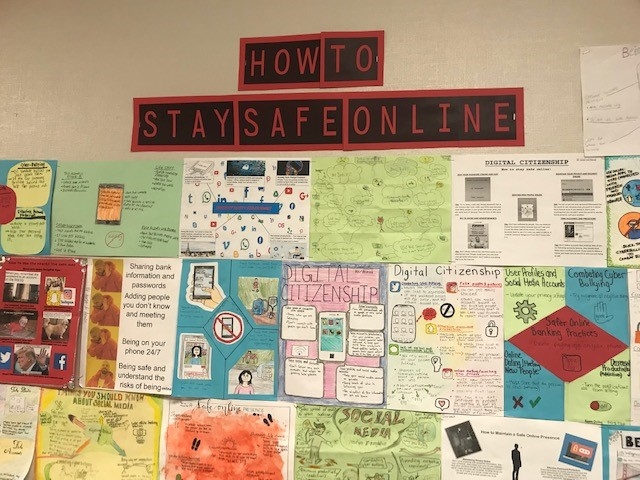
Making progress through literary skills acquisition
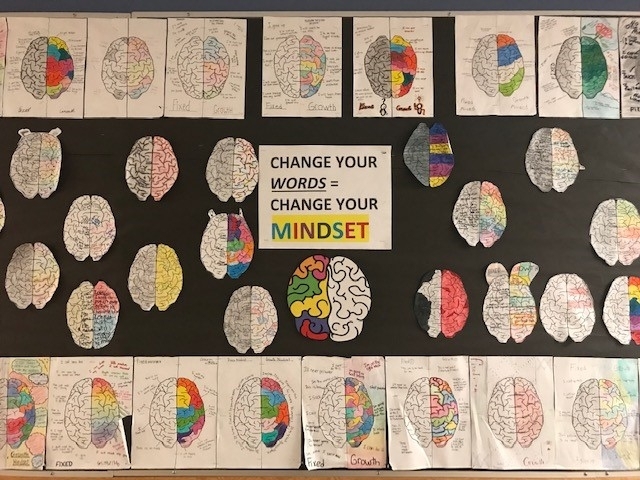
Communicating through art
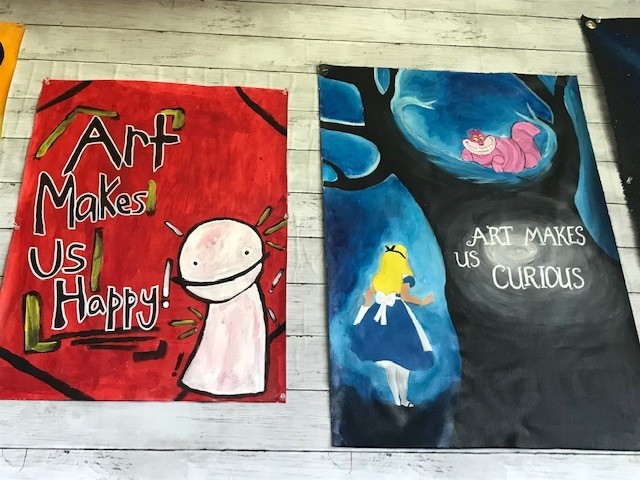
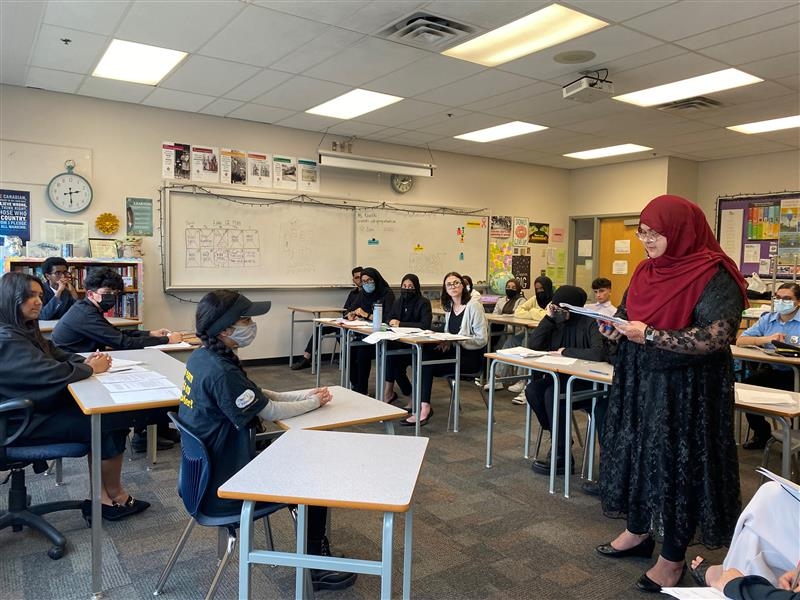
Our learners can make connections to the real world and communicate their learning beyond the classroom.
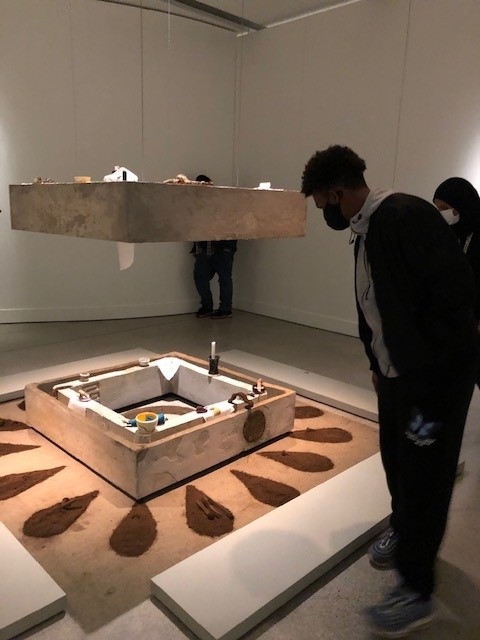 UBC field Trip focusing on diversity and inclusion
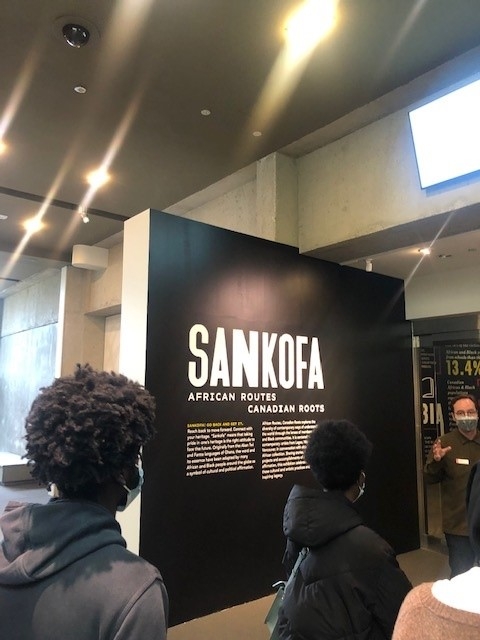
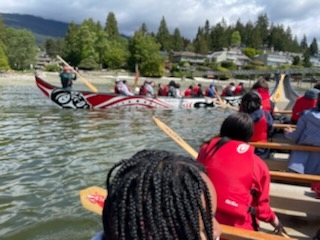 Indigenous students participating in lived heritage
Overall, our learners are demonstrating proficiency in their reading and writing.
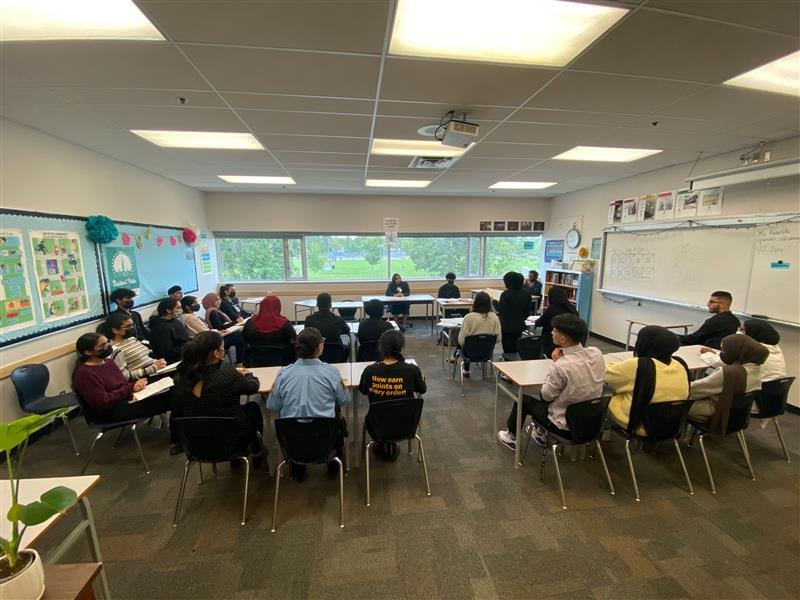 Students discussing and interpreting literature through fictional text
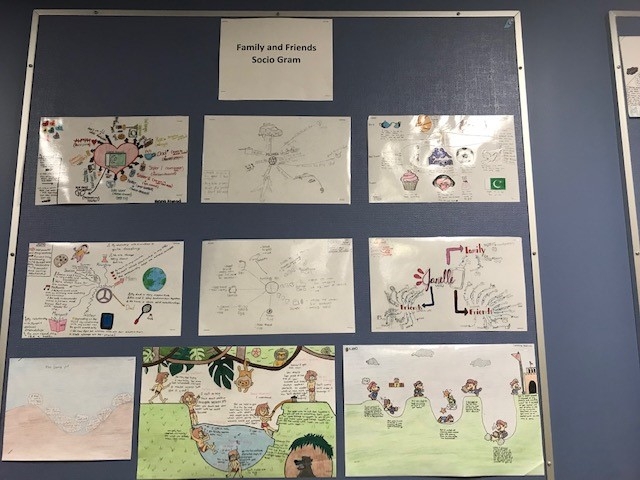
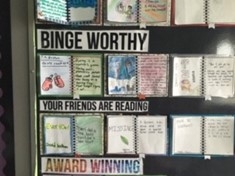 Promoting reading in our lives
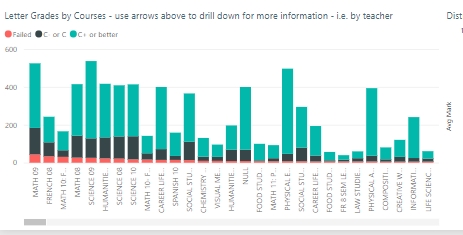
Our students are able gather our evidence through a variety of written sources. The following graph shows student success by course and the grades achieved. Every class and in all subjects, literacy skills are taught by teachers to help students access content and knowledge (skills). Literacy is foundational to all aspects of life-long learning.
As seen in the graph below, we have strong evidence that our students access and engage in curriculum to deepen their understanding and communicate their thinking to others.
June 2022 - Letter Grades by Course
(Source: PowerBI)
OUR FOCUS
Each and every day, among the variety of learning experiences presented to our learners, our team of educators focuses on thinking, reading, writing and communicating in all curricular areas. Our aim is to develop a strong literacy foundation that is fundamental for student participation in today's world.
Our students learning goals are:
- To improve students' ability to access information from a variety of sources and communicate ideas for diverse purposes.
- To improve social and emotional wellness by developing skills and learning strategies to deal with stress and anxiety and by developing positive relationships with trusting adults in the building.
All teachers, across all grades, provide students with learning opportunities aimed at increasing the literacy success rates of our learners. Students are provided opportunities to engage in learning experiences focused on phonemic awareness. To highlight and determine overall successes and gaps, we monitor the progress of a cohort across different subject areas.
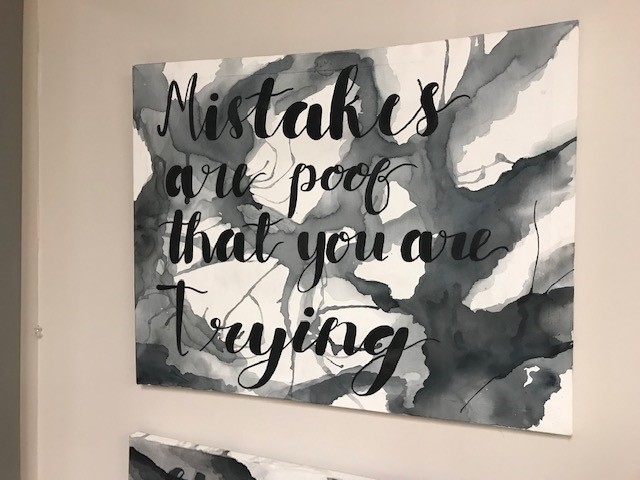 - Making mistakes is OK! It is how we learn.
 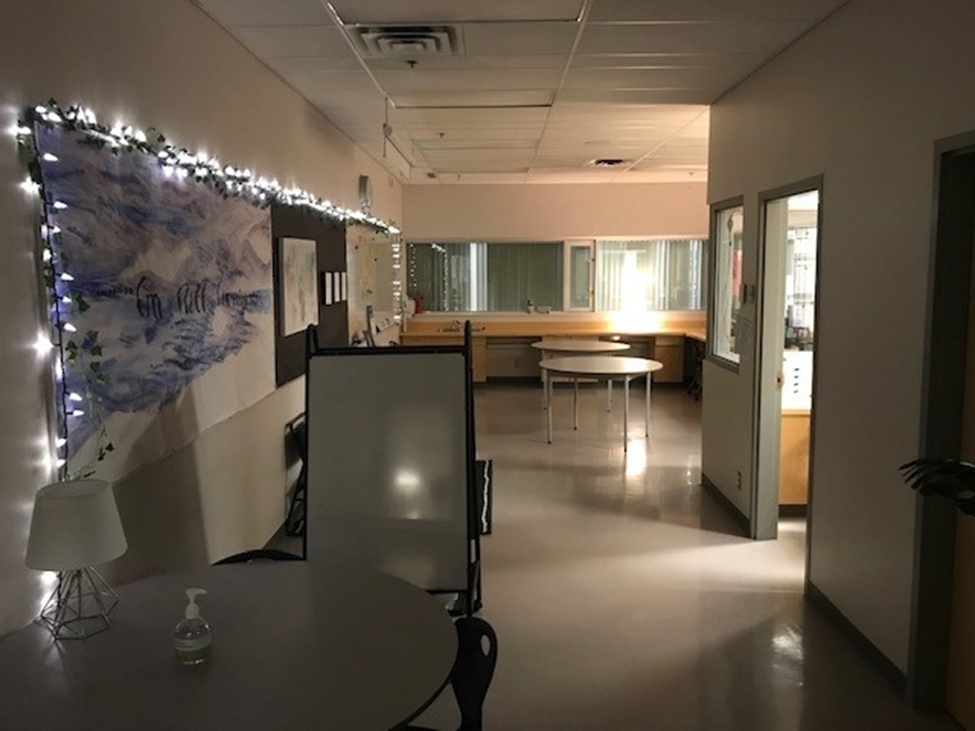 Calming spaces to practice
emotional regulation
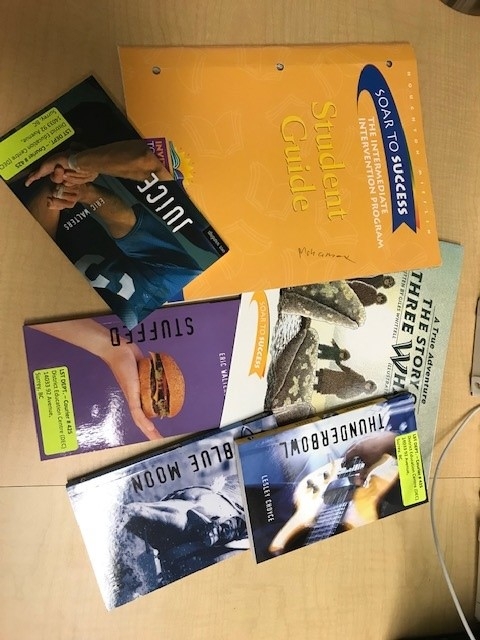
Some of the learning experiences being used to foster student growth in grade level fluency in reading and writing are:

 Resources
- Soar to Success
- Wilson Just Words Program
- Age-appropriate levelled readers
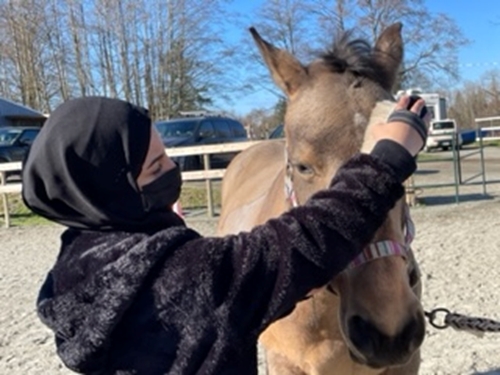
Making good connections with other students and caring adults in the school will have a positive impact on their learning and social-emotional well-being. Students are encouraged to join in activities that help with emotional regulation and managing stress and anxiety. Students have gone on a number of field trips to further strengthen these new connections (Sterling Stables, Community walking trips, Langley Alder Acres). Different speakers with similar backgrounds have also presented to the students sharing their challenges and how they overcame them.
OUR NEXT STEPS
Evidence of our students learning last year demonstrateds that our literacy focus is positively impacting our cohort of learners. When surveyed and asked to communicate the students progress, teachers from this cohort indicated that all students demonstrated growth in relation to the literacy goal. Similarly, our students have made gains in acquiring strategies to help them manage anxiety within the school setting.
We are continuing to work on supporting our two main goals for the next school year.
- To improve students' ability to access information from a variety of sources and communicate ideas for diverse purposes.
- To improve social and emotional wellness by developing skills and learning strategies to deal with stress and anxiety and by developing positive relationships with trusting adults in the building.
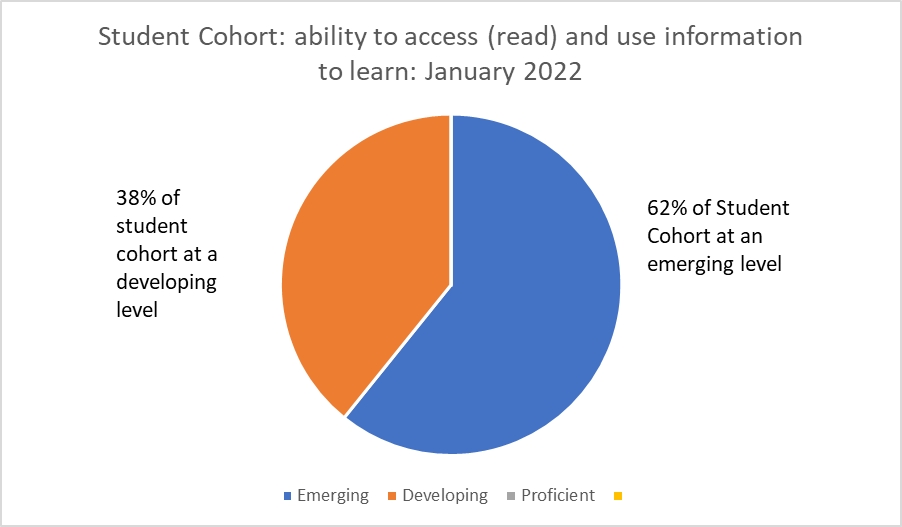
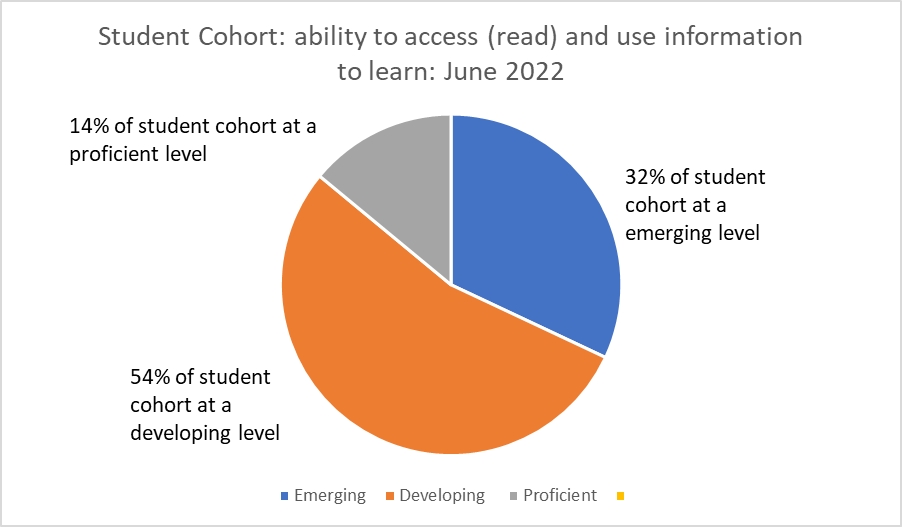
In relation to our literacy goal focusing on phonemic awareness the direct evidence is depicted below:
In relation to Goal 2, improving social emotional wellness, teachers have reported, based on observations, conversation and samples of students work, that all learners have developed an understanding of the strategies to assist in managing stress and are able to identify trusting adults within the school to get support.
This is one teacher's observation of increased resilience and trust within her classroom and the effect it had on readiness to learn and literacy.
"A pivotal moment for us was going on a field trip. It was an incredible exercise and students had very frank and open discussions. Without prompting, they began to share about their pasts and things that had happened in their lives. It was a light conversation, given the serious topics, where they were sharing and opening up. This is the moment when they started to feel safe and take the literacy lessons more seriously."
Reading fluency was observed in a variety of situations:
Another teacher observed that one of the students said she read something to her mom and her mother was very proud and impressed with her increased reading skills. Most importantly, this student learned that she could learn, and she now wanted to learn! The student noted that she "learned how to set [her bad] habits aside and and take risks." The teacher credited this change in attitude to a mindful approach to creating a safe environment and path for our students.
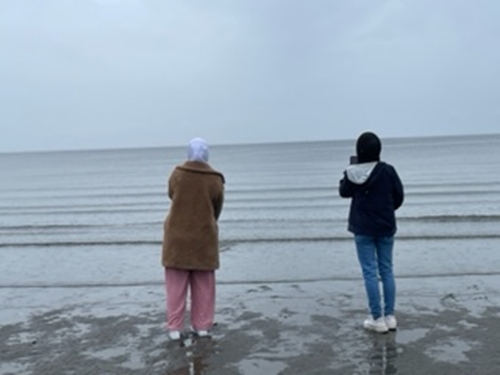
Based on classroom conversations, student work, and interviews, teachers have determined:
- Our best learning happened when we gamified lessons. Our students are competitive and loved to practice and apply their skills in games.
- The most meaningful learning occurred when students were recognized for their individuality, their personal stories, and even the smallest victories were celebrated.
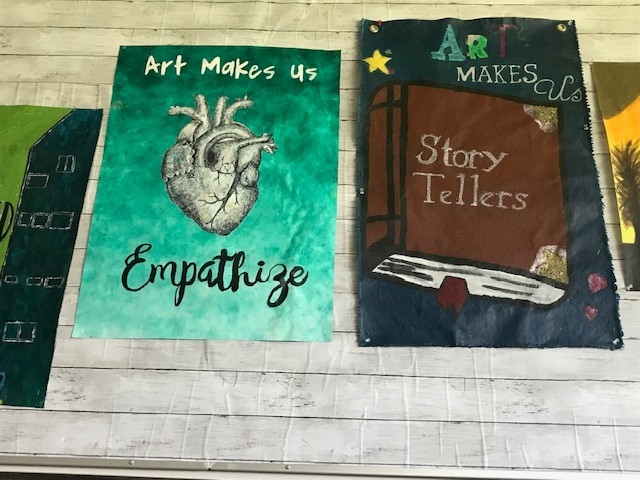
Looking Back and Looking Forward
Based on what we learned this past year, we have clarified our focus for the next year's learning. We will:
- continue to increase opportunities for students to regularly use reading strategies and thinking routines that guide their thought processes and support them in developing deeper understandings of text (print, visual, and digital)
- further explore how we can strategically support our learners in writing with intention and purpose.
- work to strengthen oral language strategies (speaking with expression, connecting to listeners, asking questions to clarify, listening for specifics, summarizing and paraphrasing).
Surrey Schools
Formed in 1906, the Surrey School District currently has the largest student enrolment in British Columbia and is one of the few growing districts in the province. It is governed by a publicly elected board of seven trustees.
The district serves the cities of Surrey and White Rock and the rural area of Barnston Island.