Prince Charles Elementary 25-26

OUR CONTEXT
Prince Charles Elementary is a vibrant elementary school in North Surrey, BC. The school is situated on the traditional, unceded, ancestral territories of the Semiahmoo, Katzie, Kwantlen, and other Coast Salish peoples.
Community:
At Prince Charles, we strive to embody and instill the value of community in our learners, emphasizing the significance of contributing to both our local surroundings and the broader society. We aim to cultivate an understanding among our students that being an integral part of a community entails nurturing ourselves, acting as stewards of the land, and caring for one another.

CARE
At Prince Charles, we use the acronym “CARE” which stands for “Cooperation, Accountability, Respect, and Effort” as our school focus. These virtues are directly taught by classroom teachers and celebrated daily with individual and class “kotchas.” Throughout the year, we gather as a school, each of these virtues being the focus. Students present individually and as a class as to what these virtues mean to them. Most importantly, we try to live these values everyday in how we approach our community and environment.

Identity & Diversity
Prince Charles is a diverse community, we celebrate our identity and individuality, embracing differences and connection. It is important that all learners feel a sense of belonging at Prince Charles. To support this in our learners, educators focus on social & emotional learning, equity, collaboration and mentorship.
Developing students’ sense of identity is essential because it lays the foundation for their well‑being, confidence, and capacity to learn. When students see their cultures, experiences, languages, and strengths reflected and valued at school, they feel a stronger sense of belonging and safety, conditions that are necessary for academic and social success. A strong, affirmed identity helps students understand who they are, what they bring, and how they fit within a community. It also supports resilience: students who know and value themselves are better equipped to navigate challenges, regulate emotions, and build healthy relationships. As a school, intentionally nurturing identity sends a powerful message that every child is seen, respected, and important, creating a learning environment where all students can thrive.
Student Engagement
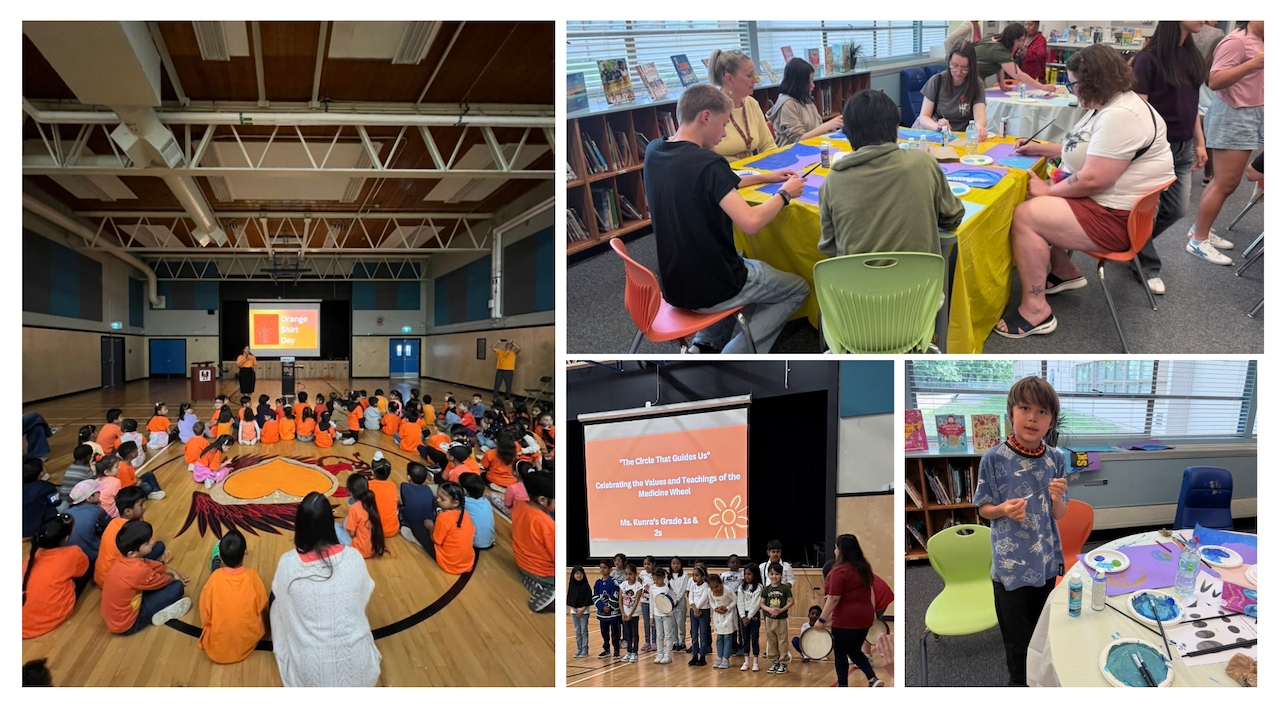
At Prince Charles, we believe student engagement is the foundation of learning and growth. Our goal is to ensure that every student experiences joy, feels safe, and develops a genuine love for school, knowing that when students are engaged, their learning deepens and their confidence flourishes. We prioritize engagement through student leadership opportunities, community partnership programs such as Girls in Action and Canucks 4 Kids, as well as intramurals, student clubs, sports teams, and spirit days. Our school staff, student leadership and PAC create an environment focused on student engagement by planning opportunities to connect and have fun. Together, these initiatives create a vibrant school culture where students thrive in a supportive environment and learning becomes a joyful experience.

Professional Collaboration & Development
At Prince Charles Elementary, staff are deeply committed to professional collaboration and ongoing development. This dedication is evident through initiatives such as two active professional book clubs: The Book Whisperer, which focuses on fostering a love of reading, and Small Groups, Big Results, which emphasizes effective small-group instruction.
Through these collaborative efforts and leadership opportunities, our staff continuously build professional capacity—expanding their knowledge, refining instructional practices, and strengthening their ability to meet diverse student needs. This shared commitment ensures that our school remains a dynamic learning community where educators grow together to create the best possible outcomes for students.
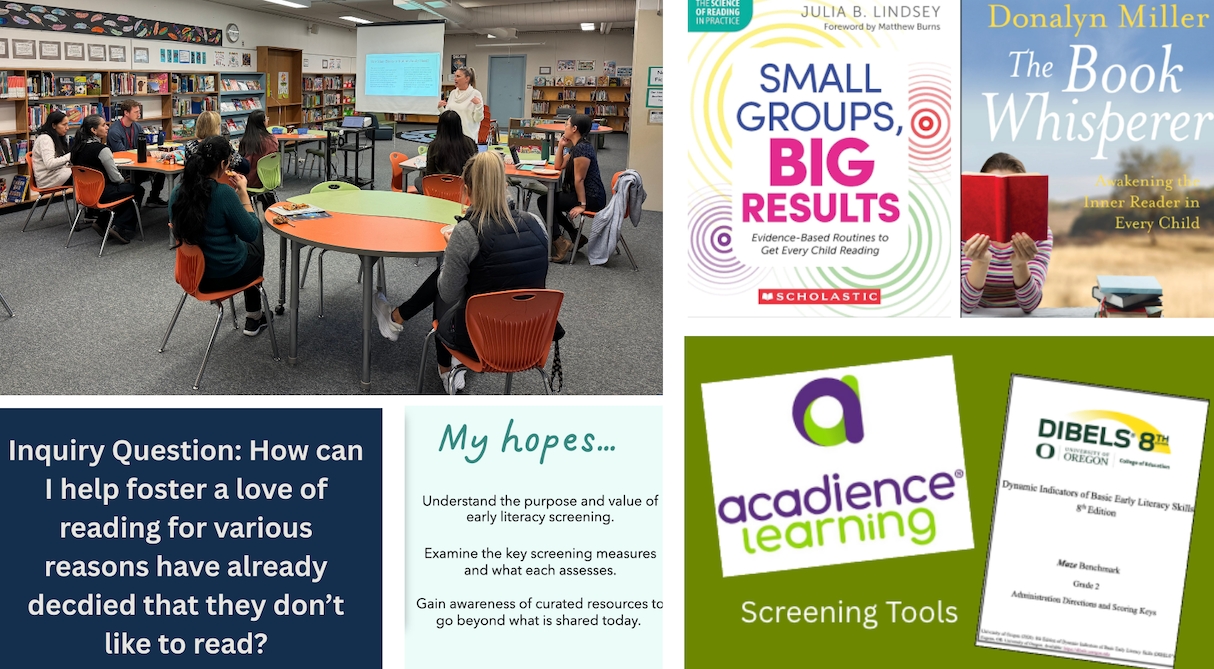
In addition, many teachers have embraced site-based leadership roles supported by our school district. These roles include mentorship, literacy success, racial equity, Indigenous learning, social and emotional learning, and digital learning. Many of these site-based leadership positions have created opportunities for site-based committess.

OUR LEARNERS
Education is a shared, ongoing journey that requires dedication, involvement, inquisitiveness, and the collective efforts of everyone participating in our children’s education. The BC curriculum is instrumental in fostering our students’ growth in these areas of collaboration, problem-solving, information exchange, and personal expression.
A crucial aspect of this educational journey is the enhancement of literacy skills, a vital life skill, encompassing the capacity to read, write, articulate, and reason in a manner that enables effective communication and comprehension of our personal experiences. The various methods our students employ in their literacy learning journey are showcased below.
Language and story can be a source of creativity and joy.
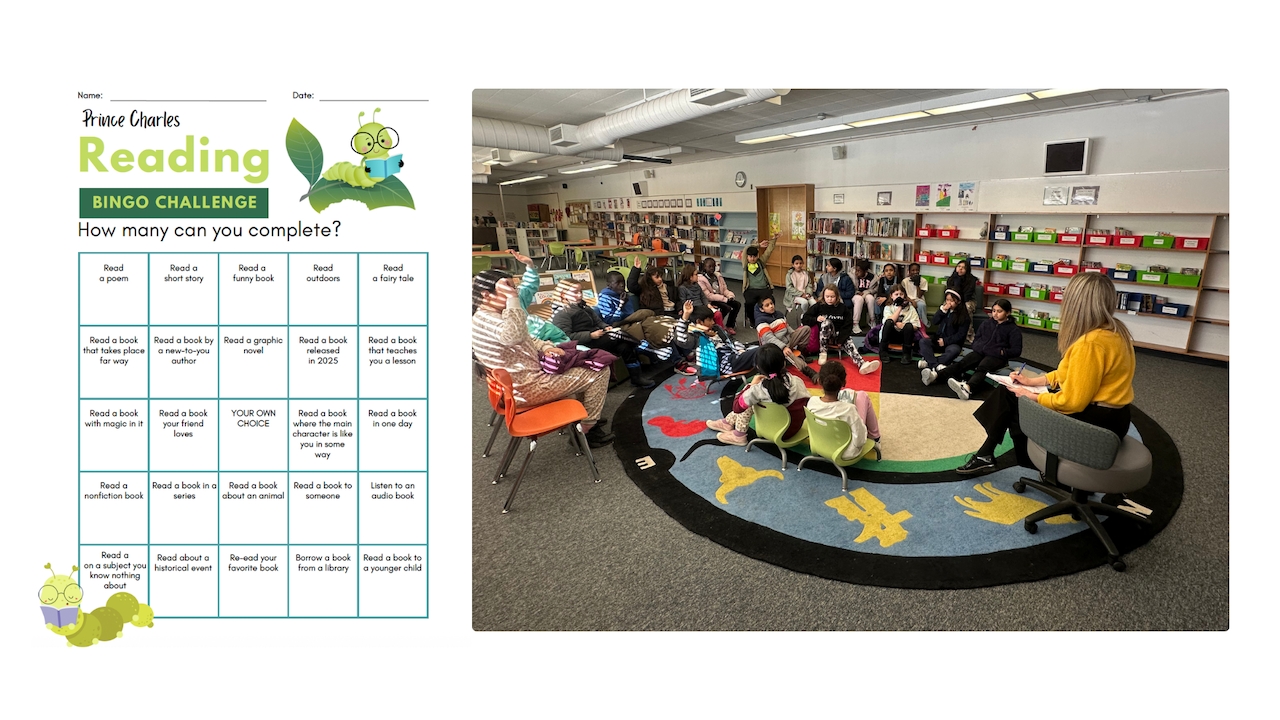
At Prince Charles, it’s important for all learners to develop a love of reading, as motivation and engagement around foundational to reading. Our learners voluntarily participate in book clubs to connect through story. Learners engage actively as listeners, viewers, and readers to develop an understanding of self, identity and community.
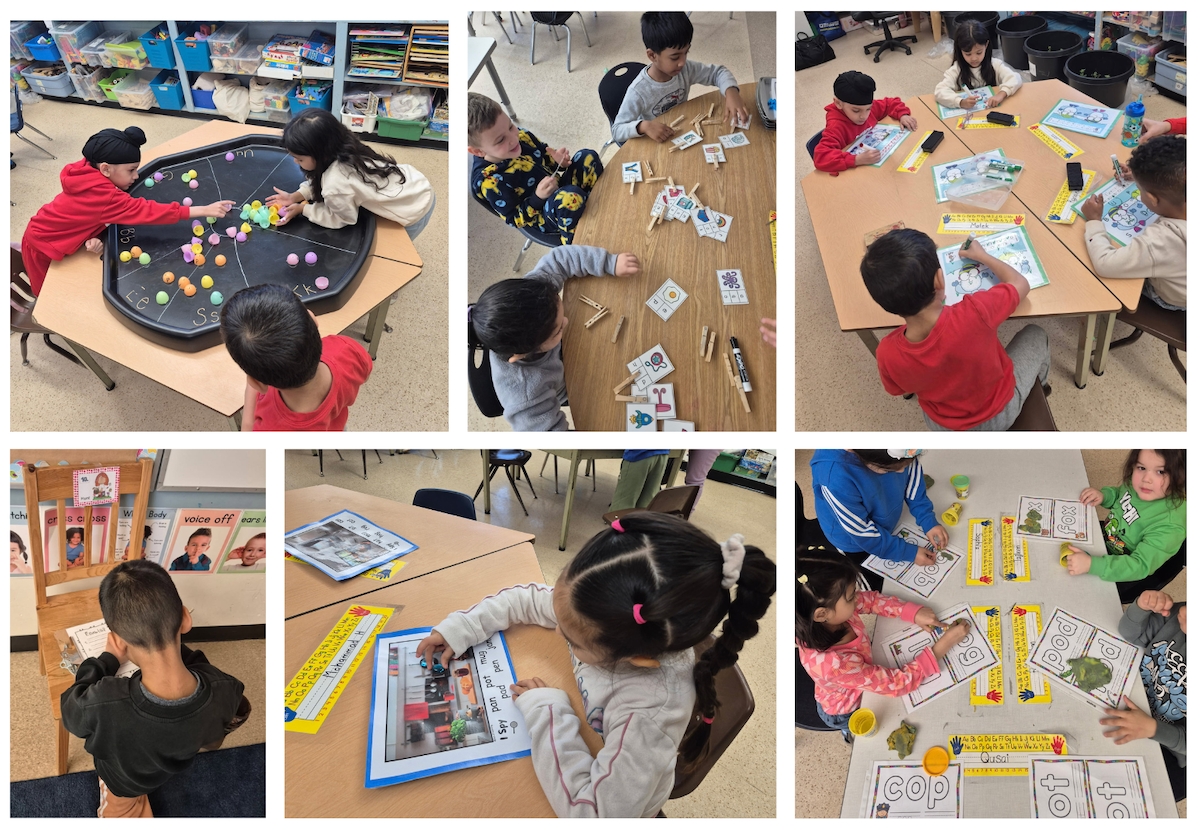
Our learners are developing phonemic awareness and an understanding of phonics.
Phonemic awareness and phonics are two of the five components of reading development. Phonemic awareness focuses on recognizing and manipulating individual sounds (phonemes) while phonics emphasizes the connection between sound a written letters. Our early primary teachers and early literacy teacher collaborate using UFLI and Heggerty resources to develop these essential early literacy skills.
Our learners show a commitment to reconciliation.
Our learning community is deeply committed to reconciliation, recognizing the importance of developing personal acts of reconciliation that honor the experiences and histories of Indigenous peoples. Through the First Peoples in Residence, students and staff are learning from and alongside Indigenous facilitators, embracing opportunities to witness… listen, reflect, and grow together. We value creating spaces where Indigenous students and community members can connect meaningfully.


As part of this journey, students are engaging in the practice of territorial acknowledgement, exploring its significance, and creating their own personal acknowledgements that reflect respect, understanding, and a commitment to reconciliation.


Indigenous students at Prince Charles have been connecting with indigenous students within our family of schools to share traditions, engage in land-based learning and to build relationships to support transition to high school.

OUR FOCUS
Literacy is the ability to read, write, speak and listen in a way that lets us communicate effectively and make sense of the world. Literacy is essential for learning, personal development, and well-being. As a staff, we have focused on reading, engaging in professional development in the science of reading. The Science of Reading identifies five pillars of reading development: phonemic awareness, phonics, vocabulary, fluency and comprehension.

Fluency & Comprehension
Reading fluency is the ability to read text accurately, quickly, and with appropriate expression. A fluent reader doesn’t have to stop and decode most words, which allows them to focus on understanding the meaning of what they’re reading. Fluency acts as a bridge between recognizing words and fully comprehending a text, when students read smoothly and with expression, their comprehension naturally improves because their cognitive energy is spent on meaning, not decoding. We have two cohorts that we are focusing on, a division of K students and two divisions of Grade 7. These classes are taught by our literacy leads.
 Fluency & Core Competencies
Reading fluency supports the development of the Core Competencies in the BC Curriculum by helping students more fully access and engage with learning. When a student reads with greater accuracy, pace, and expression, they are better able to understand texts and communicate their ideas clearly (Communication competency). Improved fluency also allows the student to focus on deeper thinking skills, such as making connections, asking questions, and analyzing meaning (Thinking competency). As fluency grows, the student often builds confidence and independence as a learner, supporting their Personal and Social development. Overall, strengthening reading fluency will help the student participate more actively and successfully across all areas of learning.
Kindergarten Cohort
One area of focus in the student learning plan is the use of Acadience Reading assessments to identify students’ levels of risk in developing reading fluency. This data helps determine whether students are performing at, above, or below expected benchmarks, and highlights specific areas of need. By using this information, educators can provide targeted instruction and monitor progress over time, ensuring that appropriate supports are in place to strengthen reading development.
In Kindergarten, teachers are implementing the UFLI (University of Florida Literacy Institute) Foundations program to provide structured and explicit instruction in foundational literacy skills, including phonemic awareness, decoding, and early fluency.
We focused on a cohort of 16 Kindergarten students, as this was the first year Acadience was administered at the beginning, middle, and end of the year. The following graphic outlines the progression of literacy development in Kindergarten, including the Acadience measures and the points in the year at which they are assessed.
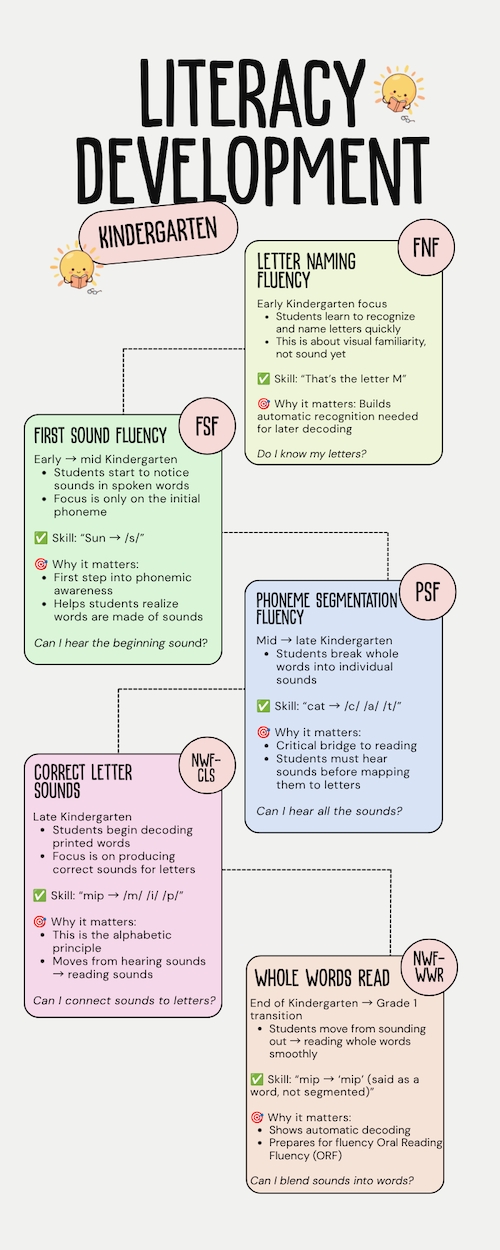
For the purpose of this student learning plan, we took a closer look at students who moved beyond sound awareness (PSF) into decoding (CLS) by the end of the year, as an indicator of their response to instruction.
Analysis of the data shows that 81% of students developed foundational reading skills by progressing from phoneme awareness (PSF) into decoding (CLS). This indicates that the majority of students are able to both hear sounds and connect those sounds to print, an important marker of strong Kindergarten literacy development.
Moving forward, continued focus will be placed on supporting students in developing automatic word reading (NWF‑WWR) to increase the number of students transitioning into fluent reading. The Acadience will be administered to all Grade 1 students throughout the year. Our Grade 1 teachers will continue using UFLI by breaking students into targeted instructional groups (ex. PSF vs CLS vs WWR) based on the Acadience data.
Grade 7 Cohort
Another focus of our student learning plan is a cohort of 48 Grade 7 students, where the emphasis shifts from learning foundational reading skills to strengthening reading fluency and comprehension.
Using DIBELS (Acadience) measures such as Oral Reading Fluency (ORF) and MAZE, we aim to identify students who may have underlying fluency gaps, as well as those who struggle with understanding complex text. While some students demonstrate adequate reading rate and accuracy, they may still require support in comprehension, vocabulary, and meaning-making. This data allows educators to more precisely target instruction, ensuring students are supported in developing both fluent reading and deeper comprehension skills necessary for success in intermediate grades.
Grade 7 teachers, who also serve as literacy leads, engaged students in daily oral reading fluency practice throughout the year. Overall, the data collected at the beginning, middle, and end of the year shows that students are making steady gains in reading fluency, as evidenced by consistent growth in ORF scores. The following graphic, hilights the main differences between the ORF and the MAZE measures...
 Here, two of our grade 7 students discusses reading strategies they have practiced this year when doing oral reading fluency practice.
Results
Analysis of growth across the cohort indicates that 67% of students demonstrated improvement in oral reading fluency (ORF), with an average increase of 8.6 words correct per minute. In contrast, comprehension growth, as measured by MAZE, was more consistent, with 93% of students showing improvement and an average increase of 9.7 points. MAZE results also showed a slight dip mid-year, followed by significant improvement by the end of the year.
Overall, the data highlights the importance of continuing to focus instruction on comprehension strategies, vocabulary development, and deeper thinking about text—particularly for students who demonstrate strong fluency but inconsistent comprehension. This data will guide our next steps, including maintaining explicit instruction in fluency while placing a greater emphasis on vocabulary and comprehension to support students in making meaning from increasingly complex texts.
OUR NEXT STEPS
Inquiry
In addition to our Grade 7 cohort, our literacy leads have focused on 5-7 Grade 5 students from four Grade 5 divisions. Literacy leads have used release time to demonstrate how to use the DIEBELS screening and progress monitoring tool and to model fluency practice instruction with the 4 divisons of learners that include these students.

Our teacher librarian has also focused collaboration time with these divisions to focus on reading stamina based on the strategies in Donalyn Miller’s “The Book Whisperer,” specifically building reading stamina through daily sustained silent reading and introducing book talks to spark curiosity. Stamina and fluency inter-connected in their relation to reading comprehension. When a student reads fluently, they use less mental energy to decode words. This makes reading feel easier and more enjoyable, allowing them to read for longer periods without becoming tired or frustrated. In turn, stamina strengthens fluency because the more time students spend reading, the more practice they get with word recognition, phrasing, and expression. Over time, this consistent practice improves fluency. Both skills directly impact comprehension: if a student struggles with fluency, reading feels slow and effortful, which can reduce stamina. Likewise, if stamina is low, they may not read enough to build fluency skills. Together, fluency and stamina create the foundation for understanding and enjoying text.
Part of our multi-year plan, is to focus on our Grade 5s this year, to monitor this cohort again next year and then finally Grade 7. We are curious to compare the data of this year and next year’s Grade 7s to this year’s cohort of Grade 5s when they are in their Grade 7 year (2027-2028). How will using screening tools and progress monitoring, in addition to daily fluency practice starting in Grade 5 impact students by the time they reach Grade 7?
Morphology
Next year we are introducing Bug Club Morphology as a literacy resource for Grade 4-7, designed to teach morphological awareness, that is, how words are built from meaningful parts such as prefixes, suffixes, and roots. Its purpose is to help students better understand word structure, spelling, and vocabulary so they can become stronger readers and writers.
This resource empowers students through explicit instruction in word structure, which improves vocabulary knowledge, word recognition, and reading comprehension. The program includes a research‑based scope and sequence, explicit lessons, teacher scripts, word‑study activities, reading passages, and integrated vocabulary, oral language, and writing tasks.
This aligns with Science of Reading research showing that explicit morphology instruction strengthens spelling, vocabulary, and reading comprehension, particularly in upper elementary and middle grades.
Our plan, is to use summer professional development and the admin day in September to focus on learning and modeling this resource so teachers feel confident using it as an instructional tool during the 2026/2027 school year.
Responding to Readers
Three new teachers will assume the literacy lead role for Responding to Readers to build school-wide capacity. They will work as part of a school-based cohort alongside this year’s literacy leads and other interested teachers. The focus of Responding to Readers is to strengthen teachers’ ability to use reading assessment and screening data to inform responsive, evidence-based instruction. Through collaborative data inquiry, teachers will deepen their understanding of student reading development, monitor progress over time, and design targeted instructional responses. This work emphasizes building data literacy, implementing high-impact classroom routines, and making teacher impact on student learning visible through ongoing reflection and adjustment of practice. Expanding the number of teachers with access to district professional learning, development, and collaboration will strengthen instructional consistency and deepen expertise in literacy practices across the school.
Screening Tool
Primary teachers (Kindergarten through Grade 3) will implement the Acadience screening tool with all learners to support early identification of literacy strengths and areas of need.
To ensure effective use of the data, teachers will participate in targeted professional learning during summer professional development sessions and on the September administrative day. This learning will focus on:
- administering the screening tool with fidelity
- interpreting Acadience data (including composite scores and subtests)
- using screening results to inform Tier 1 instruction and targeted interventions
- identifying students who require additional support (Tier 2 and Tier 3)
The goal of this work is to build staff capacity to use screening data responsively, ensuring that instruction is aligned to student needs and that early literacy gaps are addressed proactively.
Surrey Schools
Formed in 1906, the Surrey School District currently has the largest student enrolment in British Columbia and is one of the few growing districts in the province. It is governed by a publicly elected board of seven trustees.
The district serves the cities of Surrey and White Rock and the rural area of Barnston Island.