Prince Charles Elementary
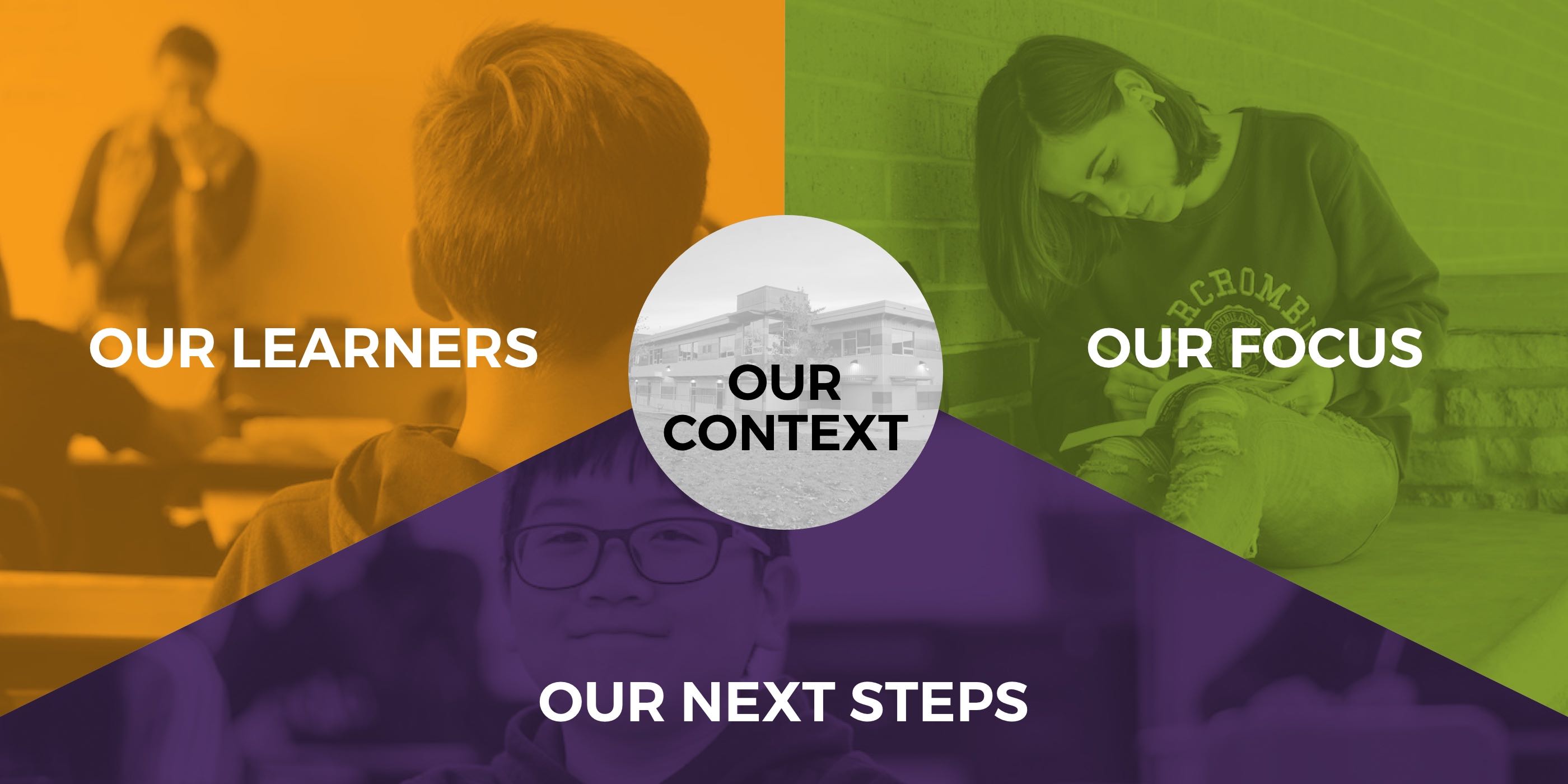

OUR CONTEXT
OUR LEARNERS
Numeracy is the basis for learning in multiple disciplines within a student's life. Be it basic numeracy such as addition, advanced numeracy such as calculus, or the patterns relating to music and dance, numeracy touches many facets of the world in which our students learn and grow.
With a focus on learning and engagement, it is our goal to create an environment with equity for all learners at its core. Thinking and Communication, two of the Core Competencies in the British Columbia Curriculum, are key to interpreting and expressing the learning and understanding of concepts taught in numeracy.
Our students can use specific mathematical vocabulary to be able to explain mathematical concepts and develop strong number sense.
Students across all grade levels must be able to consider, interpret and express their understanding of numeracy. As such, empowerment of learners to confidently communicate their own understanding using specific numeracy terms is something that is important to the learning of every student. In this video, Jaysukh, a grade two student, is working on double digit subtraction with regrouping and can explain to the teacher why regrouping is required in the equation.
Our students can use hands-on materials to express numeracy concepts discussed in class and apply them to real life situations through collaboration and discussion with classmates.
The use of hands-on manipulatives is a key component of learning for our students across all grade levels. Being able to express one's understanding of a concept and then demonstrate that understanding in a tactile way is important for all learners. In this example, Grade 5 students are rolling dice to create fractions and then using multiplication charts to identify fractions greater than one, and fractions less than one. Their goal is to order them from least to greatest without repetition or inclusion of equivalent fractions. To do this, they must talk with partners to check and confirm appropriate ordering is taking place, be able to identify equivalent fractions, determine common denominators, and recognize fractions greater than or less than in relation to each other.
Our students can recognize the primary components of word problems and focus on what the question is about.
Being able to identify the clues given in a word problem based on specific math vocabulary is an important skill for a student's growth in numeracy. Recognizing the words related to specific actions such as sum, altogether, difference, groups, more/less than, to name a few, is a useful skill that builds confidence in our learners, reduces stress when students are faced with a word problem, and helps them to resolve word problems in a self-assured manner.
 Students working on word problems using the computer
OUR FOCUS
Our students come from varying backgrounds and diverse home environments, and we want to help them reach a universal understanding of numeracy through discussion and collaboration. It is our goal to develop the fluency of all our learners so that they can express their thinking and discuss developing ideas and questions in a confident and clear manner.
Our students’ learning goals include:
Recognition and use of mathematical vocabulary
A developed sense of numbers, achieved using hands-on manipulatives and text related activities
The ability to discuss and interpret the results of numerical equations through oral, written and representational expression
The ability to make student thinking visible through the use of manipulatives, collaborative discussions, and descriptive writing
Developing listening skills and the ability to respect others’ ideas and contributions
Working to develop a growth mindset and increase learning stamina when approaching new and complex topics
Learning to connect with, and understand the relevance of, mathematical concepts through relationships to personal interests and real-world situations
Developing peer to peer teaching skills
Exploring the knowledge, skills, and processes required for learning competency in each grade
Our cohorts engaged in the application and development of these goals. This group initially included Grades 2, 3, and 4 students, with the expectation that the remaining grade groups will look to join in the coming year. The learners in these groups include a diverse range of students with different learning needs and backgrounds. Over the next year, our cohort will be having scheduled collaborative meetings to discuss the evidence of growth and data collected in individual classrooms. We will be looking for evidence that demonstrates that students are articulating their mathematical knowledge, using the desired vocabulary, and highlighting their grasp of number sense.
OUR NEXT STEPS
Our cohorts intend to initiate our school plan with the following inclusions in our individual classrooms.
Direct teaching of mathematical vocabulary using visuals and labelling terminology in appropriate contexts
Institution of number sense routines; 10-15 minutes of focused time each morning where students can learn through discovery and play, while practicing their number sense
Delivering scaffolded activities to help promote number sense and increase students' confidence in their use of mathematical vocabulary
Guided math groups for different ability levels to assist learners in each class reach a grade appropriate understanding of number sense through guided practice
Prioritize teaching students how to make their thinking visible through the use of manipulatives, text, and oral discussion utilizing appropriate math terminology
Focusing on introducing word problems through the use of specific math vocabulary so students can identify the unimportant words/parts vs. important words that signal the specific calculations required by the question
Ensure that teachers seize upon opportunities to expand the mathematical vocabulary of students when presented with teachable moments
Introducing numeracy brain breaks in different situations aside from math class, such as drama and physical education
Ensuring a focus for in-class support from the Learner Support Team is applied to numeracy
Creating and updating math journals with students throughout the year so as to create a tool they can refer to in future situations
Establishing a culture of reflection and sharing within the classroom between the teacher and the students, and amongst colleagues as a means of creating a discourse around the idea that all learners are different and come to answers in different ways
Promoting engagement with curricular materials through play and hands-on learning with the use of tools such as playing cards, dice, dominoes, and math manipulatives
Surrey Schools
Formed in 1906, the Surrey School District currently has the largest student enrolment in British Columbia and is one of the few growing districts in the province. It is governed by a publicly elected board of seven trustees.
The district serves the cities of Surrey and White Rock and the rural area of Barnston Island.