Port Kells Elementary 25-26

OUR CONTEXT
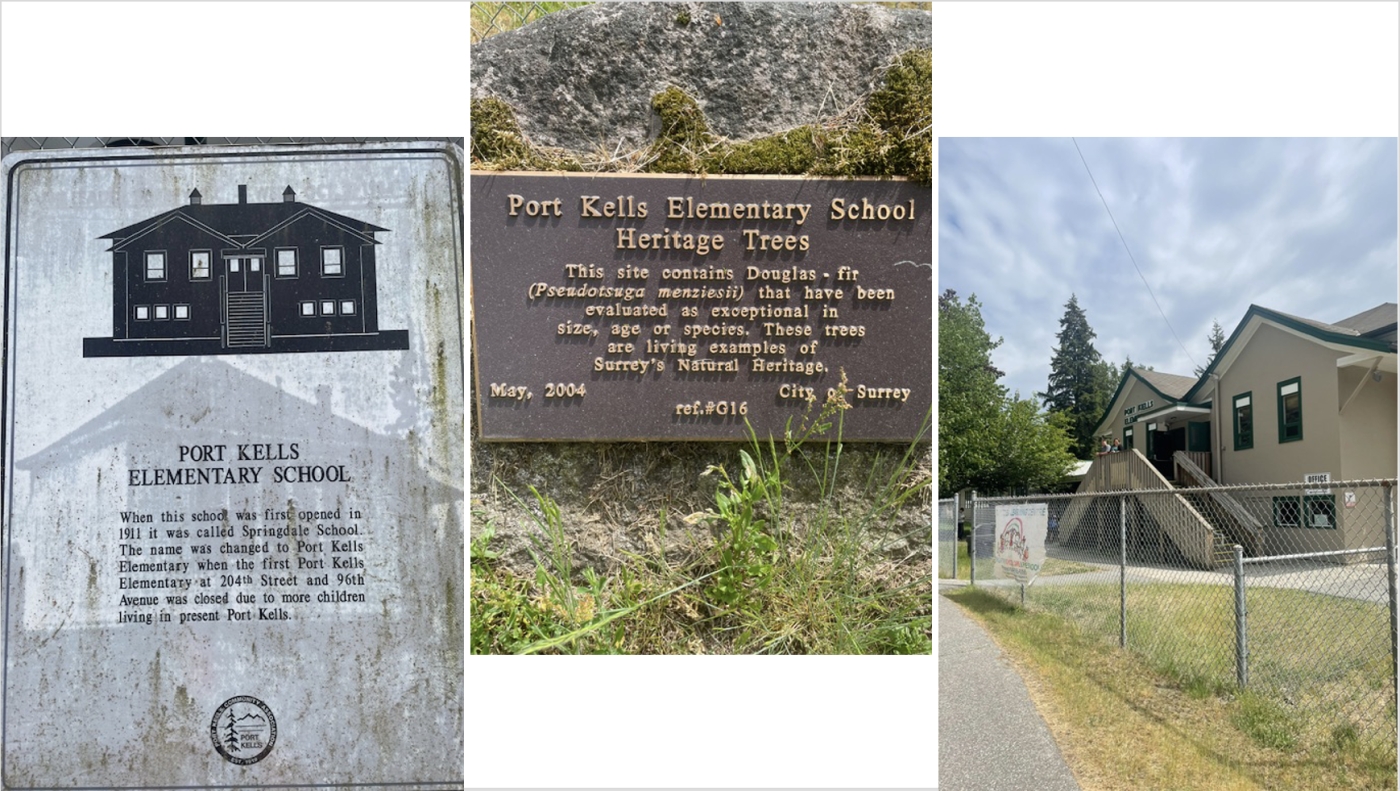
Port Kells is a close knit, rural community set in the northeast corner of Surrey with significant history. The first Port Kells School opened in 1891 and the current Port Kells school building opened between 1907 and 1909. Later on as the community grew and evolved, an additional building was added on the eastern side. The two buildings are joined by a covered area where students congregate and play.
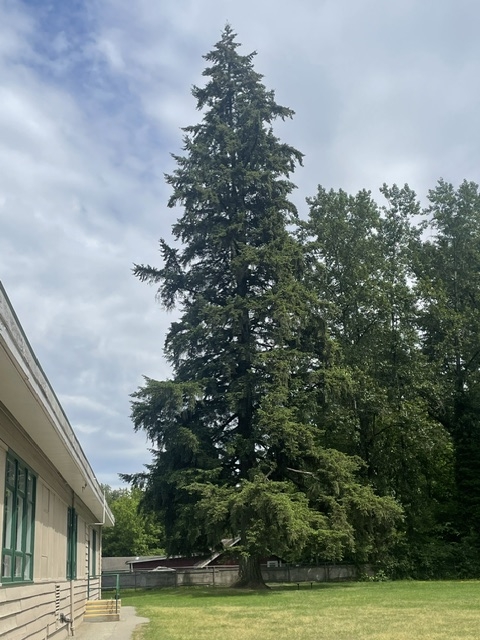
Port Kells Elementary is located on a large, beautiful grounds. There are massive evergreen trees that provide shelter from rain and shade from the sun. Students lovingly have named one specific Douglas Fir tree "Big Doug"
As a school with approximately 70 students, a big part of our school is the connection to the Port Kells Community. Our student population has traditionally been quite stable, and includes students from families who have had multi-generations of family members learn and work in our school. Recently, we are seeing families move into and out of our community more often.
Because of our small size, all staff get to truly know each of our students and take part in the students' learning. As we are comprised entirely of combined classes, teachers and students frequently work together for more than one year. This enables our teachers and students to build a strong connection over multiple years. At Port Kells, we work together collaboratively to ensure that all of our students can reach their full potential and that we can foster a school community where students feel safe to learn and want to take risks, make mistakes and explore. At the forefront of our mindset is the First Nations' principle, "Learning takes patience and time and that learning requires exploration of one’s identity."
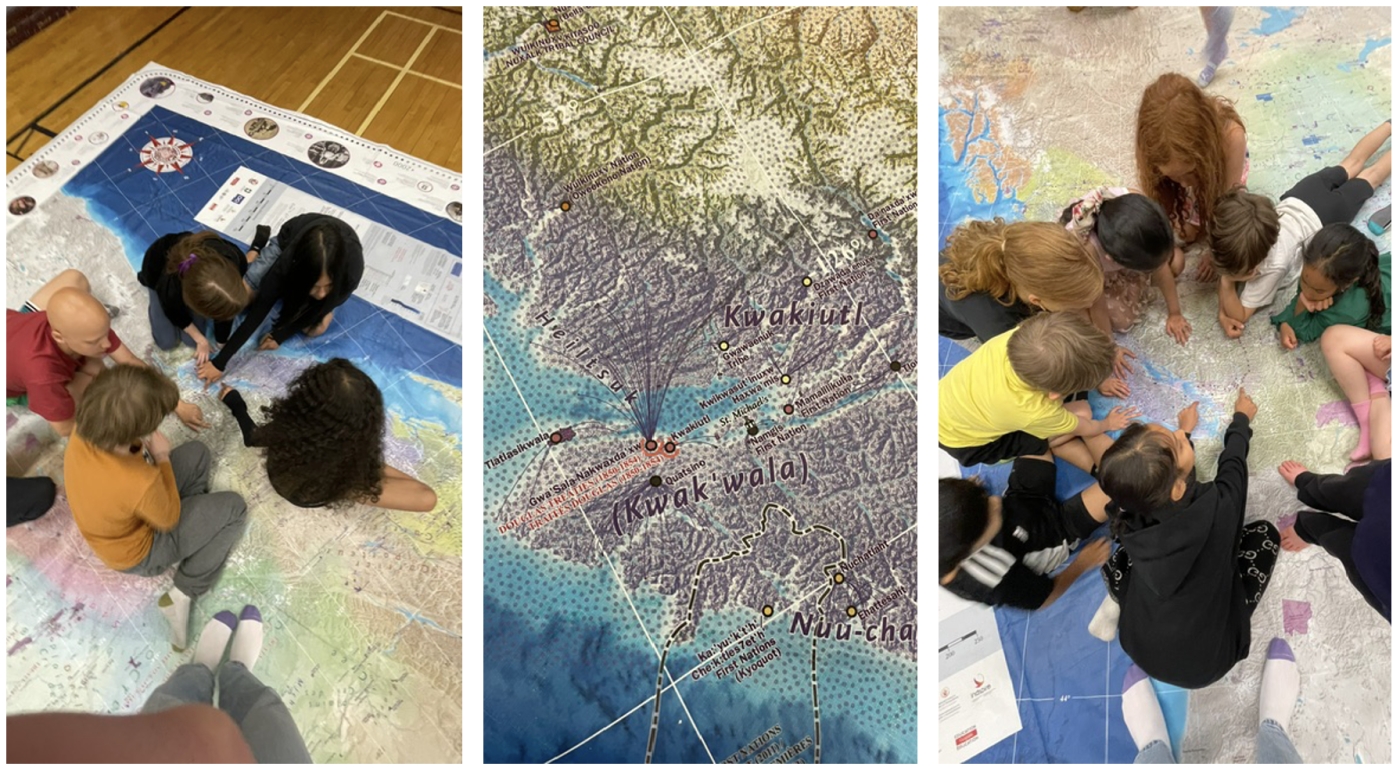
Approximately 28% of our students at Port Kells are Indigenous and we are committed to recognizing and celebrating the diversity of the students in their Indigenous ancestry. First Peoples Principles are woven into learning daily and students are encouraged to share and learn about their culture, interests and history. Ensuring that resources are available that reflect authentic Indigenous experiences and stories is a priority for Port Kells Elementary. This includes the understanding that there are many Nations across North America that hold unique traditions, cultures and language.
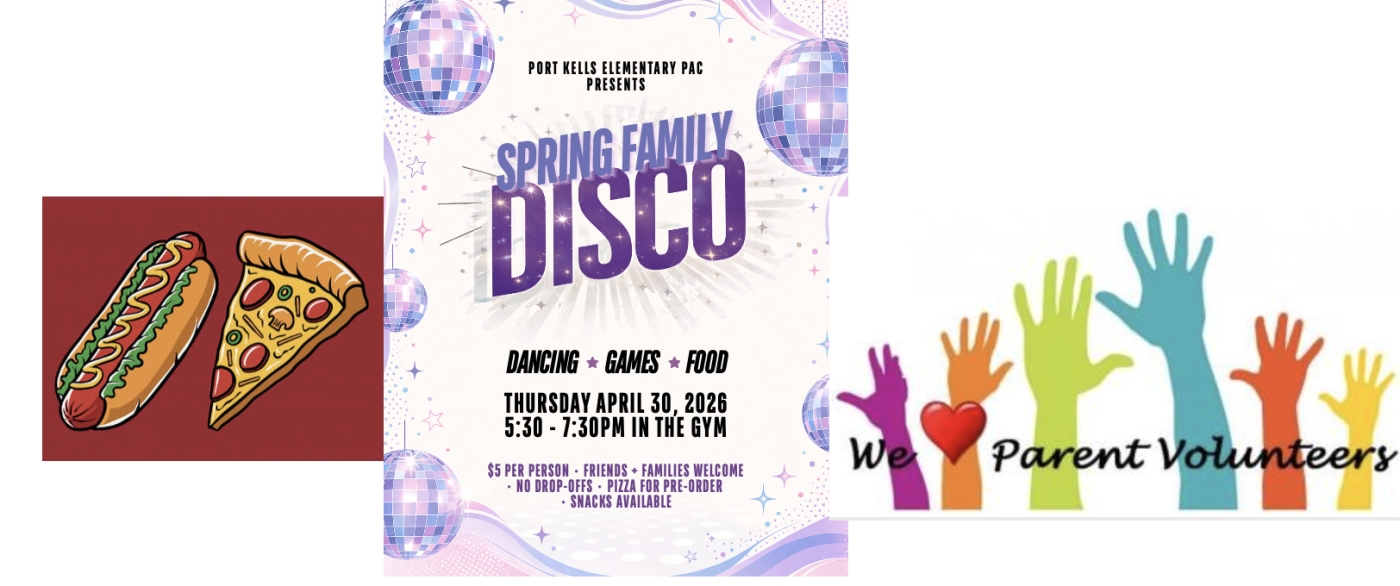
 At Port Kells, we have a dedicated PAC. Our PAC is hard working, industrious, and provides students with an 'enhanced school experience'. Some examples include, Pancake Breakfasts, family events (Family Disco), Welcome Back Meet and Greet, coordinate Hot Lunch and Treat Days and support class field trips. Our students know the PAC members and enjoy seeing them around our school. A huge bonus of a small school is that our staff know our parent community as well as our students.
Port Kells is a space where students truly feel an extension of their home. Students, staff and caregivers are all dedicated to providing the best learning environment possible.
OUR LEARNERS
Literacy is a core competency embedded across all areas of learning in BC’s curriculum and is central to supporting our learners develop reading, speaking, writing and listening skills as they collaborate, problem solve, share ideas, exchange information, and express their individuality.
Literacy is a fundamental life skill. It is the ability to read, write, speak, and think in a way that lets us communicate effectively and make sense of the world. Communication – a core competency embedded across all areas of learning in BC’s curriculum – is central to supporting our learners develop their literacy skills as they collaborate, problem solve, share ideas, exchange information, and express their individuality.
Students learn new information, build their vocabulary and expand on their ideas through reading. They use language to identify, create, and share ideas, feelings, opinions, and preferences. The students understand the importance of reading for information and understanding. They also know that having an abundant vocabulary allows them to express their thoughts and ideas, and understand others.
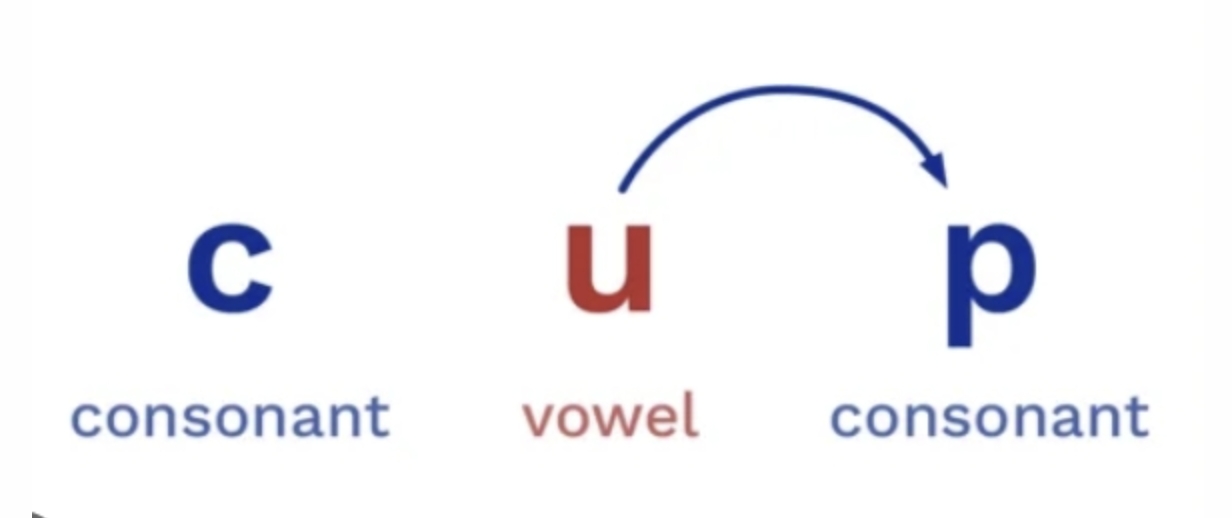
Our learners work hard to grow their reading skills. Students work hard to understand the connection between letters and sounds, and staff use engaging and researched-based approaches to teaching. This awareness of letters and their corresponding sounds is called Phonemic Awareness. In the beginning stages of writing, students memorize the letters and sounds which creates a "code" called phonics. Using this "code" or phonics, students begin to read short words that have a consonant, vowel, consonant (CVC) pattern. As students progress, they learn more about words and apply knowledge of phonemic patterns to their reading.
OUR FOCUS
Literacy Foundational Skills Focus
At Port Kells Elementary, we will be shifting our focus to reading. Staff will begin by ensuring that all students are able to decode words efficiently and effectively. This process typically begins at the primary grade levels, however at Port Kells, we have students who continue to require this support in the intermediate grades.
We are fortunate to have teachers in the primary grades who recognize the importance of phonemic awareness and phonics instruction in developing good readers. Leveraging the excellent skills and knowledge of primary staff members, we will be engaging in screening all students in grades K to 7 at the beginning, middle and end of the school year. During the year, there will be a focus on developing letter-sound relationships and then learning about more complex word and phonemic patters in words.
We understand that developing student knowledge of phonemes and providing explicit phonics instruction are foundational to being an effective reader. Consistent, daily review and practice are invaluable in the retention of letters and their sounds. Students will be provided with many opportunities to review letters and sounds in various ways each day.
"Consistent repetition helps students retain letters and their sounds. ELL students will learn to discern slight differences in sounds i.e. pulled vs jumped = pull-d vs jump-t."
- LST teacher
-Phonemic awareness is a specific aspect of a learner's phonological awareness: a child's ability to segment broken words into phonemes and to blend phonemes into words indicates a developing phonemic awareness.
-Phonological awareness involves the abilities to hear and create rhyming words, segment the flow of speech into separate words, and hear syllables as 'chunks' in spoken words.
- K/1 Learning Standards, BC School Language Arts Curriculum
-Using knowledge of language patterns and phonics to decode words; identifying familiar and 'sight' words; monitoring (asking: Does it look right? Sound right? Make sense?)
-Recognizing and identifying word patterns/families
- Grade 2/3 Learning Standards, BC School Language Arts Curriculum
Given the importance of these areas, we will engage in daily use of these materials in primary grades to support an improvement in year-end reading scores. Student literacy and decoding skills are assessed at the beginning, in the middle and at the end of the school year. They are also assessed consistently throughout the year to guide instruction. We will also compare the year-end student reading assessments from June of 2026 with June of 2027 to look at growth over a twelve month period.
OUR NEXT STEPS
What We Will Do
Reading begins with letters and sounds. Following the science of reading, our staff is focussed on first ensuring students at all levels have a solid phonemic awareness. They then understand how to build on those skills and help students become confident readers who are able to comprehend what they read.
Students in primary grades have had a targeted and significant exposure to phonemic skills and move to building more vocabulary and reading more unfamiliar words. Teachers are curious about the bridge between a strong foundation in phonemic awareness and the ability to read and comprehend information efficiently. Furthermore, upper intermediate teachers will provide consistent instruction in word patterns to help students decode more complex words.
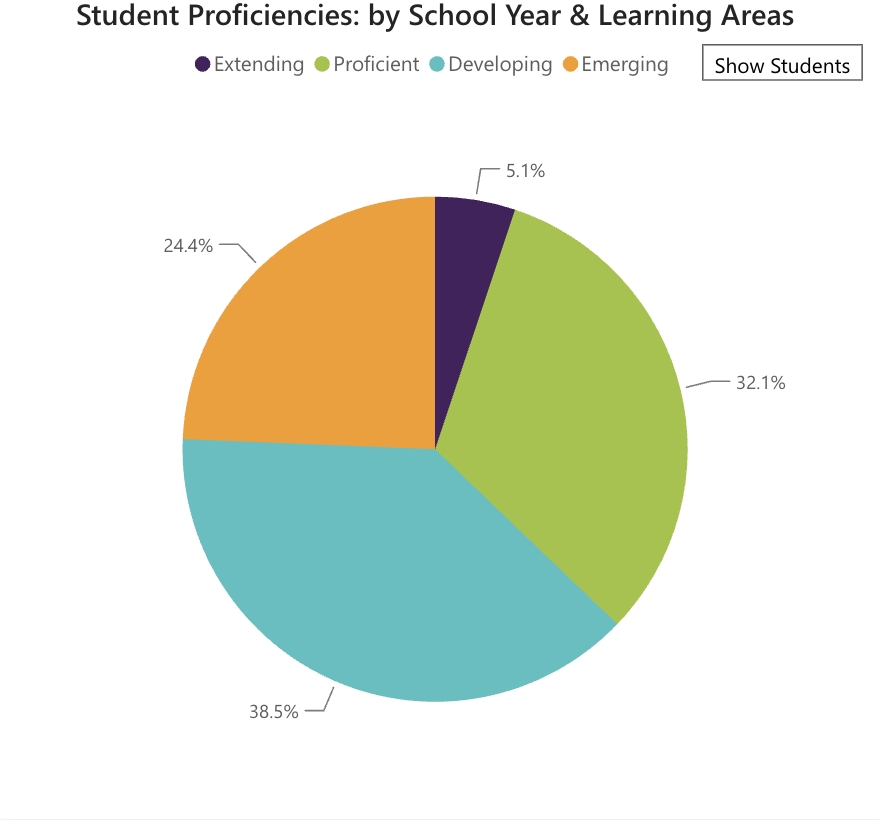
In June, 2025 data regarding English Language skills showed us that the majority of all students attending Port Kells Elementary were developing in their skills. This is a very general view of all skills related to Language Arts. It is the most current data we have at this time.
 Analysis of the Data So Far
It is worth noting that the data collected at Port Kells Elementary is susceptible to great swings due to the small school population. Percentages are significantly affected by one or two students either added or removed in categories.
Collecting Reading Data
Teachers are focused on assessing and teaching decoding words and comprehension skills in students. Students were assessed on basic phonemic awareness in all grades and this will continue into the 2026-2027 school year. In upper primary and intermediate grades, there will also be a focus on assessing decoding and recognition of word patterns. As these students develop their decoding skills, we will add assessment focus to reading comprehension.
Most of the intermediate teachers spent time learning to use the same assessment tool for reading. In the 2026-27 school year, they will focus on gathering information focused on phonemic awareness and decoding skills, and basic comprehension skills in the fall and then again in the spring.
Primary students were assessed on letter/sound knowledge early in the 2025-26 school year, in the middle of the year and at the end.
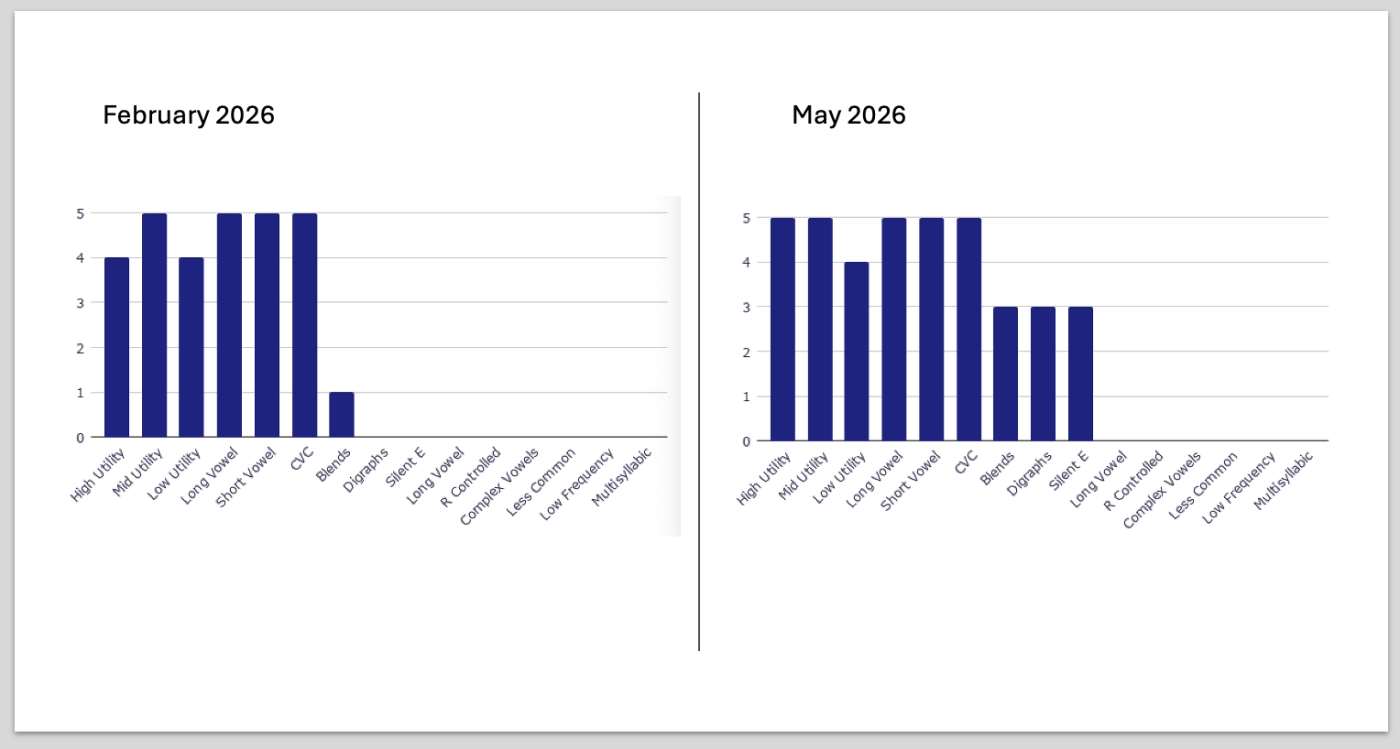
These graphs show that the consistent review of letter/sound relationships have a positive effect on phonemic awareness in mid-primary grades. Students also added significant skills in the word pattern areas as they became more familiar with how letters are combined to create sounds and therefore words.
Staff will complete the same process in the 2026-2027 school year. Our goal is to increase phonemic awareness as early as possible in order to improve reading comprehension and fluency for students as they move forward in their school journey.
Small Group Analysis
A small group of primary students make an interesting cohort to focus on. They have developed an understanding of the letters and the sounds each one makes, however they continue to work on applying what they know to decoding unfamiliar words. This group's data will be analyzed in more depth in the 2026 - 27 school year.
In addition, there will be an individual focus on students with significant gaps in their reading skills. Students who are in upper primary and intermediate grades who do not know all of their letter/sound relationships will receive targeted, consistent review from as many staff members as possible in order to increase their reading fluency.
Indigenous Students
Approximately 28% of the students at Port Kells are Indigenous. With regards to reading, the Indigenous students at Port Kells demonstrate a variety of stages in the development of reading. For some of the students at Port Kells, we will be working hard to build background knowledge and leverage individual experience which will support vocabulary development. Students have been, and will be, supported by all staff members who are committed to building strong relationships with students. More specifically, the staff members are focused on building strong connections with students who are at risk in their reading skills by engaging in conversation whenever possible, taking great care to support student individuality and interests, and to create safe, alternative spaces for students to take risks. Teachers and the Teacher Librarian ensure that there is literature created by Indigenous authors and opportunities to share and discuss this content with all students.
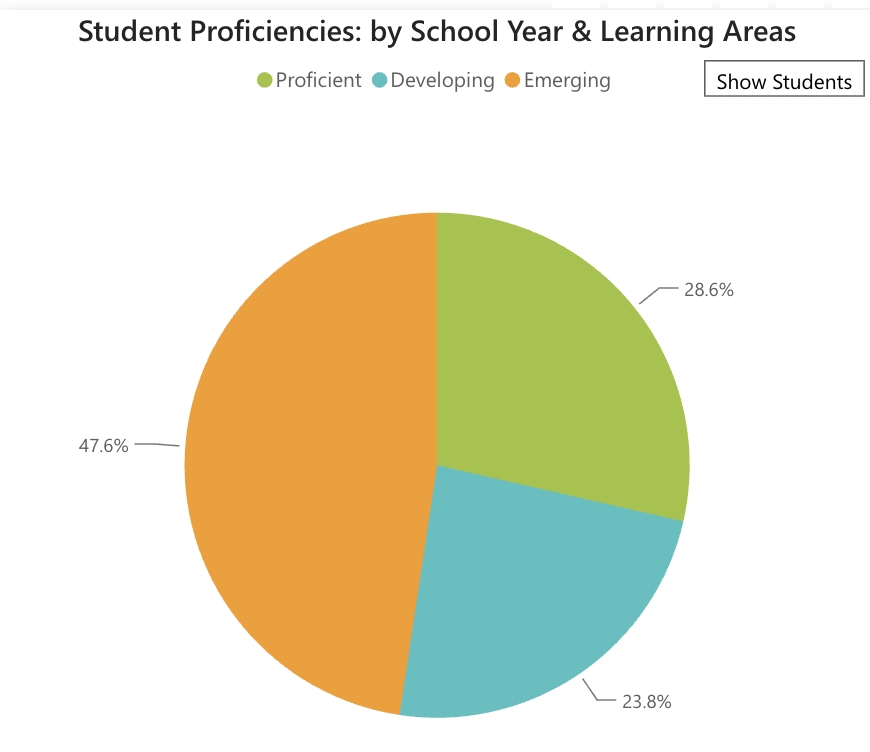
Data from the 2024-2025 school year shows us that about half of the Indigenous students were emerging in their Language Arts skills. Dedication to building connections with students and learning about their interests/preferences will support reading development for the Indigenous students at Port Kells Elementary. Many of these students will receive very targeted, individual review of phonemic skills as consistently as possible from multiple staff members.
Our team believes that a focus on early phonemic awareness as is rooted in the science of reading, will improve literacy skills by the time that students reach intermediate grades.
Surrey Schools
Formed in 1906, the Surrey School District currently has the largest student enrolment in British Columbia and is one of the few growing districts in the province. It is governed by a publicly elected board of seven trustees.
The district serves the cities of Surrey and White Rock and the rural area of Barnston Island.