North Ridge Elementary 25-26

OUR CONTEXT
We respectfully acknowledge that Surrey Schools reside on the traditional, unceded and shared territories of Coast Salish peoples: The q̓íc̓əy̓ - Katzie, the q̓ʷa:n̓ƛ̓ən̓ - Kwantlen and the SEMYOME - Semiahmoo First Nations: the stewards of this land since time immemorial. We highlight this history knowing that relationships and partnerships based on respect with the Indigenous peoples of this land are important for truth and reconciliation.
North Ridge is a wonderfully vibrant school of 485 students. We are a community of culturally diverse learners. At North Ridge, there are over 30 languages spoken including English, Punjabi, Urdu, Hindi, Pashto, Tagalog, Somali, Arabic, Bengali, Dari, Sinhala, and Swahili. We love creating opportunities for our students to celebrate their own backgrounds and learn about each other’s backgrounds. One way we do this is through our school-wide Multicultural Assembly where students proudly display their beautiful clothing, music and dance performances.
We are proud of our continued learning and focus on Indigenous worldviews at our school. The First People’s Principles of Learning is evident in all of our classrooms and is demonstrated authentically by sharing circles within the classroom, place-based learning outside in our beautiful forested area, availability of authentic stories written by Indigenous authors, intentional teaching of the injustices Indigenous Peoples have faced since colonization, as well as the resilience and strength of Indigenous Peoples whom we continually learn from. This year, we had First Peoples in Residence Week at North Ridge where students and staff had the opportunity to learn from Indigenous Cultural Facilitators. Thanks to our hardworking PAC, we were also able to book a whole-school theatrical presentation for How Raven Stole the Sun.
North Ridge’s students enjoy participating in extracurricular activities such as student leadership, athletics teams, Reading Link Challenge, Young Entrepreneurs’ Fair, Scholastic Book Fair, the Talent Show, and more. These opportunities not only enrich student learning and engagement but also provide meaningful spaces for students to practice collaboration, inclusion, and kindness—further strengthening the school’s shared commitment to respect and empathy.
OUR LEARNERS
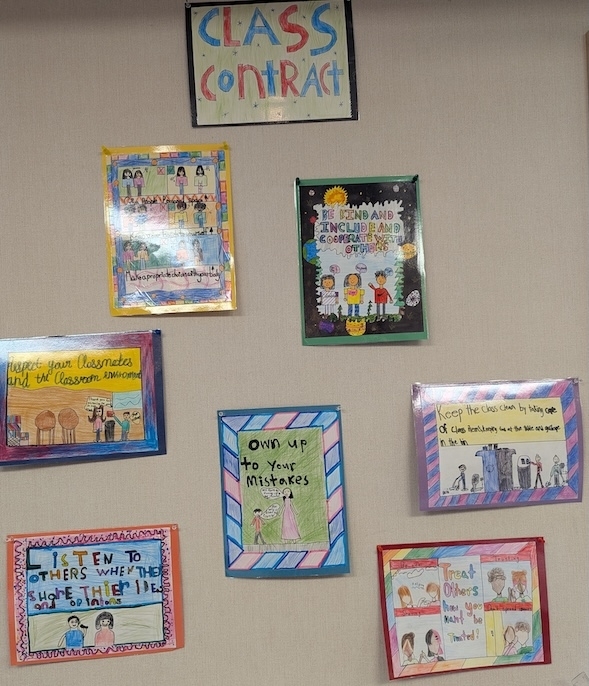
At North Ridge, our focus is respect and empathy.
Through instructional strategies, it is our aim to foster students who take perspective and listen to understand. We are teaching our students to treat each other with kindness. We are growing our students’ ability to have positive, healthy relationships with each other, and to demonstrate inclusive, respectful behaviour.
We are talking about Social and Emotional Learning, or SEL, for short. Social and Emotional Learning is a lifelong process through which children and adults acquire the skills to understand and manage emotions, set positive goals, feel and show empathy for others and establish healthy relationships. SEL supports the skills that are necessary for success in school, work and daily life.
The question that guides all of our work is:
How can we foster respect and empathy among our students?
We are diving into strategies, here at North Ridge, that foster and develop our students’ social and emotional skills.
The BC Curriculum provides Curricular Competencies. These are the skills, strategies and processes that students develop over time.
The Curricular Competencies that focus our Student Learning Plan are:
Describe and develop strategies for positive, healthy relationships.
Demonstrate respectful, inclusive behaviour.
These curricular competencies are embedded in our Physical and Health Education and in our Career Education curricula.
The concepts start broadly and then continue to build upon a student’s deepening understanding.
Let’s take a look at our first competency:
Students are expected to be able to describe and develop strategies for positive, healthy relationships.
This comes from our Physical and Health Education curriculum.
We see that, in Kindergarten and Grade 1, students are expected to be able to:
- Identify caring behaviours among classmates and within families
In grade 2, students grow their understanding and are expected to:
- Identify and describe characteristics of positive relationships
In grades 3, 4, 5, 6 & 7 the skill set has evolved even further and students are expected to be able to:
- Describe and apply strategies for developing and maintaining positive relationships.
Our second competency is from our Career Education curriculum:
Students are expected to be able to demonstrate respectful, inclusive behaviour.
We see that, in Kindergarten and grades 1, 2 and 3, students are expected to be able to:
- Work respectfully and constructively with others to achieve common goals.
In Grades 4 and 5, this grows so that students are now expected to:
- Demonstrate respect for differences.
By Grades 6 and 7, students are expected to:
- Appreciate the importance of respect, inclusivity, and other positive behaviours in diverse, collaborative learning, and work environments.
It takes explicit teaching and learning to develop these foundational skills. We invite you to take a dive into the rest of our Student Learning Plan to explore how students are engaging with these important concepts.
OUR FOCUS
How can we foster respect and empathy among our students?
When we ask ourselves this question, we recognize that there are foundational skills that underpin the ability to develop healthy relationships. These building blocks include the ability to recognize emotions, identify caring behaviours in others, take perspective, as well as describe and apply the strategies for developing and maintaining positive connections. This is no small feat!
Our teachers work expertly with the students to help them develop empathy and respectful behaviour. They collaborate with each other, use key resources that support Social and Emotional Learning, and they engage their classes in age-appropriate activities that cultivate these skills.
Our Resources
At North Ridge, we have been using some common resources such as Second Step to further our students’ learning. Second Step is a widely used, research-based social-emotional learning curriculum designed to help students develop crucial life skills like emotion management, empathy and conflict resolution. Parents may wish to check out Second Step online to see more about what your children are learning and also to explore parent resources.
Teachers have also been meeting together to explore and discuss an important work in the area of children and their emotional development. The book, Reclaiming Our Students by Hannah Beach and Tamara Neufeld Strijack explores themes of anxiety, aggression and the struggles of modern children to understand and regulate emotions. Teachers from a variety of grade levels and specialties have enjoyed exploring these topics and putting new ideas to work with their students.
Another great resource for our teachers has been The Morning Meeting Book by Karen Poplawski. Class meetings are one of the common and important tools in a SEL toolkit.
Morning Meetings
Morning meetings are important in the classroom because they foster a positive learning environment by building community, strengthening social-emotional skills, and preparing students for the day's learning. They create a sense of belonging, boost students' confidence, and improve communication skills.
For example, in one of our early primary classes, the teacher begins each day with a structured morning meeting that fosters community, communication, and social-emotional learning (SEL). They have a special focus for their meetings each day!
- Monday: Weekend News – Students share highlights from their weekend.
- Tuesday: Special Question Tuesday – A thought-provoking or fun question encourages deeper conversation. For example, “What is 30 – 5?” or “Which of these animals do not have fur? Bear, dog, or flamingo?”
- Wednesday: Boogie Wednesday – A short dance break to energize and promote joy.
- Thursday: Air Greeting Thursday – Students greet each other in creative, contact-free ways. For example, an air hug, an air high five, or thumbs up
- Friday: How Do We Feel Friday – A check-in on emotions and well-being.
Check out this clip from a Monday Morning Meeting!
In this class, morning meetings aim to:
- Develop oral communication skills and confidence in speaking
- Encourage consistent eye contact and active listening
- Promote inclusivity and respect for all individuals in the classroom, including support staff, substitutes, and peers with exceptionalities
- Foster a welcoming and respectful classroom culture
These routines are intentionally aligned with SEL competencies, including:
- Self-awareness – Understanding one’s emotions, strengths, and areas for growth
- Social awareness – Demonstrating empathy and respect for others
- Relationship skills – Building and maintaining positive relationships with peers and adults
Rose, Bud and Thorn
In one of our intermediate classes, the teacher leads her class through an activity called Rose, Bud, Thorn. The intended learning for Rose, Bud, Thorn, is to provide students with a safe space to speak and to be listened to. The teacher says, "I wanted to build a strong classroom community and a chance for them to check in with me, and to practice speaking in front of their peers. I followed through on the rules of respectful listening such as eye contact, and body language, and modeled how to appropriately speak about their grievances (if they had any thorns about hard situations at school). Generally, I find that students love ending their week like this and are disappointed if we miss it."
"Don't Look Behind You" and "Silly Goose"
Classroom drama games give students the opportunity to express and explore feelings in a safe, supported setting. Students learn how to express themselves, identify feelings, and sometimes even resist an expected feeling.
In the first game, "Don't Look Behind You", two kids stand in front of the group and one starts with the prompt "Don't look behind you but....." They fill in the blanks with something they imagine and the rest of the class acts out whatever they just said! Students take turns being the prompter and the one that, inevitably, looks back to see the suggested surprise.
The game "Don't Look Behind You" offers several benefits, primarily focusing on building creativity, collaboration, and risk-taking, particularly in a classroom setting. The game supports our curricular competencies by developing the underpinning skills. The game:
- Encourages Imagination: Players must quickly come up with dramatic and silly scenarios, fostering creative thinking.
- Promotes Collaboration: The game requires players to work together to act out the scenarios, encouraging teamwork.
- Develops Risk-Taking: Players are encouraged to be bold and take chances in their choices, which can translate to other areas of learning.
Silly Goose
In the game, Silly Goose, a pair of students work together. One does their best engage in non-verbal expressions that could evoke laughter while the other student does their best to regulate their response and not laugh. This drama game offers a range of benefits for participants, including enhanced social skills, improved communication, and increased creativity. The game also fosters the skills that underpin a student's ability to grow as a respectful, empathetic community member.
Specific benefits include:
- Social Skills: The game encourages interaction, sharing, and turn-taking, which are crucial for developing social competence.
- Communication: Children learn to express themselves clearly and listen attentively to others, both verbally and nonverbally.
Confidence: Participating in dramatic play can help children overcome shyness and build self-assurance in expressing themselves.
- Creativity: "Silly Goose" games stimulate imagination and allow children to explore different roles and scenarios.
- Teamwork: Group activities promote collaboration and the ability to work together towards a common goal
Emotional Awareness and Expressing Empathy
In our of our upper intermediate classes, we focused on emotional awareness and empathy by using the feelings wheel as a central tool. We began with a simplified version to help students identify basic emotions and slowly introduced a more detailed chart as they became more comfortable. Together, we explored what these emotions might look like in others, especially when someone isn't directly expressing how they feel. For example, we discussed how sadness might look like someone sitting alone with their head down, red or teary eyes, or low energy.

In drama, students then created skits to act out different emotions and explored how they can support others who might be feeling that way.
In Language Arts, they practiced “showing, not telling” emotions in their writing and describing scenes in which feelings were revealed through body language, actions, or tone of voice.

The results were incredible and not only produced excellent, detailed writing, but also demonstrate the students' developing ability to understand emotions in-depth, take perspective and describe cues that help us navigate an emotional landscape.


Practicing Perspective-Taking with Biographies
This year, in one of our Grade 4/5 classes, students honed their perspective-taking skills and explored their class theme of community by writing biographies. They started with a guided exercise that allowed them to start with a Big Idea such as “My peer is a determined person”, and then to gather facts like “he practices reading every night”. They then considered what the facts were telling them about the person such as “He pushes through even when the work is hard”.
Students were paired through random selection, often with someone who was not already a close friend. They interviewed each other about their personal history, motivations, and values so that they could write a meaningful paragraph about their peer.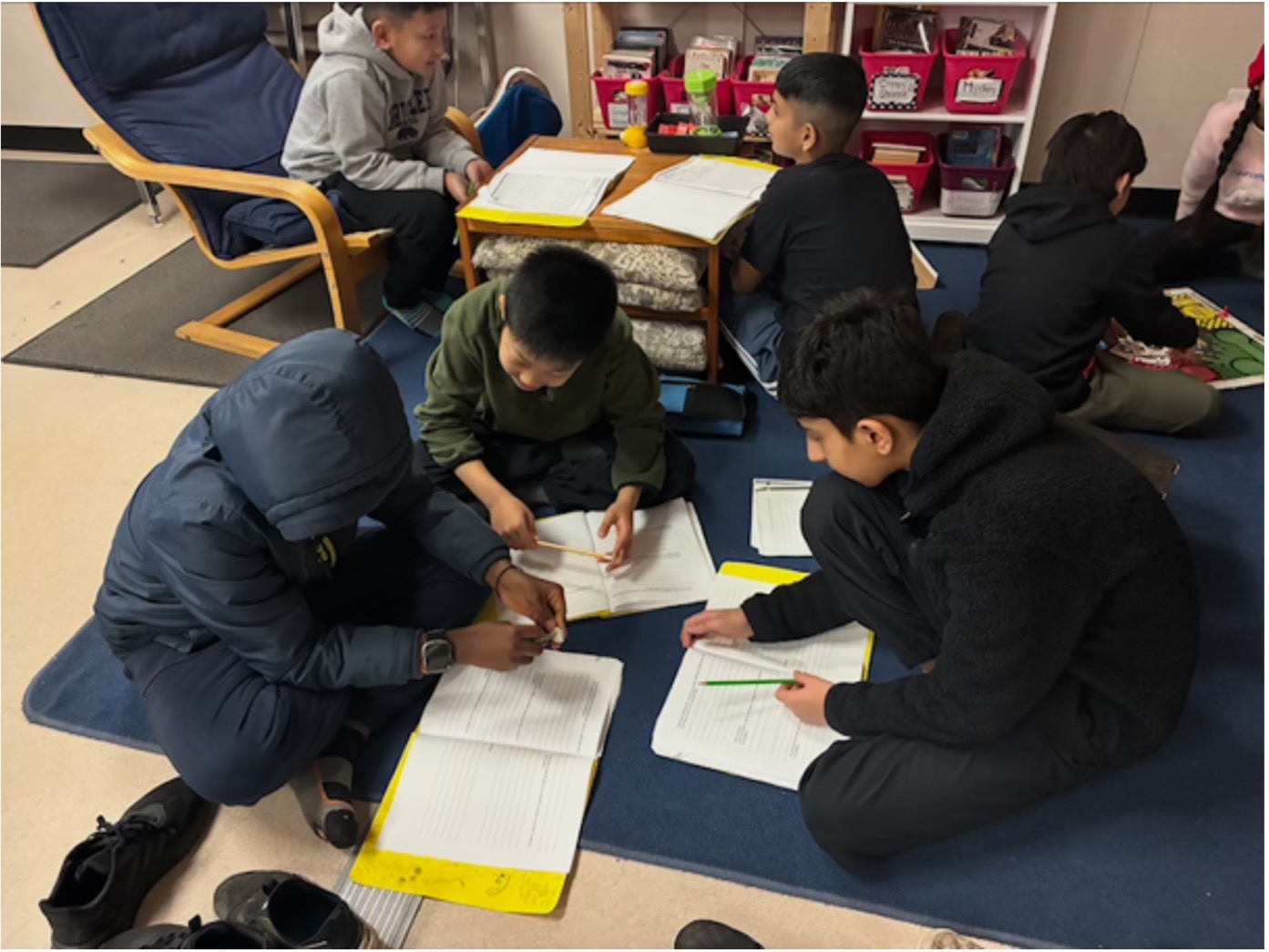
Through this process, our goal was to develop a deeper appreciation of ourselves and one another.
Students certainly rose to the challenge and wrote thoughtful pieces about their peers, celebrating their strengths and determination in the face of challenges!
OUR NEXT STEPS
How do we know that we are finding success in fostering respect and empathy among our students? How do we know that our students are continually growing in their ability to describe and develop strategies for positive, healthy relationships? How are they showing progress in demonstrating respectful, inclusive behaviour?
The evidence is gathering that our students are growing, learning, and becoming community members who demonstrate respect and empathy for others.
Do you remember the class that worked on Biographies?
Any visitor to this class may have noticed the evidence that the class was indeed succeeding at developing this appreciation for their school community! On the white board was a very special message:

It was a thank you from the class to our custodian for all of their important work, with a joyful message back!
The learning that this class was doing with empathy and respect is clearly being applied to new contexts and people!
In our primary classes, the teachers are seeing the difference that Morning Meetings and SEL Drama games are having on their classes. One teacher shared, “I am extremely proud of our class because I see the growth in care and empathy towards everyone. I also see the confidence that has been built, especially the students who are ELL and were often nervous to speak at the beginning of the year. I have had some of the students’ past teachers come to me and say they are pleasantly surprised with how much their old students talk with such confidence!"
The "Rose, Bud and Thorn" activity is helping our students practice their ability to share, listen and demonstrate respect for their peers. The teacher reflected, “I’ve seen tremendous growth with students that find it difficult to speak in front of large groups. At this time of year, some of these students have so much to say and can do it was such ease and confidence. It’s also a great space for full inclusion and peer support with designated students. When Student A is speaking, the class is very respectful and gives her their full attention. Sometimes students that are sitting beside her, help guide her if she is stuck or confused with the process. I have had many parents over the years tell me that their child has brought the routine home and now it is their ritual at dinner time”.

In our upper intermediate class, where the students did an in-depth exploration of feelings and empathy, the growth was evident. Students became able to more readily and accurately be able to express their own emotions as well as take perspective about how others are feeling.
The teacher explains, “As students grew more familiar with the (emotion) charts, students saw a shift in how they talked about their own emotions. Many students who originally said “I don’t know” when asked how they felt, began to use more specific words from the chart. Some even started referencing the chart independently, searching for the right word to express what they were experiencing. One of my biggest goals with this was to make an impact on our classroom culture. Students have slowly become more understanding and aware of each other. They've learned to look beyond surface behaviors and consider how someone else might be feeling inside. This showed up even more in friend groups where they were struggling to understand points of view when in an argument. I’m excited to continue to do this next year and use what I’ve learned to better teach my students how to build empathy and care for each other.”

Success Criteria
This year, as a staff, we asked ourselves:
How will we know that our students are developing their skills in being respectful and empathetic? How will we know that they have been successful?
We developed some criteria to help us teach the skills and guide the way! We asked ourselves: "What will we see and what will we hear from our students when they are being successfully respectful and empathetic students?"
Our students will be:
Helping and Supporting Others
- Helping someone who needs it
- Supporting peers with care and empathy
Listening Actively
- Looking at the speaker
- Taking turns when speaking
- Listening respectfully to different perspectives
Respecting Boundaries
- Respecting personal space and emotional boundaries
- Taking breaks when needed
- Accepting differences
Cooperating and Using Positive Interactions
- Working together respectfully
- Disagreeing respectfully
- Using effective, open communication
Showling Responsibility and Honesty
- Taking responsibility for one’s actions
- Being honest and accountable
Building Healthy Relationship Skills
- Using conflict resolution strategies
- Demonstrating self- and social-awareness
- Understanding the difference between healthy and unhealthy behaviours
Each month, we have been focusing on teaching one of these skill sets and we have been demonstrating students’ learning at our monthly Respect and Empathy Assemblies.
Students across all grade levels have been sharing their important learning. For our Respecting Boundaries, assembly, for example, students shared their knowledge about why people sometimes neglect to respect others’ boundaries

More importantly, the students followed up with strategies for staying in control so that we can be successful in minding boundaries and maintaining boundaries.

Students also impressed us with their learning in our Active Listening assembly!
This grade 5/6 class shared their learning about active listening loudly and clearly They have great advice:
“Get ready to listen!”
“Clear you mind!”
“Show you are listening!"
“Ask follow-up questions!"
At North Ridge, we are excited about our work in fostering respect and empathy among our students. We see them developing the ability to describe and develop strategies for positive, healthy relationships. We see them more readily demonstrating respectful, inclusive behaviour.
We look forward to exploring the positive impact on our school community!
Surrey Schools
Formed in 1906, the Surrey School District currently has the largest student enrolment in British Columbia and is one of the few growing districts in the province. It is governed by a publicly elected board of seven trustees.
The district serves the cities of Surrey and White Rock and the rural area of Barnston Island.