Newton Elementary 25-26

OUR LEARNERS
BIG IDEA
Using language in creative and playful ways helps us understand how language works.
WHY THIS GOAL MATTERS
Our learners can:
- Create and communicate through written language
- Use a variety of writing and design processes for different audiences
- Take risks in their writing to share their voice and point of view
- Connect their own interests and experiences to their writing
As a newcomer to Canada, a student shares their joy in learning new English vocabulary and how they can express their feelings and ideas through writing. This student learned to plan, draft, edit, and refine their writing through guided practice with peers and her teachers. The student continues to learn new vocabulary and uses a variety of words in meaningful ways.
The poems below show a deepening understanding of language and literary devices. The student is transitioning to using more expressive purposeful language.


OUR FOCUS
Students can use writing and design processes to plan, develop, and create texts for a variety of purposes and audiences.
Curricular Competency: Create and communicate (writing, speaking, representing)
Our focus is on literacy, targeting writing in the early Intermediate grades. Students can:
- co-construct rubrics
- reflect on what they did well after writing, such as a topic sentence, important details, flow of language
- articulate their steps in the writing process
- use a variety of jumping off points such as an image, sentence starter, sentence frame or prompt
One student noted “The teachers conference with us a lot. Conferencing helps me not to repeat mistakes, try my best and makes me do more deep thinking."
The BC curricular competency of Creating and Communicating focuses on encouraging students to take risks in their writing, explore word choice, style and a variety of formats. Students write to develop and refine their personal writing, style and voice.
Our cohort has grown to include numerous intermediate students from several classrooms.
Our students’ learning goals include:
regular self-assessment and goal-setting opportunities
working collaboratively with teachers and peers to co-construct rubrics and success criteria
sharing their strengths and growth over time
becoming self aware as a writer
OUR NEXT STEPS
Literacy skills provide the foundation for success across all areas of learning.
The Curricular Competency we explored was Creating and Communicating.
This competency encourages students to take risks in their writing, explore word choice, formats and ideas. Students write to develop and refine their personal writing style and voice.
Proficiency Levels in Writing
Students showed their growth in writing through personal narratives, poetry, story writing, and persuasive writing. The charts below show student proficiency levels in writing in the fall of 2025 and spring of 2026.
In the fall, 18 students were Emerging, and 21 students were Proficient.
In the Spring of 2026, the numbers shifted to only 9 students who were Emerging and 32 students who were Proficient in their writing. 

Our students’ learning goals included:
regular self-assessment and goal-setting opportunities
working collaboratively with teachers and peers to co-construct rubrics and success criteria
sharing their strengths and growth over time
becoming self aware as a writer
To support student ongoing growth in writing, teachers focused on the following:
- ongoing instruction, modelling and structured practice
- using Think Alouds, shared writing practices and peer feedback
- designing prompts that connect to students' experiences and interests
- offering choice of topics or formats to increase engagement
- regular and targeted conferencing with individual students to encourage self reflection of next steps to improve their writing
Doing poetry lessons, students learned to select words carefully to powerfully evoke mood and meaning. The student shared that she struggled to find the right words and used only a few to evoke Spring. She was proud of the word "Tishh!"
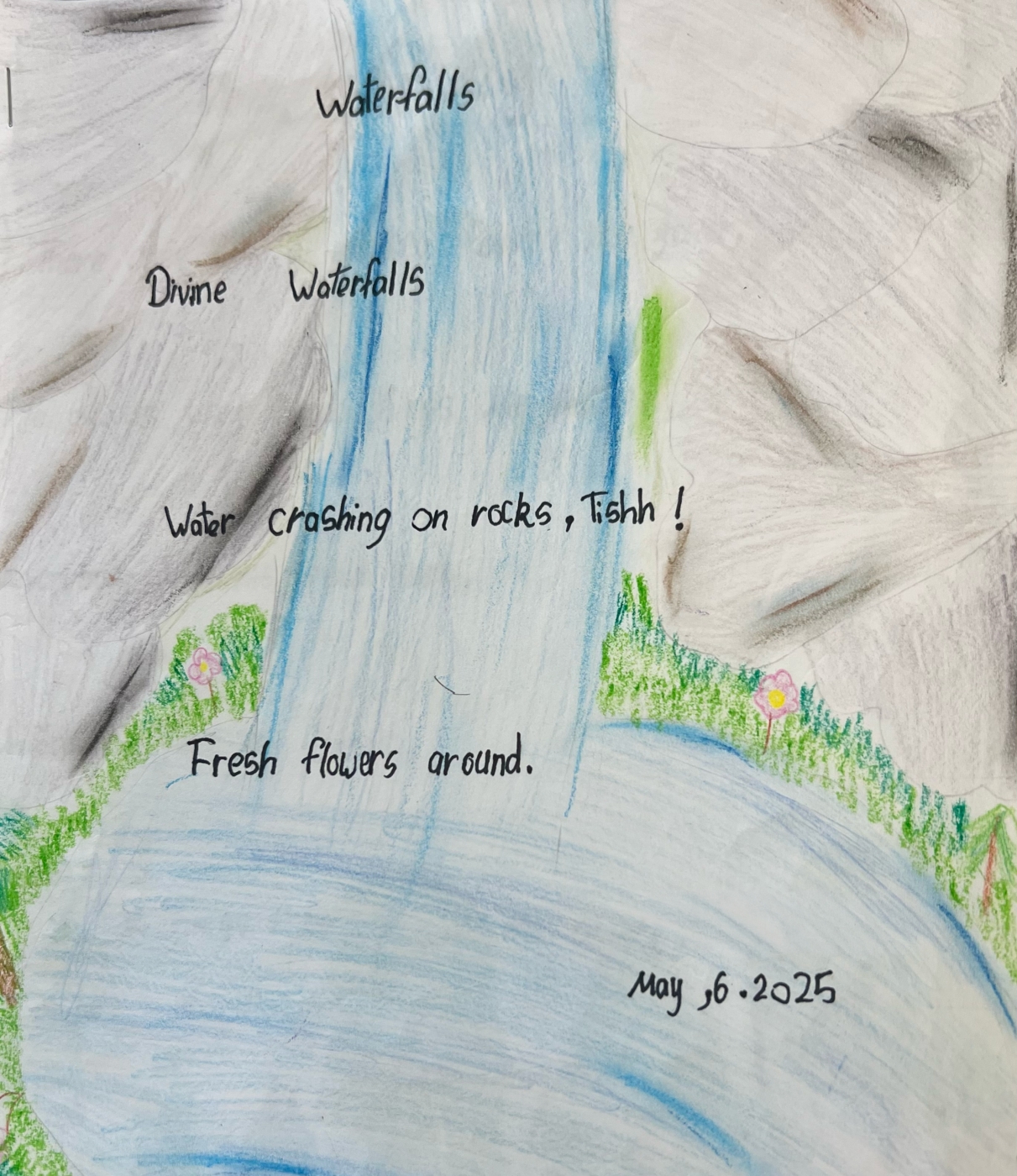
Below is a sample piece of writing that illustrates how students can keep themselves safe and healthy and connect to their deep feelings and emotions. The simple layout and carefully drawn images make the affirmations clear and powerful.

Observations: Targeted Learning Support
At Newton Elementary, our team approach has shown successful outcomes in writing for our early Intermediate learners. Our early Intermediate teachers regularly collaborate. Students receive ongoing support from the classroom teachers and the Learner Support Team. Ongoing opportunities to draft, receive teacher and peer feedback, and revise their writing enables students to organize their thinking, strengthen their writing voice and style, and elevate their ideas and persuasive arguments.
Moving Forward We Will
Our team will continue to work with our early Intermediate learners to focus on engaging, purposeful activities and instructional strategies that promote powerful writing in a variety of genres and styles. Creating opportunities for students to connect their writing to their cultural identities, experiences and perspectives is important to foster deeper engagement and more meaningful writing.
We believe the strong foundation established through our Primary literacy initiatives has contributed to the success of students in our early Intermediate years.
Connect
As our early Intermediate students develop as writers, they learn to express their feelings, experiences, and observations with greater clarity and purpose. They make meaningful connections and consider new perspectives, as they engage with an ever-expanding world of learning.
Surrey Schools
Formed in 1906, the Surrey School District currently has the largest student enrolment in British Columbia and is one of the few growing districts in the province. It is governed by a publicly elected board of seven trustees.
The district serves the cities of Surrey and White Rock and the rural area of Barnston Island.