Morgan Elementary 25-26

OUR CONTEXT
We respectfully acknowledge that Surrey Schools are located on the traditional, unceded, and shared territories of the Coast Salish peoples: the q̓íc̓əy̓ (Katzie), the q̓ʷa:n̓ƛ̓ən̓ (Kwantlen), and the SEMYOME (Semiahmoo) First Nations—stewards of this land since time immemorial. We recognize this history with the understanding that respectful relationships and partnerships with Indigenous peoples are essential to truth and reconciliation.
Morgan Elementary serves approximately 550 students from Kindergarten through Grade 7 and is located in the South Surrey region.
At Morgan, we are a community of culturally and academically diverse learners. Our students are curious, inquisitive, and thoughtful. Many spend their entire elementary journey with us, from Kindergarten to Grade 7. They are developing stamina in their learning and strengthening their ability to collaborate, share knowledge, and support one another.
Our students are strong advocates for their learning needs. They are learning to access strategies and understand the importance of choice in their educational journey. Morgan students are communicative and enjoy sharing their thoughts and connections with classmates, teachers, and families.
Morgan is a close-knit community, strongly supported by an active Parent Advisory Council (PAC). The PAC contributes to classroom needs and supports events such as field trips, artist residencies, and hip-hop dance lessons. Community events—including welcome barbecues, movie and activity nights, family dances, pancake breakfasts, and hot lunch programs—are well attended and celebrated.
Our students enjoy a wide range of extracurricular athletic opportunities, including basketball, volleyball, soccer, track and field, cross country, and badminton. Additional enrichment opportunities include student leadership, the Reading Link Challenge, Grade 7 Band, the Young Entrepreneurs Fair, raising butterfly larvae, and the Minecraft Challenge. Leadership roles include Lunch Monitors, Door Monitors, Library Monitors, Assembly Set-Up and Tech Crew, and Announcement Helpers.
We are particularly proud of the way our students support one another and celebrate the diversity within our school. Languages spoken at Morgan include English, Mandarin, Chinese, Korean, Punjabi, Urdu, Spanish, Cantonese, Turkish, Russian, Hindi, Japanese, Arabic, Gujarati, and Tamil. Students take pride in their multilingual abilities and often volunteer to assist with translation when needed.
We have many things we are proud of at Morgan- A few of our highlights are below:
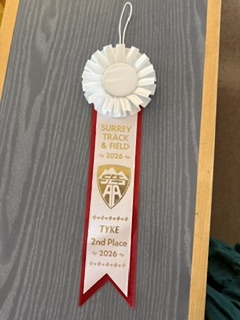
This year, we are proud to highlight the success of our robust Track and Field program for students in Grades 3–7. Students had the opportunity to learn, practice, and compete across a wide range of events, building both their athletic skills and confidence.
Our school participated in two full-day track meets, where students demonstrated strong sportsmanship, determination, and teamwork. It was wonderful to see so many smiles and celebrations as our students performed as fierce competitors while also representing our school as respectful and responsible citizens off campus.


In addition, we provided students with the opportunity to participate in a school choir. Our choir proudly performed at Semiahmoo Mall in December, as well as at several school-wide events throughout the year, showcasing their talent and dedication.
In June, we further celebrated the diverse talents of our students by hosting a school-wide talent show. This event highlighted creativity, confidence, and student voice, and was a joyful way to recognize and honour the many abilities within our school community.
OUR LEARNERS
At Morgan, our students are motivated and eager to learn—whether it’s acquiring a new language, mastering a new song, or exploring a new math strategy. Their enthusiasm for learning is evident across all areas of the curriculum. Many of our students begin their educational journeys early, with high participation in preschool programs—often over a two-year span—and StrongStart initiatives. They arrive at Morgan well-traveled, articulate, and enriched by a wide range of early experiences.
Our students are deeply connected to the broader community through extensive involvement in extracurricular activities. These include community sports such as hockey, soccer, lacrosse, and baseball; parks and recreation programs; dance and cheerleading; competitive swimming; musical theatre; and music lessons. Many also participate in high-level competitive teams or receive additional academic support through tutoring and enrichment programs. As a result, students come to Morgan ready and excited to learn.
Morgan’s educators understand that optimal learning occurs when conditions are tailored to each student’s needs. The First Peoples Principles of Learning are embedded throughout our curriculum and guide our teaching practices. These principles emphasize:
- Recognizing the consequences of one’s actions
- Understanding generational roles and responsibilities
- Valuing Indigenous knowledge
- Embedding learning in memory, history, and story
- Honoring patience and time in the learning process
- Exploring personal identity through learning
Our staff are committed to helping students set realistic academic goals and supporting them with clear, targeted instruction. Students are increasingly aware of their strengths and are learning to advocate for both their academic and social-emotional needs.
Through our House Team events, students actively engage in building a strong sense of belonging and community while reinforcing what it means to be a Morgan Mustang. These shared experiences provide meaningful opportunities for students to collaborate, support one another, and demonstrate our school values through positive actions.
Following last year’s school-wide focus on literacy engagement—particularly reading—both students and staff demonstrated renewed enthusiasm. This was reflected in a significant increase in library circulation, especially among intermediate students.
Building on this strong foundation in reading, our focus this year shifted toward strengthening writing. Teachers observed that while students were confident in oral expression and highly engaged as readers, writing remained more challenging. Many intermediate students were capable writers but often showed reluctance when initiating writing tasks. This prompted staff to intentionally explore strategies to build student confidence, independence, and effectiveness in writing.
Our educators recognize the foundational role of literacy in student achievement and view literacy development as a continuum. They also understand that integrating social-emotional learning—particularly through goal setting—enhances student agency, builds confidence, and amplifies student voice.
OUR FOCUS
25-26 Our focus:
1)We are committed to deepening our focus on literacy, with a particular emphasis on both reading and writing for 2025-26. Staff have committed to further professional learning in providing targeted writing instruction utilizing SEL Social Emotional Learning and Self regulation strategies.
Self-Regulated Strategy Development helps students become stronger, more confident learners—especially in writing. It teaches simple step-by-step strategies for tasks, along with skills like goal-setting, self-checking, and staying focused. By learning how to plan their thinking and monitor their progress, students become more independent and successful in their learning.
Examples of strategies students may use:
- POW = Pick ideas, Organize, Write
- TREE = Topic sentence, Reasons, Explain, Ending
- Setting goals (e.g., “I will include 3 reasons”)
- Self-checking their work before finishing
- Using “self-talk” to stay focused and keep going
September Writing Sample:


The cohort is showing steady growth in writing over time, with average scores improving across each writing task. Students are building their ideas and explaining their thinking more clearly with each assignment, and many are becoming more confident in organizing their writing using topic sentences and supporting details. The cohort continues to develop skills in expressing ideas clearly, adding more detail and explanation, and using a wider range of words. Overall, the cohort is progressing as writers, with their skills strengthening from the pre-assessment through to later writing tasks.
What our students are DOING to improve their writing:
Students actively engage in:
Planning before writing
→ using simple structures (e.g., topic, ideas, details, ending) to organize thinkingSetting goals for their writing
→ deciding what they want to improve (e.g., add details, clearer introduction)Explaining their thinking with detail
→ moving from listing ideas to adding reasons, examples, and explanationsChecking and improving their own work
→ rereading, revising, and making changes using clear criteriaReflecting on their progress
→ thinking about what they did well and what they will work on next
Our student writing samples also show:
- Growth from shorter, simpler responses → more detailed and organized writing
- Increased ability to include explanations, not just ideas
- Greater consistency across multiple writing tasks over time
OUR NEXT STEPS
The cohort is progressing from early writing that focused on listing ideas toward writing that is more complete, organized, and thoughtful. Students are increasingly able to explain their thinking and communicate their ideas clearly.
We have seen meaningful growth in student writing over time:
- Overall, students are writing longer, more complete pieces that include greater detail and clearer organization.
- Students are becoming much stronger at explaining their thinking, adding more depth and supporting details to their ideas.
- Writing is easier to understand, with clearer sentences and improved flow.
- Students are developing stronger beginnings, with clearer topic sentences that help organize their writing.
- Word choice and sentence structure have improved, with students using more precise and varied language.
- Students have consistently demonstrated strong ideas and are able to stay focused on their topic while expanding their thinking.
Next steps: As students continue to build on their strong foundation in organization and clarity, the next phase of instruction will focus on deepening their thinking, strengthening independence, and enhancing the overall craft of their writing.
- Focus on expanding ideas with evidence, examples, and deeper explanation
- Teach writer’s craft (strong leads, transitions, conclusions, and voice)
- Increase student independence through goal-setting, self-assessment, and revision
- Strengthen connections between reading and writing through shared texts and responses
- Build collaboration through peer feedback and cross-grade writing mentorship opportunities
Surrey Schools
Formed in 1906, the Surrey School District currently has the largest student enrolment in British Columbia and is one of the few growing districts in the province. It is governed by a publicly elected board of seven trustees.
The district serves the cities of Surrey and White Rock and the rural area of Barnston Island.