Morgan Elementary

OUR LEARNERS
At Morgan, our goal is to build community that supports the well-being of self and others through developing positive connections.
Our guiding question is: how are we intentionally and continually developing our own and our students’ emotional literacy skills?
We explore our guiding question as a staff through regular and ongoing dialogue at our meetings and planning days. Together, we discuss and examine how to best support our learners by building strategies and resources to support their ongoing emotional literacy skills.
Very broadly, our students are learning to:
- use strategies that help them manage feelings and emotions
- take ownership of their goals, learning, and behaviour
- interact with peers peacefully and use problem-solving strategies for conflicts.
Our learners are engaging with their emotional literacy skills on a personal level, at the classroom level, and as a whole school community.
Emotional Literacy- Self
Our students are actively exploring their own feelings, asking themselves the questions: How am I feeling today? What is creating these feelings for me? Do I need some strategies to help me feel calm or more centered? What strategies can I use?
These skills are expressed through our provincial curriculum in many of the Curricular Competencies. You will recognize these particular competencies in the examples below:
- Students can identify and describe feelings and worries, and strategies for dealing with them (Physical and Health Education, Grade 2)
- Students can identify and apply strategies that promote mental well-being (Physical and Health Education, Grade 2, 3)
- Students can share ideas, information, personal feelings, and knowledge with others (Career Education, Grade 1, 2, 3)
Our learners engage in a variety of techniques, tools and resources to help them with these self-regulation skills.
In this sample, we are seeing a class actively engaged in identifying and discussing how they are feeling by describing what “Zone” they are in. This strategy comes from The Zones of Regulation. This is a daily practice for these students. When they enter the classroom each day, the place their name into one of the coloured zones which may indicate their state of alertness. For example, the Blue Zone describes a low state of alertness and could be used to describe when a person feels tired, sick or sad. Green is the ideal state of alertness with a person feeling content and calm. Red is an extremely heightened state of alertness, and Yellow describes a person who may be experiencing feelings like stress, excitement, silliness or anxiety. During their morning meeting, these students have an opportunity to share why they selected their zone.

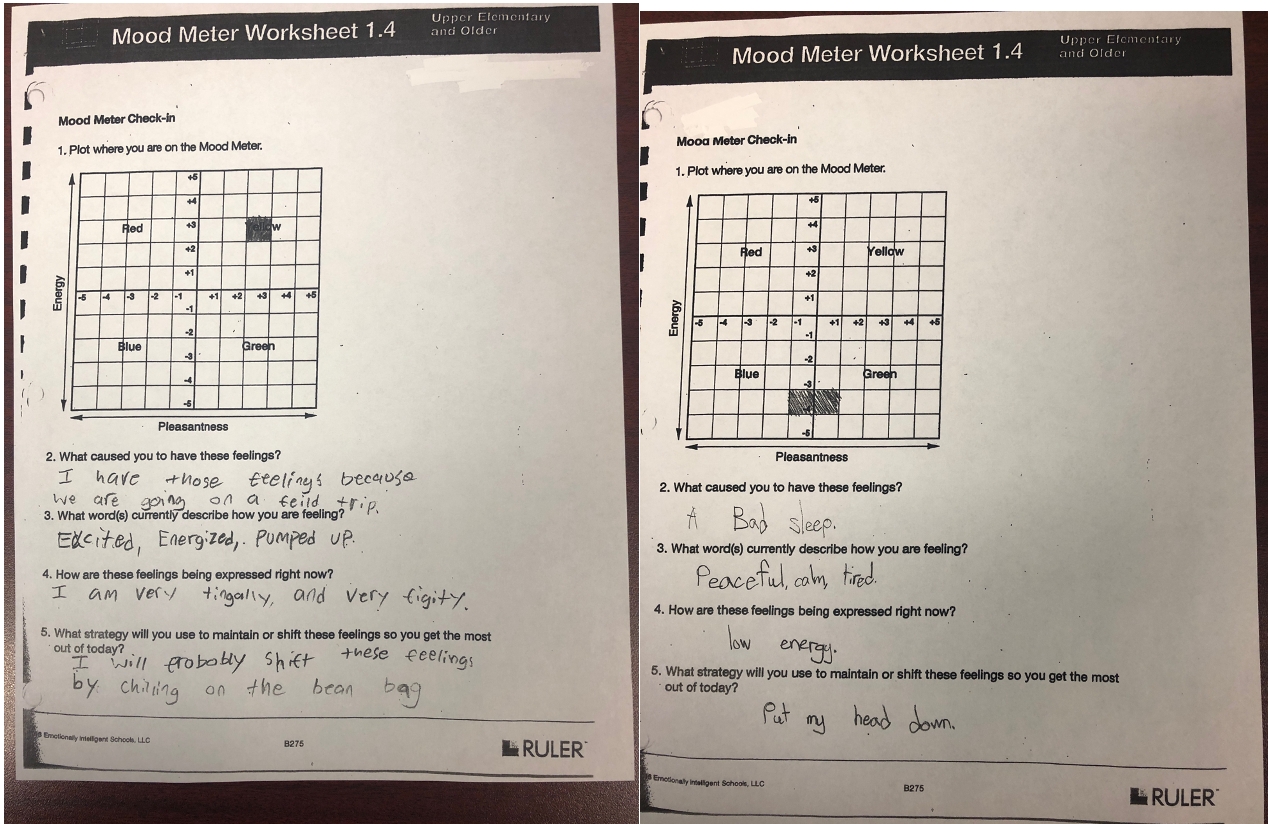
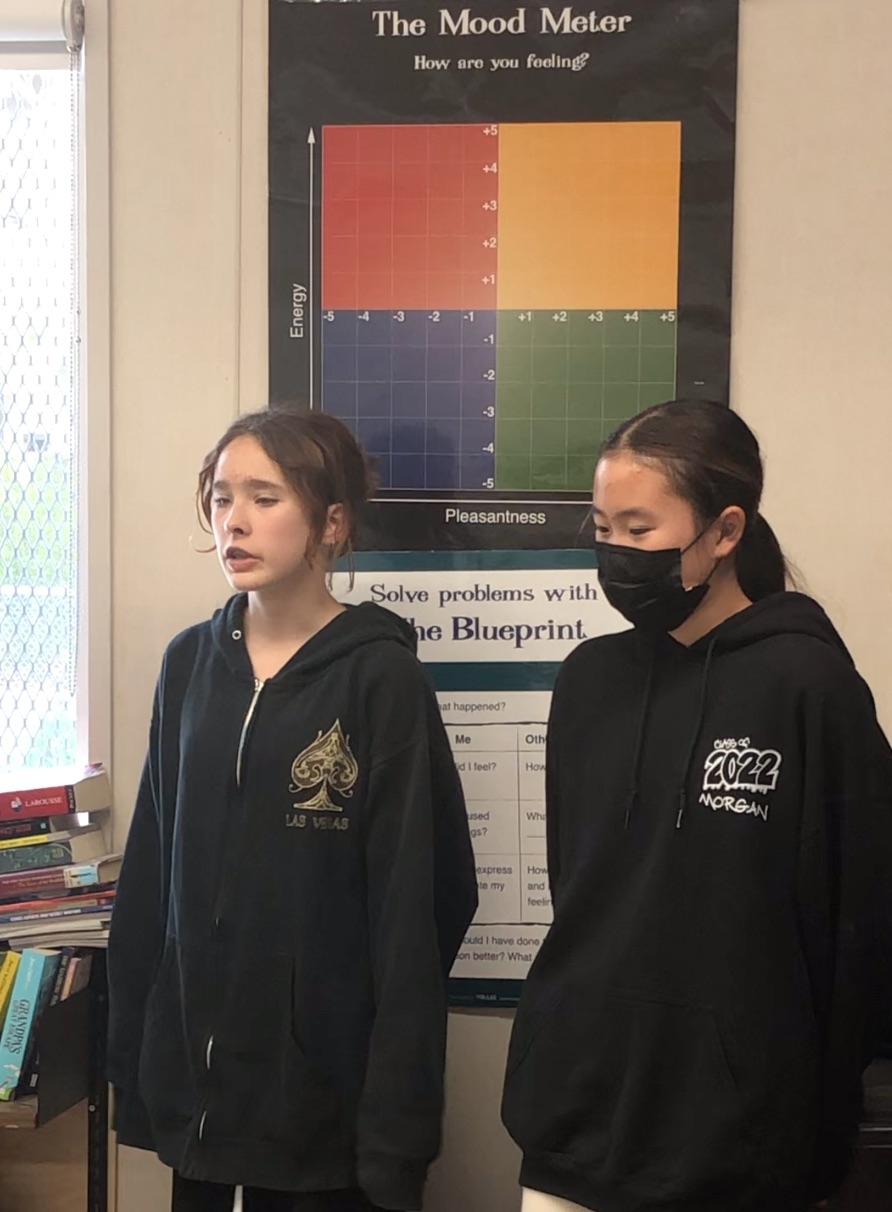
Some classes use different tools to help students engage with the questions: How am I feeling? Another tool commonly found at Morgan is the “Mood Meter” from the RULER program.
RULER is an acronym for the five skills of emotional intelligence:
- Recognizing emotions in oneself and others
- Understanding the causes and consequences of emotions
- Labeling emotions with a nuanced vocabulary
- Expressing emotions in accordance with cultural norms and social context
- Regulating emotions with helpful strategies
The Mood Meter works on a horizontal axis representing how pleasant/unpleasant we feel, and a vertical axis representing how much physical energy is running through our bodies. In the pictures below, we can see a Mood Meter where the teacher has helped learners to deepen their understanding by labelling the quadrants with some of the feeling words they might experience.

Here, we can see how the teacher has created empty Mood Meter Quadrants on the board. This is commonly done in classrooms so that, when students enter in the morning, they can select their name on a magnet, consider and connect with how they are feeling, and place their name in the quadrant they feel suits them.

And here, students have had the opportunity to do some written reflections about where they are on the Mood Meter and what strategies they may want to apply.
When our learners are able to identify how they are feeling, it opens the door for them to be able to strategize for those times that they recognize feelings of discomfort and unrest. Our students may choose to ask for a brain break, engage in some deep breathing techniques, get a snack or drink some water. Conversations about how to help ourselves become calm, alert and ready are common discussions in our classrooms.
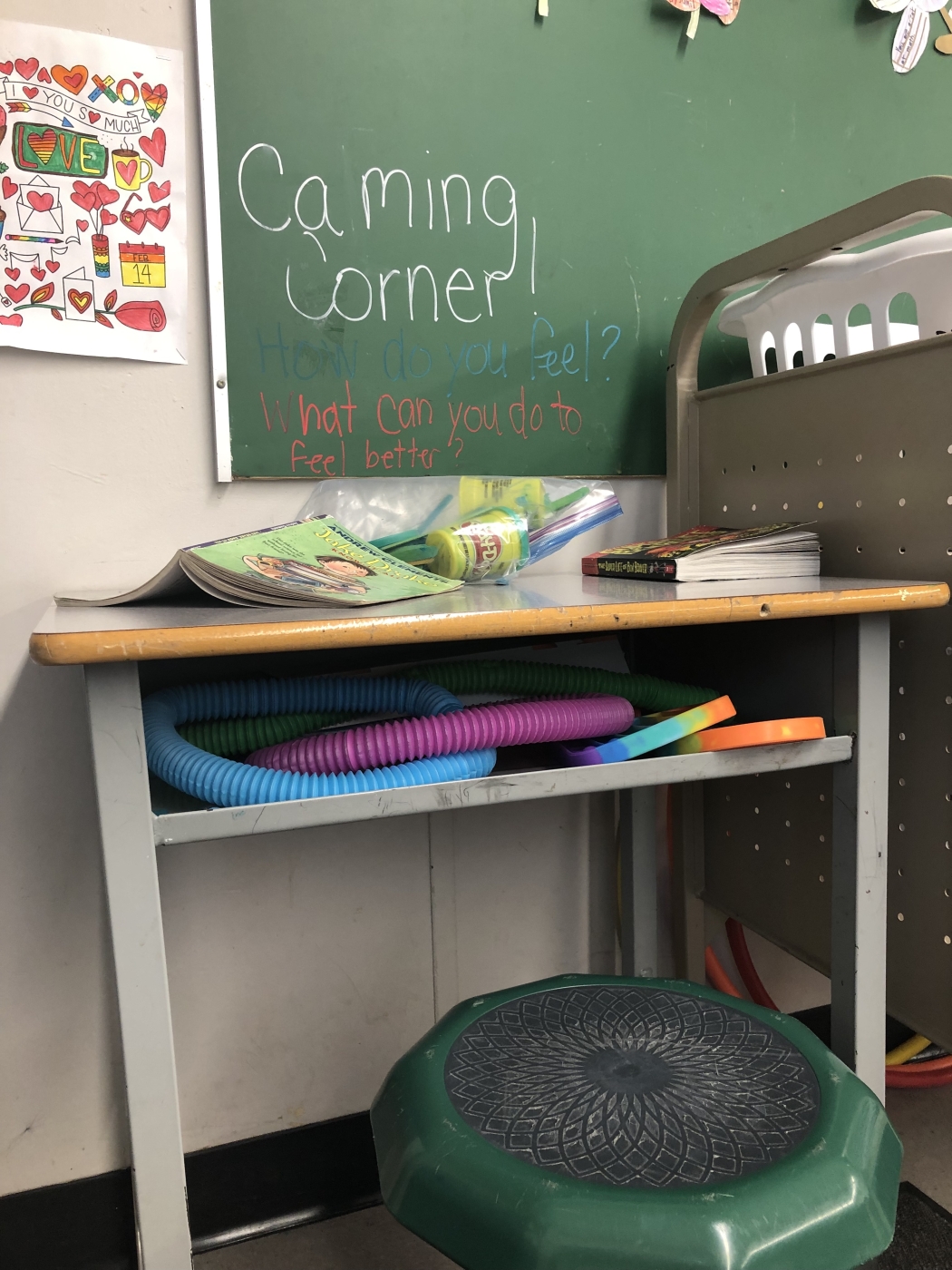
In the picture below, you can see a “Calm Down Corner”. This is an important space in the classroom that students can access when they identify that they are in need of strategies that can help create feelings of comfort and calm. When a student arrives, the prompts on the board ask the learner: “How do you feel? What can you do to feel better?” If you look closely at the picture below, you can see a variety of tools and supports that the student can then access: favourite books, playdough, sensory tools, and a stool that allows for movement.
Emotional Literacy- Classroom Community
Our learners are working and learning to build a safe, caring and respectful classroom community. Teachers support students in creating a space where students take ownership of their goals, learning, and behaviour. Together, they are developing a space where learners interact with peers peacefully, using problem-solving strategies for conflicts.
These skills are expressed through our provincial curriculum in many of the Curricular Competencies. You will recognize these particular competencies in the examples below:
- Students can identify caring behaviours among classmates and within families (Physical and Health Education, Grade K, 1)
- Students can describe and apply strategies for developing and maintaining positive and healthy relationships (Physical and Health Education, Grade 3, 4, 5, 6, 7)
- Students can describe and apply strategies that promote a safe and caring environment (Physical and Health Education, Grade 4, 5, 6)
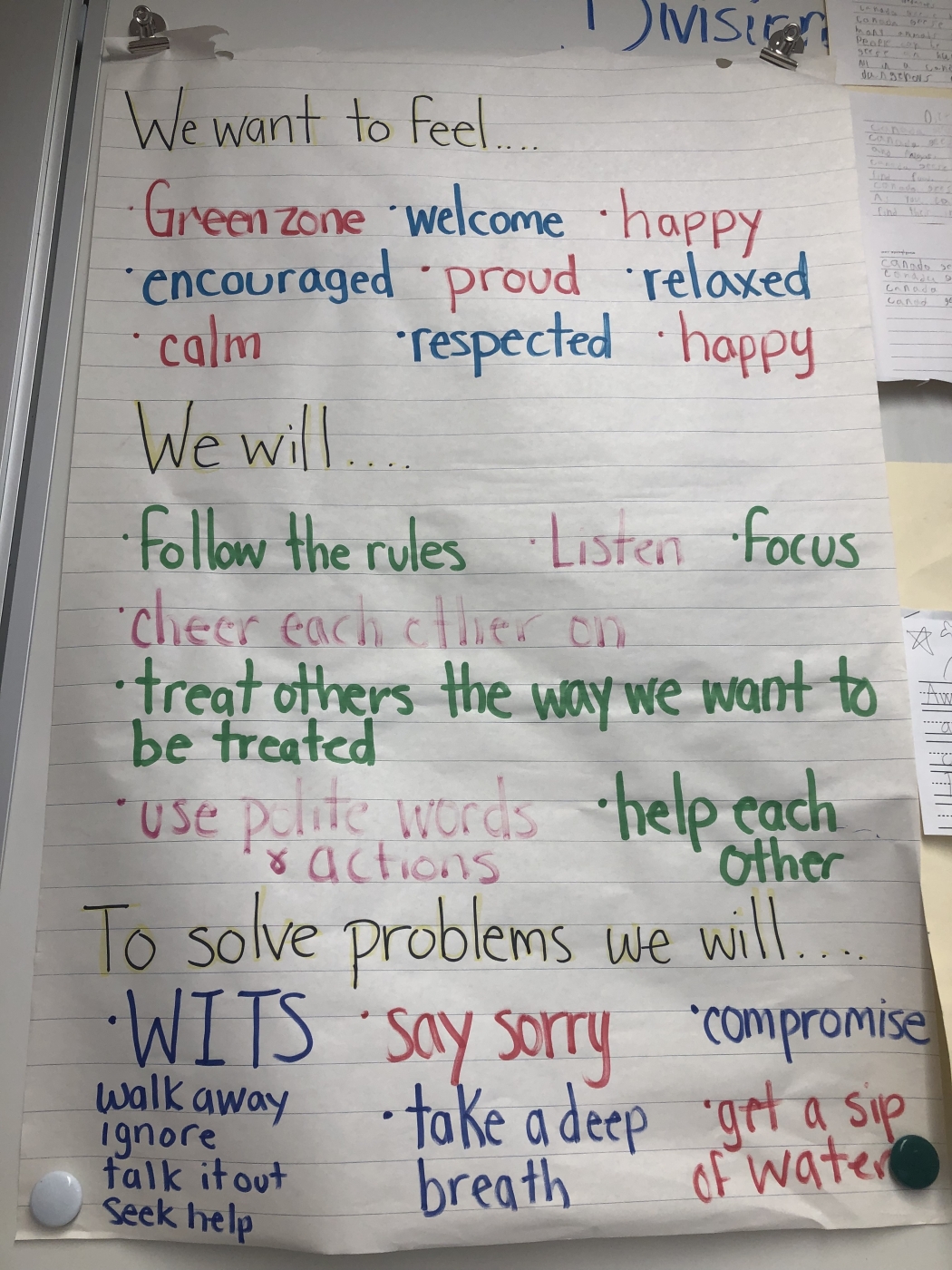
Learners begin the year with their teachers building a Classroom Charter. The Charter can be described as an expression of the values and norms of the class, and is created so that all may feel heard, safe and welcome. The Charter starts with the question ‘How do we want to feel at school?’ then, ‘How will we make sure to feel these feelings?’ and finally, ‘What will we do when there is conflict or unwanted feelings?’.
Each class builds their own unique Charter which is then signed by all students and teachers. Creating a charter is a collaborative experience, collectively made by the students. It is rooted in their ideas creating a sense of shared ownership and accountability.
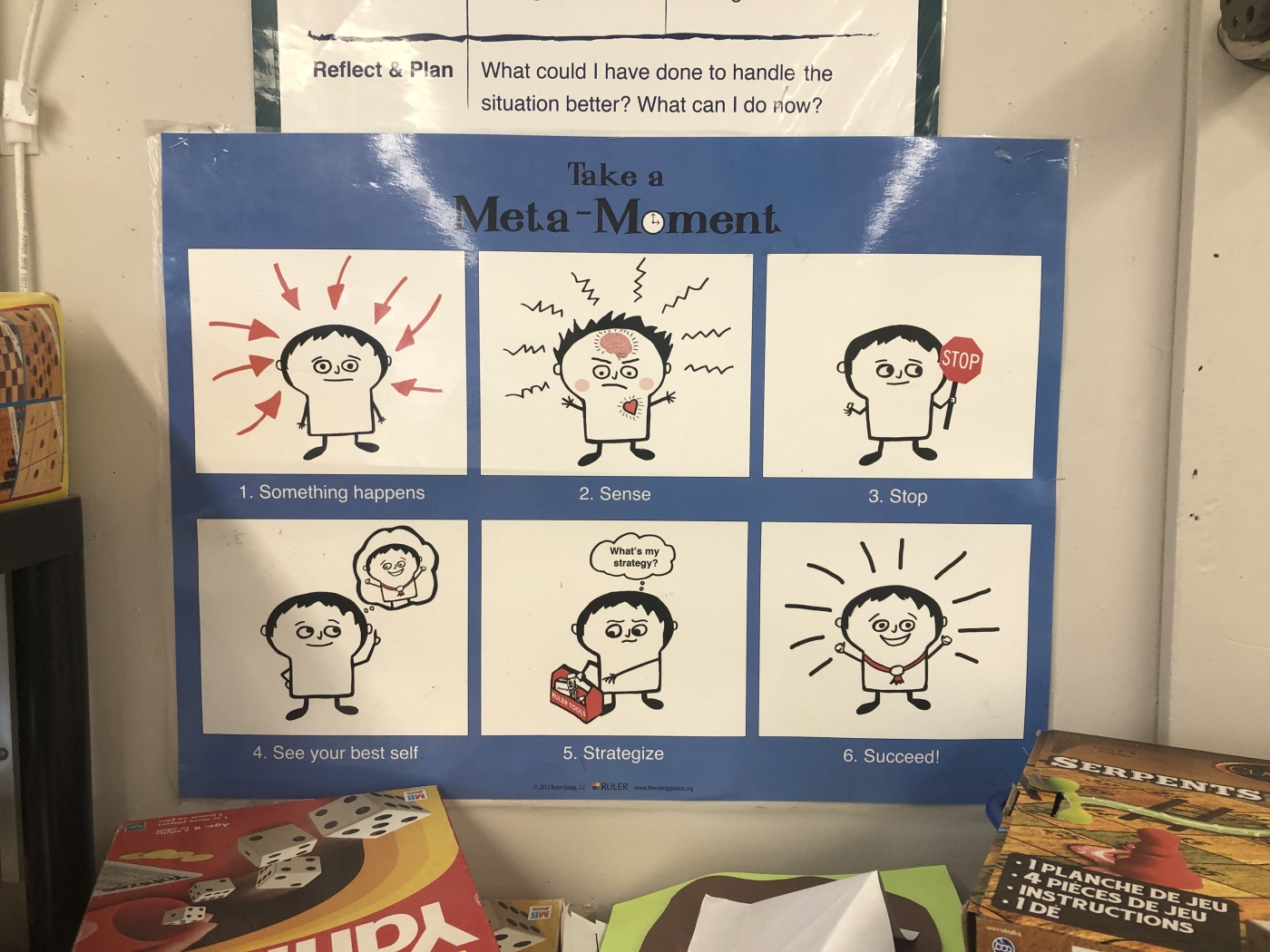
Teachers engage students in the Curricular Competencies to teach the skills that develop emotional literacy within the classroom community throughout the year. This is through a variety of strategies such as written reflection, or possibly explicit lessons on perspective taking such as those provided by the Second Step or RULER program. Two commonly taught strategies in the school are the Meta Moment and The Blueprint from the RULER program.
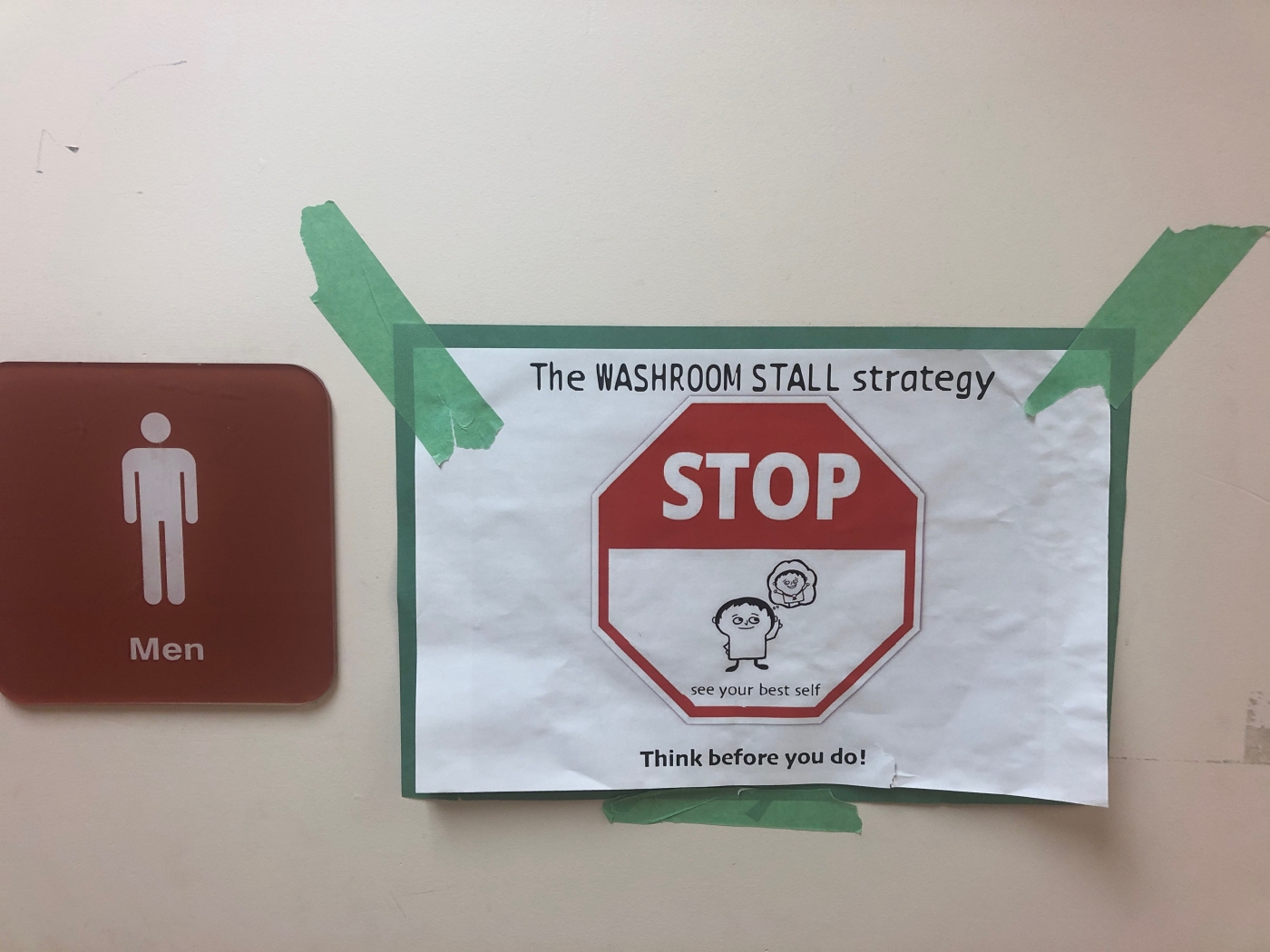
The Meta Moment allows a learner to step back from a situation so that they may pause and think before acting. We ask ourselves, how would my “best self” react in this situation? What strategy can I use so that my actions reflect my best self? This allows students to gradually replace ineffective responses with safe, empowering responses.
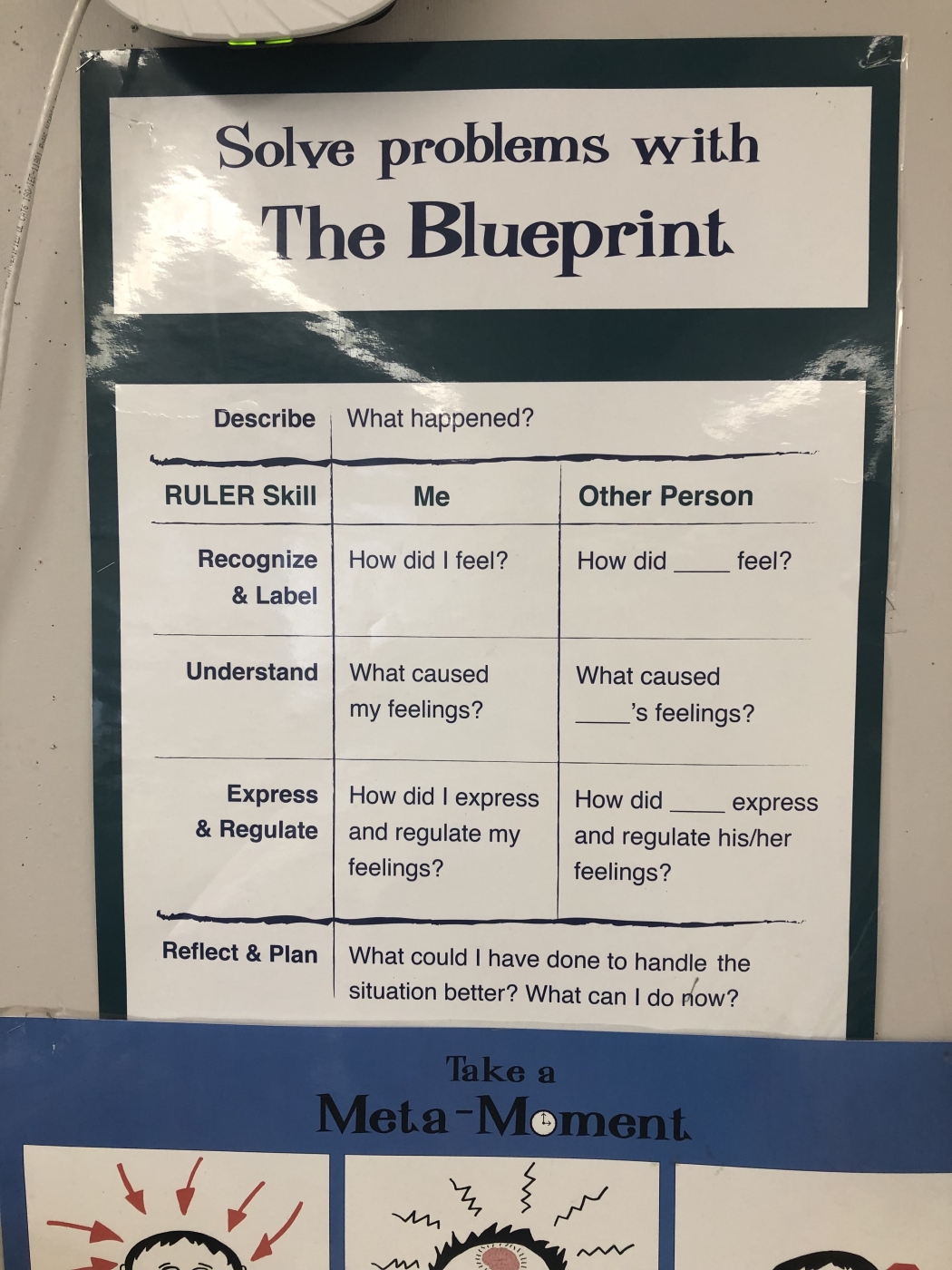
The Blueprint helps students develop a set of skills that allows them to manage conflict effectively. With the Blueprint, learners consider their own perspective and the perspective of the others involved, promoting the development and practice of empathy. Together, and with the help of an adult, students identify healthy solutions to conflicts.
Teachers also support emotional literacy within the classroom community through class meetings that organically (and intentionally) assist students in working through or celebrating real-life challenges or successes.
Below, are two examples of special celebratory class meetings. In both examples, students recognize the importance of positive relationships in their lives, and demonstrate respect for differences in the classroom.
In the first example, Understanding and Celebrating Our Peers, the students have gathered to recognize the attributes of their peers. Together, they are identifying caring behaviours among classmates, and appreciating the influence of their peers on their classroom community as they collectively choose an ‘award’ that will capture the positive contributions of their classmate.
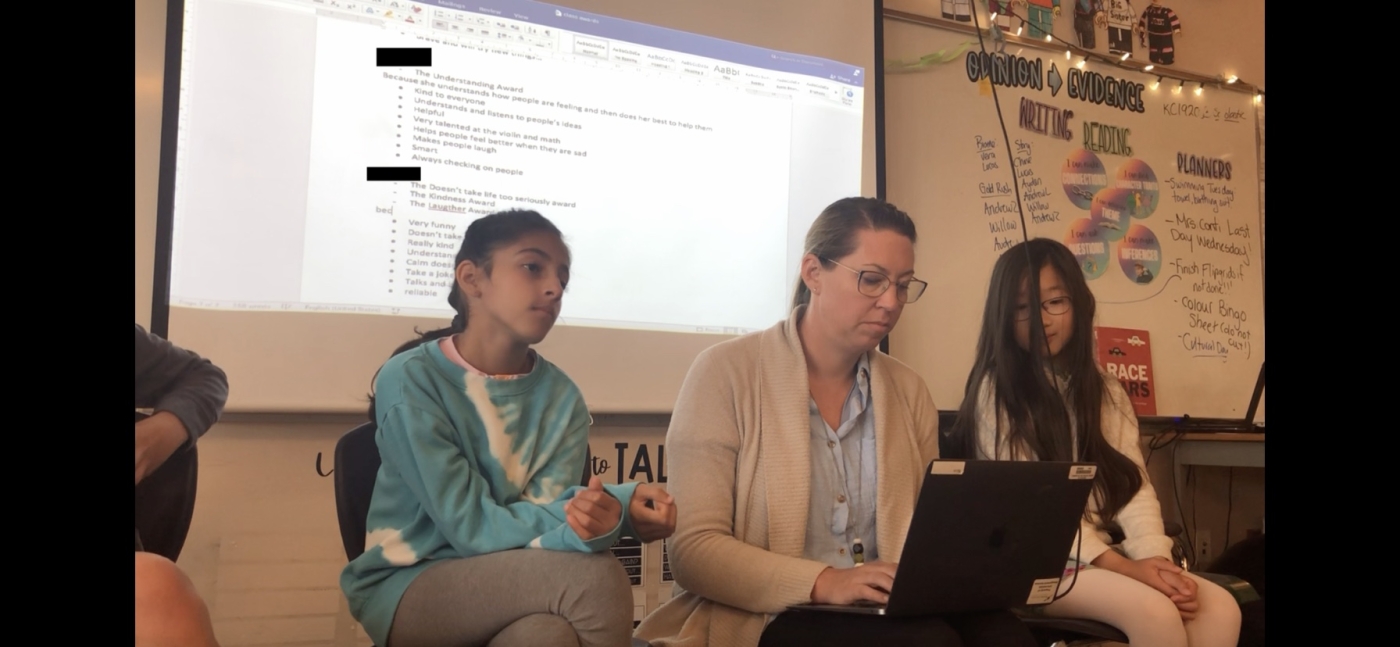
In the second example, Acknowledgement Circle, students have gathered together to acknowledge the need for others who can support their learning and personal growth. They acknowledge simple things, like appreciation for a treat, and big things like how they were included or experienced the support of a peer group in furthering their learning. They raise their hands in the ways of our Indigenous people as a gesture of gratitude.
Emotional Literacy- School Community
Our learners are developing their emotional literacy to provide leadership and service in our school. Successful student leaders demonstrate self-regulation, perspective-taking and problem-solving skills. They model and support these skills for our younger students.
These skills are expressed through our provincial curriculum in many of the Curricular Competencies. You will recognize these particular competencies in the examples below:
- Students can appreciate the importance of respect, inclusivity, and other positive behaviours in diverse, collaborative learning, and work environments (Career Education, Grade 6, 7)
- Students can demonstrate leadership skills through collaborative activities in the school and community (Career Education, Grade 6)
- Students can explore strategies for promoting the health and well-being of the school and community (Physical and Health Education, Grade 6)
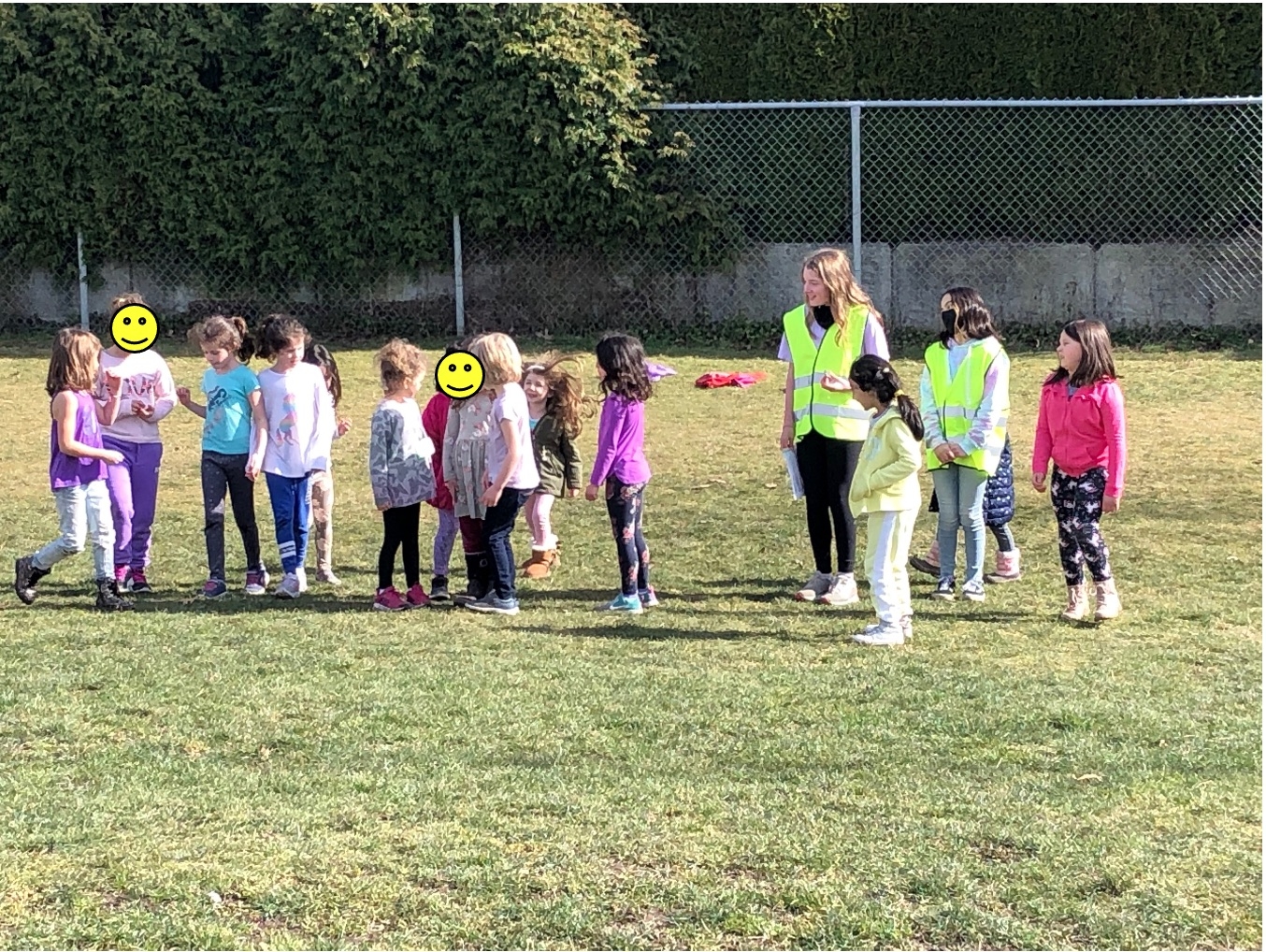
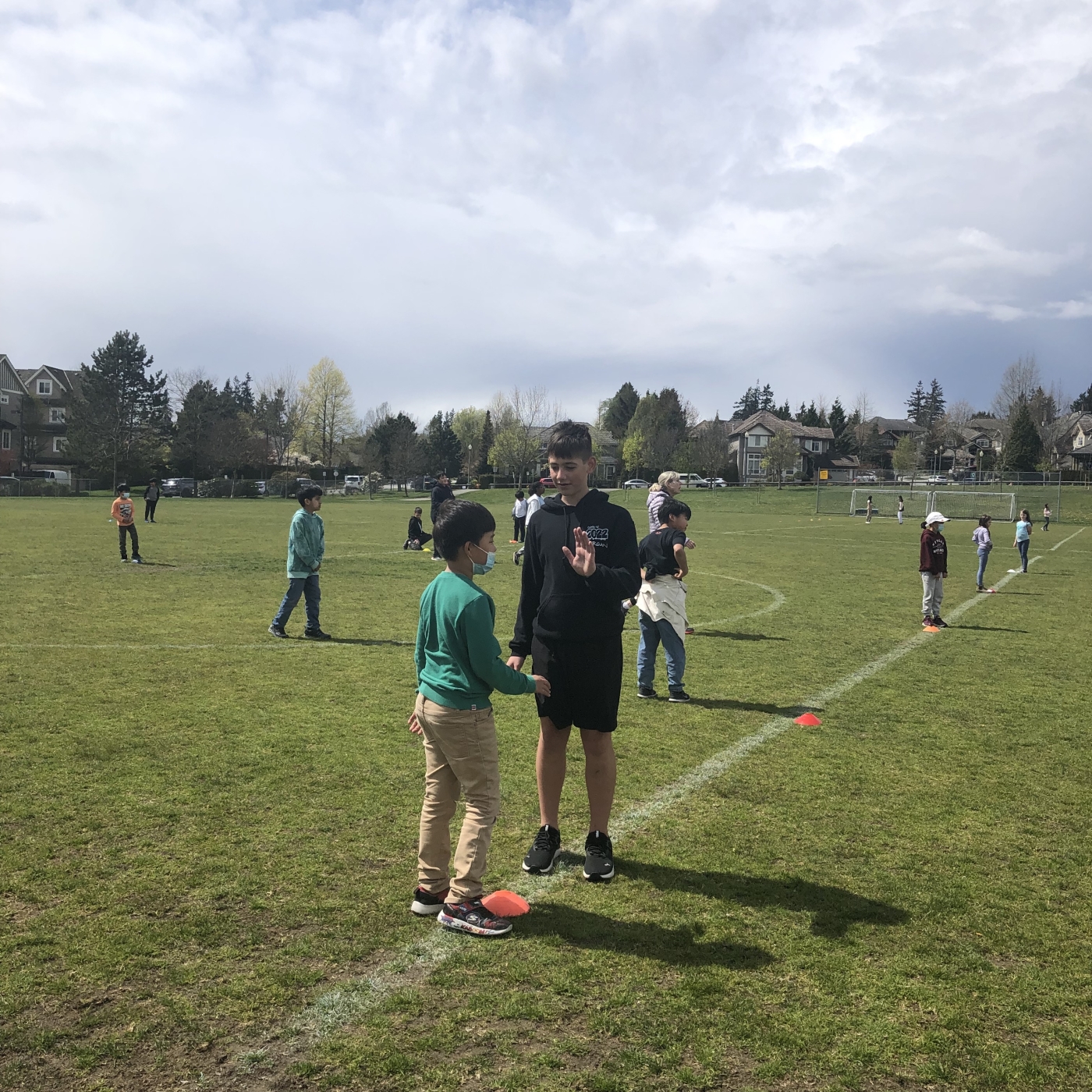
There are many Student Leadership roles at Morgan including Lunch Monitors, Spirit Leaders and Library Monitors, etc. One role that particularly taps into our students’ emotional literacy skills is our Bridging Buddies. These intermediate students support our youngest students outside at recess and lunch. They form a connection to these students (a bridge) by helping with play ideas, small conflicts, and safe play reminders. They also ‘bridge’ to the adult supervisors as needed. On Wednesdays, our Bridging Buddies provide game opportunities to our primary students.

Our Grade 6 and 7 Leaders took their understanding of the Meta Moment this year to create a campaign promoting student respect of our shared spaces. They applied what they learned about ‘seeing their best self’ to encourage others to pause and chose respect with “The Washroom Stall”.
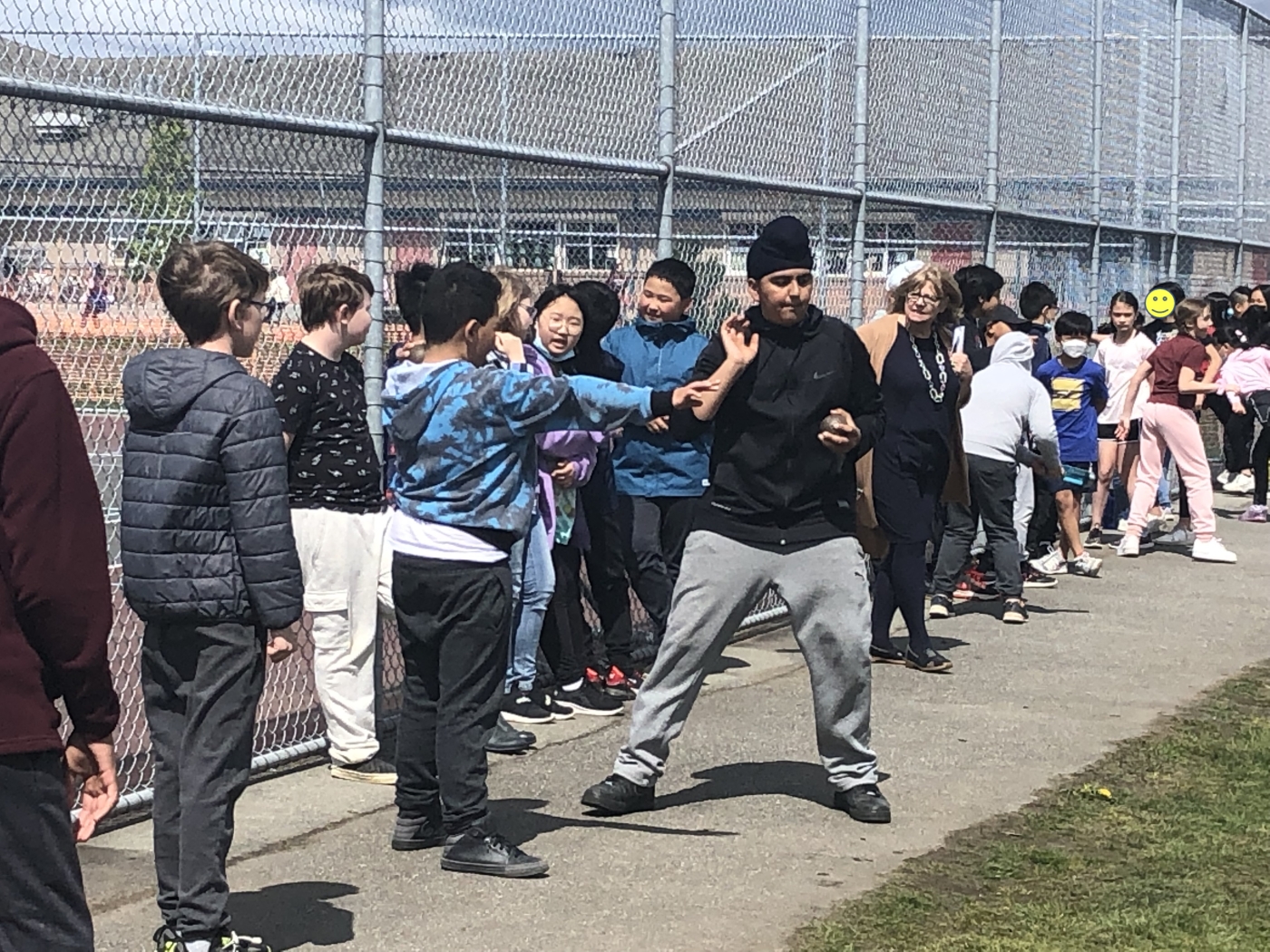
Another Student Leadership role is Big Buddies on Call. These student leaders promote the well-being of the school by providing service as needed to our youngest students. They support our Kindergarten students at assemblies by sitting next to them and modelling how to be a school community member; they play board games with them during the lunch hour, showing them how to be responsible citizens in the classroom during the lunch hour; and they take them for body breaks, modelling how we access self-regulation strategies.
Our upper intermediate students promoted health and well-being, and collaborated with staff and our younger students in leading our Track Attack and Sports Day activities. We are proud of our student leaders and recognize the many emotional literacy skills they are practicing in order to be successful in their roles. Our learners, big and small, all benefit!

OUR FOCUS
At Morgan, our goal is to build community that supports the well-being of self and others through developing positive connections. Our guiding question is: how are we intentionally and continually developing our own and our students’ emotional literacy skills? We understand our focus to be foundational to student wellness and readiness for learning. When we develop the wellness and emotional literacy of the individual, we develop the social and emotional learning of the classroom community, and then the community at large.
In our classrooms, students participate and contribute to Morning Meetings, Class Meetings, small group discussions about their feelings and how to solve problems peacefully. In addition, students have learned how to reflect upon their behaviour and are learning to take ownership of their actions.
This work is embedded across subject areas, and is expressed in the Curricular Competencies found in Language Arts, Career Education, and Physical and Health Education.
Specific curricular learning goals:
I can describe my feelings and worries
I can recognize when I am ready to learn
I can use strategies to manage my feelings
I can use the class charter to guide my actions, so that I can have positive relationships
I can identify sources of support at school that will help my learning goal(s)
Student Self Reflection
In our primary classes, students learn about identifying how they feel and how to manage their emotions. In our classrooms, it is important for students to first be able to identify feeling words and explore a variety of strategies for self-regulation. Student self-reflection is a lifelong skill that helps students with their overall well-being and sense of identity. The intention is with ongoing practice, students will have more positive peer relations and the ability to problem solve when conflicts arise.
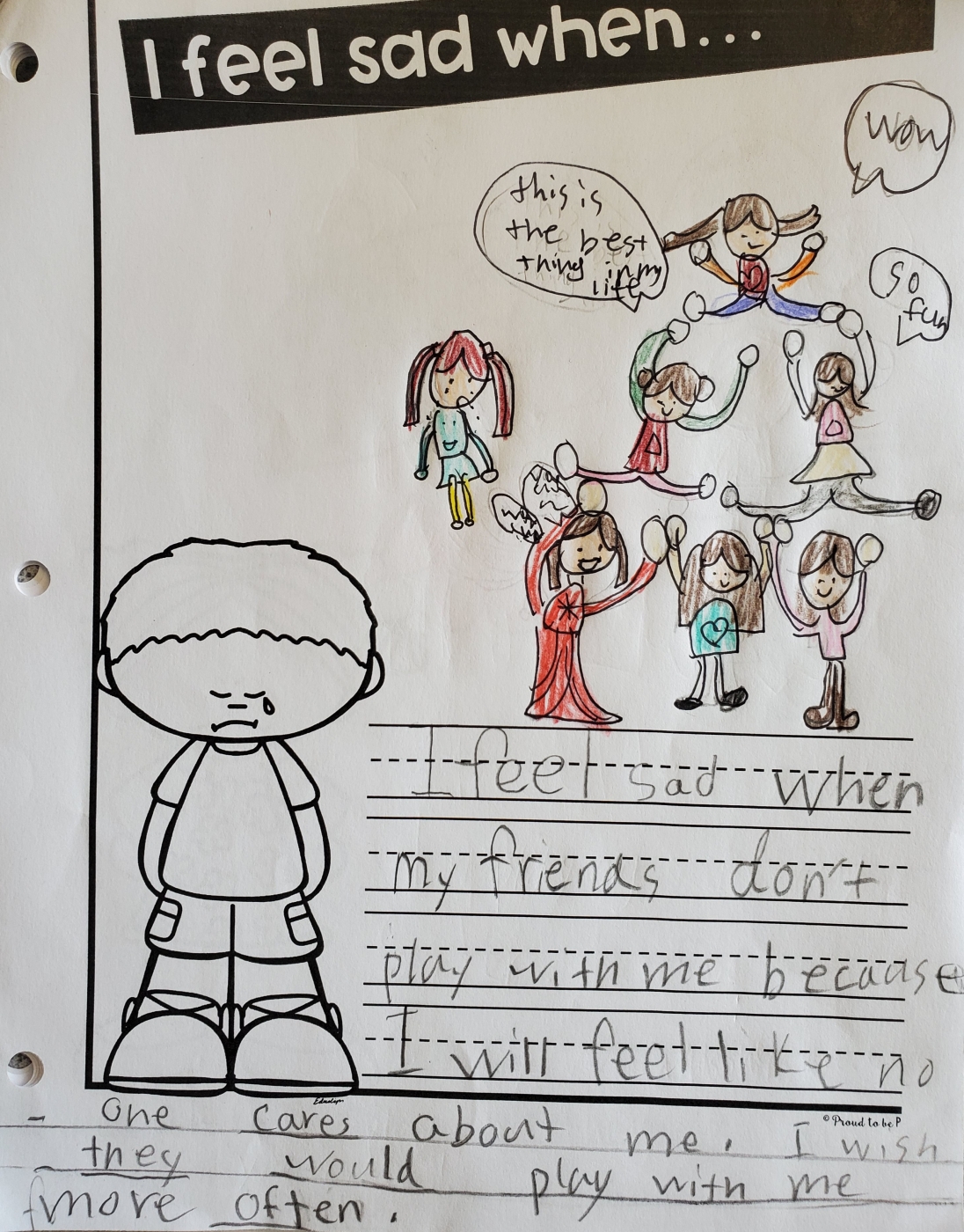 Student Feelings Journal Entry | 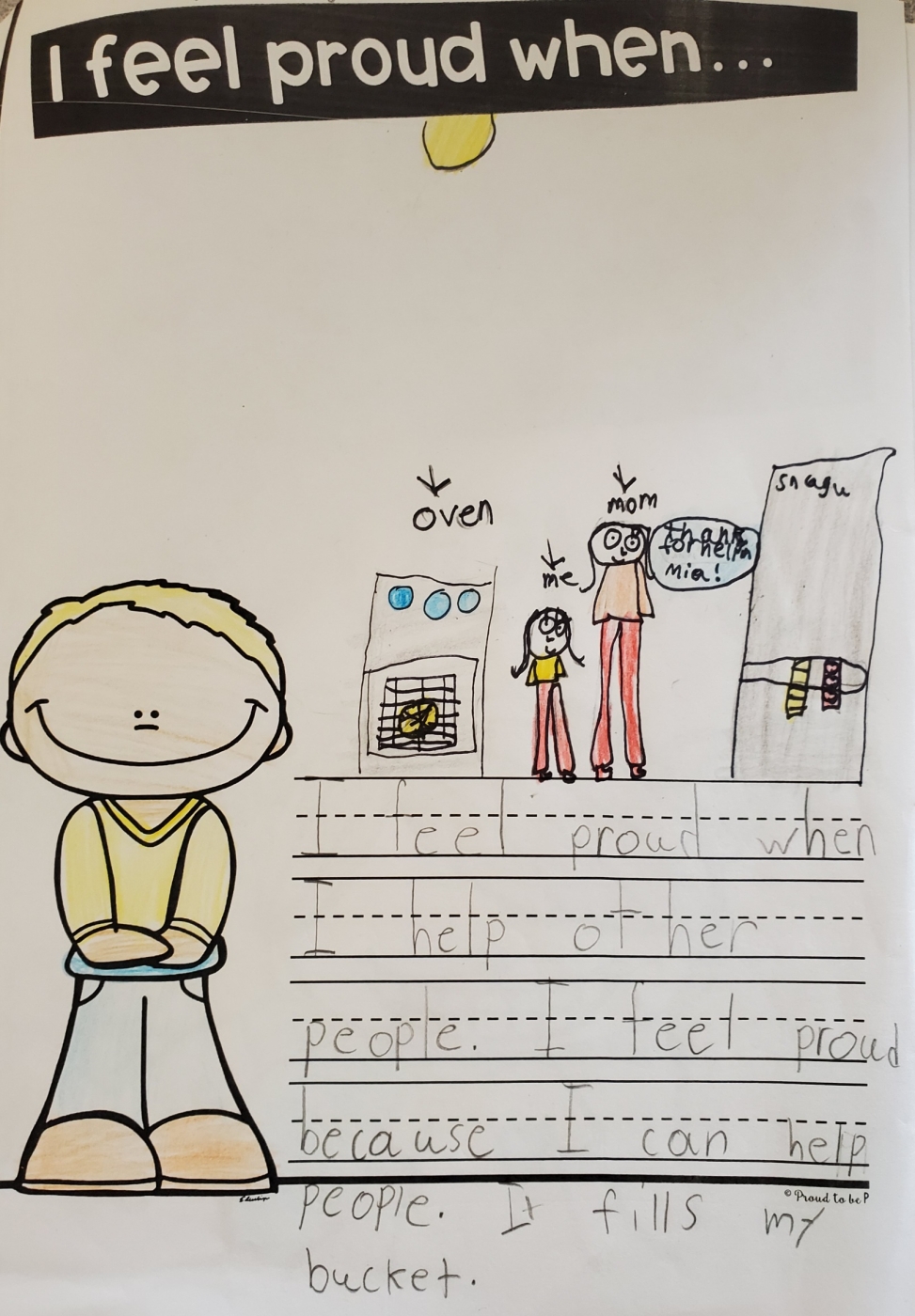 Student Feelings Journal Entry |
Morning Meetings
Morning Meetings provide a foundation for students to express their opinions and work together towards a common goal. Through Morning Meetings, students learn, problem solve, and build a classroom community that cares for one another that is based on the Class Charter. The Class Charter is foundational to our work in our classrooms. As a collaboratively developed document, it guides the behaviour and expectations in the classroom. Developing it is a thorough process, often taking multiple weeks, and is shared and signed by students, staff and families.
Through morning messages, greetings, and sharing, students build trust, review academic learning goals and learn strategies that increase positive behaviour.
Class Meetings
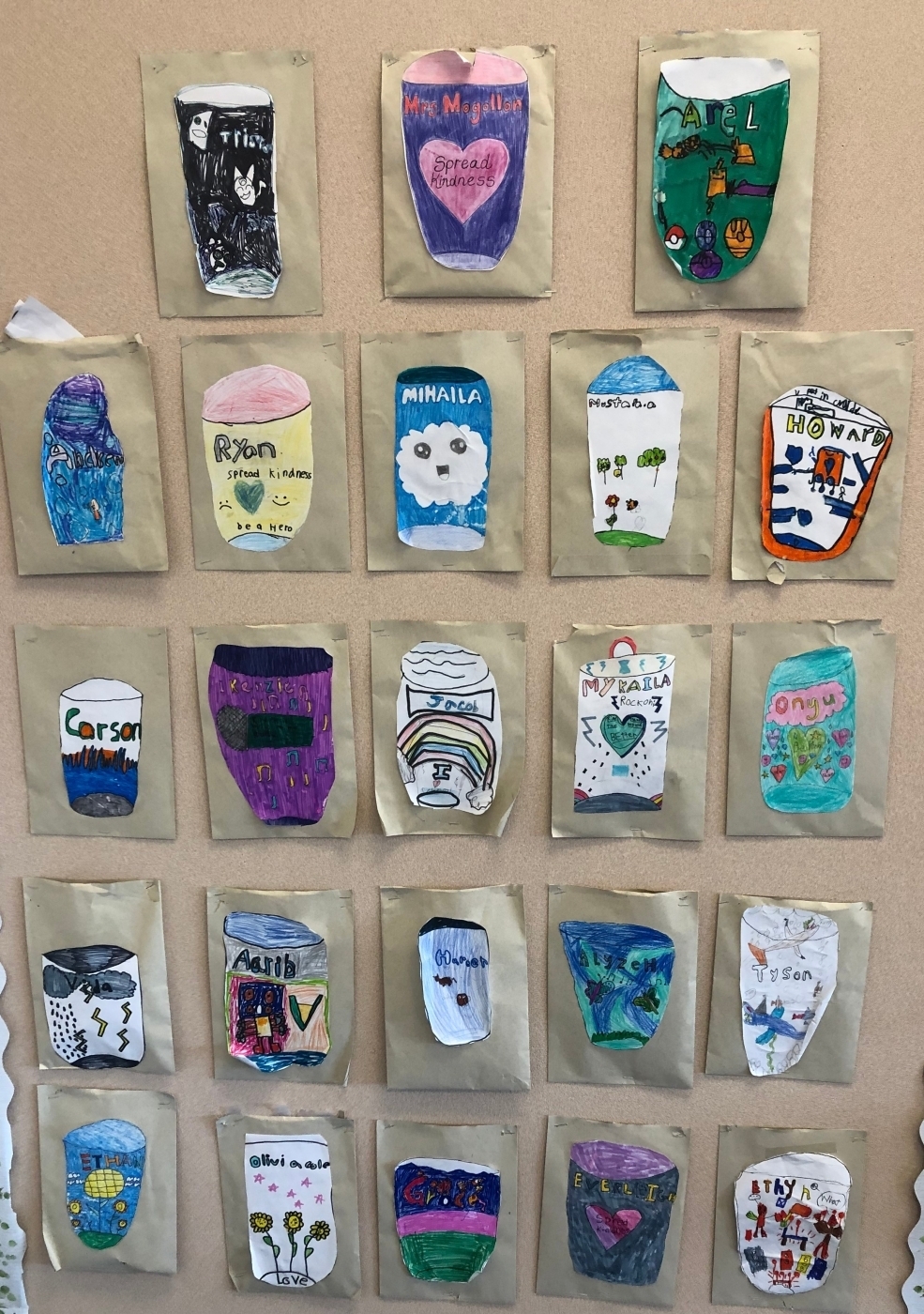
Weekly meetings are held to review activities and learning goals. Throughout the day and week, students may write messages to 'fill each others' buckets'. These notes of kindness (Bucket Slips) are read aloud during class meetings to promote positive peer relations and to contribute to a positive classroom environment.
OUR NEXT STEPS
We Can See the Learning!
We are proud of our students and can see their learning and growth! We notice that our students look to the Class Charter to help them identify their feelings in relation to their peers and the classroom environment. When students are not feeling ready to learn, they often look to the Class Charter for strategies to help support their learning. Through practice and guided conversations, students have a toolbox of strategies that have proven to be effective for them. Students make their learning visible to us by discussing the strategies they use: the need to change their spot, use noise cancelling headphones, or take deep breaths to feel more focused.
During weekly class meetings Bucket Slips are read to celebrate our commitment to the Class Charter and our accountability to one another as a classroom community. We watch our students acknowledge one another’s efforts to be kind, empathetic, inclusive, and respectful members of the classroom. Students demonstrate a sense of pride and ownership over their individual buckets that are displayed in the classroom.
Our students are developing their proficiency at identifying and managing their feelings and emotions both in and outside of the classroom. Students are becoming more confident in expressing how they feel at Morning Meetings and often cite their Classroom Charter when trying to problem solve with their peers. We often hear:
“____ isn’t following our Class Charter. They are not including me, being respectful...”

We have interviewed our students, and our curricular learning goals are evident in our students' learning:
I can describe my feelings and worries
I can recognize when I am ready to learn
I can use strategies to manage my feelings
I can use the class charter to guide my actions, so that I can have positive relationships
I can identify sources of support at school that will help my learning goal(s)
Our first video of interviews captures our students talking about our Class Charter:
Student Interview: Using the Class Charter
In these interviews, the students are able to demonstrate their proficiency with our curricular competencies. They demonstrate their understanding that the Charter is there to help guide the actions of the class. They see the Class Charter as important because it reminds them to "be respectful and kind to others"; it helps them to "not get bullied, and to stand up for each other". The students are able to explain the benefits of the Charter in supporting positive relationships and extrapolate beyond the written words on the charter. As one child puts it, "it helps us with learning being respectful and also, like, telling the truth to other people so they don't feel bad. But if it is something hurtful, you probably just don't want to say it, and that's good."
The students are able to identify the Charter as a source of support at school that will help individuals, the class, and even the whole school. The student tells us that "the Charter helps us and tells us what to do like, apologize, or just walk away or actually just talk it out... to be nice". Students describe how it is important to use these strategies to help manage challenging feelings so that the individual, class, and school community are able to have peaceful connections.
Student Interview: My Strategies for Self-Regulation
The students in these interviews are able to expertly describe strategies that they regularly employ so that they are ready to learn. To feel balanced and focused for learning, they have a number of strategies at their finger tips. "I usually just get a privacy shield", one student tells us. It helps her to feel more focused because there is nothing else around her. Her friend agrees, and also adds, "or I move my spot... to the carpet". Another student tells us "I put on noise cancelling headphones, take a privacy shield and put it around me and take some deep breaths". These students demonstrate that they have many strategies to manage their needs, and are easily able to identify sources of support at school to help them with their learning goals.
Next Steps:
We recognize that developing emotional literacy is a reflective, iterative and lifelong process. As we continue our journey with our Curricular Competencies, our students will:
Continue engaging in opportunities to reflect and express their feelings (i.e., Morning Meetings & journaling)
Continue to explore and practice strategies on how to solve conflicts with and without adult support
Go deeper in reflecting on their own behaviour with guiding questions such as:
What positive strategies did I bring to the situation? Was I my best self in this situation?
What went well? What could I have done differently?
Surrey Schools
Formed in 1906, the Surrey School District currently has the largest student enrolment in British Columbia and is one of the few growing districts in the province. It is governed by a publicly elected board of seven trustees.
The district serves the cities of Surrey and White Rock and the rural area of Barnston Island.