McLeod Road Traditional 25-26

OUR CONTEXT

McLeod Road Traditional Elementary School is proud to sit on the unceded, traditional territory of the Katzie, Kwantlen, and Semiahmoo First Nations and other Coast Salish Peoples. We are grateful to come to school each day to work and learn. We are committed to continued learning about our area and to be stewards of the land.
McLeod Road Traditional, also known as MRT, is a distinctive and close-knit educational community within the Surrey School District. The emphasis on a traditional learning experience, along with the unique aspects such as a school uniform, contribute to the school's distinctive culture. The smaller size of the school fosters a keen sense of community and belonging among students, creating a unique and supportive learning environment. The stability of the community with returning staff and families, enhances the sense of trust and connection between all members.
The choice program's popularity among parents suggests that MRT offers something special that appeals to families seeking a more traditional educational approach. The pride students take in wearing their uniforms also reflects a shared identity and a sense of belonging.
Overall, the school context highlights the positive aspects of MRT, emphasizing its unique culture, community spirit, and the enduring relationships among students, staff, and parents.
We take pride in building a strong sense of school culture that includes the greater community to provide authentic and meaningful learning opportunities for our students. We engage in collaboration in a variety of ways, and seek participation from our families and the greater community.
Please see the following highlights of our learning community:
SOCIAL EMOTIONAL LEARNING
We are proud of our focus on social and emotional learning and how we integrate these concepts into our daily routines, curriculum, and school goals. Some examples of our focus on Social Emotional Learning include: our positive behavioural support plan (BOLTS), evidence-based SEL programming, and an in-house Social and Emotional Learning lead teacher.
 IDENTITY AND SENSE OF BELONGING
Our identity as Thunderbolts is used as a tangible metaphor for the qualities we want to celebrate within our community.

MONTHLY ASSEMBLIES
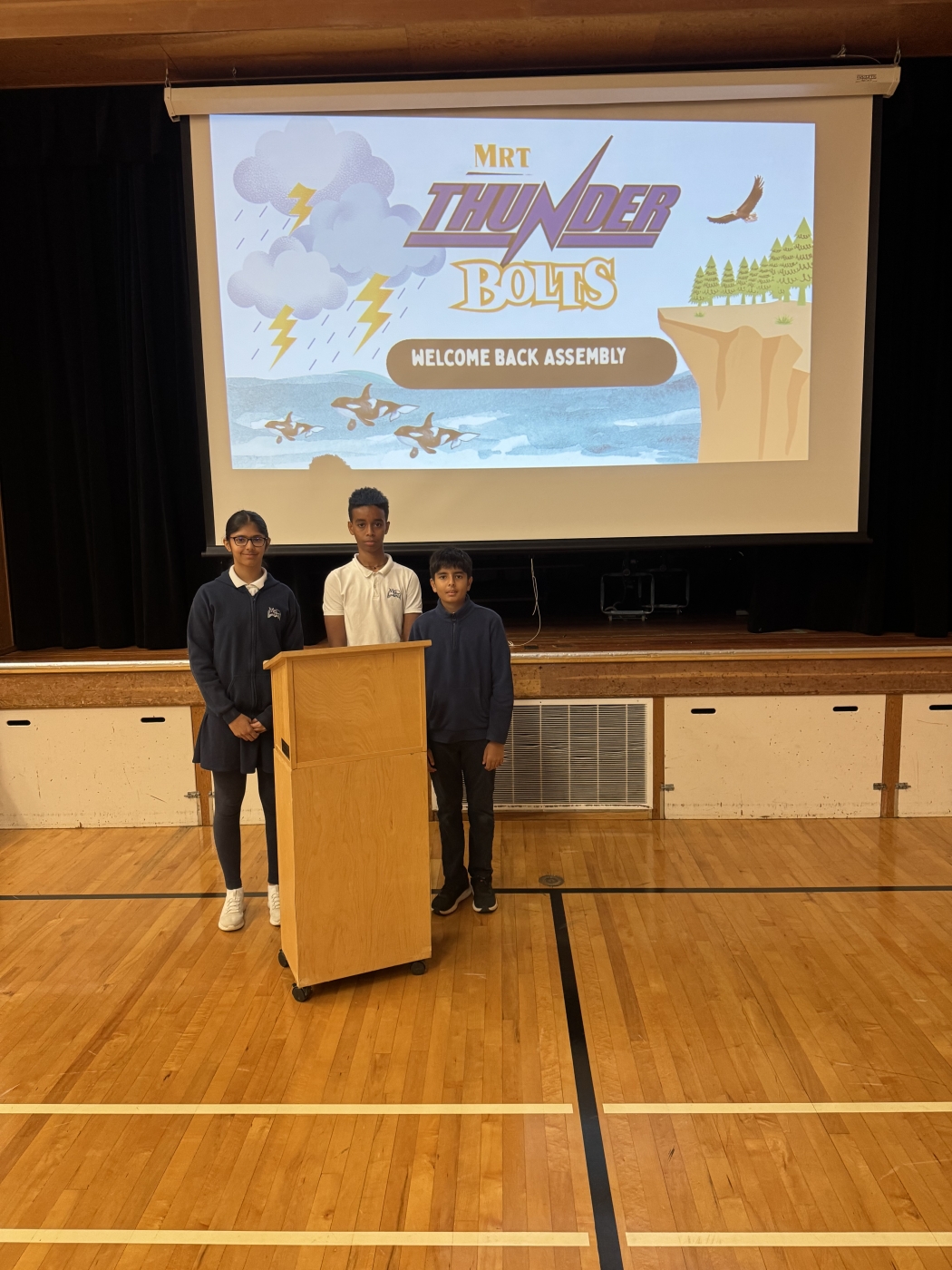
We gather as a learning community at the end of each month to highlight learning, cultivate student voice, focus on SEL themes, and celebrate student successes. Students are the focus!
ENCOURAGING POSITIVE BEHAVIOUR
Our goals for positive student behaviour are outlined in the acronym "BOLTS". Students are acknowledged with a "BOLTS" ballot by a staff member when they are noticed demonstrating this positive behaviour. Students then enter these BOLT ballots into a draw box for a chance to win gift cards on the last day of each month.

OUTDOOR LEARNING
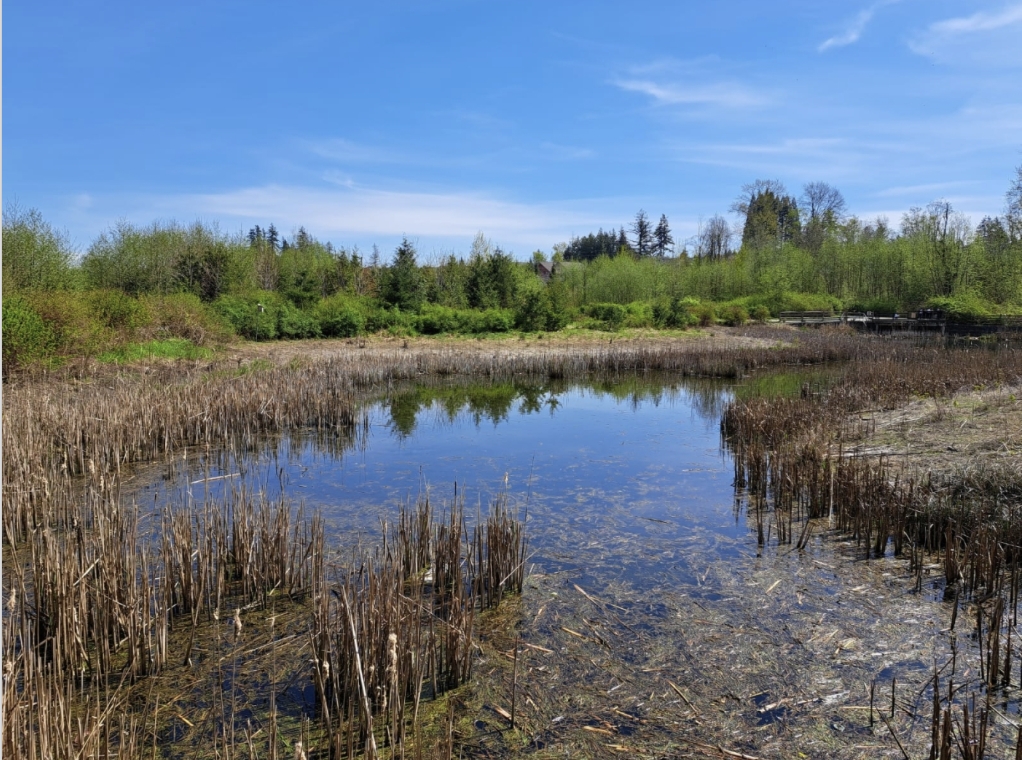
Outdoor learning opportunities have become heavily embedded in our educational programming. We are fortunate to have large school grounds of natural space. Other outdoor spaces frequently used include McLeod Park which is adjacent to our school property and has a duck pond. Classes utilize this space to engage in hands-on, place-based learning.
INDIGENOUS LEARNING
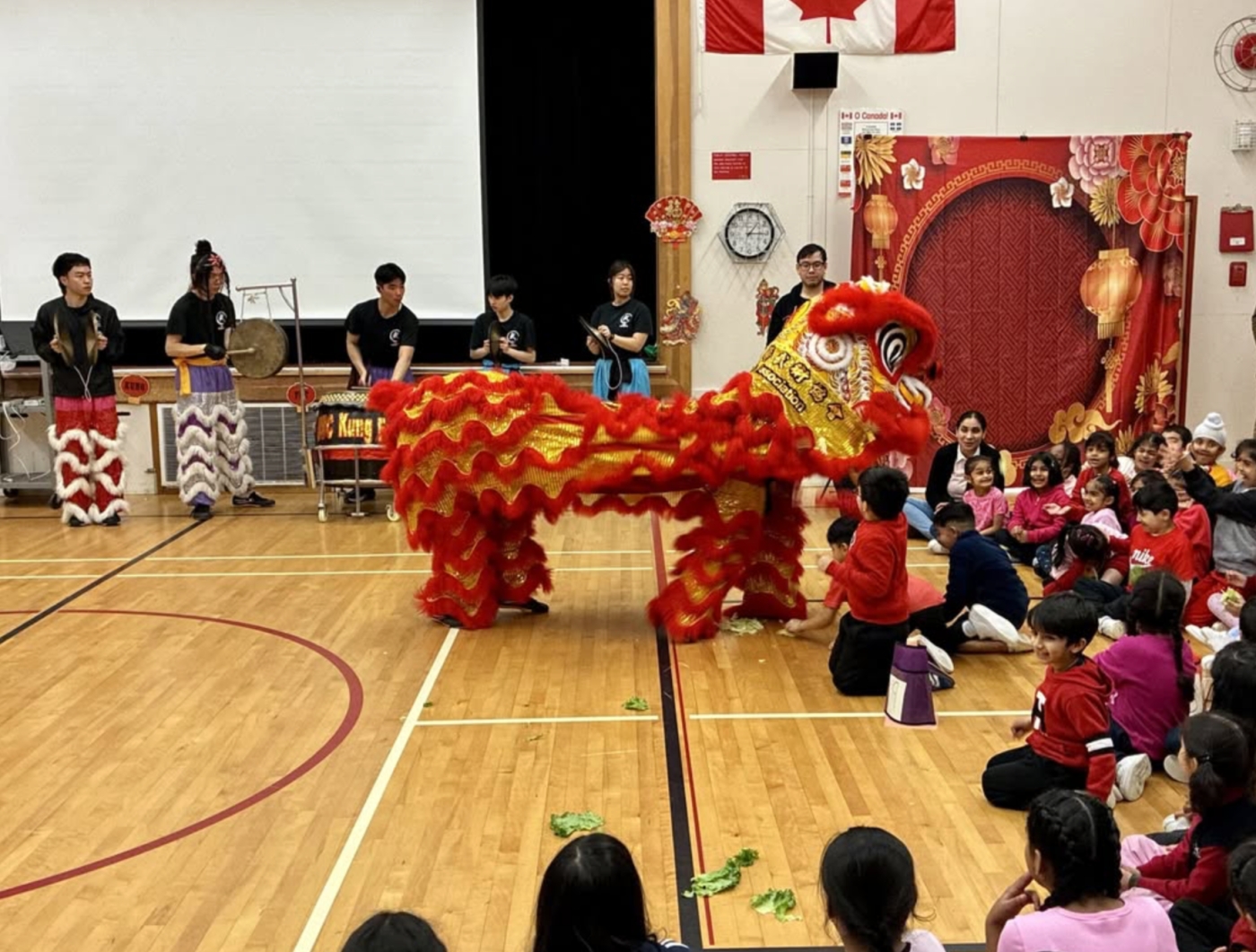
The First Peoples Principles of Learning are embedded in announcements, assemblies, and classroom activities. At McLeod Road, we acknowledge that learning happens in a social setting, is based in relationship, and should reflect the history of the land and its original peoples.
 DIVERSITY
At McLeod Road we celebrate our diversity and encourage conversations that promote and discuss equity and inclusion. We use the District's Racial Equity Calendar to highlight celebrations, events for our community to learn more about one another. At McLeod Road, we understand that learning happens within a social context, and that there is a cultural component of knowledge. We continue to seek ways to highlight cultural celebrations, and honour cultural knowledge from those within our community. We acknowledge that there is no one way to do anything, and the more opportunities we have to learn from people who are different than us, the more we will learn about the world, and ultimately ourselves.
PAC
Our dedicated and involved parent community actively fundraise to support learning opportunities for students throughout the school year. Our Parent Advisory Council (PAC)sponsors events such as hot lunches, treat days, special events, and school wide lessons for athletic programming.
OUR LEARNERS
Overview:
McLeod Road Traditional School serves a student body of 210 learners distributed across nine classes, creating a close-knit learning community. The families of these students place a high value on education, which is evident in the students’ dedication to learning and their pride in academic achievement.
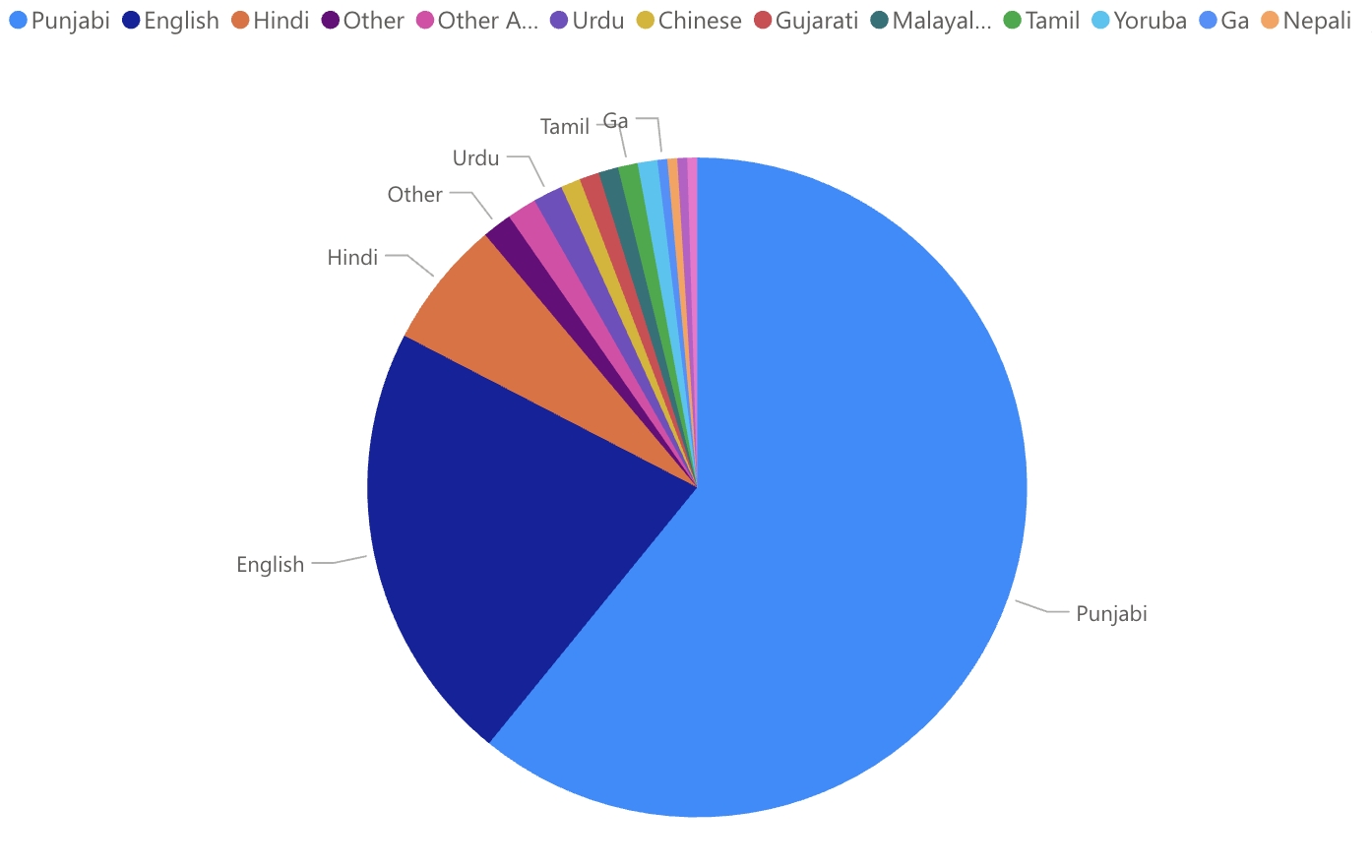
A significant characteristic of the student population is its linguistic and cultural diversity—most students speak a second language at home, enriching the school community with a variety of perspectives and experiences.
Top languages spoken at home based on student enrolment:
Numeracy Student Focus:
As is the case at every school, there are learning strengths and challenges. Many students excel in rote learning and fact recall, showing strong memory skills and the ability to retain and reproduce information accurately. However, when it comes to higher-order thinking skills—such as analysis, synthesis, and evaluation—the students tend to face more challenges. This has become clear when looking at the Foundational Skill Assessment (FSA) results of the students in grade 4 and grade 7.
Student Learning Plan focus: Numeracy and Student Voice
Overview of Learning Experiences
Our focus cohort of Grade 5/6's have been encouraged to develop their voice to communicate their thinking through a variety of strategies, including: self reflections, student-made videos, use of manipulatives/loose parts, and other strategies such as Math Up. Opportunities for communicating thinking will be presented routinely to students, and they will be provided with guided practice so they can develop their competency in a variety of different areas.
Specifically this year, we had the Numeracy Helping Teacher lead staff in instructional ways to have students develop in the following areas:
-contribute to small group discussions
-listen to others' idea
-explain their ideas listen to others’ ideas
-use precise math language
Our learners can... communicate their learning in numeracy using a variety of strategies, including manipulatives, documentation, and oral sharing.
When surveyed twice this year, November 2025 and May 2026, students reported:
Earlier in the year, students showed emerging confidence in mathematical discussion, representation, and justification. While participation was present, many students were hesitant to fully articulate or defend their reasoning.
Current self‑reflection data shows significant growth across all competencies.
What changed over time:
- From tentative participation → increased contribution
- From answering → explaining
- From listening politely → listening purposefully
What instructional practices likely contributed:
- Daily math talk norms
- Think‑pair‑share and turn‑and‑talk
- Sentence stems for justification
- Consistent use of representations
- Normalizing multiple strategies
Students said:
November 2025:
- "Some of us didn’t feel ready to share"
- "Explaining our thinking felt hard"
- "We weren’t always sure how to use math words"
May 2026:
- "Most of us feel confident talking about math"
- "We listen carefully and build on ideas"
- "We can show our thinking in pictures, numbers, and words"
OUR FOCUS
Numeracy and Communication- Student Voice
Curricular Competencies
Our students can use :
- use mathematical vocabulary and language to contribute to mathematical discussions,
- explain and justify mathematical ideas and decisions,
- communicate mathematical thinking in many ways,
- represent mathematical ideas in concrete, pictorial, and symbolic forms,
This goal matters as we hope students can clearly communicate their thinking, be confident while engaging in numeracy tasks, and also use mental math and manipulatives to understand concepts and processes of solving problems versus memorization. The focus group at this point in time is our intermediate students in grade 5/6.
Specifically, these students have had the opportunity to work collaboratively in groups to discuss their learning, and teach one another strategies for problem solving. Though this collaboration, students have had the opportunity to develop and enhance their social and emotional skills such as reflecting on mathematical thinking, connecting mathematical concepts to each other and to other areas and personal interests, using mathematical arguments to support personal choices, which are all part of the curricular competencies in the B.C. curriculum for mathematics.
Objective
For all math, the teacher’s objective is to understand individual learner needs and skills, meet each child where they are at, and move them forward by building on their strengths to close gaps or extend learning.
Rationale
The rationale for each math lesson is rooted in student engagement. It is imperative that all math concepts taught help students make connections to real life and other subject material. This can be achieved through hands-on activities, exploration, discussion, playing, creating, the use of technology, the arts, and reflection.
Key Actions
- Continue to embed regular opportunities for math talk and discussion across all grades through routines such as think‑pair‑share, turn‑and‑talk, and math talks.
- Intentionally support students in explaining and justifying their thinking, moving beyond answers to reasoning and strategy comparison.
- Maintain consistent use of concrete, pictorial, and symbolic representations to deepen understanding and support a range of learners.
- Use student self‑reflection as a formative tool to build ownership, confidence, and awareness of growth in numeracy skills.
- Provide targeted support for students who remain in the Emerging category, with a focus on foundational skills delivered within classroom instruction.
Goals:
Lessons will instil a growth mind set, where each student sees themselves as a capable mathematician who knows when, where and why math skills are needed, and how support tools can be accessed to solve problems. Math class and math concepts are designed to provide opportunities to gain confidence in sharing discoveries, making mistakes, asking questions, and finding solutions.
Examples:
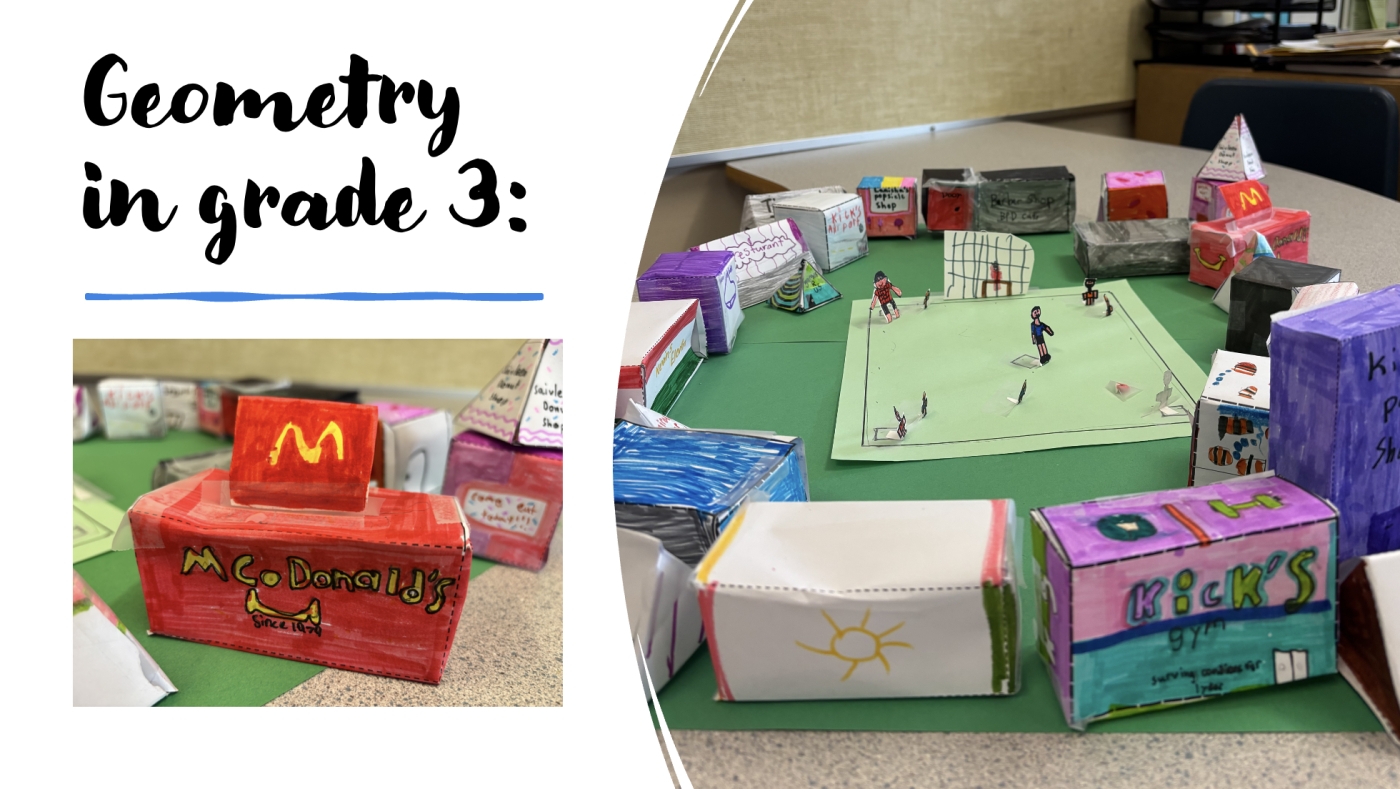
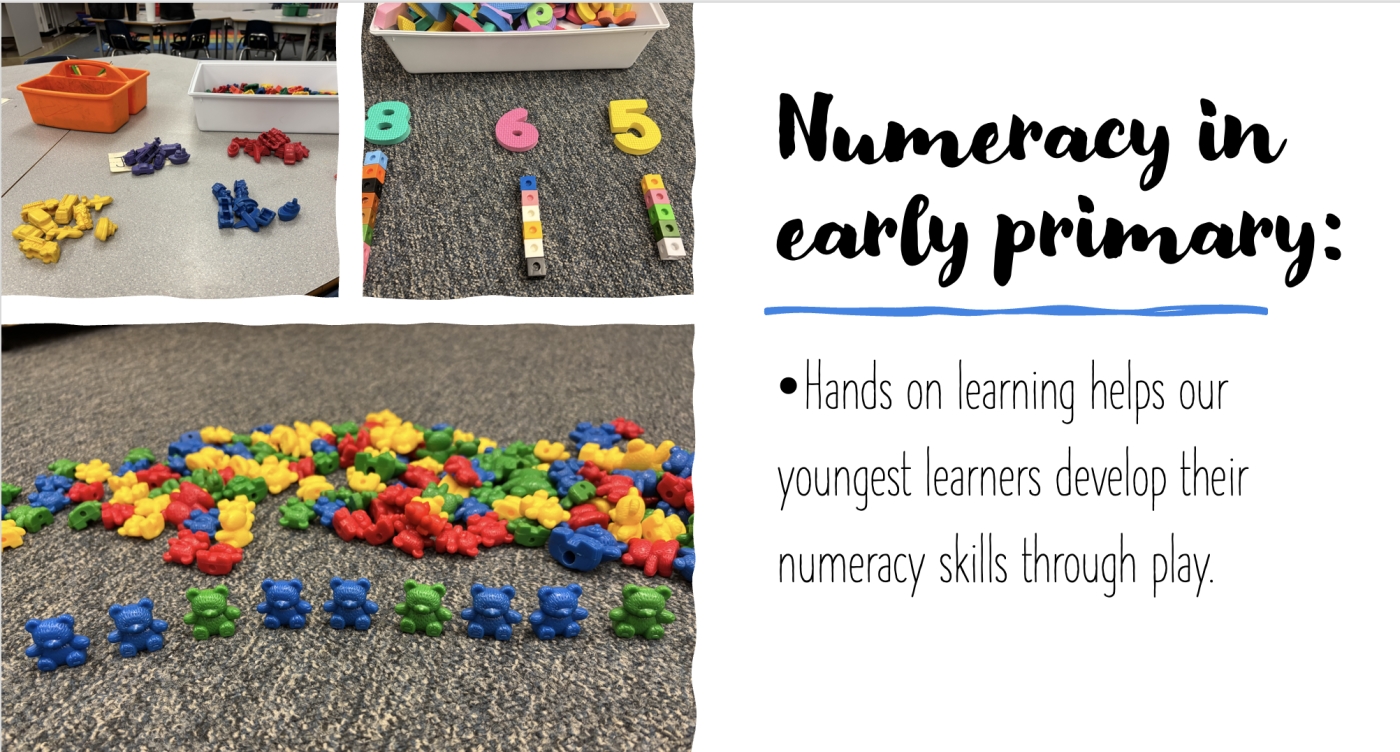
While many of our students demonstrate strong foundational skills—such as fact recall and basic computational math—they often encounter challenges when faced with more complex or unfamiliar mathematical problems. This suggests a need to strengthen their flexibility of thinking and deepen their conceptual understanding of mathematics.
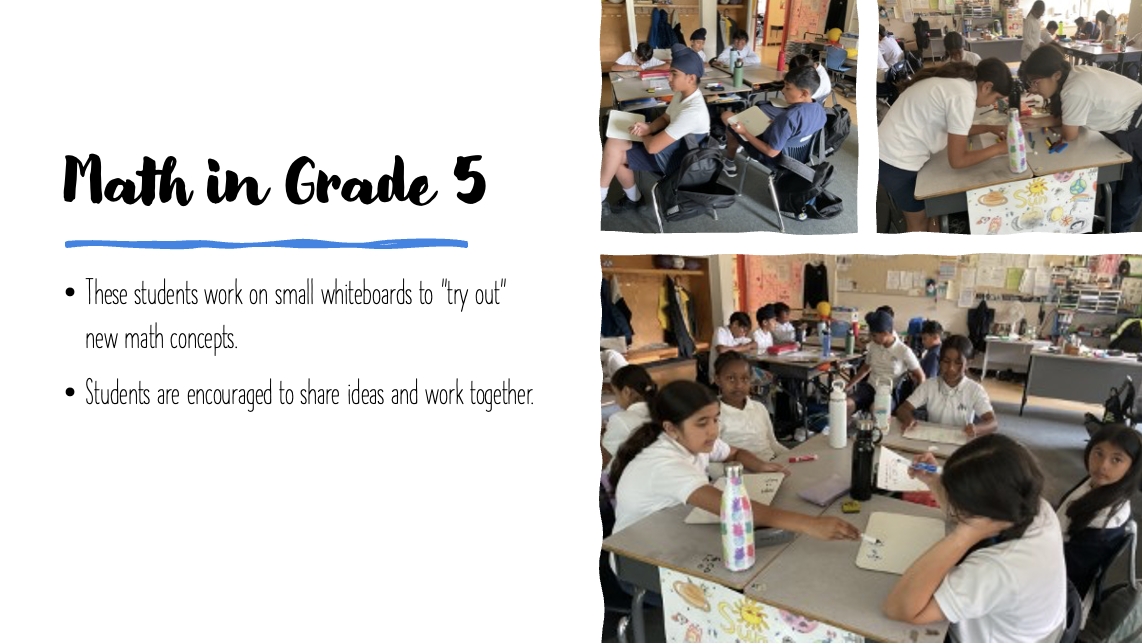
One staff explained that, "A different medium (whiteboards) allows students to "draw" their thinking while they are learning new concepts in math. It is less intimidating to make a mistake on a whiteboard that can be easily be erased versus writing it on a paper or in a notebook. It also encourages sharing between students and allows for easy formative assessment ."
Our FSA data indicates that there is a school-wide opportunity to enhance overall math proficiency. Specifically, students need to build stronger problem-solving strategies and develop a growth mindset. When math becomes challenging, we want our students to feel confident in their ability to persevere, explore different approaches, and learn from mistakes.
This data makes us wonder about the students who are emerging in their mathematical ability. It seems that many students are learning and progressing well with the classroom teaching and extra supports that they are given but what about the students who are not making the expected progress. How do we meet their needs in order to help them achieve success?
By focusing on numeracy as a school goal, we aim to:
- Support students in becoming more adaptable and strategic thinkers in math.
- Encourage resilience and a positive mindset when tackling difficult problems.
- Improve overall student achievement in numeracy, as reflected in future FSA results and classroom assessments.
This goal aligns with our broader mission to equip students with the skills they need to succeed not only in school but in life beyond the classroom.
OUR NEXT STEPS
OUR NEXT STEPS
Focus Area : Strengthening student confidence, communication, and reasoning in numeracy.
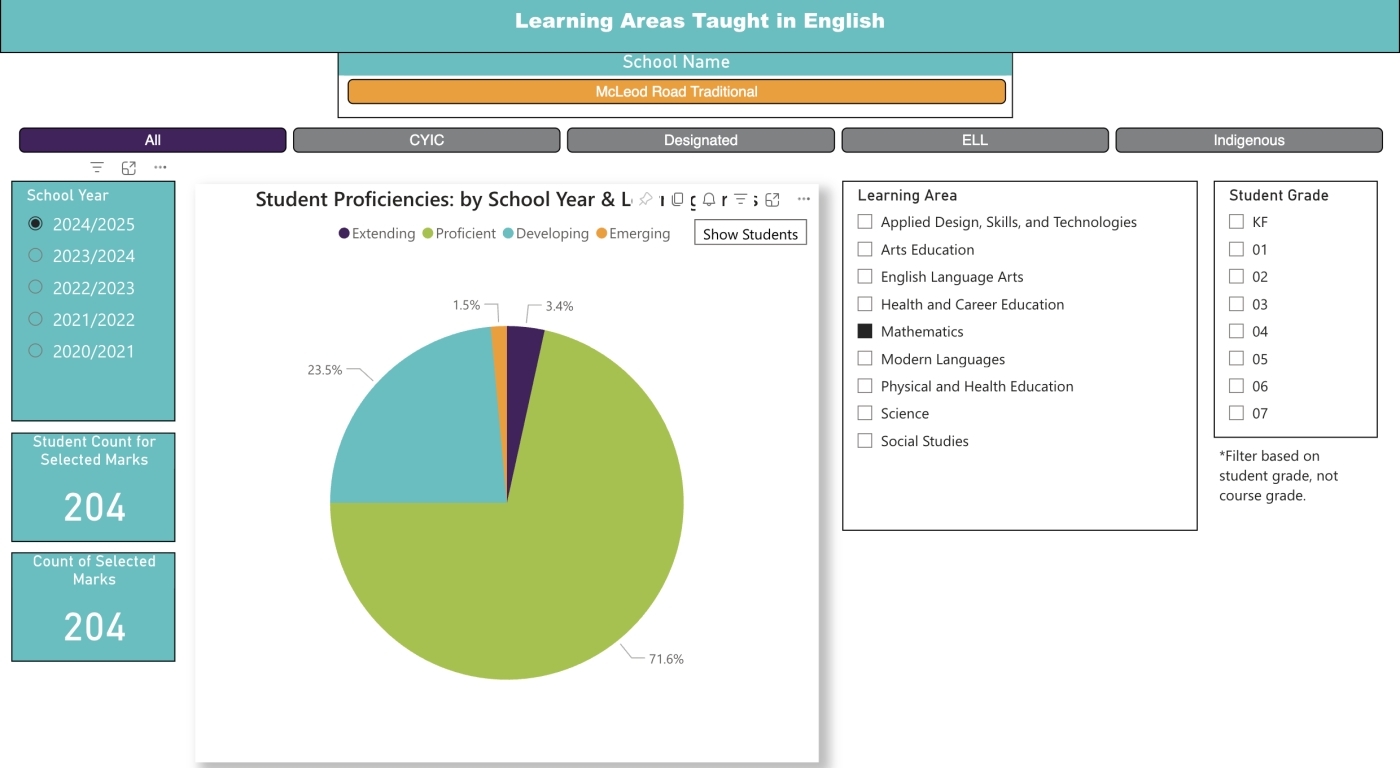
Data: Comparing FSA data and school proficiency indicators:

Context and Rationale of the Data:
Over the past several years, FSA numeracy data for both Grade 4 and Grade 7 shows an overall positive trend, with increasing numbers of students meeting expectations. Early data reflected a high number of students in the Emerging category, followed by steady improvement and a strong recovery period. A notable dip in 2023/2024 was seen across both grades, suggesting a broader cohort challenge rather than isolated classroom issues. Recent results from 2024/2025 and 2025/2026 show clear improvement, including lower Emerging rates and higher On Track achievement. This growth is supported by classroom self‑reflection data, which indicates that students feel increasingly confident talking about math, using representations, and explaining their thinking. Together, these data sources highlight the importance of continuing to build student confidence, voice, and reasoning in numeracy.
Generalized Key Actions:
- Continue to embed regular opportunities for math talk and discussion across all grades through routines such as think‑pair‑share, turn‑and‑talk, and math talks.
- Intentionally support students in explaining and justifying their thinking, moving beyond answers to reasoning and strategy comparison.
- Maintain consistent use of concrete, pictorial, and symbolic representations to deepen understanding and support a range of learners.
- Use student self‑reflection as a formative tool to build ownership, confidence, and awareness of growth in numeracy skills.
- Provide targeted support for students who remain in the Emerging category, with a focus on foundational skills delivered within classroom instruction.
Equity and Inclusion Considerations
- Reduce barriers by offering multiple ways for students to demonstrate understanding, including oral explanations, visuals, manipulatives, and written strategies.
- Monitor progress of identified learner groups to ensure equitable growth and access to support.
- Ensure interventions strengthen, rather than replace, inclusive classroom practices.
Alignment to Curricular Competencies
This focus supports the BC Numeracy curricular competencies by emphasizing students’ ability to:
- Communicate mathematical thinking
- Reason and justify solutions
- Use multiple representations
- Reflect on learning and growth
Evidence of Success
Success will be monitored through:
- Classroom observations and formative assessments
- Ongoing student self‑reflection data related to confidence and participation
- Year‑to‑year analysis of Emerging, On Track, and Extending performance
- Continued improvement and stability in FSA numeracy results
Indicators of success will include a continued reduction in Emerging learners, increased consistency in students meeting expectations, and greater confidence in explaining mathematical thinking.

Specific Next Steps to Support Numeracy Goals so that there is less of a gap between the FSA and school level proficiencies as compared in the two graphics above. We will target this gap by:
1. Professional Development Focus on Numeracy Communication
- Workshops and Training: Provide targeted professional development for staff on strategies to teach and assess mathematical communication. Topics could includ We using math journals, incorporating mathematical discourse, and teaching students how to explain their reasoning effectively. This year we have had two Numeracy Lunch and Learns from the District Numeracy Teacher, Mr. Chris Hunter.
- Collaborative Planning: Establish Professional Learning Communities (PLCs) that focus specifically on numeracy, where teachers can share best practices, analyze student work, and co-create lessons aimed at improving mathematical communication. Next year, McLeod Road will be part of a district initiative called Math Matters with a focus on Communication as a competency.
2. Integrated Use of Technology for Communication and Assessment
- Digital Tools for Expression: Introduce digital platforms such as Explain Everything, Seesaw, or Flipgrid, where students can record and present their mathematical thinking using visual and verbal explanations.
- Adaptive Assessment Tools: Use tools like Mathletics or Freckle to assess student progress while providing opportunities for students to explain their thinking within the platform.
3. Refinement of Assessment Practices
- Rubrics for Mathematical Communication: Develop and use rubrics that explicitly assess how well students communicate their mathematical thinking, including criteria such as clarity, accuracy, and use of mathematical vocabulary. Share these rubrics with students to guide their self-assessment.
- Formative Assessment Techniques: Implement regular formative assessments, such as math exit tickets, where students must write or draw how they solved a problem. This can provide immediate feedback and inform instruction.
- Student Portfolios: Establish a numeracy portfolio where students collect examples of their problem-solving work, paired with written or recorded explanations of their reasoning.

4. Classroom Strategies to Support Communication
- Math Talks: Dedicate time for regular math talks, where students explain their reasoning to peers and engage in constructive discussions about different solution methods.
- Anchor Charts: Create visual aids in classrooms that outline steps and language for explaining mathematical thinking, such as "I solved this by…" or "My strategy was…".
- Peer Reviews: Introduce peer feedback sessions where students evaluate and discuss each other's mathematical explanations using teacher-provided criteria.

5. Engaging Families in Numeracy Communication
- Numeracy Nights: Host family math nights where students demonstrate and explain their problem-solving strategies to parents. Provide families with resources to support mathematical communication at home.
- Home Learning Tasks: Design take-home math activities that require students to explain their thinking in writing or through videos submitted to the teacher.
6. Data-Informed Instruction
- Analyze Patterns: Regularly review assessment data to identify trends in how students communicate their thinking. Use this data to tailor interventions for students who struggle with expressing mathematical ideas.
- Goal Setting with Students: Engage students in setting personal goals related to mathematical communication, fostering ownership of their learning.
7. Creation of a loose parts room to increase student engagement and access to cross curricular manipulatives.

By embedding these strategies, we aim to build on current initiatives to enhance student learning and deepen student ability to articulate mathematical reasoning more effectively.
Surrey Schools
Formed in 1906, the Surrey School District currently has the largest student enrolment in British Columbia and is one of the few growing districts in the province. It is governed by a publicly elected board of seven trustees.
The district serves the cities of Surrey and White Rock and the rural area of Barnston Island.