M.B. Sanford Elementary
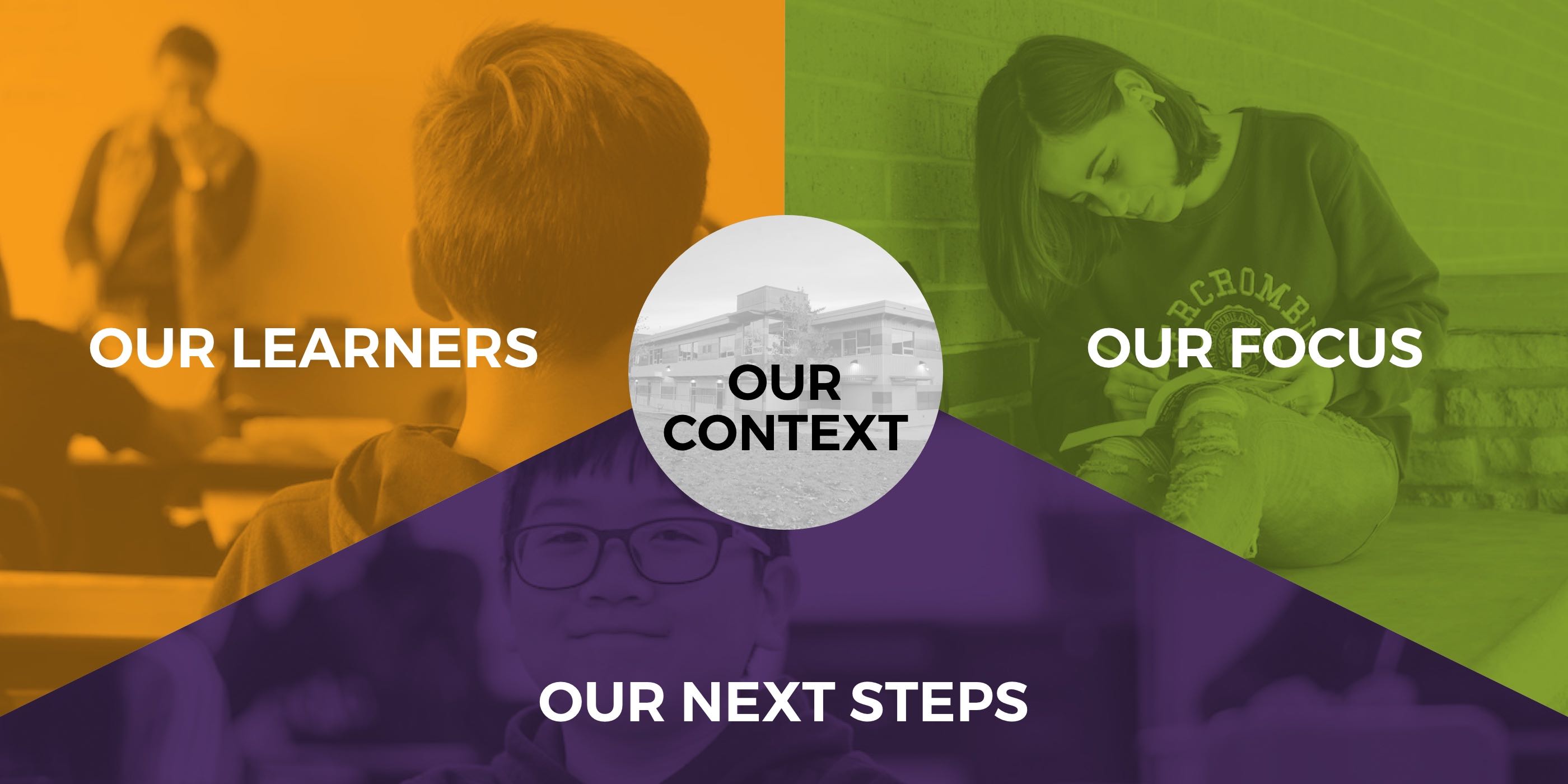

OUR CONTEXT
MB Sanford is a learning environment that strives for community and connection.

Through student involvement we aspire for students to have a sense of belonging, be motivated and inspired to learn, and to provide meaningful opportunities for students to develop their communication, collaboration and problem solving skills. We want students to truly feel that MB Sanford is their school; to feel valued and have a sense of agency in their learning. Our students are eager to volunteer and get involved. From planning and presenting our school assemblies, school wide events, and initiatives, our students are engaged in every aspect along the way. Orange Shirt Day, Remembrance Day, Welcome to Kindergarten, our school garden, morning announcements, and Walk to school are just a few of the ways students lead at MB Sanford. Our teachers seek out meaningful, hands on learning experiences that engage students and empower them to connect with the world around us.
OUR LEARNERS
Numeracy is a universal language that allows for exploration and interaction with the world. Focusing on the processes and thinking used to solve problems, our students understand that math is more than numbers, symbols and calculations. Our students recognize that math is a tool that allows them to engage and explore the world by solving problems and communicating solutions.
Our learners can verbally explain the steps they took to solve a problem
Students were led through an Entrepreneurial Experience. They were asked to create an item to sell, and craft a business proposal. Students engaged in a process that included marketing research and budgeting in order to price their product for a profit.
Our learners can apply mathematic skills to real world situations
Students were engaged in identifying how math can be found in their daily lives and interests by tracking the debits and credits of choices throughout the day.

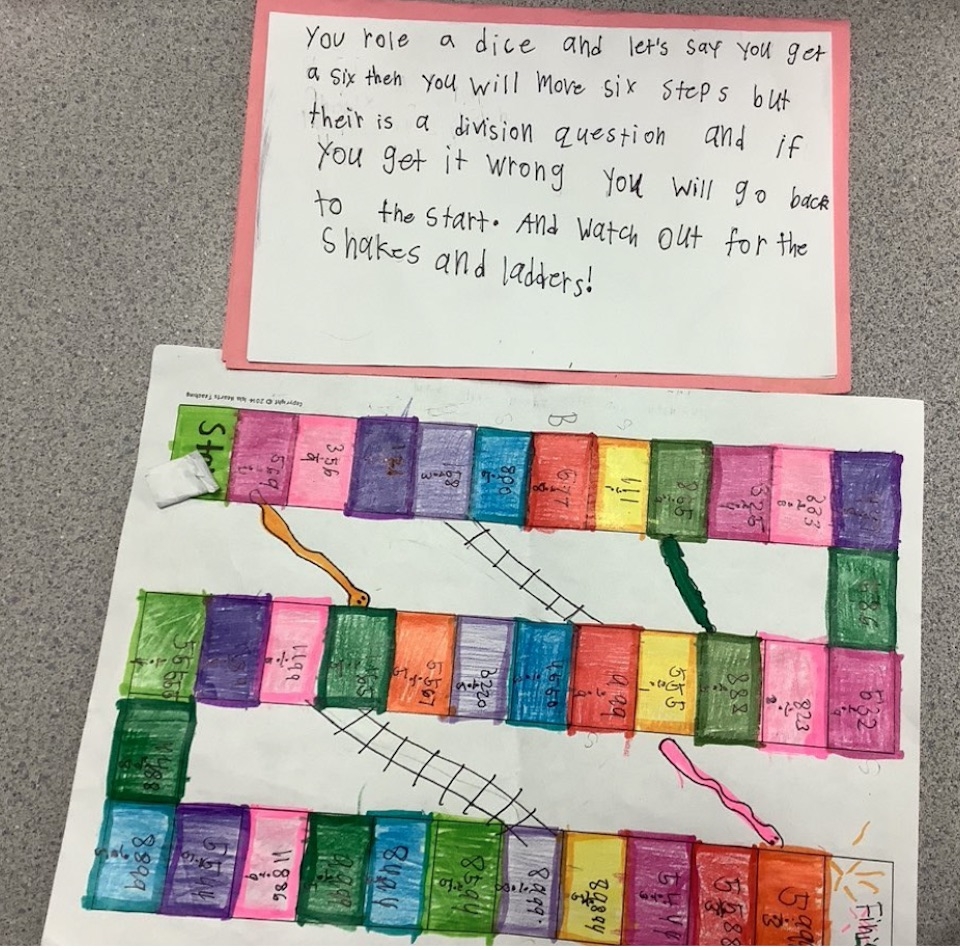
Students were given the task of creating a game to enjoy with their families that included a mathematical concept practiced earlier in the year.
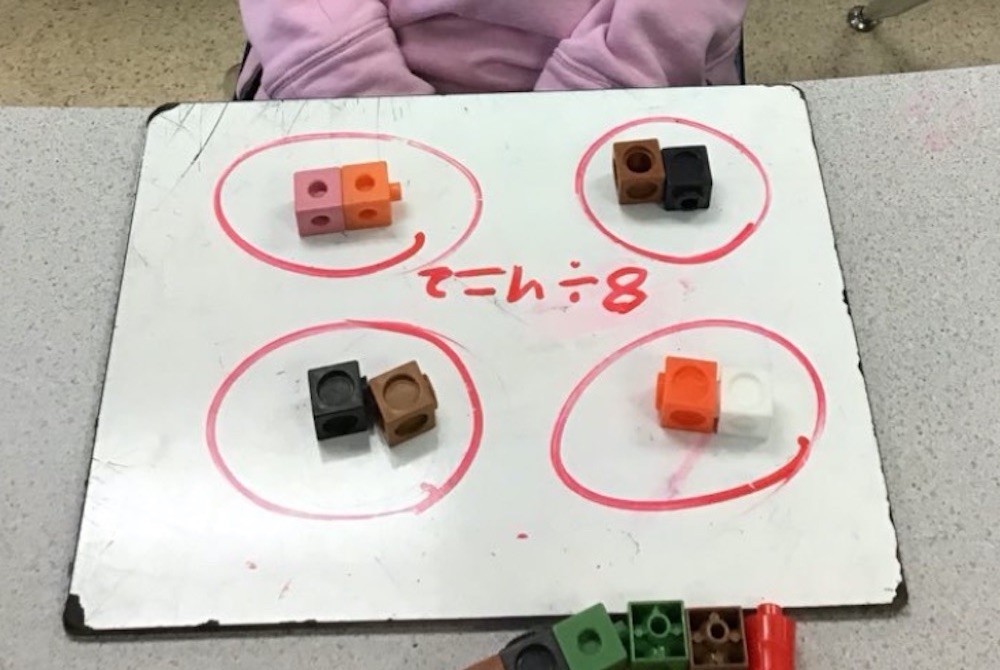
Our learners can use concrete manipulatives to demonstrate their understanding of mathematic concepts.
Here students used blocks to demonstrate how the concept of division is making equal sets.
Our learners reflect on their thinking
"I tried my best during the test, and made sure most of the things I did were right. I understand my mark and where I need to study more. I did good in finding the Lowest Common Multiples, but struggled with Factors. I forgot some of my divisibility rules. I am still celebrating though. I am proud of myself even though my mark isn't the greatest. I didn't give up and I know I can to better next time."
OUR FOCUS
We strive across all curricular areas to provide learning experiences for students to connect learning in meaningful ways to the world around them. Our aim is to equip students with the numeracy skills they need to make sense of their world and contribute to it.
Our Students' Learning Goal focused on:
- developing students' ability to communicate their mathematical ideas and thought processes
- developing multiple mental math strategies for students to use to make sense of quantities and solve problems.
All educators, across all grades, aim to strengthen numeracy skills for our learners. To highlight specific successes we captured the growth of a cohort of primary students. Students were encouraged and provided opportunity to regularly share their thinking and strategies. Students played math games regularly to practice and improve their fluency with numbers. Lessons focused on the process students used to solve problems. Students were challenged to push their thinking beyond one strategy. Success was defined as the ability to find multiple ways to solve a problem.
OUR NEXT STEPS
All students demonstrated flexibility in their understanding of math concepts and communicated multiple ways to find and represent solutions. Flexible thinking is essential for solving problems. Students demonstrated that there are multiple strategies possible for solving a single problem, and sharing a solution. They developed confidence in their mathematical abilities. Confidence in math allows for students to trust their own abilities to think through and tackle complex problems. With confidence, students develop a willingness to struggle productively through problems and ultimately continue to deepen their mathematical understanding.
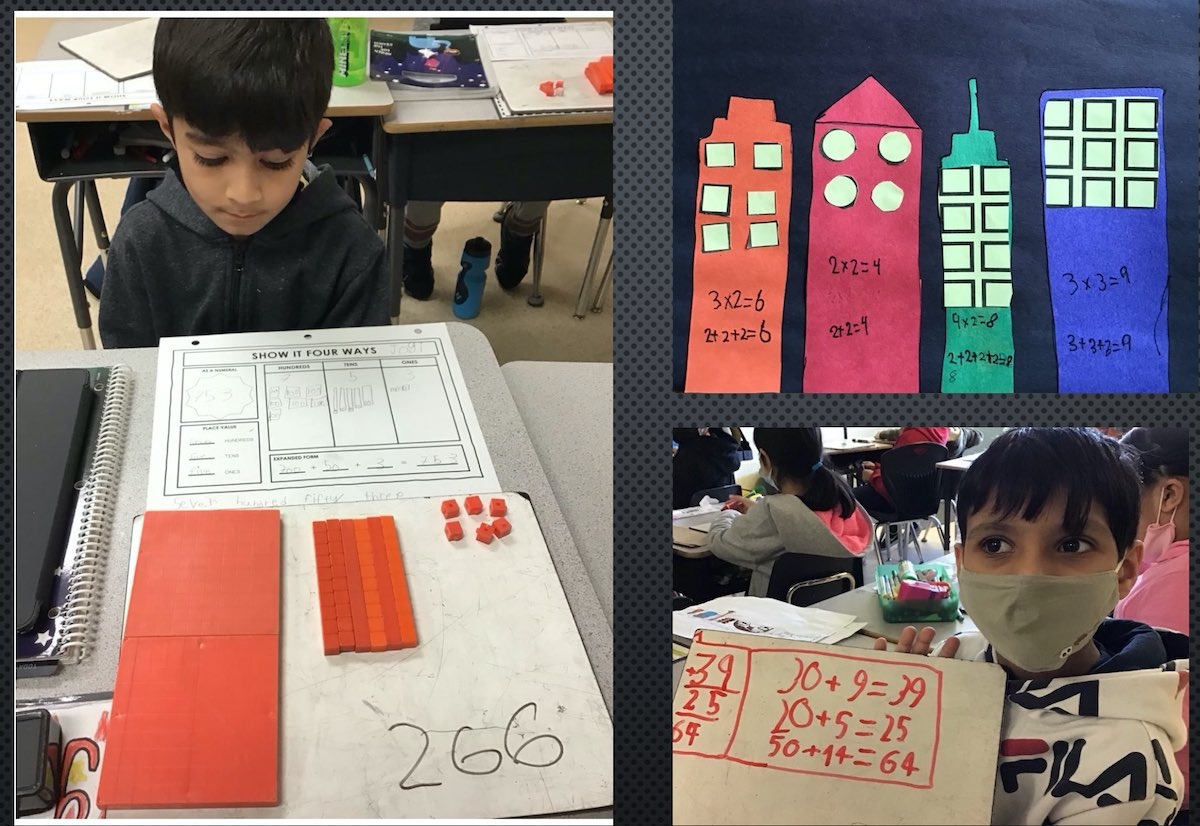

The teacher working with our cohort indicated that all students were able to communicate their mathematical thinking with increased proficiency.
Moving forward:
- We will continue to support the development of students' fluency and flexibility of number sense by routinely engaging them in fun and enjoyable mathematic play.
- We will go further with developing students ability to use spoken and written language to explain and justify their mathematic ideas and strategies.
- We will explore how having students reflect on errors can build capacity and build mathematic confidence.
Surrey Schools
Formed in 1906, the Surrey School District currently has the largest student enrolment in British Columbia and is one of the few growing districts in the province. It is governed by a publicly elected board of seven trustees.
The district serves the cities of Surrey and White Rock and the rural area of Barnston Island.