Mary Jane Shannon Elementary 24-25
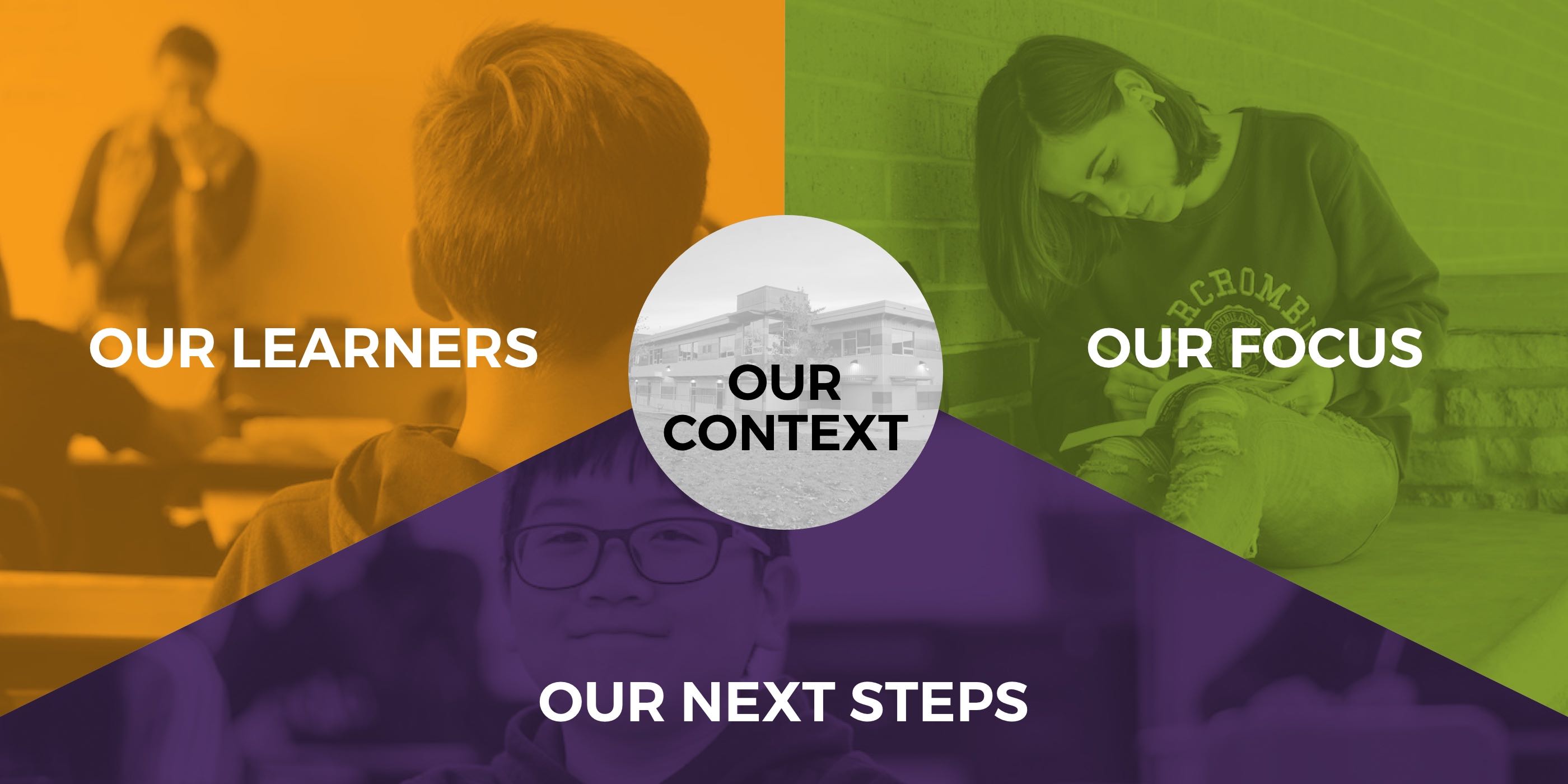

OUR CONTEXT
Mary Jane Shannon (MJS) is a school that is rich in its composition and cultural make up. As a staff and community, we embrace and highlight our individual differences and celebrate what we have in common. Our learners are kind, compassionate and come from a variety of experiences and backgrounds and from which we build an unwavering sense of community. Our students are accepting and understanding of their own and each other’s differences and unique strengths. As a school community, we recognize the common threads that bind us together.
Everyone belongs at Mary Jane Shannon. Our students feel that the adults are supportive, open, and welcoming. Our school is at the heart of the community. Students enjoy spending time at school, oftentimes before and beyond school hours, where they feel connected to each other and have a place where they can be themselves. Whether they are playing sports or participating in an after-school program, students love being at Mary Jane Shannon.
“My favourite thing about MJ Shannon is the people. Everyone is so nice and helpful.” - Grade 6 student

We are appreciative of our school community and those who supported us on this journey so far. Our hope is that the learning community will deepen their sense of self and identity in a positive way. We want to provide a safe place for students to deepen their understanding of who they are as learners and opportunities to grow in their learning strategies.
OUR LEARNERS
Literacy is something that brings us all together, through our shared and diverse histories. Everyone at Mary Jane Shannon has a story.
Our learners at Mary Jane Shannon bring a wealth of different backgrounds, experiences, and perspectives into our school every day. Our students continue to see learning and growth as something that will not only help them achieve their goals, but to do so in a way that continues to support their rich, but individual, identities. Finding ways to engage our students as readers and to take pride in their own Personal Awareness and Responsibility, a core competency embedded across all learning in the curriculum, is vital in helping our students feel a sense of agency over their learning. Our learners set goals and are aware that learning takes time and patience. With the variety of backgrounds, we so cherish seeing in our school, we continue to incorporate ways for them to express this through their reading, writing, and oral language.
-Our students can represent their learning and tell how it connects to their experiences and efforts.
-Our students understand that their identity is made up of many interconnected aspects, such as life experiences, family history, heritage, and peer groups.
-Our students can exchange ideas and perspectives to build a shared understanding.
2022/2023

2023/2024


- Emerging students decreased from 18.9% to 13.7%, showing improvement.
- Developing students increased slightly from 35.8% to 37.4%.
- Proficient students rose from 42.8% to 46.2%, indicating more students are meeting expectations.
- Extending remained low but slightly increased from 2.5% to 2.7%.
FSA Results

- Both grades experienced a notable dip in performance around 2021/2022.
- Grade 4 showed a strong recovery in 2023/2024.
- Grade 7 also improved but with a slight regression in the most recent year.
OUR FOCUS
Building on our goal from our previous year, we continued to focus on Literacy as an area to spotlight for student growth. Reading underlies all learning, and the skills needed for reading: phonemic awareness, decoding, fluency, and comprehension, are fundamental for students’ language development.
We have identified literacy, particularly as an opportunity to practice our reading and as an expression of cultural identity, as one of our school goals. We set out to work on the following reading goals:
- fluently at grade level
- Exchanging ideas and perspectives to build shared understandings.
- Synthesize ideas from a variety of sources to build understanding.
- Recognize our own stories are rooted in our familiar, social, and cultural backgrounds
Ultimately, our learners engaged actively as listeners, viewers, and readers, as appropriate, to develop understanding of self, identity, and community. We hope our students will be inspired and develop a life-long love for reading while sharing their ideas, stories, and histories openly with others.

Our initial plan was run with the participation of two primary cohorts, expanding to include an intermediate classroom, and multiple students who receive regularly targeted literacy supports in smaller groups.Use of story workshops as a means of storytelling that integrates oral storytelling writing, and artistic expression.
- Using technology for publishing projects that allow students to share their completed work with their peers.
- An oral language unit on the importance of food to our own cultural identity, visiting restaurants, and sharing foods from home with their peers.
- Bringing in community members for an afternoon of oral storytelling, sharing cultural and familial stories with peers and their classes.
- Using drama as a lesson to build confidence as part of the oral story telling process, focusing on intonation, projection, and sharing with their peers.
OUR NEXT STEPS
Looking forward to next year, the staff would like to continue to focus on literacy. The focus will be guided by the curricular competencies in English Language Arts, reading strategies, oral language strategies, and metacognitive strategies. Our goal will bring in more student voice into our planning and our gathering of data. Using the core competency of collaborating we will encourage and guide the students to share their voices and their ways of learning.
Working Collectively – students combine their efforts with those of others to effectively accomplish learning and tasks.
Supporting Group Interactions – students seek to distribute leadership, listen actively, take turns in discussions, acknowledge contributions, and identify missing voices.
Determining Common Purposes – students develop shared understandings of information, issues, situations, and problems in pursuit of common purposes and goals.
As a team we will begin to use the spirals of inquiry to guide our student learning plan.
-Scanning
-Focusing
- Developing a hunch
-New professional learning
-Taking action
-Checking
We already have a variety of co-horts in mind for next year. We will collaborate on lessons and activities, developing strategies on how to best support the students. Before we dive into the learning, we will gather information from the students. It is extremely important to us to bring in student voice and hear from them, what helps them in their development of reading. These lessons and activities will reflect what the students have expressed to us that will help them with their development as readers.
The Learning Support Team has been collecting data on reading for the students of MJS. This coming Fall as a team we will review and collect the data along with the student voice surveys, to focus our learning. We will also align our learning with the school demographic information around our ELL learners.

We are excited to see how our focus develops overtime and looking forward to hearing from the students on how they feel about their growth. At each step of our journey, we will always have in mind three questions; What is going on for our learners? How do we know? And why does this matter.

Surrey Schools
Formed in 1906, the Surrey School District currently has the largest student enrolment in British Columbia and is one of the few growing districts in the province. It is governed by a publicly elected board of seven trustees.
The district serves the cities of Surrey and White Rock and the rural area of Barnston Island.