Maddaugh Elementary


OUR CONTEXT
Our vision for learning is to promote joy, community, well-being, a love of learning, and to equip our learners to thrive in the modern world. In order to do this, our community works daily on the goals of "Working Hard, Being Kind, and Being Your Best You".
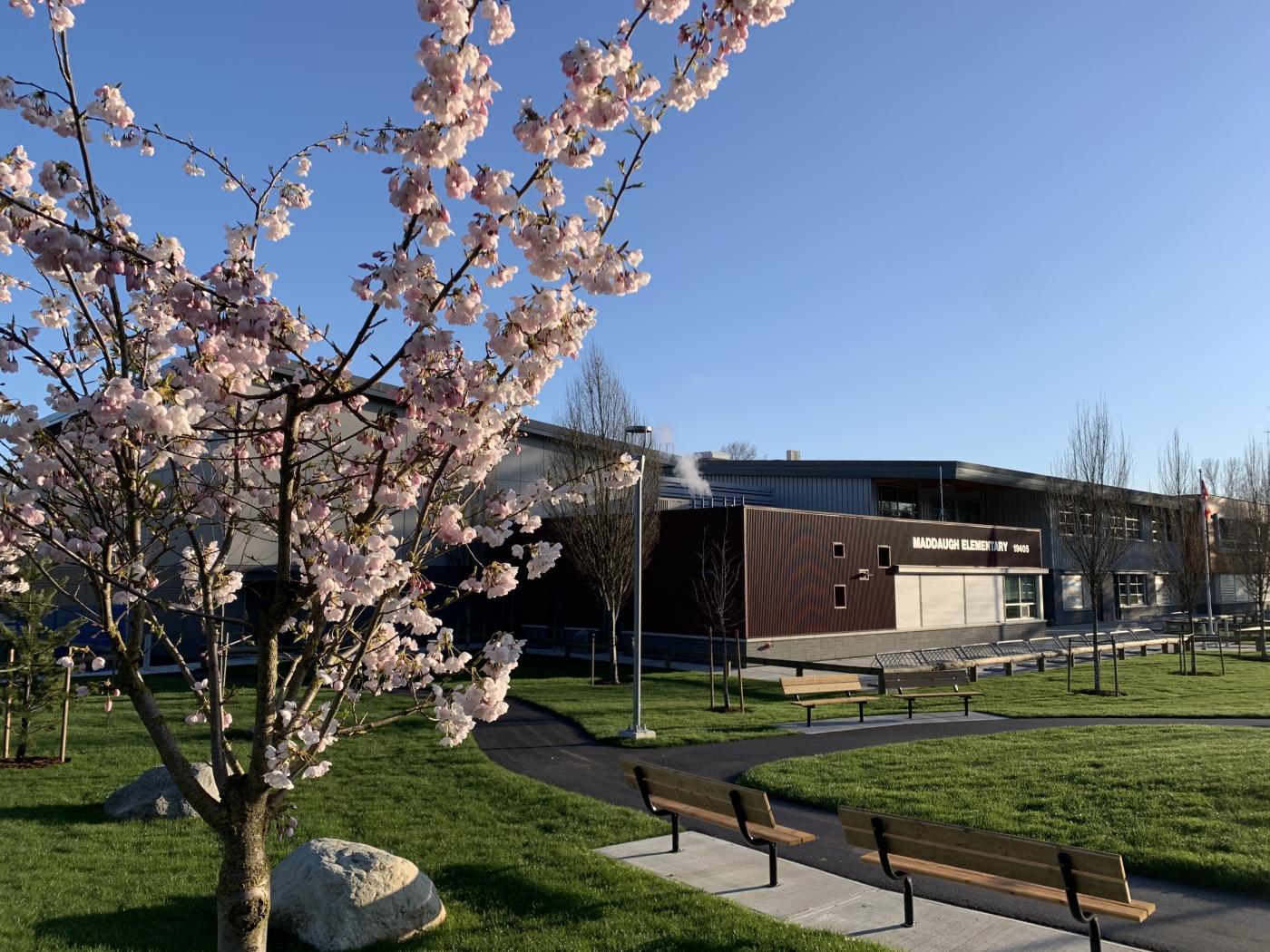 |  |  |
Maddaugh Elementary is a new, vibrant, and welcoming learning community in the Cloverdale-Clayton area of Surrey, B.C. We opened our doors on March 29, 2021 to a diverse group of learners. The time leading up to our opening was challenging, being located at two different schools as the construction of our new school continued, and with the dark cloud of COVID-19 hovering above us. It was clear that we needed to focus on wellness and building community.
We have been asking important questions as our community deepens its roots:
- What does it mean to flourish and be happy?
- How can we promote growth in student learning by instilling a sense of well-being in our students, our staff, and our community?
To help explore these questions, we have been investigating the work of Dr. Martin Seligman and his research on well-being. Well-Being theory suggests that there are 5 measurable elements that contribute to a person's "flourishing":
- Positive Emotion: feeling good
- Engagement: finding “flow”
- Relationships: authentic connections with others
- Meaning: purposeful existence
- Achievement: a sense of accomplishment
Collectively as a school community, these themes have been explored through the structure of video morning announcements that are shared every Monday morning. While initially introduced as a strategy to connect Maddaugh students and teachers at both Katzie and Hazelgrove Elementary while our current school was under construction, Monday morning announcements have continued, representing a way to connect learners to important wellness themes and to each other. Students experience common language and learning and teachers often use these morning announcements as a springboard to further explore PERMA themes deeply in the classroom. Have a look at how PERMA themes are shared with Maddaugh students, staff, and parents:
At Maddaugh, we apply PERMA to not only continue to build a sense of community and tradition, but also to help more of our learners flourish. Student ownership has been promoted by making sure students have input into important school decisions that are made, such as the animals that appear on the privacy film throughout the school, the signing of a panel located at the front of the school, to the selection of playgrounds and jerseys, to the signing of our official school-opening plaque. Every step of the way, PERMA has found expression through the student voices that have guided the development of our school culture.
 |  |
 |  |
OUR LEARNERS
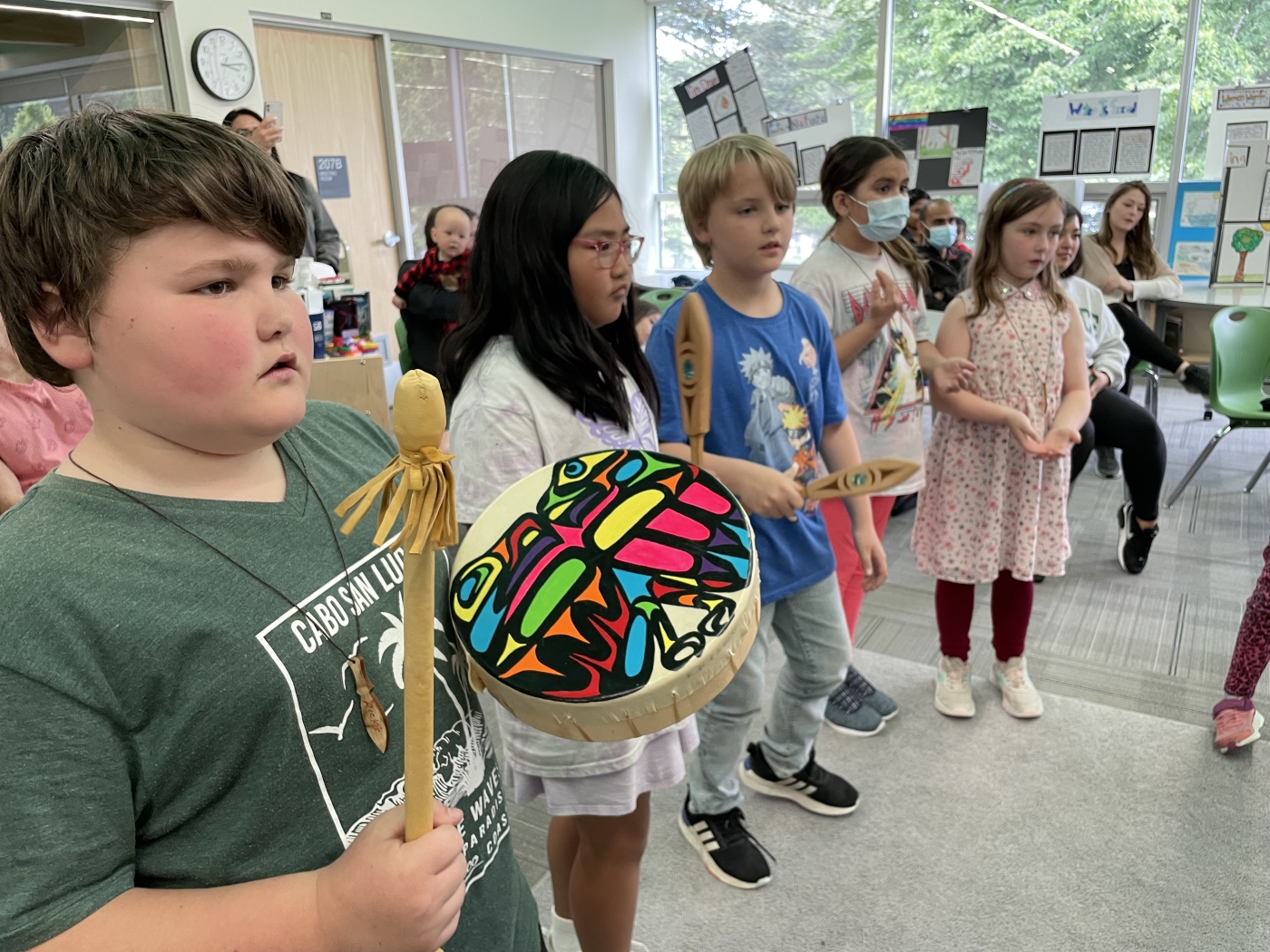
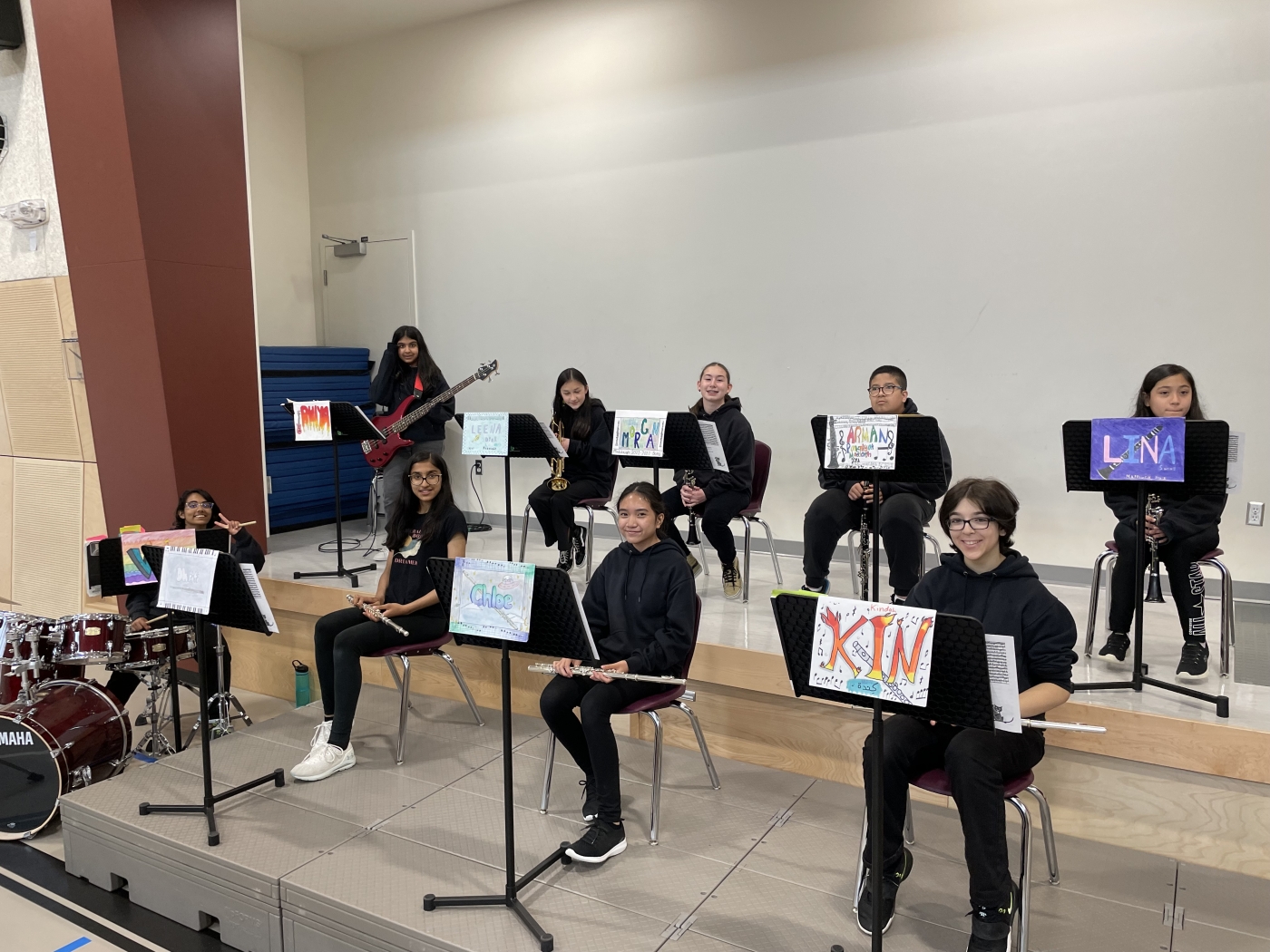
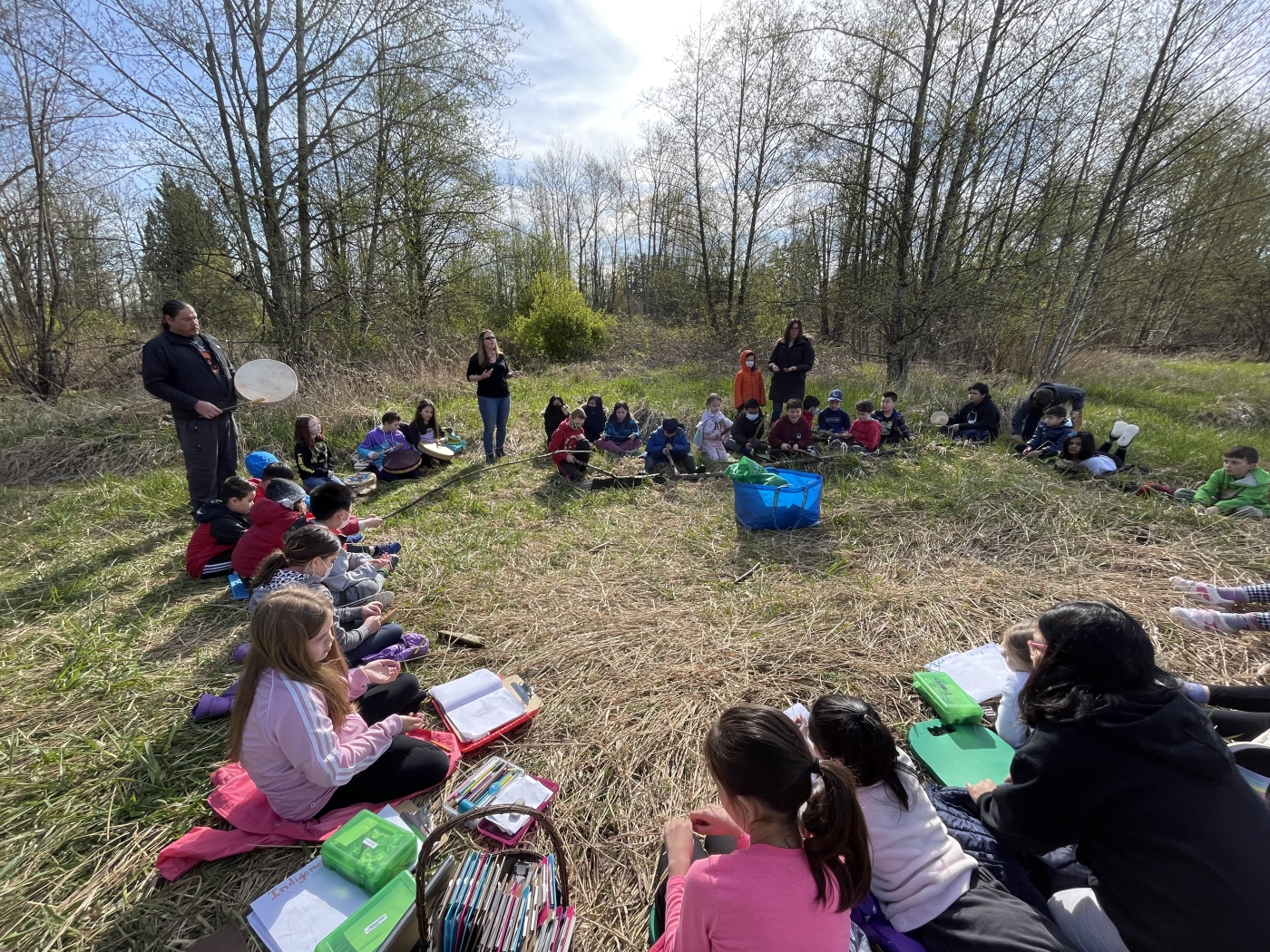
Maddaugh learners are diverse in many ways, from their culture, background, and identity, to their approaches to learning, how they view themselves as learners, and their ability to self-regulate.
 |  |  |
 |  |  |
Maddaugh learners are proud of their school and have a sense of belonging and ownership. How do we know this? When asked what makes Maddaugh special, students said things like:
"It is special because it is a place where you can build a strong community. It is also a place where you can learn freely and safely."
"Maddaugh is special to me, because it respects their students and staff and is very welcoming to the First Nations and tries their best to learn their culture."
"Maddaugh is special because the moment you step through the doors, you’re immediately part of something. You're accepted just the way you are."
"I believe Maddaugh is special because it’s a very accepting community. No matter what skin color, race or sexuality you may have, you will always be able to make new friends."
We consider the majority of Maddaugh students to be flourishing - they have friends, engage in school and community opportunities, and are proficient or near proficient in foundational areas of learning such as Literacy and Numeracy.
| LITERACY | ||||
| Emerging | Developing | Proficient | Extending | |
| Term 1 | 8% | 37% | 53% | 2% |
| Term 2 | 5.5% | 38% | 52.5% | 4% |
| NUMERACY | ||||
| Emerging | Developing | Proficient | Extending | |
| Term 1 | 3% | 22% | 73% | 2% |
| Term 2 | 3.5% | 21% | 69% | 6% |
OUR FOCUS
For various reasons such as learning challenges, family issues, trauma, extended periods away from school or in blended learning, or a fixed mindset, a subset of learners is either disengaged in the learning process or highly dysregulated.
Through a collaborative process, a total of 12 students were chosen to participate in our Social and Emotional Learning (SEL) Inquiry. These students were identified as not yet flourishing (disengaged in the learning process, have a fixed or negative mindset, and are significantly below age expectations for one or several curricular competencies in foundational areas of learning such as Literacy and Numeracy).
The questions that guided the SEL Inquiry at Maddaugh included:
Leaning on research and the work we have been doing around PERMA and well-being, what intensive measures and strategies can be implemented to support students who are not yet flourishing?
How can a focus on student strengths, the use of these strengths in novel ways, and an increase in self-efficacy positively impact their mindset, approach to learning, and academic performance?
And so, the work began!
Our SEL Inquiry included the following phases:
- Completion of a self-efficacy pre-survey on all students in the group. Questions included:
- I can choose and set a goal for myself
- I can follow steps to reach a goal
- I can remain calm and manage my feelings when something is difficult
- I can tell you something I am good at.
- If I set my mind on something and work hard at it, I can learn how to do most things.
- I lose track of time when I am engaged in a passion of mine.
- I do not give up when I find an activity challenging.
- I feel good when I work hard to achieve my goal.
- I can solve most problems when I work hard.
- Students completed an inventory to help them identify their strengths.
- Using a lead teacher at Maddaugh and mentors from Salish Secondary and Trinity Western University, students developed a plan in which their strengths could be used in new or novel ways. This is a positive psychology exercise has been repeatedly connected with long-term benefits (e.g., 6 months) such as higher levels of happiness and lower levels of depression. These "passion projects" were varied and included:
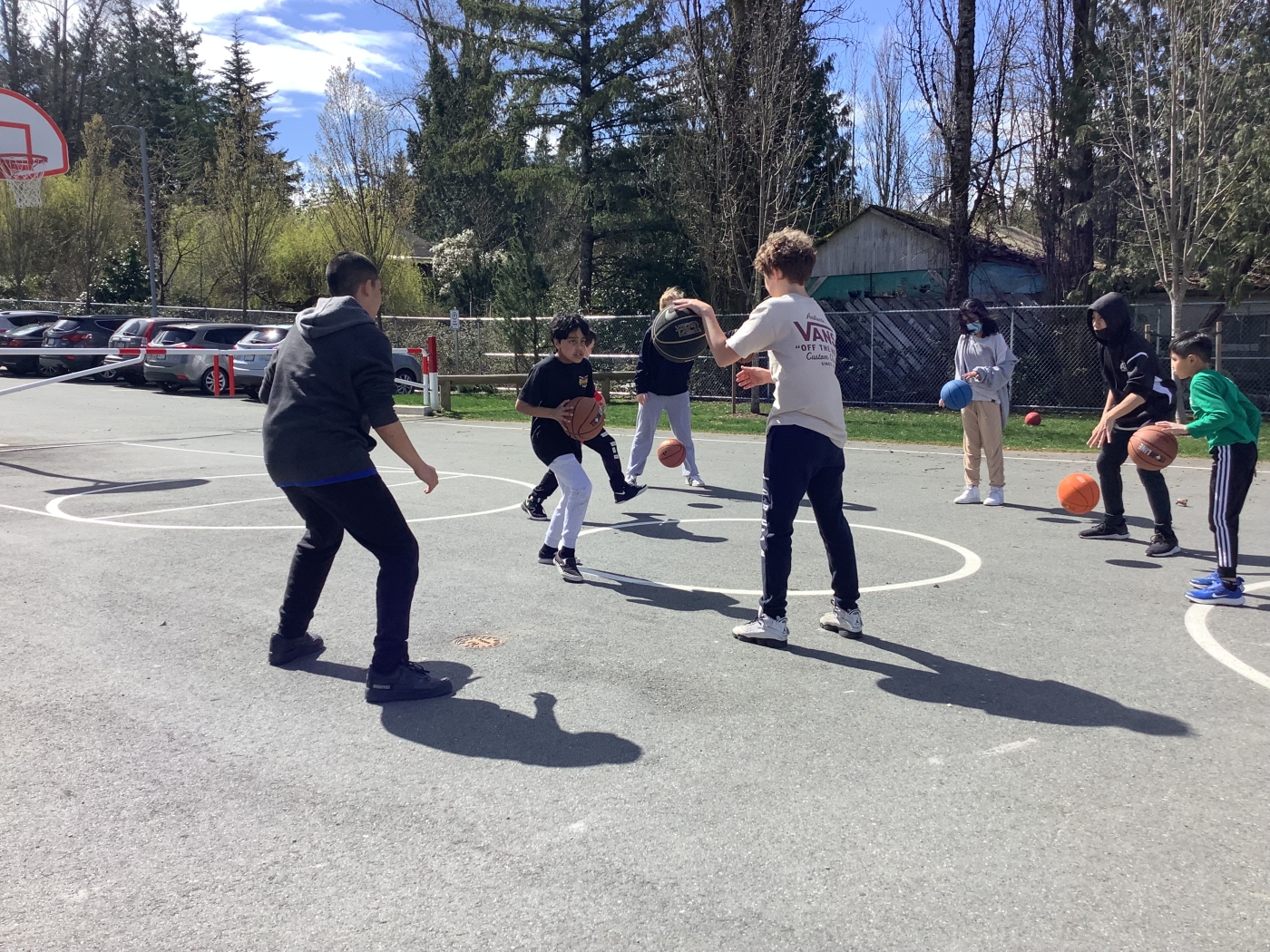
- Learning to dribble a ball with their left hand
- Becoming a buddy reader for a younger student
- Learning about indigenous culture and learning to weave with different materials
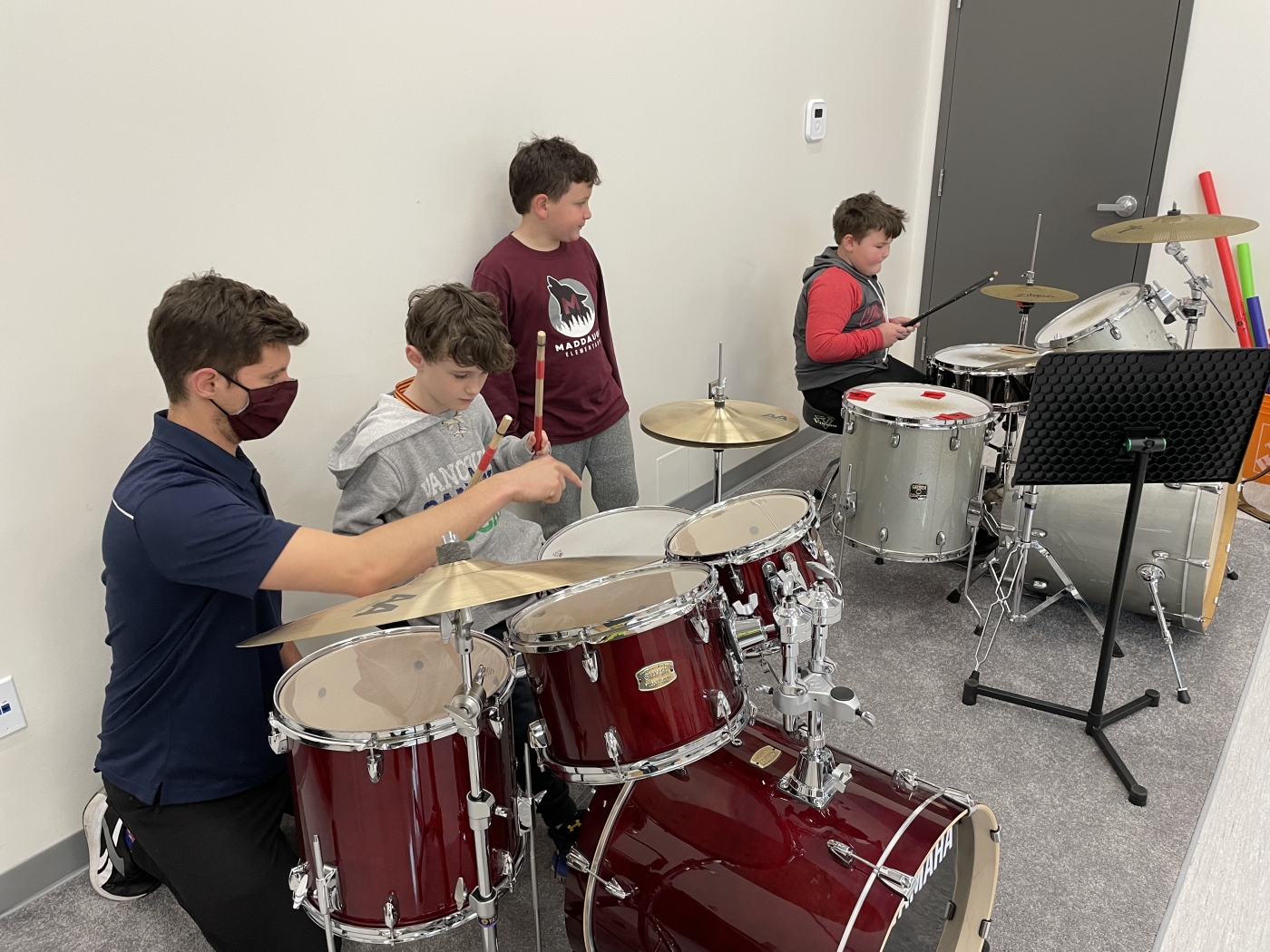
- Learning to drum from our music teacher
- Delivering art lessons to younger students
- Creating an instructional video to teach the rules of UNO
- Building and gifting planters from recycled wood
- Students carried out their plan to apply their strengths.
- Students, teachers, and mentors were interviewed.
- Students completed a self-efficacy post-survey.
Our SEL lead teacher, Neva Whintors, and mentors played a critical role in supporting Maddaugh students in the conception, development, and implementation of their projects.
 |  |  |  |
 |  |  |  |
OUR NEXT STEPS
Based on observations, conversations, and interviews with both students and staff, we discovered that this work had a varied but profound impact on our learners. Specifically, we learned that:
- The average score of the self-efficacy survey almost doubled (15.7 on the pre-survey and 29.8 on the post-survey).
- 8 of the 12 participants demonstrated improved attendance (combination of lates and absences).
- Teachers reported that 5 of the 12 participants made academic gains related to the curricular competency that was identified as a target area for the participant.
- Mentors gained from the experience of working with Maddaugh students as much as the students themselves.
- Maddaugh students involved in the inquiry developed leadership and mentorship skills themselves.
| Music teacher Marcus Abramzik mentors a student who has a passion for Indigenous culture and drumming. |
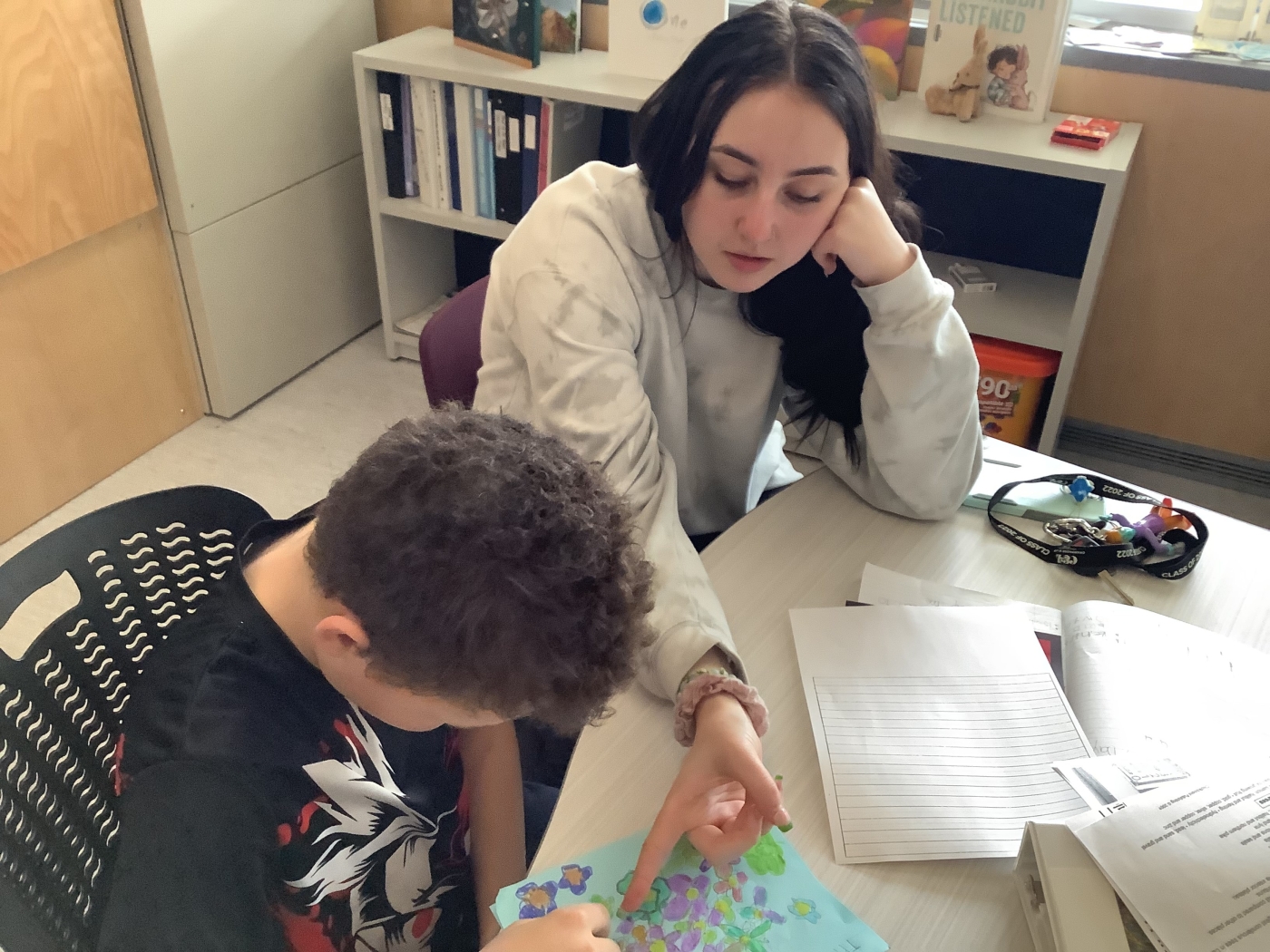
Salish mentors reflect on their work with Maddaugh students. One Salish student went on to complete her Capstone Project on her experience at Maddaugh. |
Another student worked with his mentor to create this Uno card game "how-to" video. |
Another student, a mentored student, begins to mentor others. |
 A Maddaugh student becomes a big buddy reader and not only boosts his own reading level, but that of his little buddy as well. |
 A Maddaugh student works with mentors and peers to build and gift planters made from recycled wood. |
The following is a summary of the observed growth by staff members over the course of the 3 months SEL Inquiry:
Student: J.B.
Self-Efficacy Pre and Post Survey: 9 and 24
Self-Regulation Assessment:
•Increased confidence
•Increased self-regulation of emotions
•More regularly displays happinessCurricular Competency Assessment (Reading and Writing):
•Improved comprehension
•Is able to express herself through writing to a greater degree
•Now willing to read in small groups or in front of younger students.
•Uses expression when reading aloud.
Student: O.M.
Self-Efficacy Pre and Post Survey: 25 and 32
Self-Regulation Assessment:
•Has demonstrated mentorship skills.
•Increased enthusiastic attitude towards school.
•Increased confidence.
•A visibly more positive appearance.Curricular Competency Assessment (Reading):
•Significant reading gains (Level E to Level O)
Student: A.P.
Self-Efficacy Pre and Post Survey: 16 and __
Self-Regulation Assessment:
•Increased confidence
•Demonstrated an ability to lead and mentor younger studentsCurricular Competency Assessment (Reading and Writing):
•Student is capable in both areas but attitude and mindset have stopped him from demonstrating his ability in these areas.
•Has been able to provide more evidence of his learning.
Student: B.W.
Self-Efficacy Pre and Post Survey: 9 and 23
Self-Regulation Assessment:
•Increased pride in his culture and strengths
•Increased confidence and ability to self-regulateCurricular Competency Assessment (Reading):
•No significant gains noted
Student: M.B.
Self-Efficacy Pre and Post Survey: 8 and 22
Self-Regulation Assessment:
Curricular Competency Assessment (Reading):
•Jumped several reading levels in a short time (Level C to Level J)
•Now views himself as a capable reader.
Student: A.D.
Self-Efficacy Pre and Post Survey: 19 and 33
Self-Regulation Assessment:
•Increased confidence
•Has demonstrated a more positive mindset
•Demonstrates leadership and mentorship abilities
•Outwardly commits to working hard to meet her goal of becoming an art teacherCurricular Competency Assessment (Writing):
•No significant gains noted
Student: B.B.
Self-Efficacy Pre and Post Survey: 21 and 32
Self-Regulation Assessment:
Curricular Competency Assessment (Writing):
•No significant gains noted
Student: D.S.
Self-Efficacy Pre and Post Survey: 12 and 29
Self-Regulation Assessment:
•Improved attendance
•Increased sense of belonging
•Involved in less conflictCurricular Competency Assessment (Reading):
•No significant gains noted
Student: D.L.
Self-Efficacy Pre and Post Survey: 6 and 31
Self-Regulation Assessment:
•Increased self-confidence to achieve.
•Increased ability to work with others.
•Has demonstrated mentorship skills.
•Increased ability to manage emotionsCurricular Competency Assessment (Writing):
•No significant gains noted
Student: A.F.
Self-Efficacy Pre and Post Survey: 20 and 31
Self-Regulation Assessment:
Curricular Competency Assessment (Reading):
•More willing to read in a small group which he was unwilling to do before
Student: S.S.
Self-Efficacy Pre and Post Survey: 28 and 32
Self-Regulation Assessment:
•Self-reported decrease in anxiety
Curricular Competency Assessment (Reading):
•No significant gains noted
Student: J.O.
Self-Efficacy Pre and Post Survey: 17 and 29
Self-Regulation Assessment:
•Increased sense of connection and belonging (disclosed by the student to a staff member)
•Improved attendance
•A visibly more "open" appearance. Now walk upright whereas he used to walk with his hood on and his head down.Curricular Competency Assessment (Reading and Writing):
•An overall increase in engagement in the learning process
With an intentional focus on collaboratively highlighting and implementing student strengths, we can have a profoundly positive impact on how students view themselves as people and learners, their mindset, and their willingness to take risks and put effort into academic tasks that are challenging.
We also learned that this work boosted all aspects of PERMA:
- Through their demeanor and social interactions, we saw evidence that students were more regularly experiencing POSITIVE EMOTIONS.
- Students were more visibly ENGAGED in their work.
- New RELATIONSHIPS were formed.
- Students were engaged because their work was personally MEANINGFUL.
- Students strongly demonstrated a strong sense of ACCOMPLISHMENT.
Despite the short time frame, the findings of this inquiry are compelling. As a school community, we plan to continue our focus on the PERMA model for well-being. We believe that infusing the five aspects of PERMA daily into the experience of our students and teachers provides the foundation and springboard to powerful self-regulation and learning, and will allow all of our learners to flourish. Specifically, our next steps include:
- Advocating to the Surrey School District that they continue the SEL Lead release model.
- Re-engaging existing and new mentors, while harnessing built-in mentorship capacity at Maddaugh.
- Laddering Year 1 participants of the SEL inquiry into a second phase of personal strength implementation.
- Collaboratively scanning our learners for students who are not yet flourishing and running them through the SEL Inquiry process.
- More deliberately collecting evidence in a curricular competency to better show growth over time (as in a "two of the same" writing or reading sample).
Surrey Schools
Formed in 1906, the Surrey School District currently has the largest student enrolment in British Columbia and is one of the few growing districts in the province. It is governed by a publicly elected board of seven trustees.
The district serves the cities of Surrey and White Rock and the rural area of Barnston Island.