Lord Tweedsmuir Secondary 25-26

OUR CONTEXT
Our Context
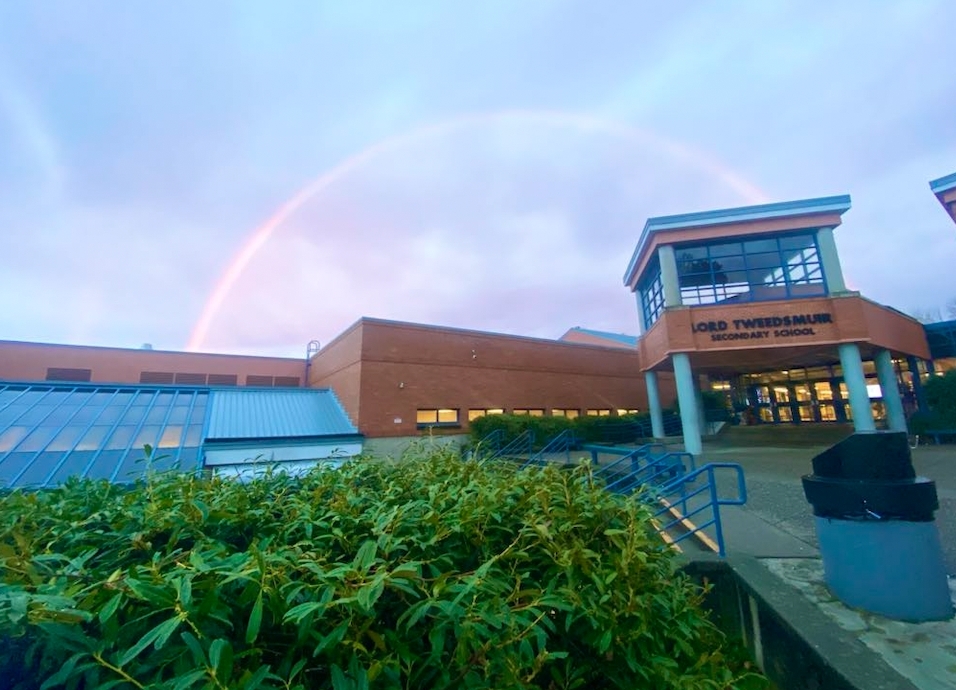
Lord Tweedsmuir Secondary is located in the Cloverdale/Clayton area, on the shared, unceded traditional territories of the Kwantlen, Katzie and Semiahmoo First Nations. Our school is one of the largest in the district, with a population of approximately 1860 students and 150 staff. A third of our families speak a language other than English at home which reflects the diversity of the community we serve.
We want our learners to have the fullest school experience possible and provide a wide range of both curricular and extracurricular offerings, including an extensive Athletics program, professional teaching kitchen and Culinary Arts program, district Connections program, district Automotive Service Technician Program, Fine and Performing Arts program, as well as other clubs and activities such as Student Council, GSA (Gay Straight Alliance), Student Library Council, Mindfulness Club, Ad Astra Club, Mathematics Homework Help Club, and many more. Our students are proud to represent Lord Tweedsmuir Secondary at our various academic, athletic, performative and cultural events.
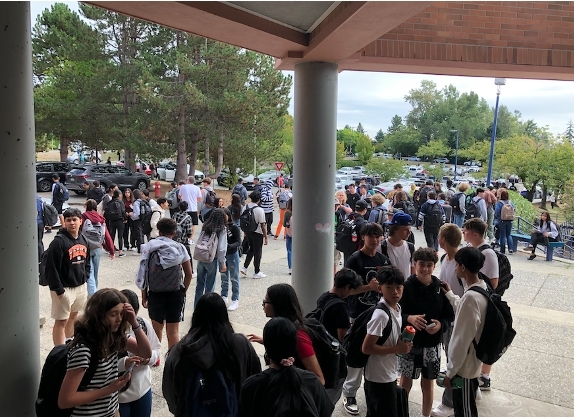
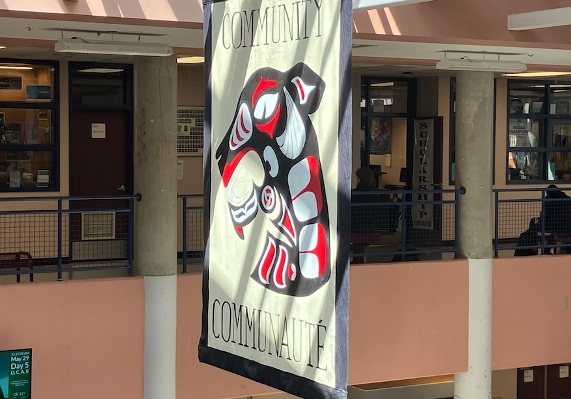
Lord Tweedsmuir Secondary school has an amazing sense of community with students of diverse backgrounds, abilities and interests. "Panther Pride" is highly valued! Our students and staff are engaged in their learning and demonstrate excellence in all forms of learning every day. We celebrate the diversity of our school community and work together to create a friendly and inclusive environment grounded in caring and respect.
Student 1:
“The vast diversity of programs available and the general positivity of the school environment are two noticeable strengths. This is because the school gives plenty of freedom and opportunities for students to do whatever they wish and explore their interests freely. Due to such an open environment, Lord Tweedsmuir feels like a place of comfort for many (myself included) which encourages a generally positive mood throughout the school.”
Student 2:
“We are very diverse. There is always a place for someone to feel at home whether that be with their friends, teachers, club members, or sports teams.”
Student 3:
“Demonstrates a strong commitment to fostering a caring environment through various support systems like LST and after-school programs like a variety of homework clubs.”
OUR LEARNERS
Our Learners
The First Peoples Principles of Learning support the success of our students across all curricular and extra-curricular areas of our school. These principles are embedded in all subject areas in BC's curriculum. This year, our staff and students are focussed on two First Peoples Principles of Learning. We celebrate our learners' successes and strengths through the implementation of the following principles:
- Learning is embedded in memory, history, and story
- Learning requires exploration of one’s identity.
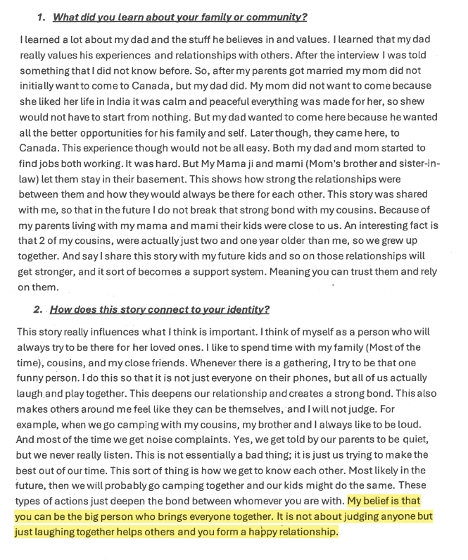
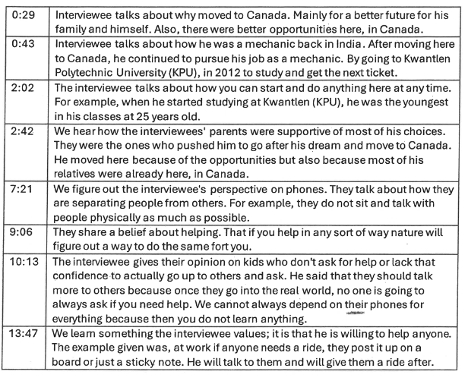
Students interviewed a member of their family. The project helped them explore the connections between stories, identity, and community. They learned how stories shape who we are and how they related to Indigenous knowledge. The students created a timestamp summary of their interview, wrote a reflection about their experience and then shared interview audio clips with their class.
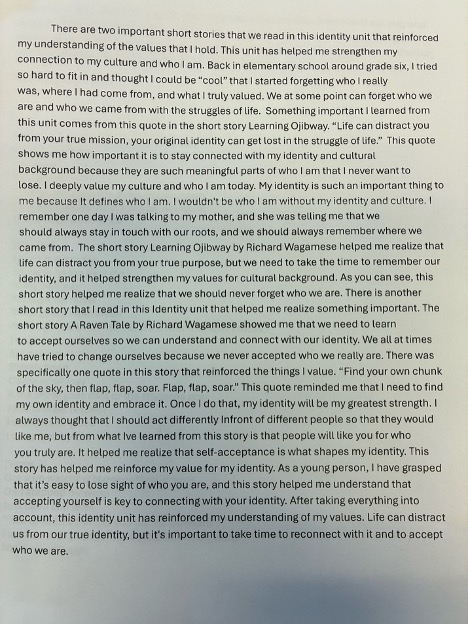
Students completed a Short Story unit that focussed on identity and reflection. Our students read 10 short stories and were asked “Who are you?” They learned about the internal and external factors that shape our identity. By exploring a narrative (stories) both written and in oral tradition, they witness/experience life’s challenges and contemplate how they would react in similar circumstances.
Learning requires exploration of one’s identity.
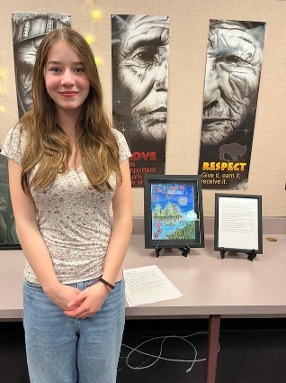
Our Grade 8 students celebrated their diversity and reflected on their own identities and discussed the importance of maintaining healthy and supportive relationships. Students in several Humanities 8 classes completed a variety of assignments that allowed them to explore their identity. We were very impressed with their insight and self-reflection.
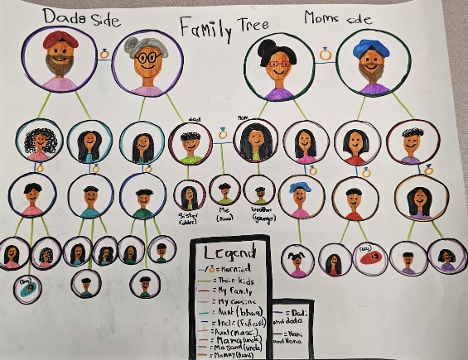
Students created a diagram of their family tree. This required connecting with knowledge keepers in their family structure. They appreciated the chance to learn more about their ancestors.
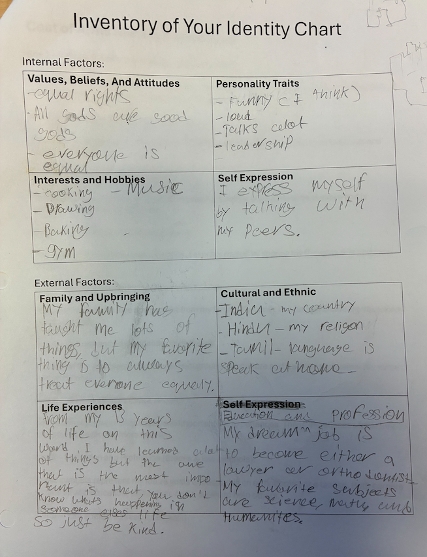
Inventory of Internal and External Identity factors. Students were asked to take an inventory of the external and internal factors that “Make you you”
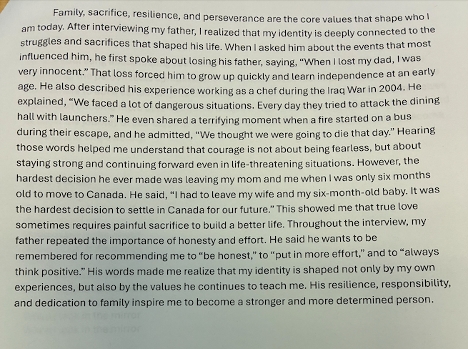
Identity Paragraph. After taking this Identity inventory, and interviewing an elder in their family, students were asked to write a final paragraph on what they learned. These activities helped them understand something important about who they are as a person.
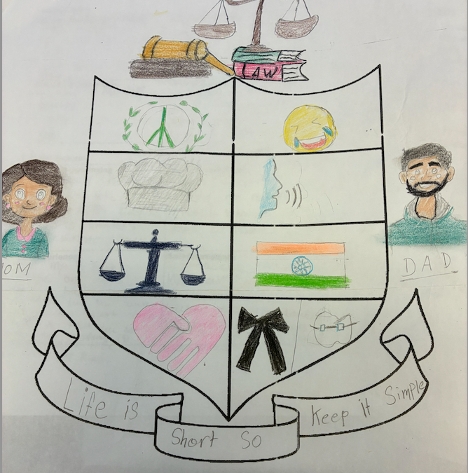
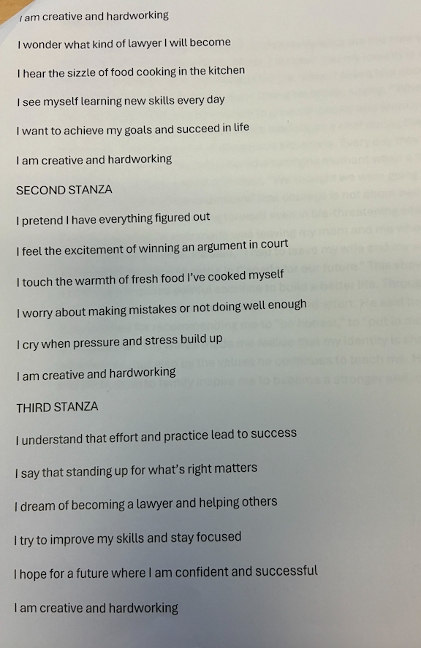
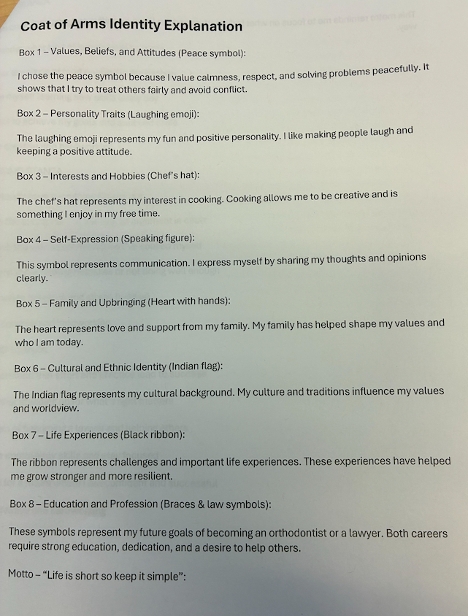
Coat of Arms. Students created a personal “Coat of Arms” as a graphic representation of their identity. The Coat of Arms includes their values and identity factors that were identified in previous lessons. Students then wrote a description of each aspect of their Coat of Arms and wrote an “I Am..“ poem that celebrates their identity.
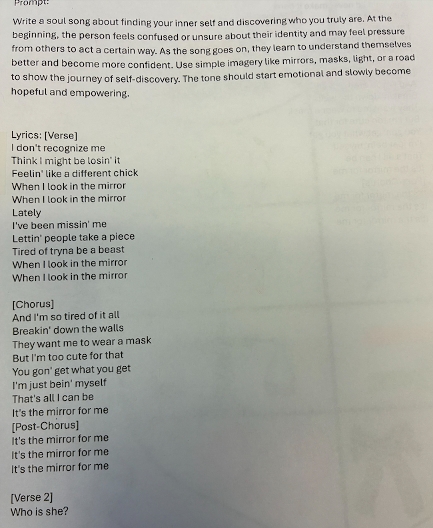
Power Anthem – Fight Song. Students used the power of Artificial Intelligence to incorporate lyrics into a song that captured the most important aspects of their values and beliefs and qualities that defined them. “Life is a series of obstacles to overcome, and your fight song will be a powerful testament to the person you are and hope to become.”
Novel Study - Our students were asked to read and reflect upon an Indigenous short story. They considered the meaning and symbolism of the story in relation to Indigenous identity.
Student Responses:
- “Nanaboozhoo Creates the Spirit World” is a meaningful story to the Objibwe people since it explains a great deal of their mythology and beliefs. It tells the story of what will happen to you when you leave this world, giving people the answer to a question no one knows the answer to.
- According to the story of “Nanaboozhoo Creates the Spirit World” there are four main steps to navigate the spirit world and enjoy a happy after life. The first is to follow the instructions of a man, who will tell you the dangers you will face down the path of the after life. The second step is a choice of which path to follow. After encountering the man you will see a woman in between a crossroad. She will ask you to choose a path. The only to pick right path, you must place some tobacco on the floor. Shortly afterward a giant strawberry will appear on the right path, showing you the way. The third challenge of the spirit world is facing a pack of wild dogs and once you show them tobacco they will become friendly and bring you no harm. Finally, the final step is to cross a river inhabited by a deadly serpent. Once you show tobacco one last time, you can safely cross the river and rest in peace.
- The story of how Nanaboozhoo created the afterlife shows just how important nature was in indigenous cultures. Each step of the way to paradise involved plants or animals of the wild kingdom, demonstrating just how connected to the land Indigenous peoples were.
- Helping us understand and comprehend how indigenous peoples viewed the world, allows us to spread awareness of their culture and its history. That is why the story of how Nanaboozhoo created the Afterlife contributes greatly to reconciliation giving us a little more insight on how indigenous peoples went through life.
- The story of “Nanaboozhoo and Naadowe Obuibik" holds a great importance to the Objibwe people. It explains the origin of the rattlesnake and Naadowe Objibik, as well as demonstrating objibwe history and culture.
- The snake in the story “Nanaboozhoo and Naadowe Obuibik” was a sly and cunning creature. It was able to convince Nanaboozhoo to spare his life, by dismissing his act of cruelty as an act of self defense. Nanaboozhoo in return, tied his wampum to the snake’s tail, instructing him to shake his tail whenever he got anxious. The snake got away with his life and a strong prize.
- Indigenous communities were incredibly connected to the land and this is perfectly demonstrated by the story of “Nanaboozhoo and Naadowe Objibik.” This story revolves entirely around nature. By telling the story of the origin of the Naadowe Objibik and the rattlesnake gives an extra layer of history to the land around them. It shows how nature was deeply intertwined with the spiritually and mythology of indigenous peoples.
- Learning indigenous stories allow us to deepen our understanding of the culture and traditions. Helping us preserve it and teach it to future generations.
We believe these learning activities helped students understand that they are active participants in forming their identity. Moreover, we believe they were able to understand that we all are aided in our personal journey to find purpose in this world, by the support of family, friends, and community.
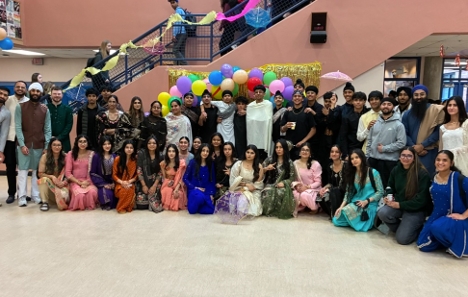
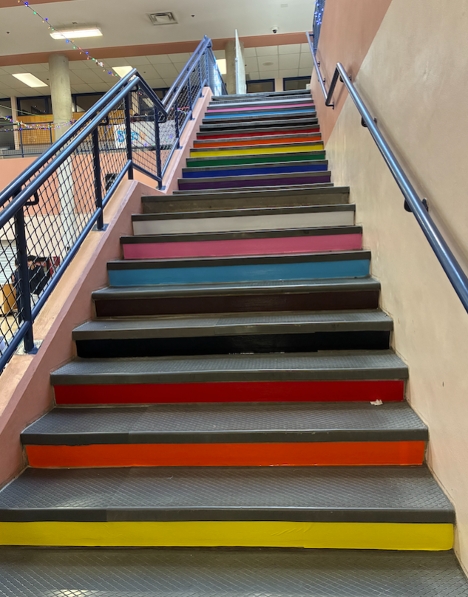
Our various student-led Clubs organized numerous cultural celebrations throughout the year and across the school community to celebrate identity and diversity.
OUR FOCUS
Our Focus
Every day our learners are presented with opportunities to learn and grow through the implementation of First Peoples Principles of Learning. We have focused on the use of two Principles of Learning within a cohort of learners. This cohort includes a diverse range of learners that are representative of our school’s population and across all subject areas.
We hope to see, through evidence collected from our cohort of students and reflected through the larger group, that our focus on implementation of First Peoples Principles of Learning to support memory, history and story-telling and through the exploration of identity is positively impacting learners.
Specifically, the following principles: 1) Learning is embedded in memory, history, and story, and 2) Learning requires exploration of one’s identity, directly supports the following Curricular Competencies and learning goals in the Humanities 8 curriculum.
Our students will recognize personal, social and cultural contexts, values and perspectives in text.
Our students will construct meaningful personal connections between self, text and the world.
In order to support this curriculum, our cohort focused on identity, interconnectedness and oral histories throughout their units of study. Over several months, they focused on creating a classroom community by pulling on their individual and collective identities through team-building activities and expressions of individuality through art and writing.
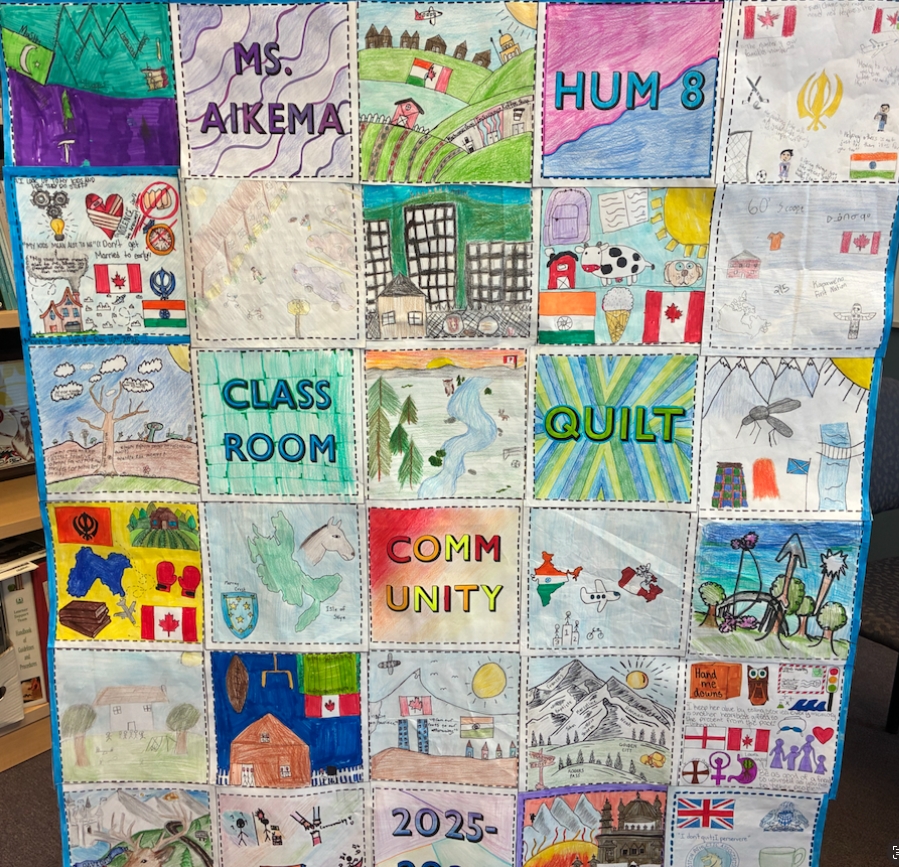
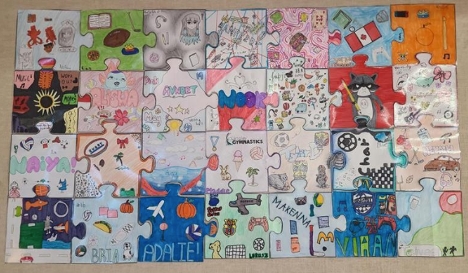
To begin the unit, a class art piece was created. Students were given the chance to express their individuality and also see how we are more interconnected than we often think through shared interests and identities. The project helped our students feel like they belonged within our classroom as a piece of a puzzle.
Similarly, they also looked at the importance of belonging through story-telling and family history by looking at Disney’s Hercules and Rick Riordan’s novel The Lightning Thief which centres around these themes. They then completed literary analysis assignments.
Students also had the opportunity to complete family history interviews that allowed them to connect with their own family and shared history to understand their own sense of belonging at home and how it connects to their social and personal identities.
Lastly, they completed a pre and post unit survey on the topic of belonging. Students were asked the same series of questions before and after the unit to think about what growth they may have experienced in their understanding and if the activities of the units helped them develop a greater sense of belonging.
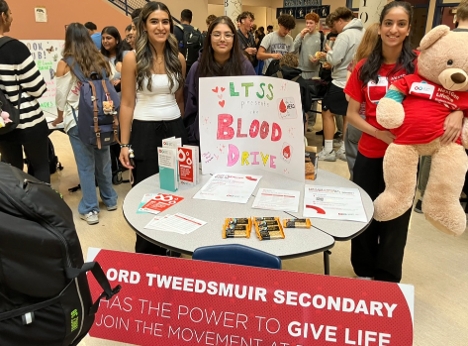
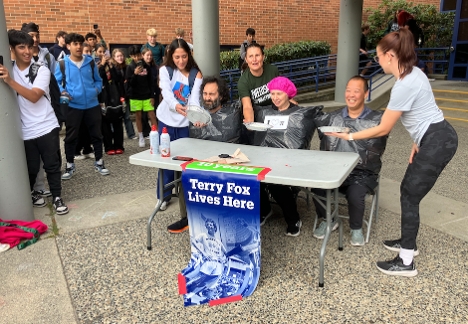
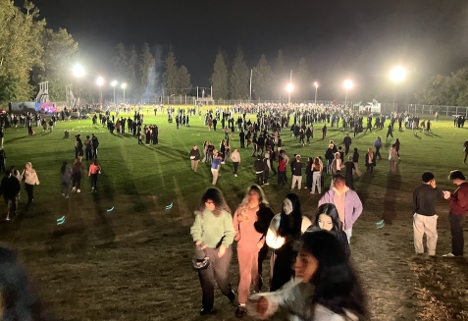
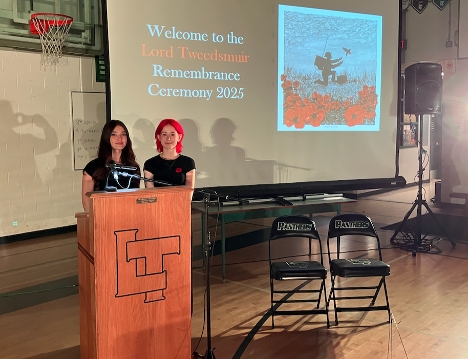
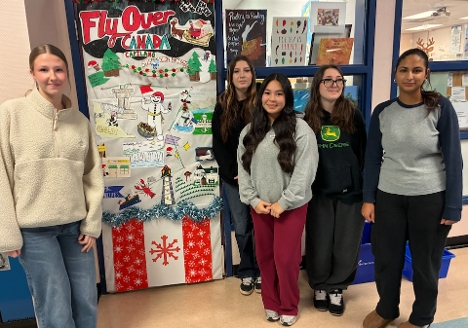
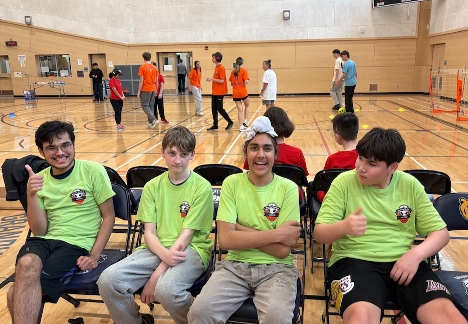
School-wide community building activities included numerous special events during the 25/26 school year that helped to build community and focus on interconnectedness.
OUR NEXT STEPS
Our Next Steps
Our learners are developing their skills and knowledge through the use and practice of First Peoples Principles of Learning.
Students were able to demonstrate greater levels of proficiency in constructing meaningful personal connections between self, text and the world through the use of story-telling and exploration of memory and history.
Students in the cohort completed a journalism writing task – “Family Interview”. After classroom discussion about identity, students considered people in their family who make a significant impact in their lives. Students then interviewed a family member, and the interviews often focused on obstacles these family members faced on their journeys. The assignment directly supported the ". . .story-telling and exploration of memory and history" element of the Curricular Competency.
Upon completion of the “Family Interview” project, students’ understanding of this Curricular Competency was significantly deeper.
Student Assessment:
The growth of student learning was measured in two ways.
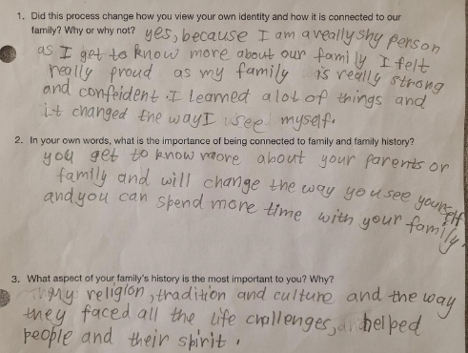
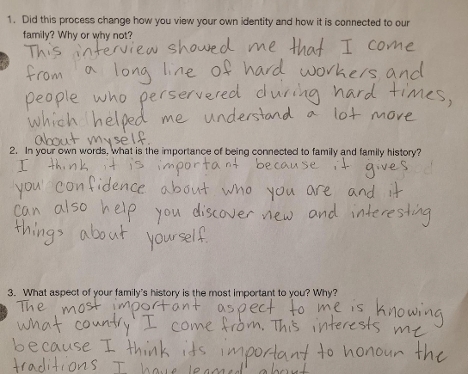
1) Cohort students were asked to interview a family member about their lives and reflect on factors that impact their own identity. Students' understanding of the factors influencing their identity was demonstrated and assessed through their written reflections.
Results:
Analysis:
1)Based upon teacher reflection at the conclusion of the period in which this Family Interview activity occurred, students' journal assignments demonstrated a stronger connection to their family identity and family stories.
In addition, students were better able to articulate their feelings of belonging as a result of their analysis of the stories Hercules and The Lightning Thief. They understood how the characters felt belonging and were better able to understand and articulate their own sense of belonging. Student progress was directly related to the curricular competency: construction of meaningful personal connections between self, text and the world.
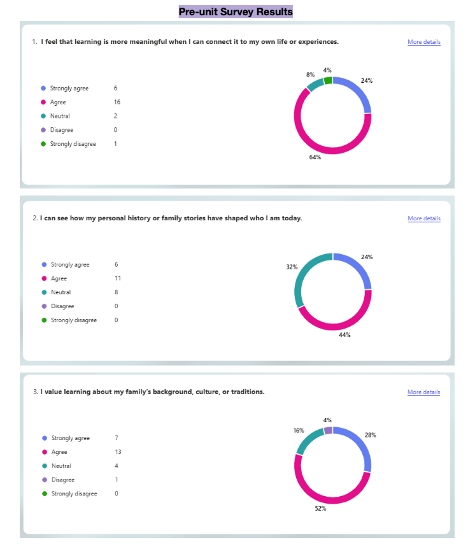
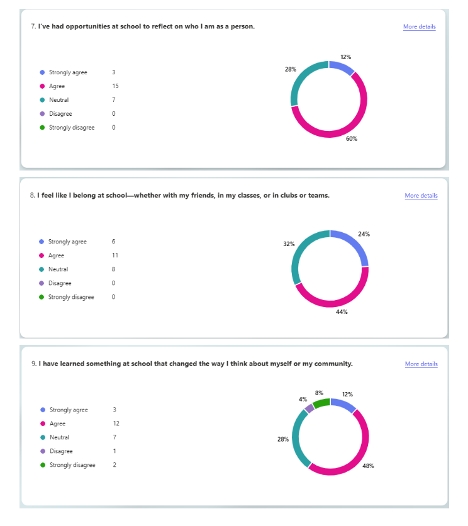
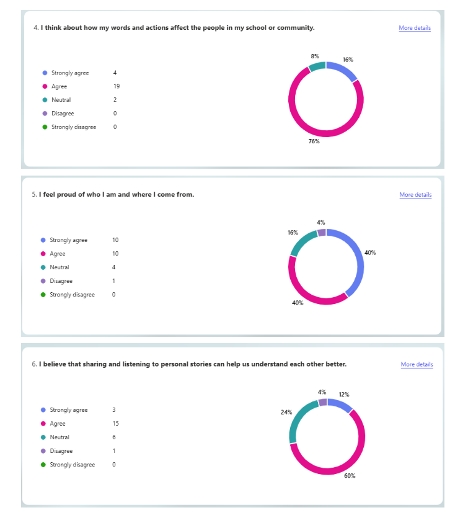
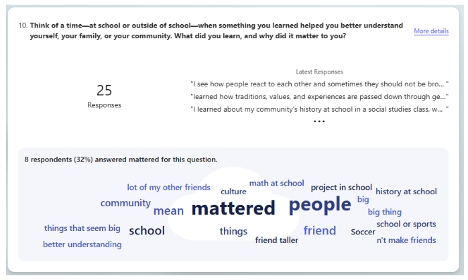
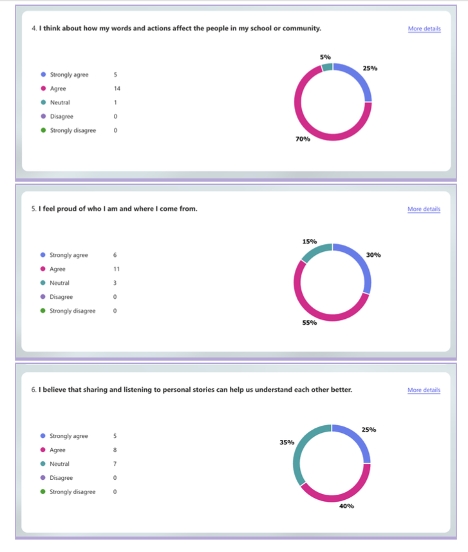
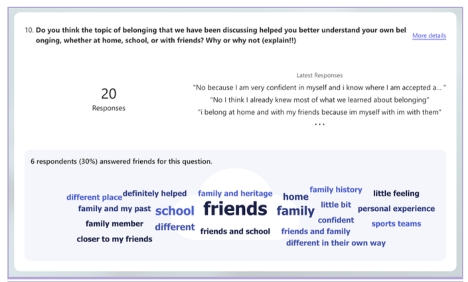
2)Our cohort students responded to an "Identity" survey prior to the instructional unit and after completion of the unit. Students were asked to describe their beliefs about the formation of their identity and the impact of their learning activities on their sense of belonging.
Results:
Pre-survey responses:
Post-survey responses: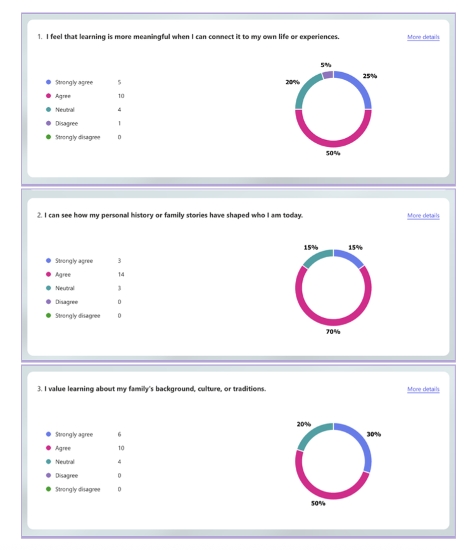
Analysis:
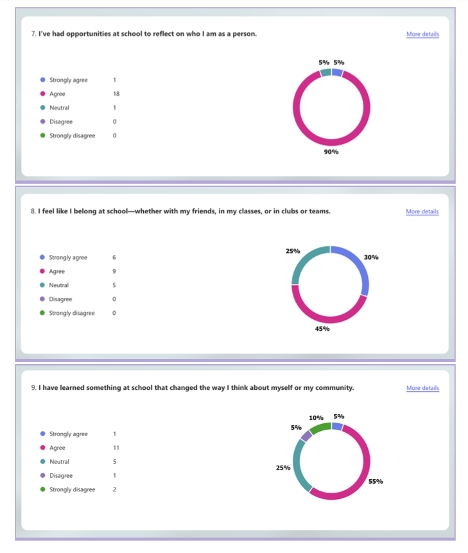
As noted in the responses above, the students progressed in recognizing personal, social and cultural contexts, values and perspectives in text through the exploration of their own identity.
Question #2: “I can see how my personal history or family stories have shaped who I am today”. There was a 17% increase in agreement at the completion of the unit.
Question #7: “I’ve had opportunities at school to reflect on who I am as a person.” There was a 23% increase in agreement at the completion of the unit.
Question #8: “I feel like I belong at school – whether with my friends, in my classes, or in clubs or teams.” There was a 7% increase in agreement at the completion of the unit.
Moving Forward
Advancing our learners' skillsets through memory, history and story as well as through exploration of one’s identity have been very important. Our students have progressed in their understanding of themselves and how this connects to their interactions with their peers, our school, and the surrounding community. In addition, this increased awareness has directly increased their ability to recognize and make connections between themselves and text.
In moving forward, we plan on reinforcing the involvement of Humanities 8 students who will focus on these Curricular Competencies and supported by these First Peoples Principles of Learning. As we continue with this work, we will build on it in the following ways.
Learning is embedded in memory, history, and story
- We will increase opportunities for students to learn through story telling and reflection.
Learning requires exploration of one’s identity
- We will further develop activities for more students in other subject areas to explore their own identity as a foundation for curricular learning and making personal connections between self, text and the world.
Surrey Schools
Formed in 1906, the Surrey School District currently has the largest student enrolment in British Columbia and is one of the few growing districts in the province. It is governed by a publicly elected board of seven trustees.
The district serves the cities of Surrey and White Rock and the rural area of Barnston Island.