Latimer Road Elementary 25-26

OUR CONTEXT
At Latimer Road Elementary, we respectfully acknowledge that our school is located on the shared traditional territory of the Kwantlen First Nation, Katzie First Nation, and Coast Salish Peoples. This is the place where we come together each day to learn, work, play, and grow as a community.
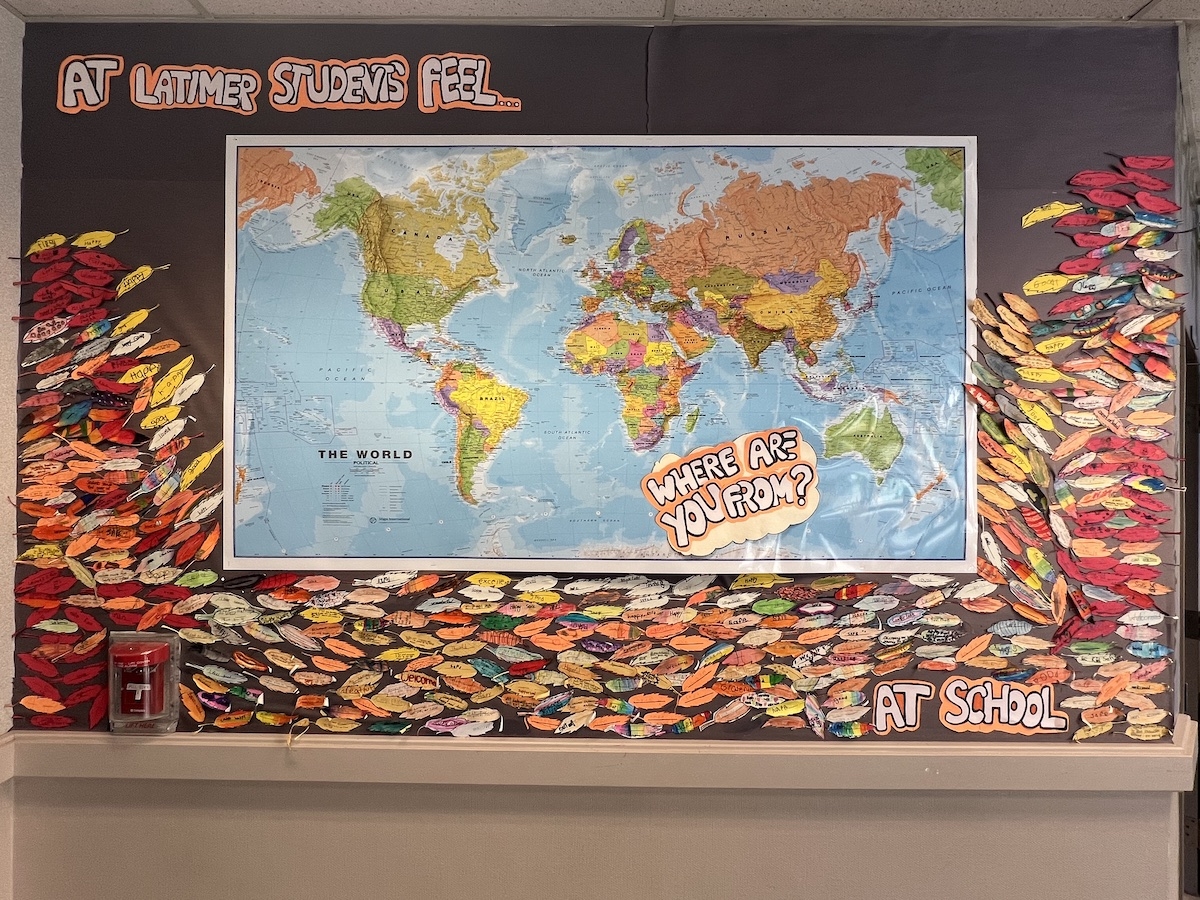
At the heart of Latimer is a strong sense of belonging. We see ourselves as a family—one where every member is valued, supported, and encouraged to thrive. Together, we learn to take care of ourselves, each other, and our community. All members of our school community are expected to be responsible citizens who respect and honour individual differences while working collaboratively. Respect is foundational at Latimer: respect for self, for others, and for the environment.
Our learning is guided by the Seven Grandfather Teachings—Love, Respect, Bravery, Honesty, Wisdom, Humility, and Truth. These sacred teachings are woven into our daily interactions, shaping how we approach learning, relationships, and decision-making. They serve as a compass, helping students develop a strong sense of identity, responsibility, and empathy.


We are proud of the diversity within our school community and celebrate the many stories, cultures, and experiences that our students and families bring. At Latimer, we recognize that each learner has a unique identity, and we strive to create opportunities for students to explore, express, and honour who they are. Through intentional learning experiences, we foster connection, inclusion, and a deep sense of belonging.

Our students are curious, capable, and compassionate learners who engage in both academic and social growth. They are provided with meaningful opportunities to develop their voice, build relationships, and contribute positively to the school community. Social-Emotional Learning is embedded throughout our school, supporting students in developing self-awareness, self-regulation, and strong interpersonal skills.
Families are an integral part of the Latimer community. They are supportive partners in their children’s learning journeys and contribute to the welcoming and inclusive environment we strive to maintain. Through collaboration between home and school, we work together to ensure that all students feel safe, valued, and empowered.
Our staff is deeply committed to supporting every learner. Through collaboration, reflection, and shared purpose, we work together to create engaging and responsive learning environments. We bring care, dedication, and joy to our work, ensuring that students are supported every step of the way. By modelling lifelong learning and strong relationships, we aim to inspire our students to do the same.
At Latimer Road Elementary, we are more than a school—we are a connected, caring community where every individual matters, and where learning is rooted in respect, identity, and belonging.
Staff
As a staff, we extend beyond the responsibilities of the classroom to support students through extracurricular opportunities, including leadership and coaching. By caring for and supporting one another, we strengthen our ability to care for our entire school community. Our ongoing participation in Surrey School District Social-Emotional Learning initiatives has contributed significantly to fostering a positive, safe, and inclusive culture at Latimer. This year, as part of our first year participating in the district’s Responding to Reading initiative, staff have engaged in collaborative, classroom-embedded learning to strengthen literacy practices and better support all learners. Through shared learning, collaboration, and mentorship, we model for students what it means to build strong relationships and support one another. Our diverse cultural and educational backgrounds enrich our school, allowing us to create a welcoming environment where all students and families feel valued and connected.

OUR LEARNERS
Our Learners
At Latimer Road Elementary, our Student Learning Plan is deeply rooted in fostering strong literacy skills and a commitment to strengthening literacy, particularly through developing confident, capable readers. We recognize that strong reading skills are foundational to student success across all areas of learning and are essential in supporting the development of the Core Competencies within BC’s curriculum. By building students’ abilities in decoding, fluency, and comprehension, we are equipping them to engage thoughtfully with a wide range of texts and ideas.
As part of this work, our school is in its first year of the Responding to Reading initiative. Through this initiative, staff are collaboratively working to deepen their understanding of effective literacy practices and to respond intentionally to student needs. Using universal, standardized screening tools, particularly in Kindergarten through Grade 3, we are able to pre-screen and monitor students’ literacy development over time. This allows us to identify where students may require additional support and to provide targeted instruction at the universal, targeted, or intensive level.
Our learners benefit from a responsive and collaborative approach, where educators regularly review evidence of student learning and adjust instruction to best support growth. Through engagement with diverse texts and shared reading experiences, students continue to build their critical thinking and communication skills. They learn to make connections, ask questions, and express their ideas with increasing confidence.
By fostering strong literacy skills within a supportive and inclusive learning environment, we are empowering our students to become thoughtful, engaged learners who are prepared to navigate an increasingly complex and information-rich world.
Our learners are enthusiastic, capable, and engaged readers. Across the school, students demonstrate a strong interest in books and literacy experiences, eagerly participating in opportunities to read, discuss, and share their thinking with others. Many students choose to extend their reading beyond the classroom through initiatives such as Battle of the Books, reflecting a growing culture of reading and a positive reading identity. Students are developing confidence as readers and are increasingly seeing themselves as members of a community of learners who value literacy.
 Students participated in Battle of the Books, engaging with a variety of texts and demonstrating their comprehension through collaborative discussion and friendly competition.
 Reading Under the Stars: students are invited to bring a book, blanket and get comfortable with a book to read under the stars with a flashlight.
| This video highlights the progress of a Grade 1 student who was not yet reading at the beginning of the year and is now able to identify phonics sounds. It demonstrates the student's growth in foundational literacy skills, including phonemic awareness, letter-sound correspondences, decoding (reading), encoding (spelling), and recognition of high-frequency words. Supported by the Responding to Reading initiative, the video shows how assessment data was used to guide targeted instruction and support the student's literacy development. |
Below is an example of a Grade 2 student's Acadience Oral Reading Fluency, on the left is Term 1, on the right is Term 2.

 Image Caption
OUR FOCUS
OUR FOCUS: Strengthening Reading Through Identity, Connection, and Responsive Instruction
At Latimer Road Elementary, we are committed to strengthening reading development through inclusive, culturally relevant, and responsive learning practices. Grounded in the Weaving Threads Framework, our approach to literacy honours the interconnectedness of Indigenous ways of knowing, social and emotional learning, and culturally relevant and responsive instruction. We recognize that learning is relational, experiential, and deeply connected to students’ identities, cultures, and communities.
Reading is not only a foundational academic skill but also a means for students to understand themselves, connect with others, and make meaning of the world around them. Through intentional and responsive instruction, we aim to ensure all learners see themselves reflected in texts, feel a sense of belonging, and develop confidence and agency as readers.
Our students’ learning goals include:
- Developing foundational reading skills, including phonological awareness, decoding, and fluency
- Building confidence, voice, and identity as readers
To support this work, we are engaged in the Responding to Readers (RtR) Initiative, a collaborative professional learning opportunity involving a cohort of teachers across Grades 1–4. Through RtR, classroom teachers, Literacy Helping Teachers, and district researchers work together to deepen our understanding of how children learn to read and how to respond effectively to student needs. Guided by the questions “How are our readers doing?” and “How do we know?” educators examine classroom practices, gather evidence, and engage in ongoing reflection to inform responsive instruction.
Our RtR cohort, consisting of classes across Grades 1–4, serves as a representative group to explore and refine assessment and instructional practices. A key focus of this work is building teacher capacity in the use of Acadience, a universal screening tool that supports early identification of students who may be at risk in reading.
Using a structured cycle of assessment and instruction, we:
- Screen students using Acadience to identify those who may require additional support
- Diagnose specific areas of need through targeted assessments
- Plan and implement responsive, evidence-based instruction, including flexible groupings
- Evaluate student progress regularly
- Adjust instruction as needed to ensure continued growth
This responsive approach ensures that instruction is timely, targeted, and aligned with each learner’s strengths and needs.
In our primary classrooms, students engage in rich literacy experiences that integrate phonics instruction with meaningful reading opportunities. Through explicit teaching and guided practice, students develop the skills needed to decode and comprehend text, while also engaging in discussions that build understanding, empathy, and critical thinking.
Through this work, we aim to create equitable learning environments where all students are supported to grow as readers. By weaving together identity, community, and responsive instruction, we are building strong, confident readers who are equipped to engage with the world in meaningful ways.
The graph below represents reading progress across all Kindergarten classes participating in the Responding to Readers initiative. Using Acadience assessment data collected at the beginning, middle, and end of the year, it shows the number of students performing in the “Well Below” and “Below” benchmark categories. The data reflects ongoing progress monitoring and the use of targeted literacy instruction to support growth in foundational reading skills, while identifying students who continue to require additional support.


In this video, a Grade 1 student explains their understanding of UFLI and how it supports their reading development. The student describes using multi-sensory strategies, such as tracing letters on their arm, writing in the air, and practicing on paper to learn letter-sound correspondences. They explain that these strategies help them "sound out the words" when reading. The student's reflection demonstrates an understanding of how phonics instruction supports decoding and contributes to their growth as a reader.
OUR NEXT STEPS
Next Steps: Early Primary Cohort
At Latimer Road Elementary, we will continue to build on this year’s focused and collaborative work to strengthen foundational literacy skills in our early primary learners. Through our involvement in the Responding to Reading initiative, teachers and the school-based team will continue to work together to support student growth in key areas such as phonemic awareness, phonics, and early reading development.
Moving forward, the Responding to Reading team and classroom teachers will deepen their use of assessment by regularly reviewing Acadience data, including ongoing progress monitoring, to better understand student needs and track growth over time. This data-informed approach will guide instructional decisions and allow for more precise and responsive teaching.
A key next step will be strengthening small-group instruction by identifying specific areas of need and providing targeted support for students. To support this work, we will develop a shared literacy intervention toolbox that teachers can access. This toolbox will include strategies, resources, and instructional approaches aligned with Acadience data, enabling teachers to effectively plan and implement targeted small-group instruction.
As students continue to develop foundational reading skills, we will also focus on supporting them in constructing meaning from a variety of texts through comprehension strategies. Teachers will provide opportunities for students to think deeply about what they read, make connections, ask questions, and engage in discussions that strengthen their understanding of text. By intentionally supporting both word recognition and comprehension, we aim to help students become confident, capable readers who can successfully access and make meaning from increasingly complex texts.
Through continued collaboration, intentional use of assessment, and a shared commitment to responsive teaching, we will keep this goal at the centre of our work: supporting early learners in developing strong and confident foundations in literacy.
Surrey Schools
Formed in 1906, the Surrey School District currently has the largest student enrolment in British Columbia and is one of the few growing districts in the province. It is governed by a publicly elected board of seven trustees.
The district serves the cities of Surrey and White Rock and the rural area of Barnston Island.