Johnston Heights Secondary 25-26

OUR CONTEXT
Johnston Heights Secondary School is a public school in Surrey and welcomes all students. Students begin in the International Baccalaureate Middle Years Programme (MYP). In Grade 11, students can decide to continue into the International Baccalaureate Diploma Programme (DP) or the BC Graduation Program (BCED). We, as a learning community, believe all students can find success within the MYP, DP and the BC Graduation Program.
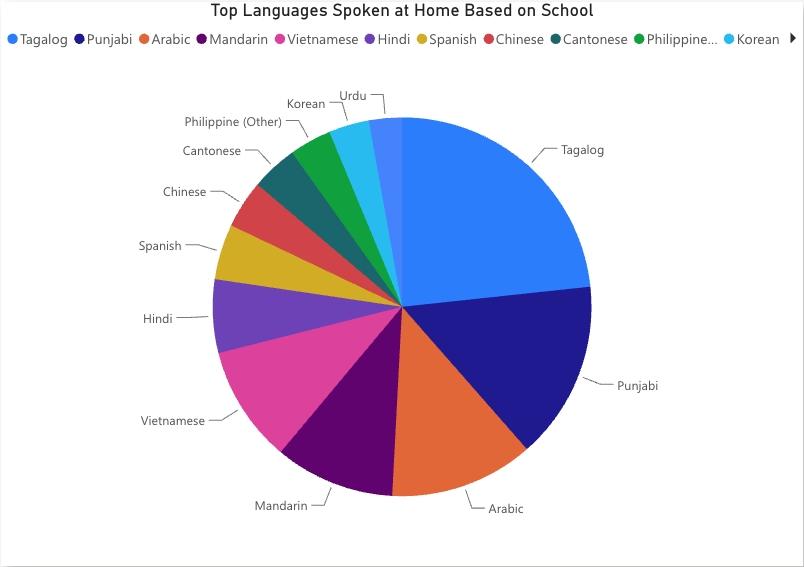
Our students come from a variety of backgrounds and cultures with many different languages spoken at home.
What Does Student Life Look Like at Johnston Heights?
At Johnston Heights, the BC Curriculum is delivered through the lens of the IB. Our students work on a balanced schedule that follows a linear timetable. Students explore the BC Curriculum through key concepts, global contexts and explorations while also building approaches to learning / Core Competency (ATL) skills and developing the Learner Profile (LP) traits. These elements enhance the learning experience and the delivery of the BC Curriculum, while also giving students a well-rounded experience.
Our students care deeply about the world around them and respectfully engage with various cultures within the school. Our staff and students engage in ongoing self-reflection and service to our community to ensure we build a strong world together. In their classes, students often engage in inquiry-based activities that blend academic rigour with personal interest. To demonstrate connection to their learning, students create Personal Projects in Grade 10 CLE, Creativity, Activity and Service projects, and a Capstone project in Grade 12 CLC. It is common to see students working collaboratively in the hallways, designing community service projects, mentoring new students while actively participating in Athletics and the Arts.
Why Do We Do What We Do?
Johnston Heights is a caring school that embraces service and inclusion and seeks to ensure students can be accommodated comfortably within the school. The school respects and supports diversity as part of its mission. We welcome students with learning differences and offer support provided by our Student Support (LST and ELL), Inclusion (B.A.S.E.S.), counselling and youth care team.
OUR LEARNERS
The aim of all Johnston Heights students is to develop as internationally minded people who, recognizing their common humanity and shared guardianship of the planet, help to create a better and more peaceful world. Our students set our shared goals and express their understanding of the world through literacy and numeracy. To this end, our students rely on the ATLs / Core Competencies to build their individual literacy and numeracy skills.

What Can Our Students Do?
Students show understanding by demonstrating their ATL skills in action through literacy and numeracy based learning activities.

Students practice self management by understanding the importance of balancing different aspects of our lives including intellectual, physical, and emotional well-being. Additionally, they reflect by thoughtfully considering the world and our own ideas and experience.
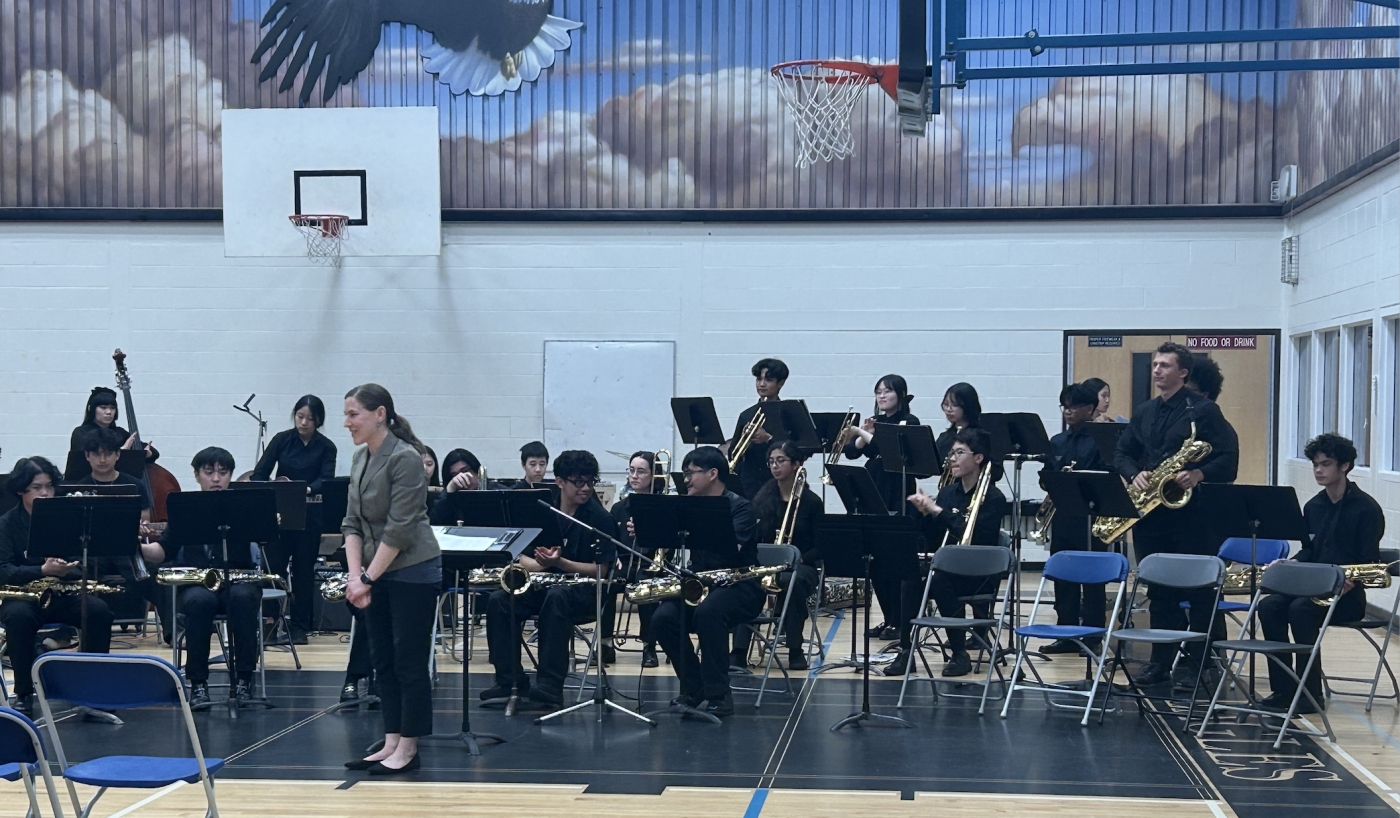
Students practice the ATL communications skills when they express themselves confidently and creatively in their learning.
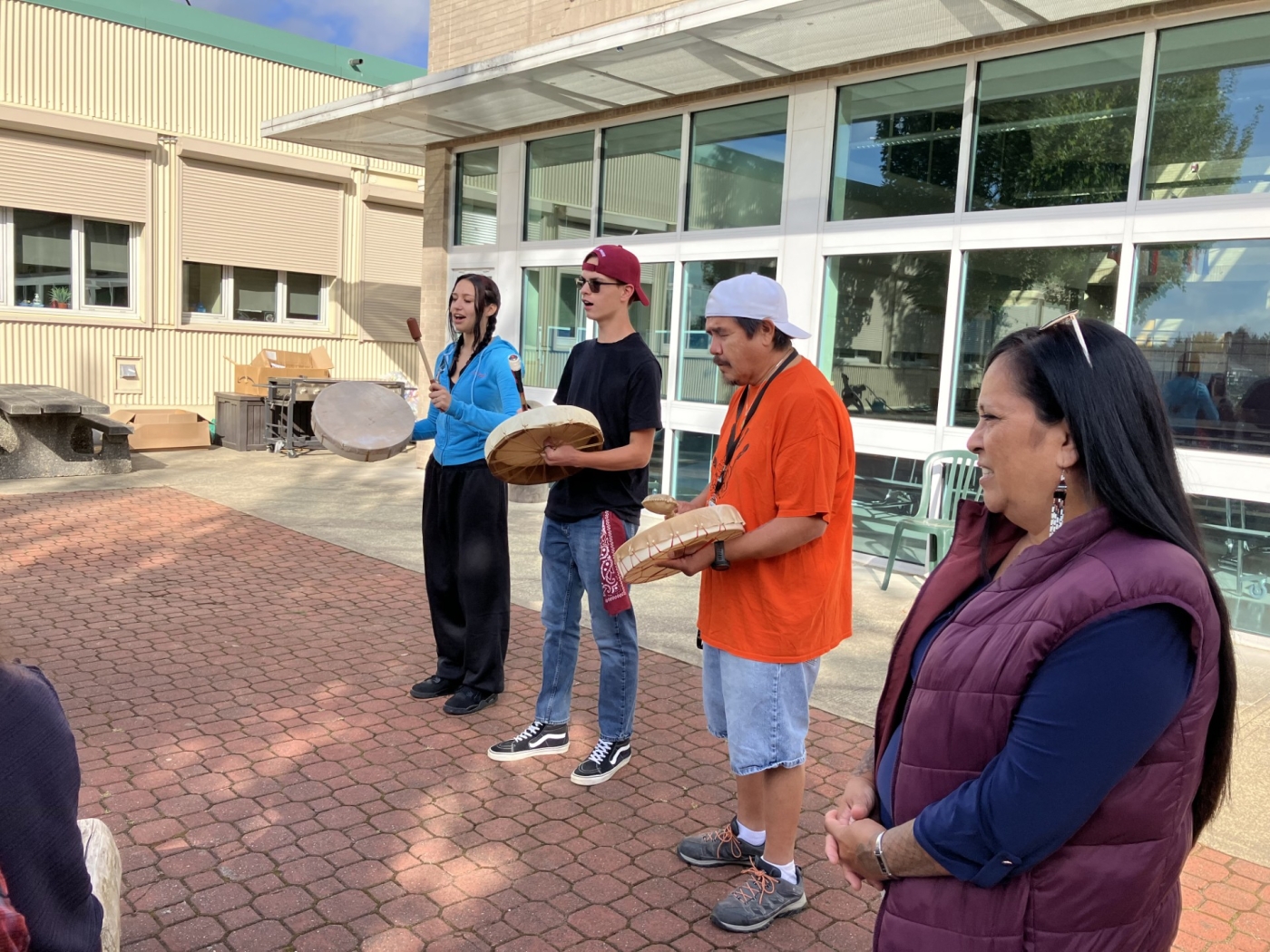
Our students appreciate our own cultures and personal histories, as well as use critical and creative thinking skills to analyze and take responsible action on complex problems.
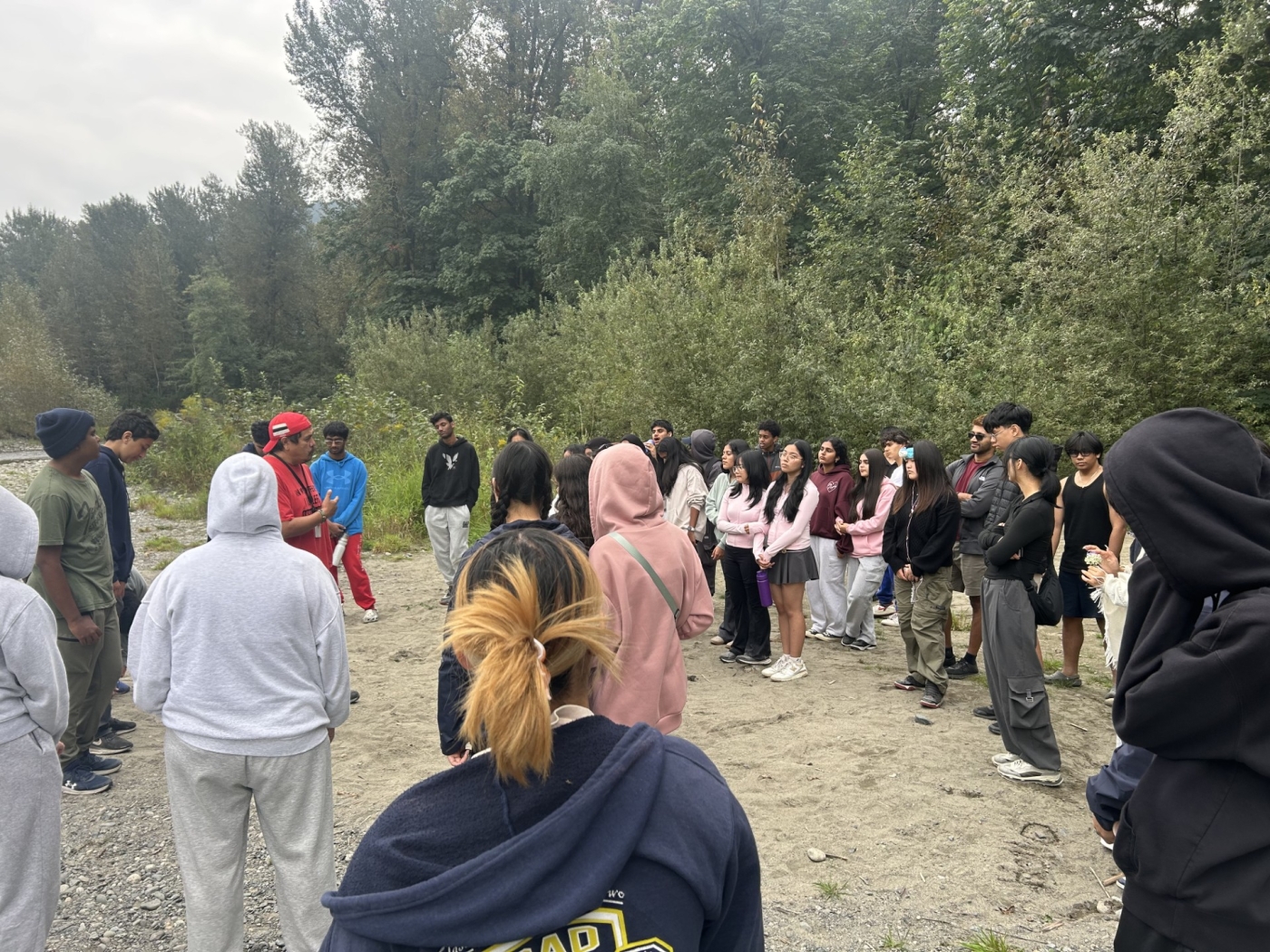
When looking at our students, we see that they:
- Actively participate in classroom learning;
- Actively work to make the school a better place for each other through care and empathy;
- Work with peers and teachers to develop knowledge and skills;
- Demonstrate their best efforts to demonstrate their skills and growth;
- Ensure work is of their own creation and they use academic integrity;
- Reflect on their learning to foster growth.
OUR FOCUS
As we approach our MYP / DP evaluation in 2026–27, selecting a key topic for our self-study is a vital step in fostering ongoing growth and strengthening our alignment with IB principles. This process offers us a meaningful opportunity to reflect on our practices, celebrate our achievements, and identify areas where we can deepen our impact on student learning and development.
One area we are particularly interested in exploring is concept-based learning, which lies at the heart of the IB framework. By focusing on transferable, big ideas rather than isolated facts, concept-based learning empowers students to think critically, make interdisciplinary connections, and apply their understanding in real-world contexts. Investigating how we design and implement concept-driven units across the MYP (grades 8-10) and DP (grades 11-12) could provide valuable insights into how we nurture deeper understanding and long-term retention.
Framing the Focus: Concept-Based Learning as a Bridge Between Literacy and Numeracy
Concept-based learning emphasizes enduring understandings and transferable ideas—such as change, relationships, systems, and perspective—that transcend subject boundaries. This approach is particularly well-suited to fostering interdisciplinary transfer, especially between traditionally siloed domains like literacy and numeracy.
Why This Matters
Students often struggle to see how the skills they develop in one subject apply to another. By designing concept-driven units that explicitly connect literacy and numeracy through shared concepts and inquiry, we can:
- Deepen students’ understanding across disciplines;
- Promote critical thinking and problem-solving;
- Encourage flexible application of knowledge in real-world contexts.
As an IB continuum school, we are empowering students in their learning journey.
Our School Learning Goal
How can we build our students' numeracy skills using conceptual-based learning?
Measuring Our Success
To evaluate the effectiveness of our concept-based numeracy focus, we have monitored progress using both quantitative and qualitative measures.
We gathered evidence from:
- Formative assessments and informal check-ins throughout the process, including journals
- School-wide Survey
- Student work samples
The data collected from the school-wide survey highlights both strengths and areas for growth in student learning, informing instructional planning and targeted supports. Please click on the link below to access the summarized results of our school-wide survey.
Student Learning Numeracy Survey
Our students have evidently explored and applied numeracy-based concepts across curricular areas.
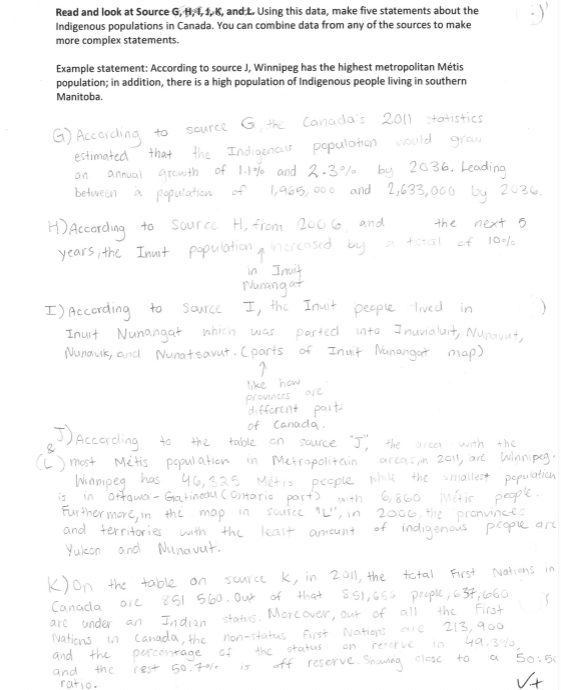
Student Sample #1
In Social Studies 9, students were asked to analyze and interpret data regarding Indigenous populations in Canada.
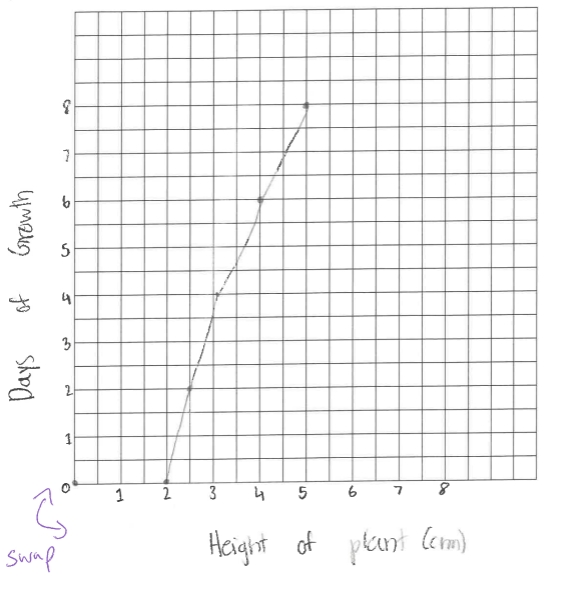
Student Sample #2
In Science 8, students were asked to collect data and plot their data points on a line graph to show the relationship between time and plant growth.
Our students are increasingly recognizing that numeracy is not confined to mathematics alone, but is woven throughout all subject areas in meaningful and practical ways.
OUR NEXT STEPS
Our Findings
Students are developing a deeper awareness of how skills such as interpreting data, understanding patterns, measuring, and problem-solving are essential across disciplines - from analyzing trends in science experiments, to evaluating information in Social Studies, and even structuring ideas in Language Arts. This growing understanding is helping students see numeracy as a transferable, real-world competency that supports their learning and critical thinking in every area of their education.
Strengths in Numeracy Development
- Widespread application of numeracy across subject areas
- Science (data analysis, experiments, graphs)
- Individuals and Societies (population data, timelines, graphs)
- ADST (measurement, fractions, design)
- Home Economics (measurement, conversions, scaling recipes)
- Arts (proportion, rhythm, spatial reasoning)
- English (data tracking, graphing reading progress)
- Students demonstrate a strong awareness of numeracy connections beyond mathematics
- Many students are able to interpret graphs and data, perform calculations, and apply numeracy to real-world tasks
- A portion of students show confidence using numeracy in complex tasks
Student Confidence in Numeracy
- Many students reported being moderately confident with numeracy
- Some students reported being highly confident, particularly when tasks are familiar, concepts are clearly explained and practice is provided
- Students reported that they feel less confident when instructions are unclear or when tasks are rushed and under high-pressure situations
Challenges or Barriers
- Instructional clarity
- Difficulty understanding abstract numerical concepts without context
- Lack of real-world connections
- Students report greater difficulty when numeracy feels disconnected from practical use
- Limited scaffolding
- Some students require additional individual support
- Numeracy-related anxiety
Recommendations for School Improvement
- Continue to integrate numeracy explicitly across all curricular areas
- Emphasize real-world application and relevance
- Continue to provide scaffolded, step-by-step teaching
- Continue to use visual representations consistently
- Continue to provide time for cross-curricular collaboration
- Promote consistent language and strategies
Advancing our students' competency-based learning is a critical component of the IB MYP framework. Using the evidence that we gathered from formative assessments and informal check-ins, student work samples from various curricular areas, and our school-wide Student Learning Numeracy survey, we will continue to develop strategies and cross-curricular collaboration opportunities to ensure greater consistency across classrooms, with ongoing monitoring to track improvements in students' ability to recognize, apply, and feel confident with numeracy in all areas of learning.
Surrey Schools
Formed in 1906, the Surrey School District currently has the largest student enrolment in British Columbia and is one of the few growing districts in the province. It is governed by a publicly elected board of seven trustees.
The district serves the cities of Surrey and White Rock and the rural area of Barnston Island.