Hyland Elementary

OUR CONTEXT
A Glimpse into Hyland Elementary
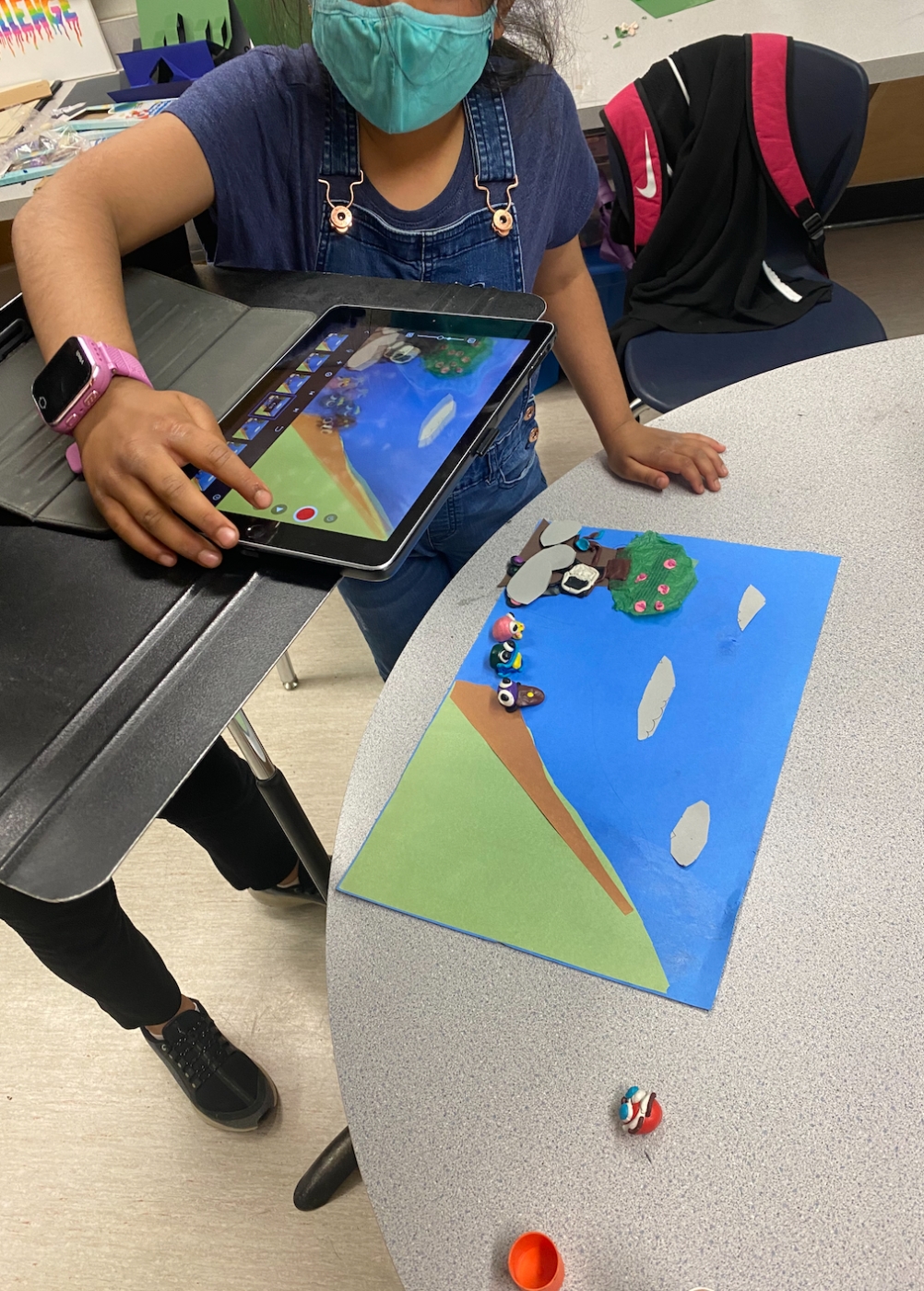
Hyland Elementary is located in the Newton suburb of the City of Surrey in the province of British Columbia. Hyland Elementary is located in a residential neighbourhood and next to a local park called Hyland Creek Park, filled with an abundance of trees, a flowing stream where you can spot salmon in the spring, and a playground. At Hyland, we have 20 classroom divisions. We have a French program, Music program, and Band program. We also have a beautiful learning commons, where students can read, engage in various ADST activities and learn through play.
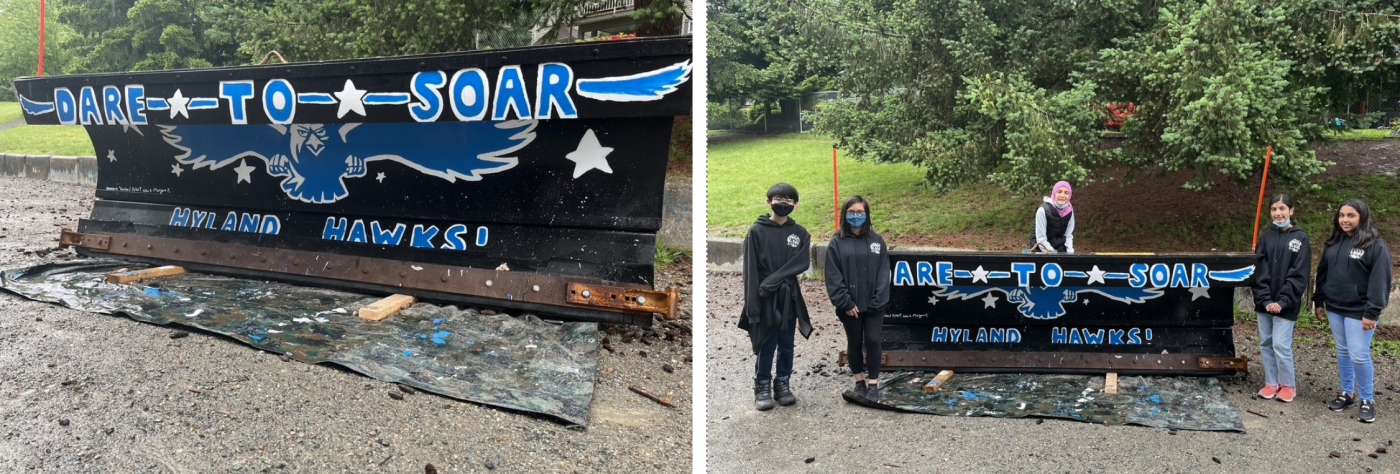
Hyland Elementary has two specialized programs for students in our district. One of our divisions is a Multi-Aged Cluster Classroom (MACC). The MACC teacher provides an academically challenging and social-emotionally supportive environment for students. Each student works towards an advanced curriculum designed to meet their individual goals. The second program is the Challenge program. The Challenge Program provides an opportunity for students in Grades 3 to 7 to actively engage with students from local elementary schools in an academically and creatively-challenged space. 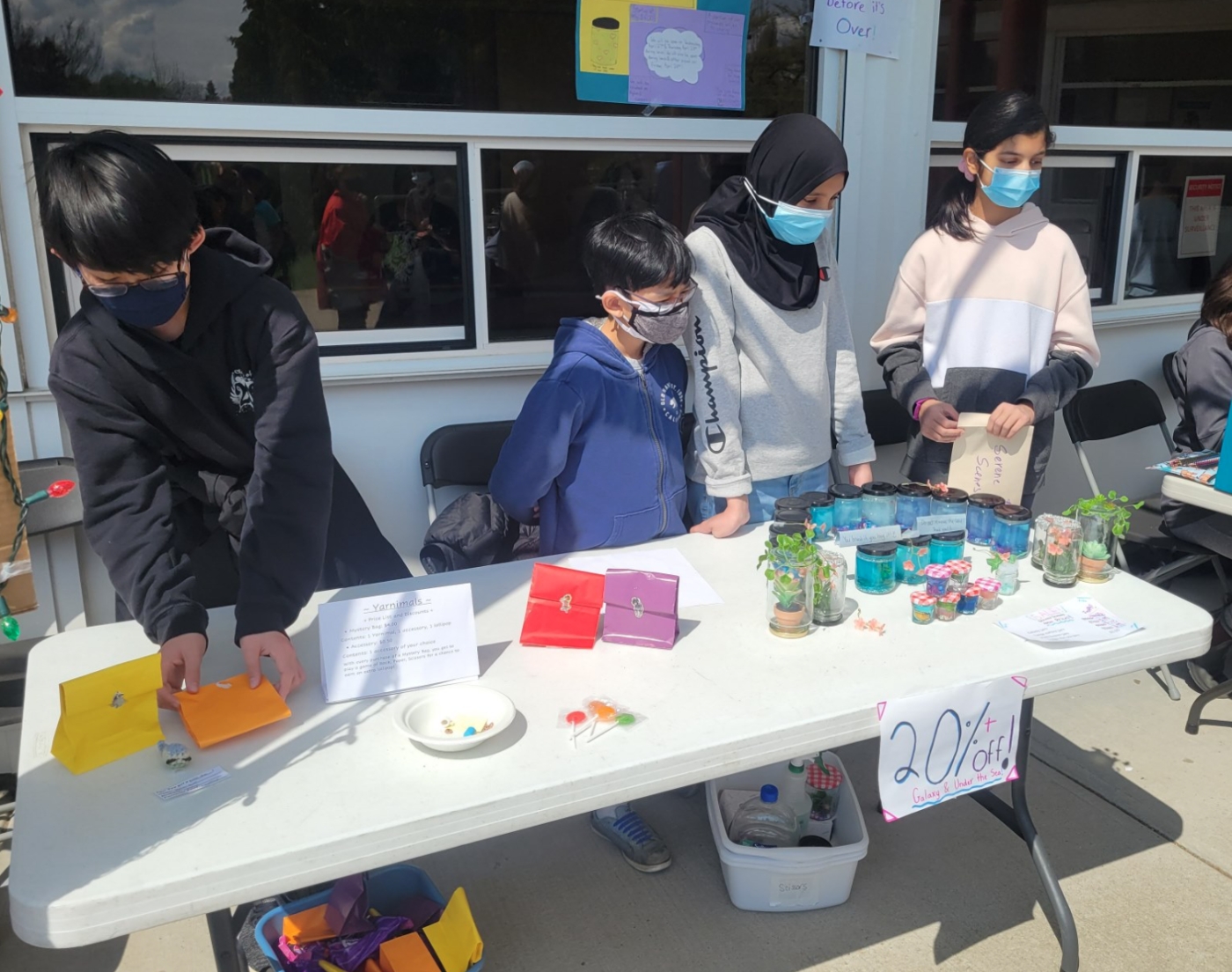
Within Hyland, there is a before school and after school daycare program for Hyland students. There is also a pre-school program that runs three times a week for our future Hyland Hawks. Also our community offers before school and after school care all serviced by Cambridge Learning Centre.
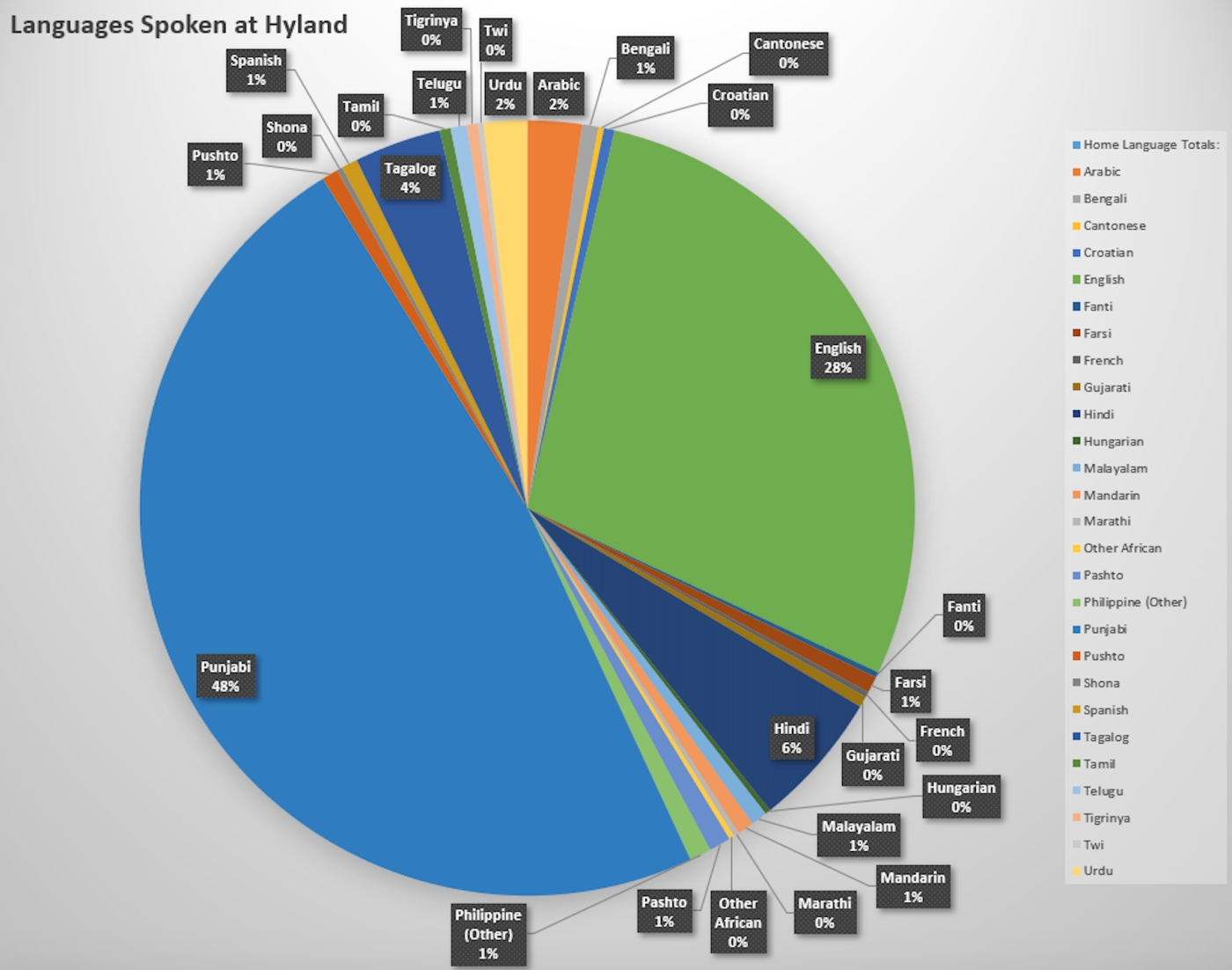
 Our Hyland Elementary Community has a diverse group of students. There are 27 languages spoken by our families at Hyland Elementary. Hyland Elementary has 195 English-language learners, ranging from beginning to bridging.
Hyland Elementary welcomes many students who are new to the country, with eight students arriving new this year. Four of these students arrived from Afghanistan, and four arrived from India. We work closely with our District Resource Staff from the Welcome Centre to help our parent community and students with their transition to our Elementary School.

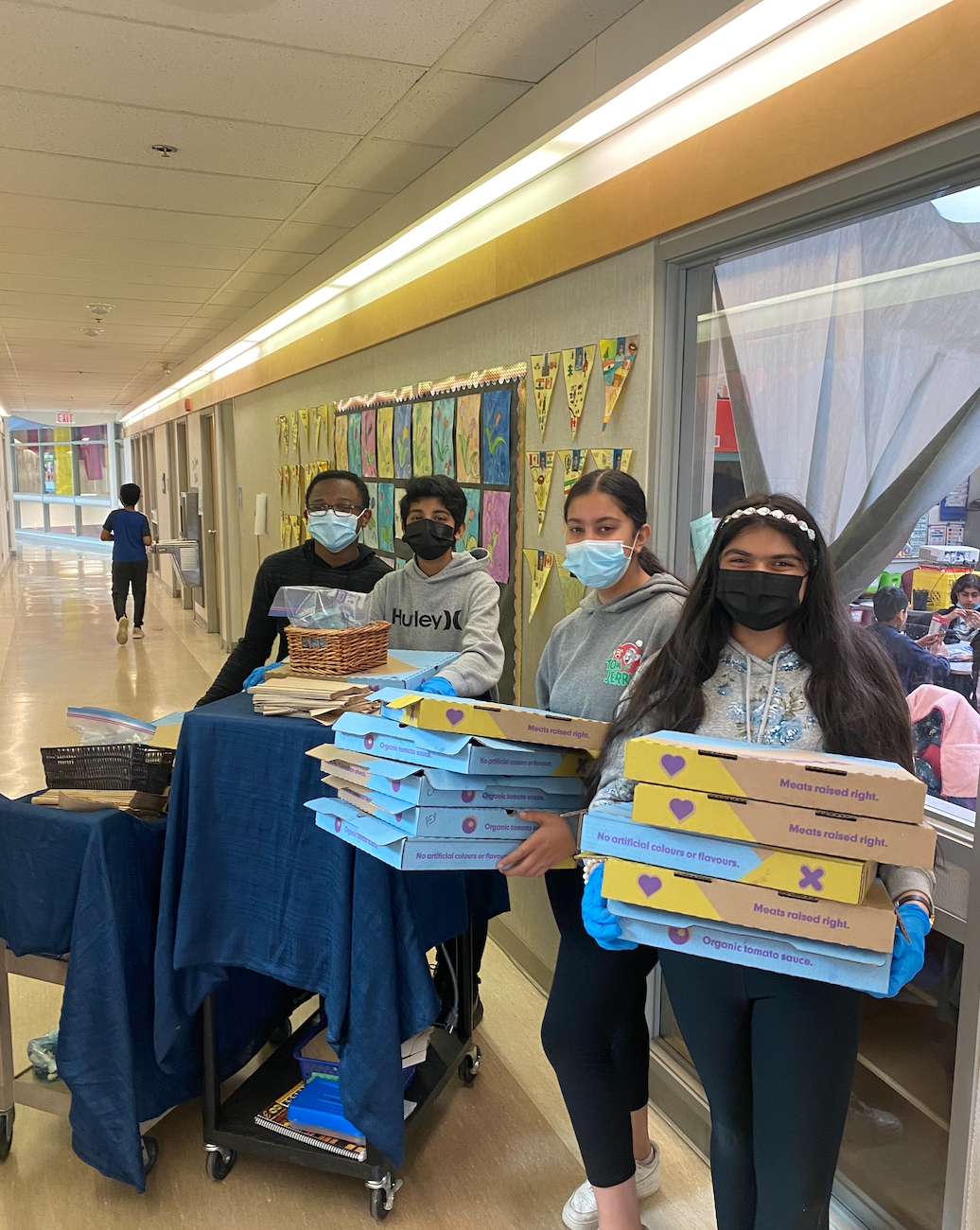
At Hyland, we take great pride in developing our future leaders by providing and mentoring various leadership roles. Our students are invested in our school community and together help in various ways to continue to build a positive school culture of care, inclusivity and respect for all learners.
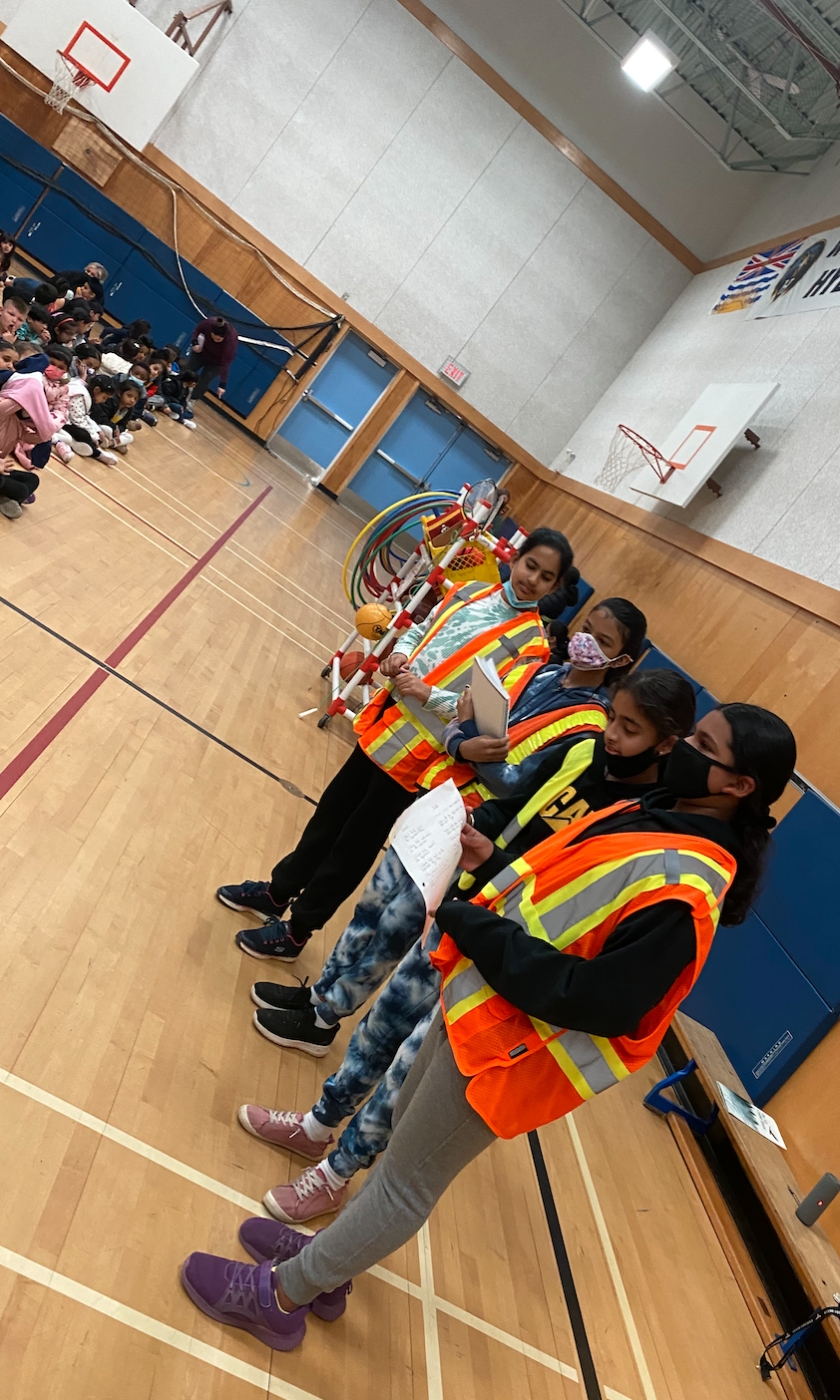
Various leadership roles include: Fitkid athletics, assembly leaders, technology leaders, playground mentors, walk and roll monitors and announcement leaders, just to name a few.


OUR LEARNERS
Our Hyland Learners
Our students over the last two years have demonstrated tremendous resilience and continue to show great pride in being a part of our Hyland School community. Our students can adapt, work together, learn from each other, work independently and can apply what they have learned to their lives at school and at home. In general, our students are respectful, hardworking and as a school, we have been focusing on understanding the core competencies and identifying specific strengths and challenges that our learners possess and need to build upon. This year, our School Learning Plan focuses on Core and Curricular Competencies.

As a school, we are focusing on increasing student’s ability to engage in reflection and self-assessments with teachers being intentional in addressing and building the language and understanding of the core competencies. We are using reflective prompts, criteria and conversations that are strength-based and ask open-ended questions that are critical in helping students increase their ability to self-reflect and self-assess.
OUR FOCUS

At our staff development day in September 2021, as a staff, we examined our strengths and the strengths of our teammates through the lens of the Core Competencies using the resource Six Cedar Trees by Margot Landahl and Celestine Aleck. Our staff took time to complete their own self assessments reflecting on their strengths and challenges. This is will continue as a focus for our staff team into 2022-2023.

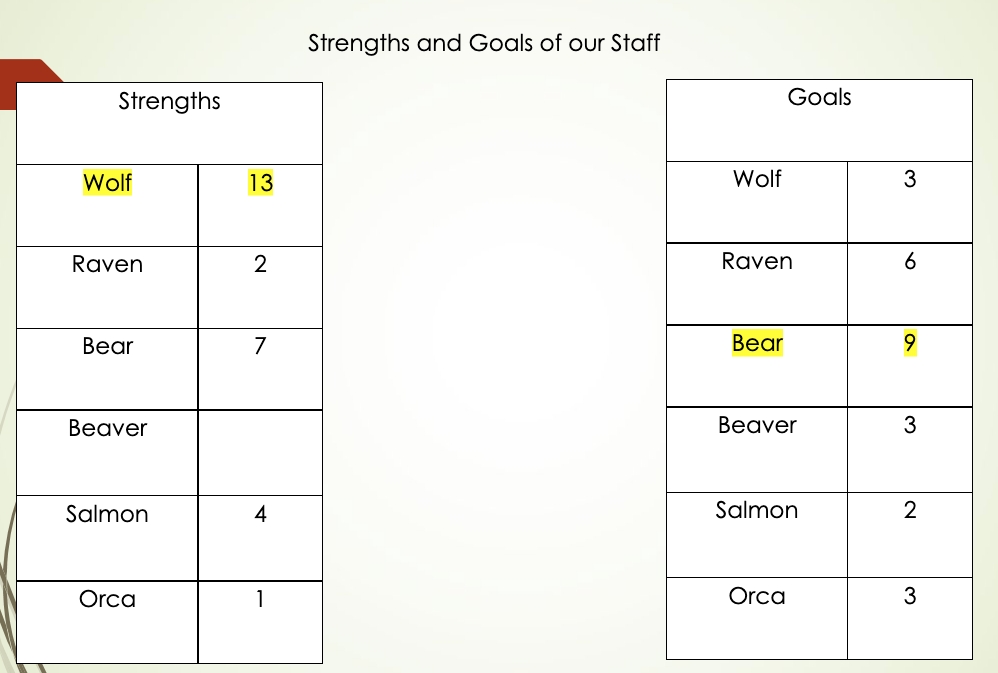
This resource connects six Coast Salish animals to BC's Core Competencies. The Six Cedar Trees, grew out of a personal inquiry into British Columbia’s Core Competencies and a school inquiry into the The First Peoples Principles of Learning. Each animal was carefully chosen by the authors as an “anchor” to teach children holistically, ways of being a reflective, compassionate and well-adjusted person connected through a sense of social responsibility and compassion for place and people.


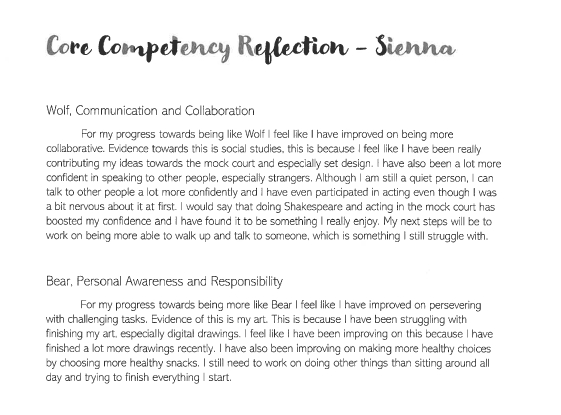
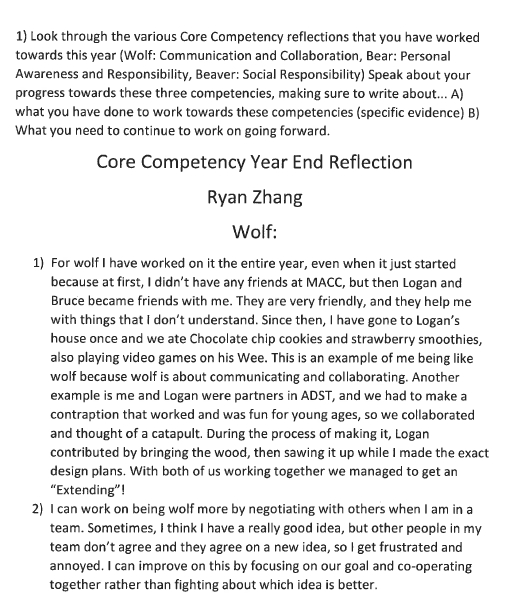
Our Term 1 focus was on the core competency of Communicating and Collaborating. The Wolf is a great communicator and collaborator. Our goal was that by the end of Term 1, we had a school full of wolves! There are many students who are exemplars of these competencies already. Our staff are also exemplars of wolves! We really wanted our staff and students to focus on growth in these areas. In order to do this, we encouraged staff to use self-reflections throughout the school year. In these self-reflections, students were encouraged to set goals and then reflect at the end of the term on the goals they set for themselves.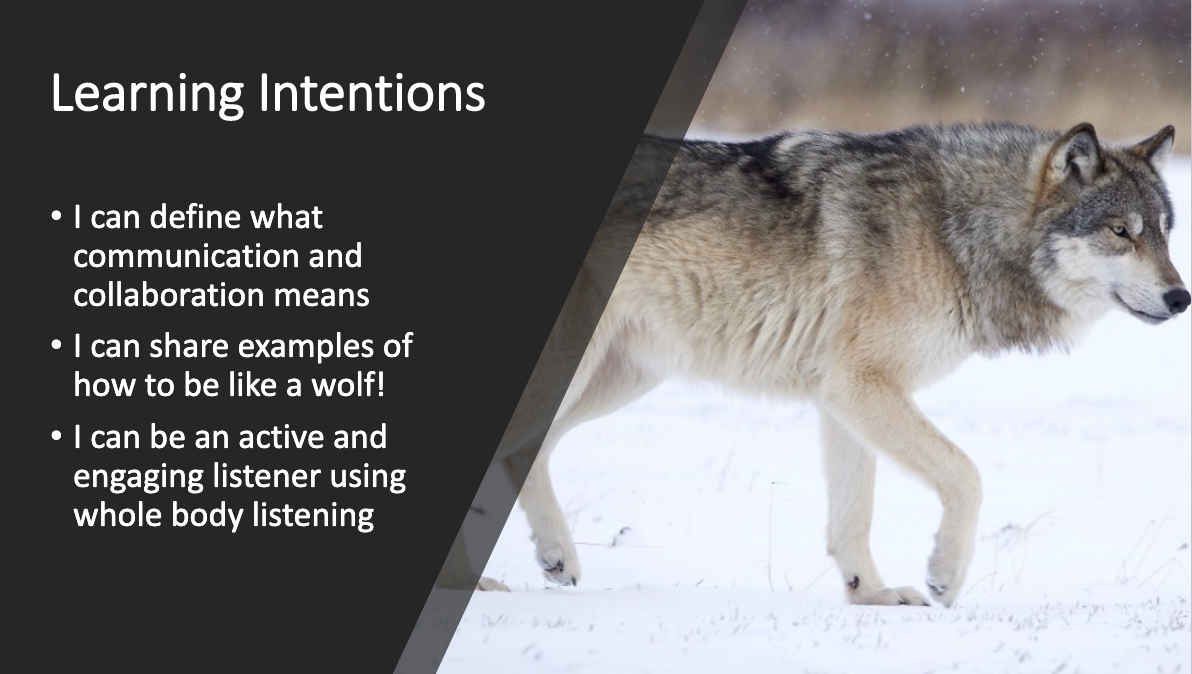
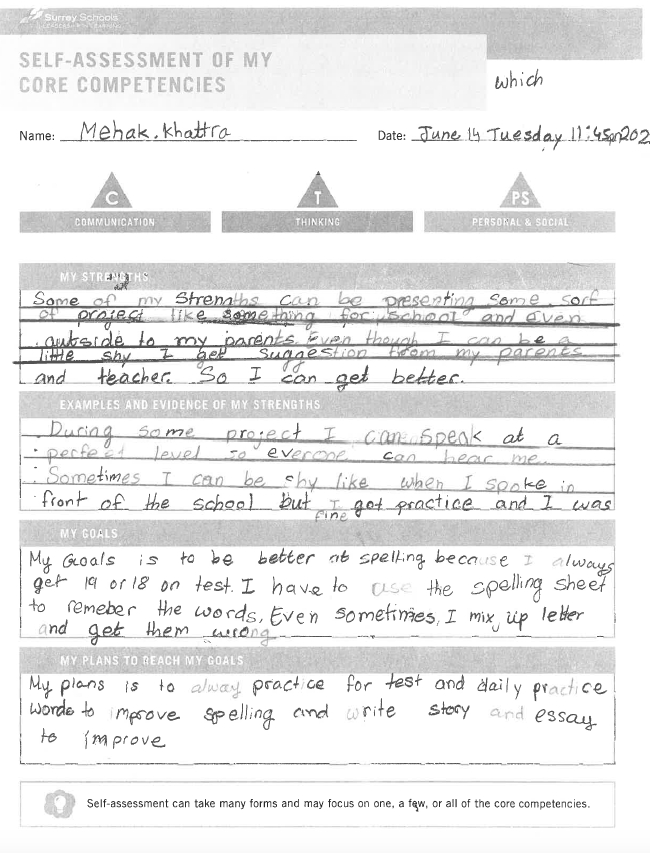
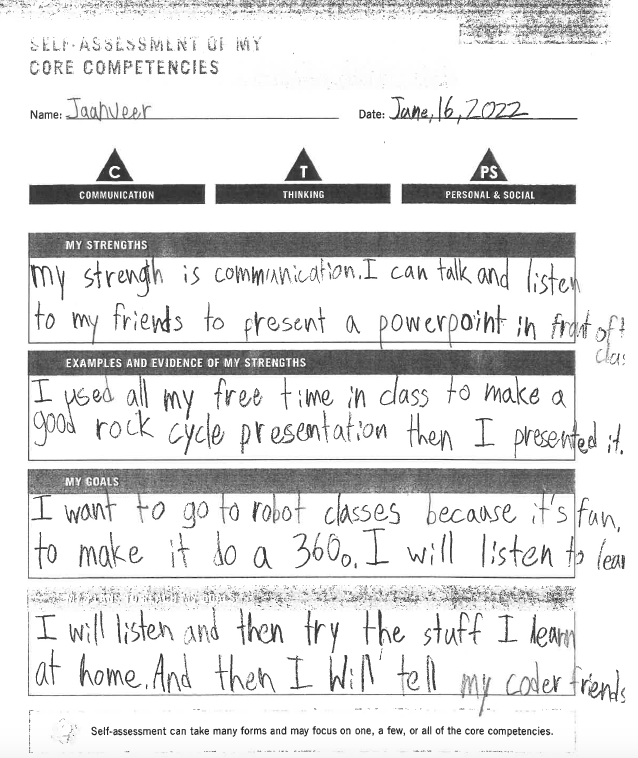
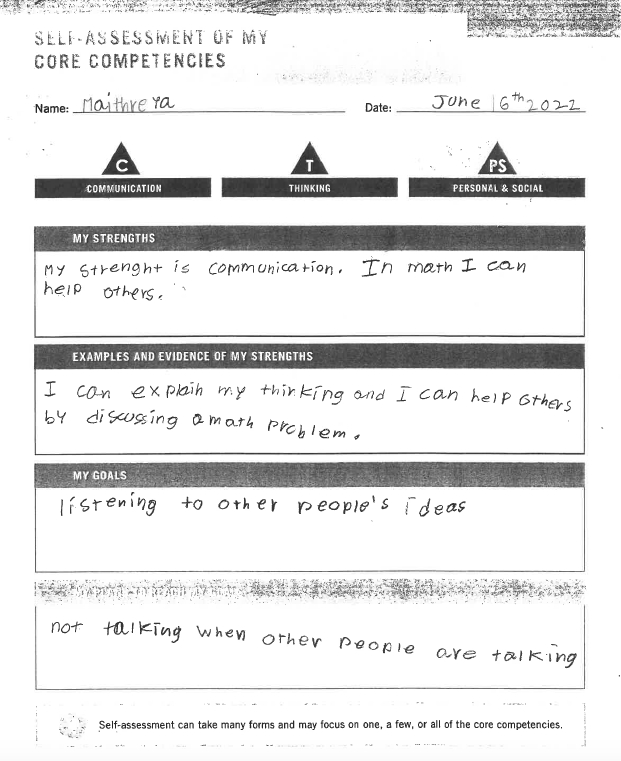
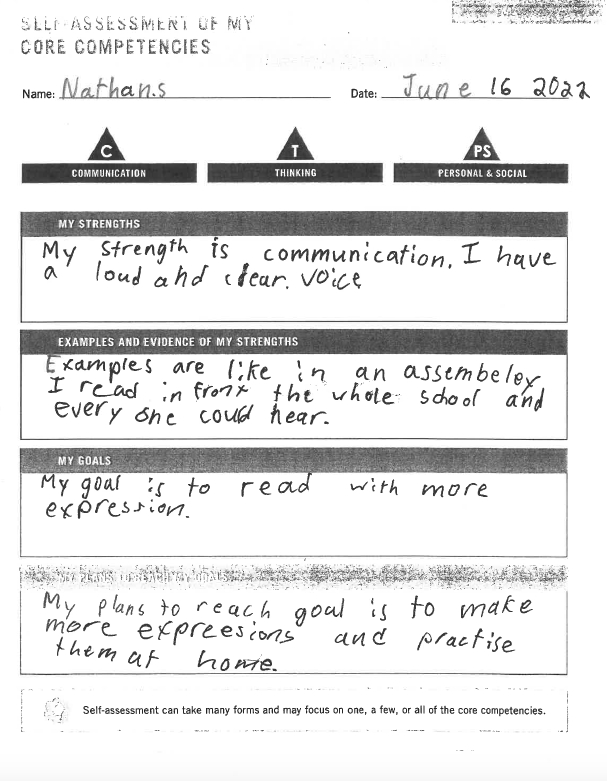
Wolf is a great communicator. He represents the Communication Competency. Through Wolf, we can learn to connect and engage with others; gather and share information; and cooperate with others by listening to and respecting each other
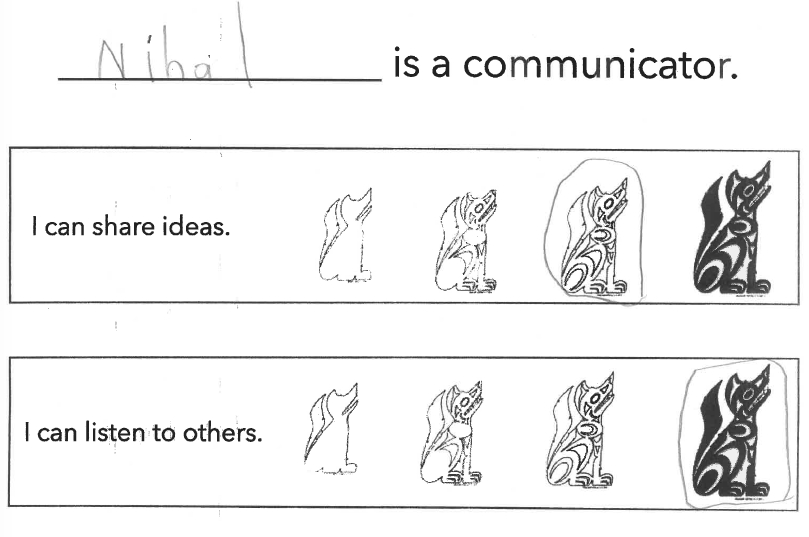
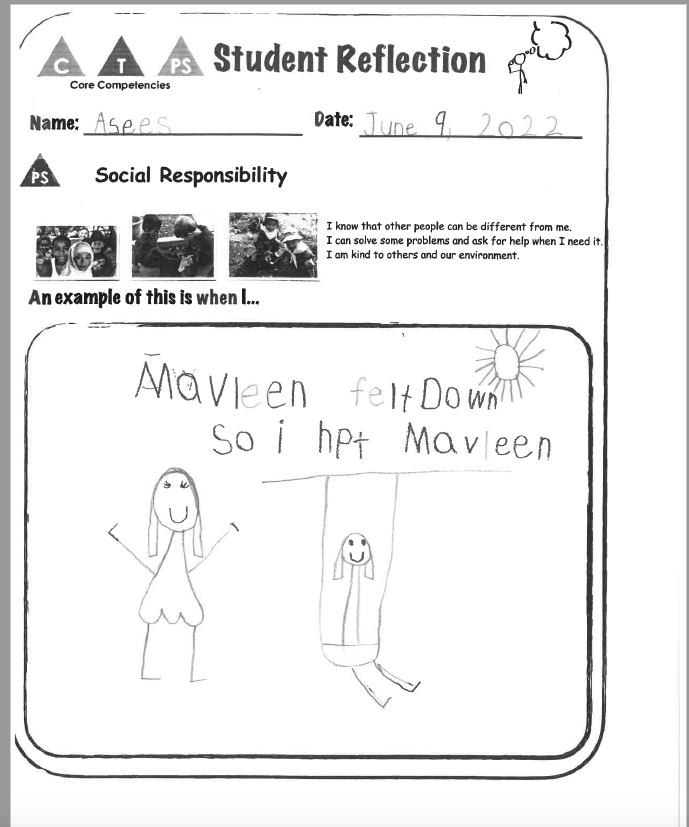
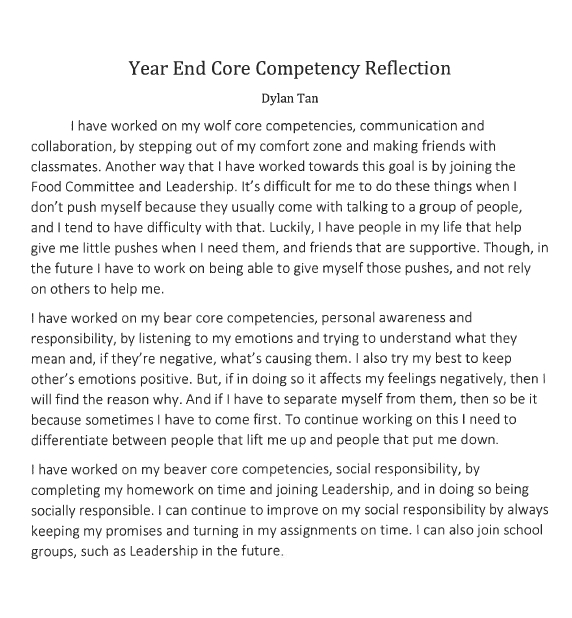
Examples of Student Self-Assessments on the Core Competency of Communication ( Grades 2,4,6 & 7)
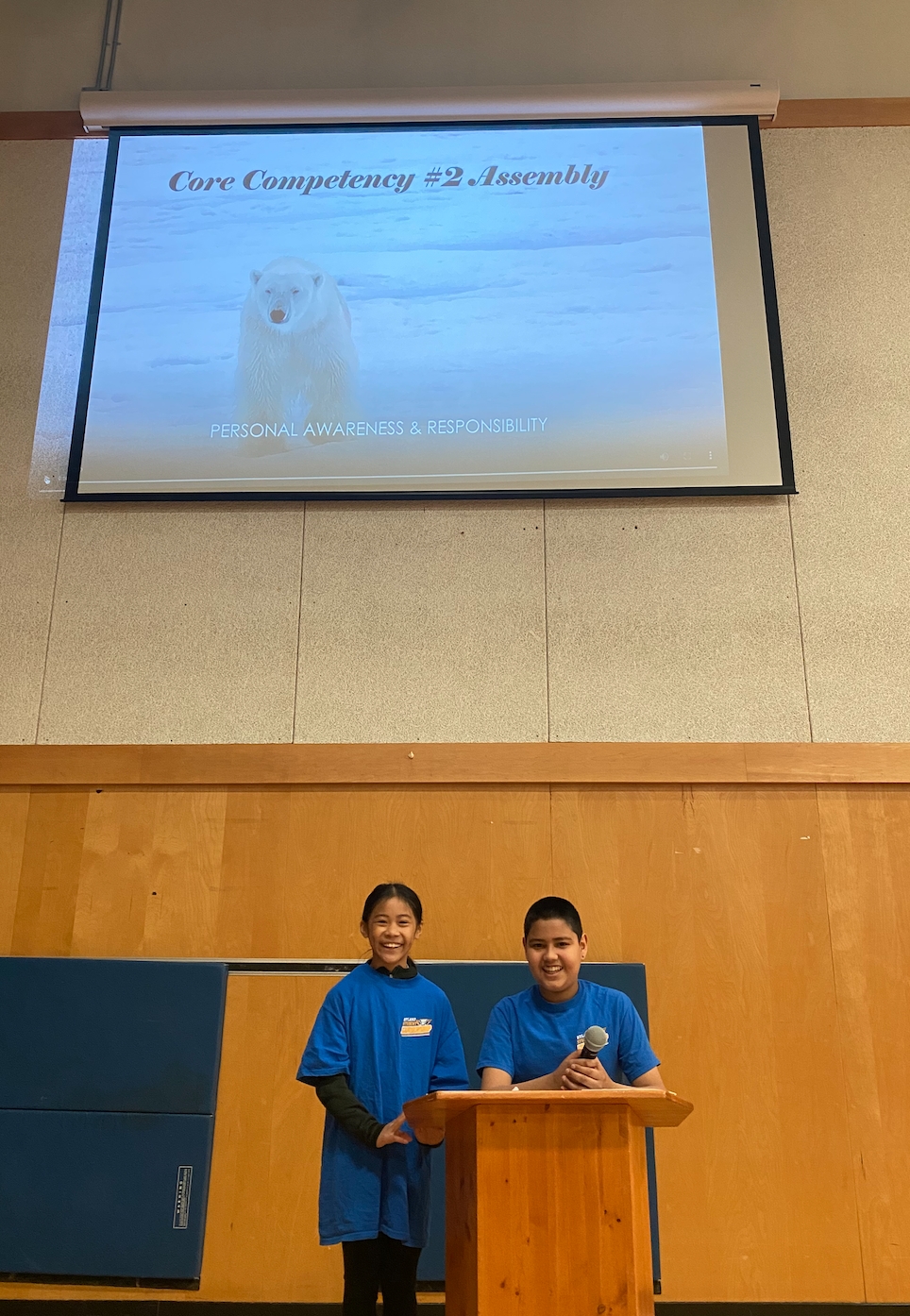
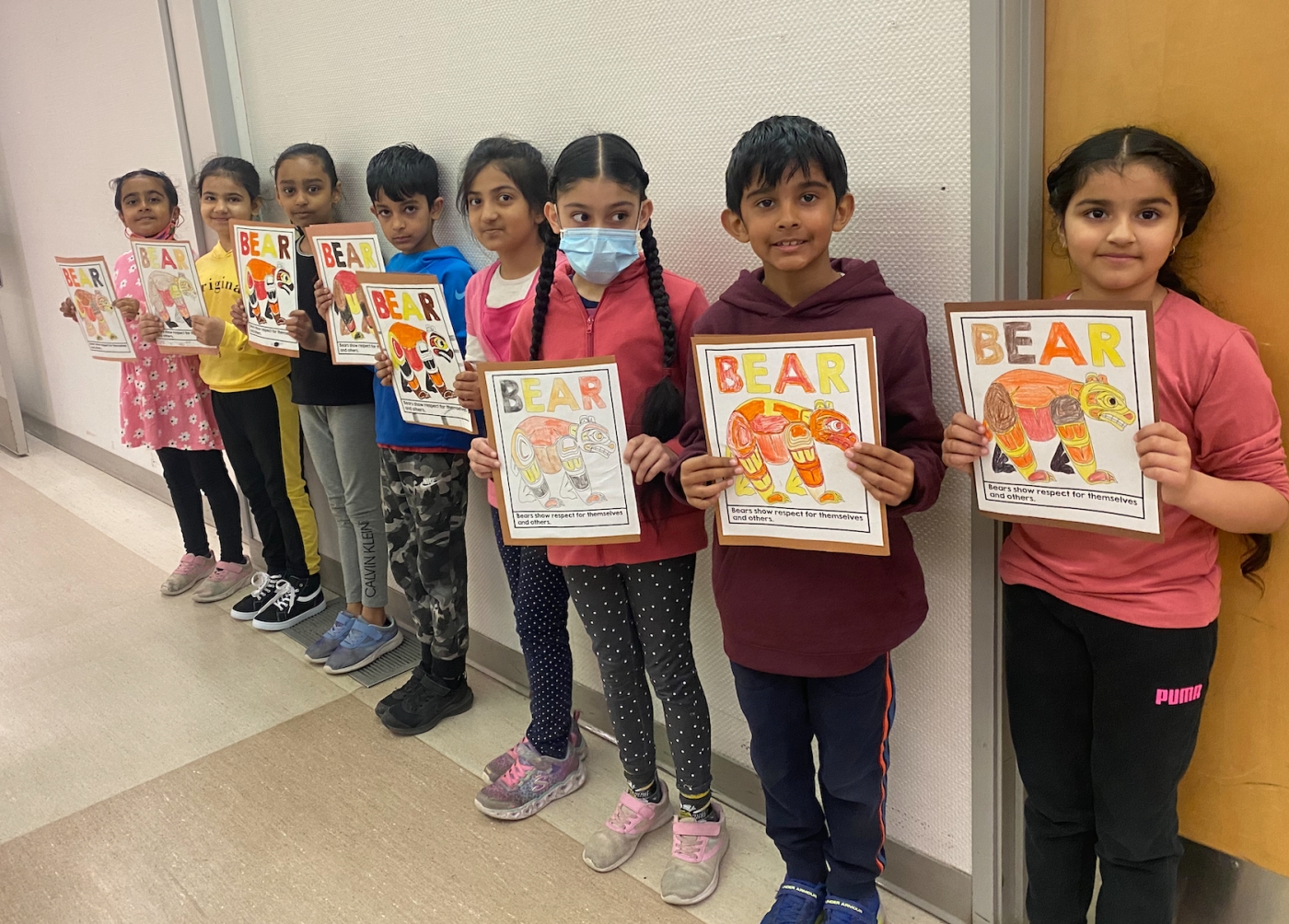
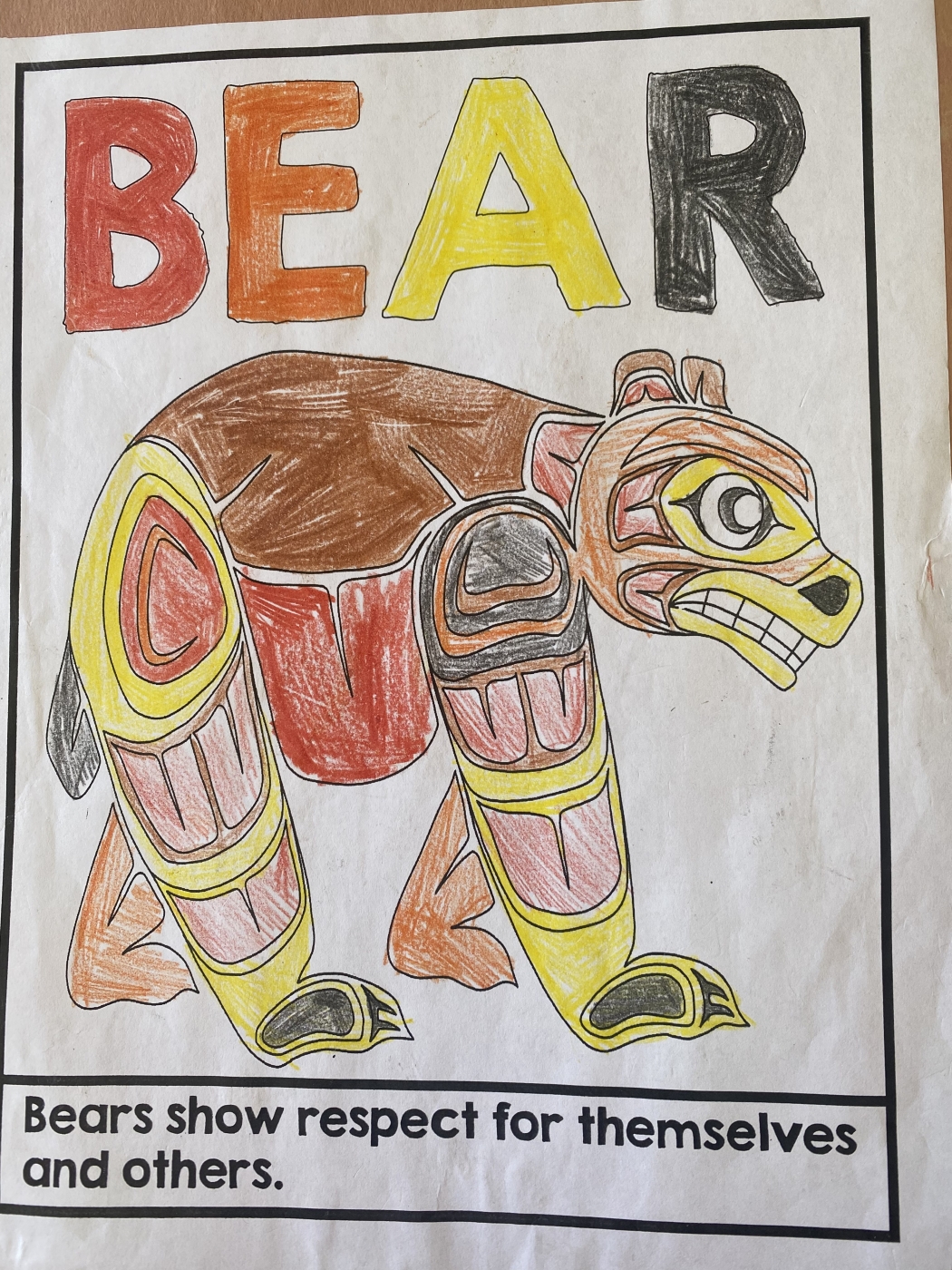
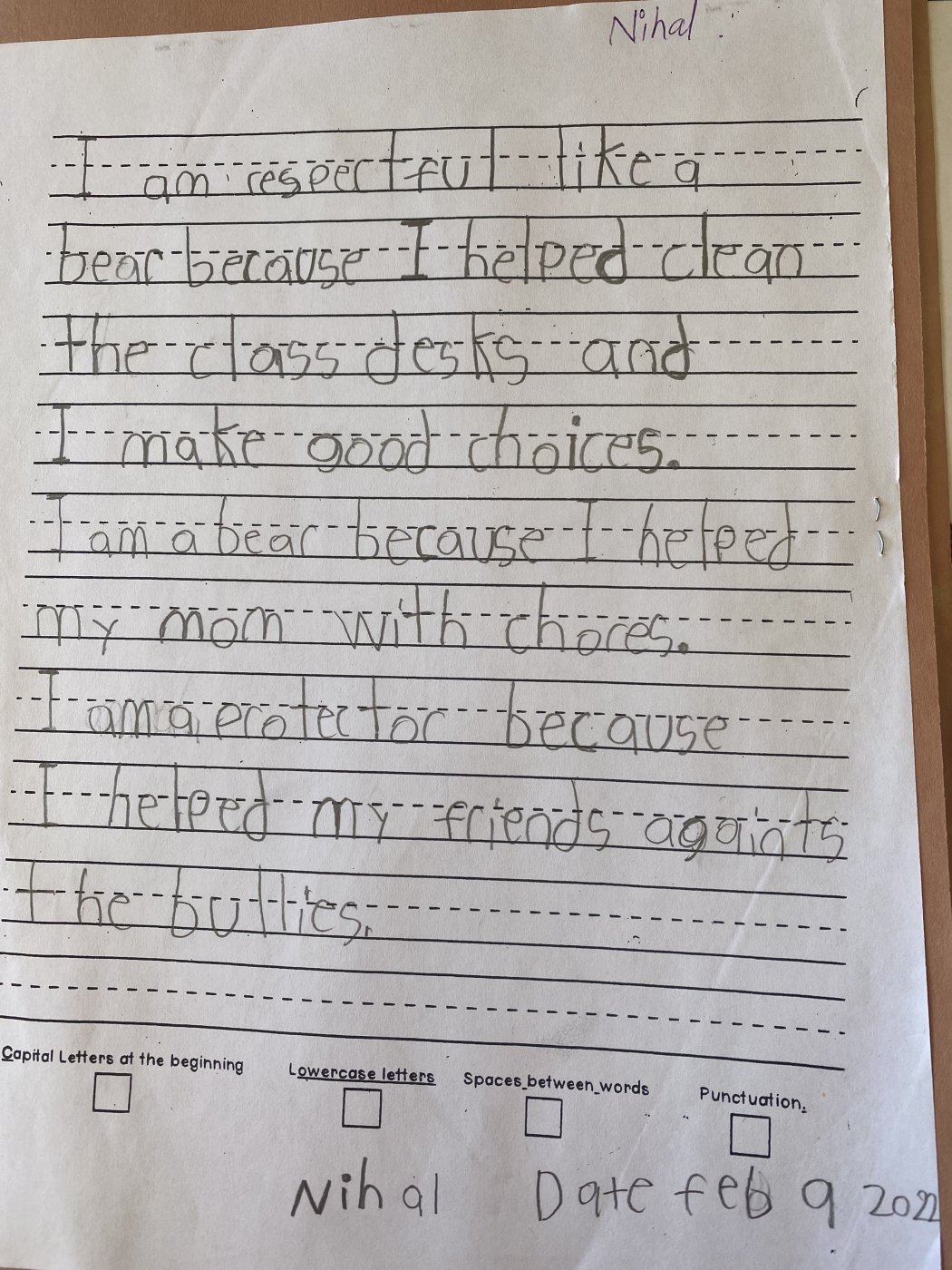
Our Term 2 focus was on the core competency, Personal Awareness and Responsibility. The Bear is excellent at knowing how they are feeling, and knowing what strategies they need to feel calm and happy, when it wakes up on the wrong side of the bed! Our hope was that by end of Term 2, our students were able to strengthen their personal awareness and responsibility skills. Many classes continue to focus on the Zones of Regulation to support students in this core competency. In order to support teachers and students, we ordered copies of the resource called the Zones of Regulation. At the end of the term, teachers and students presented their learning about the Personal Awareness and Responsibility core competency!
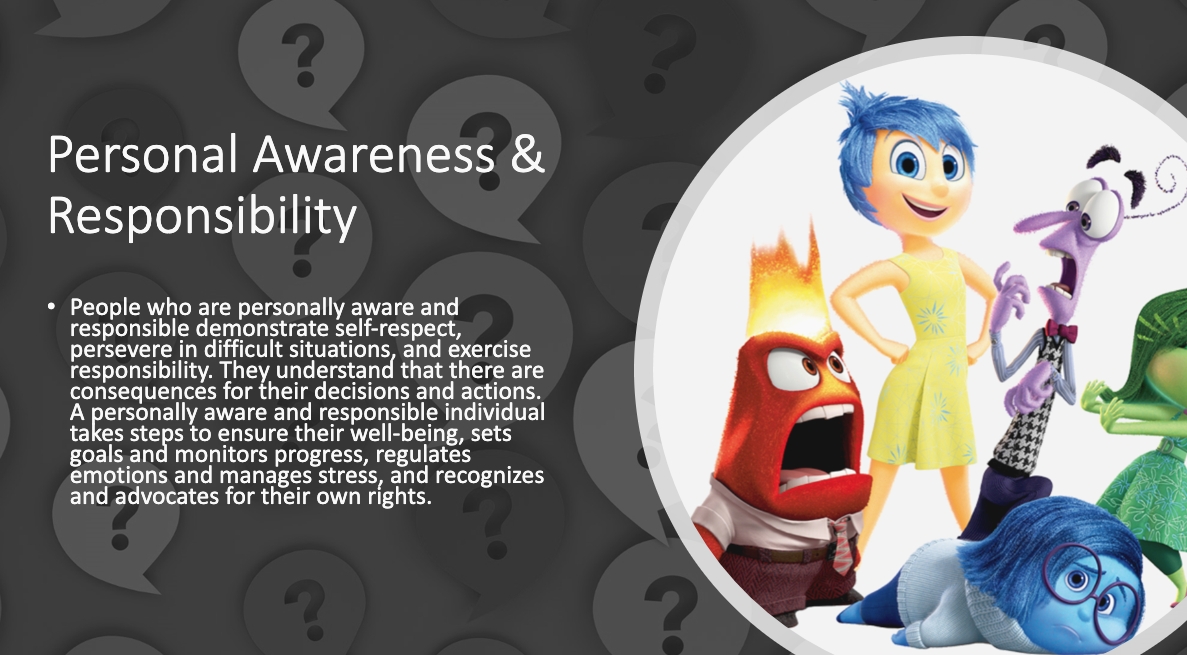
Bear is a great protector. He represents Personal Awareness and Responsibility. Through Bear, we can learn to nurture our own personal well-being by valuing ourselves and our accomplishments; understanding our feelings and making good choices that demonstrate respect for ourselves and others.
To continue to build common language within our school and at home, this bulletin board on the Zones of Regulation is displayed in our main foyer and also messaged out to our parent community. Many parents, staff and students share how this program helps bring awareness to their various feelings and emotions. 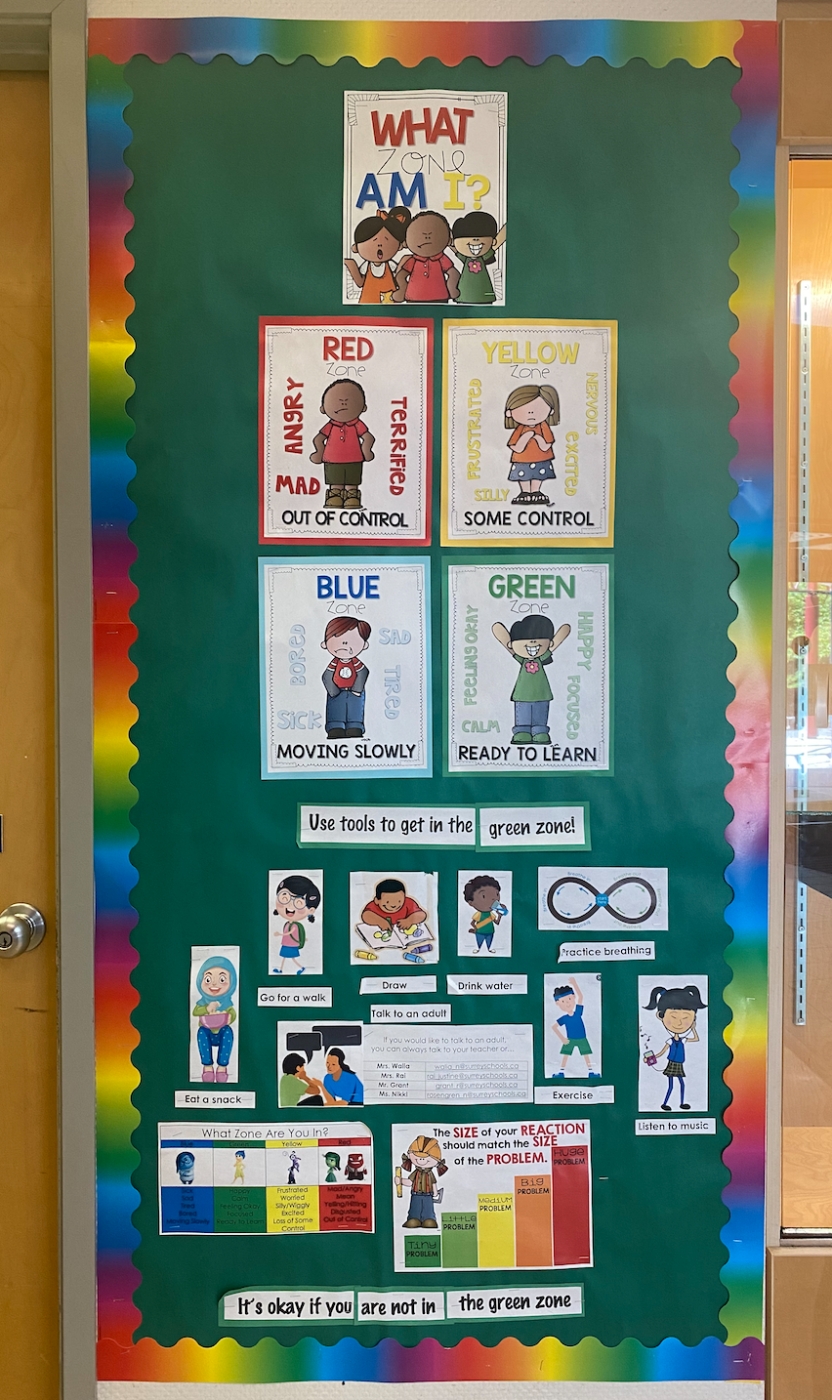
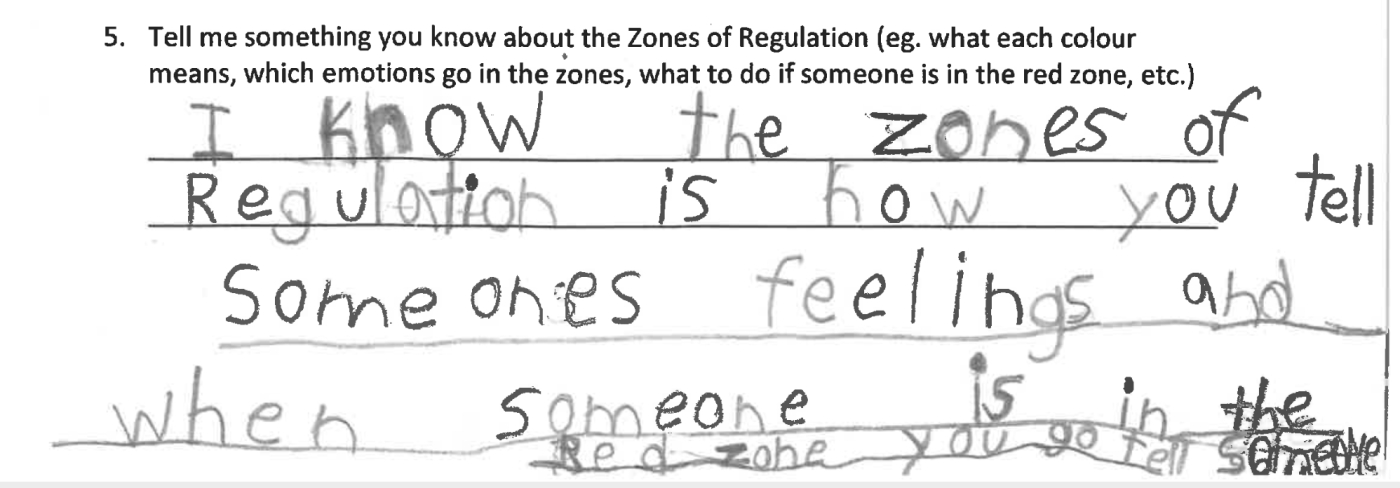
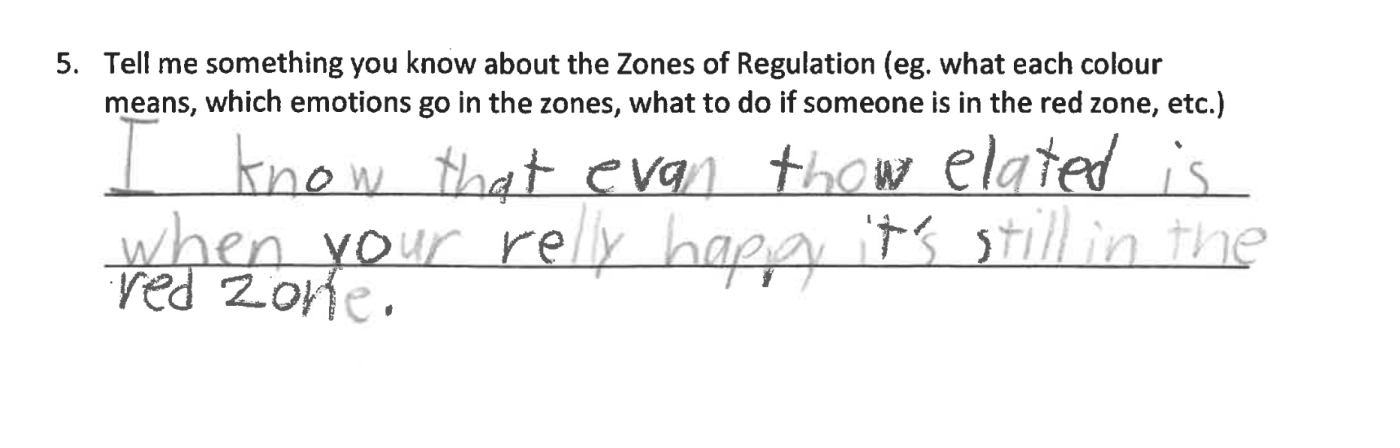
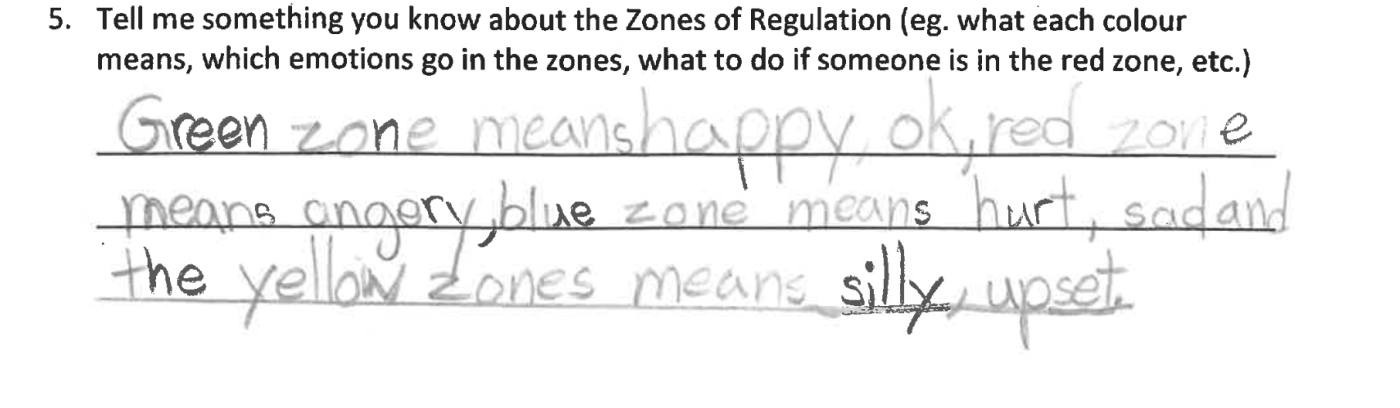
Examples of Student Self-Assessments on Personal and Social Responsibility ( Grades 2,4,6 & 7)
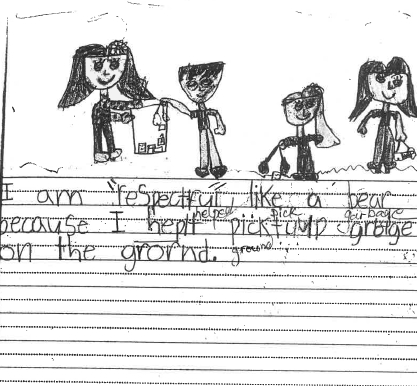
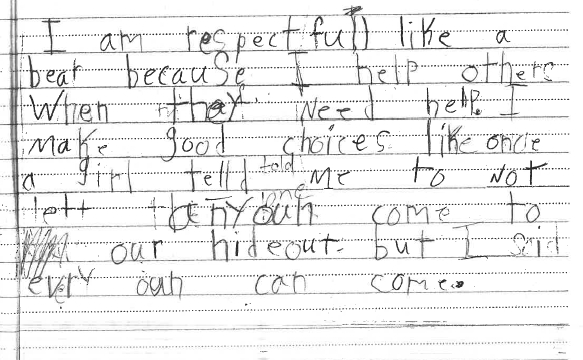
OUR NEXT STEPS
We will continue to focus on students and staff digging deeper with their understanding of the core competencies. Having both students and staff examine their strengths and their challenges as well as setting goals for successes. As a school we will be using specific prompts for reflecting on student self assessments.
COMMUNICATION
Describe a form of communication you are proud of. What would you like others to notice about it?
Describe ways that you contribute to discussions.
Explain what you do when you disagree with someone in your group. How did you learn this strategy?
Describe how you share ideas and questions
CREATIVE THINKING
What strategies do you use when you want to generate ideas? How do you develop your ideas?
Talk about something you designed. If you did it all over again, what adjustments would you make?
What helps you get new ideas?
Describe the environment you like to be in when you are coming up with new ideas?
POSITIVE PERSONAL & CULTURAL IDENTITY
What are you good at?
Describe something you really liked in the work you did. What made it special for you?
How have your experiences, family history, heritage and/or peers helped shape who you are today?
How do you make good decisions? What influences your decisions?
What makes you unique?
PERSONAL AWARENESS & RESPONSIBILITY
How are you progressing as a learner? How can you use your strengths to improve?
Describe a time you stood up for something you believed in. How did you express yourself? What motivated you? Did you need help?
Talk about a time that you made some good choices that contributed to your well-being.
When I am having trouble with something, I...
I can keep myself healthy by...
SOCIAL RESPONSIBILITY
Describe some of the ways you have collaborated with others in...?
How have you strengthened your relationships with others this year?
Describe how your actions have helped make your classroom, school, community or the natural environment a better place.
What does fair look like, and how do you make that happen?
Describe a time you used kind words and actions to encourage or help others.
CRITICAL THINKING
Describe a problem that you solved. What choices did you make that made a difference to the outcome of the problem?
When you analyze and critique your work, what evidence and criteria do you use to draw conclusions about it?
What strategies do you use to determine the truth about what you’re reading on a social media site?
When you are curious, how do you find answers?
Surrey Schools
Formed in 1906, the Surrey School District currently has the largest student enrolment in British Columbia and is one of the few growing districts in the province. It is governed by a publicly elected board of seven trustees.
The district serves the cities of Surrey and White Rock and the rural area of Barnston Island.