H.T. Thrift Elementary

OUR CONTEXT
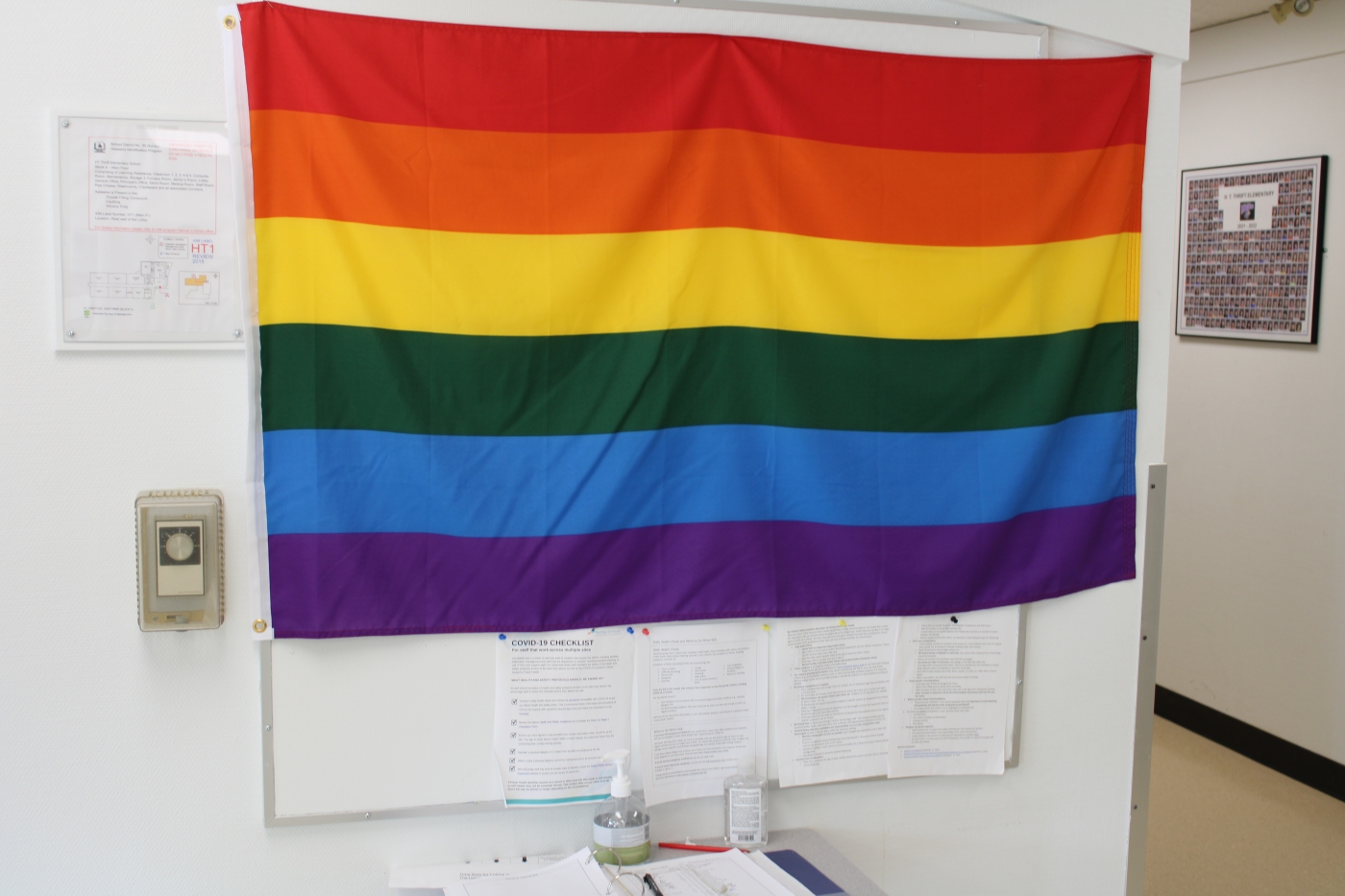
At H.T. Thrift, we recognize our strengths. We know that learning requires exploration of one’s identity. Our learners are supported and taught the importance of citizenship and community involvement. We actively respect diversity through various means. This includes a Traditional Welcome at all public functions, the Cultural Announcement of the Week, information boards with celebratory information, Spirit Days to honour celebratory days, and more.
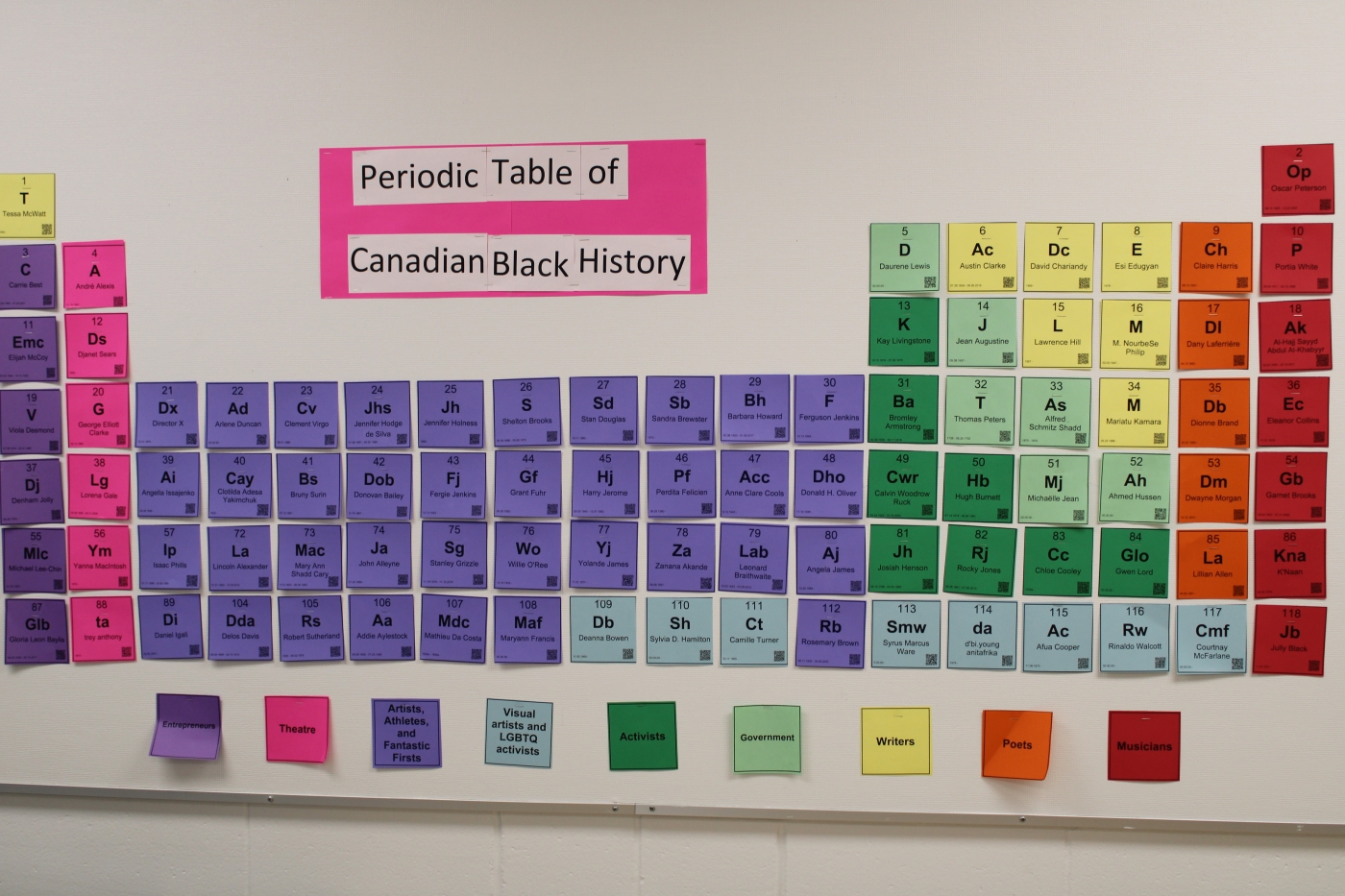
To celebrate Black History Month, H.T. Thrift put up the Periodic Table of Canadian Black History. This was created by Parents For Diversity. Included are notable Black Canadians who have contributed to their communities and country. This includes activists, musicians, poets, artists, entrepreneurs, writers, athletes, as well as those who have contributed to theatre and government. Using the QR codes, students can look up information about any of the Black Canadians on the table; giving them a chance to learn about and celebrate Black voices, experiences, dreams, and achievements.
At H.T. Thrift, we respect that learning ultimately supports the well-being of the self, the community, and the land.
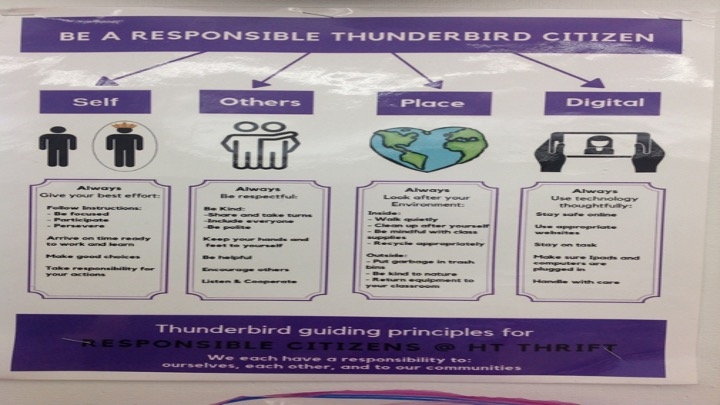
The “guiding principles” chart is included in our student planners.
At H.T. Thrift, we stress kindness, respect, and cooperation. We know that learning is holistic, experiential and relational (focused on connectedness, on reciprocal relationships, and a sense of place). The school’s learners are given opportunities through leadership clubs, diversity gatherings, sports teams, academic contests, and so much more. We are proud of the clubs that are student-initiated and student-led.
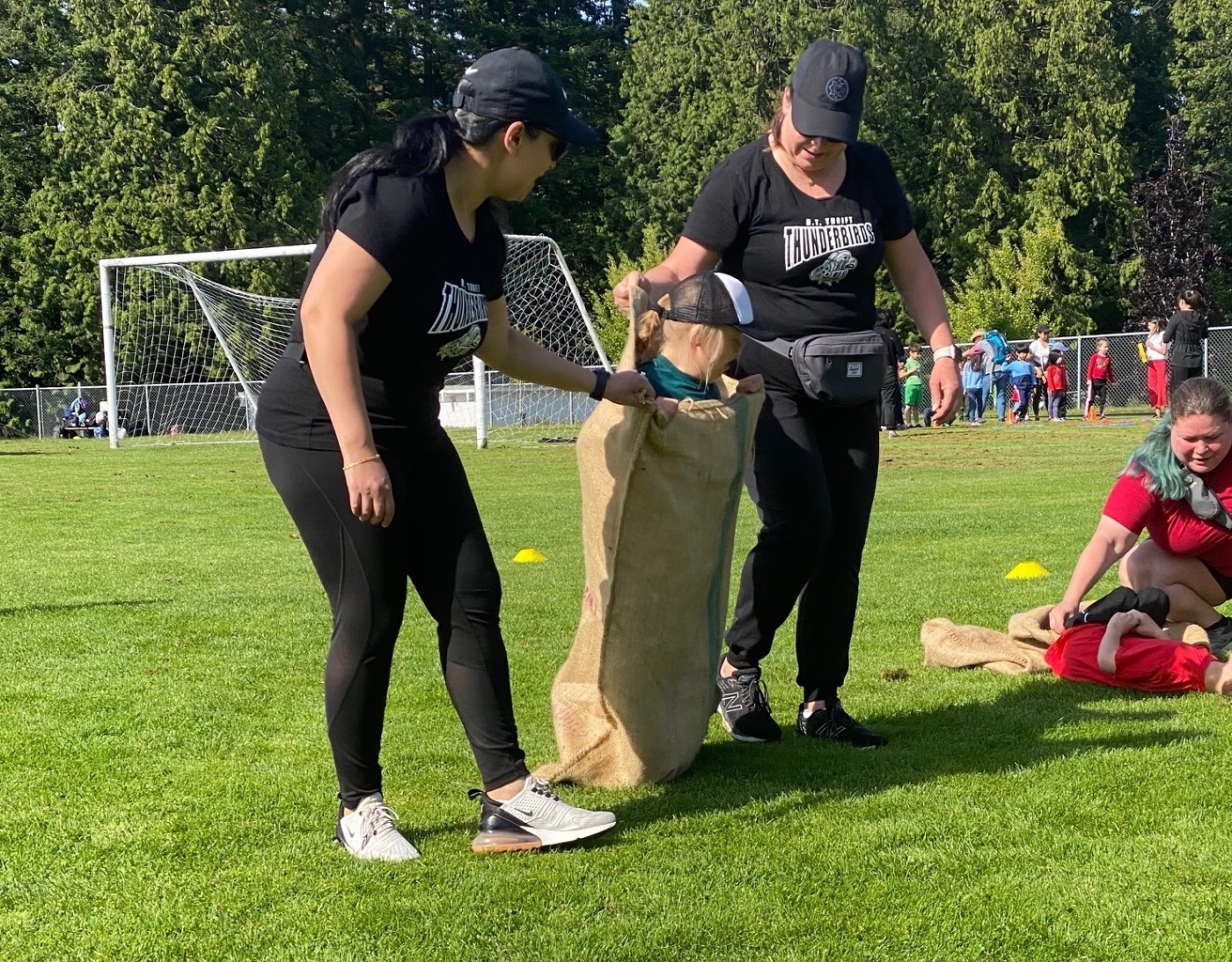
Sports Day is an example of how all students are included in our school-wide activities.
Here is a video of “The ABCs of H.T. Thrift” booklet that our students made.
We are the H.T. Thrift Thunderbirds!
OUR LEARNERS
What is the Focus of H.T. Thrift’s Student Learning Plan?
At H.T. Thrift, our Student Learning Plan revolves around Social and Emotional Learning (“SEL”). The staff has been exploring various strategies and practices centred on SEL that can best support our learners.
What is SEL and Why Are We Focusing on SEL?
Social and Emotional Learning is the important process through which young people acquire and effectively apply the knowledge, attitudes, and skills necessary to understand and manage emotions; set and achieve goals; demonstrate empathy for others; establish and maintain positive relationships; and make effective decisions.
The implementation and support of quality social and emotional learning through research-based processes and practices, have been shown to enhance the well-being of learners, overall achievement and positive life outcomes.
What Are The Curricular Connections?
SEL is ingrained within the Physical Health Education curriculum. The competencies that are the focus for H.T. Thrift means that our students can do the following:
Healthy and Active Living:
-Identify opportunities to make choices that contributes to health and well-being.
Social and Community Health:
-Describe and apply strategies that promote a safe and caring environment.
-Describe and assess strategies for responding to discrimination, stereotyping, and bullying.
Mental Well-Being:
-Identify and apply strategies for promoting mental well-being, for self and others
-Identify personal skills, interests, and preferences that positively influence mental well-being and self-identity.
The curricular Content that applies to our Student Learning Plan means that our learners know the following:
-practices that promote health and well-being, including those relating to physical activity
-factors (including interests, peers, self-esteem, and cultural heritage) and influences (including sexual identity, gender, values, and beliefs) that influence self-identity
-consequences of bullying, stereotyping, and discrimination
What Can H.T. Thrift Students Do With SEL So Far?
Our learners can identify and describe strategies that promote mental well-being for self and others.
Our learners can understand the interconnectedness of the four important parts (body, mind, spirit, heart) that make them whole. The focus for this has been on recognizing and sharing what makes us happy and healthy. We used the medicine wheel, which is a symbol used in a variety of different Indigenous cultures, as a tool to help students visualize each of these essential parts.
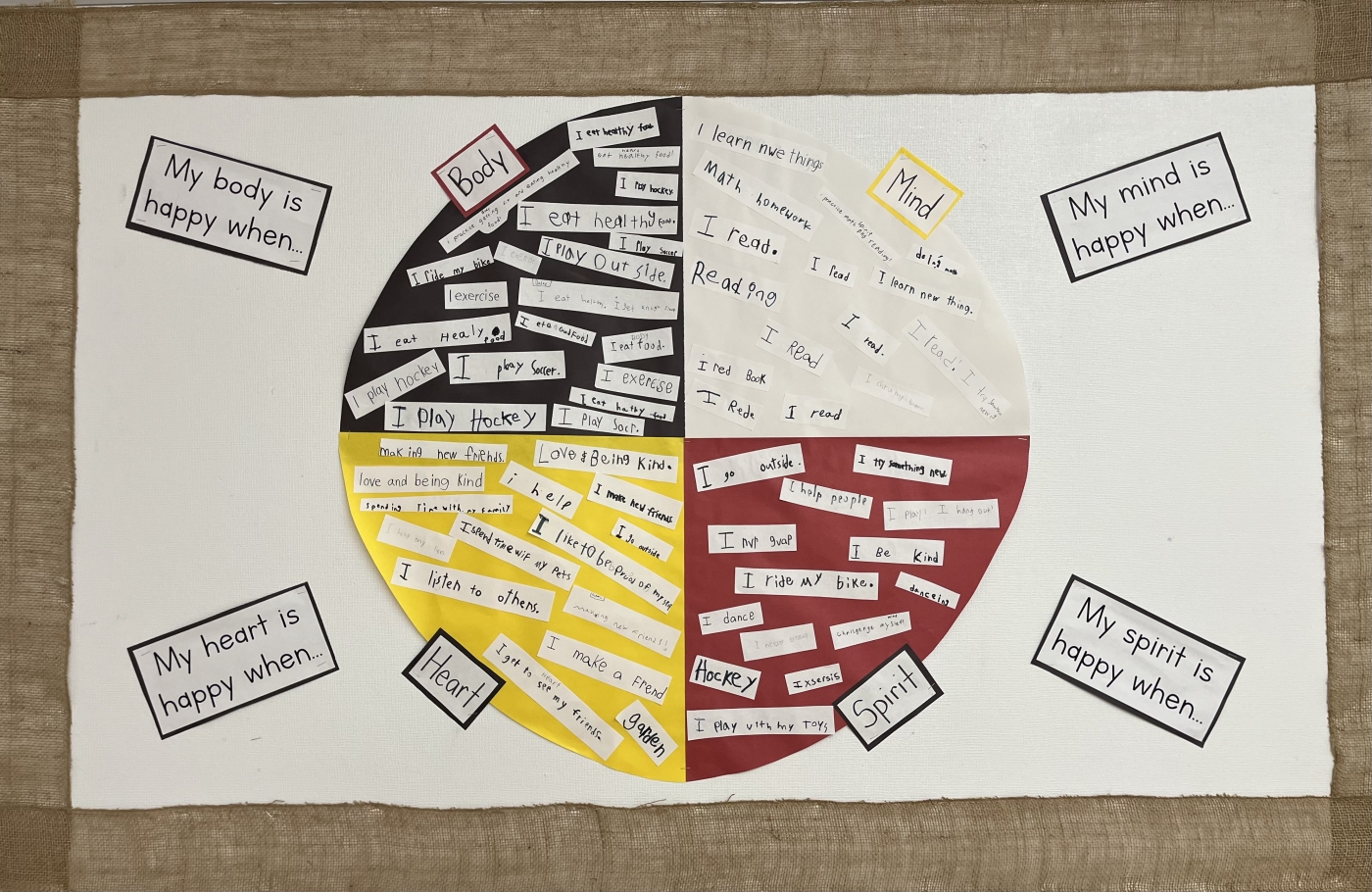
Our students can understand how supporting others and being empathetic can improve well-being for all, including the supporter. Our students learned and practiced these characteristics through three themes: empathy, kindness, and strategies for conflict. This was done when students were in Library time. Upon finishing the work associated with the three themes, teachers reported that students were more confident in their ability to speak and interact in more positive ways.
1) Learning about Empathy:
After receiving a request from the Peace Arch Hospital Auxiliary for students to make Valentine's Day cards for residents and patients, classes discussed how it might feel to be a patient in a hospital, perhaps for an extended period of time. We discussed how some patients may not have friends or family who visit them and how it would feel to receive a Valentine's Day card. Many students were able to make connection with their real-life experiences of similar situations in order to create some empathy. The students created over 150 cards with beautiful messages for the residents and patients.

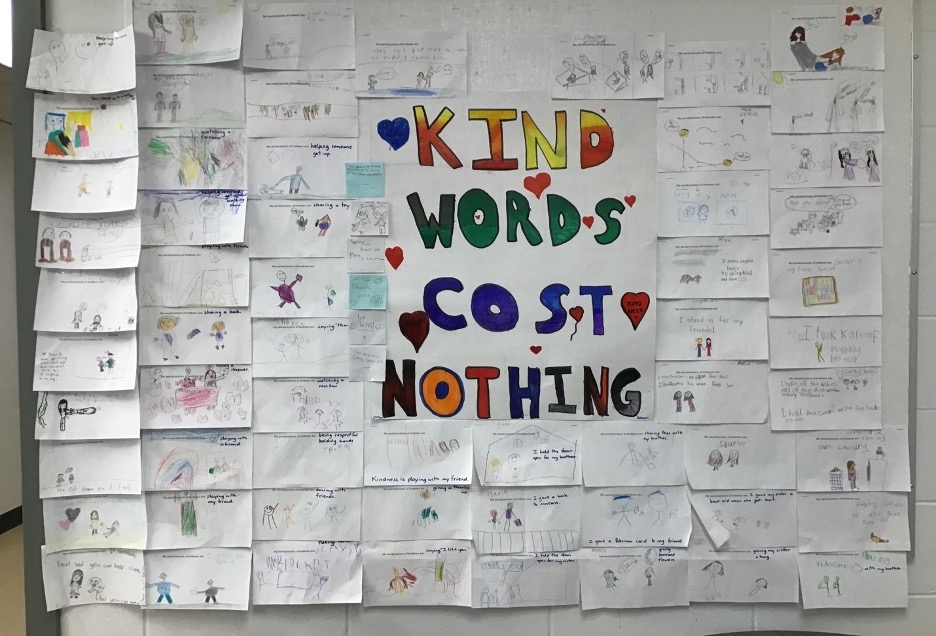
2) Learning about Kindness (“Kind Words Cost Nothing”):
Incorporating natural celebrations that focus on kindness (ie: Valentine's Day, Pink Shirt Day, Anti-Bullying Day, etc.), we read the book “Be Kind” and discussed how an act of kindness turned someone's bad day around. Then, after the students demonstrated what kindness looks like or sounds like, they wrote or drew about it in order to learn how this action can support others. The students came up with many wonderful examples of kindness.
3) Strategies We Use for Conflicts:
For Pink Shirt Day, we read the book “The Recess Queen”, which is about a bully on the playground who controls everyone and everything. The story shows how a new student deals with the conflict in a whimsical way. Students then brainstormed ideas and strategies of how to deal with conflicts in order to learn ways to help themselves and allow them to help others. Mostly, we discussed how important it was to believe in oneself, stand up and speak up for yourself in a strong, confident voice. Then, all students drew or wrote down their strategy on a t-shirt template.

Our learners can build trust, manage stress, explore equity and belonging, and cultivate resilience. Our students have gained these skills through many means, including the Second Step Program.

Quote from our Teacher-Librarian:
“As a teacher-librarian, I try to, as often as possible, to choose books with SEL themes (acceptance, inclusivity, consent, bullying, etc.) to read to the students and have rich discussions. There is often much engagement with these topics. I also show students a breathing exercise to calm their bodies which is where they imagine a chocolate chip cookie hot out of the oven. Students then need to slowly "smell the cookie, blow on the cookie" several times. One more activity is the Temperature Check, which allows teachers to identify students who may need more support.”
OUR FOCUS
As is stated in the H.T. Thrift Code of Conduct, we believe that all children have the right to learn in a safe, caring, inclusive and orderly environment. Our expectations are that students will maintain an attitude that is cooperative, courteous and respectful. There are many ways to support the growth, development and learning of our children. Academic learning and social-emotional development are the keys to opening the door to our student’s growth. While SEL forms the basis of everything we do, it helps with increasing confidence in academics such as numeracy.
Helping our students become resilient and enabling them to face challenging situations is a goal that we look forward to continuing to develop. One of our LST teachers gave an example of how she does this:
“Before I do any assessment, I will have a casual conversation with the student and do a check-in. If someone is exhibiting any nervous or anxious feelings, I ask them about how they’re doing, acknowledge their feelings and try to put them at ease. We then talk through what the assessment will look like, and I give any other information (such as the time requirement) that may help decrease the unknowns. Once any other expressed needs (such as getting a drink of water) are met, we begin. Every student can benefit from a moment to reflect and relax before an assessment.”
Our students are presented daily with opportunities to practice and demonstrate their understanding of Social and Emotional learning skills and capabilities. Our educating team provides our students with these essential skills to create success as they progress through the year. To help understand the effectiveness of our approach, students were presented with a survey to convey their feelings and attitudes around all aspects of school, including cross-curricular academic success. We are now tracking the students by grade on an annual basis.
Our students’ learning goals include:
Our learners can identify and describe strategies that promote mental well-being for self and others.
Students were asked what helped them feel better when at school. Here are some of the answers:
“I like that my class does DPA [Daily Physical Activity] every day. I look forward to getting exercise every day.” – J.S.
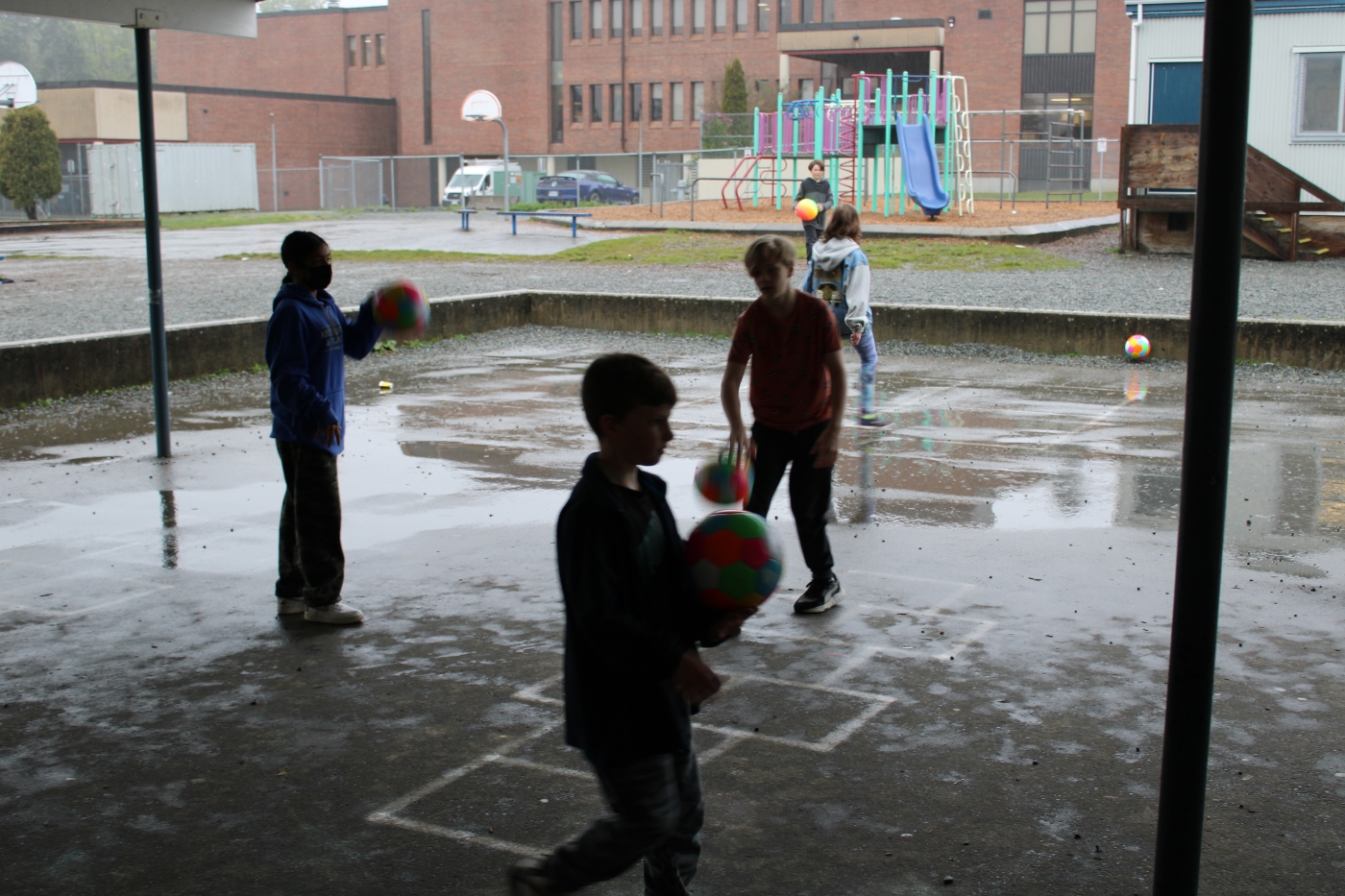
“I am glad I can go to [the Integration Support Teacher’s] room or [the Child Care Worker’s] room whenever I need a break. Sometimes this really helps at Recess.” -D.H.
“I remember when the whole school tried calm breathing. Now my class does that all the time.” -B.D.
“Sometimes I need to hold my [sensory] toy. I am allowed to any time.” -A.B.
Our learners understand that learning requires exploration of one’s identity.
They can communicate pride in who they are and what they can do through images and language. Below are two of the many examples of how H.T. Thrift supports this in our learners.
Our senior intermediate students explore diverse short films that accentuate our belief in inclusiveness and diversity. They present a Film Festival for all the other students who can learn more about these values. The goal is to exhibit diversity through the creation of a film festival.
The process begins with leadership students watching and considering several films that they felt had educational (and some entertainment) merit for the school. After students select their movies, there is an opportunity for them to visit classes to share some of the key themes that would be shown during the festival. On the day of the festival (which is split into Intermediate and Primary groups), students from H.T. Thrift watch the films as a community. Each film is introduced, shown, and subsequently followed by a short question and answer period, where students could learn about why that film was shown and leadership students could discuss the choice of the film. At the end the festival, students (both as viewers and presenters) are given an opportunity to reflect on their experience and what they learned.
The principal aim of this activity is to endow students with the capacity to thoughtfully select a diverse range of concise cinematic works which not only accurately embody the plurality within our society but also foster an environment of mutual understanding and respect for diversity amongst the student body. Through the use of a follow up survey, the evaluative standards applied to this process elucidated how a given film demonstrates these qualities while also encapsulating the unique essence of our community. This assessment determined that over 90% of our pupils exhibited a proficient level of understanding and empathy in this area.
Also, H.T. Thrift is a Downie and Wenjack Fund “Legacy School”. This means we engage students in the work for reconciliation through awareness, education and connection. Our students watch videos, read stories and discuss the impact of Residential Schools for Orange Shirt Day. This leads to Secret Path Week, during which time we talk about Gord Downie's legacy (on the anniversary of his death) and how he became interested in the story of Chanie Wenjack. We learn Chanie's story and listen to some of the music from ‘The Secret Path’, concentrating on the meaning of the lyrics. Our students participated in the Walk For Wenjack, and, in the spirit of reconciliACTION, we donated a portion of our fundraising money to The Gord Downie and Chanie Wenjack Fund. During and after the walk, the students are encouraged to think about how Chanie must have been feeling, and this starts a discussion about empathy. Our students find this very meaningful and inspirational.
For more information about what it means to be a Legacy School for the Downie and Wenjack Fund, check out this video:
OUR NEXT STEPS
Our learners are developing their Social-Emotional Learning skills while building their academic resiliency and skills. By doing so, the students have demonstrated an increased knowledge and improvement with the following three goals:
1) Our learners can demonstrate an understanding of the impact of personal decision-making on community well-being.
This project was designed to showcase the learning our students showed towards that goal. The students were to: Create artistic works collaboratively and as an individual, using ideas inspired by imagination, inquiry, experimentation, and purposeful play
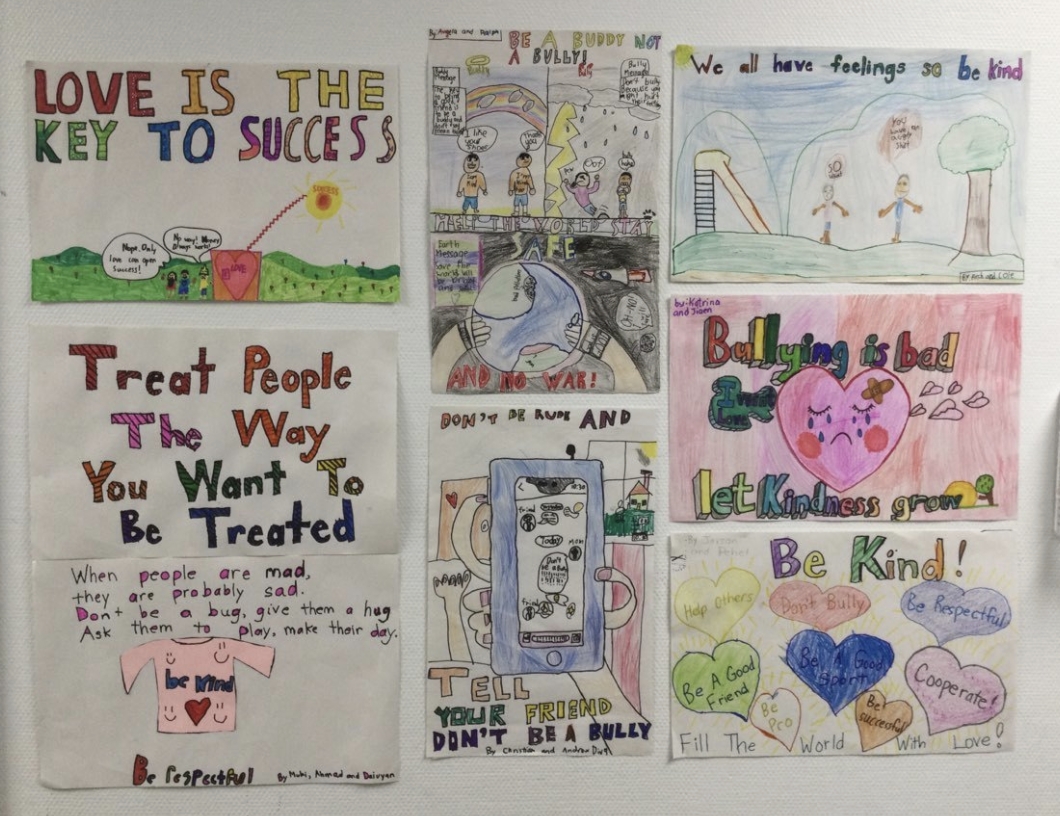
The teacher noticed that the students were struggling to play fairly during unstructured times such as Recess. The class read books on the topic, such as social stories about friendship. The class discussed strategies to problem-solve instead of retaliating. The teacher gave a lesson on WITS (Walk away, Ignore Tell someone, Seek help) and i-messages (focusing on how an action makes the student feel). This cumulated with a project on anti-bullying and pro-friendship. The number of negative issues decreased after all these lessons.
Working in Buddy Classes, our students had to plan and create a message to communicate a positive message for Anti-Bullying Day. The criteria included demonstrating the ability to promote Social and Emotion Learning for students in our school while creating a poster that used bold letters for a title and a poem and/or drawing to promote their message. It was a collaborative activity where students discussed responsible decision making, why it is important to be a good friend, obeying rules, showing empathy, being responsible, setting goals, listening to others, and respecting diverse perspectives to resolve conflicts effectively. The students presented their posters to the class and explained the messaging.
The bottom, left poster entitled “Treat People the Way you Want to be Treated” is an example of a proficient assignment. Through the discussions and final products, we found that 90% of the projects were proficient and the students really enjoyed the activity. This was an effective way for students to create, present and demonstrate social awareness, relationship skills, responsible decision making and self-awareness.
2) Our learners can identify solutions to personal and social problems while evaluating the consequences of their actions.
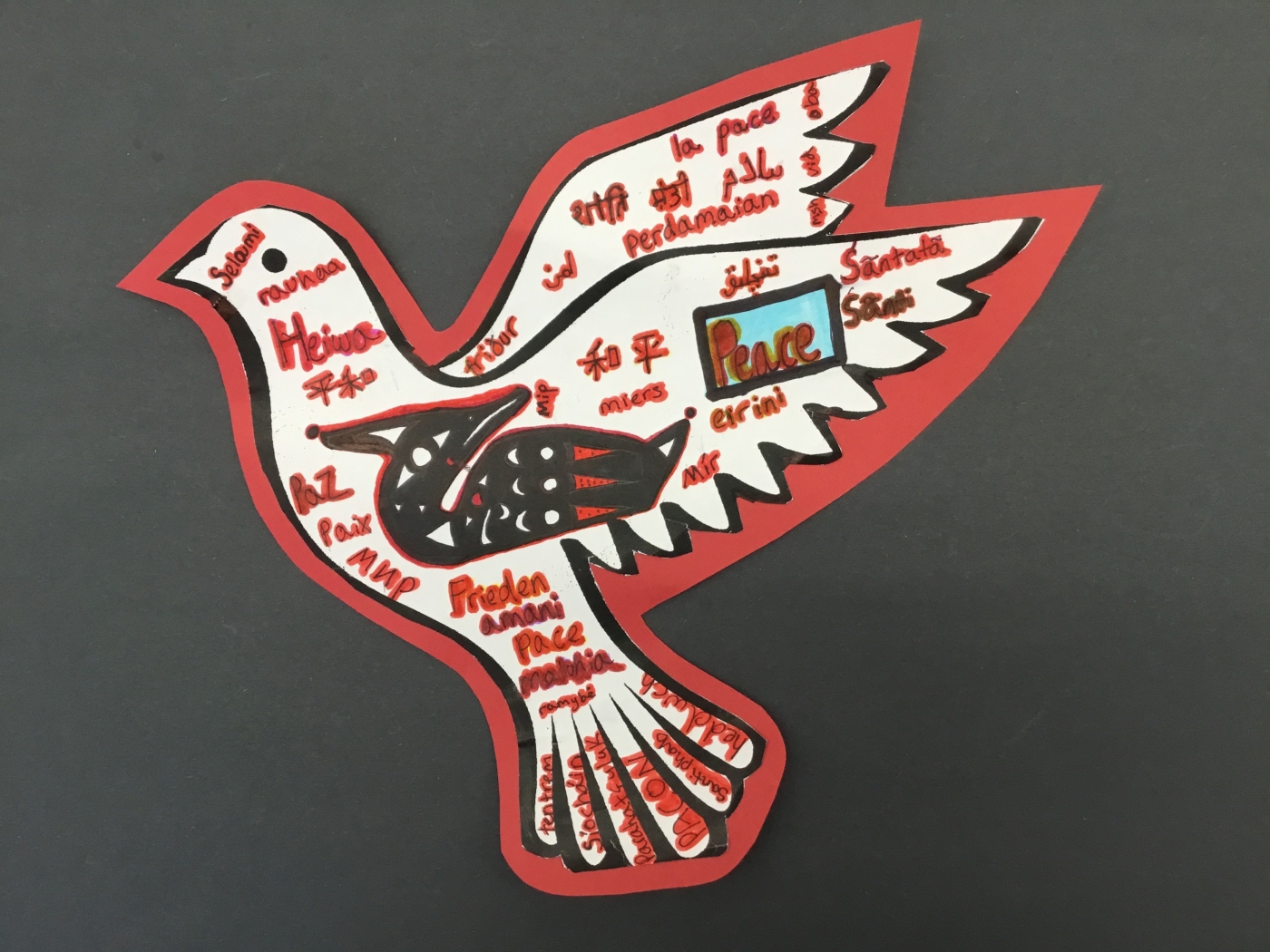
This project was designed to showcase the learning our students showed towards that goal. After the class did work on current events, the teacher led the class in discussions on the importance of thinking globally and not being self-centred. This cumulated with the students doing a project in which they were to reflect on peace and its symbolism.
The learning intention was to integrate Indigenous studies into a Remembrance Day art activity. A ‘dove’ is an international symbol of peace, while the ‘loon’ is an Indigenous symbol of peace. Assessment was based on effort, completion of the project, and a set-criteria that included students researching how to say “peace” in as many languages as possible, describing their own ideas of peace, drawing their interpretations of peace, and adding a piece of their own culture into the project.
All the students enjoyed this art activity and at least 90% were proficient. The final projects were very eye-catching and very effective when we taped them onto the gym walls for the assembly.
3) Our learners can recognize their personal strengths and stretches to help take responsibility for using strategies to accomplish their goals.
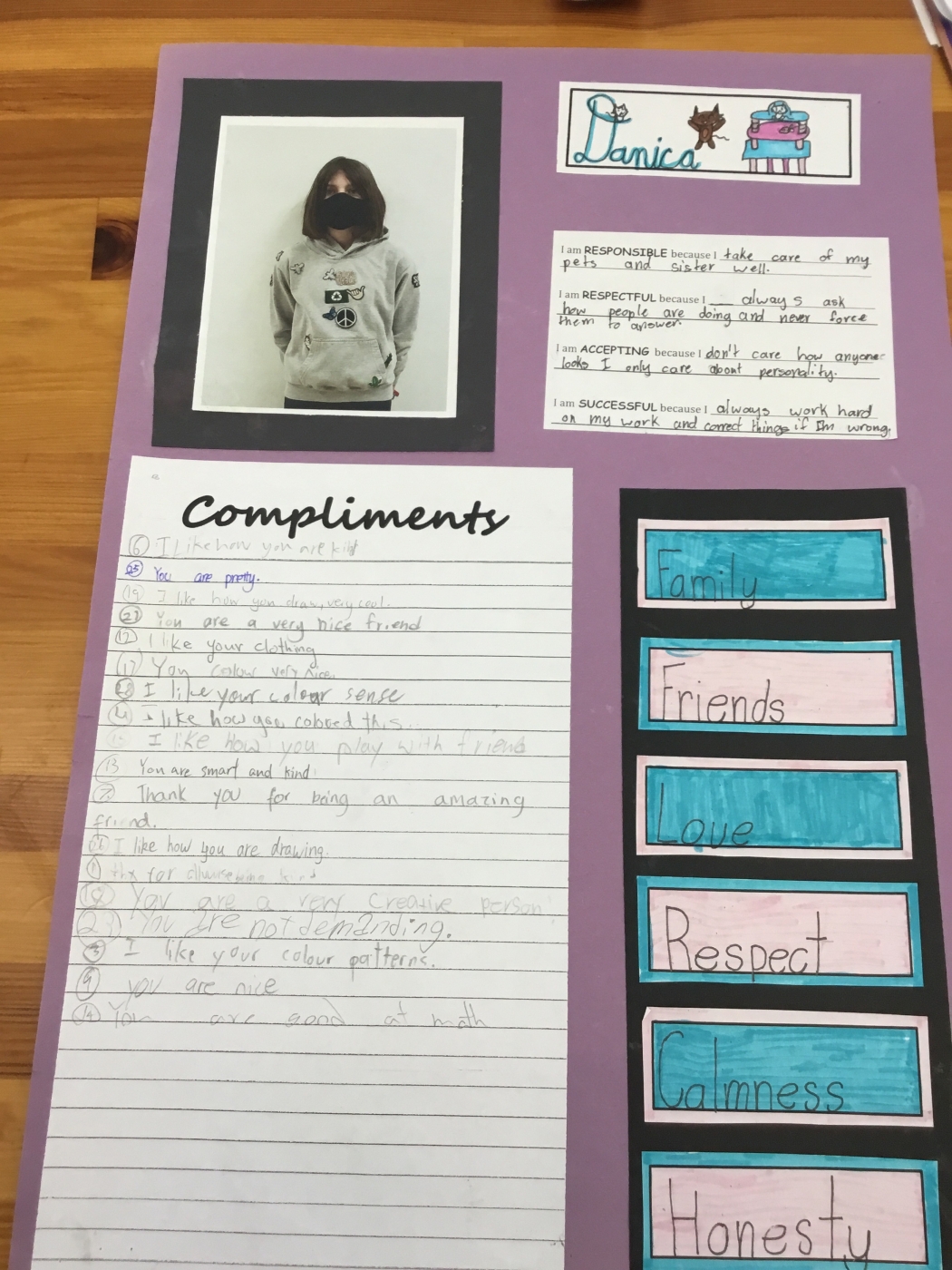
This project, which is part of our SEL/HACE program, was designed to showcase the learning our students showed towards that goal. This project is entitled “SEL- Values, Self-Esteem & Compliments”. The teacher’s intent was to get the students to continue thinking about themselves and who they really are. To build up self-esteem, this included having peers find the positives about each student. Also, we found that many students struggled to know or understand how to write or say a ‘positive compliment’. Thus, the learning intention was to teach students positive words and how to ‘compliment’ one another.
The daily ‘Super Student’ was asked to list their most important values that describe their personality. The rest of the class was asked to write a positive compliment about this person. TED Talks, short videos, skits, large group discussions and small group work were strategies used as ways to show and practice examples. Assessment was based on their oral/group participation, as well as the ability to write 25 meaningful and positive compliments. Overall, this was a very successful activity, and the students really enjoyed it.
-------------------------------------------------------------------------------------------------------------------------------
MOVING FORWARD:
The H.T. Thrift educating team has worked hard to utilize and improve their own SEL skills sets and cultural competencies in their teaching practice and professional development. This is with the intent purpose of providing strength-based learning opportunities for our students.
Our students have started taking part in annual SEL-based surveys. The initial school-wide survey established a baseline of how our students are doing socially-emotionally and how that impacts their academic ability. These surveys will be repeated yearly by grade-level to track how much our students are growing in each of the areas we are focusing on.
As well, we have noticed a trend in our community. As the diversity of our student-community has increased, we have also noticed an increased need to develop more empathy and deeper understanding of the differences that we celebrate. This will be accomplished through events such as: The Cultural Announcement of the Week, more diversity-respecting assemblies, expanding on Learning Commons’ celebration themes, First People in Residence Week, increased Spirit Days that tie into celebrations, and more.
Finally, our staff has identified a growing gap in numeracy skills in our students. We are exploring strategies we can use to support the learners’ mindset and feelings about Math. By focusing on a SEL-perspective, we will evaluate how much we can narrow the gap. This year, we have seen an improvement in students’ attitude towards numeracy in a cohort class. In November, 2022, our intermediate students came out at 67.8% positivity when asked how much they enjoyed math and felt about it. In late April, 2023, our cohort class averaged 71.7% positivity. While there are numerous factors that impact results, we believe that the work we have done in SEL has made a significant contribution to the improvement we have seen in the attitude towards Numeracy in this short time. We will continue to track the students’ attitudes towards Math through our surveys and see what impact our SEL-focus has on numeracy skills.
Surrey Schools
Formed in 1906, the Surrey School District currently has the largest student enrolment in British Columbia and is one of the few growing districts in the province. It is governed by a publicly elected board of seven trustees.
The district serves the cities of Surrey and White Rock and the rural area of Barnston Island.