Green Timbers Elementary 25-26

OUR CONTEXT
OUR CONTEXT


At Green Timbers Elementary we strive to create a sense of community for our students, their families, our educators, and our support staff. Our community consists of approximately 530, K-7 students, and just over 60 caring staff members. Nearly 80% of our students speak another language other than English at home.
Our school is privileged to offer the following opportunities for our students and staff:
- Punjabi Language Program (Grade 5-7)
- Leadership Program
- Spirit Committee
- Wellness Wednesdays
- Extracurricular Activities
Our School Community Supporters consist of:
- Parent Advisory Council (PAC) - Our appreciation extends to our supportive family members, including the Parent Advisory Council (PAC). The PAC assumes the crucial role of fundraising through the coordination of events like hot lunch days, treat days, as well as organizing engaging activities such as Bhangra dances and art classes. Thanks to their dedicated efforts a commitment, Green Timbers Elementary benefits from school-wide events and valuable contributions towards field studies, classroom resources, and other inclusive school-wide Spirit Days!
- Friends of Simon, an award-winning Simon Fraser University (SFU) Faculty of Education initiative, brings
together an attitude of inquiry, and instructional knowledge for our students. This allows us to provide literacy tutoring
for school-aged children and youth. For over a decade, Friends of Simon has been dedicated to serving the Green
Timbers community. Their focus has been on supporting our K-7 students who are newcomers in addition to those who may need additional support. The goal is to enhance their academic achievements through after-school tutoring sessions. - Yo Bro | Yo Girl - Yo Bro Yo Girl Youth Initiative runs a series of strength-based programs in Vancouver and the Lower Mainland. We cultivate resiliency in at-risk youth and empower them with tools to avoid the perils of drugs, gangs, crime, and violence. Yo Bro | Yo Girl seeks to actively engage in the prevention of violence among young individuals, commencing from the sixth grade and continuing throughout the majority of the school year via after-school programs.
- BC Fruit and Vegetable Program - Green Timbers Elementary expresses gratitude for the chance to take part in the BC School Fruit and Vegetable Nutrition Program, sponsored by BC Agriculture in the Classroom Foundation. The program's objective is to enhance students' openness, familiarity, and willingness to sample fruits and vegetables grown in British Columbia. Participating students receive fresh, cleaned, and ready-to-enjoy produce approximately once a month, completely free of charge!
- Backpack Buddies - The Backpack Buddies program involves collaboration among teachers, administrators, and social workers who provide guidance on the students' needs and help identify those who would benefit the most from receiving a weekend food bag. We are conscientious about ensuring that the children receiving support do not feel singled out and that no one is made to feel abnormal or stigmatized due to their family's circumstances.
OUR LEARNERS
OUR LEARNERS
At Green Timbers Elementary, it is important for our learners to:
- feel connected to and cared for by an adult in our school.
- feel safe and supported.
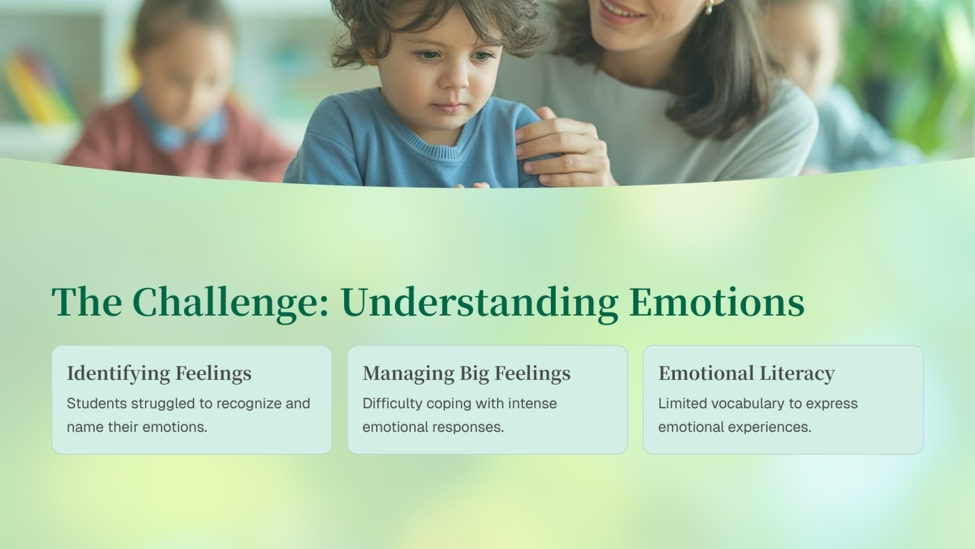
- express and manage their emotions.
- be treated with respect and fairness.
- care and understand the feelings of others.
We do this by:
- creating a strong sense of belonging.
- guiding our learners to develop personal and social self awareness.
- guiding our learners to make responsible decisions.
- teaching empathy.

Social Emotional Learning (SEL) is the foundation upon which impactful learning takes place. It is essential for our staff to foster an environment that encourages our learners to develop competencies of personal awareness, social awareness, and responsible decision making, all of which are woven throughout the BC Curriculum and the Collaborative for Academic and Social Emotional Learning (CASEL) framework.

OUR FOCUS
OUR FOCUS

Student reflections, Student Learning Surveys, and Middle Years Development Instrument (MDI) student survey results, have guided us towards our focus of personal and social awareness, responsible decision making and creating a stronger sense of connectedness and belonging.
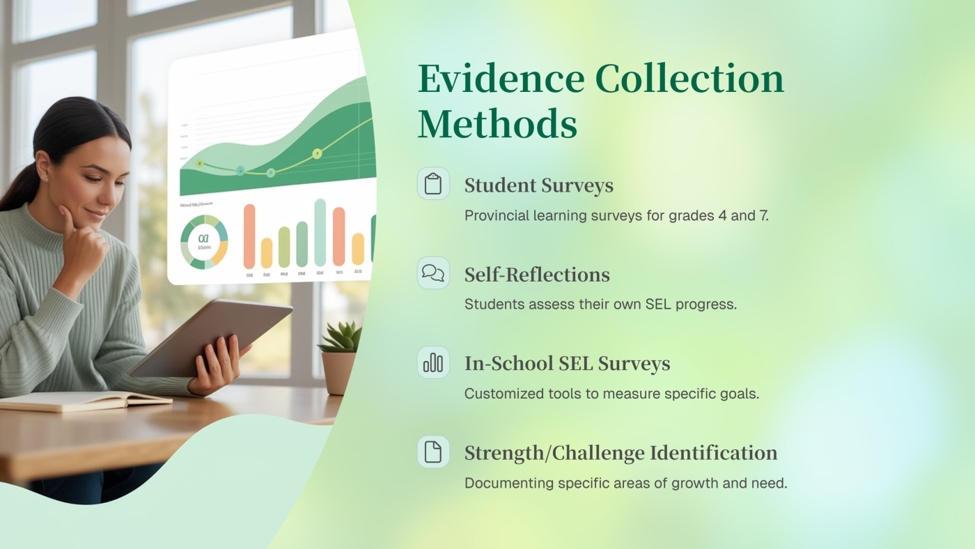
Self Awareness - Students who possess personal awareness and responsibility take ownership of their choices and actions. They can:
- recognize their strengths and challenges.
- develop a growth mindset and know mistakes need to be made in order to learn.
- understand and talk about their needs and feelings.
- recognize other people’s needs and feelings.
- reflect on how their behaviour affects others.
Those with greater self-awareness are more likely to report higher academic performance and school engagement and less likely to report symptoms of depression in childhood and adolescence (Ross & Tolan, 2018).
Social Awareness - Students who possess social awareness can:
- understand the viewpoints of others.
- demonstrate empathy towards individuals from diverse backgrounds, cultures, and contexts.
By developing the skill of recognizing others' emotions, students establish a solid groundwork for expressing empathy and compassion. In addition, it promotes healthy relationships with peers and adults and protects children against bullying and victimization (Divecha & Brackett 2020).
Responsible Decision-Making - Responsible decision-making involves making thoughtful and considerate choices regarding personal conduct and interactions within diverse situations. Students who show responsible decision-making can:
- uphold ethical standards.
- prioritize safety concerns.
- assess the potential benefits and consequences of different actions for personal, social, and collective well-being

1) BELONGING TRENDS AND NEXT STEPS

RECOMMENDATIONS BASED on TRENDS
Continue Positive Strategies:
- Student Choice in Learning: Maintain and expand opportunities for students to choose what they learn. This could include more project-based learning, elective courses, and student-led initiatives.
- Welcoming Environment: Continue fostering a welcoming and supportive environment where students feel comfortable asking questions. This can be achieved through regular teacher training on student engagement and creating an inclusive classroom atmosphere.
- Collaborative Projects: Promote collaborative learning opportunities where students can work together on projects. This helps build teamwork skills and enhances peer learning.
- Interest-Based Learning: Integrate students' interests into the curriculum to keep them engaged and motivated. This can be done through Personalized learning plans and incorporating real-world applications of the subjects being taught.
- Improving Learning Skills: Continue teaching students how to learn effectively. This includes study skills, time management, and critical thinking exercises. Provide regular feedback and reflection opportunities for students to understand their learning processes and areas for improvement.
Targeted Improvements and Next Steps:
- Review and Enhance: Regularly review the effectiveness of current strategies and make necessary adjustments to ensure continuous improvement.
- Student Feedback: Collect and analyze student feedback to identify areas for improvement and implement changes based on their suggestions.
- Curricular Competency Connection – Career Education: “Set and achieve realistic learning goals, monitor progress, and adjust as needed.” We will support students in understanding how consistent attendance is essential for achieving their personal and academic goals.
2. LEARNING, COGNITIVE SKILLS, & IDEA OF FUTURE TRENDS AND NEXT STEPS:

RECOMMENDATIONS BASED on TRENDS:
Continue Positive Strategies:
1. For younger students: Maintain and expand programs that foster awareness of choices, mental and physical health, creative thinking, and resilience. 2. For older students: Focus on enhancing mental and physical health education, and resilience-building strategies.
Targeted Improvements and Next Steps:
- Mental Health and Physical Health: Develop targeted programs for Grade 7 students to address the slight decline in these areas.
- Resilience: Implement strategies to help older students develop perseverance and coping skills.
- Creative Thinking for Grade 4: Introduce more activities and projects that encourage creative thinking to reverse the slight decline.
- Creative Thinking for Grade 7: Continue to build on the positive trend by providing more opportunities for innovation and idea generation.
- Curricular Competency Connection – English Language Arts (ELA): “Access and integrate information and ideas from a variety of sources and from prior knowledge to build understanding.” Literacy instruction will focus on helping students make meaning from texts by connecting to their experiences and building comprehension strategies.
- Curricular Competency Connection – Mathematics: “Use reasoning and logic to explore, analyze, and apply mathematical ideas.” We will provide opportunities for students to apply math skills in real-world contexts, encouraging deeper understanding through problem-solving and reasoning.
3. MENTAL HEALTH & SAFETY TRENDS AND NEXT STEPS:

3) RECOMMENDATIONS BASED on TRENDS:
Addressing Stress and Anxiety:
- Implement programs and initiatives focused on mental health and stress management.
- Provide resources and support for students to cope with stress and anxiety.
- Curricular Competency Connection – Career Education: “Identify and describe personal qualities, interests, and skills.” SEL strategies will help students build self-awareness and emotional regulation, which are foundational for personal growth and future planning.
Enhancing Anti-Bullying Measures:
- Strengthen anti-bullying programs and policies to address the increase in reported bullying incidents.
- Promote a positive and inclusive school culture.
Promoting Safety and Support:
- Continue to ensure that students feel safe at school and during their commute.
- Maintain and enhance support systems for students to seek help from adults.
Encouraging Community Engagement:
- Develop initiatives to engage students in community service and leadership opportunities.
- Foster a sense of belonging and contribution to the community.
Improving Conflict Resolution Skills:
- Continue to teach and reinforce peaceful problem-solving and conflict resolution skills.
- Provide opportunities for students to practice these skills in real-life situations.
OUR NEXT STEPS
OUR NEXT STEPS

According to CASEL, social-emotional learning (SEL) is known as the process through which all young people and adults acquire and apply knowledge, skills, and attitudes to:
- develop healthy identities,
- manage emotions,
- achieve personal and collective goals,
- feel and show empathy for others,
- establish and maintain positive relationships, and
- make responsible and caring decisions.
Our learners will continue to develop their SEL skills in the areas personal and social awareness, belonging and responsible decision making.
Our direct evidence to see the impacts of SEL within our school will include data from the Middle Years Development Instrument (MDI), student learning surveys, and self-assessments of BC's Personal and Social Core Competency.
MOVING FORWARD:
We will persistently strive to enhance students' feelings of belonging, their ability to be personally and socially aware, and be responsible decision makers. To achieve this, we will further expand upon our efforts by:
- incorporating school-wide SEL practices in our classrooms through a SEL focused program, Second Step (as a leading research-based program, Second Step helps students develop the skills they need to connect and thrive),
- expanding our 'Wellness Wednesday' activities in addition to our school-wide wellness walk, and
When implemented holistically, SEL can help you build stronger school community and support inclusive, equitable learning.

Green Timbers continues to prioritize youth voice and engagement while building on the foundation of comprehensive SEL instruction and supportive school climate.
Based on Student Learning Survey Results Our Next Steps Include:
- Encourage Extracurricular Participation:
- Support and promote clubs, dance, sports, and music classes outside of school time.
- Address Mental Health and Stress:
- Implement programs for stress management and mental health support.
- Educate students on sleep importance and provide strategies for better sleep management.
- Enhance Anti-Bullying Measures:
- Strengthen anti-bullying programs and promote a positive school culture.
- Promote Safety and Support:
- Ensure students feel safe at school and during their commute.
- Maintain and enhance support systems for students to seek help from adults.
- Improve Career Guidance:
- Develop career guidance programs to help students set future goals.
- Provide opportunities for career exploration.
- Build Confidence and Resilience:
- Implement initiatives to build students' confidence and resilience.
- Provide mentorship and support for goal setting and achievement.
- Support Basic Needs:
- Strengthen support systems to ensure students have access to sufficient food and other basic needs.
- Collaborate with community organizations to address food insecurity.
By focusing on these consolidated recommendations, we can effectively address the trends and ensure continued improvement in student well-being and engagement at Green Timbers.
NEXT STEPS FOR SEL DEVELOPMENT AND READING IMPROVEMENT AT GREEN TIMBERS:
- Continuum of Integrated Supports:
- Implement a range of SEL programs and interventions tailored to student needs.
- Provide consistent and comprehensive support across all grade levels.
- Authentic Family Partnerships:
- Engage families in the SEL development process through workshops and communication.
- Foster strong relationships between school and home to support student learning.
- Aligned Community Partnerships:
- Collaborate with local organizations to enhance SEL and reading initiatives.
- Leverage community resources to provide additional support and opportunities for students.
- Systems for Continuous Improvement:
- Establish regular assessments and feedback mechanisms to monitor SEL and reading progress.
- Use data-driven approaches to refine and improve programs continuously.
GOALS FOR NEXT YEAR:
Over the last phase of our school’s development, we have learned a great deal about our students. Our dedication to Social Emotional Learning will persist because we believe that students who feel safe at school will be able to thrive academically. Next year, Green Timbers will be shifting our focus to Reading and Literacy.
Improve Reading:
- Implement targeted reading programs to enhance literacy skills.
- Provide additional reading support and resources to students who need it.
- Curricular Competency – English Language Arts (ELA): “Recognize and identify the role of personal, social, and cultural contexts, values, and perspectives in texts.” As part of our literacy shift, we will incorporate reading passages that reflect SEL themes (e.g., identity, empathy, resilience), allowing students to engage with texts that support both literacy development and emotional learning.
By focusing on these next steps and goals, Green Timbers can continue to develop SEL while also improving reading and literacy outcomes for students.

Surrey Schools
Formed in 1906, the Surrey School District currently has the largest student enrolment in British Columbia and is one of the few growing districts in the province. It is governed by a publicly elected board of seven trustees.
The district serves the cities of Surrey and White Rock and the rural area of Barnston Island.