Green Timbers Elementary

OUR CONTEXT
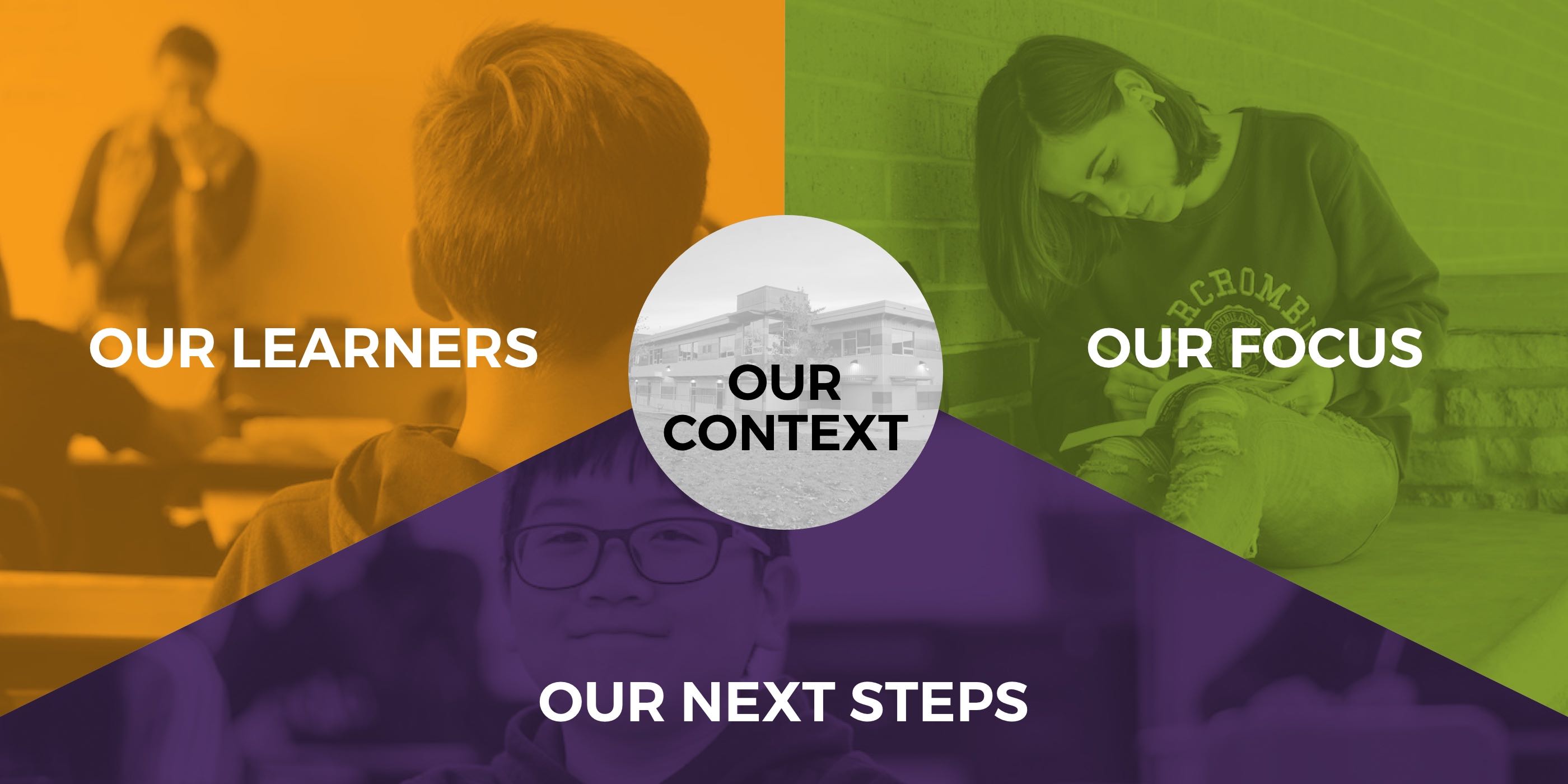
Green Timbers is a large culturally diverse school built on the traditional, unceded, and shared territories of the Coast Salish peoples. Many of the teaching staff have been part of the Green Timbers community for 15 or more years. Those that are new to our school community express what a special place it is and don’t want to leave. Being located so close to the Green Timbers Forest, learning at Green Timbers happens both in and out of the classrooms.
Green Timbers offers many extracurricular activities, such as soccer, volleyball, cross country, and track and field. We also have school-wide recurring events such as Walking Wednesdays, where the whole school does a walk around the school after lunch to encourage community at the school level, as well as physical fitness and healthy living. We are lucky to be one of the few schools in Surrey to offer the Punjabi Language Program for grades 5, 6, and 7 students. Our leadership program offers opportunities for students to participate in community work including local and global initiatives, such as serving food to those in need at the Surrey Urban Mission, organizing and facilitating fundraisers such as “WE Walk for Water,” tree planting, and participating in the CIBC “Run for the Cure” to raise money for childhood cancer research. Recently, our Leadership students have participated in fundraising to raise money for "Buddy Benches," to facilitate friendships and connections between children. Our school has close ties to the community, and we offer a wide variety of after-school programs, including tutoring from prior and current university students (Friends of Simon), Math Buddies (tutoring from Enver Creek Secondary School students), YoBro/YoGirl, and Go Girls. The wealth of opportunities provided is reflective of the commitment among staff members to provide and support these rich and valuable opportunities for students.
OUR LEARNERS
Embedded within the culture of our school is the notion that everyone matters, and that we all can make a difference. The caring nature of students and staff at Green Timbers has contributed to a community that meets not only the academic needs of its students, but the social and emotional needs as well. Our students are curious, inclusive, respectful, and kind, and are accepting of diverse backgrounds, experiences, and abilities. They have a high level of social and personal responsibility. Newcomers and guests to our school often comment on the feel of Green Timbers, and how one feels welcomed immediately upon arrival.
Many of our students are of Asian and South Asian origin, with an increasing Arabic-speaking population. With a large number of new immigrants and international students, students across the grades are coming to school with limited background knowledge, due to less frequent exposure to the outdoors, outside experiences and events. It is clear our students feel loved and are connected to others. However, they are not as “community connected,” in terms of the range of experiences they are having. While this background knowledge and associated vocabulary is being built, teachers have noted more time and prior-knowledge building required when introducing new concepts or ideas.
OUR FOCUS
Along with a recognition that Outdoor Education, as an area of focus, can help students build background knowledge and vocabulary fluency, is an awareness that we can also provide students with a greater wealth of learning experiences through our ADST experiences in the Learning Commons. Our belief is that both our work with teachers around vocabulary instruction, our Outdoor Education focus, and work in the Learning Commons, will provide a breadth of learning opportunities for students in order to be able to access vocabulary more readily.
In the Learning Commons, the use of iPads for differentiated representation of learning, has been the focus. This begins in kindergarten, and increases in the intermediate classes. A wide variety of apps are utilized such as Book Creator, Pic Collage, Keynote, iMovie, Doodle Buddy, and Comic Life. In addition, teachers are signing up their students for coding opportunities during the open collaboration times. Some of the coding apps and robots that are being used are LightBot, Scratch Jr., Mbots, Ozmo Coding, and Spheros. These experiences have increased student engagement, and provided opportunities for problem-solving, and creative and critical thinking.
Through participation in a variety of experiential learning activities, such as forest walks, including field studies like the Coquitlam WaterShed, Tynehead Hatchery, Green Timbers Park, and the Surrey Nature Centre, our students are focusing on two of the BC Ministry of Education's Big Ideas:
- Curiosity and wonder lead us to new discoveries about ourselves and the world around us.
- Playing with language helps us discover how language works.
Participation in experiential learning also allows students to focus on the development of the following curricular competencies:
- Engage actively as listeners, viewers, and readers, as appropriate, to develop understanding of self, identity, and community (K)
- Recognize the importance of story in personal, family, and community identity (K,1,2)
- Use personal experience and knowledge to connect to stories and other texts to make meaning (K)
- Show awareness of how story in First Peoples cultures connects people to family and community (Gr 1,2,3)
- Create stories and other texts to deepen awareness of self, family, and community (Gr 1)
- Develop awareness of how story in First Peoples cultures connects people to land (Gr 3,4,5)
- Demonstrate awareness of the oral tradition in First Peoples cultures and the purposes of First Peoples texts (Gr 4,5)
- Construct meaningful personal connections between self, text, and world (Gr 6, 7)
- Recognize and appreciate the role of story, narrative, and oral tradition in expressing First Peoples perspectives, values, beliefs, and points of view (Gr 6, 7)
OUR NEXT STEPS
We will know our plan is making a difference in a variety of ways. Student vocabulary development and growth can be heard through the conversations our kids are having on a regular basis, with their teachers, other staff members, and their peers. It can be seen in student writing, both personal and narrative, as well as informational writing. Teachers will continue to assess their student' s writing at various points throughout the year using the Performance Standards rubric.
Anecdotally, we expect to hear from teachers that there has been a shift in the understanding students show when expected background knowledge is referenced.
Language can be, and often is, contextual. While vocabulary and language go hand-in-hand, as focus narrows to key topics of learning, the expectation of vocabulary growth should increase accordingly. Language will necessarily broaden as vocabulary deepens.
Surrey Schools
Formed in 1906, the Surrey School District currently has the largest student enrolment in British Columbia and is one of the few growing districts in the province. It is governed by a publicly elected board of seven trustees.
The district serves the cities of Surrey and White Rock and the rural area of Barnston Island.