Grandview Heights Secondary 25-26

OUR CONTEXT

Grandview Heights Secondary is the newest secondary school in the Surrey School District, opening its doors to the community on September 7, 2021. We proudly acknowledge that our school is situated on the traditional and unceded territory of the Katzie, Kwantlen, Semiahmoo, and other Coast Salish Peoples.
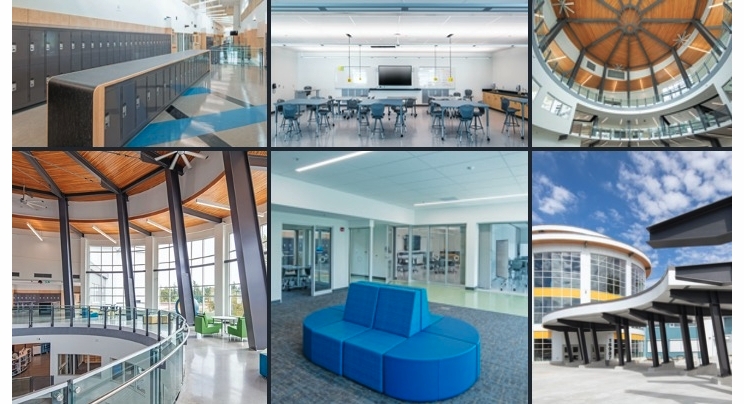
Our school community includes more than 1,900 students who, along with staff and families, take pride in this state-of-the-art learning environment. The building features over 60 classrooms, a purpose-built black-box theatre, a Grand Atrium inspired by a Coast Salish Longhouse, open-concept learning commons, two gymnasiums, and maker spaces equipped with cutting-edge applied design technologies.
Our educators understand that learning is not confined to classrooms; it occurs throughout the building in flexible, innovative spaces designed to foster collaboration and creativity. We are committed to ensuring that these spaces are welcoming and inclusive, supporting our goal of creating an environment where every learner can identify with the school community and experience a strong sense of belonging.
OUR LEARNERS
Our Learners
Grandview Heights Secondary is home to a vibrant and diverse student population of approximately 1,860 learners. Our school community reflects a rich tapestry of cultural and linguistic backgrounds, with 763 students (41.02%) speaking a language other than English at home and 38 different languages represented. Among these, Mandarin, Korean, Punjabi, and Cantonese are the most commonly spoken languages after English. We also support 164 English Language Learning (ELL) students, representing 8.82% of our population. These learners span multiple proficiency levels, from Level 1 to Level 5, and speak a variety of languages at home, including Arabic, Hindi, Tagalog, and Vietnamese.
In addition to linguistic diversity, our school serves 236 students with special needs or diverse abilities (12.69% of enrolment), encompassing a range of designations and levels of support. We are also proud to support 52 Indigenous students (2.8% of enrolment), representing identities such as Non-Status, Off-Reserve, Métis, and Inuit, with the largest cohort in Grade 12. This diversity enriches our school community and underscores the importance of creating an environment where every student feels valued, supported, and empowered to succeed.

Alongside our diverse population, Grandview Heights offers a wide range of extracurricular opportunities that enrich the student experience and foster personal growth. Learners are actively engaged in programs such as band, choir, athletics, robotics, dance, and co-op education, as well as numerous clubs and leadership initiatives. These activities provide students with avenues to explore their interests, develop critical skills, and build meaningful connections within the school community. By supporting involvement beyond the classroom, we aim to cultivate well-rounded individuals who contribute positively to both our school and the broader community.
OUR FOCUS
Our Focus: Literacy
Focusing on Literacy is essential because it underpins success across all subject areas, enabling students to access, analyze, and apply increasingly complex texts. As outlined in the Surrey School District’s Priority Practices, a strong emphasis on literacy, particularly through intentional reading instruction and responsive assessment, supports equitable outcomes for all learners. Enhancing students’ comprehension skills also strengthens their ability to think critically, communicate effectively, and engage meaningfully in both academic and real-world contexts. At Grandview we plan to prioritize reading comprehension as we value improving student achievement, fostering inclusive learning environments, and preparing students for future pathways.
Our Current focus at Grandview Heights is to improve reading comprehension through consistent, school wide instructional practices.
Our Why:
Our focus on reading comprehension is grounded in evidence from Grade 8 DIBELS data and classroom-based observations, which show that a significant number of students are performing below benchmark in comprehension despite generally accurate reading skills. While a smaller group demonstrates challenges with fluency, the more pressing need is that many students struggle to make meaning from text, identify key ideas, summarize, and generate thoughtful questions.
Reading Comprehension (MAZE)
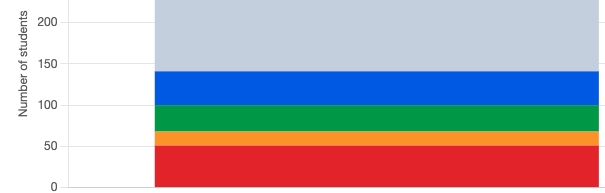

Classroom evidence further indicates that students often engage with text at a surface level, have difficulty explaining their thinking in writing, and experience inconsistent instruction in reading strategies across classrooms.
(Insert some student work)
This data highlights a clear need to strengthen students’ ability to think deeply about text and communicate their understanding, reinforcing reading comprehension as a critical school-wide focus aligned with improving student learning outcomes.
To address this, we have shifted our focus to the following:
Our Current focus at Grandview Heights is to improve reading comprehension, at the Grade 8 level through consistent, school wide instructional practices.
Our Cohort Group:
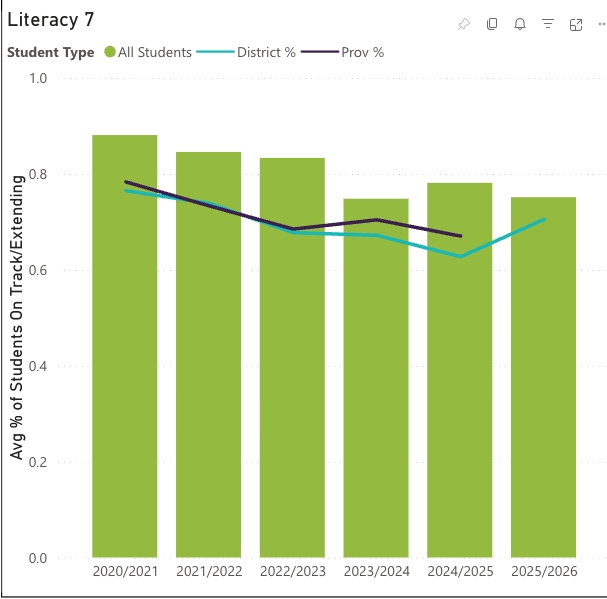
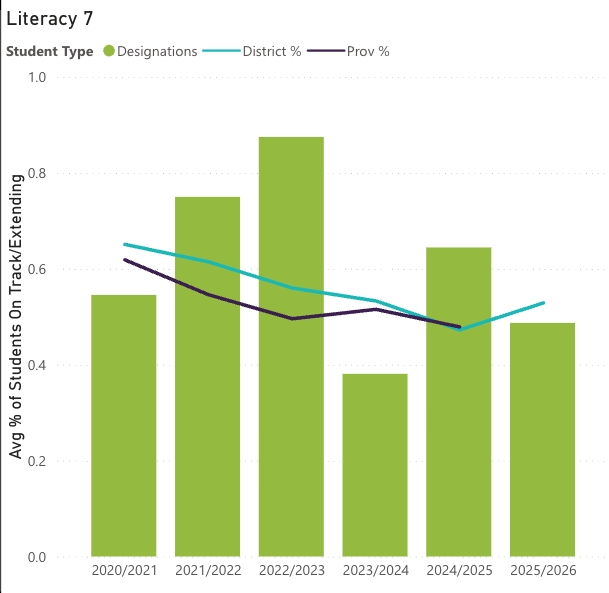
As part of our ongoing assessment practices, we monitor student literacy development at key stages throughout their elementary and secondary education. These assessments include the Grade 7 Foundational Skills Assessment (FSA), Grade 8 DIBELS screening, and the Grade 10 Literacy Assessment. Analysis of the data across these measures indicates a notable discrepancy between the literacy outcomes of the general student population and those of students with designations.
FSA Results - All Students
FSA Results - Students with Designations
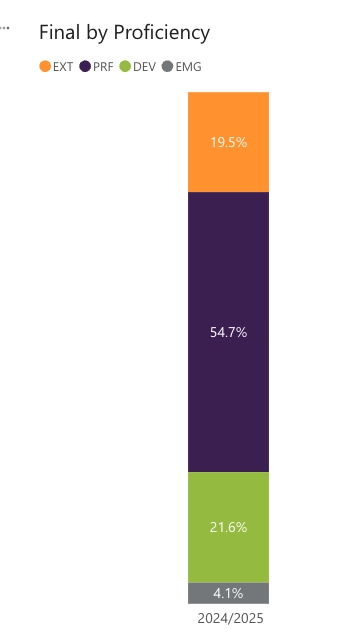
English Language Arts 8 Final Proficiency - All Students
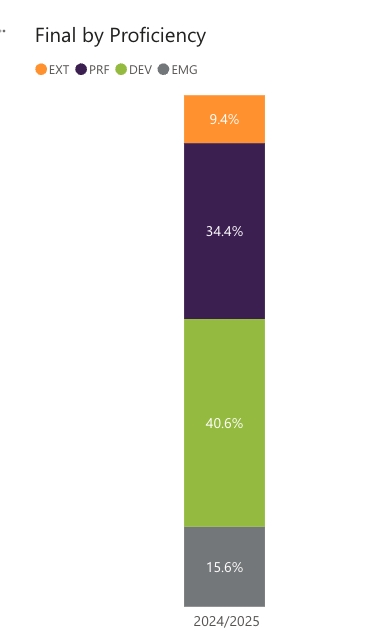
English Language Arts 8 Final Proficiency - Designated Students
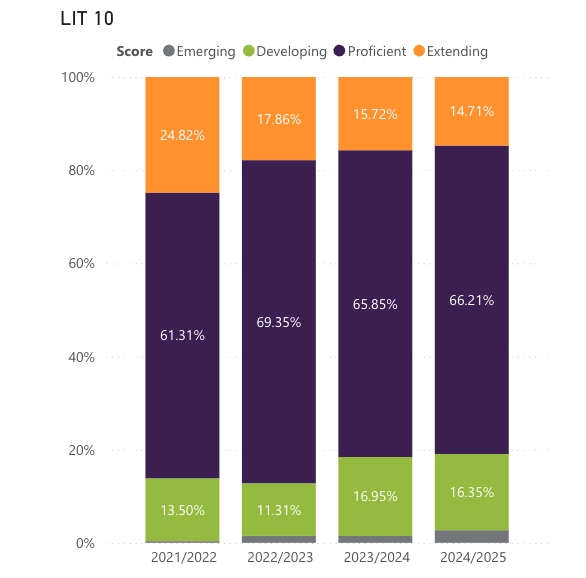
Provincial Literacy Assessment - All Students
Provincial Literacy Assessment - Designated Students
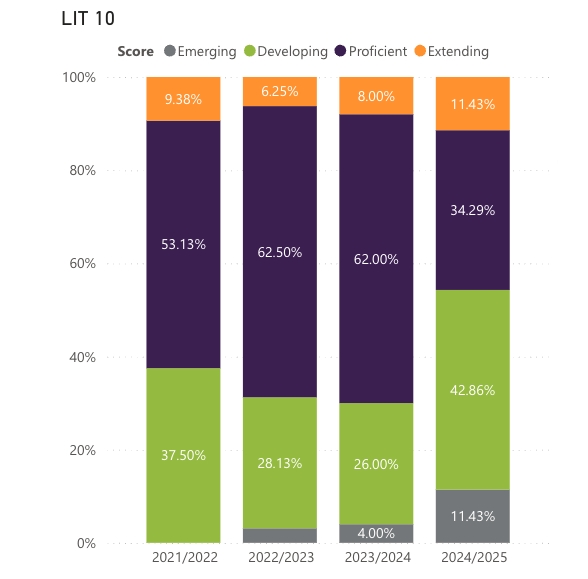
As illustrated in the data presented above, there is a consistent upward trend in the proportion of students performing within the “Emerging” category across all literacy measures. This trend is particularly pronounced among students with designations. In response to these findings, our school has identified a targeted focus on literacy development, with particular attention directed toward Grade 8 students, and more specifically, Grade 8 students with designations.
OUR NEXT STEPS
Next Steps:
First off, we need to take action. In order to support our learners, we need to implement a school wide, tiered approach:
Within a multi-tiered system of support, Tier 1 (Universal) instruction is implemented across all Grade 8 classrooms through a consistent Active Reading Routine. This routine supports comprehension before, during, and after reading by engaging students in activating prior knowledge, making predictions, annotating texts (e.g., questions, areas of confusion, and key ideas), and consolidating understanding through questioning and brief written summaries. A school-wide emphasis on writing about reading ensures that students regularly make their thinking visible.
At Tier 2 (Targeted), students requiring additional support receive small-group instruction focused on key literacy skills, including questioning, vocabulary development, and summarization. Instruction is scaffolded to promote accessibility and skill development through the use of sentence stems, chunked texts, and graphic organizers.
At Tier 3 (Intensive), students identified as at risk through consultation with all stakehodlers, including those enrolled in the Block A Semester 1 Skills course, receive daily, differentiated intervention. Instruction is responsive to individual needs, with targeted support in fluency (e.g., repeated, modeled, and partner reading) and comprehension (e.g., explicit instruction in main idea, inference, and questioning). These interventions are designed to support literacy development and address persistent skill gaps.
How will we know we are making a difference?
We will utilize both quantitative and qualitative data sources to monitor student progress and evaluate the effectiveness of our literacy interventions.
Quantitative measures will include DIBELS Oral Reading Fluency (ORF) and Maze assessments administered at multiple points throughout the year (Fall, Winter, and Spring). In addition, we will track the movement of students from at-risk to benchmark performance levels as an indicator of growth and intervention impact.

Qualitative evidence will complement these data by providing insight into students’ developing literacy skills and engagement. This will include the analysis of student writing samples to assess growth in comprehension and communication by Grade 8 Humanities and LST teachers. Particular attention will be given to students’ ability to summarize texts, ask meaningful and relevant questions, and clearly explain their thinking. Classroom observations will also be used to monitor levels of student engagement and participation, providing further context for understanding student learning and progress.
Collectively, these measures will provide a comprehensive understanding of students’ overall literacy development and progress. This evidence will inform instructional decision-making and guide targeted interventions, ensuring that all students continue to strengthen and apply their literacy skills across all subject areas.
Surrey Schools
Formed in 1906, the Surrey School District currently has the largest student enrolment in British Columbia and is one of the few growing districts in the province. It is governed by a publicly elected board of seven trustees.
The district serves the cities of Surrey and White Rock and the rural area of Barnston Island.