Georges Vanier Elementary 25-26

OUR CONTEXT
We are a school that celebrates the richness of our diverse community and champions equity for every learner. Our dedicated staff work collaboratively to create meaningful, positive outcomes for students, ensuring that each child feels safe, supported, and empowered. We cultivate environments where students use their voices with confidence—sharing their ideas, stories, and creativity through words, art, and authentic expression. In our community, every child matters, and every child belongs.
OUR LEARNERS
At Georges Vanier, we continue to prioritize strong literacy development as the foundation for student success and equitable outcomes. Current data in this field reinforces that early literacy interventions are essential in ensuring all learners gain the decoding and comprehension skills needed to thrive. By engaging with diverse texts and participating in shared reading and discussion, students strengthen critical thinking, communication, and personal and social responsibility. Our ongoing focus on literacy empowers every student to become a confident, capable reader who can navigate an information‑rich world and contribute meaningfully to our diverse community.
Our learners can use personal experience and knowledge to connect to text and make meaning
 |  |
| The learners above are using their understanding of reading through various texts focused on environmentalism to create statements about how they are going to protect the Earth. |
Our learners can apply appropriate strategies to comprehend written, oral, and visual texts, guide inquiry, and extend thinking.
 |  |
| Learners in an intermediate class showcase their reading comprehension through a variety of strategies they learned during their independent novel studies. |
OUR FOCUS
Georges Vanier is dedicated to building strong literacy foundations for all our students. We focus on developing phonemic awareness and foundational reading skills, ensuring students can decode words and use effective strategies to understand what they read. We emphasize comprehension strategies, enabling students to deeply engage with texts and use reading as a tool for inquiry. This focus is crucial because strong reading skills unlock access to knowledge, foster critical thinking, and empower students to confidently navigate their learning journey. In our rapidly evolving world, where information is abundant and constantly changing, strong literacy provides students with the tools to discern credible sources, adapt to new information, and become lifelong learners who can thrive in any environment.
Our learning objectives for student learning in literacy are:
- Students can use foundational concepts of print, oral, and visual texts
- Students can use a variety of comprehension strategies before, during, and after reading, listening, or viewing to deepen understanding of text
- Students can apply appropriate strategies to comprehend written, oral, and visual texts, guide inquiry, and extend thinking
Throughout the school year, we've focused on targeted support and progress monitoring for three distinct student cohorts. With our early primary learners, we’ve observed how they are beginning to use foundational concepts of print along with oral and visual texts to build early literacy behaviours. Our early intermediate cohort has been developing their ability to draw on a range of comprehension strategies before, during, and after engaging with texts, allowing them to deepen their understanding in more intentional ways. Meanwhile, our upper intermediate cohort has been applying strategies to comprehend written, oral, and visual texts, using these tools to guide inquiry and extend their thinking as they engage with a variety of texts.
Early Primary Cohort
This year at Georges Vanier Elementary, our early primary team continued its collaborative and focused work to strengthen foundational literacy skills for our youngest learners. Research consistently highlights the early primary years as critical for long-term reading success, and our school-wide efforts reflect this understanding. Building on the structures established last year, we continued implementing systematic assessment, targeted instruction, and ongoing progress monitoring to support students in developing automatic letter–sound knowledge.
Our instructional plan was grounded in the Grade 1 curricular competency that students will be able to use foundational concepts of print, oral, and visual texts. Some of these include directionality of print, differences between a letter and a word, letter-sound relationships & phonological awareness.
These foundational understandings form the basis of early literacy development. Mastery of letter–sound relationships is essential for decoding, encoding, and the development of fluent reading skills. Our instructional approach intentionally targeted this competency through structured, explicit, and responsive teaching practices.
As in previous years, the early primary team began the year with a letter–sound assessment. Students were shown individual letter cards and asked to produce the corresponding sound within 2–3 seconds. This assessment provided a clear baseline of both automaticity and accuracy.
From this data, a cohort of early primary students requiring the most intensive support was identified. This cohort received daily targeted instruction supported collaboratively by classroom teachers and additional support staff, ensuring consistent, high-frequency opportunities for practice and reinforcement. The early primary team grouped students according to their literacy profiles, allowing instruction to be precisely targeted to student need. Across classrooms, teachers implemented:
 |  |  |
Structured lessons aligned with a research-backed literacy program | Letter–sound learning centres | Whiteboard dictation activities |
 |  |  |
Incremental rehearsal for targeted 1:1 practice | Supplemental mastery activities | Additional supports for English Language Learners |
Because this cohort required additional time to consolidate learning, instruction intentionally moved at a slower pace. This deliberate pacing ensured students developed automaticity and deep understanding rather than surface-level familiarity.
Early Intermediate Cohort
The Early Intermediate Cohort consisted of six students, including English Language Learners who received pull‑out support from an LST two to three times per week, an Indigenous learner supported by our Indigenous Child Care Worker, and students who benefited from in‑class ELL strategies. Since September 2025, these students were assessed on their comprehension of classroom texts. Teachers focused on developing skills in making connections, visualizing, asking quick‑thinking and deep‑thinking questions, and inferencing. Among these strategies, inferencing emerged as the area where this cohort required the most support to strengthen their overall reading comprehension.
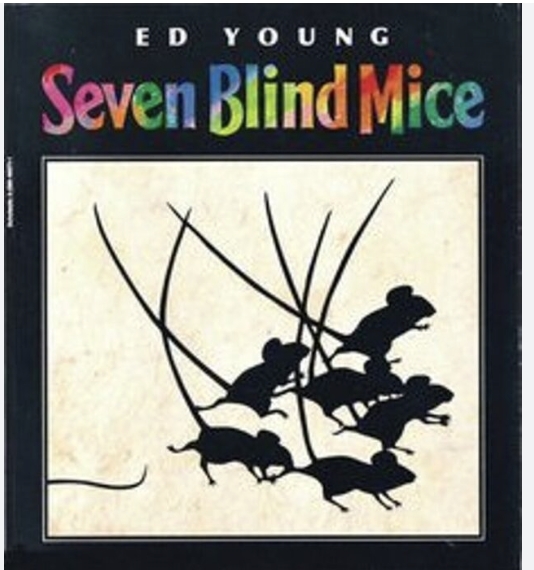
To build inferencing skills, students engaged with a variety of picture books and wordless texts, including:
 |  |
| Good Dog Carl by Alexandra Day | Pancakes for Breakfast by Tomie dePaola |
 |  |
Little Green by Keith Baker | Who Is the Beast? by Keith Baker |
 |  |
Seven Blind Mice by Ed Young | Tales of a Fourth Grade Nothing |
Many of these books contained little or no text, prompting students to rely heavily on inferencing to construct meaning. When exploring Good Dog Carl, students examined visual clues to infer events and character actions. This process became more challenging—and more rewarding—when listening to Little Green read aloud without seeing the illustrations. Students had to infer solely from descriptive language, leading to lively predictions and thoughtful debate about the identity of “Little Green.”
 |  |
Their engagement during inferencing lessons was exceptional. They eagerly shared their ideas, compared interpretations, and engaged in friendly debates about who might be correct. These moments highlighted how meaningful and motivating inferencing work can be for developing readers.
In the third term we started a read aloud novel study of “Tales of a Fourth Grade Nothing” by Judy Bloom. We noticed that with practice, more lessons, prompting, and time many students were able to demonstrate deeper connections, detailed visualization, interesting deep-thinking questions, and making inferences by combining clues with their own background knowledge to help interpret the text.
 |  |
Upper Intermediate Cohort
Upper Intermediate teachers engaged in extensive professional learning through workshops on responding to readers. A key takeaway from this training was that students with strong background knowledge and topic‑specific vocabulary consistently perform better on reading assessments, including fluency and comprehension. For this reason, teachers intentionally designed a reading program that prioritized building knowledge before beginning novel studies.
To support this work, teachers selected two novels with rich themes requiring preparation:
- Shabash – The story of Rana, a Canadian Sikh boy from a small BC town who joins a minor league hockey team. Rana experiences racism and challenges both on and off the ice as he navigates identity, belonging, and resilience.
- My Name is Seepeetza – A semi‑autobiographical account of Seepeetza, renamed Martha Stone at a residential school, where she faces strict rules, cultural suppression, and emotional hardship.
Before beginning the novel studies, Upper Intermediate teachers created learning experiences to build the background knowledge and vocabulary students needed to understand themes such as racism, exclusion, identity, and Indigenous history.
Students engaged in:
- Picture books connected to themes — Teachers read stories addressing racism, exclusion, and bullying to build conceptual understanding.
- Class discussions and personal connections — Teachers shared personal experiences of adversity, and students opened up about their own, helping them connect emotionally to the themes of the upcoming novels.
- Vocabulary development — As a class, students generated a list of key words related to the themes (e.g., exclusion, inclusion, discrimination, anxious, fearful).

- Learning about Indigenous history — Students explored topics such as residential schools through readings and videos to prepare for My Name is Seepeetza.
These activities ensured students entered the novel studies with the knowledge and language needed to comprehend complex themes.
During reading groups, students worked in small groups of four to five. Upper Intermediate teachers rotated between groups to listen to students read, model fluent reading, and provide instruction on using context to understand vocabulary.
Key components included:
- Rotational reading aloud — Students took turns reading two paragraphs at a time. One student who initially preferred reading only to the teacher gained confidence by the third term and began reading aloud to his group.
- Popcorn summaries — After reading, students summarized their section in one or two sentences to reinforce comprehension.
- Vocabulary and comprehension tasks — Students completed assignments on vocabulary, character development, main events, and predictions.
- Teacher modeling — Teachers periodically modeled fluent reading and demonstrated how to use context clues to determine word meaning.
- Teaching context strategies — Students practiced identifying unfamiliar words and using surrounding text to infer meaning.
Families received a notice outlining the importance of daily home reading and the expectations for the novel their child selected. Parents signed and returned the form to acknowledge the reading goals.
Students read their novels at home and periodically presented to the class or teacher on:
- Characters
- Plot and major events
- Problem and solution
- Whether they would recommend the book to peers
These presentations reinforced comprehension, accountability, and oral communication skills.
OUR NEXT STEPS
Early Primary Cohort
Our early primary cohort met for 45 minutes, 5 days a week. Teachers employed instructional strategies listed in the 'Our Learners' Section of our plan. At key stages throughout the year, they used a letter recognition assessment to record data to monitor student progress.
October Assessment
• Students knew between 0–21 sounds, with a cohort average of 5.
• Several students recognized only 0–3 sounds, indicating significant early literacy vulnerability.
November Assessment
• Many students demonstrated dramatic early gains.
• Several students moved from recognizing 0–4 sounds to 11–24 sounds.
• One student increased from 0 to 17 sounds, another from 1 to 12 sounds, and another from 3 to 19 sounds.
Examples such as “0/26 → 17 (65%)” and “1/26 → 12 (46%)” illustrate the significant early progress made through targeted intervention and consistent practice.
January Assessment
By January, the cohort demonstrated substantial consolidation of skills:
• Students knew between 0–26 sounds, with the cohort average rising to 18 known sounds.
• Many students achieved 100% accuracy, including several who had begun the year recognizing fewer than 5 sounds.
April Assessment
By April, the data continued to show strong upward growth:
• Students knew between 5–26 sounds.
• 9 of 20 students had mastered all 26 sounds.
• The cohort average increased from 5 sounds in October to 23 sounds in April.
Magnitude of Growth
Across the cohort:
• Many students gained 15–20+ sounds between October and November.
• Several students gained an additional 4–13 sounds between November and January.
• Between January and April, students who had not yet reached mastery continued to demonstrate meaningful growth, gaining an additional 3–10 sounds.
This pattern reflects not only rapid early improvement but also sustained growth over time, an indicator of effective instruction, targeted intervention, and strong student engagement.
The trajectory shown in the data, particularly the dramatic gains observed between October and April, demonstrates that with targeted support, structured instruction, responsive teaching practices, and consistent opportunities for practice, students can make remarkable progress in foundational literacy skills.
The graph below shows the average growth in the cohort of letter sound knowledge over the course of the year.

The graph below shows the individual growth of each student in the cohort that was followed.

Early Intermediate Cohort
Growth in Inferencing Skills from Term 1 to Term 3
Assessment data collected from Term 1 to Term 3 shows clear growth in students’ understanding of making inferences. Students were assessed twice during the school year using the same rubric to ensure consistency.
Proficient Students
Students who demonstrated proficiency showed a solid understanding of the inferencing strategy. They were able to identify clues in the text or illustrations and combine them with their own thinking to deepen comprehension. These students clearly distinguished between a fact and an inference and responded using language such as “I think…” or “Maybe…” to explain their reasoning.
Developing Students
Students who were developing began to show an emerging understanding of the difference between facts and inferences. They were able to look for clues in both pictures and text and used these clues to make better sense of what they were reading.
Comparison of Term 1 and Term 3 Results
Term 1
- 14% Proficient
- 31% Developing
- 55% Emerging
Term 3
After months of guided practice, teacher modelling, and repeated opportunities to practice inferencing, student performance improved:
- 26% Proficient
- 40% Developing
- 24% Emerging
Overall, the data indicates meaningful improvement in students’ ability to make inferences. With consistent instruction, modelling, and repetition, more students moved from emerging to developing, and from developing to proficient. This growth reflects the effectiveness of intentional strategy instruction and ongoing support.
Below is an illustration of the growth in inferencing skills over the course of the school year.

Upper Intermediate Cohort
Teachers employed instructional strategies listed in the 'Our Learners' Section of our plan. At key stages throughout the year, they used a reading comprehension assessment to record data to monitor student progress.
At the beginning of the year, student reading comprehension scores ranged from 9.5 to 33, with an average of approximately 18.8. This spread shows that while a few students were already demonstrating stronger understanding, most were still developing their ability to make meaning from text.
By the middle of the year, results showed a slight decline overall, with scores ranging from 7.0 to 32 and an average of about 16.9. This dip suggests that as texts became more complex and expectations increased, some students initially struggled to apply comprehension strategies independently.
By the end of the year, there was a strong upward shift. Scores increased significantly to a range of 11.5 to 38, with an average of approximately 27.4. This represents an overall gain of nearly 9 points from the beginning of the year and over 10 points from the middle of the year. Most notably, many students who were previously at the lower end showed substantial growth, moving into higher performance levels.
This pattern reflects a trajectory where students first encountered increased challenge, followed by meaningful improvement over time. The end-of-year data indicates that students strengthened their ability to understand complex texts, likely supported by explicit instruction, vocabulary development, and opportunities to engage deeply with content before and during reading.
Overall, the data shows a delayed but significant improvement, with the strongest gains occurring after sustained practice and instruction.
The graph below shows the average growth in the cohort over the course of the school year.

Context Specific Reading Comprehension Growth
Moreover, students in the upper intermediate cohort demonstrated further measurable growth in reading comprehension, particularly in their ability to use historical, cultural, and social context to deepen their understanding of the novels Shabash! and My Name Is Seepeetza. The group average increased from 15.6/20 (78%) to 17.6/20 (88%), representing a 10 percentage point gain. Six of seven students improved their scores, with three students moving from Developing to Proficient and one student advancing from Proficient to Extending. Through explicit exploration of the cultural and historical contexts within both novels, students strengthened their ability to make inferences, understand character perspectives, and connect background knowledge to their interpretation of the text.
Moving Forward
This past year marked our third year in the shift to literacy. Staff remains excited and deeply committed to further solidifying their own understanding and proficiency in using more strategies and resources to move a greater number of students into a proficient writing ability.
Based on the significant progress we have already made, and following continued staff consultation and review, we have identified the following as our ongoing and future areas of focus for the upcoming year:
- Continued in-service and review of writing resources, utilizing various formats including Staff meetings, Lunch and Learns, and online methods.
- Continued discussions on ways to integrate a platooning model to work with students at similar levels.
As we approach our fourth year with these refined goals, our students and teachers will continue to work together to improve outcomes in literacy for all of our learners.
Surrey Schools
Formed in 1906, the Surrey School District currently has the largest student enrolment in British Columbia and is one of the few growing districts in the province. It is governed by a publicly elected board of seven trustees.
The district serves the cities of Surrey and White Rock and the rural area of Barnston Island.