École Woodward Hill

OUR CONTEXT
OUR LEARNERS
Reading is a foundational skill that opens a world of opportunities for our students. Where our youngest learners are building skills to learn how to read, our intermediate students continue to develop their reading reading skills to broaden their understanding of literature, science, sociology, technology and many other concepts.
Our learners use decoding strategies to strengthen their reading skills.
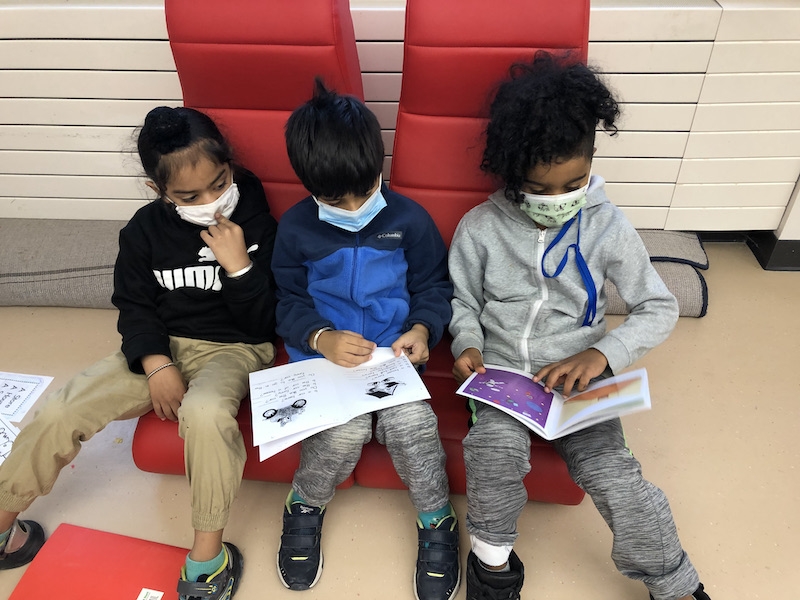
Our youngest learners practice decoding strategies to develop strong reading skills. The image on the left demonstrates using picture clues to build meaning. Using picture clues is an important beginning reading strategy for all learners, as Sumair describes, "I knew this word was 'robot' because on the left page it kind of looks like a robot. Also, I read this book a lot. Also, the first letter is'r' and that makes sense."
In the middle image, students receive direct instruction on how to use Magic 'e' to decode and write words. Direct reading instruction is central to helping students learn how to read at all levels. In the example below, the use of white boards during whole group instruction is not only fun for students, but also provides instant feedback to the teacher on student understanding. The third image on the right demonstrates how students use loose parts to create stories. Through story writing, students develop language skills that support their reading development.

The videos below demonstrate reading strategies used by our early learners. Encourage your children to practice these strategies while reading at home.
Blend the sounds
Chunking
Magic 'e'
Flip the sound
Some letter make several sounds. When a child sounds out a word with the wrong sound, they can recognize that it doesn't sound correct and "flip" the sound to the letters other sound. For example, the letter 'c' sometimes sounds like an 's'. In this example, the student initially reads the word as 'site'. He then flips the 'I' sound to read the word correctly, 'sit'.
Two vowel rule
Use picture clues
Our learners can recognize and value the joy in reading.
Our learners have access to rich resources and high interest books to nurture joy in reading. Finding joy in reading supports feelings of calm and self-regulation. Our Library Learning Commons is a hub in our school and serves as a space where students can nestle with a good book, find their next great read, and explore alternative genres to pique their interests. So, while learning to read is a priority for our learners, it is equally important to find joy in literature.
Reading is joyfully calming
In the video below, Sia says, "You can calm your body by reading a book standing up, sitting down or lying in your bed. It's good to do when the room is quiet."
There is joy to be found in sharing a book
Buddy Reading is one way books can be enjoyed together. Below, we see Nathan, Tanvir and Kaavya reading together.

Discovering the right book or genre brings joy to our lives
Our librarians are the perfect people to help students to find books and genres of interest. Here, we see Angad very excited to discover Science Fiction!
OUR FOCUS
Reading proficiently is a foundational skill that enriches the well-being of our students now and in the future. Strong readers have the opportunity to better their lives both professionally and personally. Our team of educators understand the significance of developing our learners' reading skills. Each day our learners experience text-rich environments and explicit reading instruction to support the development of their full potential. Our vision is to have all students reading strategically and with joy.
Our students' learning goals are
- reading strategically
- valuing the joy in reading and its contribution to feeling calm
While we have assessed all learners' reading skills, we have focused on our early learners - Kindergarten to Grade 3 - to document and identify successes and gaps.
Reading
Reading spans all areas of learning from arts and culture to science and technology and beyond. And because reading to learn is central to our students' school experience and life opportunities, our educators prioritize learning to read for all children. A quote by one of our learners aptly describes learning to read, "reading to someone helps me to be a better reader because when you’re learning the words you can help people”.
OUR NEXT STEPS
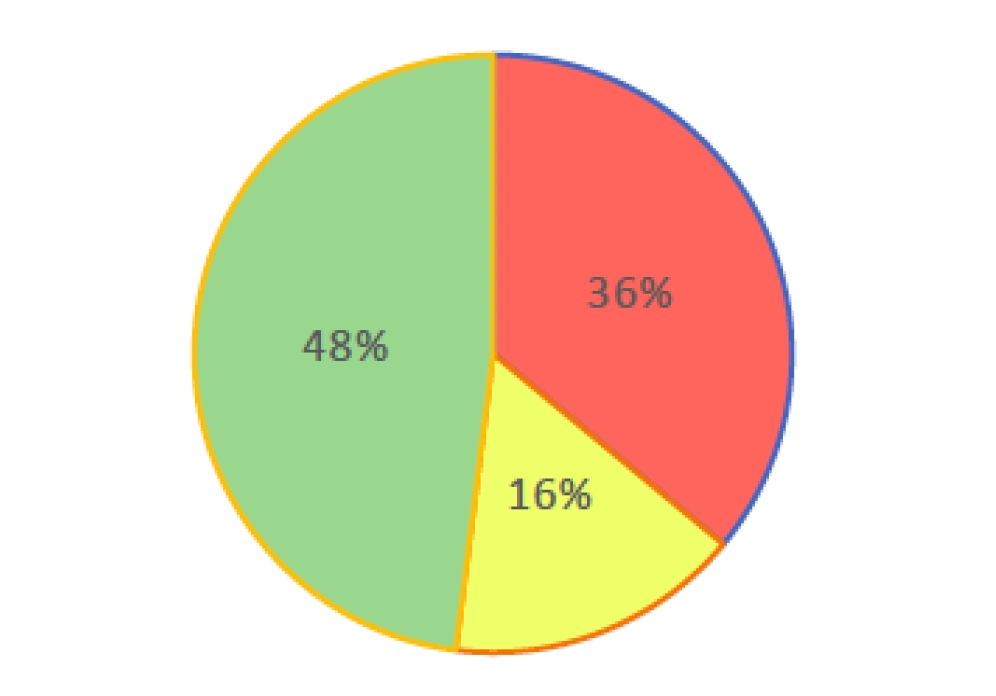
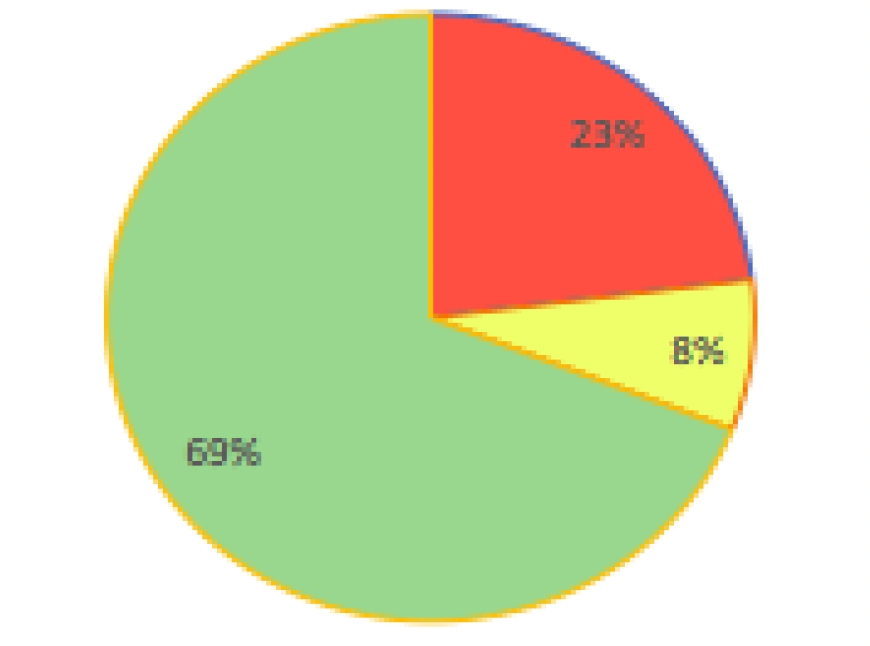
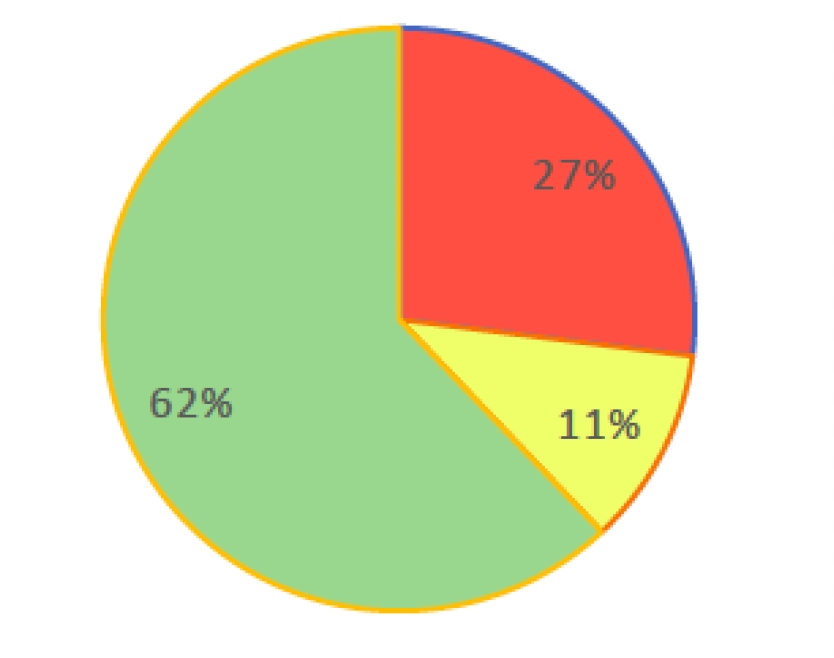
Our focus on teaching students to read strategically is positively influencing our early learners. Using the Fountas and Pinnell reading assessment, the graphs below demonstrate progress with two cohorts of students. The coloured regions of the graph represent the following:
GREEN - students reading at or above grade level
YELLOW - students approaching grade level expectations
RED - students not yet meeting grade level expectations and requiring learning support intervention
Cohort 1 May 2021
Cohort 1 May 2022
Cohort 2 May 2021
Cohort 2 May 2022
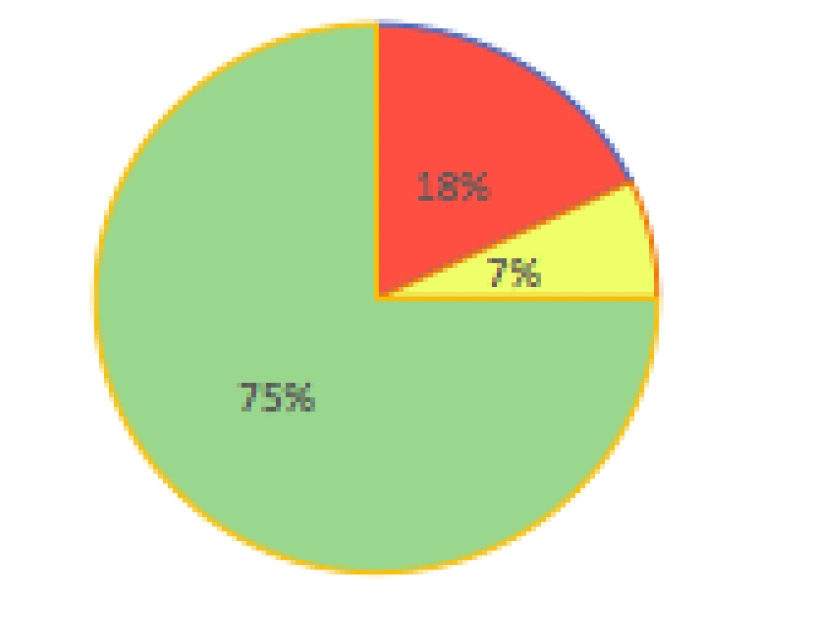
In the graphs above, we see big improvements in students entering the green region over a one year span. Our team of early literacy teachers use evidence based practices such as Heggerty to explicitly teach reading and improve outcomes. Other strategies we use include guided reading where small groups of students receive instruction from their teacher, literacy circles where students work together to reflect on literature, and buddy reading where older students read with a younger child. Some of our teachers have been exploring Noisy Reading. Noisy Reading invites families into the learning space to read with their child and promote joy and love for books. During this time, teachers provide small tips families can use at home to support their child's reading.

Moving Forward
We will continue our efforts to support our students' ability to read strategically and to find joy in books. In addition, our team of educators know that vocabulary development is central to learning to read with comprehension. With this in mind, our learning plan will formally include vocabulary development in the near future.
We know that reading is a critical skill for success in today's world. Every opportunity is provided to all of our students to build their skills to be proficient readers. As students learn to read, their confidence grows and they have increased access to a world of opportunity. And while learning to read in central in our collective responsibility to our children, a great benefit to reading is the joy that is found in a good book. We all want the best for our students, our children. Reading is a fantastic place to start!
Surrey Schools
Formed in 1906, the Surrey School District currently has the largest student enrolment in British Columbia and is one of the few growing districts in the province. It is governed by a publicly elected board of seven trustees.
The district serves the cities of Surrey and White Rock and the rural area of Barnston Island.