École Simon Cunningham Elementary 23-24

OUR CONTEXT
At École Simon Cunningham, we asked our students and staff what our school community means to them. In the video below, you will see some responses as well as images of the teaching and learning that represents our school.
OUR LEARNERS
Our school is home to 550 students who are enrolled in our dual track, French and English programs as well as our intensive intervention classroom. Nous sommes très chanceux d'avoir une communauté étudiante diversifiée à l'École Simon Cunningham. We are very fortunate to have a diverse student community at École Simon Cunningham with learners joining us from all around the world.
At the beginning of the school year, our teaching staff gathered to reflect on the needs of our learners, and we agreed that we want to continue focusing on literacy. We also discussed the need to explore and dive into Social Emotional Learning to help our students with their self-regulation skills was equally important. We shifted our focus to include SEL alongside literacy as a proactive step towards creating a nurturing and supportive learning environment that promotes the holistic development for all our students.
Social Emotional Learning (SEL) is the process through which all children learn the skills and attitudes to develop healthy identities, manage emotions, achieve personal and collective goals, build empathy towards others, make responsible and caring decisions, and to establish and maintain healthy relationships. SEL skills allow students to engage successfully with learning opportunities that foster communication and collaboration across all curriculum areas. Social Emotional Learning is embedded in all areas of the curriculum based on the CASEL Framework.

At École Simon Cunningham, we strive to meet each learner where they're at with their emotional intelligence by engaging in activities that utilize teamwork, to help build collaboration, and a sense of community so learners feel safe taking risks in their learning. By emphasizing the development of SEL, it enhances each students’ mental health, which will result in improved overall wellbeing, emotional and physical health, and academic achievement.
Social Emotional Learning & Literacy Connections
Reading & Writing
Our students engaged in stories shared in class that contained themes within the SEL Framework. With this explicit exposure, dialogue and discussions were created to further develop our students’ understanding of the various components of SEL and the widespread impact they can have.
Our learners use personal experience and knowledge to connect to text and deepen understanding of self, community, and world. They can recognize and identify the role of personal, social, and cultural contexts, values, and perspectives in texts. They can question what we hear, read, and view contributes to our ability to be educated and engaged citizens.

School Wide Read Aloud
Our students participated in a school wide read aloud. They read One by Kathryn Otoshi at a school wide assembly to acknowledge the importance of inclusion, being kind to one and other, and celebrate our readers at Simon Cunningham Elementary.
Our learners engage actively as listeners, viewers, and readers, as appropriate, to develop understanding of self, identity and community.
D.E.A.R. (Drop Everything and Read)
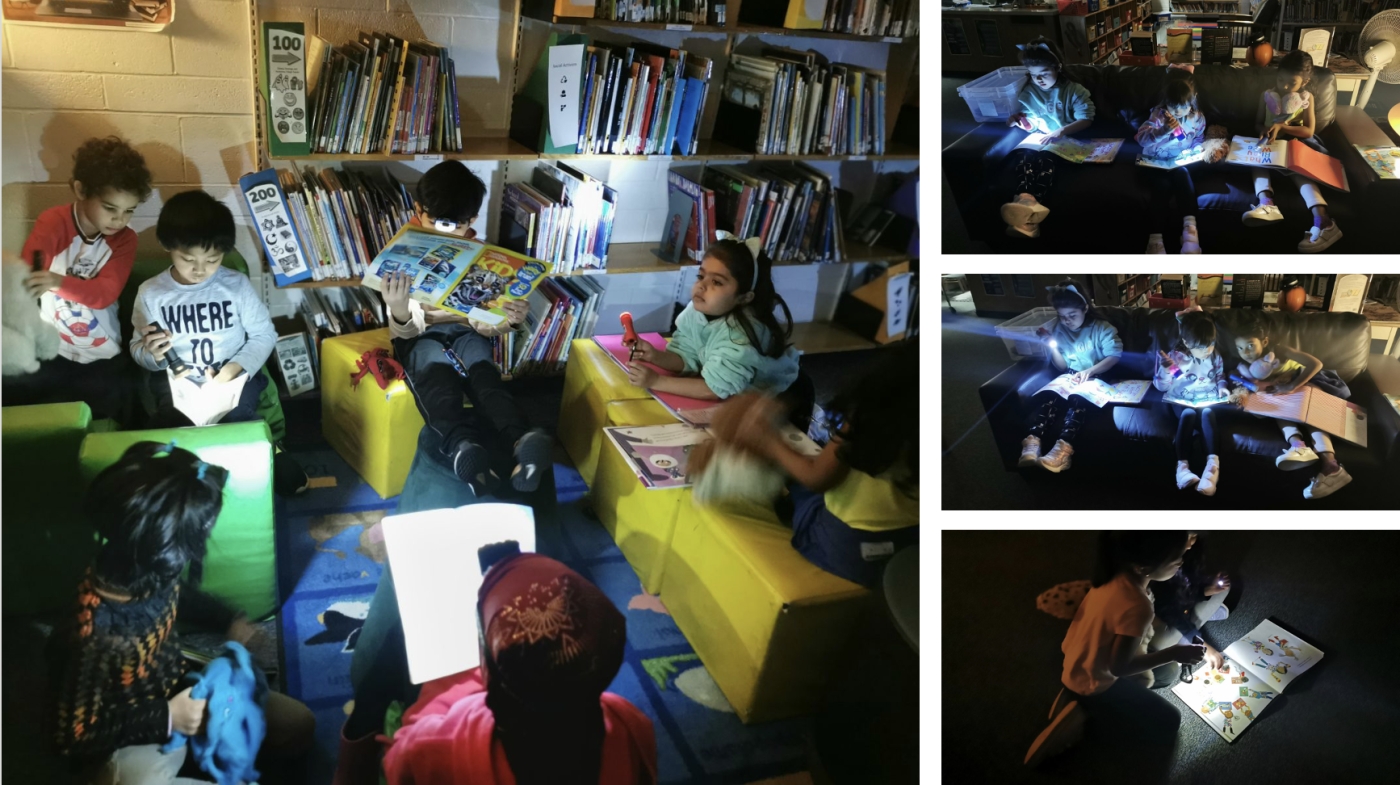
A celebration of reading designed to remind students to make reading a priority in their lives. This whole school activity occurs at different days throughout the year, often with special themes such as flashlight reading, buddy reading and noisy reading.
Our learners will think critically, creatively, and reflectively to explore ideas within, between, and beyond texts. They will recognize and appreciate how different features, forms, and genres of texts reflect various purposes, audiences, and message.
I Am Enough - Read Aloud
During the "Shades of Kindness" Assembly, our Black History Month Student Committee student readers were featured in this powerful picture book, I Am Enough by Grace Byers which focuses on self-confidence and kindness.
Our learners can demonstrate respect for differences in the classroom and our school community.
Connecting SEL to Outdoor Education
We seek innovative and inclusive instructional practices to increase literacy through outside education. Outdoor education provides opportunities to grow SEL tools by nurturing connections to self, community, and natural spaces. Outdoor learning engages the senses and promotes better self-regulation. At École Simon Cunningham, students are given many opportunities to learn outside through various field trips and experiencing outside classrooms. Some of the field trips were visiting Galiano Island, Sasamat Outdoor Centre, and Surrey Nature Centre where students explored the trees, beaches, and most importantly made a connection to the land. Students bonded with each other in a way that they are unable to do when they are in a traditional classroom.
Our learners develop connectedness, reciprocal relationships, and a sense of place through outdoor education. Learning is holistic, reflexive, reflective, experiential, and relational.
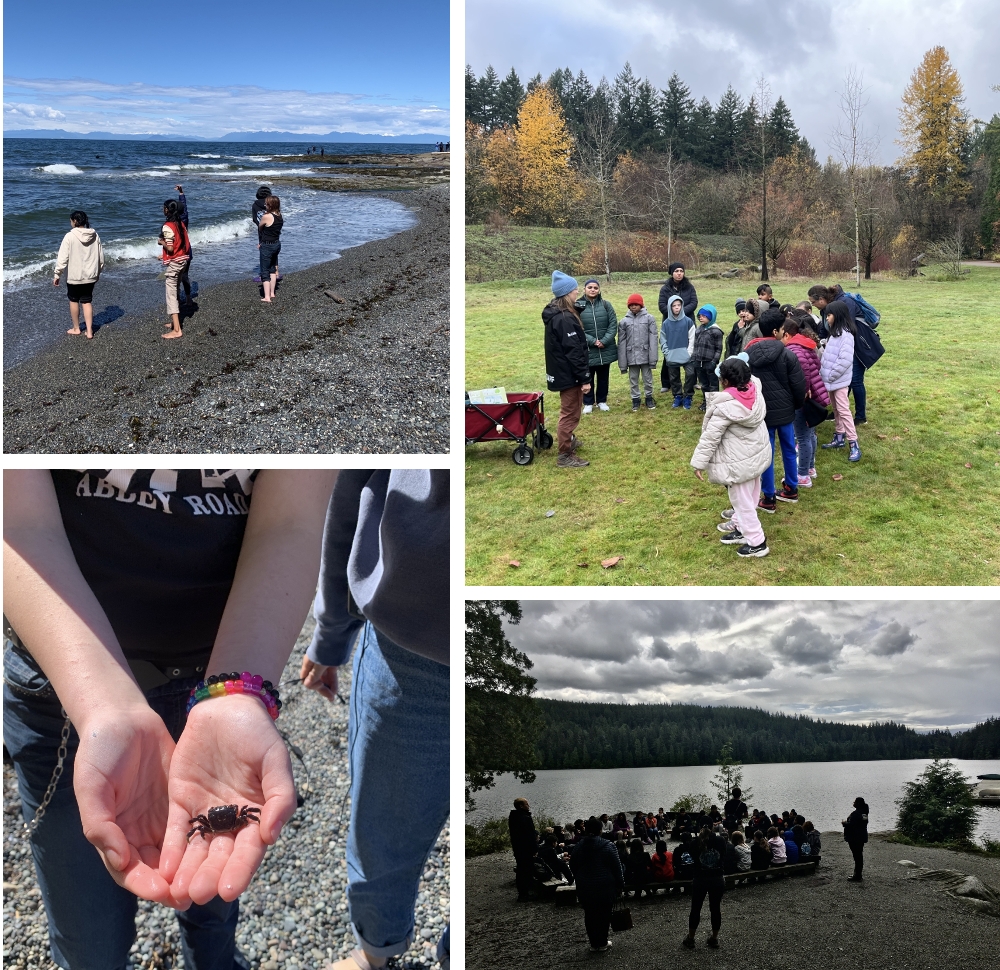
I love learning about nature and being outside with my friends - Grade 6 student
Exploring & Learning through Loose Parts
Loose Parts play-based learning provides rich opportunities for children to develop key SEL competencies such as self-awareness, social awareness, relationship skills, responsible decision-making, and self-management. By engaging in open-ended play with a variety of materials, children not only exercise their creativity and problem-solving abilities but also strengthen their emotional intelligence and social skills, laying a strong foundation for their overall development and well-being.
Our learners understand learning is experiential, embedded in memory, history, and story, and takes patience and time. Using loose parts, students explore stories and other texts that help them understand themselves and make connections to others and to the world.
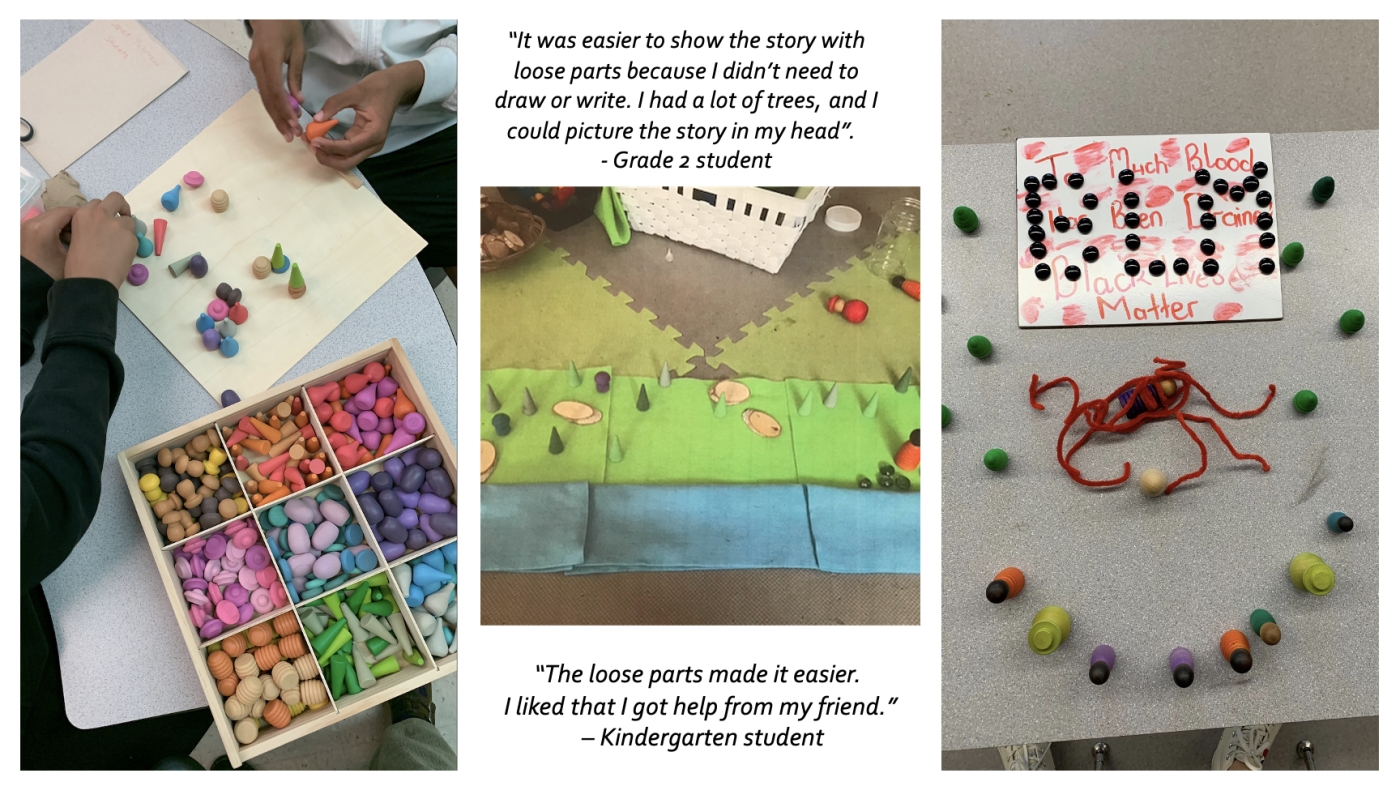
“For me, loose parts developed my creativity. We did not do a lot of arts in my country. I feel like my creativity grew way bigger when I came to Canada. Now I know what to do if I have toys and materials; I can make a story and use my creativity more and more.” - Grade 7 student
Our school values Indigenous Education
By integrating SEL into indigenous education, it can enhance the effectiveness of educational practices by honouring cultural identities, fostering positive relationships, promoting emotional well-being, and empowering students to thrive academically, socially, and culturally. By recognizing and building upon the strengths of Indigenous educational philosophies, SEL can contribute to creating supportive learning environments that nurture the whole child within Indigenous communities.
Our learners understand learning ultimately supports the well-being of the self, the family, the community, the land, the spirits, and the ancestors.

Indigenous School Drum - Our school drum is adorned with the Seven Grandfather Teachings. The drum is a focal point at each of our school assemblies. Fostering a connection to the animals and virtues that represent the teachings, students are given the opportunity to explore the teachings in relation to themselves as well as themes addressed throughout the school year.- Bannock and Books - We invited our Indigenous families for an after school gathering to join us in the library. Its intent is to connect and spend time with our Indigenous families.
- Making Handmade Drums - Our students spend time together learning about the impact of residential schools on Indigenous culture. Students had an opportunity to take part in a smudging ceremony and make handmade drums from natural materials with an Elder.
- Powwow Dancing - During our National Indigenous Peoples Day Assembly, we introduced and incorporated some Powwow dancing with our students led by one of our Indigenous teachers. Powwow dancing is not just a performance but a living tradition that continues to evolve and adapt while maintaining its cultural integrity. It serves as a powerful expression of resilience, identity, and community among Indigenous peoples.
French Immersion & School Garden
Integrating Indigenous Worldviews into Literacy Development
Our Grade 1 FRIM class engages with the Science and French Language Arts curriculum through outdoor learning in the school garden. Throughout third term, students spent 2 to 3 days outside, clearing, planting, observing, and harvesting. Teaching this way has allowed for students to engage in Indigenous Learning in an inclusive environment that fosters authentic connections, understanding, and rich learning.
Our learners can take part in caring for self, family, the classroom and school through personal approaches and through First People's knowledge of the local landscape, plants and animals.
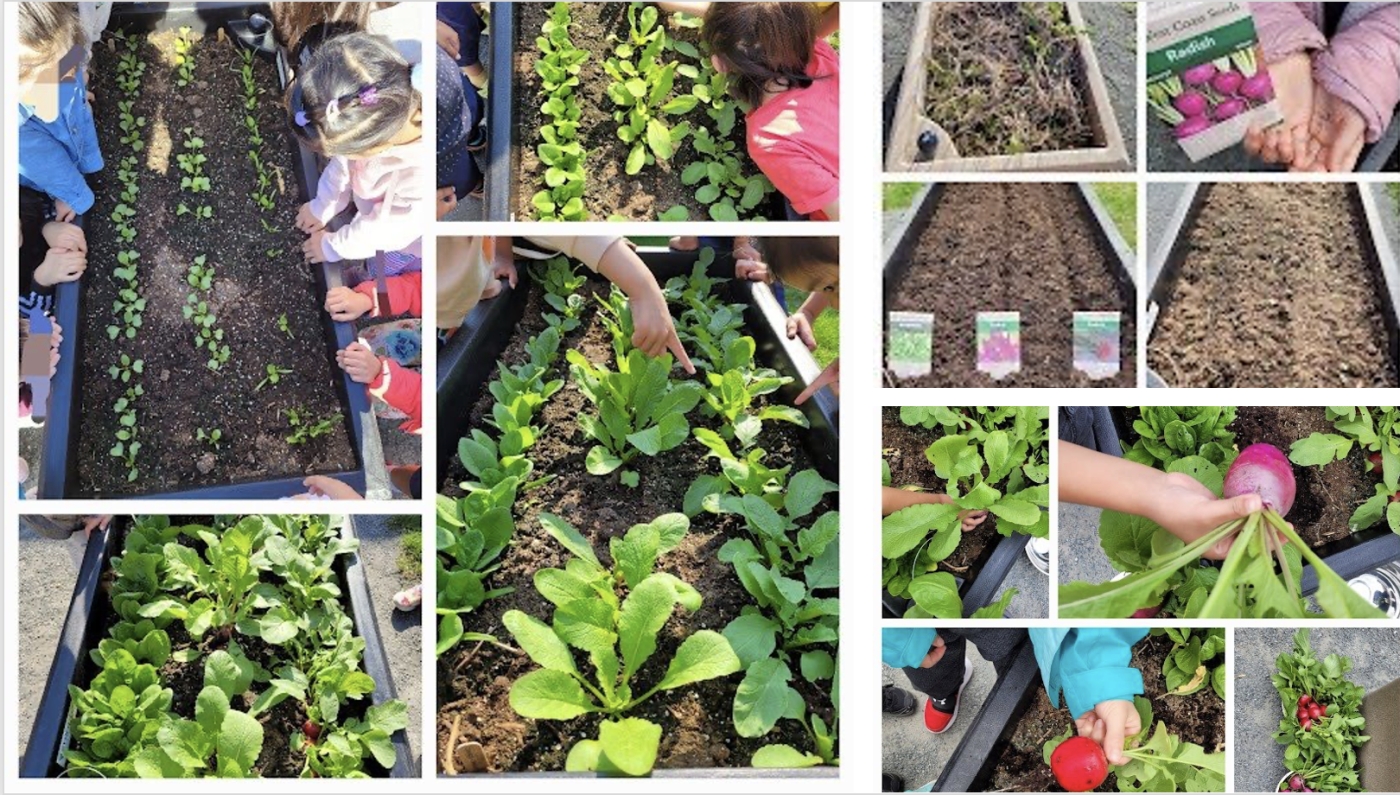
Our leaners can write simple sentences using words that follow spelling patterns and conventions.

Our learners became enthusiasm for nature, stewardship, and writing became evident when given the choice to vote on a writing topic, with the majority choosing the school garden as their preferred subject. A key focus for the Grade 1 FRIM class is developing literacy skills, particularly writing from experience. Spending time in the garden, students have become more observant, developed a connection with the land, and were given authentic nature-based experiences to write about.
The school garden serves as an inclusive learning environment, benefiting all students, including those with neurodiverse abilities. By incorporating Indigenous learning and worldviews, students have deepened their appreciation and love for the land, understanding its interconnectedness with their existence.
"Je peux lire et écrire en français" - I can read and write in French! - Grade 1 student
Physical Literacy
Intensive Intervention Program
At École Simon Cunningham, the students in the Intensive Intervention Program have physical literacy programs as a part of their curriculum and goals. Literacy takes place in many different forms. Many of our students work on "leisure skills" to improve their quality of life. Building the skills to join into play with others, or ride a bike, can bring students lots of joy. Movement and physical literacy are foundational for the development and well-being of students, including those with neurodiverse and complex needs.
Our learners will develop and apply a variety of fundamental movement skills in a variety of physical activities and environments.

Some benefits of movement and physical literacy includes:
Motor Skills Development
- Improves coordination and balance
- Develops fine and gross motor skills
- Assists in overcoming any motor delays and challenges
Cognitive Benefits
Stimulates brain function and cognitive development
Emotional and Mental Well-being and Self-Esteem
- Reduces stress and anxiety
- Provides a positive outlet for emotions and can help to regulate the body
- Can be especially beneficial for students with emotional and behavioral disorders
- Provides opportunities for success and accomplishment
- Boosts self-esteem and encourages a positive self-image
Social Skills and Inclusion
- Encourages teamwork and cooperation
- Promotes social interaction and communication
- Fosters a sense of belonging and inclusion
- Helps develop social skills and build friendships
Independence and Life Skills
- Develops skills essential for daily living
- Enhances ability to perform everyday tasks independently
- Prepares students for future challenges and opportunities
In order to promote and foster physical literacy in the Intensive Intervention Program, we use a combination of tools and supports, including:
- Individualized Education Plans (IEPs): incorporate physical activity goals and objectives
- Adaptive Equipment: use specialized equipment to support participation
Inclusive Activities: design and adapt activities/games do they include all students, regardless of abilities
We are proud of all our learners at SC. Go Cougars! - Simon Cunningham Staff
OUR FOCUS
Every day, students at École Simon Cunningham are presented with opportunities to practice and demonstrate their social emotional learning skills and capabilities. Our staff is devoted to creating a culture of care in which relationships are valued and collaboration can flourish. However, a quick scan at the beginning of the year revealed that our students were finding it challenging to work and play together effectively, often as the result of difficulties with self-regulation and/or lack of appreciation of different perspectives.
We invited teachers to take a survey to gain a better understanding of their experiences with teaching and exploring Social Emotional Learning (SEL) in the classrooms at our school.
SEL Staff Survey Results

I teach Second Step, MindUp and Growth Mindset throughout the year. SEL is instrumental in creating a nurturing learning environment where students can thrive academically, socially, and emotionally. - SC Teacher
Intervention Strategies
Skill Building Lessons
To identify students' overall strengths and areas of growth, we tracked and monitored a cohort of Grade 2/3 classes. This cohort included a diverse range of learners that were representative of our school's population, but who particularly had challenges in two identified areas. The personal and social core competencies we focused on in relation to "responsible decision-making" include:
- Self-Regulating: Students take ownership of their choices and actions. They set goals, monitor progress, and understand their emotions, using that understanding to regulate actions and reactions.
- Resolving Problems: Students identify and develop an appreciation for different perspectives on issues. They show empathy, disagree respectfully, and create space for others to use their voices.
Students in our cohorts participated in various SEL themed lessons focused on our two main competency areas. These lessons were drawn directly from the Second Step program and the CASEL framework. The goal of Second Step is to help students build a foundation for a positive, inclusive culture through developing social emotional competencies, which include perspective taking, empathy, processing emotions, understanding and resolving conflicts and building positive relationships.
Examples of SEL lessons include:
- Growth mindset and goal setting
- Emotion management
- Empathy and kindness
- Problem Solving

We learned to be assertive by talking to someone with a calm voice - Grade 3 student
Other Lessons and Activities:
- Using picture books to support SEL themes like identifying and naming big emotions and solving problem peacefully.
- Providing direct instruction about and practicing positive self-talk.
- Evaluating the consequences of actions.
- Developing an understanding of the role of personal decision making in promoting community wellbeing.
Young Cougar's Reflections
Incorporating SEL into reading and writing instruction not only enhances academic outcomes but also nurtures students' emotional well-being, creating a balanced approach to literacy education that supports the development of confident, empathetic, and skilled readers and writers.


Building Confidence & Self-Love Activity
Writing & Reflecting
Students are challenged to think of aspects of themselves that they love and feel proud of in various lessons including this SEL self-love activity. As a class, students first discussed and wrote why it is important to think of things they love about themselves and shared how they felt inside when they thought of positive things. Afterwards, the class had many discussions regarding the importance of self confidence and how our confidence helps us all throughout our lives. Students used a process of self-discovery to help foster and grow their own confidence.
Our learners can collaborate with their peers to explore what it means to show love and appreciation for themselves.

I am kind to others but sometimes I forget to be kind to myself. I didn't know how many great qualities I have and I am proud to be me. - Grade 3 student
OUR NEXT STEPS
Evidence of Growth and Areas of Focus
In September 2023, early primary teachers used the BC Ministry of Education Quick Scale: Grades K to 3 for Social Responsibility performance standards to assess students’ level of social awareness in four areas:
- Contributing to the classroom and school community
- Solving problems in peaceful ways
- Valuing diversity and defending human rights
- Exercising rights and responsibilities
In June 2024, the teachers used the same criteria scale to assess students and measure their growth over the school year. The results of the assessments below indicate a significant reduction of the number of Grade 2/3 students experiencing difficulty with their self-regulation and social responsibility skills.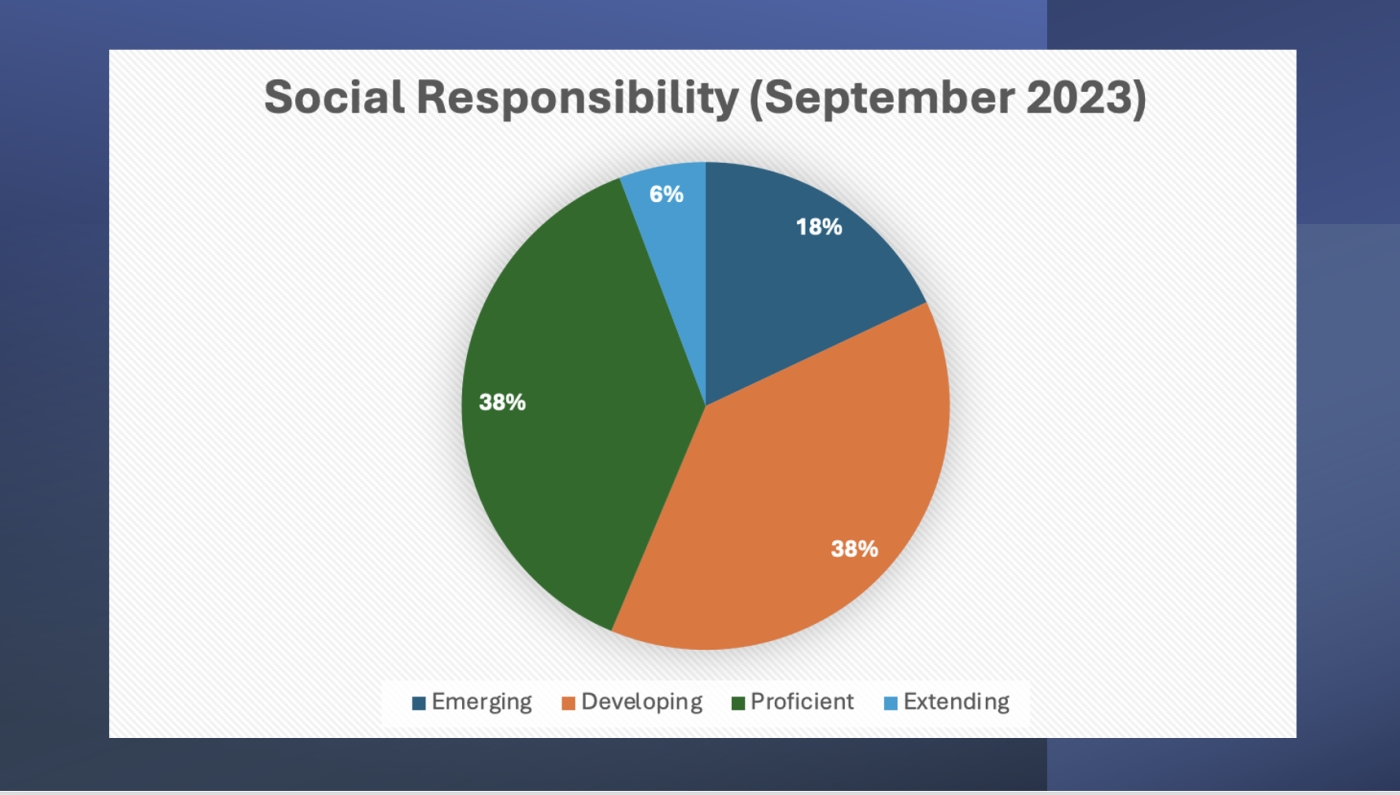


Growth was demonstrated in the September 2023 to June 2024 social responsibility scale results. When averaging results across all four goals, we saw a decrease in the percentage of students who are Emerging (-16%) and a decrease in those who are Developing (-21%). Similarly, we saw an increase in the percentage of students who are Proficient (+10%) and students who are now Extending (+27%).

When I am calm, I can focus and learn new things. - Grade 2 student
Positive Behaviour Intervention System - PBIS "Matrix"
This school year, we formed a PBIS committee to help develop and implement a school wide PBIS plan that works to promote school safety and expected positive behaviour for all of our students. The PBIS rubric we created outlines student's behaviour expectations across multiple school settings, including hallways, outside, bathrooms, etc. The goal of the PBIS rubric is to provide staff and students with clear school-wide behaviour expectations. As always, we encourage family and community involvement to support positive behaviour at school and at home. Our hope is to continue to encourage students to make safe and positive choices. 
The PBIS aims to create a positive and inclusive school climate where all students can learn and thrive socially and academically by promoting positive behaviours, addressing behavioural challenges proactively, and fostering a supportive learning environment for everyone involved.
Moving Forward
Students have started to show growth based on the skills they have learned and practiced. As we continue to keep SEL at the centre of teaching and learning at École Simon Cunningham Elementary, we will continue to build on our progress by focusing on responsible decision-making. Based on evidence of students’ progress in relation to our learning goals, our next steps will be:
- to continue to take ownership of their choices and actions
- to continue to understand their emotions, using that understanding to regulate actions and reactions
- to continue to identify and develop an appreciation for different perspectives on issues
- to further explore and show empathy, disagree respectfully, and create space for others to use their voices
Students will continue to work on these areas through implicit learning opportunities embedded in the lesson designs and supported interactions between staff and students. Staff will also continue to provide explicit instruction of these SEL skills through the school-wide use of educational resources designed for SEL instruction.
As a Learning Community
- we will continue to monitor and adjust our student learning plan to meet the needs of our students
- we will continue to facilitate growth by identifying what is working and what needs to be improved
- we will explore methods to further evaluate the impact of our plan and apply this feedback to adjust ongoing teaching strategies
Surrey Schools
Formed in 1906, the Surrey School District currently has the largest student enrolment in British Columbia and is one of the few growing districts in the province. It is governed by a publicly elected board of seven trustees.
The district serves the cities of Surrey and White Rock and the rural area of Barnston Island.