École Peace Arch

OUR CONTEXT
École Élémentaire Peace Arch School is located on the unceded traditional territory of the Semiahmoo Nation who share the remarkable White Rock Coastline and surrounding lands with our school community. Our team of educators take advantage of the many green spaces, parks and beaches that are within walking distance from our school and incorporate field studies into their curriculum that have our students out and connecting to their community often throughout the school year.
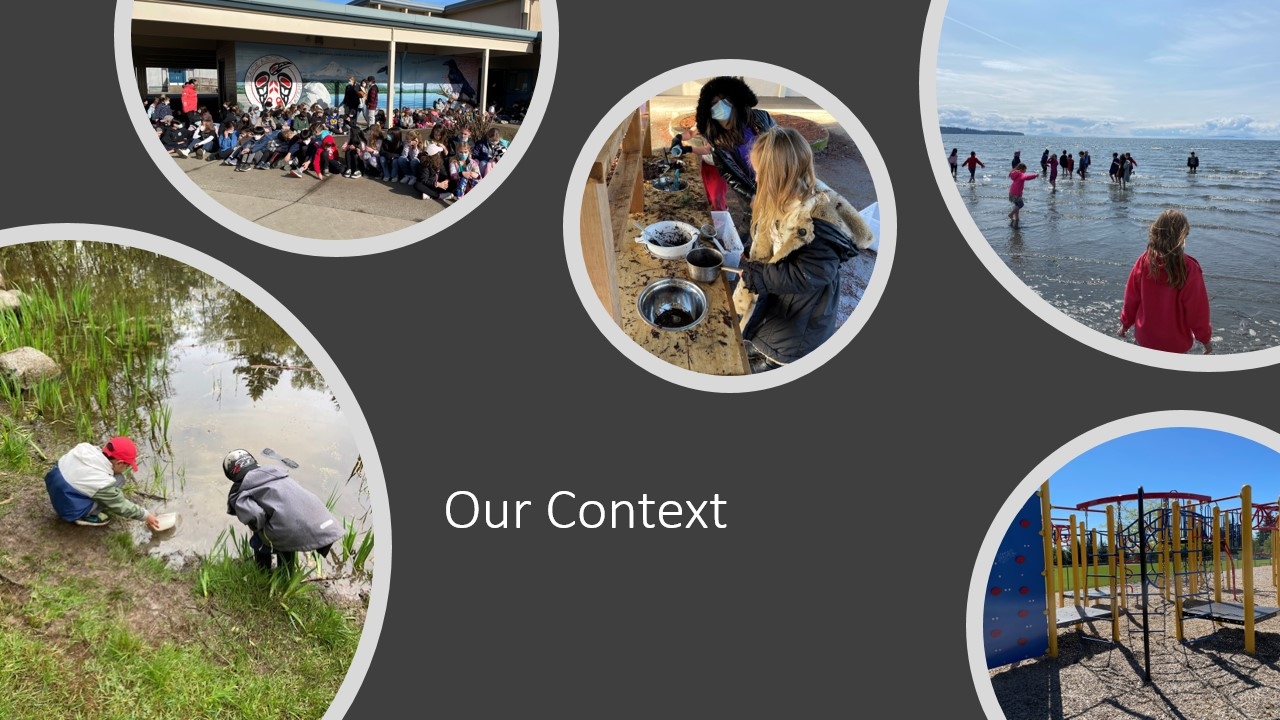
We have a unique campus setting with 5 "Pods" or modular like buildings, making our hallways primarily outdoors. We have a large outdoor space with two incredible playgrounds, undercover play areas and outdoor basketball court. We are alongside the grassy Peace Arch Playing Field, that our students are able to access throughout the day.
We are a dual track school where our Neighbourhood Program learners work, learn and play alongside our French Immersion learners. Regardless of the language of instruction, together we are the Peace Arch Ravens!

OUR LEARNERS
From the First Peoples Principles of Learning: Learning ultimately supports the well- being of the self, the family, the community, the land, the spirits, and the ancestors. With this in mind, the focus of our student learning plan is our Caring Curriculum; in particular, our work with students within the theme of Inclusion. Through the strands of Diversity, Equity, and Written Literacy our students will care about themselves, others and this place (our school and community).
Guided by the BC Curriculum the following Core Competencies are imbedded in the learning activities, events and opportunities that our students experience in the Caring Curriculum:
Personal Awareness & Responsibility – which includes the skills, strategies, and dispositions that help students to stay healthy and active, set goals, monitor progress, regulate emotions, respect their own rights and the rights of others, manage stress, and persevere in difficult situations. Students who demonstrate personal awareness and responsibility demonstrate self-respect and express a sense of personal well-being.
Social Responsibility – which involves the ability and disposition to consider the interdependence of people with each other and the natural environment.
- Our students’ value and celebrate diversity, both within themselves and each other
- Our students contribute to community and caring for the environment
Our Intermediate students continue to develop their Personal Awareness and Social Responsibility through the Health Curriculum which centers around the following curricular competencies:
1. Describe and assess strategies for responding to discrimination, stereotyping, and bullying
- Cultivating an awareness of bullying, discrimination, and violence based on gender identity/expressions, sexuality, race, religion, ethnicity, etc.
- Assessing the situation, being assertive, reporting, seeking help
- Advocating for others
2. Explore strategies for promoting the health and well-being of the school and community
3. Explore and describe how personal identities adapt and change in different settings and situations.
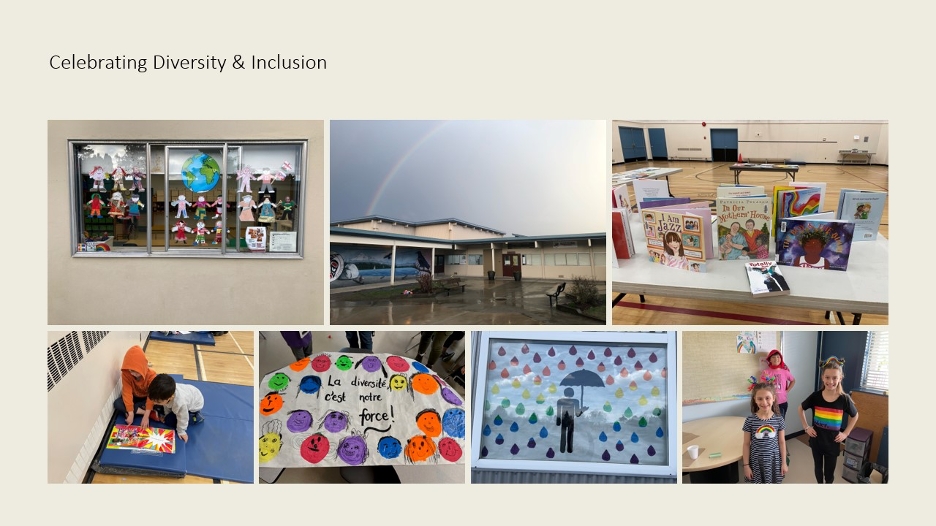
School wide events that became the vehicle for student learning included our Heritage Week in November, Pink Shirt Day in February, and our Rainbow Week in April. Each of these events involved coordinated planning and sharing of resources amongst staff so they were able to provide intentional learning opportunities for students about inclusion.
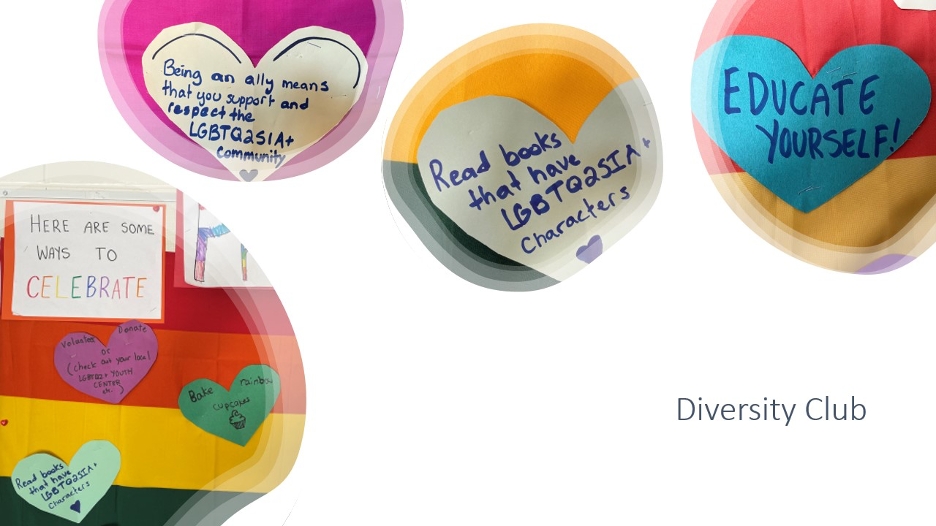
Peace Arch offered a Diversity Club this 2021/22 school year, where interested students in the intermediate grades could bring their questions and wonders about being LGBTQ2+ and explore them in a safe and inclusive environment. They also discussed and promoted ways of being an ally, and shared these with the broader school community. This work became integral in creating significant cultural shift with our understandings and acceptance of LGBTQ2+ people.
Strategies to teach deeper understanding for students of all ages also included a school-wide book tasting of our “all-inclusive” collection of picture books and subsequent lessons for teachers to guide their teaching.
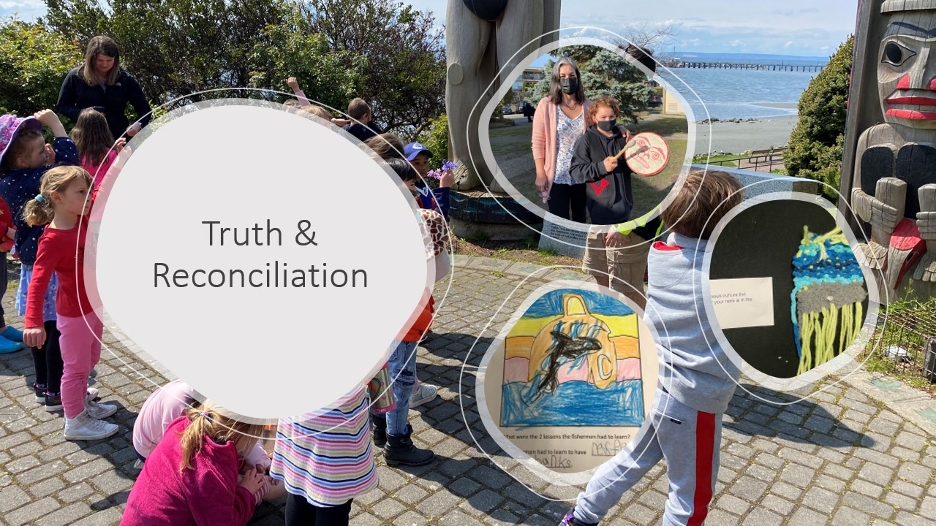 At Peace Arch we are committed to Truth and Reconciliation and are working as a staff to deepen our own as well as our learners’ understandings of why this matters. Some of the learning our students engaged in this 2021/22 school year included our First Peoples in Residence, POW WOW dance workshops, and our weekly morning announcements with explicit lessons about Truth and Reconciliation.
Indigenous Perspectives Shared:

OUR FOCUS
Learning ultimately supports the well-being of the self, the family, the community, the land, the spirits, and the ancestors (from First Peoples Principles of Learning). Through the lens of indigenous perspectives our team of educators have been explicitly teaching to inclusion and diversity this 2021/22 school year. At Peace Arch we want our students to care about themselves, others and this place.
Our intermediate students in learn to care about themselves and others during Health class, using picture books and First Peoples Principles of Learning:
Using text and story as a means to help them understand themselves and make connections to others and to the world, students will:
- understand that learning involves recognizing the consequences of one’s actions
- understand that learning is holistic, reflexive, experiential and relational (focused on connectedness, on reciprocal relationships, and a sense of place)
- understand that learning requires exploration of ones’ identity
Intermediate teacher reflection: Using the Indigenous Pedagogy of Circles (The Sharing Circle: Stories about First Nations Culture) students were explicitly taught the purpose of sitting in a talking circle. Throughout the school year, students sat in circle to better understand the health curriculum in particular bullying, stereotyping, discrimination, emotional changes during puberty and personal identities. The vehicle to deliver this curriculum was through picture books.
Picture books allow for student to learn about other’s experiences in the world. Students were explicitly taught that when author’s write their stories, they are giving the readers permission to share their perspectives and experiences that we may not realize even exist. It was hoped that using picture books would not only help deepen student understanding of themselves and others, but also to allow the students to see themselves in their education.
This did in fact materialize: After reading the book And Three Makes Tango by Justin Richardson and Peter Parnell, a student raised their hand and asked, ‘Is this a true story?’ Once it was confirmed, they replied ‘Perfect. I want to show my parents as evidence that LGBTQ is real and I am real’.

Truth and Reconciliation (Caring for Self, Others and this Place)
Connection to this place has framed our beginning in the important work of moving toward Truth and Reconciliation; in particular, our connection to this land on the unceded traditional territory of the Semiahmoo Nation. With this focus, students will cultivate their appreciation and understanding of this place where our school resides.
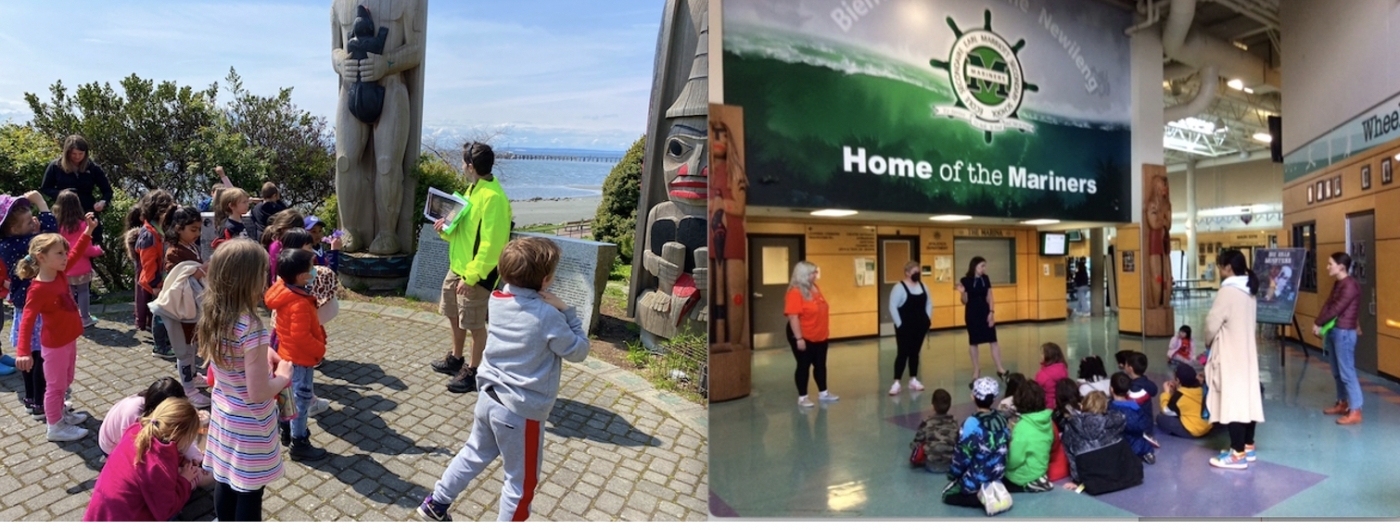 Left Photo: Field trip to Grand Chief Bernard Roberta Charles Plaza; Right Photo: A primary class visits the Cen'Alien (pronounced Quan'Alien) Welcome Posts at Earl Marriott Secondary.
A primary group of learners engaged in a year-long learning inquiry, focusing on our local area Semiahmoo/Coast Salish/White Rock, including learning about the Semiahmoo First Nation and exploring sea life stewardship at White Rock beach.
Primary teacher reflection: The principal shared the history of the Welcome posts that stand in the entry hall of Earl Marriott Secondary. Leonard Wells was the Semiahmoo master carver who created the male and female welcome posts. The welcome posts represent the captain of the reef net fishery which connects to the EMS Mascot, Mariner. The Captain of the reef net was responsible for managing the people and making sure everyone was safe and that enough food was harvested for the winter.
The principal also highlighted the importance of recognizing the relationship the Semiahmoo First Nation has with Earl Marriott and the local community. These posts were designed to welcome us into a safe place, and to connect us to the past and remind us of who we are and where we are going. The Semiahmoo people had welcome posts in front of their longhouses.
I am grateful that me and my students have gained a better understanding and appreciation of the Semiahmoo First Nation/ Coast Salish culture from the past, present and future through our inquiry this school year.
OUR NEXT STEPS
An educator brought her general observation about the shifting culture at Peace Arch to the administrations’ attention, stating that the work our staff and students have done this school 2021/22 school year has brought our school community (staff and learners) “leaps and bounds” in our understanding, acceptance and celebrations of inclusion. We are observing our students advocating for one another, being “allies”, spearheading initiatives that promote inclusion, and safely and comfortably exploring their best and true selves in open and honest ways.
A primary class became ambassadors to our playground, noticing creatures that needed our protection. They discovered a nest of Mason Bees in the ground at the edge of our playing field and alerted the caring adults to help them teach the other students about the bees so they would understand and leave them alone to continue their important work as pollinators! This is no doubt a direct result of the work they had done as a class exploring sea life stewardship. Through their enhanced awareness of Place these children have truly come to care deeply about this place (our school grounds and environment).
With these examples in mind, we plan to engage in the following next steps into the 2022/23 school year:
- To continue deepening our understanding of self, others, and place through our Caring Curriculum
- To use our Caring Curriculum as a focus to improve student writing
- To use written communication as a means of reflecting and talking about our understandings of self, others, and place
In addition to our intentional work with students cultivating their Personal and Social Responsibility, we plan to incorporate a Communication Competency Goal:
Communication competency encompasses the set of abilities that students use to impart and exchange information, experiences and ideas, to explore the world around them. Communication competency provides a bridge between students’ learning, their personal and social identity and relationships, and the world in which they interact.
- Our students acquire, interpret, and present information
- Our students explain/recount and reflect on experiences
Writing will become a further strategy to teach reflection and deepen understandings of inclusion and diversity. It will also allow us an opportunity to hone our students’ skills as writers. Using topics related to inclusion and diversity, students will reflect on and write about their understandings of inclusion and diversity.
Examining student writing through the lens of the BC Performance Standards will guide educators to the explicit skills that need to be taught to individuals and to the whole class.
- In the Fall, students will engage in a school wide write. These writing samples will inform us about our learners’ strengths as writers and areas requiring improvement
- In the Spring, reflecting on student writing samples will provide opportunity to celebrate growth and once again prioritize what to teach.
Surrey Schools
Formed in 1906, the Surrey School District currently has the largest student enrolment in British Columbia and is one of the few growing districts in the province. It is governed by a publicly elected board of seven trustees.
The district serves the cities of Surrey and White Rock and the rural area of Barnston Island.