Ecole Jessie Lee 25-26

OUR CONTEXT
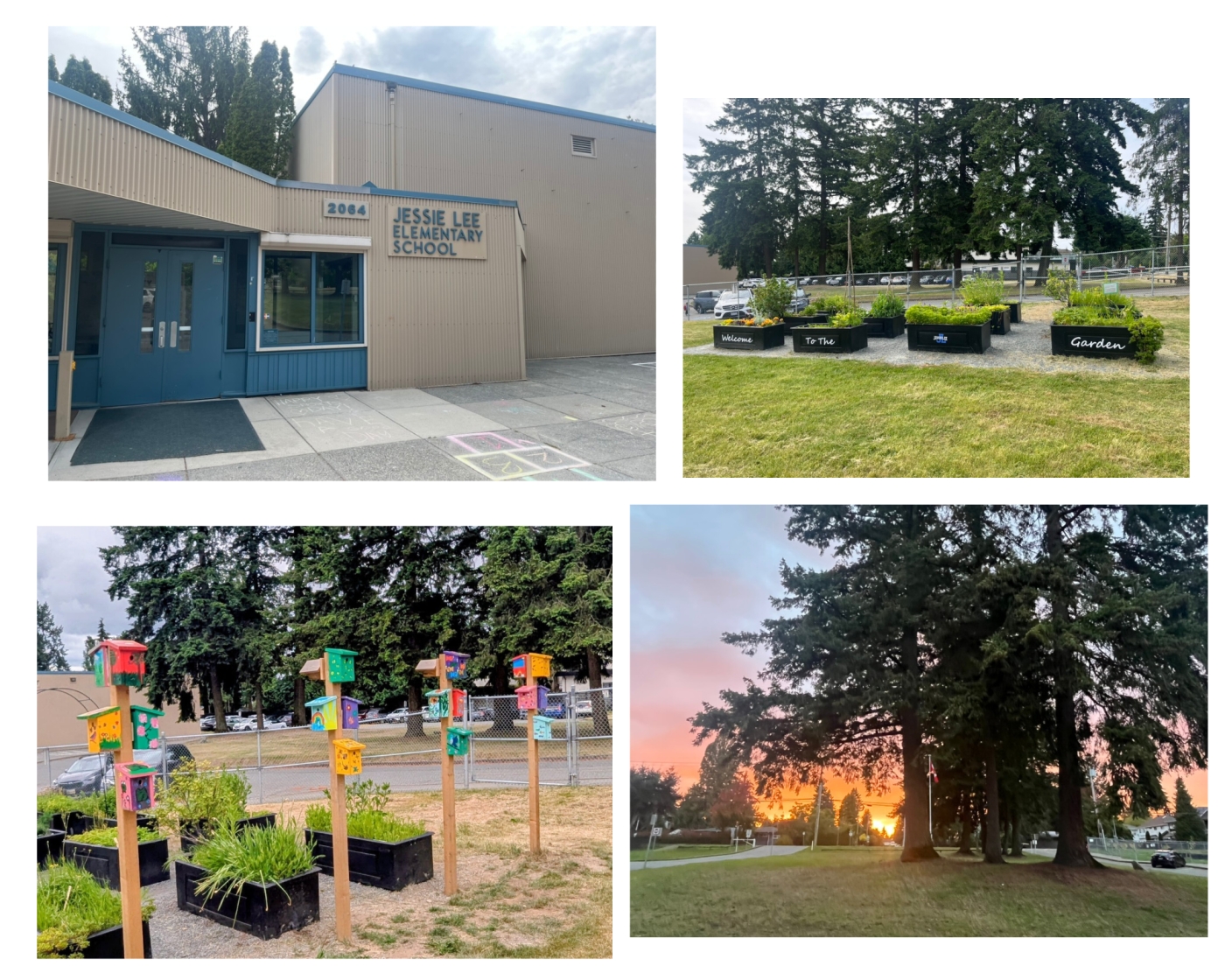
We are located in South Surrey on the traditional shared territory of the Semiahmoo First Nations. Our school is nestled in a beautiful neighbourhood surrounded by nature, blocks from the ocean and yet very close to urban comforts. Our approximately 380 students come from diverse backgrounds that make up our collaborative school community. We also have two late French Immersion classes, along with a new Social Development Program, better known as "The Lodge". Our parent group, teachers and support staff all work together to contribute to a warm, welcoming place of belonging for all.
Community & Inclusivity:
- We actively look for ways to connect our students with the local environment, engaging in place‑based learning through experiences in spaces such as our school garden.
- Our learning community values collaboration, inviting partnerships within our school, across neighbouring schools, throughout the district, and with the broader community.
- Our committed parent group plays a meaningful role in bringing joy and energy to our school. They have helped establish our school garden, as well as organize and support school‑wide events such as the Spring Sprint, Summer Fun Fair, and—always a student favourite—Hot Lunch.
- We are fortunate to receive support from several community organizations, including Feeding Futures and the Vancouver Sun, whose contributions help strengthen our programs.
- Our district also supports us through the Community Schools Partnership, which provides after‑school programming and a range of lunchtime opportunities for our intermediate students.
- Jessie Lee embraces and honours the diverse identities within our community, supported in part by our dedicated student‑led Diversity Club.
- We are committed to embedding Indigenous Ways of Knowing and the First Peoples Principles of Learning across our school.
Literacy Focus:
Our classrooms use a balanced literacy approach
Many of our teachers are involved in the ongoing "Responding to Readers" initiative
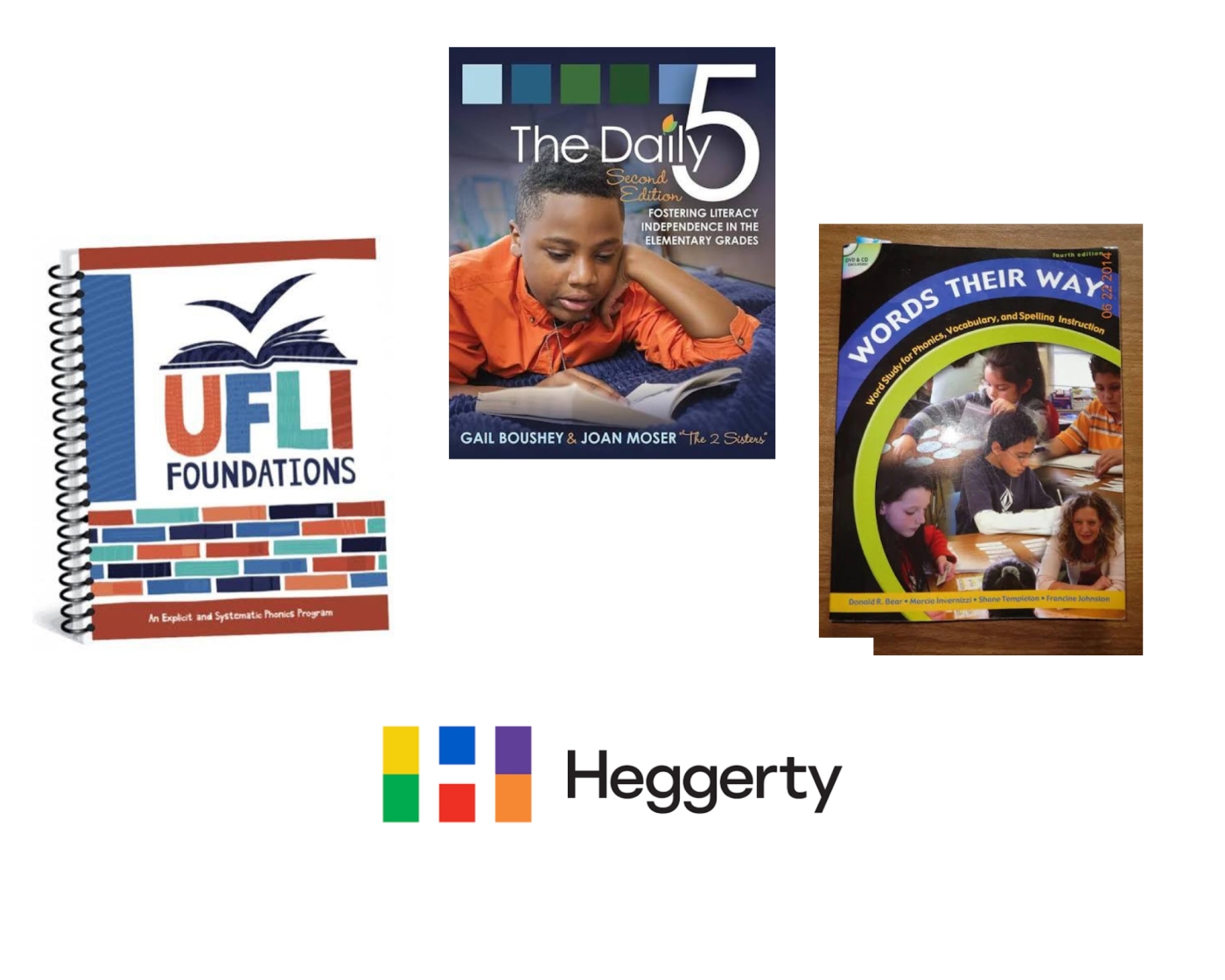
Our primary teachers use focussed phonics programs, such as UFLI and Heggerty
Many of our primary and intermediate teachers are trying new forms of assessment, such as Diebels and Acadience
OUR LEARNERS
At Jessie Lee, we are committed to offering our youngest learners rich, engaging literacy opportunities from the moment they enter school. In partnership with our Strong Start Program—which supports families with children ages 0 to 5—we create welcoming spaces where early learners can explore language and literacy throughout the building. Our community benefits from a thoughtful, well‑rounded approach that nurtures growing readers and writers and helps every child develop confidence. With predictable routines that centre on meaningful learning rather than the task itself, literacy is seamlessly integrated into each day through daily levelled guided reading, high‑frequency word instruction, targeted spelling practice, and purposeful writing experiences.
Our learning plan aligns with the BIG IDEAS of English Language Arts, including:
Language and story as sources of joy
Sharing stories through pictures and words
Curricular Competency Focus:
Teachers provide explicit, systematic instruction in reading fluency, including modelled practice and guided opportunities to build accuracy, pacing, and expression.
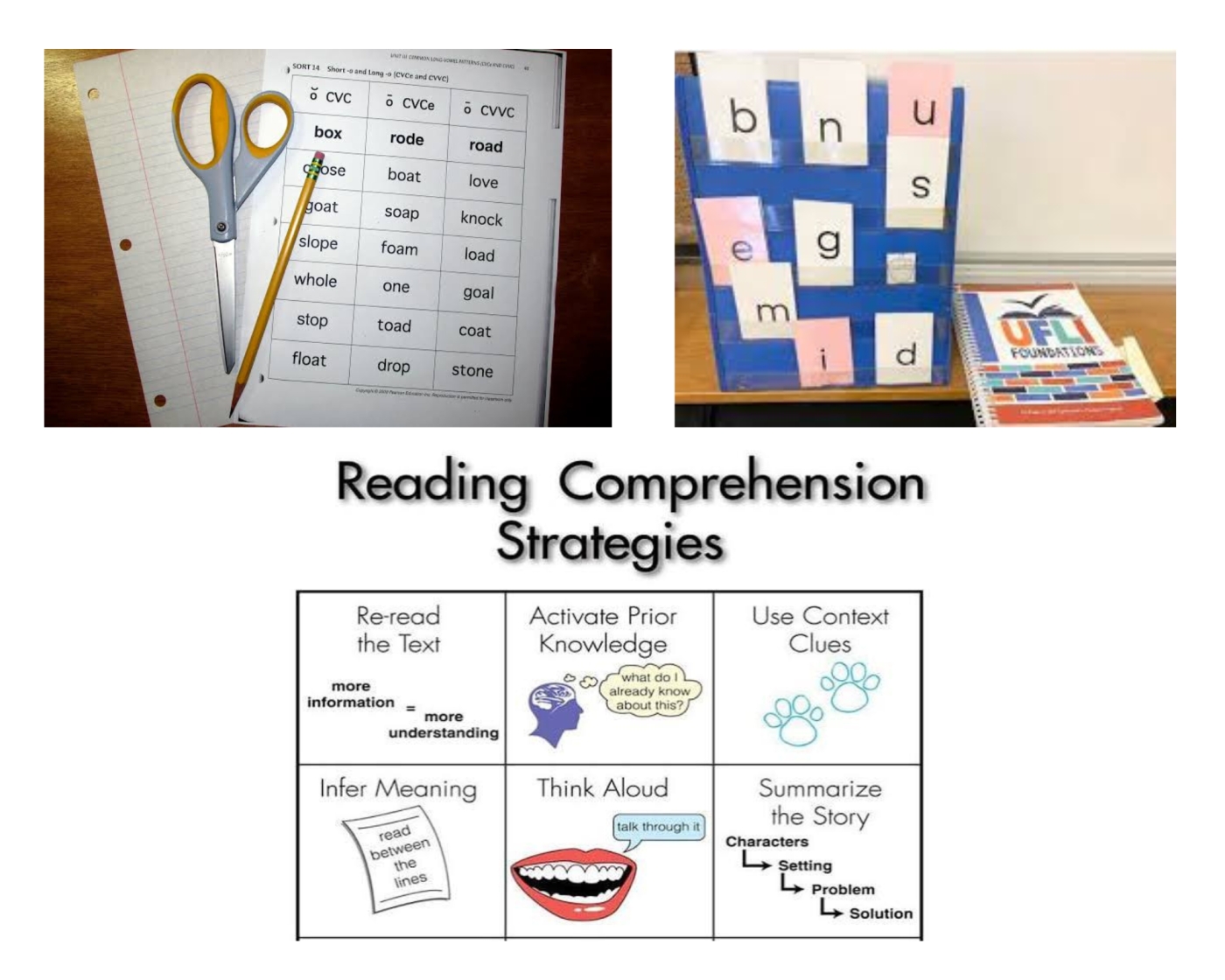
Students develop the ability to use a variety of comprehension strategies before, during, and after reading to support inquiry and deepen their understanding of text. These strategies include predicting using illustrations and prior knowledge, rereading, retelling, identifying key ideas and supporting details, decoding through phonics and language patterns, and self‑monitoring for accuracy.
As students strengthen these reading behaviours, they become more capable of making meaning from text and connecting it to their broader experiences. With growing confidence, they begin to express their own ideas more independently, shaping their thinking into written work that others can read and appreciate. Our intermediate learners continue to build on this foundation by expanding their skills in both reading and writing, ensuring they are well prepared to succeed across the curriculum.
OUR FOCUS
Jessie Lee Students Are Growing as Readers and Communicators!
At Jessie Lee, literacy is a central school priority and a foundational skill that supports learning in every grade and subject area. Literacy involves understanding, analyzing, and creating a wide range of communication forms—oral, written, visual, digital, and multimedia. It is the ability to read, write, speak, and think in ways that allow us to communicate clearly and engage meaningfully with the world. Our teachers design purposeful literacy lessons and experiences to help every student reach their full potential.
This year, our team decided to continue our focus on literacy, to continue the progress that we are making with our students.
Our Inquiry Focus:
Can students show measurable progress toward reading at grade level by the end of the school year?
Through intentionally planned lessons and targeted learning opportunities, we aim to support students in strengthening their reading skills so they can confidently meet grade‑level expectations.
Our Cohort:
We have one cohort of primary students and one cohort of intermediate students. We looked closely at these groups to gather evidence of success, ensure access to quality levelled texts and reflect on best strategies to deepen our students literacy skills.
Teachers designed specific units and lessons to target the reading and writing needs of their students. This focus was taught through explicit teaching structures such as the "Daily 5" and Book Clubs, word work focussed on phonetic patterns and word families, and various opportunities for reading aloud, through presentations, readers theatre, and more.
OUR NEXT STEPS
Teachers followed students at varying levels in literacy so we could document the growth of student learning over time. Learning was recorded through observations during individual and group work, conferencing, individual read alouds, one-on-one assessments, and standardized reading assessment tools.
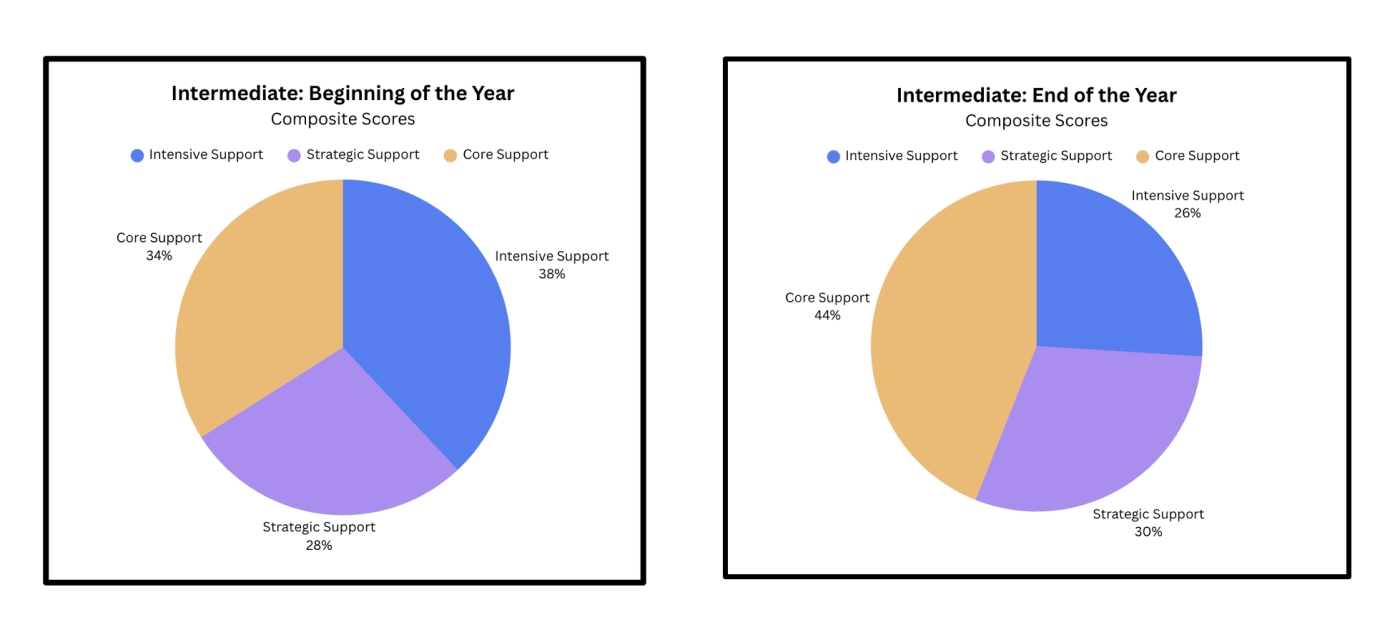
In the fall of 2025, within the intermediate cohort of students, 34% of students were reading at or above grade level, requiring core support, while 38% were reading significantly below grade level, requiring intensive support. .
Over the year students focused on both fluency and comprehension through instruction and practice.
- fluency: the ability to read text accurately, at a good pace, and with proper expressions
- comprehension: the ability to understand, process, and derive meaning from written text
When assessments were completed in May of 2026, approximately 44% of students in the cohort were reading at or above grade level, while the number of students reading below grade level and requiring intensive support went down to 26%.
Although our primary cohort of students does not appear to have made the same progress when looking at overall composite scores, they have made significant gains in particular areas, including First Sound Fluency.
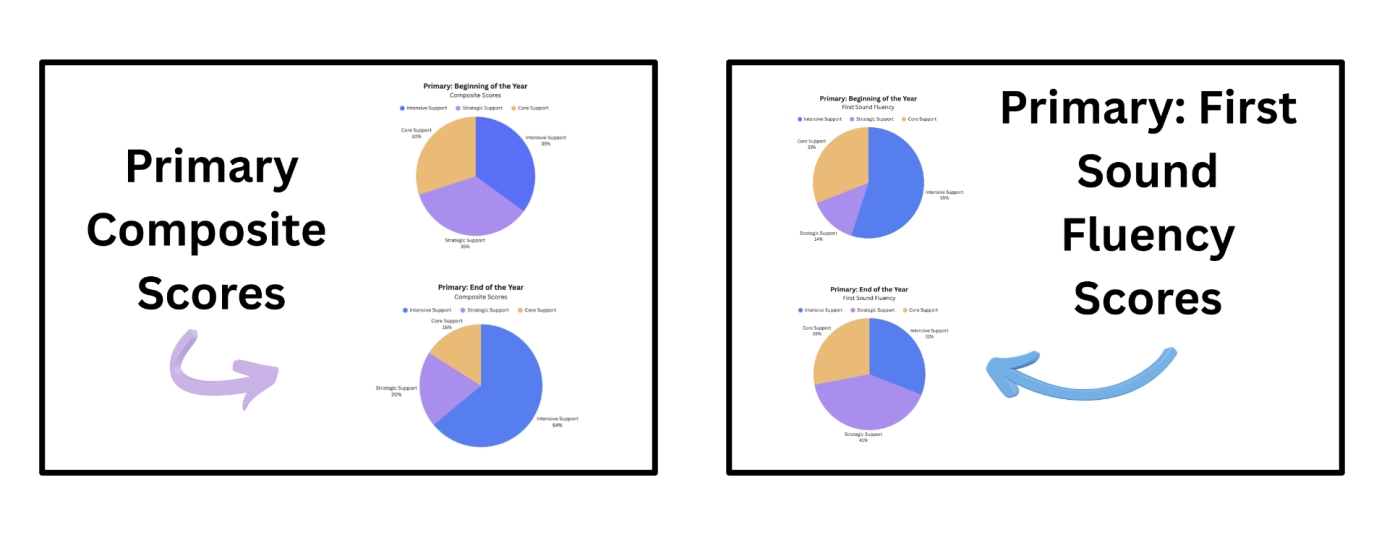
"First Sound Fluency (FSF) is a brief, direct measure of a student’s fluency in identifying the initial sounds in words. The ability to isolate the first sound in a word is an important phonemic awareness skill that is highly related to reading acquisition and reading achievement. The ability to isolate and identify the first phoneme in a word is an easier skill than segmenting words or manipulating phonemes in words, thus FSF is used as a measure of developing phonemic awareness."
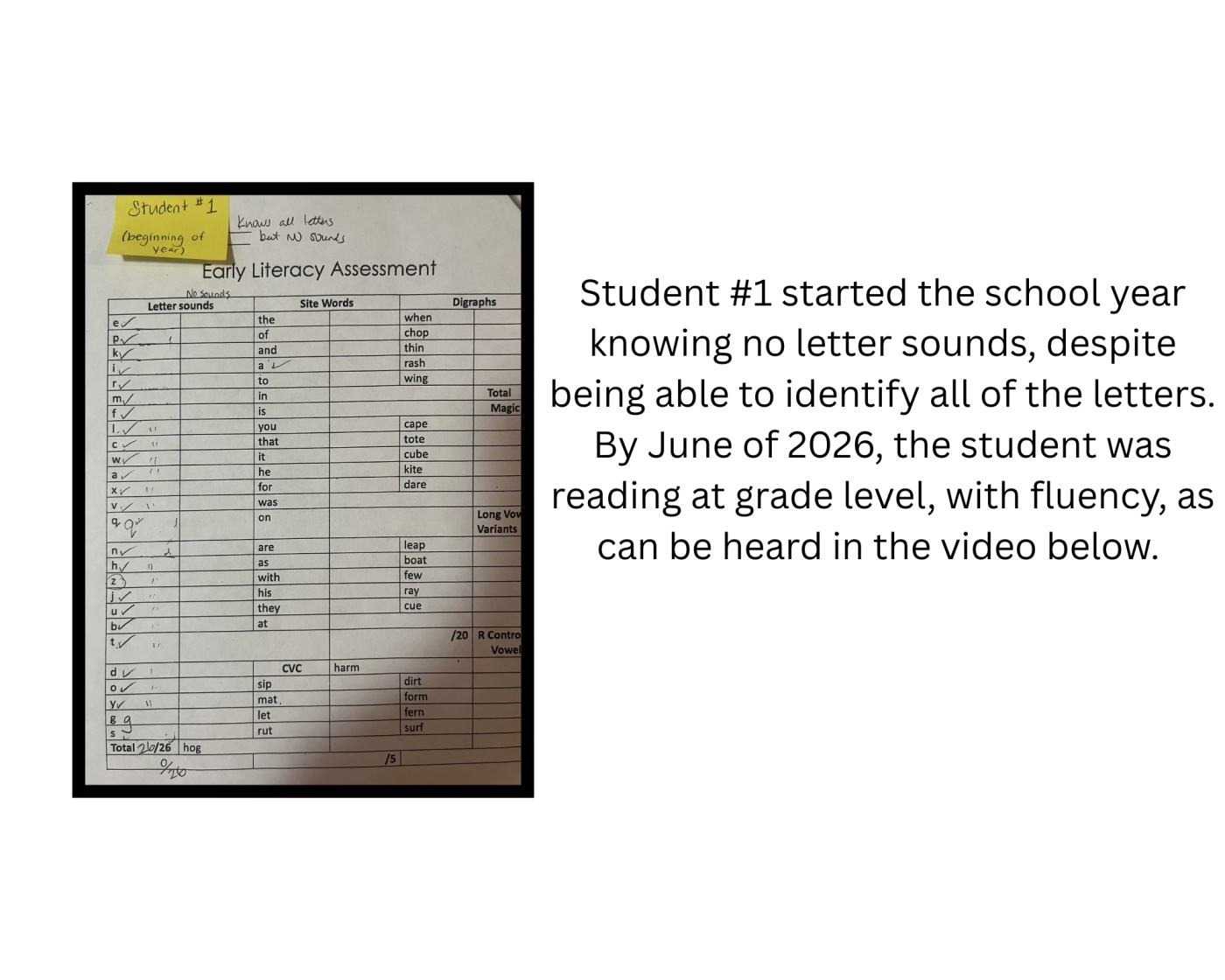
When initial testing was done, 11 out 21 students in the cohort were well below benchmarks, including 8 students that knew no lefter sounds at all. In later testing, the number of students below benchmark was 6 out of 21.
The examples below illustrate the progress a few of these students have made:
We interviewed a few teachers about their experience explicitly teaching literacy this year. We asked them to reflect on their teaching and student learning by answering a few questions.
1. How have your students progressed in reading fluency and comprehension since the beginning of the year?
"Since the beginning of the school year, students in my class have demonstrated growth in both reading fluency and comprehension. Overall, the class is reading with increased speed and accuracy. Some students are now working towards refining their pacing by pausing at appropriate points to support meaning and expression."
2. What strategies or interventions have been most effective for students who are still working toward grade-level expectations in reading and writing?
"Providing additional opportunities to engage with high‑interest texts—including exposure to new books and unfamiliar genres—has increased motivation for certain learners. Digital tools like Canva and Book Creator have supported students in organizing and sharing their thinking."
As we continue working on out schoolwide literacy goal, we remain committed to strengthening instruction in phonetic learning and morphology to ensure all students build the foundational skills needed for confident reading and writing. Our next steps include expanding staff involvement in both the explicit teaching of these skills and in the consistent use of standardized assessment tools to monitor growth and guide instruction. By working collaboratively, aligning our practices, and deepening our shared expertise, we will continue to create a, responsive literacy program that supports every learner’s success.
Surrey Schools
Formed in 1906, the Surrey School District currently has the largest student enrolment in British Columbia and is one of the few growing districts in the province. It is governed by a publicly elected board of seven trustees.
The district serves the cities of Surrey and White Rock and the rural area of Barnston Island.