Ecole Frost Road 25-26

OUR CONTEXT
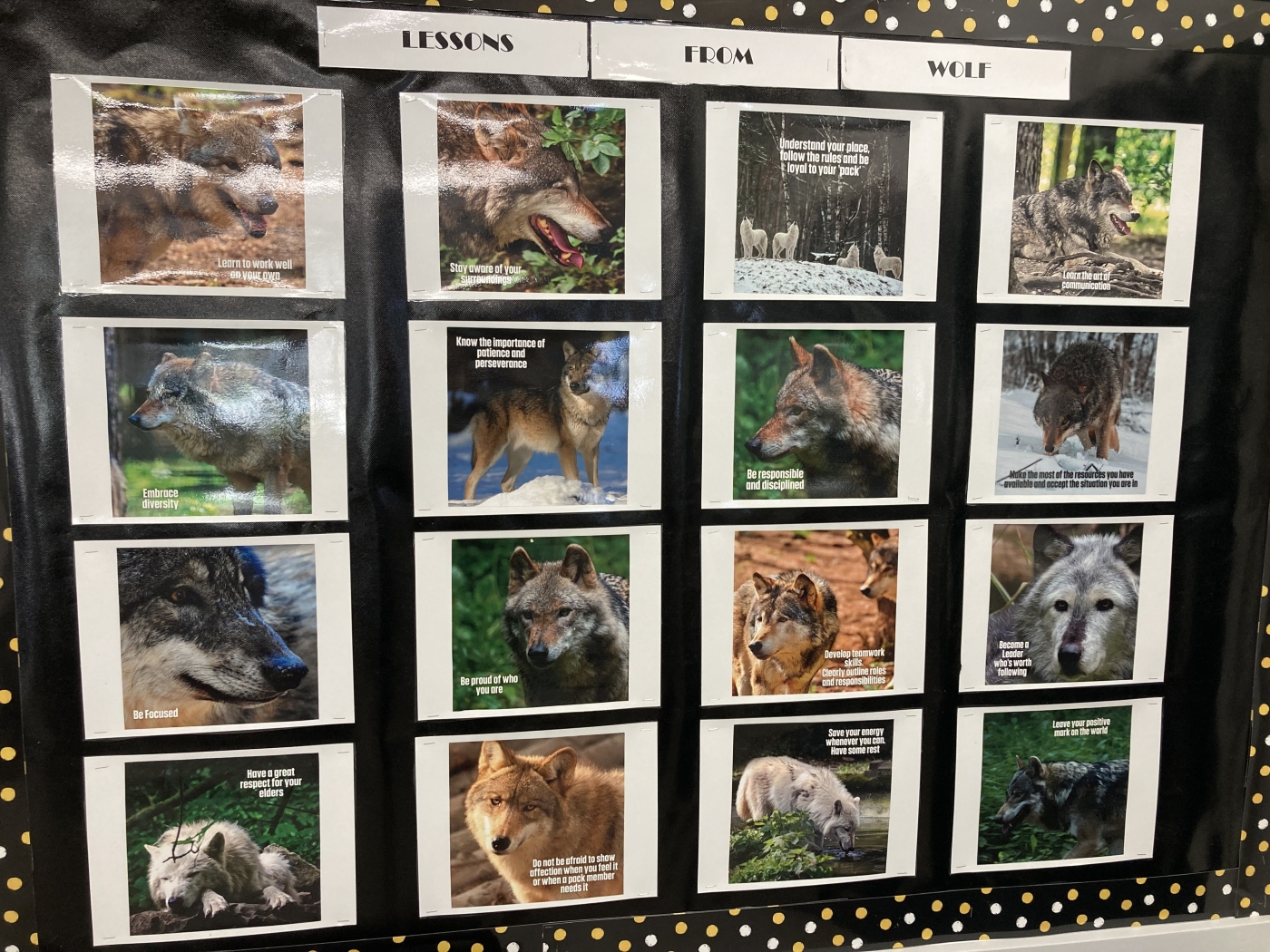
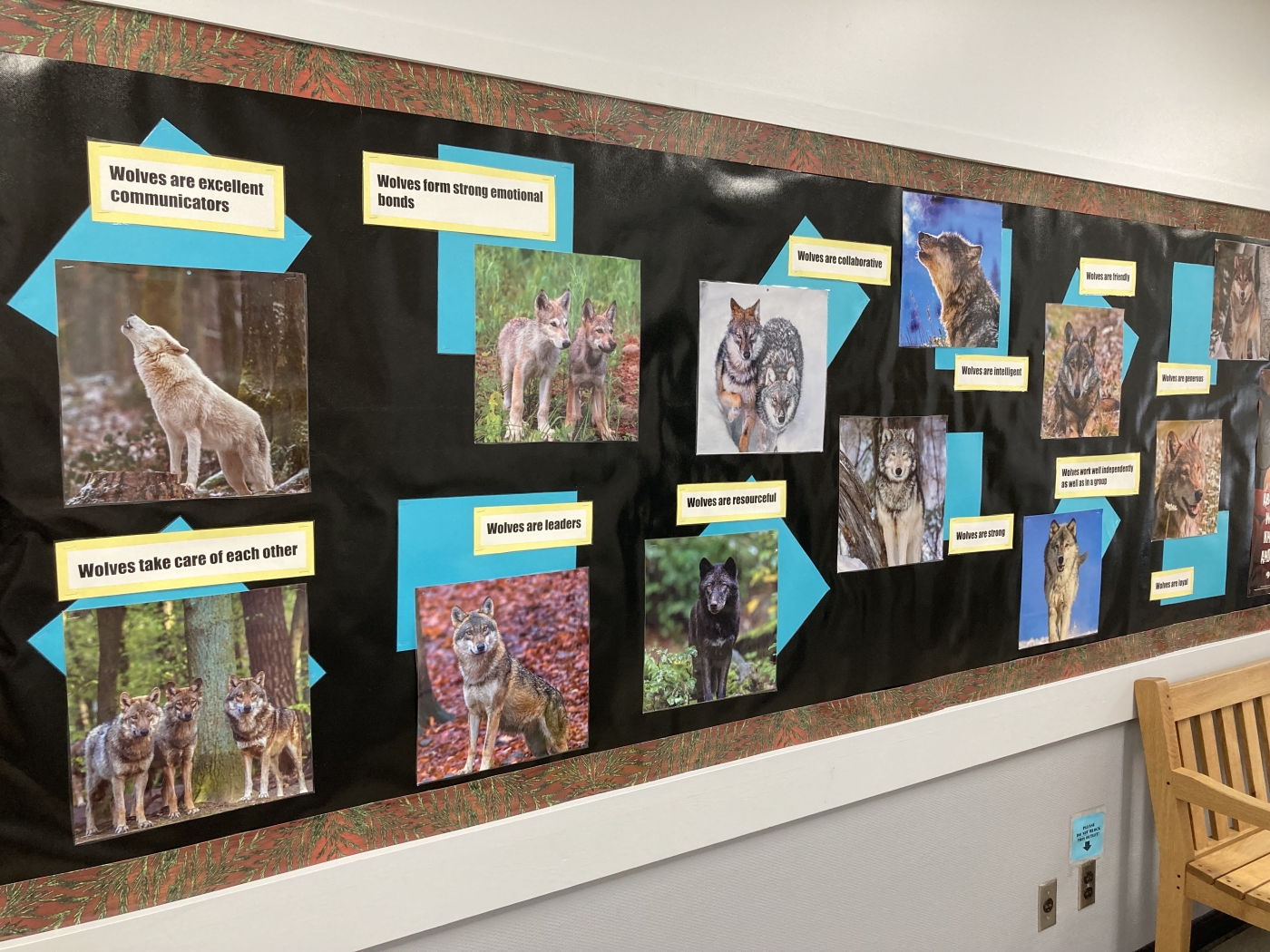
We are the Wolves! Our Frost Road community acknowledges that we work, play, and learn on the traditional, ancestral, and unceeded territory of the Katzie, Kwantlen, Semiahmoo, and other Coast Salish Peoples. Our school is a wonderful place to be! We enjoy being together, building a positive and inclusive community. We love playing and learning together. We love being physically active and getting outdoors. We connect through the arts, conversations, and technology. We prioritize hands-on and play-based learning. We embrace and celebrate our diversity.
Students of all ages work towards making Frost Road a positive place to be. Our primary students love helping to keep our grounds clean, intermediate students support and supervise younger peers at lunchtime, and our Grade 6 and 7s assist with leadership roles throughout the school. We also have a wonderful parent community that supports the school in numerous ways, including through our very active Parent Advisory Council.
Our learners are engaged in Social-Emotional Learning (SEL). We have an SEL teacher lead and a student-led SEL committee at our school that regularly provides school-wide opportunities to learn together through evidence-based programs, lessons, activities, and assemblies. Students at Frost Road are learning about virtues and how to apply them in their daily interactions to build empathy, resilience, and a positive school culture. Our learners are proud to be Wolves who uphold our high expectations for positive student behaviour, social responsibility, and academics.
OUR LEARNERS
Our learners bring a wide range of language, culture, experiences, and background knowledge to share with their school community. About 65% of our students speak a language other than English at home and they bring a wonderful linguistic variety and valuable language skills with them to school. Our learners love language, particularly sharing their ideas with one another, listening to and creating stories and music, engaging in play, showing off what they know, and celebrating their accomplishments. Our learners work hard to develop new language skills; expand their vocabulary, make connections between oral and written language, build confidence in literacy, and understand the importance of reading and the joys that come along with it. Students enjoy being surrounded by language and by being given opportunities to develop literacy skills in so many different ways each day.
Our learners are discovering their capabilities, creativity, and resilience as individuals. The First Peoples Principles of Learning, articulated by Indigenous Elders, scholars, and knowledge keepers, are a set of learning principles specific to First Peoples. These principles, particularly that "learning is holistic, reflexive, reflective, experiential, and relational," can significantly enhance our writing focus on improving attitudes toward literacy in several ways:
Holistic Learning: This approach considers the whole person, integrating emotional, social, and cognitive aspects. In writing, this means recognizing that expression isn’t just about words and grammar but also about voice, identity, and relationships. Students see writing as a way to share their stories and connect with others, fostering a positive attitude toward literacy.
Reflexive and Reflective Learning: Encouraging students to think about their thinking (metacognition) helps them understand their writing process. Reflecting on what strategies worked or didn’t work builds confidence and a growth mindset, as students learn to adapt and improve their writing over time.
Experiential Learning: Learning through experience—such as journaling, storytelling, or real-world writing tasks—makes literacy more engaging and meaningful. This approach helps students develop authentic communication skills and a positive attitude toward writing by learning from both successes and challenges in a supportive environment.
Relational Learning: Focusing on relationships and connectedness fosters a collaborative writing environment. When students share and respond to each other’s writing, they build empathy, communication skills, and a sense of community. They learn that writing is a tool for connection, not isolation.
By integrating these principles, we foster a literacy curriculum that not only strengthens writing skills but also nurtures voice, identity, and confidence, encouraging students to approach writing with creativity, courage, and enthusiasm.
OUR FOCUS
Each and every day, among the variety of learning experiences presented to our primary learners and English Language Learners, our team of educators focuses on thinking, reading, writing, and communicating across all curricular areas. Our aim is to build strong literacy foundations that are fundamental for students’ participation in today’s world.
Our students’ learning goal is to write fluently at grade level, using developmentally appropriate strategies to express ideas clearly, organize thoughts effectively, and communicate with purpose and voice. Through explicit instruction, modeling, and opportunities for authentic writing, students learn to craft sentences and paragraphs that reflect their understanding, creativity, and individuality.
We emphasize writing as a process: planning, drafting, revising, and editing so students develop resilience and confidence as writers. By integrating Social-Emotional Learning and the First Peoples Principles of Learning, we encourage writing that is holistic, reflective, and relational. Students explore personal narratives, respond to texts, and engage in collaborative writing experiences that connect them to their peers, their community, and the world around them. Our ultimate goal is to empower students to see writing not only as an academic skill but as a lifelong tool for thinking, self-expression, and making their voices heard.
This year, our school-wide write provided meaningful opportunities for teachers to collaboratively analyze student writing across grade groups. Teachers examined trends, identified common strengths and areas of challenge, and engaged in discussion about assessment practices to support equitable and consistent understandings of proficiency. Staff also participated in professional development opportunities to explore a range of writing resources and to share instructional successes with colleagues. Through this shared inquiry and collaboration, teachers reflected on their writing instruction and identified next steps to strengthen planning, scaffolding, and targeted support for learners.
Building Positive Attitudes Toward Writing
Developing positive attitudes toward writing is a key factor in improving student achievement and engagement. When students see themselves as capable writers and feel motivated to express their ideas, they are more willing to take risks, persist through challenges, and refine their skills over time. As part of this learning plan, we have identified our current Grade 5 students as a focus cohort. This group provides a meaningful reference point within the intermediate years, as writing demands deepen in both complexity and independence.
We have collected initial data on these students, including their self-perceptions as writers, levels of engagement during writing tasks, and overall attitudes toward writing. This data, shared below, will serve as a starting point for measuring growth. Over the next two years, we will continue to monitor both their progress in writing skills and changes in their attitudes toward writing. By tracking this cohort longitudinally, we aim to monitor how our school-wide focus on improving writing supports growth in student confidence, engagement, and performance, and to use this information to guide ongoing instructional decisions.
2025/2026 - Grade 5 Cohort Data
| Student Attitudes | Most students feel neutral to positive about writing | Majority selected “Writing is OK” or “I like/love writing” |
| Confidence | Students demonstrate developing confidence | Most responses indicate “somewhat confident,” with fewer “very confident” |
| Primary Challenge | Idea generation is the biggest barrier | Most frequent responses: “thinking of ideas” and “getting started” |
| Secondary Challenges | Writing conventions and organization | Common responses include spelling, punctuation, and organizing ideas |
| Helpful Supports | Students benefit from structured support | Most common supports: examples, teacher guidance, peer collaboration, and feedback |
| Engagement Factors | Choice increases motivation | Students frequently requested choice in topics and personal relevance |
| Collaboration | Peer interaction supports learning | Many students reported that working with a partner helps them |
| Instructional Need | Need for scaffolding and idea development strategies | Patterns show reliance on models, prompts, and guided support |
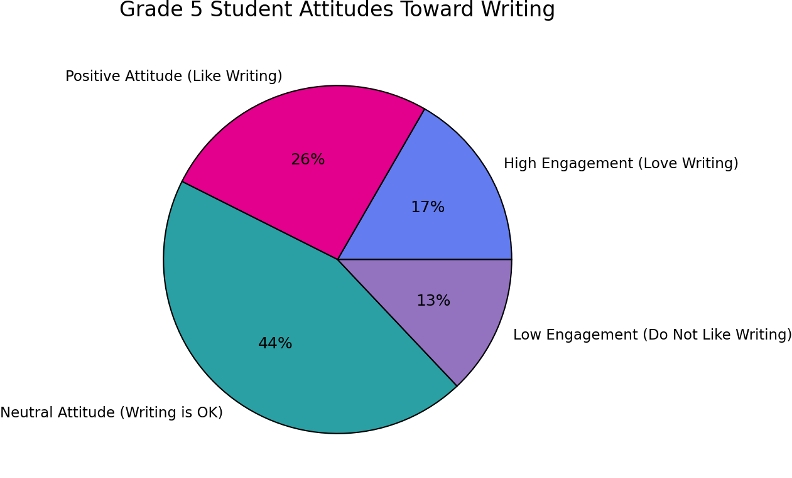
Most students demonstrate neutral to positive attitudes toward writing, with a smaller group indicating low engagement. This highlights an opportunity to build confidence and increase engagement through choice and structured support.
Survey data indicates that while most Grade 5 students have a generally positive attitude toward writing, many report only moderate confidence in their abilities. The most significant challenge identified is generating ideas and getting started, with students frequently expressing difficulty knowing what to write. Additional challenges include spelling, organization, and expanding their writing. Students identified that they are most supported by teacher modelling, examples, feedback, and opportunities to work collaboratively. Many students also indicated that having choice in writing topics and more time to develop their ideas would increase engagement. These results suggest a need to focus on explicit instruction in idea generation, scaffolding through modelling, and providing opportunities for student choice and collaboration.
OUR NEXT STEPS
Our 2025 Foundational Skills Assessment (FSA) results provided valuable insights into students’ literacy development, helping us better understand current levels of proficiency.
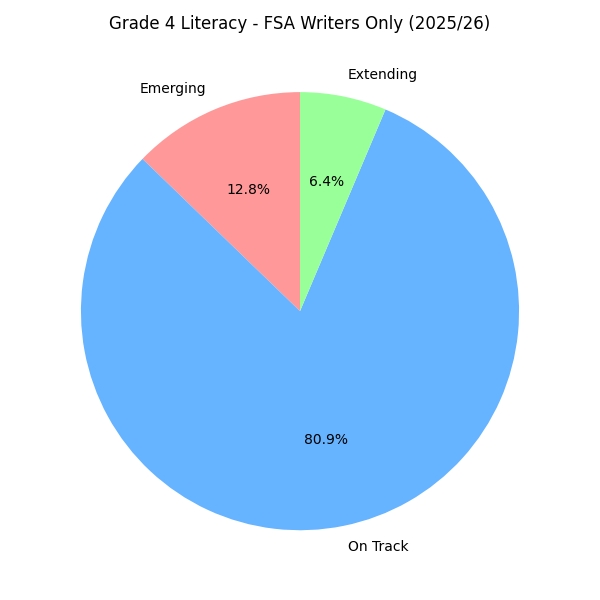
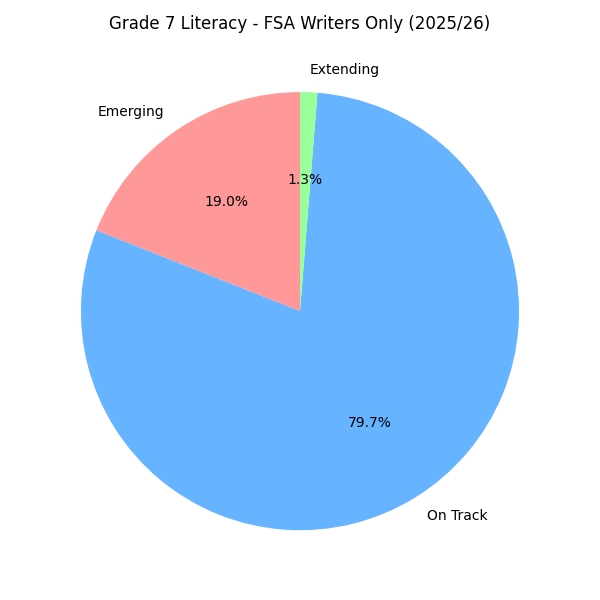
These FSA Literacy (writers‑only) results show most students are on track in both Grade 4 and Grade 7, with a higher Emerging proportion and fewer Extending in Grade 7. This points to the importance of targeted literacy support and opportunities to demonstrate advanced proficiency in the intermediate grades.
Based on the collaborative work completed this year, our school will continue to strengthen writing instruction through several key actions. We are working toward implementing new writing programs and increasing the instructional focus on writing across all grade levels. As part of this work, we will continue to monitor our identified Grade 5 cohort, using their baseline data on writing skills and attitudes to track growth over time and better understand the impact of our school-wide efforts. We will continue to participate in school‑wide writes to gather meaningful data that informs our progress and guides instructional decisions, including tracking changes within this cohort over the next two years. In addition, we will provide ongoing professional development opportunities for teachers to deepen their understanding of effective writing practices and to share successful strategies. Lastly, we will implement school‑wide writing initiatives and activities designed to build consistency, support student engagement, and celebrate growth in writing across the school.
Surrey Schools
Formed in 1906, the Surrey School District currently has the largest student enrolment in British Columbia and is one of the few growing districts in the province. It is governed by a publicly elected board of seven trustees.
The district serves the cities of Surrey and White Rock and the rural area of Barnston Island.