Ecole Fraser Wood 25-26
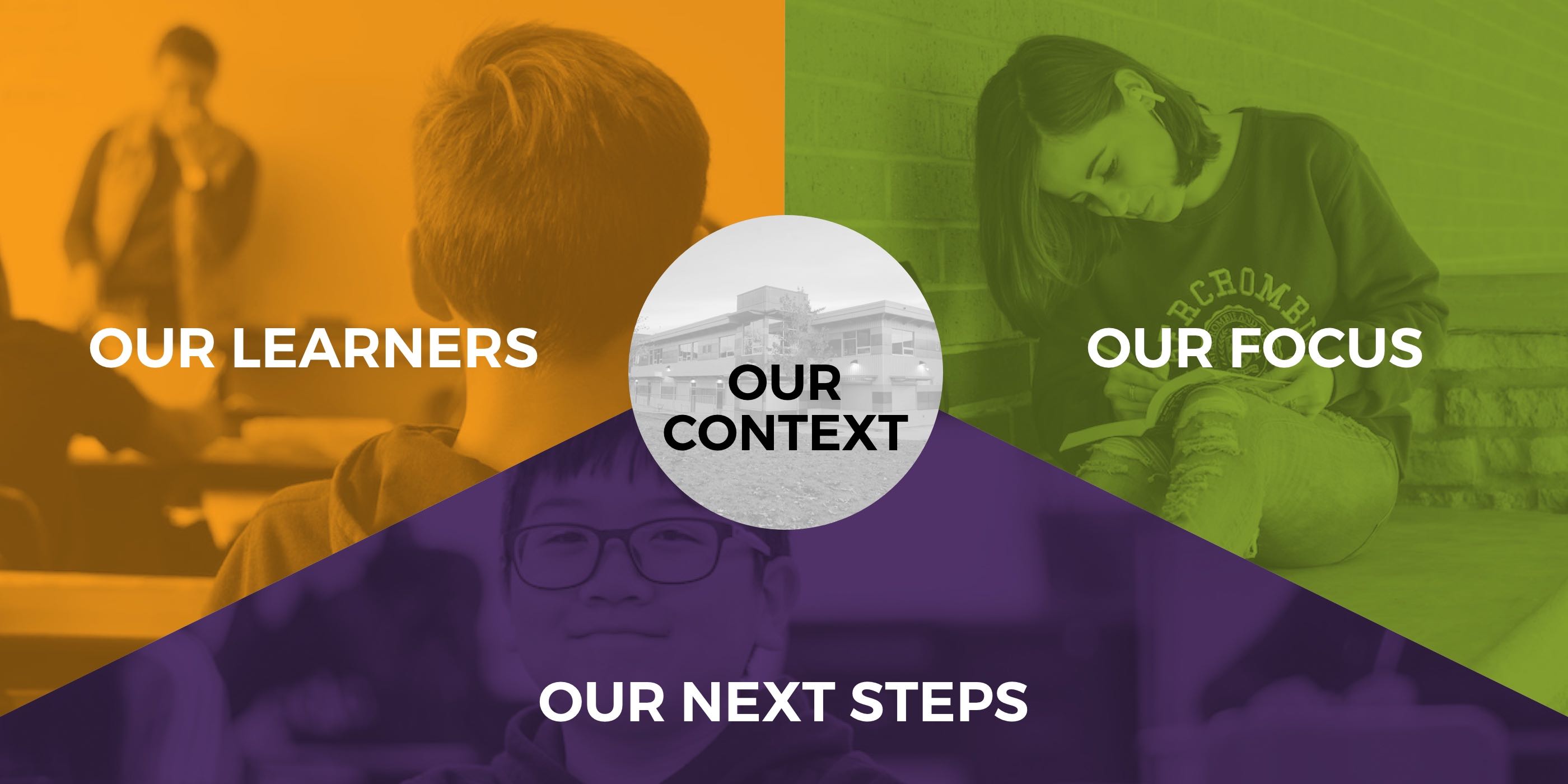

OUR CONTEXT
Fraser Wood Elementary is located on the unceded and shared traditional territories of the Katzie, Kwantlen, Semiahmoo, and other Coast Salish Peoples, who have cared for this land since time immemorial. Our school community honours these original stewards and recognizes the responsibility we share in continuing to learn from the land, its history, and the teachings of Indigenous Peoples. We remain committed to ongoing learning and to taking meaningful steps along the path of Truth and Reconciliation.
Fraser Wood is a vibrant North Surrey school known for its high expectations and strong commitment to student success. Our families include many working professionals who value education deeply and partner closely with the school to support their children. Staff and parents share a commitment to high academic standards, and we work together to create an environment where each learner is challenged, supported, and celebrated. Our school community is inclusive, welcoming, and characterized by kindness and mutual respect.
We are proud of the cultural diversity within our student population, including a high number of English Language Learners whose linguistic and cultural strengths enrich our school daily. At Fraser Wood, we celebrate the diverse backgrounds of our families through classroom learning, school-wide events, and regular community engagement. These celebrations reflect our belief that identity, culture, and belonging are foundational to meaningful learning.
Students at Fraser Wood have access to a wide range of learning and enrichment opportunities. Physical literacy is encouraged in many forms, including outdoor play, structured activities, and opportunities that promote movement and wellness using our Sport for Life program. Our community also demonstrates a strong interest in the arts, particularly music, with many students participating in musical learning both in and beyond the classroom. In addition, a wide variety of extra‑curricular activities allow learners to explore passions, build confidence, and develop leadership skills.
A unique feature of Fraser Wood Elementary is our Intensive French Program for Grades 6 and 7. This program reflects our school community’s belief in the importance of multilingualism, global citizenship, and academic challenges. Families value the long-term benefits of language learning and support students as they develop proficiency and broaden their understanding of the world.
OUR LEARNERS
Our learners are our driving force and source of joy. At Fraser Wood Elementary, learners and the surrounding community value education and the staff who provide it. Academic excellence and respect are among the cornerstone values found in our community as motivation to do well is a norm. To that end, many of our learners are engaged in community activities and additional learning opportunities outside school hours.
Our school community is a microcosm of the culturally diverse city in which we live, where all holidays and traditions are celebrated and where inclusion is an expectation. We have a large population of English Language Learners who receive language support from our Learning Support Team to reach their English language goals.
At Fraser Wood, students learn through play, in nature and in the community, with technology and in collaboration with each other.
Our learners enjoy creating art and music as evidenced by the many creative works that adorn our hallways and from the sounds of instruments and voices emanating from our music room. To that end, the winter concert and school musical form not only a gathering place but are a significant point of pride for our school community.
Many of our students demonstrate a propensity for mathematics learning so in undertaking this plan, we decided improvements in literacy – particularly writing - would strengthen our students’ written communication skills as they move forward in their education.
We recognize that this may look different across grades whereas in the primary years, it may involve improving students’ oral language skills in preparation for writing whereas in the intermediate years, this involves improving students’ academic and creative writing with an emphasis on writing conventions, structure and vocabulary building.
OUR FOCUS
Focus Statement
Our school will enhance written language development, with a primary focus on our Grade 6 students and ongoing support for other grade groups throughout the year. Through explicit instruction, consistent reinforcement, and structured writing routines, we aim to strengthen students’ ability to produce clear, organized, and effective written work.
Rationale
Writing proficiency is essential for success across all areas of the curriculum. As students move into the intermediate grades, especially Grade 6, they encounter increasing expectations for clarity, organization, and accuracy in their written communication. School-based assessments and teacher observations indicate that many learners require explicit instruction and regular reinforcement of writing conventions to express their ideas effectively.
Strengthening students’ understanding and application of core writing conventions: punctuation, capitalization, and sentence structure, will not only improve overall writing quality but also support reading comprehension, critical thinking, and academic confidence. Focusing on Grade 6 allows us to target a key developmental stage as students transition toward higher-level writing demands in upper intermediate grades and secondary school.
By involving other grade groups throughout the year, we ensure a consistent, school-wide approach to instruction. Predictable routines, common language, and scaffolded frameworks will build continuity and help students develop the skills needed to communicate clearly in increasingly complex tasks.
Goals
- Explicitly teach writing conventions, including punctuation, capitalization, and sentence structure.
- Reinforce writing conventions consistently across subjects and grade levels.
- Implement structured writing routines that provide predictable opportunities for guided and independent writing.
- Use scaffolded writing frameworks (e.g., graphic organizers, sentence stems, exemplars) to support planning and organization.
- Guide students to apply conventions purposefully to communicate clearly, confidently, and effectively.
Success Indicators
Student Learning Indicators
- Students independently apply punctuation, capitalization, and sentence structure in their writing across subject areas.
- Grade 6 writing samples show increased clarity, improved organization, and more consistent application of conventions.
- Students demonstrate growth in their ability to revise and edit using checklists, feedback, and targeted strategies.
- Students use shared language to describe their writing choices and reflect on their learning.
Instructional Practice Indicators
- Teachers use consistent writing routines and shared expectations for writing conventions.
- Instruction includes frequent modeling, guided practice, and meaningful feedback.
- Teachers and students co-create success criteria and refer to exemplars during writing tasks.
- Staff collaborate to review writing samples, identify trends, and adjust instruction based on student needs.
Evidence of Learning
Formative Evidence
- Writing notebooks or digital portfolios showing progression in the use of conventions.
- Editing checklists, rubrics, and conferencing notes.
- Anecdotal records from guided writing and classroom observations.
- Quick-writes or exit slips demonstrating understanding of specific writing conventions.
Summative Evidence
- Beginning, mid-year, and end-of-year writing samples evaluated using a consistent school-wide rubric.
- Grade 6 writing assessments demonstrating improved clarity, organization, and application of conventions.
- School-wide writing tasks showing growth across grades.
School-Level Evidence
- Team meeting notes reflecting collaborative assessment and instructional planning.
- Increased consistency in writing expectations between classrooms.
Student reflections or surveys indicating increased confidence and awareness of writing strategies.
OUR NEXT STEPS
Fraser Wood Elementary’s school goal is to strengthen students’ written language development through explicit instruction and consistent reinforcement of punctuation, capitalization, and sentence structure. Strong writing skills are essential for student success across all subjects and support clear communication of ideas and thinking.
Data-informed reflection: Analysis of student work, classroom observations, and assessment data shows variability in students’ independent application of writing conventions. While many students demonstrate emerging proficiency, consistency and precision in sentence construction remain areas for growth. These findings guide the instructional priorities for the coming year.
Instructional focus: Teachers will provide explicit instruction, model conventions, and implement structured writing routines and scaffolded frameworks to support planning, drafting, revising, and publishing. Scaffolds will be adjusted to meet learners’ needs and gradually removed as students gain independence. Writing will occur across subject areas to provide meaningful practice.
Responsive to growth and needs: Grade 6 students will serve as the primary group for measuring impact, while all grades will participate to ensure cumulative skill development. Student progress will be monitored through assessments, writing samples, teacher observations, and student reflections. Evidence will inform instructional adjustments and next steps.
Social-emotional and developmental contexts: Instruction will be inclusive and culturally responsive, supporting the diverse strengths, identities, and needs of all learners. Scaffolded instruction, multiple entry points, and consistent routines ensure equitable access, while promoting confidence, reflection, and ownership of learning.
Professional learning and collaboration: Teachers will engage in regular professional dialogue to review student work, share effective strategies, and ensure consistency across classrooms. Collaborative professional learning sessions will support refinement of writing instruction and evidence-informed decision-making.
Family engagement: Families can support writing at home by encouraging writing for different purposes, discussing ideas, reinforcing conventions, and celebrating growth. Reading together and noticing authors’ sentence structures further strengthens skills and builds positive attitudes toward writing.
Through these coordinated efforts—explicit instruction, responsive monitoring, professional collaboration, and family partnerships—Fraser Wood students will develop the confidence, competence, and independence to produce clear, organized, and effective written work.
Surrey Schools
Formed in 1906, the Surrey School District currently has the largest student enrolment in British Columbia and is one of the few growing districts in the province. It is governed by a publicly elected board of seven trustees.
The district serves the cities of Surrey and White Rock and the rural area of Barnston Island.