Ecole Erma Stephenson 25-26

OUR LEARNERS
Fostering a love of reading is a cornerstone to achieving our school's overall goals. Through reading and the English Language Arts Curriculum, students become aware that reading is not just a pathway to academic success, but a gateway to a world of knowledge, personal growth, and critical thinking skills. By developing strong readers, we empower our students to become lifelong learners, capable of navigating information, expanding their horizons, and achieving their full potential.
Staff at Erma Stephenson introduce new reading skills and strategies throughout our students grade K-7 journey. Teachers utilize a "Gradual Release of Responsibility" model as new ideas are introduced and students build confidence as readers and learners. 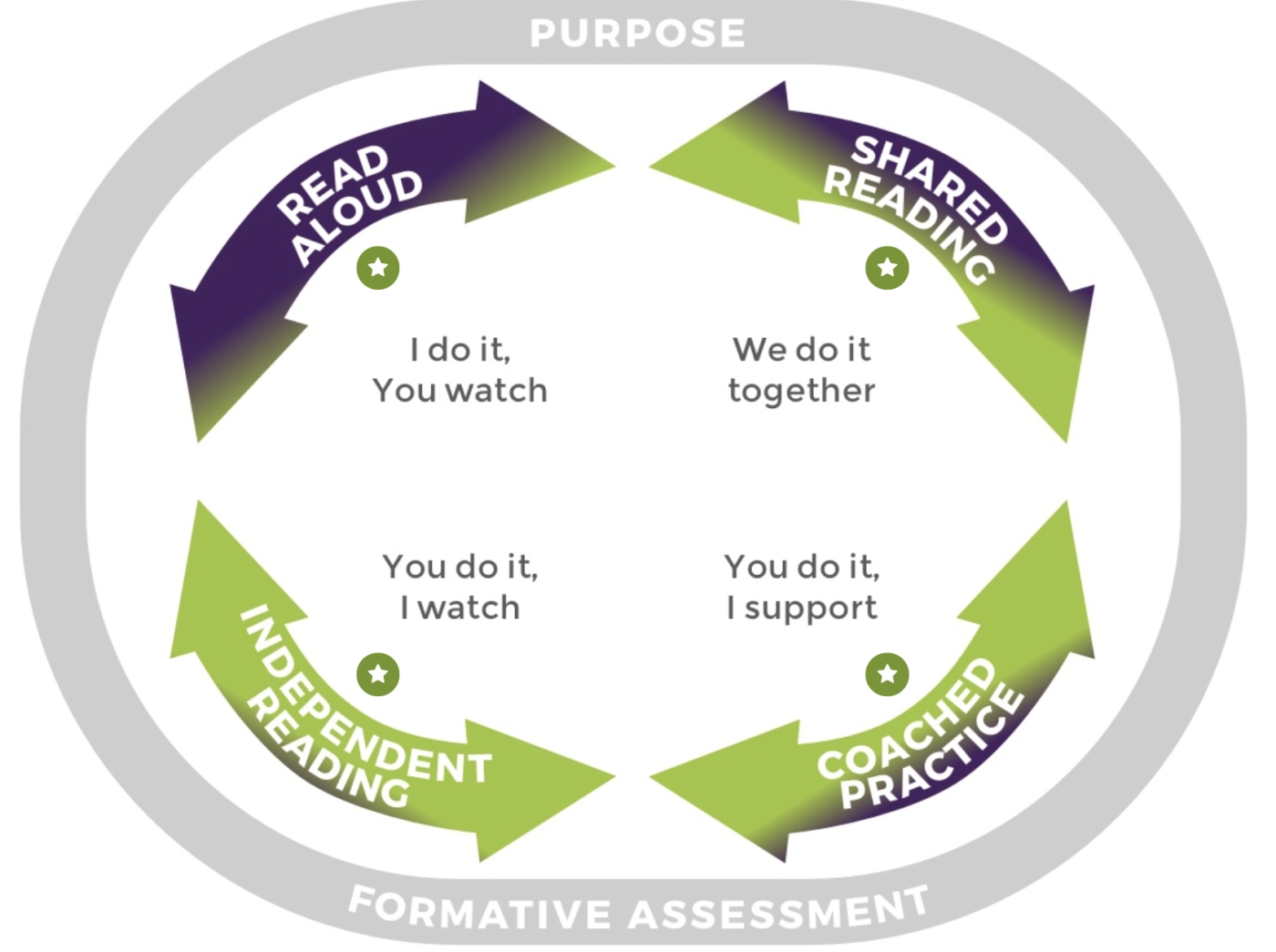 Our learners are using developmentally appropriate reading strategies such as using knowledge of language patterns and phonics to decode words, and identifying familiar and “sight” words.
By taking part in the Heggerty Phonemic Awareness Program, students receive explicit instruction on phonemic awareness (the ability to hear and manipulate sounds in spoken language). By understanding sounds and their connection to letters, students develop decoding and encoding skills, which are foundational for reading and writing. Students receive short, daily lessons that target eight phonemic awareness skills alongside letter/sound recognition. Below you will see and hear what these lessons look and sound like in our grade 1 classrooms.
According to our students:
I like that we get to say the words out loud with the class.
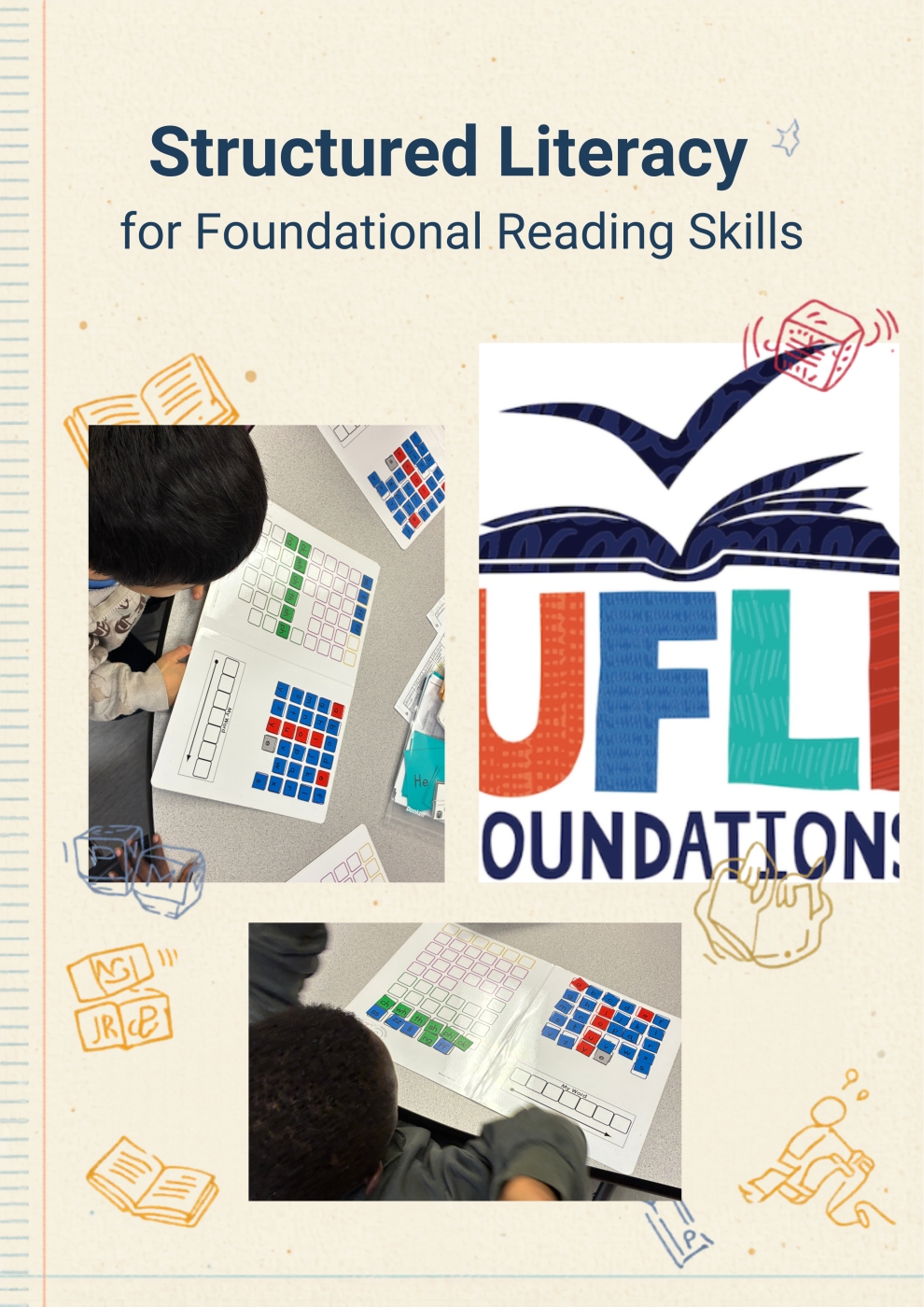
Our learners also take part in the UFLI Foundations Program. Our students receive explicit, systematic instruction in foundational reading skills, particularly phonics and word recognition. Through structured lessons, students learn the relationships between sounds (phonemes) and letters (graphemes), enabling them to accurately decode (read) and encode (spell) words. This strong focus on phonics supports the development of fluency and comprehension. Lessons are short, engaging, and delivered daily, following a consistent routine that includes review, explicit teaching, guided practice, and application of new skills. Below you will see and hear what these lessons look and sound like in our Leaner Support classrooms.
Our learners can use various reading strategies to help them think critically, creatively, and reflectively to explore ideas within, between, and beyond texts.
Our upper intermediate students take part in a weekly CNN 10 lessons. During this activity, they watch a student friendly summary of the weekly news. They are encouraged by their teachers to think deeply, question the information being presented, and to reflect on their thinking. Below, you see an example of "deep dive" questioning, by one of our students, into the topics being covered. Some of our upper intermediate students also give presentations and engage their classmates in current event discussions. As our students progress from kindergarten to Grade 7 and beyond, they develop their reading & thinking skills and move along a continuum. What begins with letter recognition and letter sounds, grows into critical thought and analysis as our students develop their reading and thinking skills.
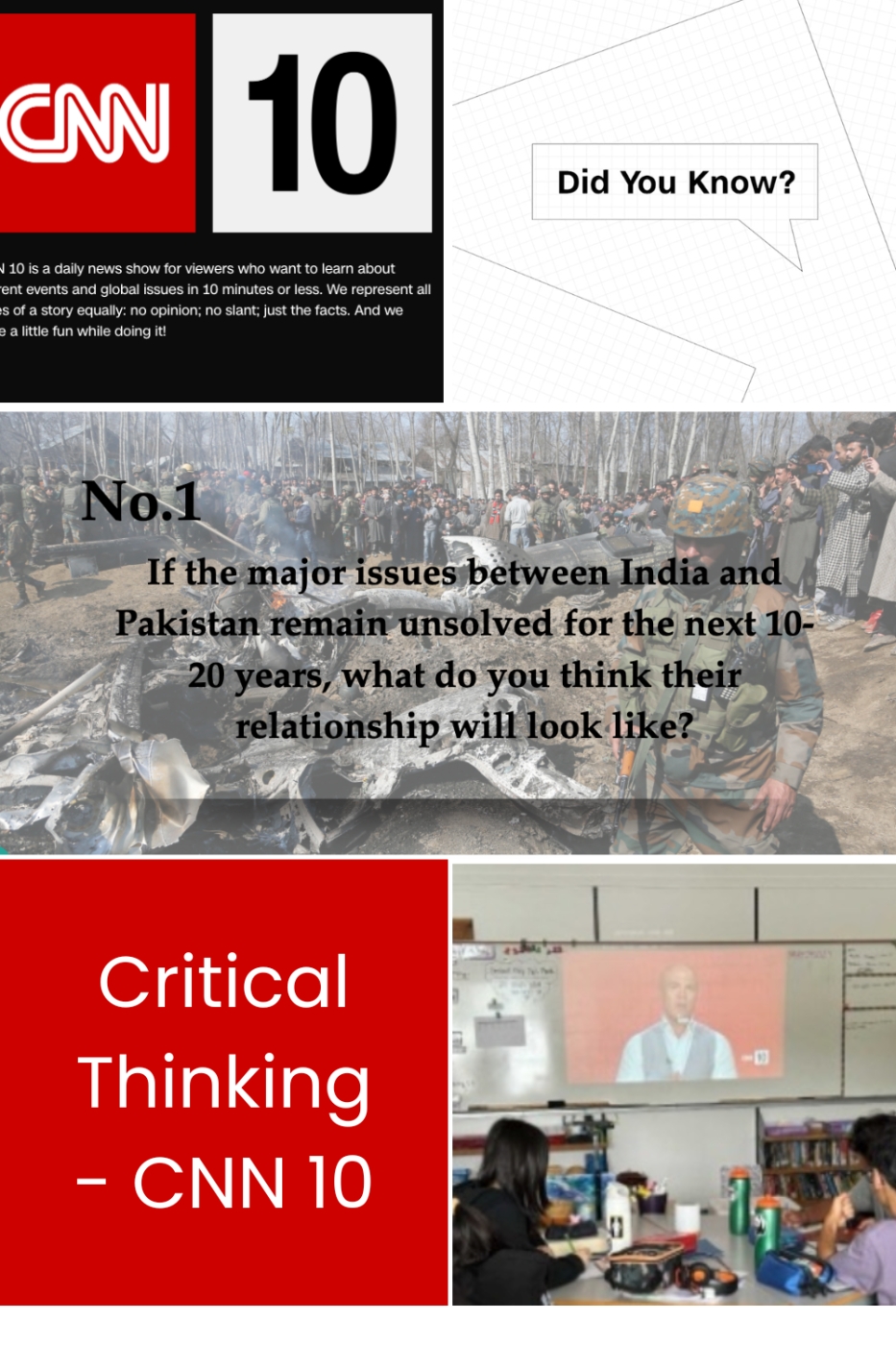
When asked "What value do you see in studying current events and CNN10?", student responses included,
I like watching CNN 10 because it explains real-world events in a way I can understand.
It helps me connect current events to things we’re learning in class, like geography or history.
OUR FOCUS
We not only want to develop a love of reading for enjoyment in our students, but also the ability the critically analyze the information they will be presented throughout their lives. In today’s world, students are bombarded with information from a variety of sources, including websites, social media, and videos. Being able to critically evaluate this information is essential. Strong reading skills provide a foundation for this, as they allow students to analyze information they are being presented.
Our learning goals for this cohort include:
- Our cohort learners understand that different texts have different purposes, like a story to entertain or a non-fiction book to share information.
- Our students understand that language and story can be a source of creativity and joy.
- Our students understand that questioning what we hear, read, and view contribute to our ability to be educated and engaged citizens.
- Our students can use sources of information and prior knowledge to make meaning.
- Our students understand that texts contain layers of meaning that can be discovered through thoughtful engagement.
Our Cohort
We have chosen to follow a Grade 7 cohort to better assess the long-term impact of our school goals on core academic skills. As we continue to build and refine our Literacy-based Learning Plan, shifting our focus to intermediate classrooms allows us to examine how literacy skills have developed and are being applied in the later grades.
Focusing specifically on Grade 7 allows us to strengthen critical reading, comprehension, and analytical thinking as students engage with more sophisticated texts and ideas. By fostering collaboration among Grade 7 teachers, we can ensure a consistent and cohesive approach to literacy instruction, ultimately supporting improved outcomes.
Key Strategy - Literature Circles:
Our learners engage in reading activities throughout the day to build their literacy skills, including Literature Circles. A key component of these circles is student choice. At Erma Stephenson, we continuously curate book selections to ensure they are relevant and engaging. When students choose texts that interest them, they are more likely to participate actively, think critically about characters and plot, and develop a lasting love of reading.
Our Grade 7 program brings students together from multiple classes to better meet their learning needs. In these groups, students engage in meaningful discussions with peers and teachers, deepening their understanding, exploring diverse perspectives, and taking on roles that strengthen a range of reading skills.
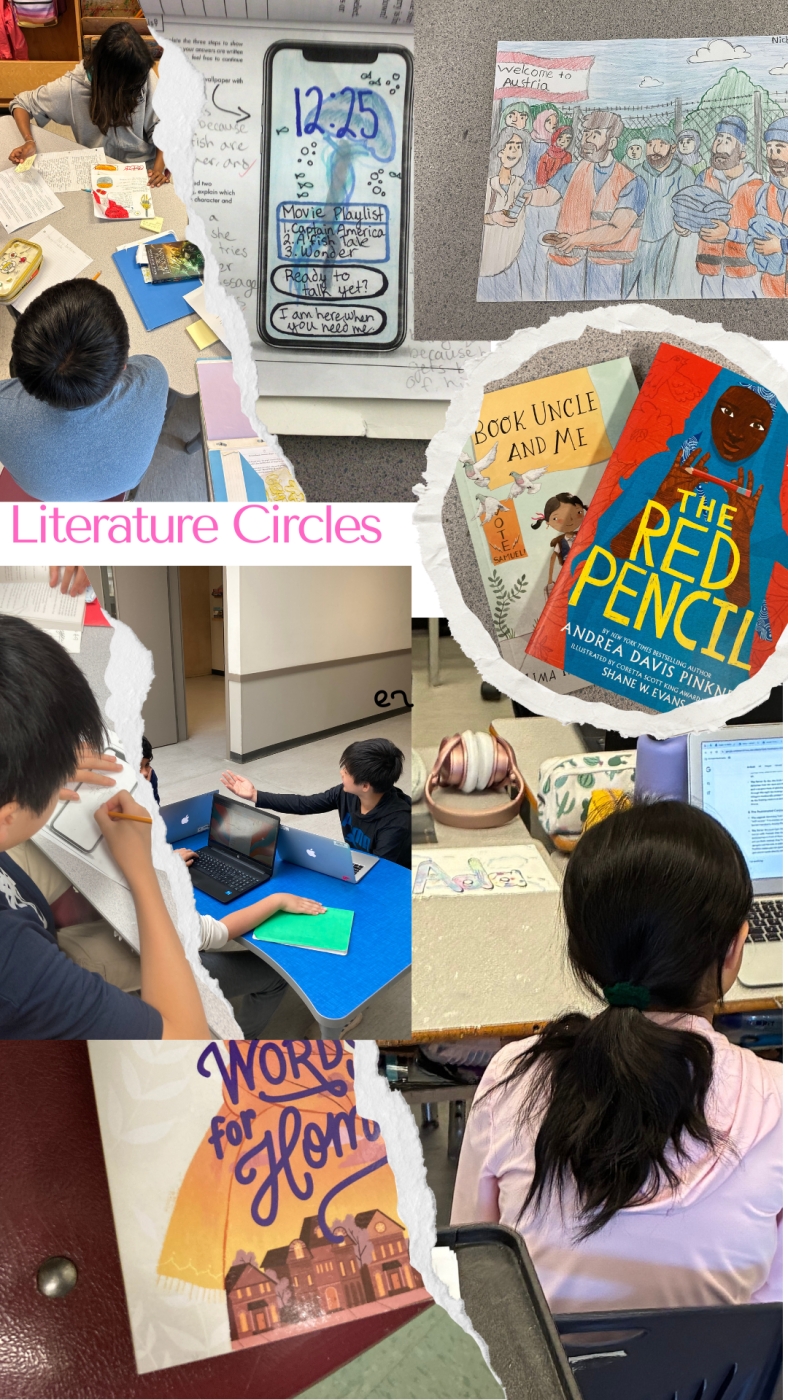
According to our students:
I like that i have get to choose the book i have to read.
I like that the books are newer.
I like that we get time to work alone and time to work with the teacher.
Key Strategy -
Summary:
Our cohort engaged in a collaborative, discussion-based reading program aligned with the BC Grade 7 English Language Arts curriculum, using strategies such as questioning, inferring, summarizing, and making connections to deepen their understanding of. While Literature Circles are not the only form of reading instruction across the cohort, they provide a strong example of how students build comprehension, critical thinking, and communication skills through structured discussion and shared texts.
Through these and other reading experiences, our cohort developed their ability to communicate ideas, listen to others, and build meaning collaboratively. Instruction also included independent and supported reading opportunities, with a focus on strengthening fluency, vocabulary, and comprehension for a range of learners. Reading was connected to writing, as students organized their thinking and supported their ideas using evidence from texts. Overall, our cohort learners are developing as readers who can think critically, communicate effectively, and engage meaningfully with texts and others.
OUR NEXT STEPS
Our Data:
Our Grade 7 cohort:
This year, our cohort had several different assessment tools used to assess their reading proficiency.
Dibels 8th Edition Reading Assessment
This year, our Grade 7 Cohort Class used the DIBELS (8th Edition) assessment to help us better understand how students’ reading skills are developing over time. DIBELS is a quick, one-on-one check-in that provides insight into key reading skills such as sounding out words, reading with fluency, and understanding what is being read.
While DIBELS is typically used in the earlier grades, we’ve found it to be a valuable tool for students who continue to strengthen these foundational skills.
It’s important to note that DIBELS is not a test that results in a mark or final grade. Rather, it provides us with timely information about where students are in their reading development and how we can best support them. This allows us to identify students who may benefit from additional support and to adjust our instruction in responsive and meaningful ways.
At our school, we use this information to guide our teaching, set purposeful goals with students, and monitor progress over time. Our focus is on supporting each learner’s growth and helping them continue to build confidence as readers.
FSA: Foundational Skills Assessment
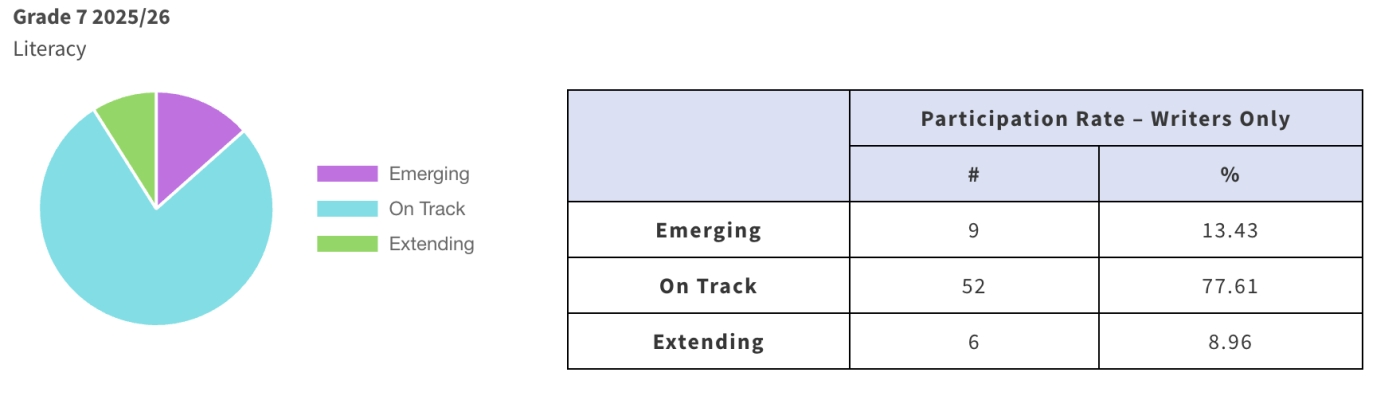
The Foundational Skills Assessment (FSA) is an annual province-wide assessment administered to all students in grades 4 and 7 in British Columbia. This assessment evaluates students' proficiency in key areas of literacy and numeracy. The FSA provides valuable data to parents, teachers, schools, school districts, and the Ministry of Education, offering insights into how well students are progressing in these foundational skills
The primary purpose of the FSA is to gather data that helps the province assess the overall performance of students in these critical areas. This information is used to inform educational strategies and policies aimed at improving student outcomes across British Columbia.
While the FSA is an important tool for measuring student performance, it is recognized that it represents a single assessment at a specific point in time. As such, it may not fully capture the true abilities and potential of our students. At our school, we place significant value on the ongoing, day-to-day assessments and data collection conducted by our dedicated staff. These formative and summative assessments provide a more comprehensive and nuanced understanding of each student's learning journey and achievements (see further down this page for that data).
School Wide Teacher Expertise Assessment
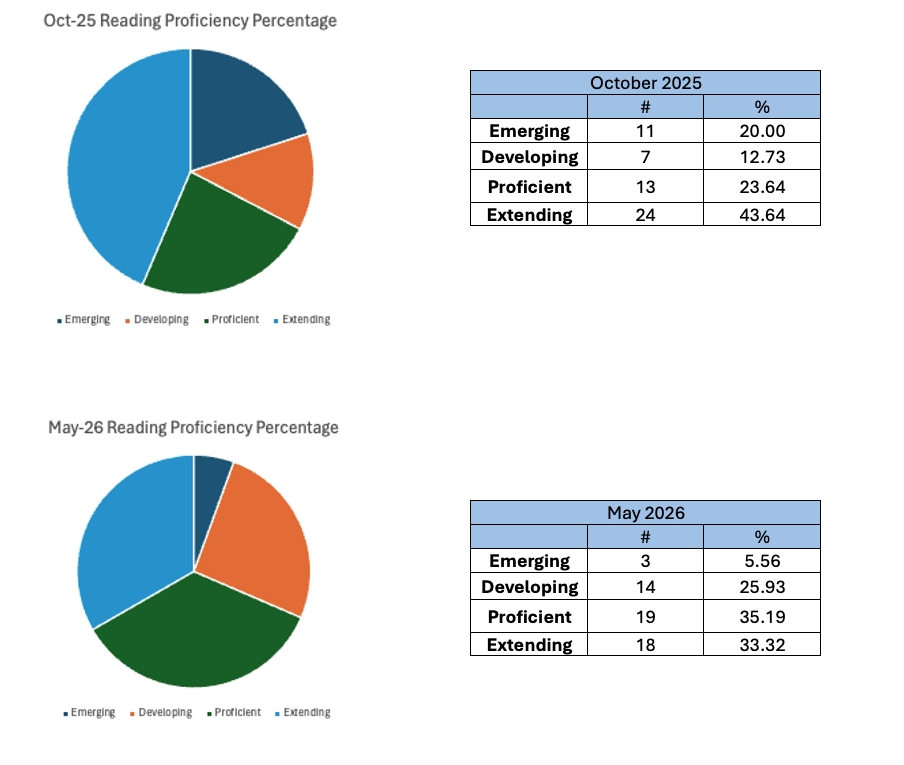
This year, we asked teachers to use their professional judgment, along with summative assessment data and their knowledge of each student, to assign an indicator using our district’s Proficiency Scale. We collected this data in October, shortly after the start of the school year, and again in May, near the end of the year. This allows us to look at student growth over the course of the year.
Terminology Differences
The FSA and our district assessments use different proficiency descriptors, which can affect how results are interpreted.
The FSA groups student performance into broader categories. It combines the levels of developing and proficient into a single category called “on track.” This means students who are still building skills and those who are meeting expectations are reported together.
Our district uses a more detailed set of descriptors including emerging, developing, proficient, and extending. This approach provides greater precision by distinguishing between students who are beginning to demonstrate skills, those who are approaching expectations, and those who are meeting expectations.
As a result, when comparing the two data sets, it is important to recognize that the FSA’s “on track” category represents a broader grouping, while our district language offers a more nuanced view of student performance.  Our Cohort's Progress:
When looking at our Teacher Assessments, we see strong upward movement in reading proficiency across our Grade 7 cohort, with good progress out of Emerging and into Proficient. 80% of our students were On Track or Extending to begin the year, and by our final assessments, 94.44% of our students were On Track of Extending. We attribute this growth to a combination of targeted instructional approaches, including literature circles, explicit strategy instruction through Adrienne Gear’s Reading Power, and additional learning support for English Language Learners. Together, these supports contributed to the overall improvement in reading proficiency across our cohort.
Surrey Schools
Formed in 1906, the Surrey School District currently has the largest student enrolment in British Columbia and is one of the few growing districts in the province. It is governed by a publicly elected board of seven trustees.
The district serves the cities of Surrey and White Rock and the rural area of Barnston Island.