École Crescent Park
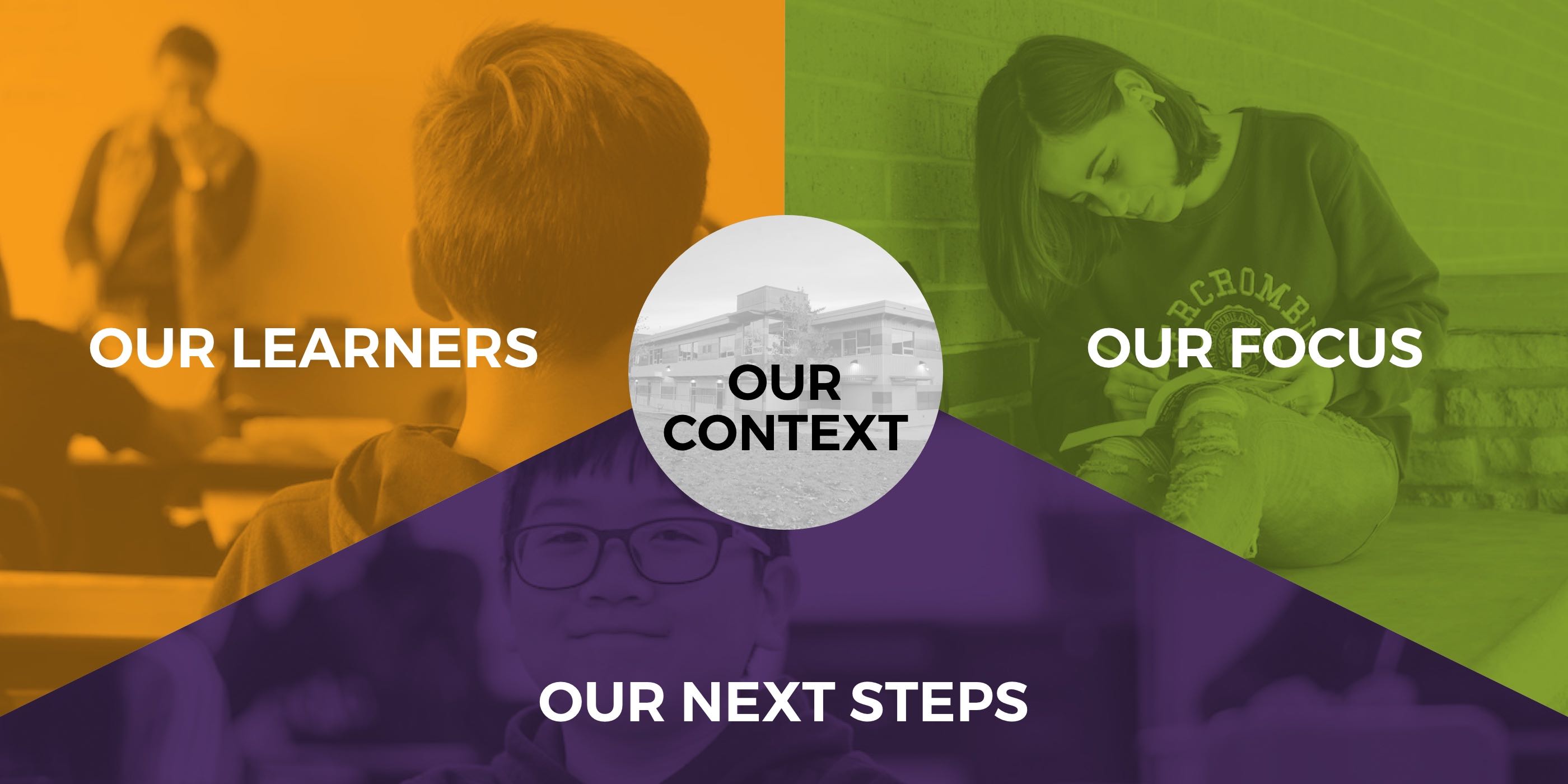

OUR CONTEXT
The Crescent Beach and Ocean Park communities have proudly supported the education of children in this area for over 100 years! In 1913, a small one room school house opened to meet the growing population the area on land donated by Captain Watkin Williams, owner of the Crescent Hotel. The school supported 9 students and was located on the corner of Tullock Road and Old Crescent Road, present day 28th avenue and 126th street. As the area grew, a new Crescent School, present day Crescent Park Annex was built in 1918 on land donated by local land owner, Ben Stevenson. This school operated as the main school for the local area until 1948 when enrolment increased and the current Crescent Park Elementary was constructed. Numerous additions and renovations have taken place over the years, but the history within this wonderful building is still evident for all to see.

We currently enrol 354 students in 16 divisions. We support 14 regular divisions and late French Immersion program for grade 6 and 7 students.
In addition to our classroom teachers, our highly dedicated staff of over 45 professionals includes Learning Support and Integration Support Teachers, a librarian, music and band teachers, and intermediate Core French teacher, a counsellor for 1 1/2 days per week and a Child and Youth Care Worker 2 days per week. Finally our team of 11 support workers works closely with our teachers and families to promote inclusion for all our students.
Students at Crescent Park Elementary enjoy a variety of activities and presentations that support cultural appreciation, physical fitness,Social and Emotional Learning, and other curricular areas, many funded by our dedicated and highly involved Parent Advisory Council. Over the years our students have enjoyed and benefited from:
Instruction in Parkour, Yoga, Fencing, Tennis, In-line Skating and Golf
Stem challenges for all k-7 students- The cardboard challenge and Iggy Peck Architect
Sexual Health Presentations: Body Science for all students by Saleema Noon
School-wide initiatives and spirit days including Pink Shirt Day, Orange Shirt Day, Jump Rope for Heart, Terry Fox Run and Young Entrepreneur Fair.
Finally, at Crescent park Elementary we have an active athletic culture and support all district sporting events including, basketball, volleyball, badminton, ultimate frisbee, cross-country,and track and field. Our grade 4 and 5 students particpate each year in the Surrey Library Reading Link Challenge. In support of our growing ADST culture, students enjoy a wide variety of coding and robotics technologies including Bloxels, Ozbots,M-Bots, Dash and Dot, Sphere's, and Osmo, as well as a makerspace where students participate in design challenges, building and creating using variety of materials and tools.
OUR LEARNERS
Crescent Park learners are kind, respectful and curious. A focus group of grade 7 students were asked the question: What would you tell a new family coming to Crescent Park about the school? All of the students responded, "Crescent Park is amazing. We have loved attending Crescent Park, it is like a big family. Everyone is connected to each other. The teachers and staff are really kind and the students are kind and welcoming to new families. We are just a big family and we know and are connected to everyone. We are not really a traditional school, Crescent Park is a community."
Data from the 2021 Middle Years Instruments:
76% or higher of Grade 4 and 7 students report they have positive adult and peer relationships. The majority of students in grade 4 and 7 reported the presence of an asset: positive experiences, relationships and behaviours that create conditions for students to thrive.
Data from the students who participated in Surrey School District SEL Survey this year (2021-2022) indicated they...
- belong and have good friends at school
- know how to solve problems
- know how to seek help from others
Foundation Skills Assessments:
The percentage of grade 4 students attending Crescent Park Elementary who were on track or Extending on the Reading, Writing and Numeracy components of the FSA exceeded the average percentage of the district and province.
The percentage of grade 7 students who were on track or extending on all components of the FSA, Reading, Writing and Numeracy exceeded the average percentage of the district and province.
The combined percentage of grade 4 and 7 students attending Crescent park who felt Welcome at School and that they Belong at School All of the Time or Many Times exceeded the average percentage for the district and province.
Our student learning goals this year focussed on the Core Competencies of Communication, Critical Thinking and Social responsibility, specifically:
I can be part of a group, I am kind to others, can work or play cooperatively and can build relationships with people of my choosing, I am aware of how others feel and can take steps to help them feel included, I build and sustain positive relationships with diverse people, including people from different generations.
I ask and respond to simple, direct questions, I am an active listener, I support and encourage the person speaking, I recognize their are different points of view and I can disagree respectfully, I can understand and share information about a topic that is important to me. I present information clearly and in an organized way
OUR FOCUS
“We don’t learn from experience, we learn by reflecting upon experience.” John Dewey.
Reflective practise is essential for teachers and learners.

At Crescent Park Elementary we are focussing on teaching and providing opportunities for students to learn and practice explicit social emotional learning (SEL) skills. Staff and students are actively involved in explicit SEL instruction; and practice and model these skills with their peers, self, and adults. Some examples of evidence informed SEL practices at Crescent Park include:Growth Mindset, MindUP, Second Step, CASEL 3 Signature Practices, Ensouling Our Schools Book Club, Zones of Regulation, Brain Fit Super Powers monthly themes and Super Flex: Social Thinking Curriculum.
A supportive classroom climate helps students to feel emotionally safe, part of a community of learners, motivated, and challenged. This type of environment creates a strong foundation for students to engage fully and take academic risks. This includes: community-building, belonging and emotional safety, and student-centered discipline. Integration of SEL into academic instruction weaves academic learning with opportunities for students to practice and reflect on social and emotional competencies, such as perspective-taking and developing a growth mindset. For example, teachers incorporate partner and group activities that promote relationships, communication skills, and effective teamwork. Explicit SEL instruction provides consistent opportunities to cultivate, practice, and reflect on social and emotional competencies in ways that are developmentally appropriate and culturally responsive.
Teachers integrate SEL practices with academic instruction. Teaching students about growth versus fixed mindsets helps students see failure as a first attempt at learning (FAIL) and builds resiliency and perseverance. "A growth mindset thrives on challenges and sees failure not as evidence of a lack of intelligence but as motivation to grow and stretch abilities. Holding a growth mind set creates a passion for learning rather than a hunger for approval; failure becomes an opportunity to learn." Elena Aguilar, Onward (2018).
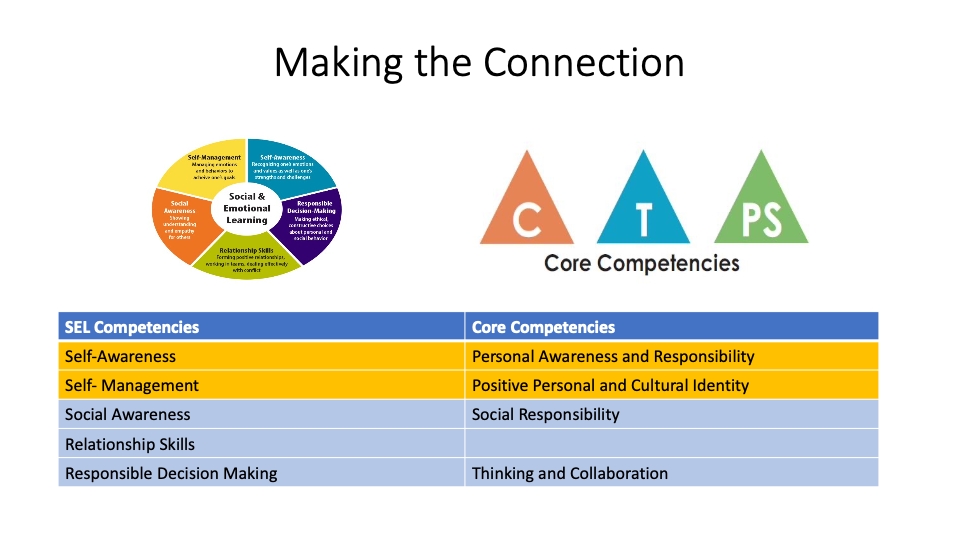
The research, Durlak et. al., (2011) clearly demonstrates a school focus on "SEL leads to improved academic outcomes and behaviours. When students have supportive relationships and opportunities to develop and practice social, emotional, and cognitive skills in different environments and contexts, academic learning accelerates." CASEL.org (2022).
Parents at Crescent Park support our SEL programs. The parents regularly complete the homework component to our Brain Fit super power monthly themes.
Developing the Core Competencies of Social responsibility and Communication our students, during morning meetings worked on building positive relationships, specifically, being kind to others, working or playing cooperatively and build relationships with people of their choosing. After discussing the importance of cooperation and what empathy during their morning meeting, students wrote about the importance of cooperating and what empathy is in their journals. Their conversations and writing demonstrates their developing ability to Connect and Engage with Others, Acquire, Interpret and Present Information, Explain/Recount and Reflect on Experiences and Accomplishments.
Samples of students' reflections:
"It is important to cooperate to be a good team member. It is important to cooperate because if you don't, not everyone will feel included. If you don't work together then it wouldn't be good teamwork."
"Cooperating is important because first of all, no one feels excluded, participate and be a good listener. An example is maybe you don't know something but if you cooperate maybe your partner knows it. You should make everyone feel included when you are doing something, and make sure no one feels excluded, and that is why it is important to cooperate"
"It is important to cooperate because you need to listen to other peoples ideas. If you only let your self talk, then you won't know what they have to say and what if they have a better idea than you. You need to listen to others because they listened to you so you should listen back. You need to make them feel like they are included because you wouldn't like it if you were excluded. So don't exclude them."
"How to show empathy. Empathy is when someone helps you when you are feeling sad or upset. It is when you put yourself in the other persons shoes. Like if they buy something really special and then lose it, you feel sad and upset for them, with them, that is showing empathy. I show empathy when I open doors for the big kids"
"How to show empathy. For example if you were to fall on concrete and get a cut if someone comes and helps you its called empathy. It's also called empathy if someone falls off the swings and gets a splinter and you feel bad for them and help them by calling a supervisor. Empathy can also be when someone brings a toy to school and lost it during recess and you feel bad for them and try to help find it. Empathy means you feel bad when someone else is feeling sad or bad."
"Empathy is when you put yourself in someone else's shoes. Empathy means to feel sorry for someone, it also means you want to help someone when they are suffering. Someone could help you or you could help them. Either way, they are both feelings of empathy. When you feel sad or hurt, and someone feels bad for you, they are showing empathy. Empathy is a great way of showing kindness."
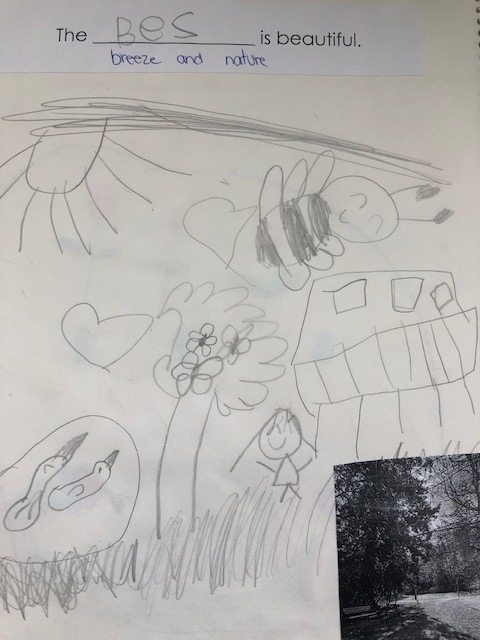
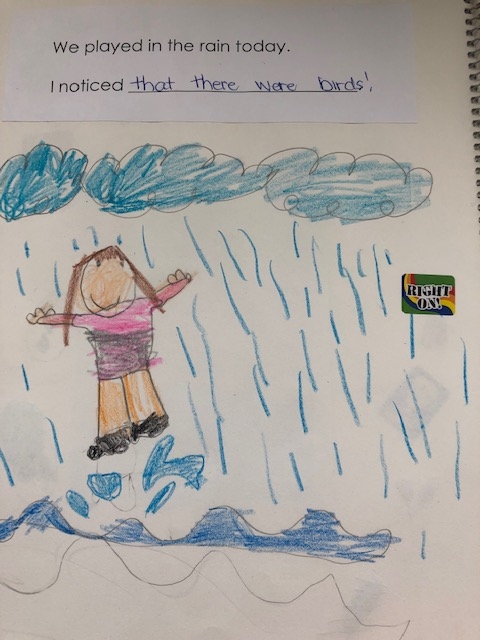
Many of our students participate in Wilderness Wednesdays to develop the Social Responsibility Core Competency of Contributing to Community And Caring for the Environment. Teachers work with their students to develop awareness and take responsibility for their physical, and natural environments by working independently and collaboratively for the benefit of others, communities and environments.
Samples of cohort student reflections in nature and what they noticed:
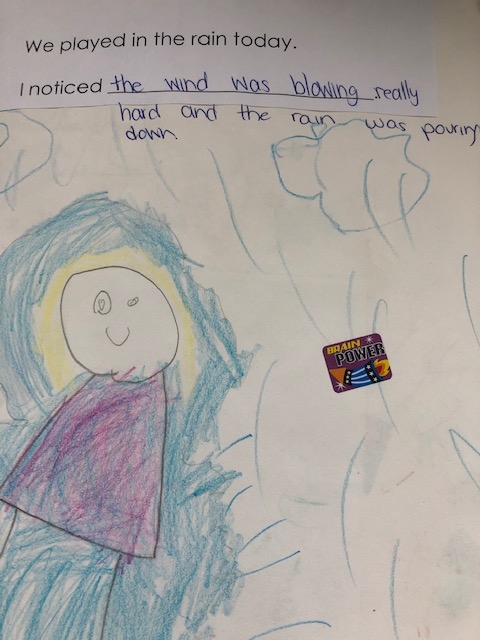
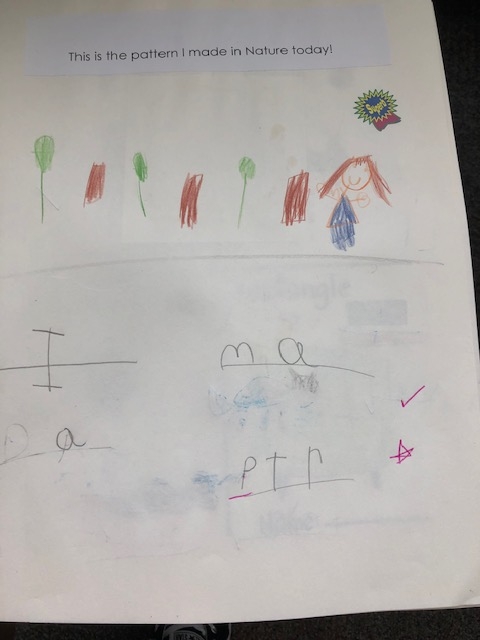
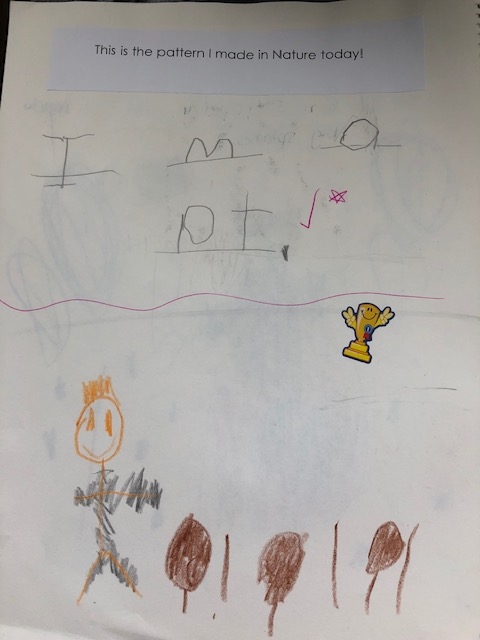
Ask part of their math curricular competency in patterning, the kindergarten students also noticed and created patterns in nature:
OUR NEXT STEPS
To support our student learning goals, teachers will continue to integrate SEL competencies with curricular competencies. At a learning lunch this year, one of our District helping teachers provided this framework to help teachers design their lessons:
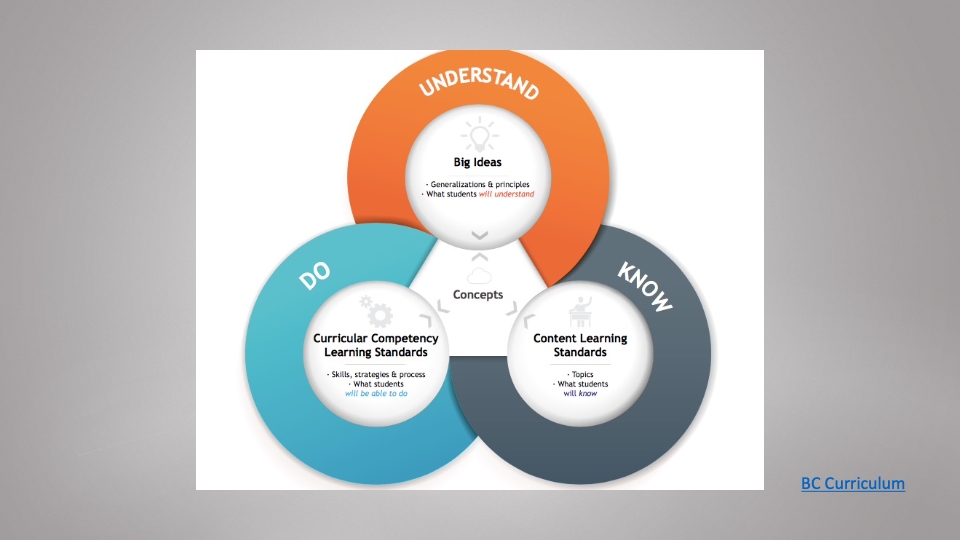
She provided these examples
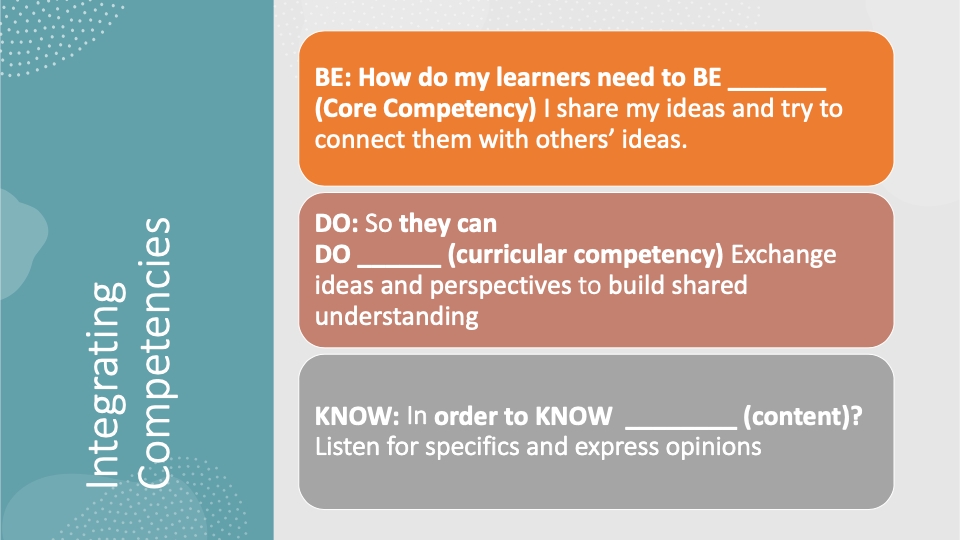
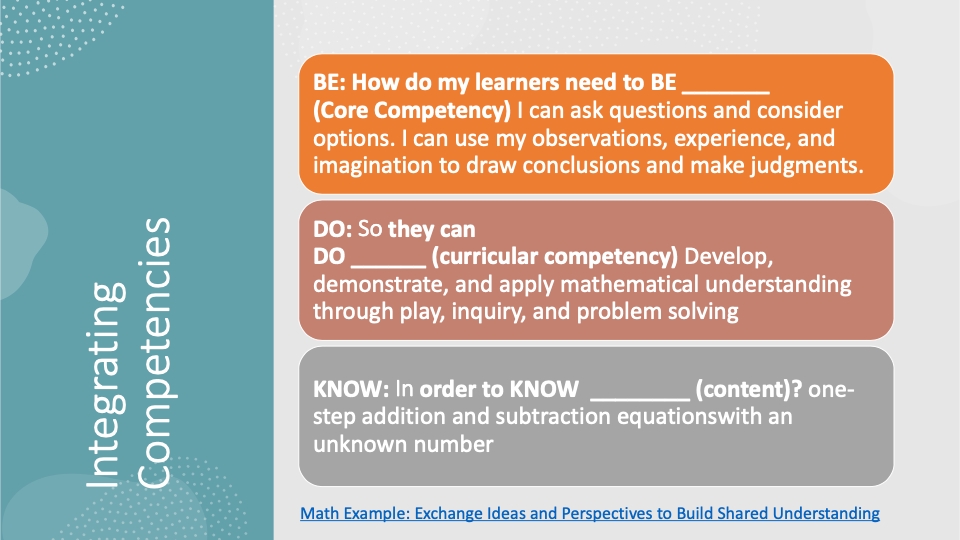
Teachers will continue to use this framework to plan for instruction to ensure our SEL focus is linked to improved outcomes for student achievement in our curricular competencies.
Surrey Schools
Formed in 1906, the Surrey School District currently has the largest student enrolment in British Columbia and is one of the few growing districts in the province. It is governed by a publicly elected board of seven trustees.
The district serves the cities of Surrey and White Rock and the rural area of Barnston Island.