Earl Marriott Secondary

OUR CONTEXT
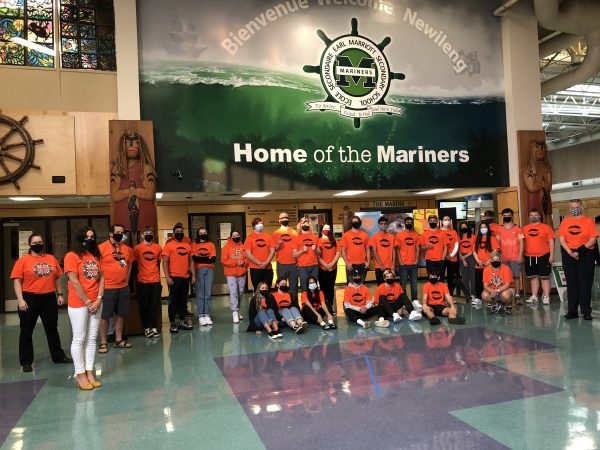
École Earl Marriott Secondary is a thriving learning community located in South Surrey, BC. First opened in 1972, Earl Marriott is a hub for academics, athletics, applied skills and performing arts. As enrolment grew rapidly in South Surrey, Earl Marriott grew in both size and structure. With the recent opening of a new Secondary School in South Surrey, Earl Marriott now enjoys increased space to learn and grow.
Today, Earl Marriott Secondary maintains a varied program of rigorous academic, fine and performing arts, technology education, special education, athletic and French Immersion programs. Earl Marriott offers three distinct co-op experiences for its students through an active Careers department. Students at Earl Marriott have the option to participate in a science and a humanities co-op, as well as a trades exploration co-op.
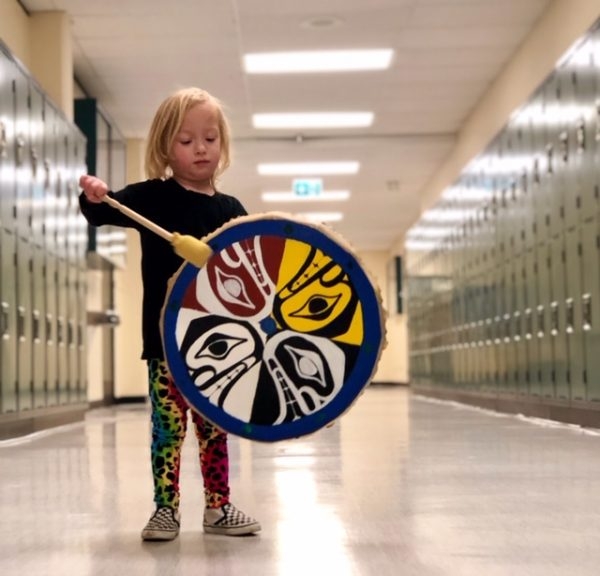
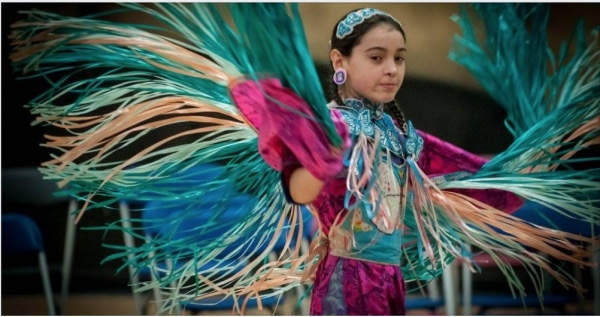
Earl Marriott enjoys a close connection with the Semiahmoo First Nation. There is a rich history and tradition of collaboration with the First Nations community. Students from Earl Marriott participate in an Annual Pow Wow, and have travelled to Haida Gwaii for cultural sharing. Elders from our community are invited in to share with our students their story, culture and history.
Earl Marriott is one of four French immersion high schools in Surrey and offers academic courses in both French and English. Approx. 30 per cent of students in the school are working towards completion of a full bilingual diploma. Earl Marriott is recognized as one of the oldest French Immersion programs in Western Canada.
OUR LEARNERS
As a staff, we recognize that our learners have changed from years past and that the challenges they will face in society have changed also. Our learners come from a variety of backgrounds and experiences, and they bring with them diverse learning needs and cultural perspectives. Our learners understand that learning requires an exploration of one’s own identity. Our learners understand that we need to acknowledge everyone’s history and story through a wide cultural and diverse representation in our curriculum and school culture. Learning is embedded in memory, history and story, and it is inclusive of everyone’s story.
Our staff has been actively engaged in implementing the curricular and core competencies, and developing our skills in universal design for learning. We recognize that to prepare our students for the future we need to embed the priority practices of the First Peoples Principles of Learning in our curriculum and assessment practices. Learning involves time and patience, and our learners are building on their understanding of reflective practice and ownership of their learning.
Earl Marriott students come from a wide variety of backgrounds and schooling experiences. 23% of students’ primary language spoken at home is not English. There are 34 home languages other than English represented by our students and their families. 5% of Earl Marriott students are given services as English Language Learners (ELL). 16% are special education learners designated with social/emotional, physical/health and/or learning needs; 5% are Aboriginal learners; 30% of students are in the French Immersion program.
Beyond language and citizenship, there are a large percentage of students who identify with a diverse racial, cultural or orientation that is not quantified in our data. These students also understand the importance of representation in our school and exploration of identity.
OUR FOCUS
Focus Areas
The Earl Marriott staff has been working together on two focus areas that connects their work with the District Priority Practices of Truth and Reconciliation, Race to Equity and Diversity and Inclusion alongside Curriculum Design: quality assessment and instructional strategies in consideration of District Inquiries of Transitions and Well Being.
I. A Focus on a positive school culture that embraces and celebrates equity, diversity and inclusion.
Our learners come from a variety of backgrounds and experiences, and they bring with them diverse learning needs and cultural perspectives. Our learners understand that learning requires an exploration of one’s own identity.
- Increasing connection to the District Inquiry in Well-being through an emphasis on social and emotional learning:
- Valuing diversity
- Understanding relationships through a cultural context
- Understanding and caring about self and others
- And the District Priority Practices of:
- First People’s Principles of Learning and Truth and Reconciliation
- Curriculum that is purposeful, intentional and meaningful
- Instructional strategies that emphasize student voice, choice and ownership of learning
- Instructional strategies that have a foundation in Inclusive learning
- Social and emotional learning
Specific Student Learning Goals and Experiences
- Students will be able to:
- Analyze strategies for responding to discrimination, stereotyping, and bullying
- Understand relationships and experiences through a cultural context
- Through their academic curricular programs, explore First Nation’s history and culture, as well as Black History and culture. (Humanities, English, Social Studies)
- Demonstrate through performing and fine arts, and ADST (Drama, Visual art, Writing, Music, Home Economics, Tech) a representation of the variety of cultures and identities in our school.
- Explore and describe factors that shape personal identities, including social and cultural factors.
In Relation to the Curricular and Core Competencies
- Apply First Peoples perspectives and knowledge, other ways of knowing, and local knowledge as sources of information
- Contribute to care for self, others, community, and world through personal or collaborative approaches
- Analyze strategies for responding to discrimination, stereotyping, and bullying
- Explore and describe factors that shape personal identities, including social and cultural factors
- Engage in problem-solving experiences connected with place, story, cultural practices, and perspectives relevant to local First Peoples communities, the local community, and other cultures
- Incorporate First Peoples world views, perspectives, knowledge, and practices to make connections with mathematical concepts
Instructional strategies and supports
- Create a current collection of indigenous learning and instructional resources to give a voice to our local First Nations People’s history.
- Create a collection of resources in our Library and English dept. that explore Black history and culture, and promote BIPOC communities
- Create a collection of resources in our Library and English dept. that include people and histories that reflect diverse orientations and identities
- Continue to bring in a diverse range of resources, representative of different cultures, viewpoints, and experiences.
Story 1 – Embedding First People’s Principles and Indigenous resources in learning: Understanding relationships through a cultural context
In the Environmental Science 12 course students do several assignments that relate to First People’s cultural knowledge/learning/stewardship.
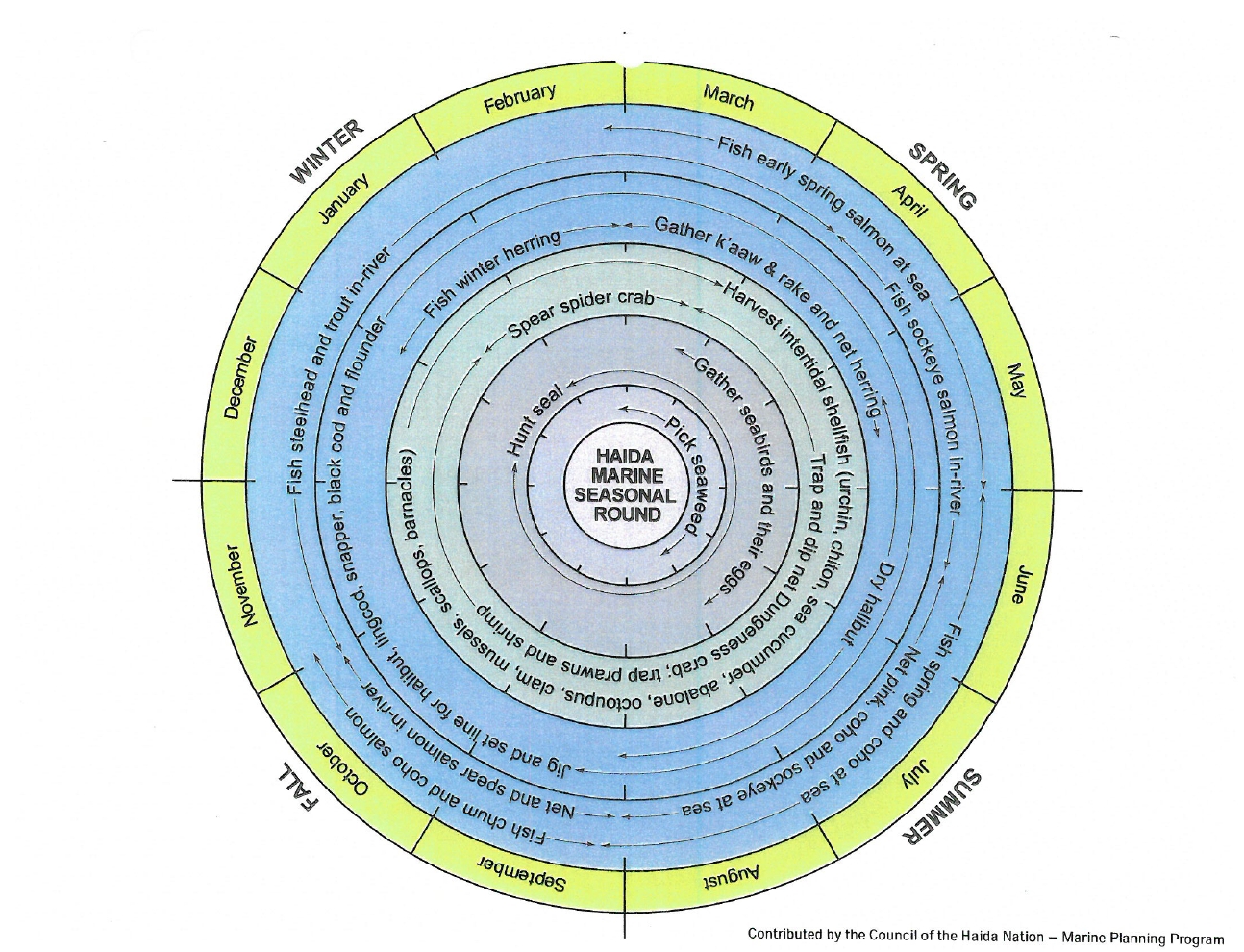
The most in-depth one is a mini-unit on the Great Bear Sea (www.greatbearsea.net). We study the practices and knowledge of First Peoples throughout time, in terms of seasonal food gathering and meal planning, as well as best practices in terms of fishing and environmental stewardship (including partnerships with local/provincial governments, and other interest groups). Other assignments include the exploration of Traditional Plant use, allowing students the opportunity to research the knowledge base of the local environment shared by the First Peoples of the Pacific Northwest. (Teacher: Jeff Lewis)
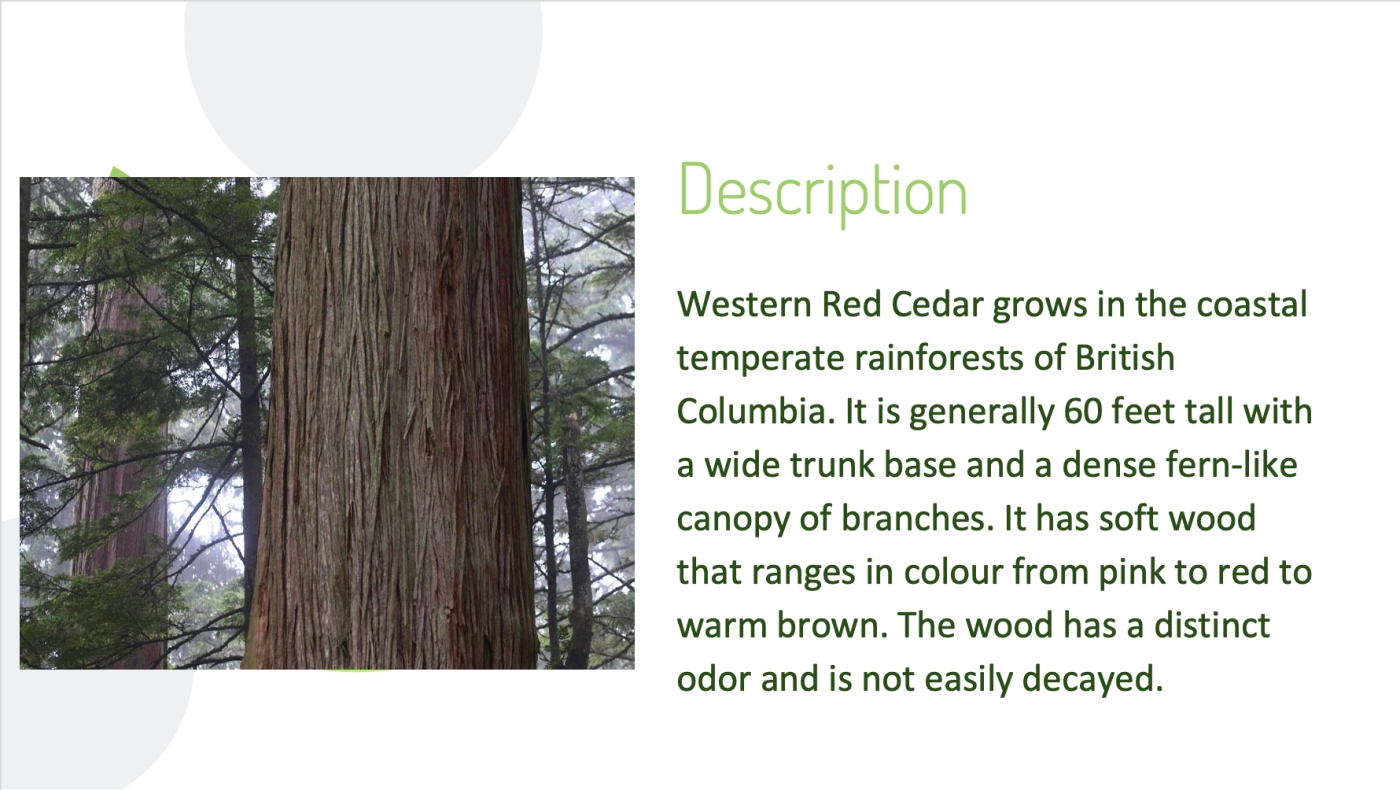
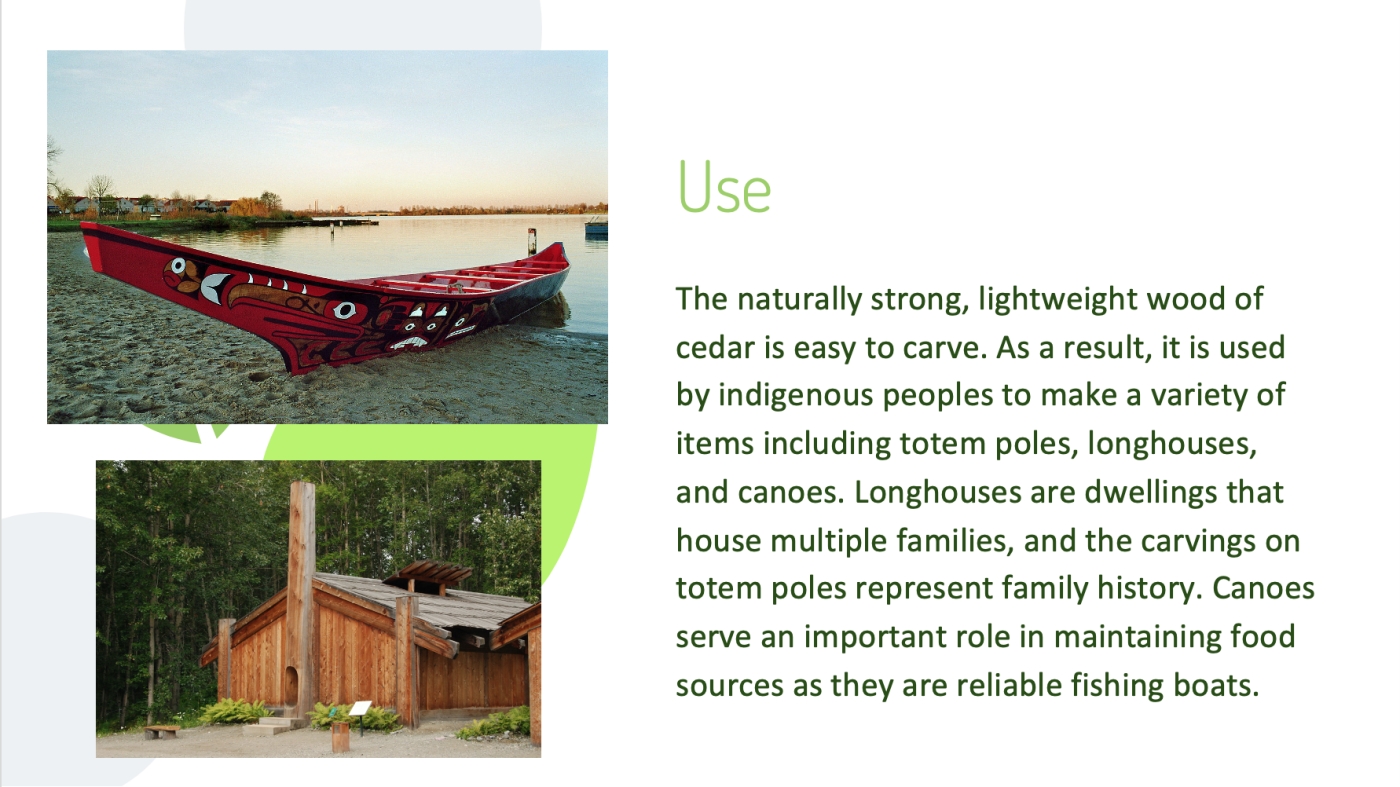
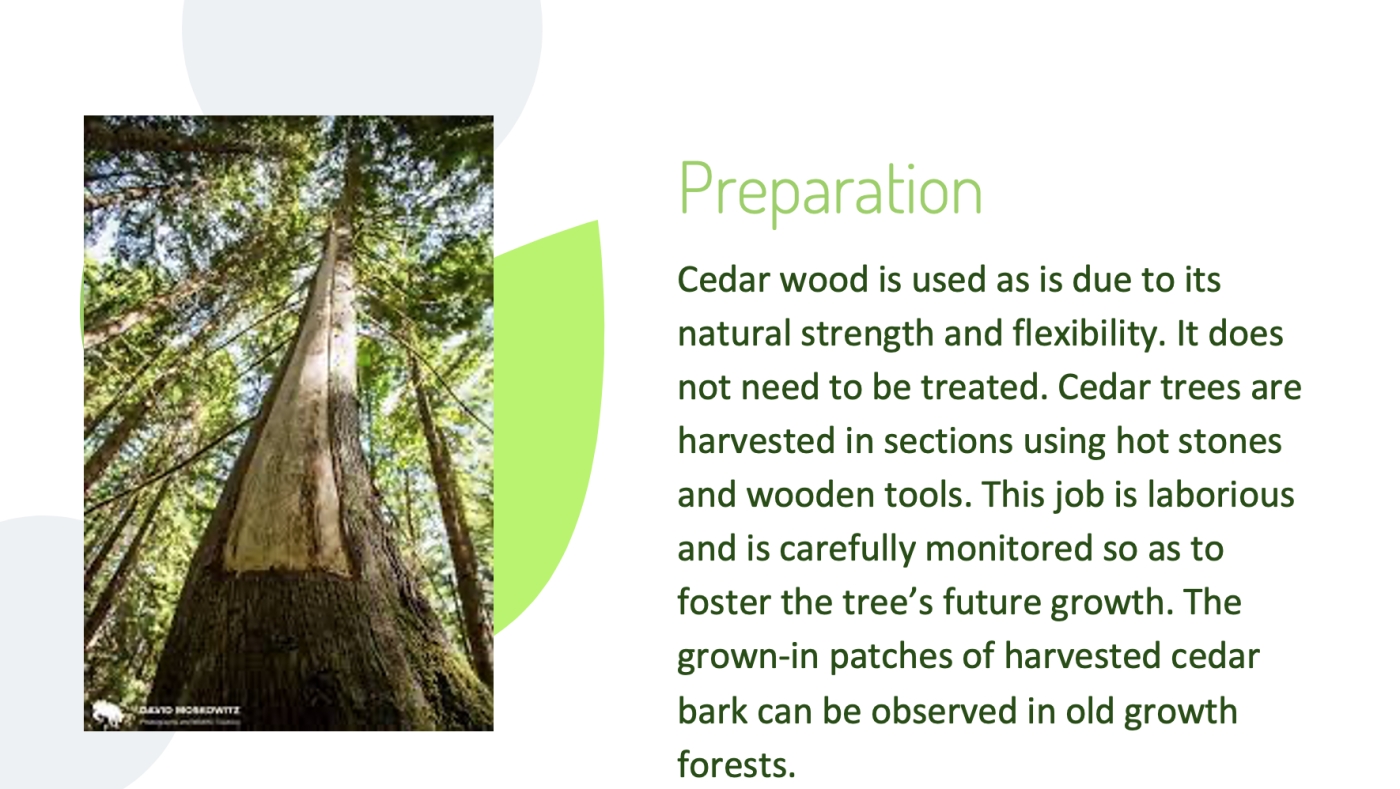 Environmental Science 12 - Student work
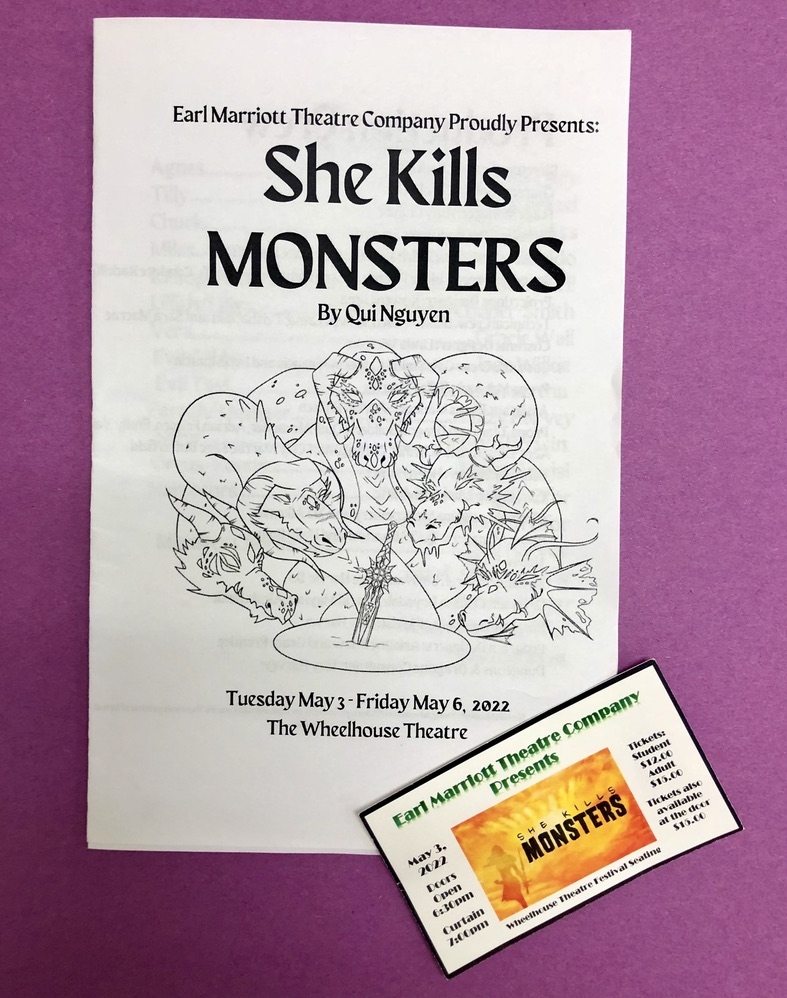
Story 2 – Earl Marriott Theatre Company presents She Kills Monsters
This year, Earl Marriott was able to open up to offering a live production for our Main stage play. The company chose to present She Kills Monsters, a play that touches on themes of acceptance and diversity, inclusion and connection, as described in our school focus. The multi-age cast were determined to perform before a live audience and share this complex and dynamic production. They performed the play to audiences that included Grade 7 students from our family of schools, and parent and community members. This was one of the first productions from our school that included diverse characters and themes of inclusion and equity. The play allowed our actors to express themselves through characters that face many of the challenges, joys and struggles that our students face in their own personal and school lives.
As a Director and teacher, I am excited about this show and the compelling and relevant nature of it in our lives. The show is poignant and funny at the same time. It deals with themes of personal identity, family connection, coping with grief and an individual’s sense of belonging. It has lovely messages about acceptance, perseverance and friendship. Whatever someone’s background or interests, whoever they love…everyone should be allowed to live their truth and be happy.
Candace Radcliffe – Director, Teacher
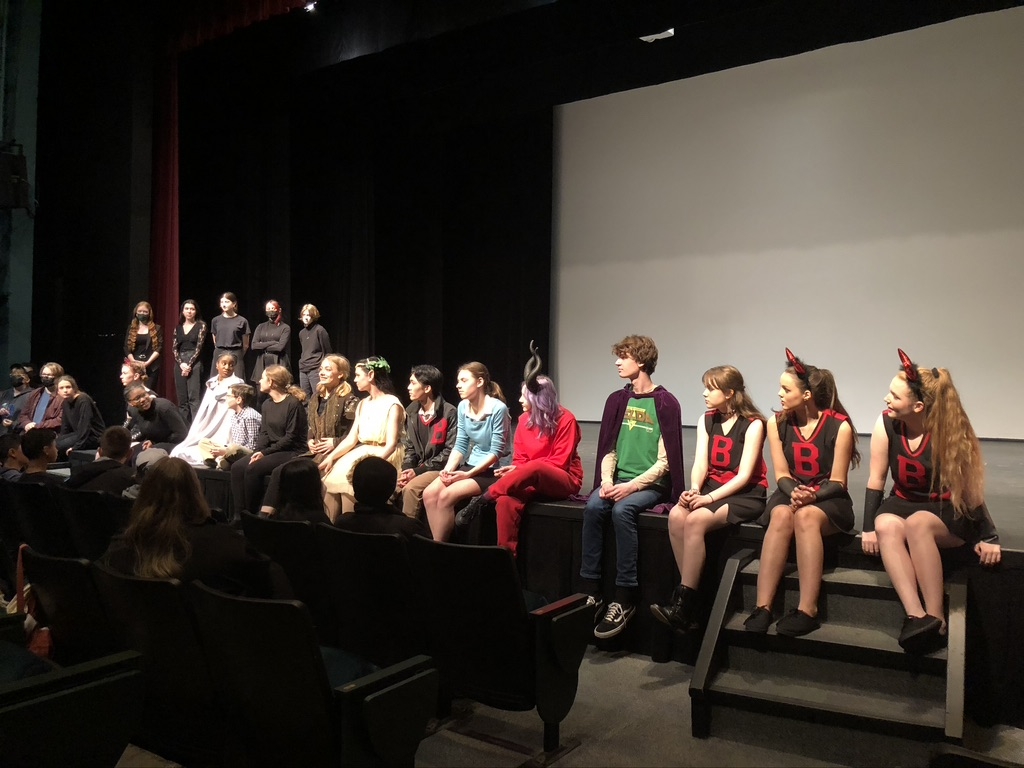
The play was well received by our audiences, and allowed for more in-depth discussion and exploration of the struggles and conflicts experienced by our students. We appreciate the effort and courage of our student actors in bringing many of these themes forward so that, as a school, we can build understanding and celebrate the diversity and inclusive culture of our community.
II. A Focus on Assessment using competency and strength-based language to improve student performance and transition experiences in the first years of Secondary school
- Working towards the District Priority Practice of Quality Assessment
- determining levels of performance through the use of rubrics and performance scales that outline important aspects of student performance through strength-based language.
- Embedding the District Inquiry in Transitions
- Improving grade to grade transitions in Secondary schools, by continuing the language of learning behaviors and strength-based learning
Specific Student Learning Goals and Experiences
- Students will understand and be able to self-reflect on their areas of strength and misconceptions in their learning, and use that information to set new learning goals.
- Students will develop reflective language and metacognition (i.e. the ability to think about thinking) to engage in effective self-assessment.
In Relation to the Curricular and Core Competencies
- Make judgments based on reasoning, where students consider options, analyze options using specific criteria, and draw conclusions.
- Reflect on the information they receive through observation, experience, and other forms of communication to solve problems, design products, understand events, and address issues.
- Use their ideas, experiences, and reflections to set goals, make judgments, and refine their thinking.
- Explore possibilities, develop and reflect on processes, monitor progress, and adjust procedures in light of criteria and feedback.
- Will apply critical, metacognitive, and reflective thinking in given situations, and relate this thinking to other experiences, using this process to identify ways to improve or adapt their approach to learning.
- Will reflect on and assess their experiences, thinking, learning processes, work, and progress in relation to their purposes.
- Will give, receive, and act on feedback and set goals individually and collaboratively. They will determine the extent to which they have met their goals and can set new ones.
Instructional strategies and supports
- Create an Assessment team that will explore, develop and share assessment strategies and practices throughout the school.
- Develop a variety of assessment tools that can be shared and adopted by others
- Focus on professional development activities that support the adoption of proficiency scales to communicate learning
- Focus department and staff meeting discussions on Assessment practices using proficiency scales by creating a standing item in both meetings
- Work together as a school community to create an Interim for 8/9 students that uses strength-based language when discussing learning behaviors (work habits) as well as possibly a quick snapshot of student progress in regards to the learning standards for that subject area.
Story 1 - Formative assessment in the form of self and peer assessment is a way in which we can can engage our learners in taking ownership of their learning.
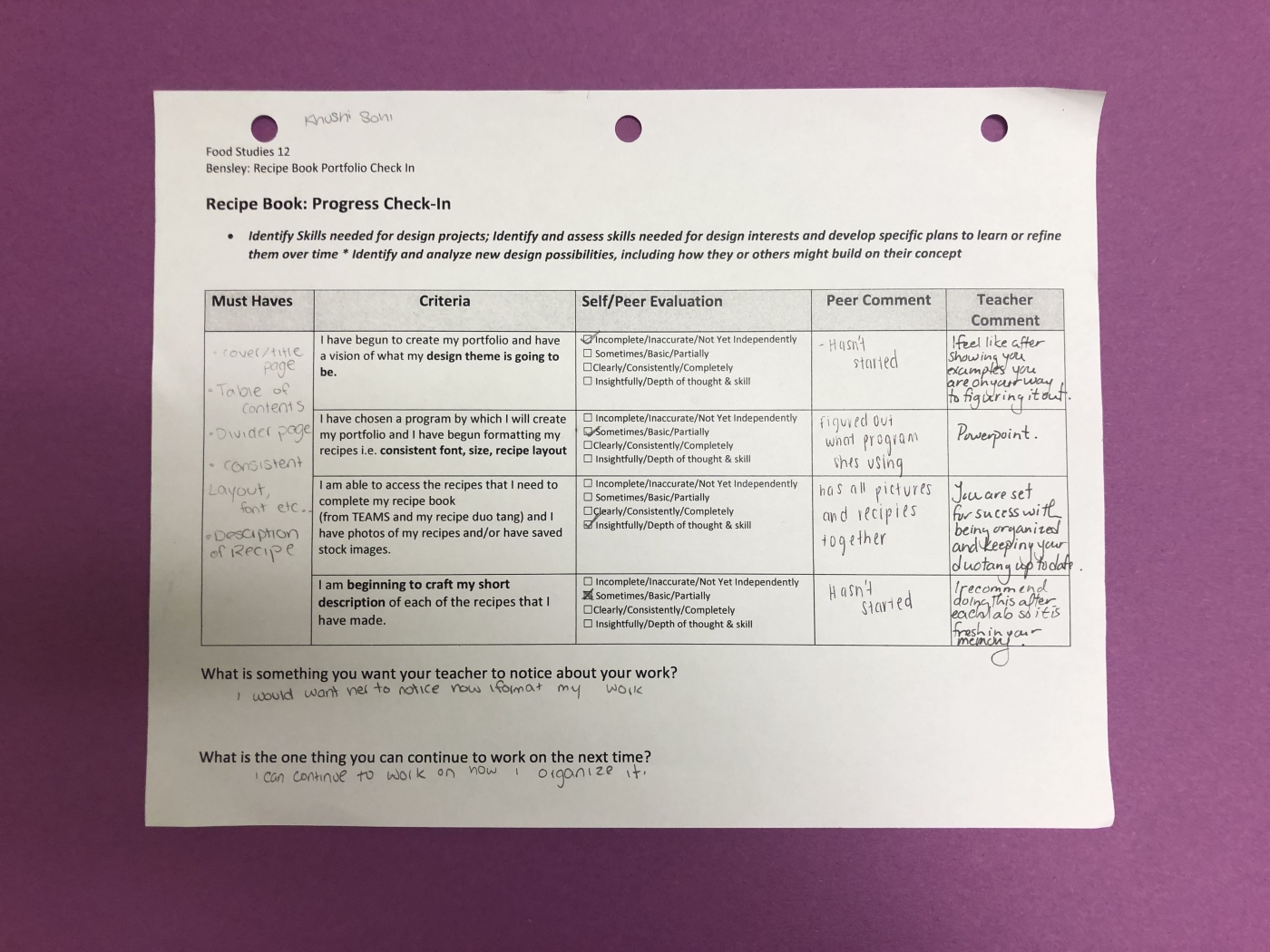
In Food Studies students participated in a Recipe Book: Progress Check In whereby they co-constructed success criteria along side the teacher. Students then participated in a student-peer-teacher assessment cycle where informal feedback was given on student evidence of learning. Strength based prompts encouraged students to share their areas of strength as well as learning goals to work towards in the future. Bringing students into the assessment process moves them towards increased independence and ownership of their own learning. (Teacher: Stephanie Bensley)
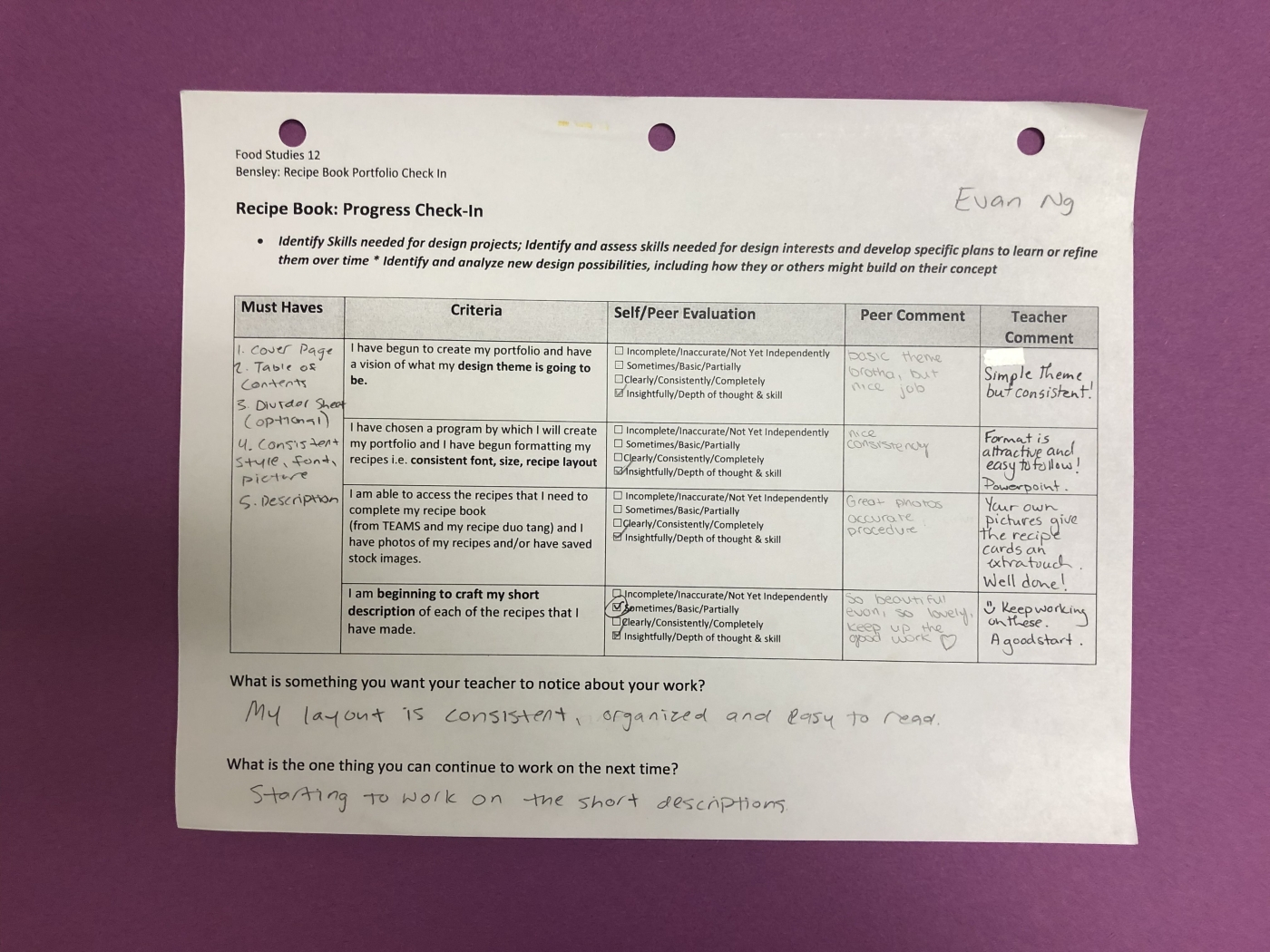
Story 2 - Educational Ownership - Short Stories
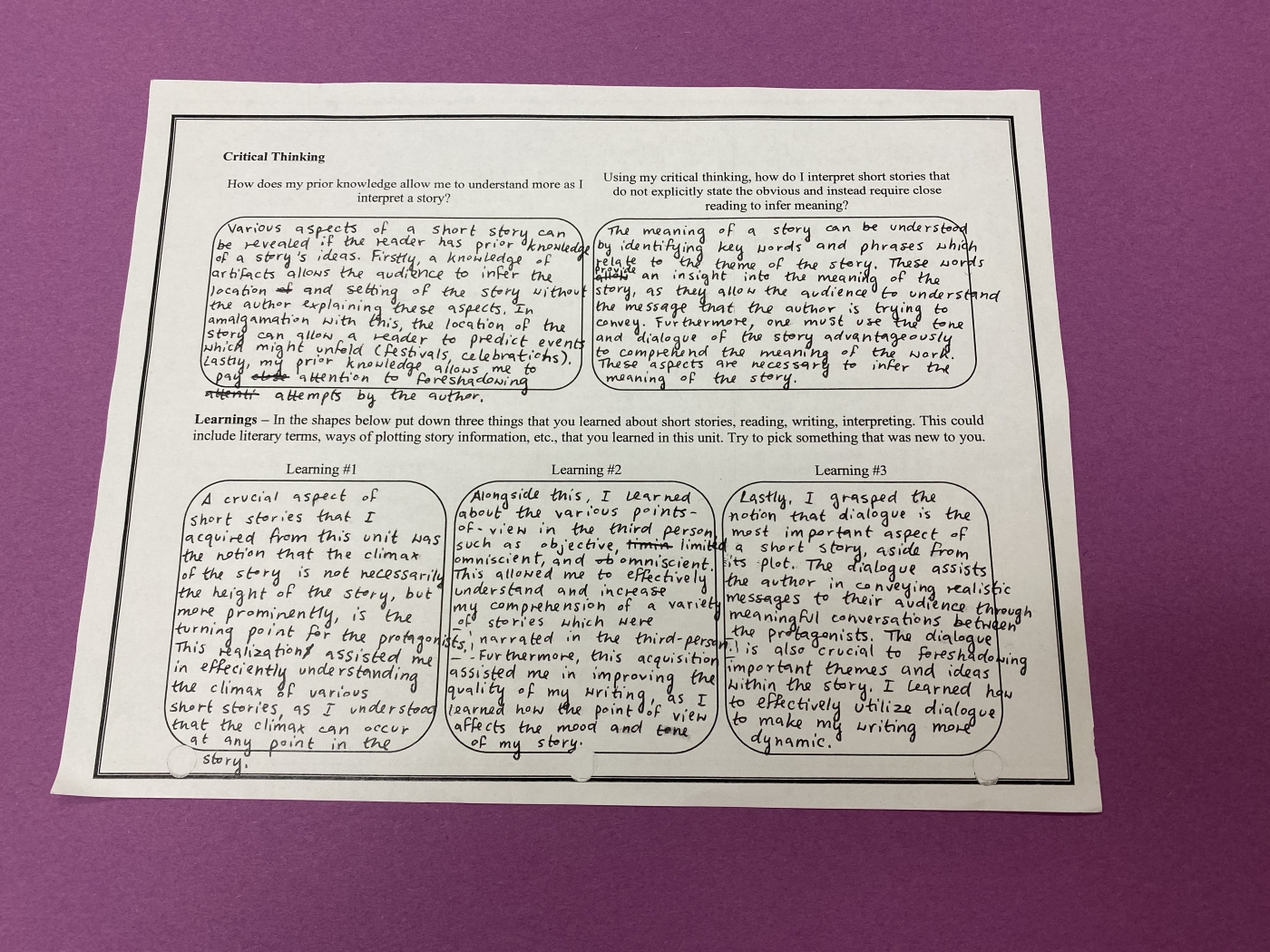
In English 12 the core competencies were used as a framework for student self-reflection on a short story unit that featured BIPOC authors. Core competencies are about our learners-personalization, inclusion, and diversity. The purpose of this educational ownership self-reflection was to enable students to better understand the processes and products of their learning.
"Learning about the experiences of those who are different than myself helps me to have a better understanding of the world and why others may hold different views or beliefs.” Kiara Neighbor
The self-awareness that comes when students are able to self-reflect on their areas of strength and growth is evident when they are given the time to engage in effective self-reflection. When asked to respond to questions such as, “When I am writing, how do I communicate to my audience in a way that is clear?” and “put down three things that you have learned about short stories” students shared, “it is useful for the author to utilize consistent language, proper grammar, and well-structured dialogue. These factors establish consistency in writing, and allows the audience to effortlessly understand a story” and A crucial aspect of short stories that I acquired from this unit was the notion that the climax of the story is not necessarily the height of the story, but more prominently is the turning point for the protagonist.
OUR NEXT STEPS
I. A Focus on a positive school culture that embraces and celebrates equity, diversity and inclusion.
- In depth professional development for English First People’s teachers, with the intention of offering English First People’s 12 to all Graduating students in 2023, and as Language Arts choice in future years
- Continue to re-examine our course offerings and practices to ensure that all of our courses are supportive of diverse students and inclusive of all students regardless of gender or orientation
- Examine the behaviours of our students through their social interactions, comments and social media, with the intention to address systemic racism in our school.
- Explore the introduction of a student group or club that is staff led to promote Global Diversity and Multicultural Awareness, with the intention of building understanding of cultural diversity, and awareness of racial equity and social justice in our school.
- Monitor the Graduation status and progress of our Indigenous students
II. A Focus on Assessment using competency and strength-based language to improve student performance and transition experiences in the first years of Secondary school
- May 30, 2022. Professional Development with Dean Pacheco, Principal Langley Secondary School. The Why, What, and How of Standards Based Grading and using Strength Based Language to Support Student Success.
- Ongoing - Focus on competency-based instruction and assessment for our junior students. The Assessment team will continue to work towards supporting the school community with resources and opportunities to collaborate around building a framework for instruction and assessment that is learner focussed.
- October 2022. Communicate student learning through competency and strength-based language in the form of a common interim report card for grade 8 and 9 learners.
- Grade 8/9 Cohort group: Students will be able to self-assess learning behaviors encompassing responsibility, co-operation, and independence. A proficiency scale will be used to assess evidence of learning as it relates to what students are learning to do and learning to know.
Gathering Student Data
To gather feedback from our Cohort group of students in Grade 8 and 9, and give them an opportunity to reflect on their own learning in the two Focus areas, we included questions in the Core Competency Reflection process that would allow students to tell us how they are learning. We will use the statements and reflections recorded by the Grade 8 and 9 cohort group to shape our next steps and evaluate where we need to continue or expand our efforts.
1. A Focus on a positive school culture that embraces and celebrates equity, diversity and inclusion:
Personal and Social Core Competency Reflection:
Reflection Question 1 - One of the First People’s Principles of Learning is that Learning takes time and patience. Comment on your own time and patience over this past year transitioning to Grade 8.
Reflection Question 2 - What have you learned so far in Grade 8 that you wish you had known before coming to EMS? What have you learned about yourself? Describe the environment that works best for you in working to your potential, creating ideas, feeling supported and accepted.
2. A Focus on Assessment using competency and strength-based language to improve student performance and transition experiences in the first years of Secondary school.
Thinking Competency Reflection:
Reflection Question 1 - How do you know you have been successful? List three words and then describe/brainstorm the evidence behind these words.
Reflection Question 2 - How have you felt supported in your learning this year? What feedback is most helpful in moving your learning forward ( or supporting your learning?)?
Reflection Question 3 - Share a personal connection to what we are doing (could be class specific/topic specific). Does this personal connection change the way that you value the learning opportunities in this course?
Surrey Schools
Formed in 1906, the Surrey School District currently has the largest student enrolment in British Columbia and is one of the few growing districts in the province. It is governed by a publicly elected board of seven trustees.
The district serves the cities of Surrey and White Rock and the rural area of Barnston Island.