Don Christian Elementary 25-26

OUR CONTEXT
At Don Christian Elementary, we are committed to improving student learning through an equity-centred and inclusive approach that recognizes the diverse strengths, identities, lived experiences, and learning needs of our students. We understand that equitable outcomes are achieved when barriers to learning are intentionally addressed and when students’ academic and social-emotional needs are supported together.
The PERMA framework (Positive Emotion, Engagement, Relationships, Meaning, and Accomplishment) provides a shared structure for creating learning environments where all students can thrive. By intentionally fostering positive emotions, we support students in feeling safe, valued, and confident. Through purposeful engagement, students are encouraged to participate actively in learning experiences that are accessible, relevant, and responsive to their needs. Strong relationships between students, staff, and families help build trust, belonging, and connection, particularly for learners who may experience barriers to success.
Meaning is developed when students see themselves, their cultures, and their experiences reflected in their learning, and when instruction honours multiple ways of knowing. A focus on accomplishment ensures that student growth is recognized and celebrated, supporting motivation, perseverance, and a positive sense of self as a learner. Together, these elements of PERMA support inclusive practices that promote both well-being and academic achievement.
Literacy remains a central focus at Don Christian, as reading provides students with access to learning across all areas of the curriculum. When strong literacy instruction is paired with PERMA-informed practices, students are better able to engage with texts, express their thinking, and develop confidence and resilience as learners.
Through a shared commitment to equity, inclusion, and PERMA-aligned practices, Don Christian Elementary continues to build a safe, caring, and connected school community where every student feels a sense of belonging and can flourish.
**INSERT VIDEO HERE**
OUR LEARNERS
At Don Christian Elementary, we believe that literacy skills are the foundation of lifelong learning and full participation in society. Reading enables students to understand and connect with the world and the people around them, empowering them to make meaning, think critically and creatively, and reach their full potential. Literacy learning is embedded across all areas of the curriculum, and explicit instruction in decoding and comprehension remains essential to student success.
The focus group for this plan includes 17 students in Grades K–3 who are not yet flourishing in reading instruction and social-emotional development. The graphs below outline the composition of the cohort. These learners are curious and capable, and benefit from targeted, intentional support to strengthen foundational reading skills while building confidence, engagement, and a sense of belonging. Supporting both literacy development and well-being is key to helping these students experience success as learners and as valued members of our school community. 
 To support this growth, Grade 6 students will serve as mentors, engaging in biweekly reading and PERMA-based activities with younger learners. These cross-grade connections provide meaningful opportunities to model effective reading behaviours, foster positive relationships, and create shared experiences of joy, purpose, and accomplishment. This approach supports the development of reading skills and social-emotional competencies in younger students, while also nurturing leadership, empathy, and responsibility in older students.
Through intentional literacy instruction and PERMA-informed practices, Don Christian continues to nurture learners who are engaged, collaborative, and developing a lifelong love of reading—supporting academic growth alongside social and emotional well-being.

OUR FOCUS
At Don Christian Elementary, our student learning focus is on strengthening reading skills while intentionally using the PERMA framework (Positive Emotion, Engagement, Relationships, Meaning, and Accomplishment) to support student well-being and achievement. This focus aligns directly with the British Columbia curriculum, particularly the Language Arts curricular competencies and the Personal and Social Core Competency. Specifically, we aim to explore foundational print and sound–symbol relationships so that students can recognize letters, sounds, and basic print conventions, which builds decoding skills and engagement. We will also teach decoding strategies to read familiar and unfamiliar words. Students apply phonics, word patterns, and context to read words independently, strengthening reading fluency and confidence (Accomplishment in PERMA!).
Through intentional reading instruction, students develop the Language Arts curricular competencies of comprehending and connecting, communicating and expressing, and thinking critically and creatively about texts. Students engage with a variety of reading materials to build fluency, vocabulary, and comprehension, while making personal and meaningful connections to what they read. These experiences support students in articulating their thinking, responding to texts, and developing a deeper understanding of themselves and the world around them.

The PERMA framework is embedded in all reading activities to intentionally support the Personal and Social Core Competency, including positive personal identity, personal awareness and responsibility, and social responsibility. Through PERMA-informed practices, students learn to recognize emotions, build positive relationships, persevere through challenges, and reflect on their learning and accomplishments. Reading activities are designed to foster engagement, promote empathy, and encourage goal setting, supporting both academic growth and emotional well-being.

By integrating strong reading instruction with PERMA-aligned social-emotional learning, Don Christian Elementary creates inclusive, supportive learning environments where students feel safe, connected, and motivated. This cohesive approach supports the development of literate, thoughtful, and resilient learners, and reflects our commitment to the BC Core Competencies and the holistic development of every student.
By intentionally integrating the PERMA framework with literacy instruction, Don Christian Elementary strengthens all three BC Core Competencies. This alignment ensures that students develop strong communication and thinking skills while nurturing well-being, belonging, and a positive sense of self—supporting the holistic development of every learner.
BC Core Competency | PERMA | What This Looks Like in Practice |
Communication | Positive Emotion Engagement Relationships | Students share ideas about texts with confidence and joy. They participate in reading discussions, partner talk, and oral responses, listen actively, and communicate respectfully, building strong relationships through collaborative literacy experiences. |
Thinking | Engagement Meaning Accomplishment | Students engage deeply with reading tasks, ask questions, make connections, and think critically about texts. They find meaning by connecting reading to personal experiences and the world, set goals, apply strategies, and reflect on their growth and accomplishments as readers. |
Personal & Social | Positive Emotion Relationships Meaning Accomplishment | Students develop self-awareness, confidence, and resilience as learners. Through shared reading and discussion, they build empathy, cooperation, and social responsibility. Reflection on reading experiences supports a sense of purpose, belonging, and pride in learning. |

OUR NEXT STEPS
Based on observations, conversations, and interviews with both students and staff, we discovered that this work had a varied but profound impact on our learners. Specifically, we answered the questions below:
How do we know reading skills have developed? :
- We collected pre and post reading assessments such as ELPATS, Acadience, Dibbles, Core Phonics, teacher observations, EDI assessments.
- The data tells us that our students in the cohort group have made gains in proficiency levels, with the biggest jump from Developing to Proficient.

How do we know PERMA is a strategy that has helped to improve confidence and well-being? :
- We collected pre and post PERMA assessments/Questionnaires.
- The data tells us that PERMA strategies are working. Students post assessments were consistently higher than those at the beginning of the year. NOTE: student 12 data shows a decrease over time but the day of the final post assessment, he could not finish the assessment.

The following is a summary of the observed growth over the course of the year long Inquiry:
Student 1
- Self-efficacy pre and post self assessments: Pre: Developing Post: Proficient
- Curricular Competency focus: Reading
- Fall assessment: Developing
- Spring assessment: Developing
- Other observations:
- connected to his big buddy
- engaged in all activities
Student 2
- Self-efficacy pre and post self assessments: Pre: Developing Post: Proficient
- Curricular Competency focus: Reading
- Fall assessment: Developing
- Spring assessment: Developing
- Other observations:
- connected to his big buddy
- Struggled to sit still in beginning but became more engaged as time went on
Student 3
- Self-efficacy pre and post self assessments: Pre: Developing Post: Proficient
- Curricular Competency focus: Reading
- Fall assessment: Emerging
- Spring assessment: Emerging
- Other observations:
- Engaged with big buddy
Student 4
- Self-efficacy pre and post self assessments: Pre: Proficient Post: Proficient
- Curricular Competency focus: Reading
- Fall assessment: Developing
- Spring assessment: Proficient
- Other observations:
- Very quiet and reserved in the beginning but became more comfortable with her big buddy as time went on
- Very chatty during sessions
Student 5
- Self-efficacy pre and post self assessments: Pre: Developing Post: Proficient
- Curricular Competency focus: Reading
- Fall assessment: Developing
- Spring assessment: Developing
- Other observations:
- Quiet student
- Have seen growth as the classroom teacher has observed greater communication and confidence
Student 6
- Self-efficacy pre and post self assessments: Pre: Proficient Post: Proficient
- Curricular Competency focus: Reading
- Fall assessment: Developing
- Spring assessment: Developing
- Other observations:
- very positive self efficacy
Student 7
- Self-efficacy pre and post self assessments: Pre: Developing Post: Proficient
- Curricular Competency focus: Reading
- Fall assessment: Developing
- Spring assessment: Developing
- Other observations:
- One on one support enhanced more confidence and communication
Student 8
- Self-efficacy pre and post self assessments: Pre: Proficient Post: Proficient
- Curricular Competency focus: Reading
- Fall assessment: Developing
- Spring assessment: Proficient
- Other observations:
- Even though the student's self efficacy scores stayed the same, we have seen improvements in his ability to manage his emotions and engage in all reading activities.
Student 9
- Self-efficacy pre and post self assessments: Pre: Proficient Post: Proficient
- Curricular Competency focus: Reading
- Fall assessment: Extending
- Spring assessment: Extending
- Other observations:
- Happy to participate at all times
- Came to group reading two grades above
Student 10
- Self-efficacy pre and post self assessments: Pre: Proficient Post: Proficient
- Curricular Competency focus: Reading
- Fall assessment: Emerging
- Spring assessment: Developing
- Other observations:
- Student was unsure of himself and questioned his abilities
Student 11
- Self-efficacy pre and post self assessments: Pre: Developing Post: Proficient
- Curricular Competency focus: Reading
- Fall assessment: Developing
- Spring assessment: Developing
- Other observations:
- Student required a lot of support but made gains
Student 12
- Self-efficacy pre and post self assessments: Pre: Proficient Post: Proficient
- Curricular Competency focus: Reading
- Fall assessment: Emerging
- Spring assessment: developing
- Other observations:
- Student participated well but on the final PERMA assessment he said "I can't do this" and put it aside.
Student 13
- Self-efficacy pre and post self assessments: Pre: Developing Post: Developing
- Curricular Competency focus: Reading
- Fall assessment: Proficient
- Spring assessment: Proficient
- Other observations:
- Student engaged more in preferred activities
Student 14
- Self-efficacy pre and post self assessments: Pre: Developing Post: Proficient
- Curricular Competency focus: Reading
- Fall assessment: Emerging
- Spring assessment: Developing
- Other observations:
- Student did not connect well with big buddy
Student 15
- Self-efficacy pre and post self assessments: Pre: Developing Post: Developing
- Curricular Competency focus: Reading
- Fall assessment: Emerging
- Spring assessment: Emerging
- Other observations:
- Student engaged with preferred activities
Student 16
- Self-efficacy pre and post self assessments: Pre: Developing Post: Developing
- Curricular Competency focus: Reading
- Fall assessment: Proficient
- Spring assessment: Proficient
- Other observations:
- Student engaged with preferred activities
- Did not make connection with big buddy
Student 17
- Self-efficacy pre and post self assessments: Pre: Developing Post: Proficient
- Curricular Competency focus: Reading
- Fall assessment: Emerging
- Spring assessment: Emerging
- Other observations:
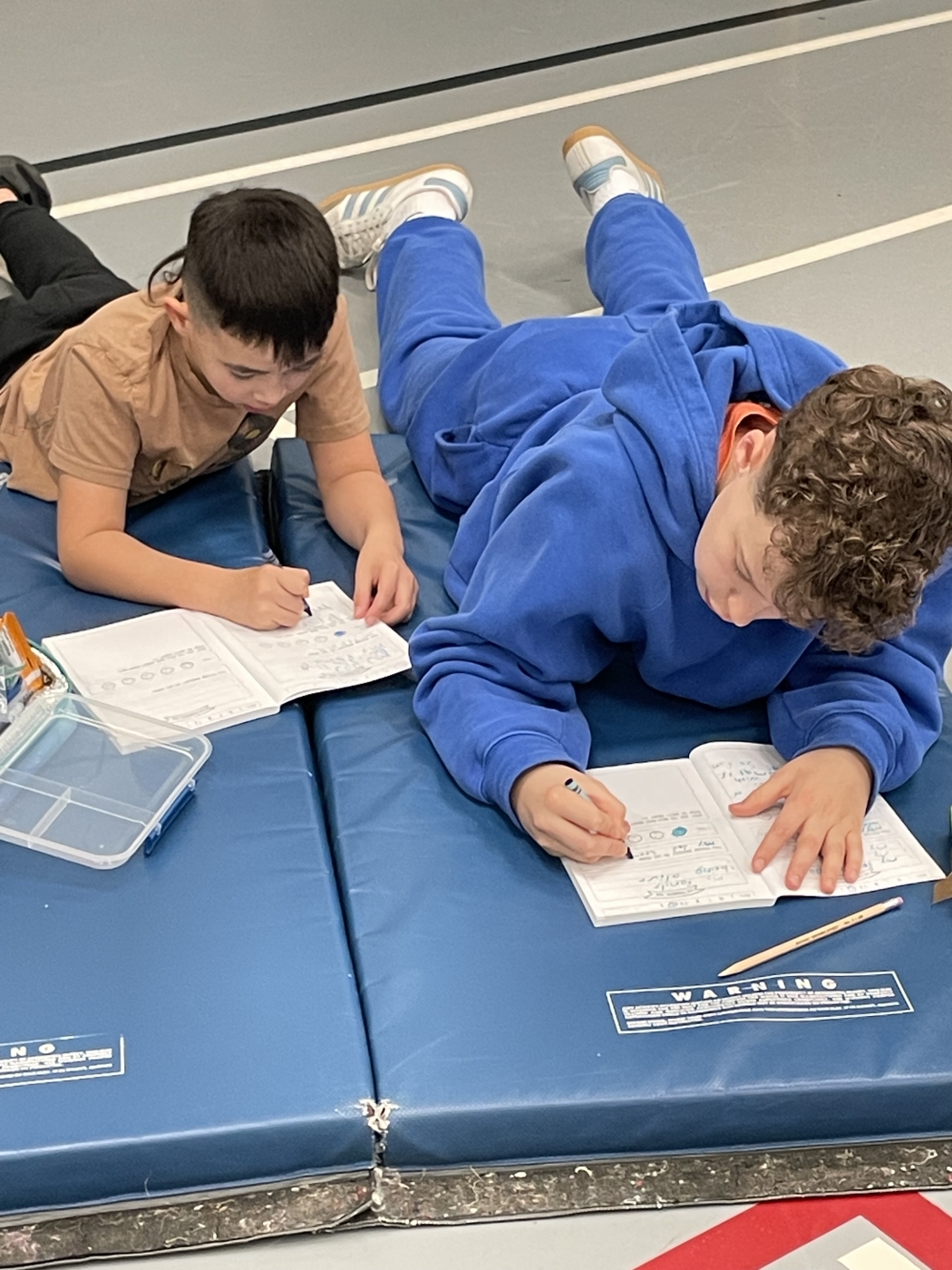
- Big buddy was quoted saying "I think student has gotten braver this year".
- Big buddy was quoted saying "I think student has gotten braver this year".
To summarize, the graphs below show student proficiency levels at the beginning and end of the year based on assessment data. The purpose of these graphs is to highlight shifts in student learning and overall class progress in reading.
Beginning of Year Distribution
- Emerging: 6 students (35.3%)
- Developing: 8 students (47.1%)
- Proficient: 2 students (11.8%)
- Extending: 1 student (5.9%)

End of Year Distribution
- Emerging: 3 students (17.6%)
- Developing: 9 students (52.9%)
- Proficient: 4 students (23.5%)
- Extending: 1 student (5.9%)

Our Key Findings
- The number of students in Emerging decreased significantly, showing strong overall growth.
- The majority of students are now in the Developing category, indicating steady progress toward proficiency.
- The number of students achieving Proficient doubled, demonstrating meaningful academic improvement.
- The Extending category remained consistent, suggesting continued support may help more students reach this level.
At Don Christian, our work centered on strengthening reading while intentionally cultivating the skills students need to thrive as learners and as people. By collaboratively identifying and building on each student’s strengths, we created conditions where students began to see themselves as capable, valued, and resilient. This shift in self-perception supported a more growth-oriented mindset, increasing their willingness to take risks and persist through challenging tasks. In some cases, this translated quickly into academic gains; in others, the impact is unfolding more gradually as students develop deeper self-efficacy and self-regulation.
Grounded in the PERMA framework, we observed meaningful growth across all domains of student well-being. Students demonstrated more frequent positive emotions, evident in their increased confidence and sense of belonging. Engagement deepened, with learners showing greater focus, curiosity, and investment in their work. Relationships expanded and strengthened, connecting students with peers, staff, and mentors in authentic and supportive ways. Learning experiences became more personally meaningful, fostering a stronger sense of purpose. Most importantly, students experienced genuine accomplishment—recognizing their progress, celebrating their efforts, and building the belief that they can succeed.
Looking ahead to the next school year at Don Christian, our focus will be on deepening and sustaining this work so that it becomes embedded in everyday practice across classrooms. We will continue to strengthen reading instruction through targeted, evidence-based approaches, while intentionally integrating the development of self-regulation, resilience, and learner identity into all areas of learning.
As a staff, we will prioritize ongoing collaboration—using team time to share strategies, analyze student progress, and co-design supports that are responsive to diverse learner needs. We will further refine how we identify and amplify student strengths, ensuring that this lens consistently informs instruction, assessment, and communication with families.
Building on our use of the PERMA framework, we will take a more deliberate approach to tracking and supporting student well-being alongside academic growth. This includes creating consistent opportunities for students to reflect on their own learning, set goals, and recognize their progress and accomplishments.
We also aim to expand relationship-building opportunities, including strengthening connections with peers, staff, and community partners. By continuing to foster a strong sense of belonging and purpose, we can support students in feeling both connected and motivated in their learning.
Ultimately, our next steps are about coherence and consistency—ensuring that every student at Don Christian experiences a learning environment where they feel capable, engaged, and supported to succeed.
Surrey Schools
Formed in 1906, the Surrey School District currently has the largest student enrolment in British Columbia and is one of the few growing districts in the province. It is governed by a publicly elected board of seven trustees.
The district serves the cities of Surrey and White Rock and the rural area of Barnston Island.