Dogwood Elementary 25-26

OUR CONTEXT
Our school is a place where relationships and consistency matter. We are fortunate to have a stable student community and a dedicated, experienced staff who know our learners well. Over the years, we have focused intentionally on building strong readers while also supporting students’ social and emotional growth. As we looked more closely at our students’ progress, we began to notice something important: while many students were reading well, they were often finding it challenging to express their thinking clearly in writing. This realization prompted us to take a closer look at our practice and to commit, as a staff, to strengthening how we support students as writers.
OUR LEARNERS
In June 2025, we conducted a survey of teaching staff to collect evidence of our students relative strengths and weaknesses as writers. The overall consensus was:
| Our Students' Strengths as Writers | Our Students' Stretches as Writers |
|
|
And then more specifically:
The primary teachers felt that students needed to work on writing conventions and to let go of the need to spell everything perfectly.
The intermediate teachers felt that the students needed to work on the form of writing... how to connect many sentences and paragraphs into a larger piece of writing.
OUR FOCUS
This year, we made a conscious decision to slow down and really focus on how we support students as writers. Early on, staff spent time together exploring a range of writing resources and professional texts, thinking about what strong writing instruction looks like in our classrooms. Each teacher chose a writing strategy book that resonated with them, which helped ground our work in practical, day-to-day strategies. We also took the time to gather baseline writing samples, giving us a clearer sense of where our students were starting from, and then revisited that data at the end of the year to see their growth.
Example:
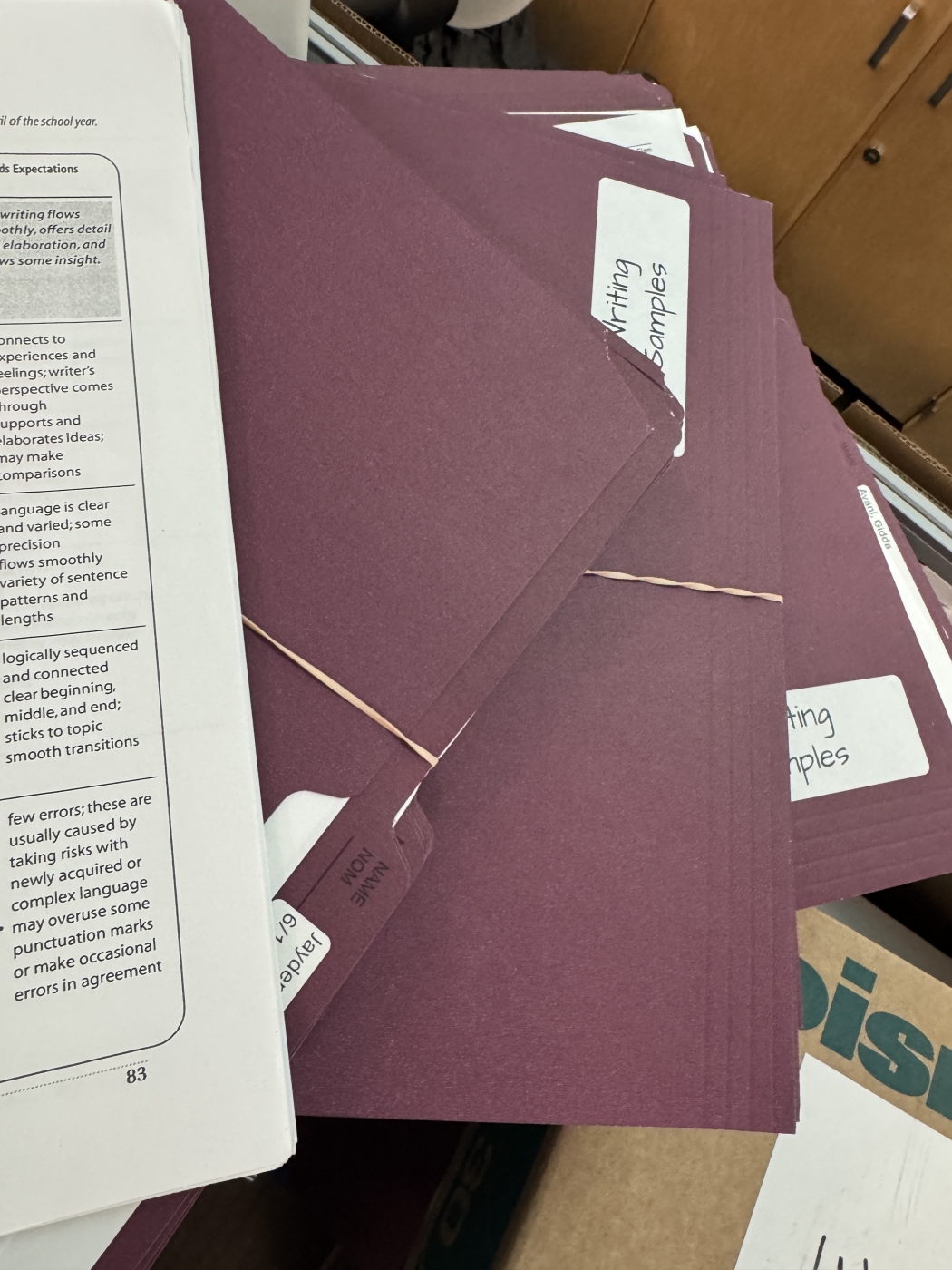
One shift we are especially proud of is the introduction of writing folders that follow students from year to year—these have helped us see writing as a continuous journey rather than something that starts fresh each September.
Throughout the year, writing stayed on the table in staff conversations. We shared what was working, where students were getting stuck, and how we could adjust. One example was using the tool "Stock and Flow" from the Compassionate Systems Toolkit. We began to look at what was preventing our students from being stronger writers.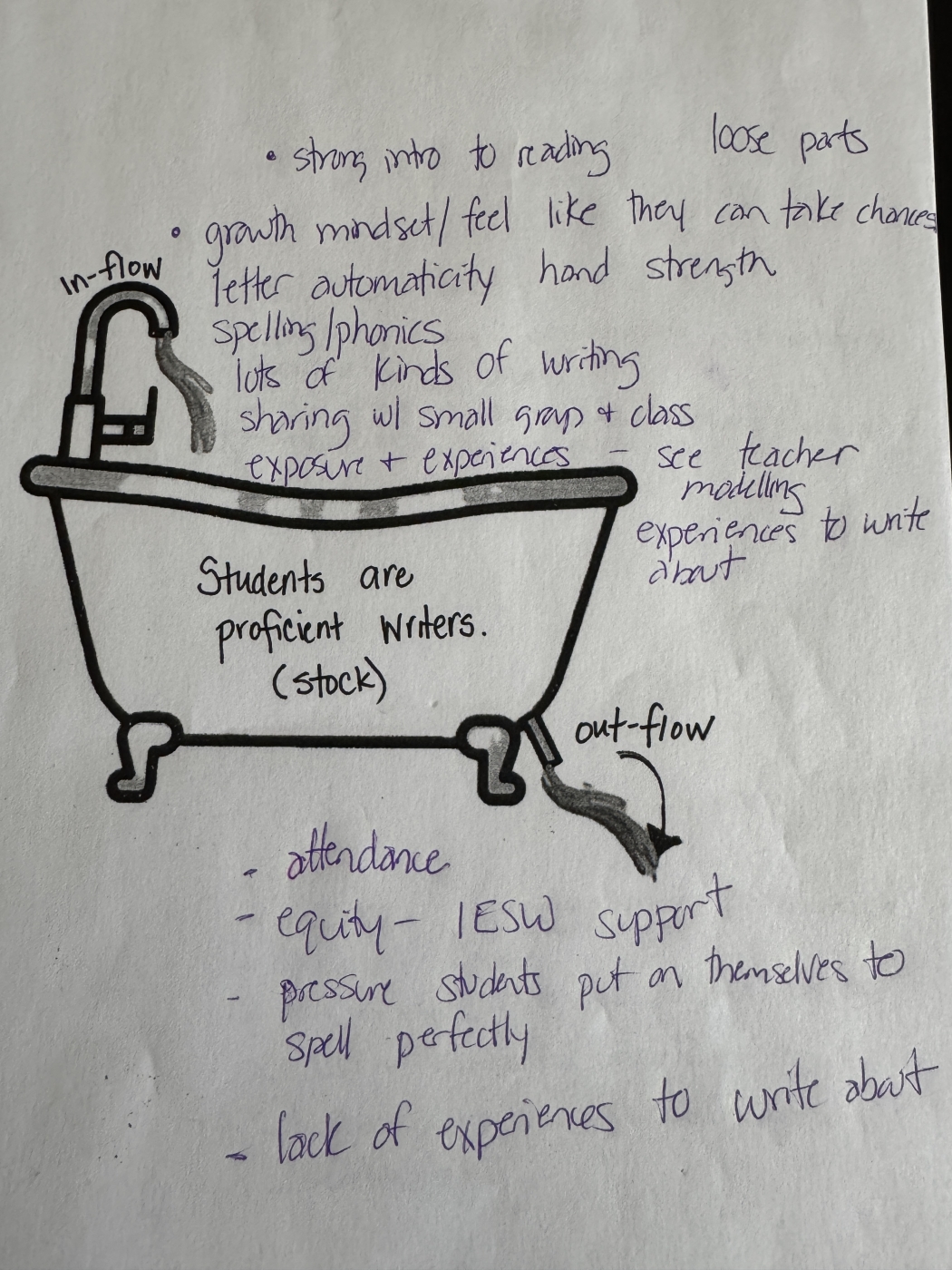
OUR NEXT STEPS
We are at the beginning of our writing focus. As we look ahead, we want to build on what we’ve learned this year and be more intentional in how we respond to our students’ needs as writers. The data we collected—both at the beginning and end of the year—has given us a clearer picture of where students are growing and where they still need support. Our next step is to use that information more purposefully, targeting instruction so it matches students more closely, rather than taking a one-size-fits-all approach.
We also see an opportunity to better leverage students’ strengths in reading. Many of our students are strong thinkers and can make meaning from complex texts, so we want to help them transfer those skills into their writing—whether that’s organizing their ideas, using evidence, or developing their voice. One way that we can make this connection is through our involvement in the districts' Responding to Readers initiative where the focus this coming year is classroom instruction.
As a staff, we’ll continue the conversations we’ve started, but with an even sharper focus on how we can meet students where they are and move them forward as confident, capable writers.
Surrey Schools
Formed in 1906, the Surrey School District currently has the largest student enrolment in British Columbia and is one of the few growing districts in the province. It is governed by a publicly elected board of seven trustees.
The district serves the cities of Surrey and White Rock and the rural area of Barnston Island.