David Brankin Elementary 25-26

OUR CONTEXT
David Brankin Elementary is located in the Whalley neighbourhood of Surrey and serves approximately 380 students in a triple-track setting. Along with our neighbourhood catchment students, we are proud to host two district programs that welcome students from across Surrey: the Intensive Arts Program and the Intensive Intervention Support Program.
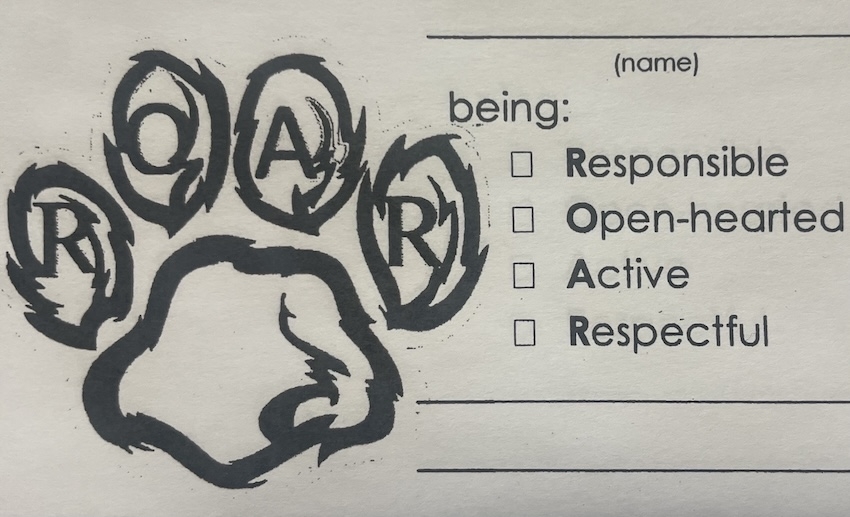
Our school is guided by the values of being Responsible, Open-Hearted, Active, and Respectful (we ROAR!). These values help shape how we learn, work together, and care for one another. Students are encouraged to take ownership of their learning, build positive relationships, and contribute to a school community where everyone feels valued and included.
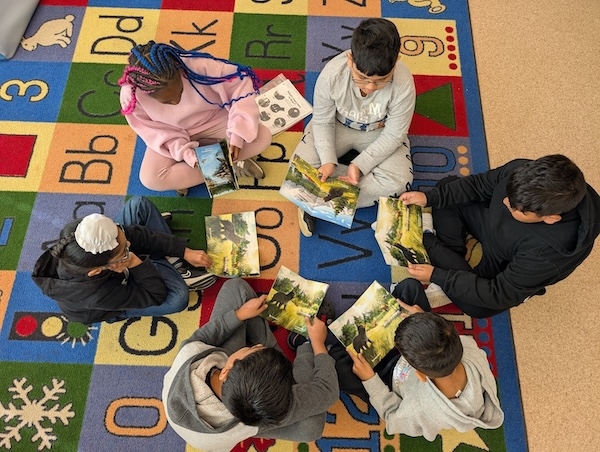
David Brankin is a diverse and welcoming school. The many cultures, languages, experiences, and perspectives represented in our classrooms enrich learning for all students. We take pride in creating opportunities for students to share who they are, learn from one another, and develop a strong sense of belonging.
Learning extends beyond the classroom through a variety of clubs, teams, performances, leadership opportunities, and school-wide events. Whether participating in Bhangra Club, Chess Club, athletics, the arts, or community service activities, students are encouraged to discover their strengths, explore their interests, and make meaningful contributions to school life.
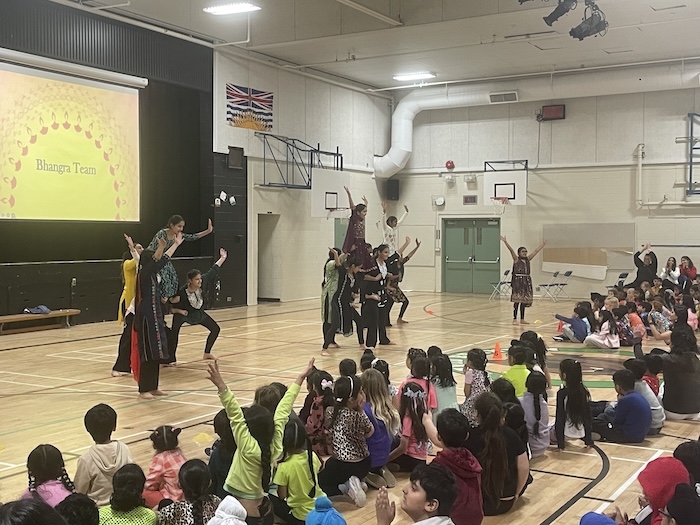
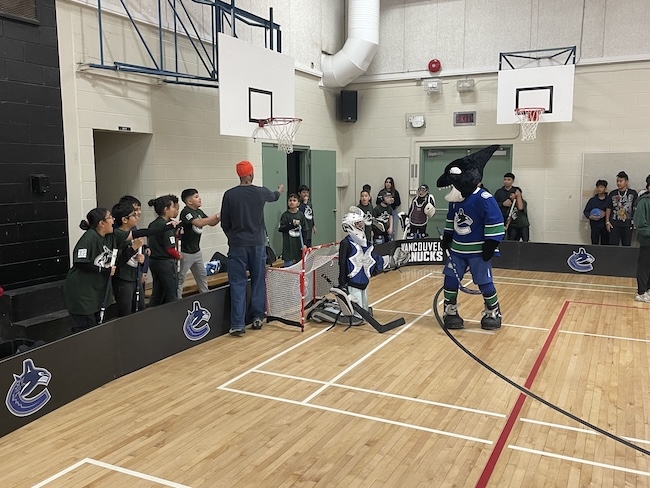
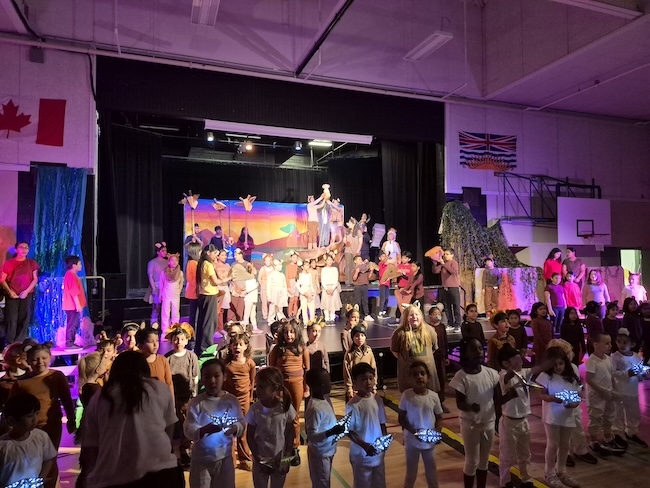
Our staff work closely with families and community partners to support student success. A range of learning and wellness supports are available to help meet the needs of our students and to ensure they have opportunities to grow academically, socially, and emotionally.
Over the past several years, our literacy work has focused primarily on strengthening reading skills. While reading remains an important part of learning across all grades, this year we are placing a greater emphasis on writing. Through engaging learning experiences and consistent opportunities to write for different purposes and audiences, we aim to help students become more confident communicators who can clearly express their ideas, share their thinking, and find their voice as writers.
OUR LEARNERS
Writing is an essential skill that helps students make sense of their learning, communicate their ideas, and develop confidence in their own voice. At David Brankin Elementary, we believe all students have stories, opinions, questions, and experiences worth sharing and that strong writing skills allow learners to express themselves clearly, think deeply, and connect with others in meaningful ways.
In alignment with the BC Curriculum, our work in writing supports students in developing key literacy competencies:
- Create and Communicate – Students use writing to share ideas, tell stories, explain their thinking, and communicate for a variety of purposes and audiences.
- Comprehend and Connect – Students draw on what they read, see, hear, and experience to generate ideas, make connections, and strengthen their written communication.
We recognize that writing is a complex process that develops over time. Becoming a skilled writer requires students to draw on many interconnected skills, including language, knowledge, critical thinking, handwriting, spelling, sentence construction, and the ability to organize and communicate ideas effectively. Across the school, our learners are building strength in the following areas:
Building Strong Foundations
Our students are developing the foundational skills that support written communication.
In the primary grades, students build confidence with letter formation, handwriting, spelling patterns, sentence construction, and vocabulary development. Through daily writing experiences and explicit instruction, students learn how sounds, words, and sentences work together to communicate meaning.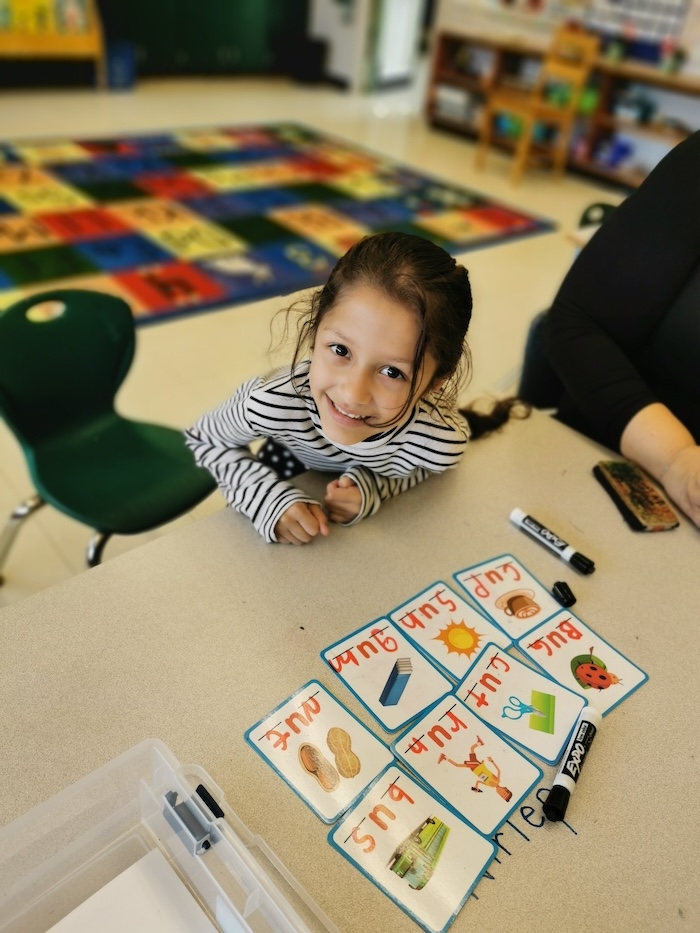
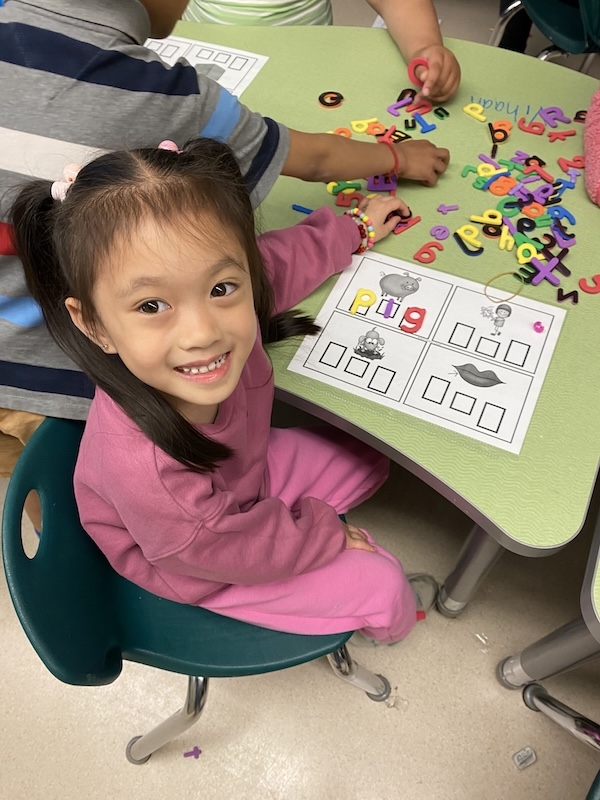
As students move through the grades, they continue to strengthen spelling, grammar, conventions, and sentence fluency. These foundational skills help reduce the effort needed for the mechanics of writing, allowing students to focus more attention on developing and communicating their ideas.
Thinking Like Writers
Our students are learning how to generate, organize, and expand their ideas.
Students engage in a variety of writing experiences, including stories, personal narratives, poetry, informational writing, and opinion pieces. Through discussion, brainstorming, shared experiences, mentor texts, and graphic organizers, students learn how to plan their writing and communicate with a reader in mind.
They are developing their ability to organize information, elaborate on ideas, choose precise language, and write with a clear purpose.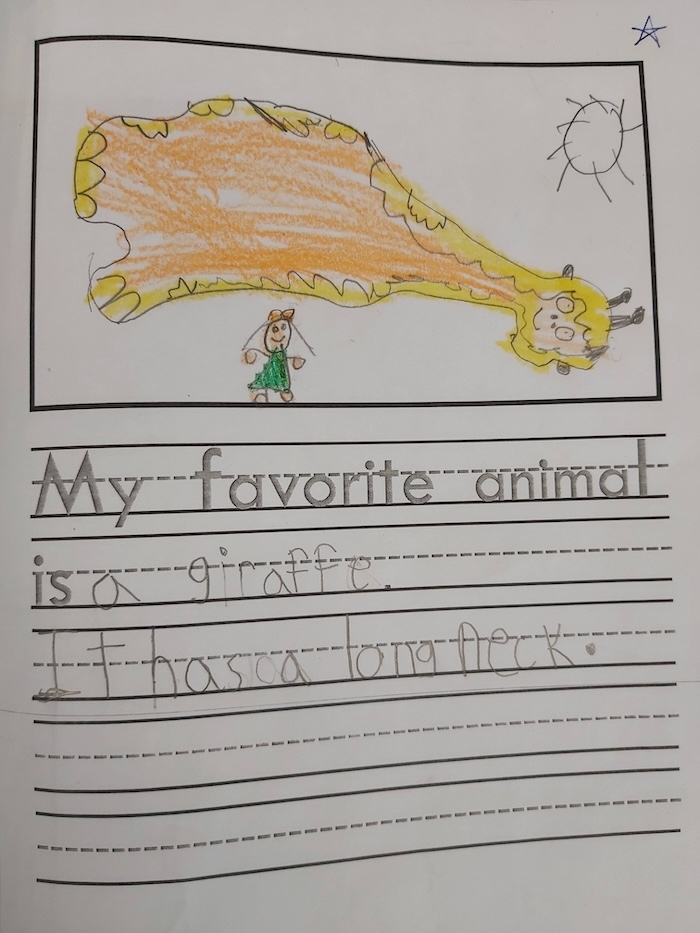
Revising, Reflecting, and Improving
Our students are developing the habits of effective writers.
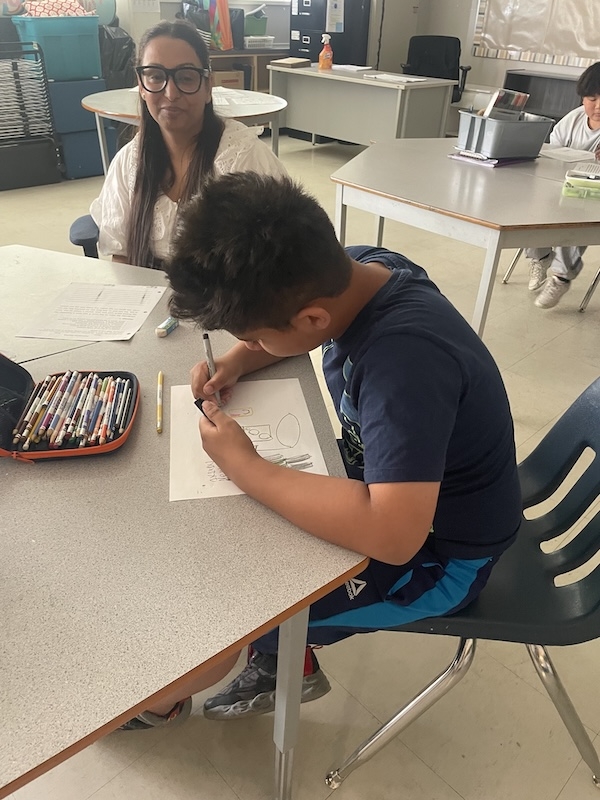
Students are learning that strong writing develops through a process of planning, drafting, revising, editing, and reflecting. Teachers provide descriptive feedback and create opportunities for peer discussion and collaboration so students can strengthen their work over time.
As students revise, they consider organization, clarity, word choice, sentence structure, and the needs of their audience. These habits help students take ownership of their growth and develop confidence as writers.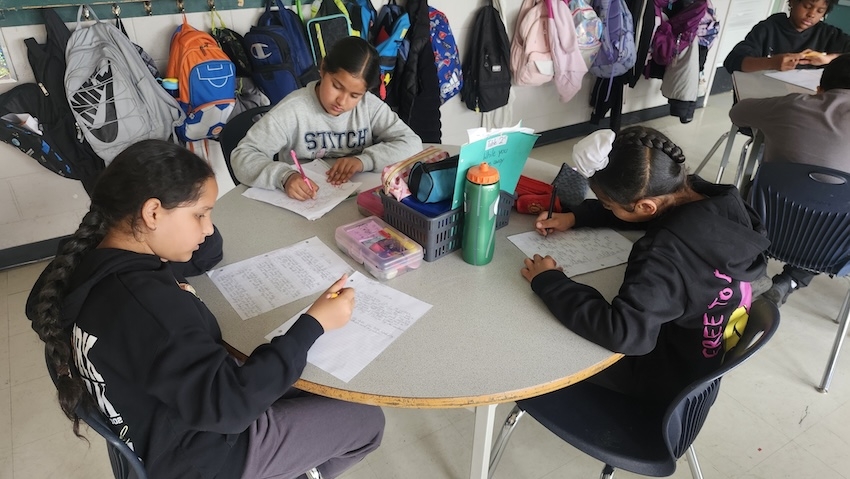
Voice, Identity, and Connection
Our students are discovering the power of writing to share who they are.
David Brankin's diverse community provides rich opportunities for students to bring their experiences, cultures, languages, and perspectives into their writing. Students are encouraged to write about topics that matter to them and to consider how their words can inform, entertain, inspire, and connect with others.
Whether writing about family traditions, community experiences, personal challenges, or future goals, students learn that their voices matter and that writing can be a powerful way to express identity and build understanding.
Engagement and Confidence
Our students are becoming more confident and willing writers.
Through regular opportunities to write, share their work (in class and at assemblies), and celebrate growth, students are building both skill and confidence.
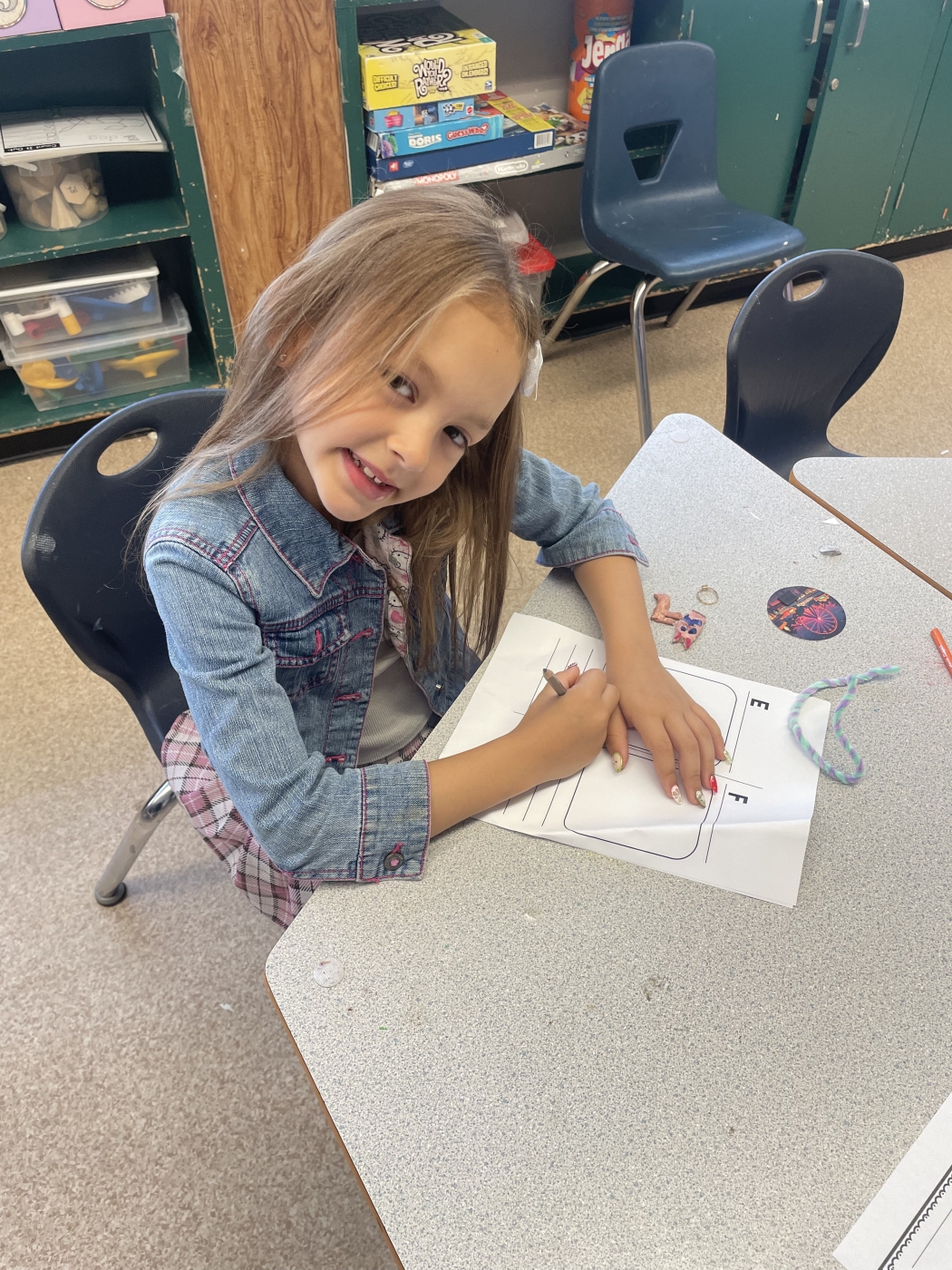
As we continue our school-wide focus on writing, our goal is for all students to see themselves as writers. By strengthening foundational writing skills, expanding their knowledge and vocabulary, and learning how to communicate effectively for different audiences and purposes, students are developing tools that will support their success both in school and beyond.
OUR FOCUS
Every day, students at David Brankin Elementary are given opportunities to develop as writers and communicators. Over the past several years, our literacy work has focused primarily on reading development. As our students continued to build stronger reading skills, we recognized an opportunity to strengthen writing instruction across the school and create greater consistency in how writing is taught, practiced, and assessed.
This year, our focus has been on helping students become more confident, capable writers who can clearly communicate their ideas for a variety of purposes and audiences. We worked to strengthen foundational writing skills, create shared expectations across grade levels, and provide students with authentic opportunities to write, reflect, and share their work.
To guide our work, we focused on the following writing goals:
- Strengthening writing conventions, including spelling, grammar, punctuation, and sentence construction
- Building students' ability to generate, organize, and expand their ideas
- Creating consistent writing expectations across grade levels
- Supporting self-reflection and revision as part of the writing process
- Increasing opportunities for authentic writing and student voice
- Using common assessment practices to monitor growth
- Deepening staff understanding of effective writing instruction through collaborative professional learning
Throughout the year, teachers worked together to establish common writing goals and review student work. Grade teams were released and used collaborative planning time during monthly ROAR assemblies to discuss instructional strategies, examine writing samples, and align expectations across classrooms. Our Writing Committee helped develop school-wide approaches to instruction and introduced staff to concepts from various resources (one major source being The Writing Rope, which emphasizes the many interconnected skills required for successful writing).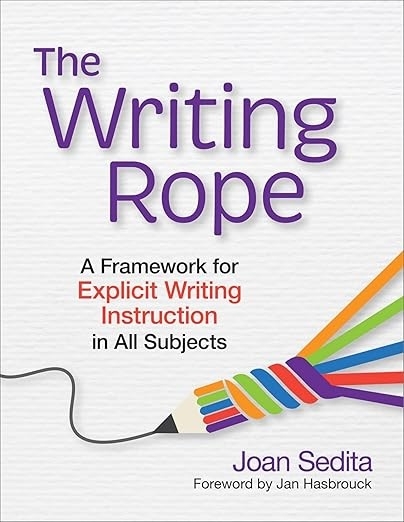
In the primary grades, students focused on building strong foundations through oral storytelling, sentence formation, handwriting, spelling, and artistic captioning. Teachers provided scaffolded support to help students understand that writing is both a creative form of expression and a skill that follows established conventions. Intermediate students worked on developing paragraphs, expanding ideas, considering multiple perspectives, and writing for different audiences and purposes.
To make writing meaningful, students wrote across all subject areas and engaged in projects connected to their interests, experiences, and learning. Monthly ROAR assemblies highlighted different aspects of the writing process, including critical thinking, writing craft, text structure, and transcription skills. Students also shared poems, stories, and other written work during these assemblies and other celebrations, helping to build confidence and pride in their growth as writers.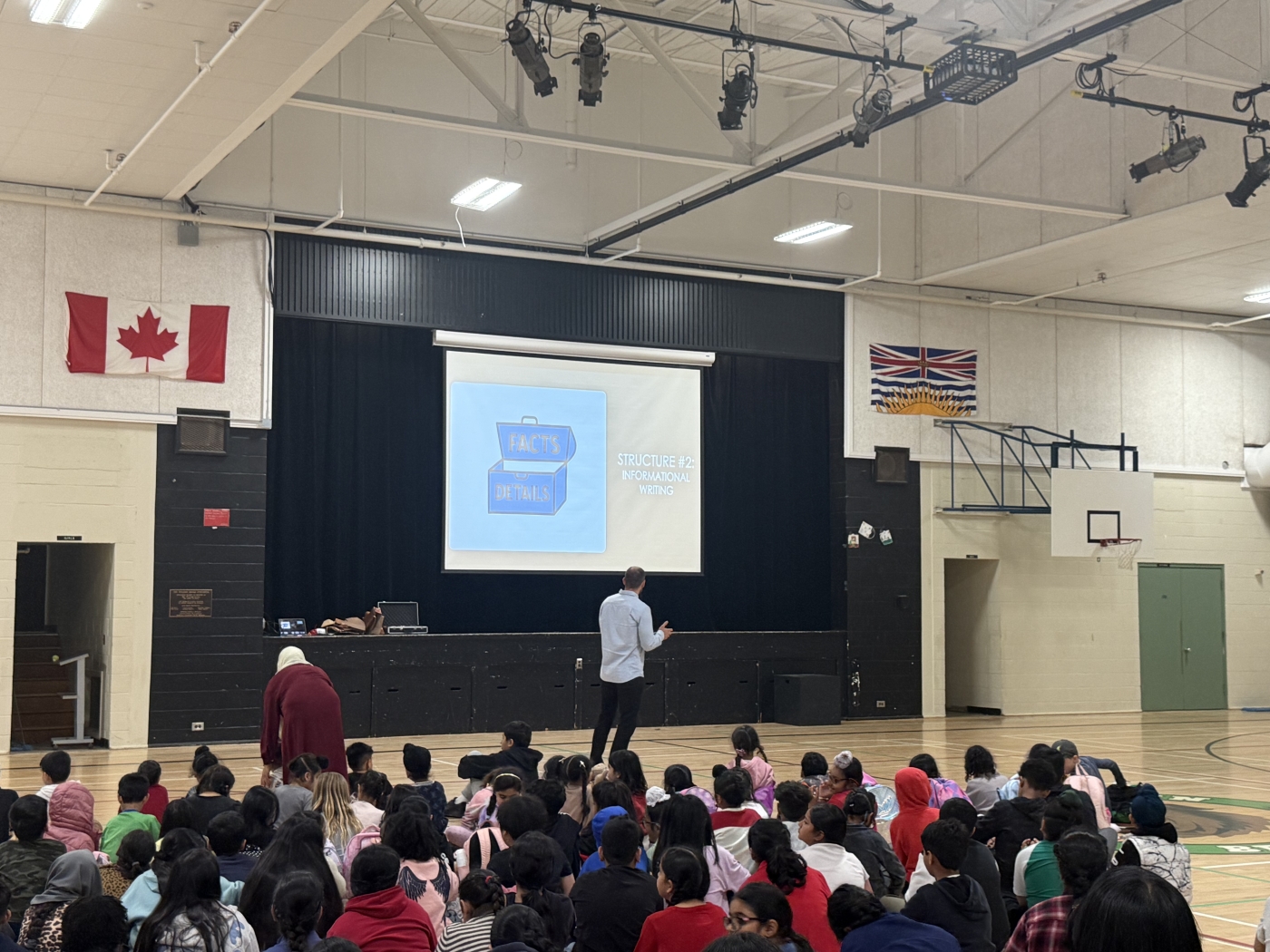
Several school-wide initiatives supported our focus. Students maintained writing portfolios to track their progress over time, participated in cross-grade writing activities, and explored connections between art and writing through storytelling and visual expression. Opportunities, such as creative writing contests, Reader's Theatre, and student voice projects, encouraged students to write for authentic audiences and purposes.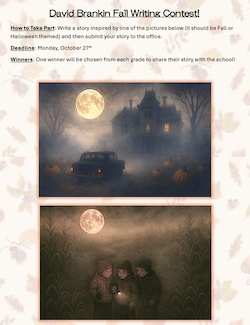
To better understand student growth, teachers completed a school-wide writing assessment in the fall and again in the spring. Using common rubrics, student self-reflections, and collaborative reviewing of writing samples, staff gathered evidence of progress in conventions and clarity.
This is an example from one of our grade 2 classes:
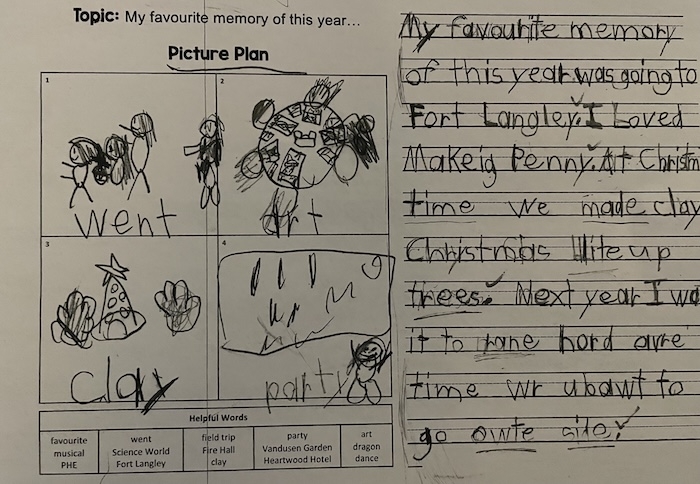
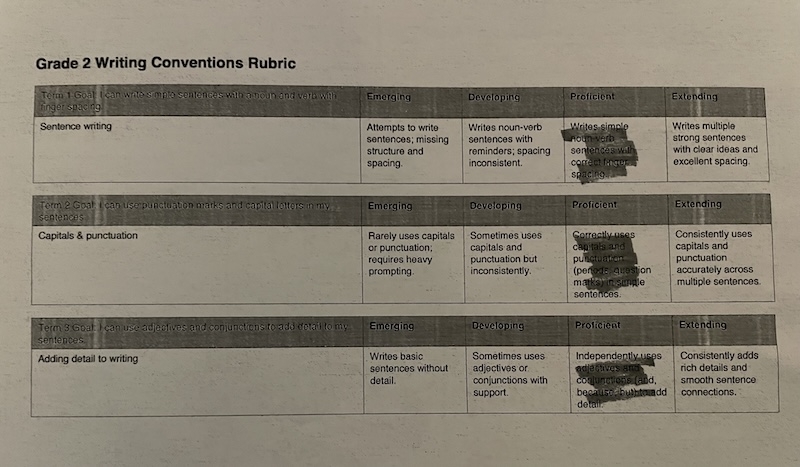
And here are a couple graphs of the assessed proficiency levels of our learners across all grades in October (our "pre-assessment") compared to those gathered in May (our "post assessment):
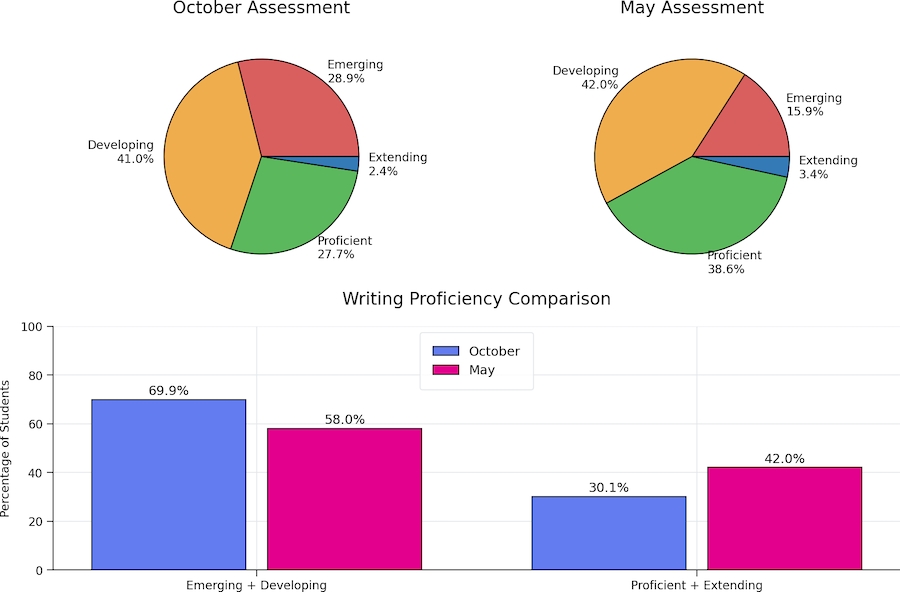
Our school-wide writing assessments indicate encouraging growth in students' writing proficiency over the course of the year. In October, 30% of students were proficient or extending in writing conventions and idea clarity. By May, that figure had increased to 42%. Correspondingly, the percentage of students performing at an emerging or developing level decreased from 70% to 58%. While many students continue to require support in improving their organization, elaboration of ideas, and use of writing conventions, the data suggests that our school-wide focus on writing is helping grow these skills. Anecdotally, teachers also noted improved writing stamina and a greater willingness among students to revise and refine their work.
We believe that writing is a powerful tool for learning, communication, and self-expression. By focusing on both the foundational skills and the creative aspects of writing, we believe we are helping students develop the confidence and competence they need to communicate effectively in school and beyond. The ways in which we plan to continue and expand upon this work will be explored further in the "Our Next Steps" section.
OUR NEXT STEPS
The evidence gathered through our writing inquiry this year - including collaboratively-developed writing assessments, classroom observations, portfolio samples, and student self-reflections - suggests that our increased focus on writing instruction benefitted student learning.
Additionally, students seemed to respond positively to opportunities to write for authentic purposes, and monthly ROAR assemblies, developing Reader's Theatre scripts for a school-wide event, writing contests, and classroom celebrations appeared to help raise the profile of writing throughout the school.
While these results are encouraging, our data and teacher observations indicate that there is still important work ahead. Many students continue to require support with elaborating on their ideas, organizing their thinking, revising their work, and applying writing conventions independently. Teachers also noted that students often demonstrate writing skills during guided practice but have difficulty transferring those skills consistently to independent writing tasks.
Moving Forward
Building on the foundation established this year, during the 2026-27 school year we plan to continue our school-wide focus on writing while refining our instructional practices in order to strengthen student outcomes.
To support this work, we will:
- Continue developing a school-wide writing progression that clearly outlines writing expectations and skills from Kindergarten to Grade 7.
- Deepen our use of The Writing Rope and other resources to support instruction in areas such as sentence construction, text structure, idea development, vocabulary, conventions, and revision.
- Expand opportunities for students to write for authentic audiences and purposes through celebrations, performances, leadership opportunities, and community-connected projects.
- Refine our common assessment practices, including the use of writing portfolios, shared rubrics, and school-wide writing samples to monitor growth over time.
- Continue providing professional learning opportunities for staff focused on effective writing instruction, feedback, and assessment.
- Create additional opportunities for cross-grade collaboration, allowing students to share writing, mentor younger learners, and see themselves as members of a broader community of writers.
- Maintain our focus on supporting multilingual learners through targeted vocabulary development, oral language opportunities, and instructional scaffolds that help students communicate their thinking clearly in writing.
As we move forward, our goal remains to nurture confident, resilient, and capable writers who can communicate with clarity, creativity, and purpose. By continuing to build a consistent and intentional approach to writing instruction across the school, we believe our students will develop the skills and confidence needed to express themselves effectively in school and throughout their lives.
Surrey Schools
Formed in 1906, the Surrey School District currently has the largest student enrolment in British Columbia and is one of the few growing districts in the province. It is governed by a publicly elected board of seven trustees.
The district serves the cities of Surrey and White Rock and the rural area of Barnston Island.