Cougar Creek Elementary 25-26

OUR CONTEXT
Cougar Creek Elementary
We are located on the unceded and shared traditional territory of the Katzie, Kwantlen and Semiahmoo Coast Salish Peoples. It is located in the Panorama/Sulllivan/Tamanawis Zone and is comprised of approximately 370 students.

Our School Logo
Our school logo, designed by Rain Pierre of the Katzie First Nation, is a powerful symbol that reflects the values and spirit of our learning community. The forest imagery within the lettering serves as a reminder of the beautiful land on which our school stands—encouraging both students and staff to appreciate, respect, and care for the natural environment around us. The cougar, gazing downward, represents protection and guardianship, reminding us all of our shared responsibility to care for ourselves, one another, our families, and our broader community. The four claws in the design carry dual meanings: they symbolize the four seasons, each offering its own unique beauty and opportunities for growth, and they also take the shape of flames—representing the fire within each of us. This flame is a call to "Ignite Our Passion" and to pursue what brings us joy and purpose every day. Rain Pierre’s design is more than a logo—it’s a living message that inspires and grounds our community in identity, connection, and care.
Words that can be used to describe our community of learners are:
- Caring, empathetic and supportive
- Diverse and passionate about culture
- Willing to help and support each other and the community
- Curious and want to learn
- Care about one another and their teachers
- Want to be here, enjoy hands-on activities and collaborating with peers to enhance their learning
- Enjoy leadership and extra-curricular activities
The Students of Cougar Creek enjoy a sense of community that they have created. Our school community members find opportunities to make connections with one another through play and learning within and outside the classroom.

Our School Acronym "PAWS"
We collectively developed our school acronymn "PAWS" and root this in our planning and experiences throughout the year.
Engaging Opportunities for Our Community of Learners
We are proud to offer a wide range of activities and events that support the growth, well-being, and cultural awareness of our students. These opportunities help foster a sense of belonging, leadership, and community spirit:
Extracurricular Activities
Students can explore their interests, build teamwork skills, and stay active through a variety of sports and clubs, including:
- Soccer
- Volleyball
- Basketball
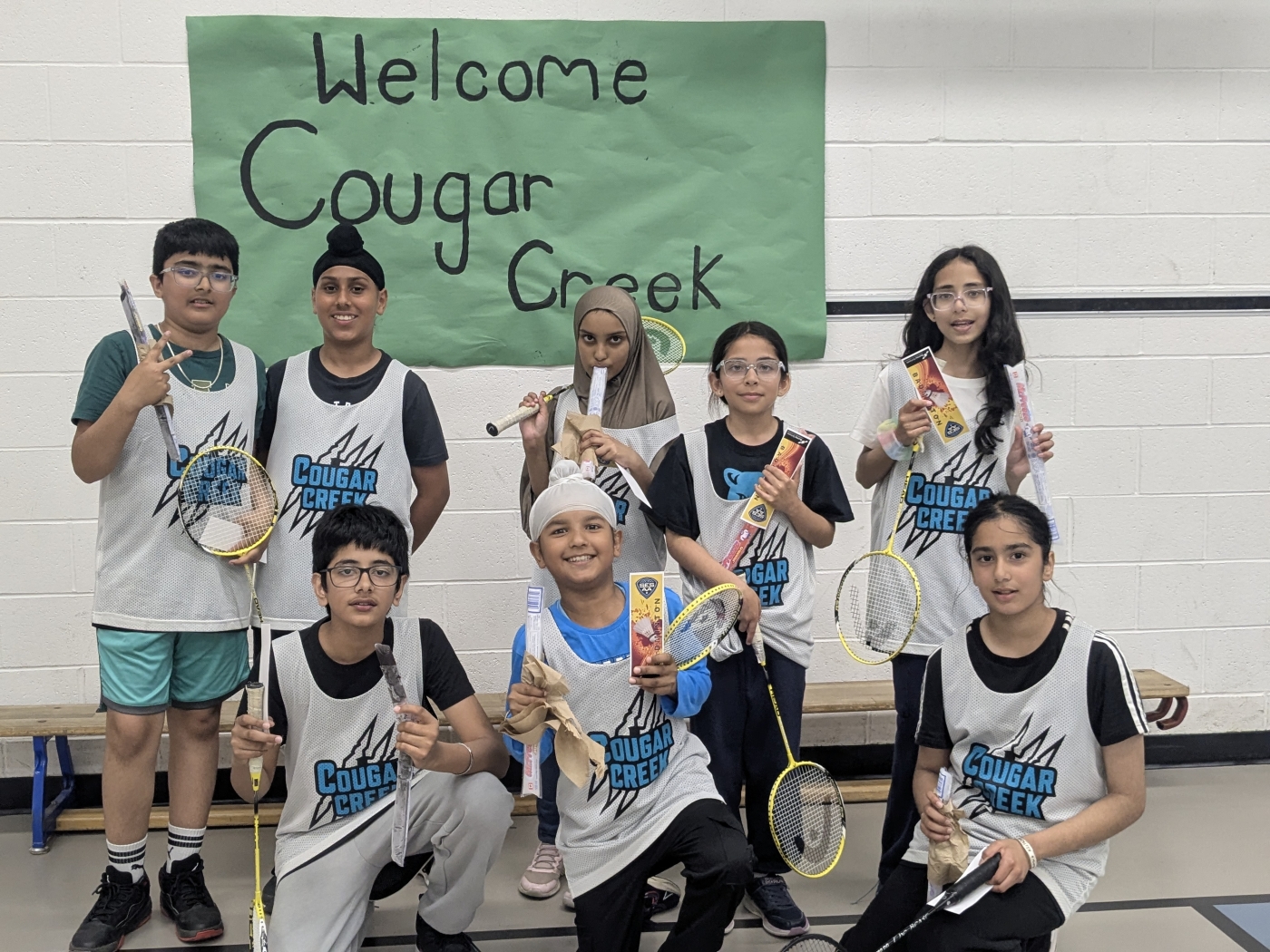
- Badminton
- Ultimate Frisbee
Cultural Celebrations
Cultural Events
We honour and celebrate the rich diversity of our school community through inclusive cultural events such as:
- Diwali
- Eid
- Christmas
- Vaisakhi
- Lunar New Year
Meaningful Learning Events
We engage students in important conversations and learning experiences that promote empathy, inclusion, and social responsibility:
- Orange Shirt Day – Honoring residential school survivors and promoting reconciliation.
- Pink Shirt Day – Standing up against bullying and promoting kindness.
Fundraising for a Cause
Our students actively participate in giving back to the community through school-wide initiatives, including:
- Boots & Jackets Drive
- Food Drive
- Terry Fox Run
- Jump Rope for Heart
Students use their reading skills to help them make sense of what they are learning. They use their reading skills, and personal lived experiences to help them understand subjects being taught, and to understand themselves and the world around them. Over the course of the last three years, we have curated literature resources to have all students in the building be able to see themselves in the content they are learning with.
Building a Stronger School Community: Partnering with Families and the Wider Community
At the heart of our school’s mission is a commitment to raising healthy, happy, and capable community members. We believe that strong partnerships with families and the broader community are essential to student success. Our plan includes a variety of meaningful opportunities for engagement and collaboration:
Family Engagement
- Meet the Teacher Nights – A welcoming opportunity for families to connect with educators and learn about classroom goals.
- Parent-Teacher Interviews & Student-Led Conferences – Encouraging open dialogue and empowering students to take ownership of their learning journey.
- Numeracy Night - Families invited into the school to learn new numeracy games to play at home together to support numeracy development amongst students
Early Years Connections
- Early Years Events – Specially designed activities for children up to 4 years old, helping future students and their families feel connected from the start.
- Welcome to Kindergarten – A warm introduction to school life, easing the transition for our youngest learners.
Celebrating Learning Together
- Seasonal Gatherings – Held three times a year, these events provide students with the opportunity to showcase their learning and talents through performances and presentations for their families.
OUR LEARNERS
Our Community of Learners
Our students are the heart of our school, and they embody a vibrant mix of qualities that make our learning environment truly special. Words that describe our community of learners include:
Caring and Compassionate
- They show empathy, kindness, and support for one another and their teachers.
- They are always ready to lend a hand and uplift those around them.

Diverse and Culturally Proud
- Our students come from a wide range of backgrounds and celebrate their cultures with pride and enthusiasm.
- They are passionate about sharing and learning from each other’s traditions and experiences.

Curious and Engaged
- They are eager to learn, ask thoughtful questions, and explore new ideas.
- Hands-on learning and collaboration with peers are experiences they truly value.
Community-Oriented
- Whether it’s helping a classmate or participating in school-wide initiatives, our students are committed to making a positive impact.
Motivated and Involved
- They enjoy being at school and take part in leadership roles and extracurricular activities with enthusiasm and dedication.
At Cougar Creek, our goal has been to engage our learners in Creative Thinking. As stated by the Ministry of Education, "people who think creatively are curious and open-minded, have a sense of wonder and joy in learning, demonstrate a willingness to think divergently, and are comfortable with complexity." We have been exploring this through literacy, and now numeracy with our learners.
Students continue to use their reading skills to help them make sense of what they are learning. They use their reading skills, and personal lived experiences to help them understand subjects being taught, and to understand themselves and the world around them. Over the course of the last three years, we have curated literature resources to have all students in the building be able to see themselves in the content they are learning with.
Now as we shift our attention to numeracy, we are in year one of analyzing where our learners are at and where we go from here. We remind ourselves that
Mathematics is integral to every aspect of daily life. Mathematical skills are essential for solving problems in most areas of life and are part of human history ~ BC Ministry Curriculum
Understanding Where Our Learners Are: A Play-Based Numeracy Lens
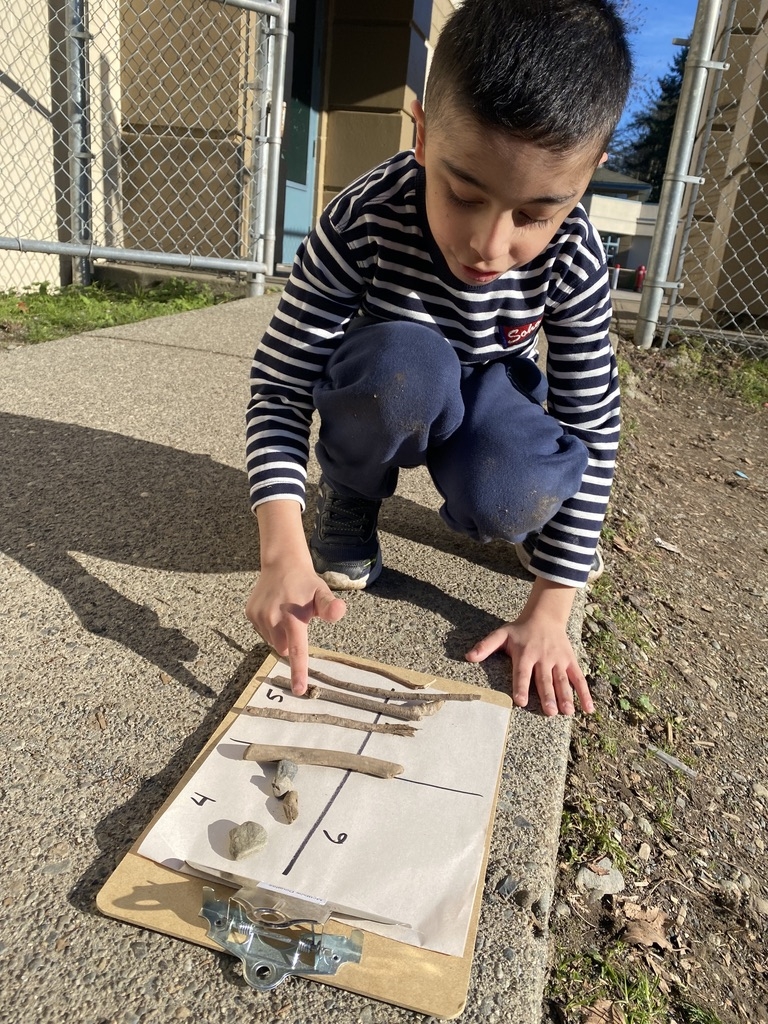
As we continue to explore the impact of play-based numeracy on student engagement and learning, early evidence from our classrooms is both promising and insightful. Across all learner groups—including English Language Learners (ELL), students with diverse needs, and mainstream students—we are observing high levels of enthusiasm, curiosity, and active participation during numeracy activities. These findings suggest that play-based approaches are not only inclusive but also effective in sparking interest and deepening mathematical understanding.
Igniting Learning Through Games and Activities
A variety of interactive tools and games have been integrated into classroom practice to support numeracy development. These activities are designed to promote problem-solving, critical thinking, and conceptual understanding in a hands-on, engaging way:
Osmo Pizza Co.
Students run a virtual pizza shop, applying real-world math concepts in a playful context:
- Addition & Subtraction: Calculating totals and change.
- Fractions: Dividing pizzas into equal parts.
- Financial Literacy: Managing transactions and understanding value.
Tangrams
This classic puzzle game enhances spatial reasoning and geometry skills:
- Shape Recognition: Identifying and manipulating geometric forms.
- Spatial Awareness: Visualizing how pieces fit together.
- Problem-Solving: Strategizing to complete increasingly complex puzzles.
Osmo Coding & Coding Awbie
These tools introduce foundational programming concepts through interactive storytelling:
- Logic & Sequencing: Building code through block-based commands.
- Debugging & Problem-Solving: Learning through trial and error.
- Creative Thinking: Designing unique solutions and pathways.
Learning Standards Alignment
These activities align with the BC Performance Standards in Numeracy, supporting development in:
- Operations and Computation
- Fractions and Geometry
- Financial Literacy
They also connect with Applied Design, Skills, and Technologies (ADST) by offering experiential, hands-on learning that fosters creativity, design thinking, and innovation.
Emerging Themes from Classroom Observations
These reflections highlight a key insight: play-based numeracy is highly effective in engaging students, especially in the early stages of concept development. However, there is a need to intentionally bridge the gap between playful exploration and formal mathematical representation.
OUR FOCUS
Playful Numeracy
Background and Context
Over the past two years, our school has prioritized numeracy across all subject areas, recognizing numeracy as a foundational skill for academic success and personal growth. This year we focused on engaging families with numeracy on top of the initiatives already in place, including hosting a "numeracy night" for families in which parents and guardians were invited in to the school to learn and play numeracy games with their children.

Inquiry Focus
Does infusing play-based numeracy enhance student learning and engagement?
This inquiry is grounded in emerging research on brain development and the role of play in learning.
Mathematics is not solely about computation—it is about problem-solving, pattern recognition, and creative thinking, all of which are naturally nurtured through playful, hands-on experiences.

Current Observations and Emerging Themes
Initial observations from classroom cohorts suggest a positive correlation between play-based numeracy and student engagement:
Student Feedback:
- I like learning when playing with my friends.
- Math is fun. I didn’t know I was doing it.
- They make learning math fun and less stressful.
Teacher Feedback:
- Students seem more excited when I start with a dice game. They are still struggling to connect it when we move to paper.
- Students work better when they can play and solve problems with friends.
- Games help practice math in a real, hands-on way.
- Math games build confidence and improve understanding.
- The Math games helped students stay engaged and focused.
- I found that some students were engaged at first, but then lost interest if their partner was at a different level than them.
- Students love the games. I find that they are more engaged in their learning.
These reflections highlight both the potential and the challenges of integrating play into numeracy instruction. While engagement is high during game-based activities, there is a need to support students in transferring their conceptual understanding to more formal representations of math.
This year, there was focus on one cohort of Grade 3 and 4 students. In this cohort the traditional "silent reading" time was replaced daily with a designated math play time. Data was collected on numeracy proficiency scores in Term 1 and Term 3.

The data demonstrates a distinct shift in numeracy scores from Term 1 to Term 3. In Term 1 more students were in the "emerging category" and no students scored "extending." In Term 3 fewer students were "emerging" and a group emerged as "extending."
OUR NEXT STEPS
Vision for the Year Ahead: Shifting from a Numeracy to a Literacy Focus
A need was identified this year to shift our focus towards literacy, as the province has now mandated literacy screening and a great amount of learning has been required in order for teachers to adopt a new literacy screening tool.
Action Plan for Growth and Impact
Establishing a Strong Foundation
- Conduct school-wide literacy screening in September to gather baseline data and identify areas of strength and growth.
Empowering Educators Through Professional Learning
- Provide targeted professional development focused on learning how to effectively use screening data for greater student learning
Fostering Meaningful Collaboration
- Create structured opportunities for teachers to collaborate, share insights, and build on each other’s expertise.
Ongoing Reflection and Responsive Practice
- Schedule regular check-in points throughout the year to:
- Monitor student progress
- Reflect on and refine literacy instruction practices
- Share successes and challenges
Engaging Families and the Wider Community
- Develop activities for families to support literacy at home, bridging school and home learning.
- Host community-based learning events that invite families and local partners to be part of the learning journey.
Surrey Schools
Formed in 1906, the Surrey School District currently has the largest student enrolment in British Columbia and is one of the few growing districts in the province. It is governed by a publicly elected board of seven trustees.
The district serves the cities of Surrey and White Rock and the rural area of Barnston Island.