Cindrich Elementary 25-26

OUR CONTEXT
We respectfully acknowledge that Surrey Schools reside on the traditional, unceded and shared territories of Coast Salish peoples: The q̓íc̓əy̓ - Katzie, the q̓ʷa:n̓ƛ̓ən̓ - Kwantlen and the SEMYOME - Semiahmoo First Nations: the stewards of this land since time immemorial. We highlight this history knowing that relationships and partnerships based on respect with the Indigenous peoples of this land are important for truth and reconciliation.
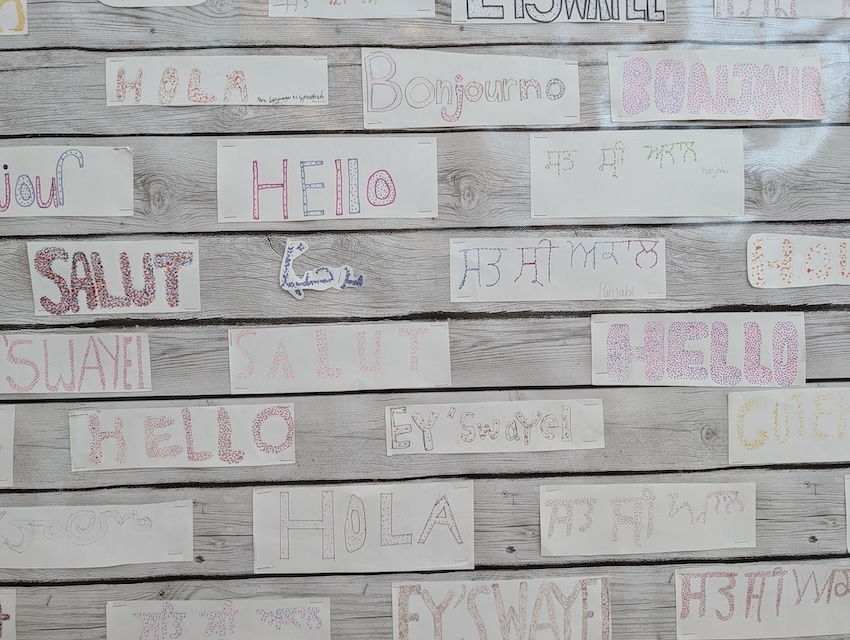
Cindrich Elementary is a vibrant and diverse community, comprising 411 enthusiastic learners. An impressive 85.16% of our students speak a language other than English in the home, reflecting the rich tapestry of our school. In total, 30 different languages are spoken in the homes of our students, who hail from 29 different birth countries. This diversity brings wonderful opportunities to learn from one another, as well as unique strengths and challenges, particularly for families who are new to Canada.
Recognizing this, we understand the critical need for foundational skills in reading, especially early reading comprehension, to ensure long-term success. Reading comprehension involves not just decoding words but also understanding and interpreting the text. We believe that for children to truly grasp written material, they must be able to decode the words, make meaningful connections with their prior knowledge, and engage in deep, reflective thinking about the text.
As a school, we have made a significant shift in how we approach literacy instruction, employing evidence-based strategies to enhance reading proficiency. This is happening in the primary grades, as well as the intermediate.
Our parents are very supportive and appreciative of all that we do at school to support their children. Our staff team and our parents are fully committed to a wrap-around, caring approach to helping students thrive.
The spirit of play transcends all cultures and is a shared universal language - our students are active! They are involved in many sports activities on the playground, as well as organized school team sports such as soccer, basketball, volleyball, badminton, and track and field. Lunchtime intramurals, Fit Kids, and our popular Hoops Contest (introduced this year) provide additional opportunities for students to build skills, teamwork, and school spirit.
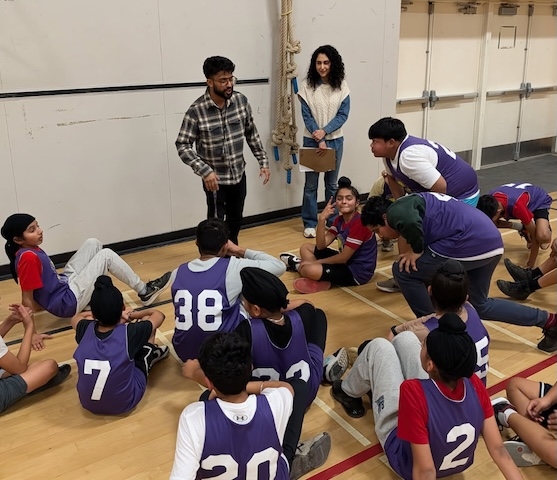
Our students enjoy coming to school and many spend their entire elementary journey from kindergarten to grade seven at Cindrich. There is an incredible sense of belonging at Cindrich Elementary.
OUR LEARNERS
The core competencies are an integral part of British Columbia’s curriculum, designed to equip students with essential proficiencies for deep, lifelong learning. Alongside literacy, numeracy, and other critical subjects, these competencies support students in becoming well-rounded individuals. At Cindrich Elementary, the core competencies are woven into every aspect of our education: Communication, Thinking, and Personal and Social Awareness.
The question that guides our work in fostering the Communication competency is:
How do we enhance student success and develop thoughtful, proficient readers?
Our focus on the Communication competency has led us to ensure that our students not only read but also internalize, understand, and interact with the texts they encounter.
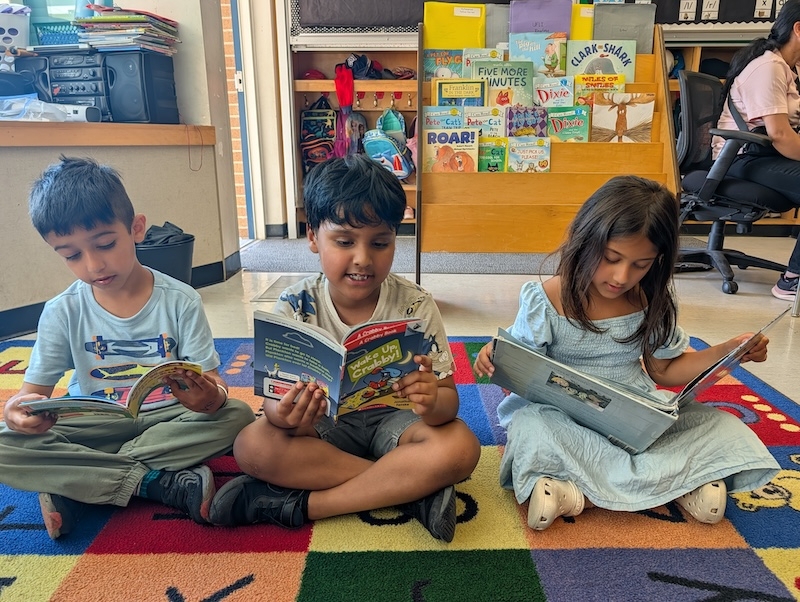
Effective reading comprehension goes beyond phonological awareness and vocalizing words; it encompasses a range of language skills, including grammar (syntax), vocabulary, and semantics, to grasp the meaning of texts. Good readers create mental images of the words they read, connect new information with prior knowledge, and can comfortably answer comprehension questions and summarize parts of entire texts. Integrating these skills with phonics instruction helps develop the brain’s orthographic processing system, which links letters, sounds, meaning, and context. By embedding this competency into our curriculum, we strive to nurture students who are not only capable readers but also effective communicators and critical thinkers, prepared to navigate and thrive in an increasingly complex world.
OUR FOCUS
How do we enhance student success and develop thoughtful, proficient readers?
Primary
At Cindrich Elementary, our early education teachers have been dedicated to enhancing reading skills through targeted phonemic awareness instruction. Recognizing the critical importance of early literacy our teachers continue with a focused approach to identify and address the specific needs of each student. In January 2026, Kindergarten students completed the ELPATS assessment (Early Literacy Phonemic Awareness Tool Survey); the ELPATS is a tool that helps teachers keep track of how well students are learning important phonemic awareness skills and allows teachers to tailor their instruction to ensure each student receives the support necessary to develop strong foundational reading skills.
In June of this year, the same quick phonics screener was administered once again to measure the progress made since January. Overall, it was documented that the students made progress in phoneme isolation, phoneme segmentation and phoneme blending. By providing targeted instruction, our teachers help students not only read words but also comprehend and engage with texts. This hands-on approach ensures each student progresses at their own pace while benefiting from the collective learning environment.
The next phase of our literacy initiative this year focuses on all primary grades. The adoption of UFLI (University of Florida Literacy Institute) program, which implements evidence-based reading instruction methodologies, empowers all students with the skills they need to become proficient, thoughtful readers, capable of engaging deeply with texts and making meaningful connections. Teachers continue to work with small groups to provide meaningful support as well as whole-class instruction. In addition, our Learning Support Team has recently attended a professional development session learning more about Acadience Reading, which is a standardized, short-duration assessment tool used by educators to screen and monitor foundational literacy skills to quickly identify at-risk readers.
As can be seen in the graph below, our primary students have made excellent progress in the Curricular Competency of:
Read fluently at grade level
Emerging | Developing | Proficient | Extending | |
| December | 35% | 20% | 40% | 5% |
| March | 32% | 14% | 43% | 11% |
| June | 25% | 15% | 47% | 14% |
Intermediate
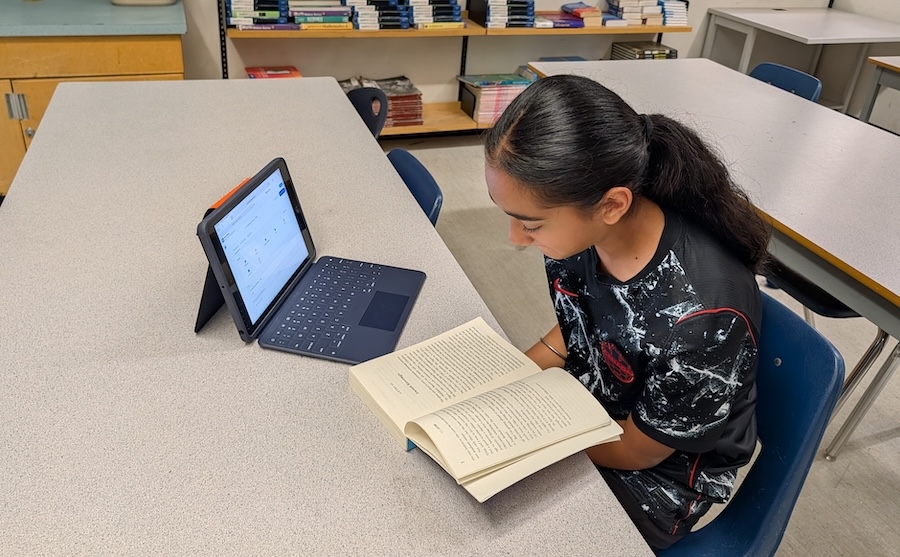
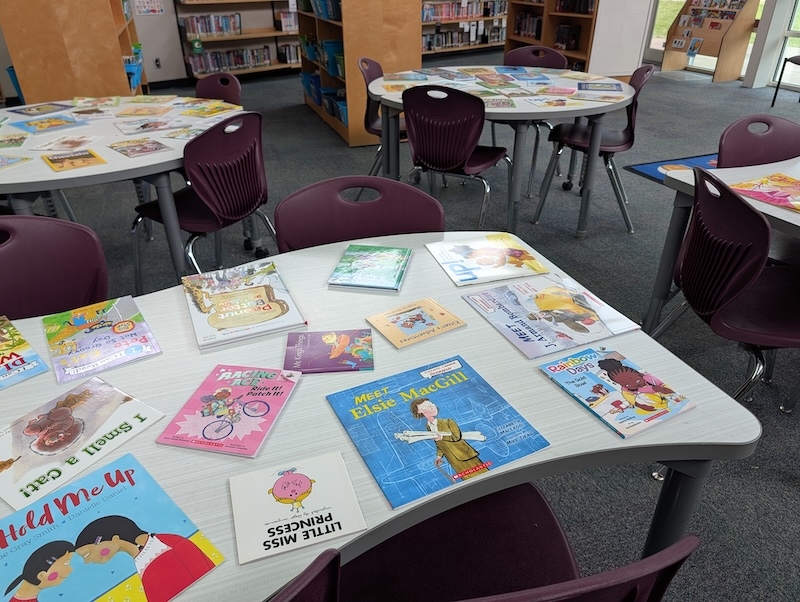
Our intermediate teachers at Cindrich anchor daily literacy instruction in student choice and interactive, real-world applications. To maximize exposure, teachers curate robust, accessible classroom libraries filled with diverse genres. To drive engagement, our teachers here at Cindrich implement dynamic, collaborative structures like student-led literature circles, where small groups assume roles to debate the themes of a self-selected novel. Furthermore, our intermediate teachers transform writing assignments into authentic, project-based tasks; rather than writing standard book reports, students might script and record their own podcasts, perform reader's theater scripts to build fluency through drama, or research and draft persuasive letters to local politicians about community issues, ensuring that literacy skills feel purposeful, highly interactive, and relevant to their lives.
One of our upper intermediate teachers explains:
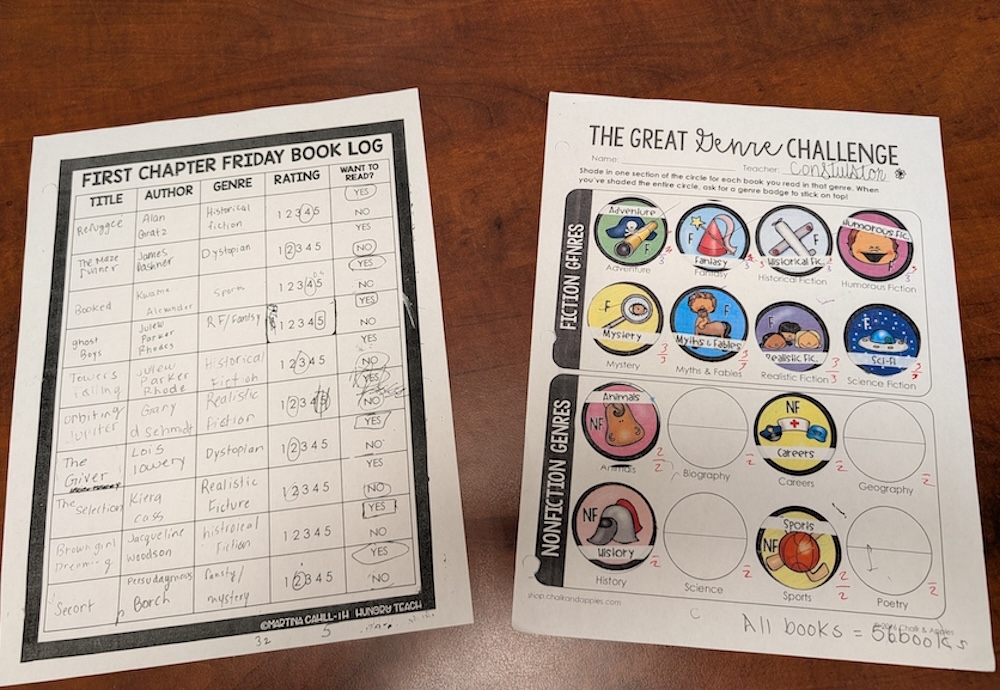
“I use “The 40 Book Challenge”, inspired by Donalyn Miller’s The Book Whisperer. This routine encourages students to read widely across genres by setting a goal of reading 40 books, mostly during class time, over the year. Students track their reading and earn genre badges by completing 2–3 books in each category (e.g., realistic fiction, fantasy, nonfiction), promoting variety and choice. This is blended in with Read to Self and Read to Someone, alternating across the week, in addition to our regular lessons, read-alouds, and literature circles.
First Chapter Friday is a weekly read-aloud where I introduce new titles, genres, and format types by reading the opening chapter. The kids record the book, rate it, and note whether they’d like to read the rest on their own. My goal is to build curiosity and expand their reading choices.
My purpose is to increase students’ enjoyment of reading through choice, exposure and lots of opportunities to read, both socially and independently. The increased practice strengthens vocabulary, comprehension, stamina, fluency, and prosody as well as helping students see themselves as readers.”
Whole School
"Books Make Us Howl" (BMUH), our school-wide reading challenge, transforms daily reading into an interactive, school-wide experience. Teachers track their students' progress daily, fueling a sense of shared accomplishment as students strive to hit the milestone of reading for 20 days in a month. When the BMUH assembly day arrives, the atmosphere is electric. To inspire future reading choices, a select group of students begin by reading a snippet from a favorite book. Teachers deepen this culture of literacy by stepping up to the microphone themselves, enthusiastically reading aloud from their own chosen books in front of the whole school to model a genuine, lifelong love for reading.
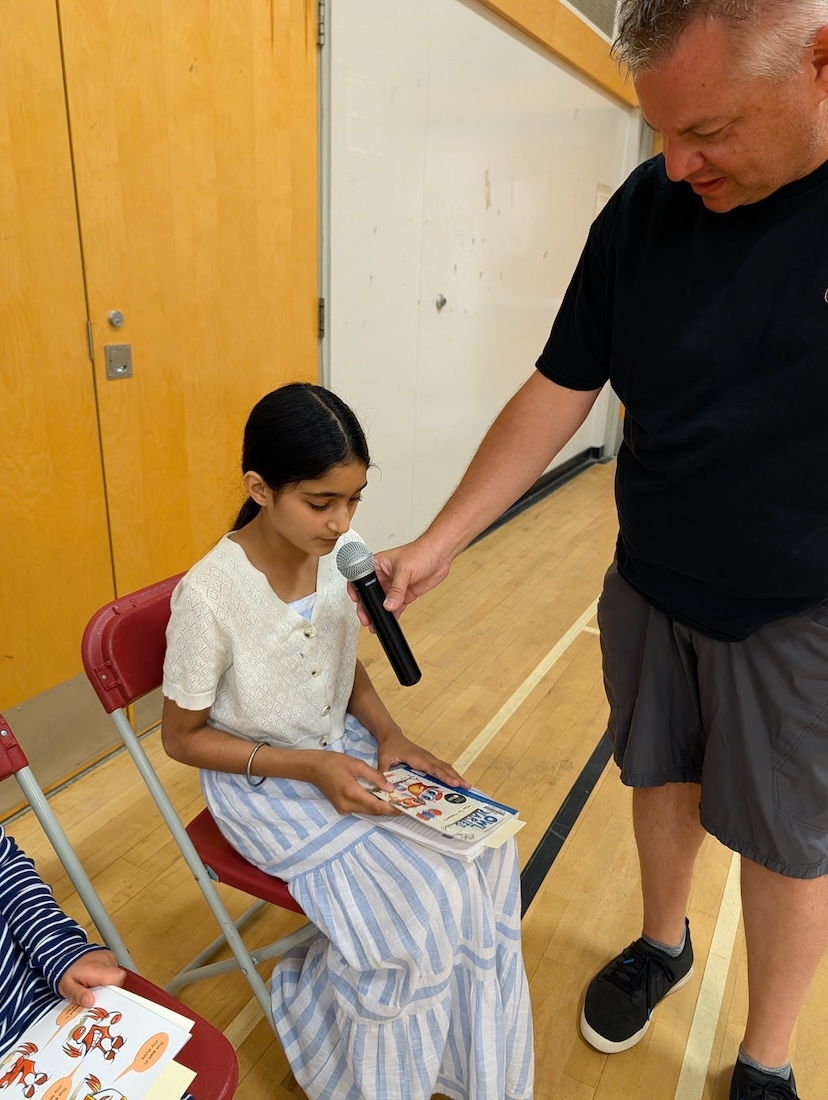
Next, readers who have read for 20 days in a month are called up in front of their peers to receive a certificate for a free book, providing immediate, public recognition of their hard work. The students at Cindrich look forward to the BMUH assemblies and often ask when the next one is!
OUR NEXT STEPS
As outlined in previous sections, our school’s focus has been our early primary students, making significant strides in enhancing their foundational reading skills. We are now excited to share our next phase - dedication to strengthening our literacy focus in the intermediate grades as well! Our goal is to enhance older students' reading enjoyment, comprehension, fluency, and critical thinking by creating more opportunities for them to read, discuss, and respond to a wide variety of texts.
Our intermediate educators actively collaborate to refine and share targeted literacy practices. Continuous formative assessment allows us to deliver highly responsive instruction, measure effectiveness, and recognize student growth in reading.
In the summer of 2026, our Cindrich staff are participating in a workshop titled Reading Done Right: Unlocking Every Student’s Full Potential facilitated by Dr. Stephanie Stroller. They are committed to building their capacity in further strengthening reading instruction through the meaningful use of student data.
Teachers will expand on their use of assessment data to further identify student needs and provide explicit instruction in comprehension, vocabulary, critical thinking, and making connections to text.
This deliberate shift toward data-driven, responsive intermediate instruction reinforces our school-wide commitment to equitable literacy outcomes. By equipping our educators with advanced diagnostic tools, such as those highlighted in Dr. Stephanie Stollar's research, we are prepared to precisely target student needs, maximize reading growth, and cultivate critical thinkers across all grade levels.

Surrey Schools
Formed in 1906, the Surrey School District currently has the largest student enrolment in British Columbia and is one of the few growing districts in the province. It is governed by a publicly elected board of seven trustees.
The district serves the cities of Surrey and White Rock and the rural area of Barnston Island.