Chimney Hill Elementary

OUR CONTEXT

Chimney Hill is located on the shared territory of the Coast Salish First Nations in the Newton Sullivan area of the Surrey School District. Our community of learners reflect diverse abilities and backgrounds that contribute to a rich learning environment. The school is central to the Chimney Hill community. We believe that children, staff, parents, and caregivers working together in a collaborative spirit, help to co-create our connected and rich learning environment. We are grateful that we are able to work, learn, and play on these lands.

At Chimney Hill we care about our connection to each other, our connection to the land and our connection to world around us.
OUR LEARNERS
Social and Emotional Learning (SEL) is the process that supports adults, youth, and children in developing skills that are necessary for school, work, and life. This includes self-awareness, self-management, responsible decision-making, relationships skills, and social awareness. These skills are embedded in all subject areas in BC's curriculum.
With this understanding we have focused our learning plans around social emotional well being with a particular focus on the core competency of communication and the importance for our learners to communicate with the intent to collaborate, problem solve, share ideas, and share and exchange information. Most importantly, we wish to foster self awareness in our young learners as they navigate an ever changing world.

Our learners require the well-being of the self, the family, the community, and the land. Our students need to feel connected to each other, and to their teachers in order for learning to take place. Our students need patience and time to feel safe and curious. Our students need safe spaces in order to explore, make mistakes, reflect, and grow.
Our learners can communicate their ideas about belonging, connection, and collaboration
In this writing and SEL example our learners are developing a sense of how listening, writing, and sharing helps them to understand themselves and the world around them. In this activity students are invited to ponder the differences between fitting in and belonging in relationship to their own experiences. Students modelled their feelings about belonging through a mapping activity and shared feelings and ideas on this topic during a sharing circle.
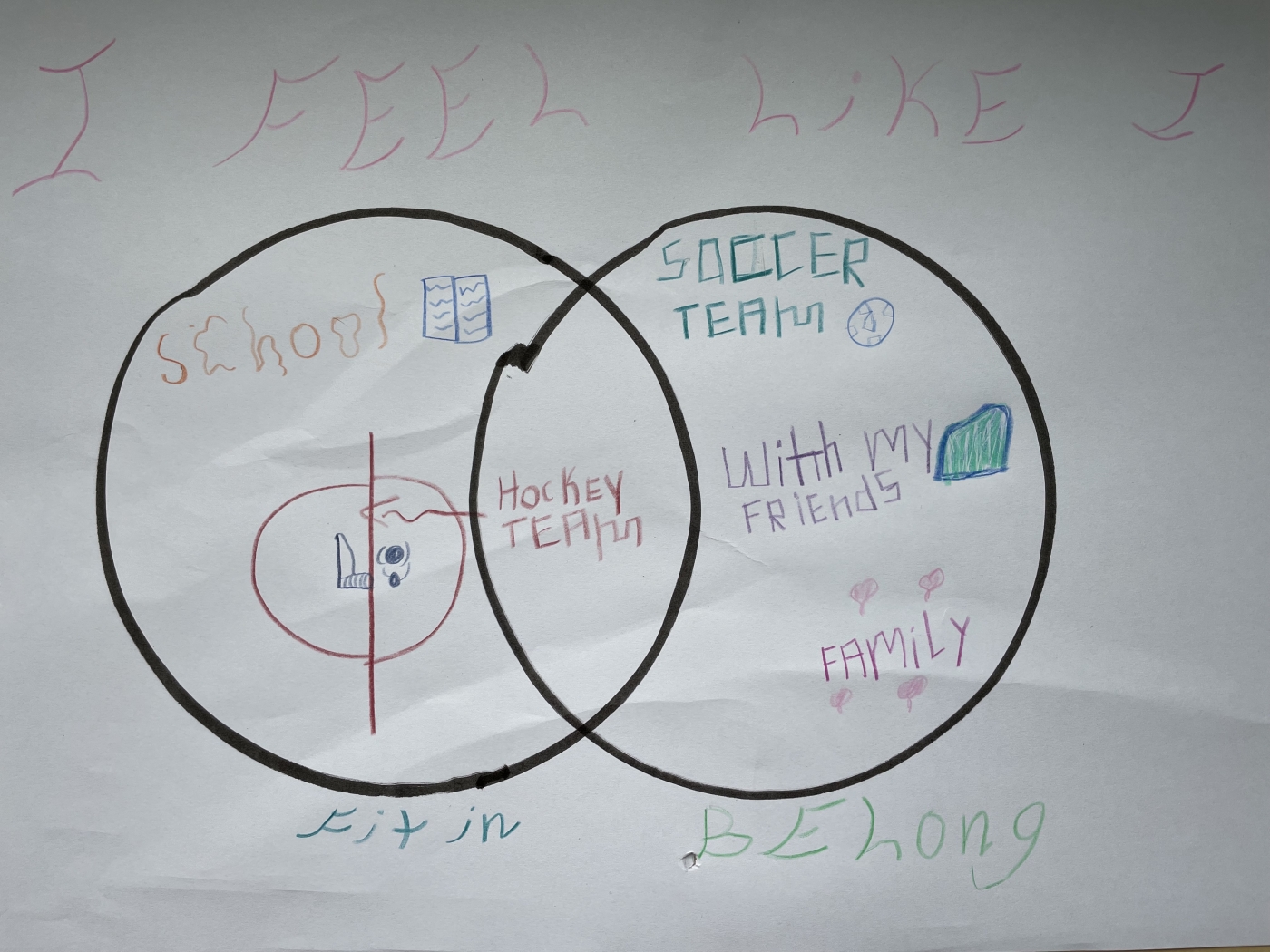
Our learners can be reflective in their writing, sharing their ideas about things that matter to them.
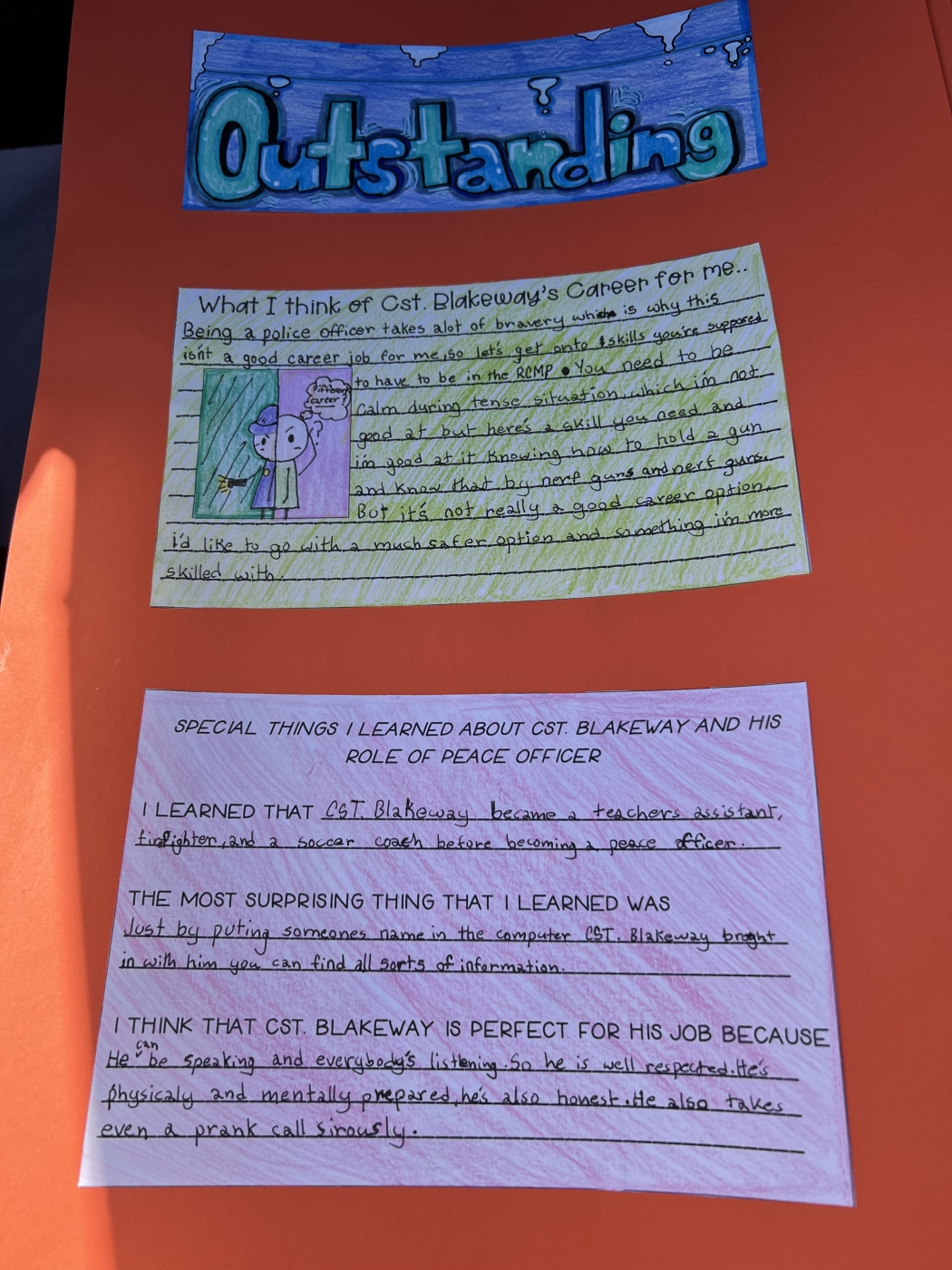
Our learners practice making connections between their feelings and their actions as learners. In this writing and SEL example we recognize our strengths as learners and how our contributions to our learning community matter and impact others.

Our learners can share their observations about the world around them through stories, images, and reflective writing practices
Our learners spend time in our school garden planting and observing our veggies grow. We wonder how long it will take for strawberries to grow and we observe closely how the plants, bumblebees, hummingbirds, and worms are connected in our outdoor learning space.

OUR FOCUS
Each day at Chimney Hill our learners are given many opportunities to practice and grow their Social and Emotional capacities. Our team of educators provide our learners with these essential skills in an effort to prepare them for an ever changing world. To identify students strengths and areas for growth, we collected data across grade level and subject areas around reflective communication practices and how it relates to student self awareness and sense of belonging at school. Specifically, we focused on 3 cohorts of learners. These cohorts reflect a diverse range of learners that are representative of our school population.
The SEL competencies that we focused on in relation to "reflective communication" include:
- Students communicate in order to collaborate.
- Students communicate to build and sustain positive relationships with diverse people, including people from different generations.
Students are provided with opportunities to practice, explore and play with these essential and important communication skills. The goal is to foster growth:
* In student confidence
* In expressing their wants and needs as learners
*In building a deeper sense of belonging and connection to school.
Below are examples of our students' classroom/school experiences as they relate to reflective communication.
Students communicate in order to collaborate.
Students across our elementary grades practice communicating with the purpose of collaborating effectively. Using loose parts to support oral story telling about a variety of learning topics is one way that our students share ideas and grow knowledge collaboratively.

Student Story:
"This is a story that is connected to my story. So there was a daddy fish swimming along and he saw a whole bunch of baby fish being attacked by some big fish like him. He fought them off and decided to keep the baby fish safe and all the little eggs. Anyone who comes along with kindness and trust and care and there was love and a big happy family"
Students communicate to build and sustain positive relationships with diverse people, including people from different generations.
The ability to grow positive healthy relationships is dependent on our learners feelings of connection and belonging at school. In all areas of learning our students have the opportunity to foster relationships with many caring adults and students alike.
OUR NEXT STEPS
Our learners are developing their SEL skills and capacities with a focus on reflective communication. Our focus on reflective communication, growing a capacity for empathy, authentic connection, and self awareness, as demonstrated across all curricular areas.
Students demonstrated an increase in their ability to:
1.) Communicate in order to collaborate.
2.) Communicate to build and sustain positive relationships with diverse people, including people from different generations.
Communicate in order to collaborate
Our primary students demonstrated development of their SEL skills over time as they collectively told stories during story workshop time about belonging. During this process, students demonstrated their learning of emotions and feelings. They were able to use oral and written language to express themselves. Of the primary cohort, the teacher reported that 85% of students are able to use language in the form of oral storytelling as well as in their writing that demonstrates self awareness.
Communicate to build and sustain positive relationships with diverse people, including people from different generations.
In all curricular areas, students explore different perspectives. Intermediate students in our cohort connect daily with a diverse range within our school community as well as opportunities to engage with members of the broader community.
Based on teacher observations and an assessment of students work over time, specifically through written reflections. 82% of students within the cohort demonstrated proficiency in communicating an understanding and appreciation of diverse perspectives.
Moving Forward
Advancing our learners skillsets in reflective communication and self awareness have been very effective. Our students have progressed in their understanding of themselves and how this connects to their interactions with their peers, our school, and the surrounding community. As we continue with this work, we will build on it in the following ways.
Reflective Communication:
*Creating opportunities for interactions and collaborations with other students and teachers
*Reflecting on the value of their collaborative decision making
Self Awareness
*Further exploration of individual identity and belonging
*Continuing to explore and understand the importance of self advocacy as a learner
Surrey Schools
Formed in 1906, the Surrey School District currently has the largest student enrolment in British Columbia and is one of the few growing districts in the province. It is governed by a publicly elected board of seven trustees.
The district serves the cities of Surrey and White Rock and the rural area of Barnston Island.