Cambridge Elementary
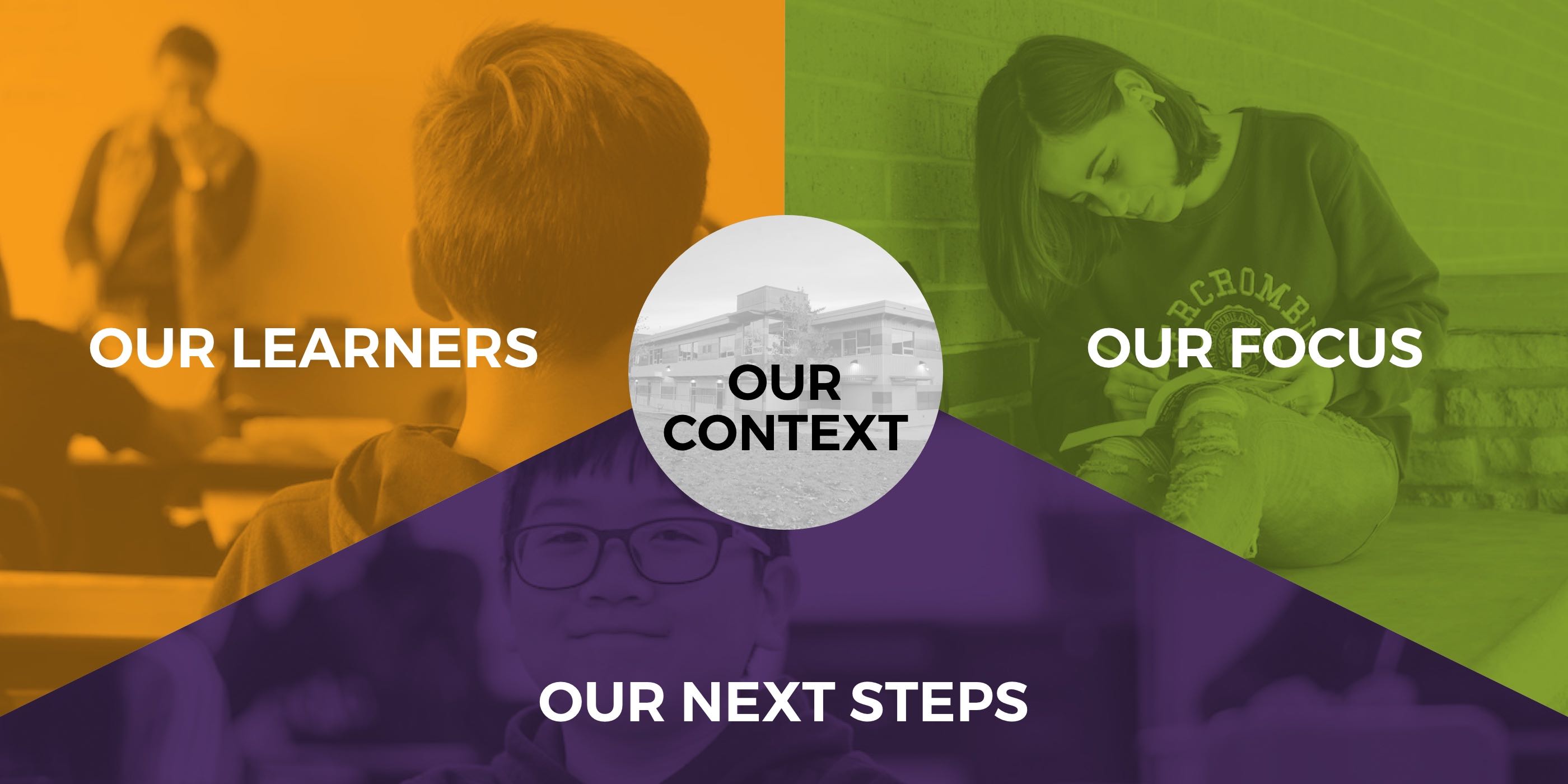

OUR CONTEXT
At Cambridge, we recognize our Strengths and Stretches. We express our needs and seek help.
We understand that learning takes patience and time.
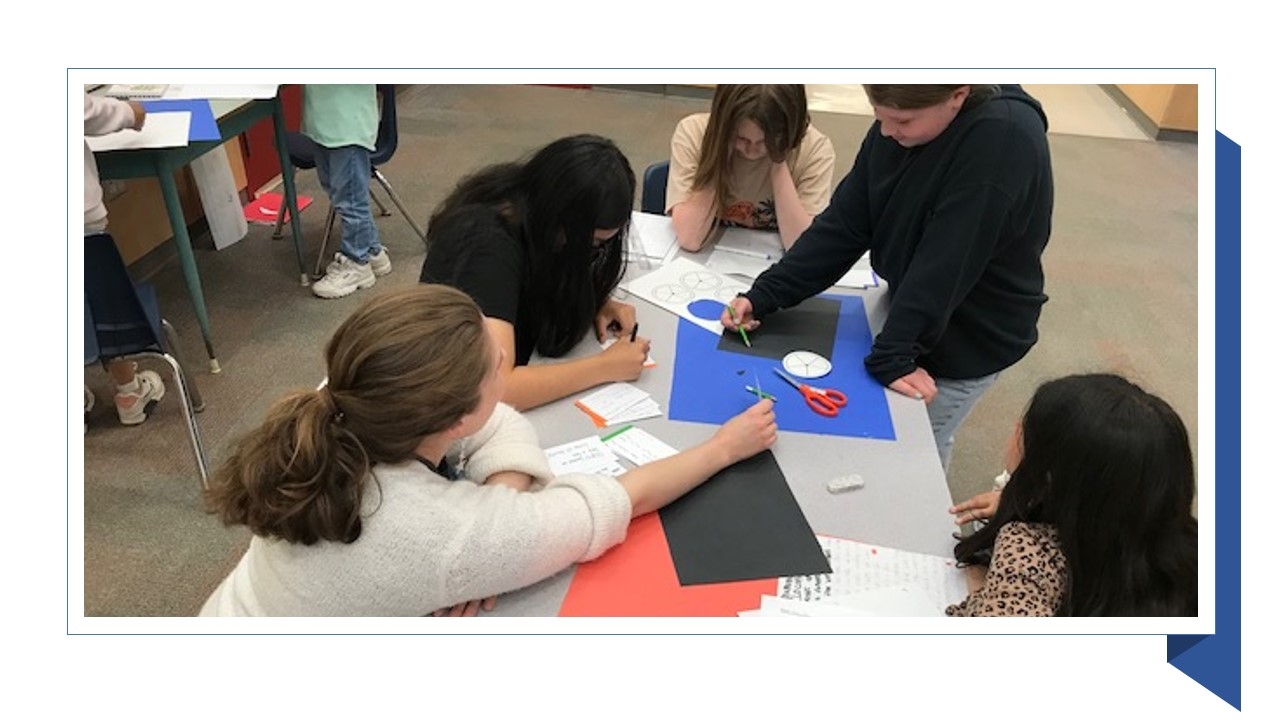
At Cambridge, we know that challenges can be opportunities for growth. We persevere in difficult situations.
We understand that learning involves recognizing the consequences of ones actions.
At Cambridge, we know that setting goals can both be motivating and help us to be purposeful.
We understand that learning requires the exploration of one's identity.
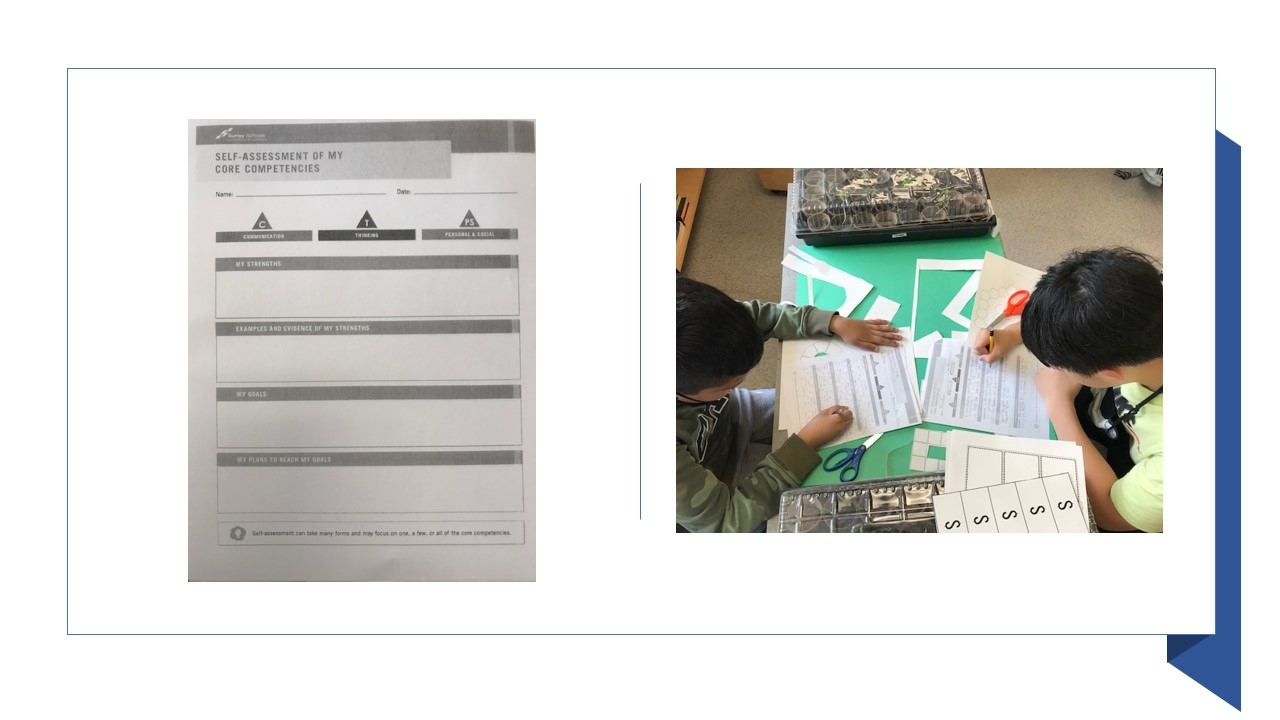
At Cambridge, we are kind and respectful. We appreciate ourselves, others, the community and the land.
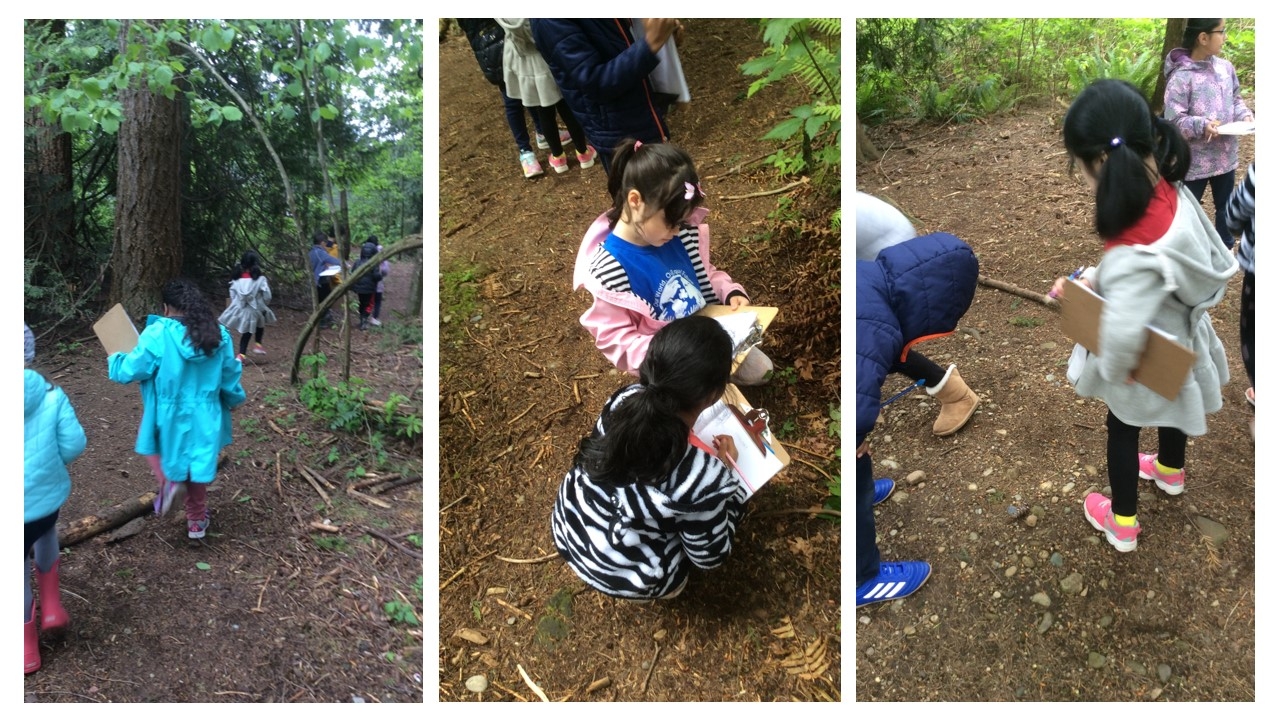
We understand that learning is holistic, reflexive, reflective, experiential and relational. Learning is focused on connectedness, reciprocal relationships and a sense of place.
At Cambridge we have active family involvement.
We understand that learning involves generational roles and responsibilities.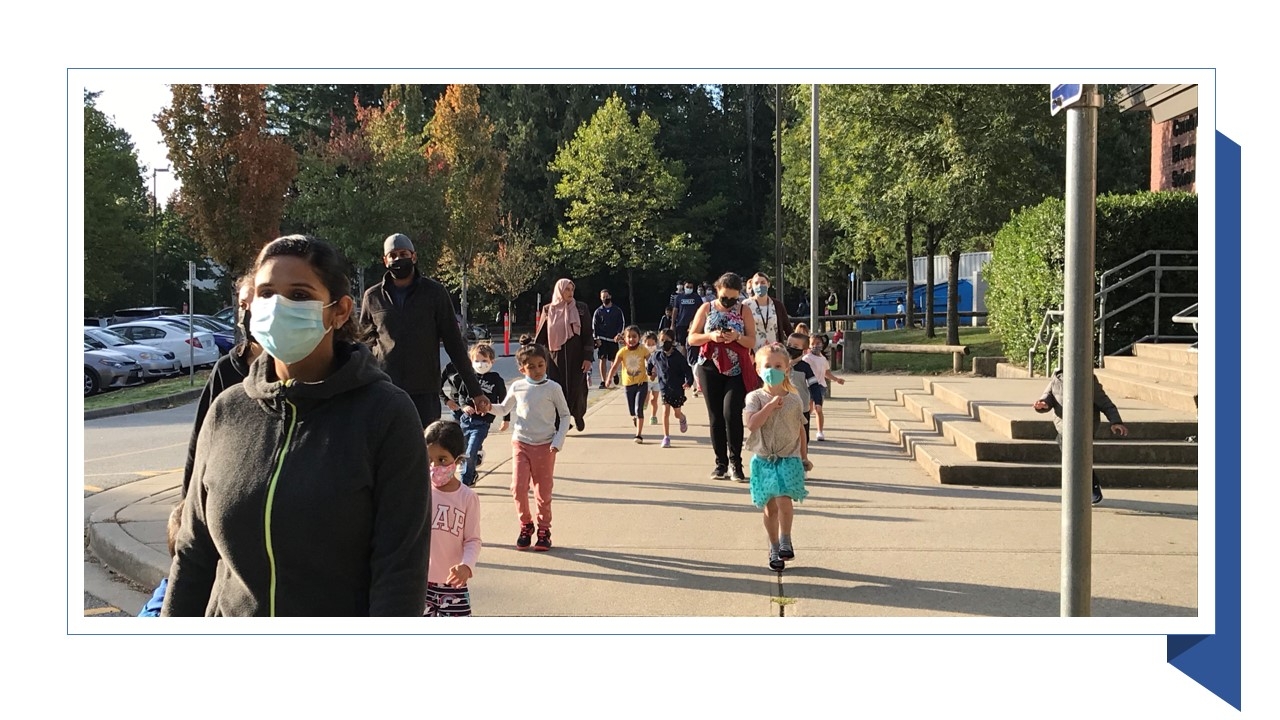
OUR LEARNERS
Students who are personally aware and responsible take ownership of their choices and actions. They set goals, monitor progress and understand their emotions, using that understanding to regulate actions and reactions. They are aware that learning involves patience and time. They can persevere in difficult situations, and understand how their actions affect themselves and others. The core competencies of personal awareness and responsibility are embedded throughout the BC curriculum. Evidence of our learners competencies and development are provided below.

Our learners can express their learning needs, seek help and advocate for themselves.
Over the year our teachers have been building our students' confidence to enable them to seek help and to develop skills to be able to self advocate for their needs in their learning. Throughout the school year the teachers have seen an improvement in the students' abilities to problem solve and in their understanding of what they may need to help them learn better, such as noise cancelling headphones or one-on-one support from a peer or teacher.

Our learners understand that learning takes patience and time. They are developing strategies to persevere in their understanding of new concepts, different perspectives and difficult situations.
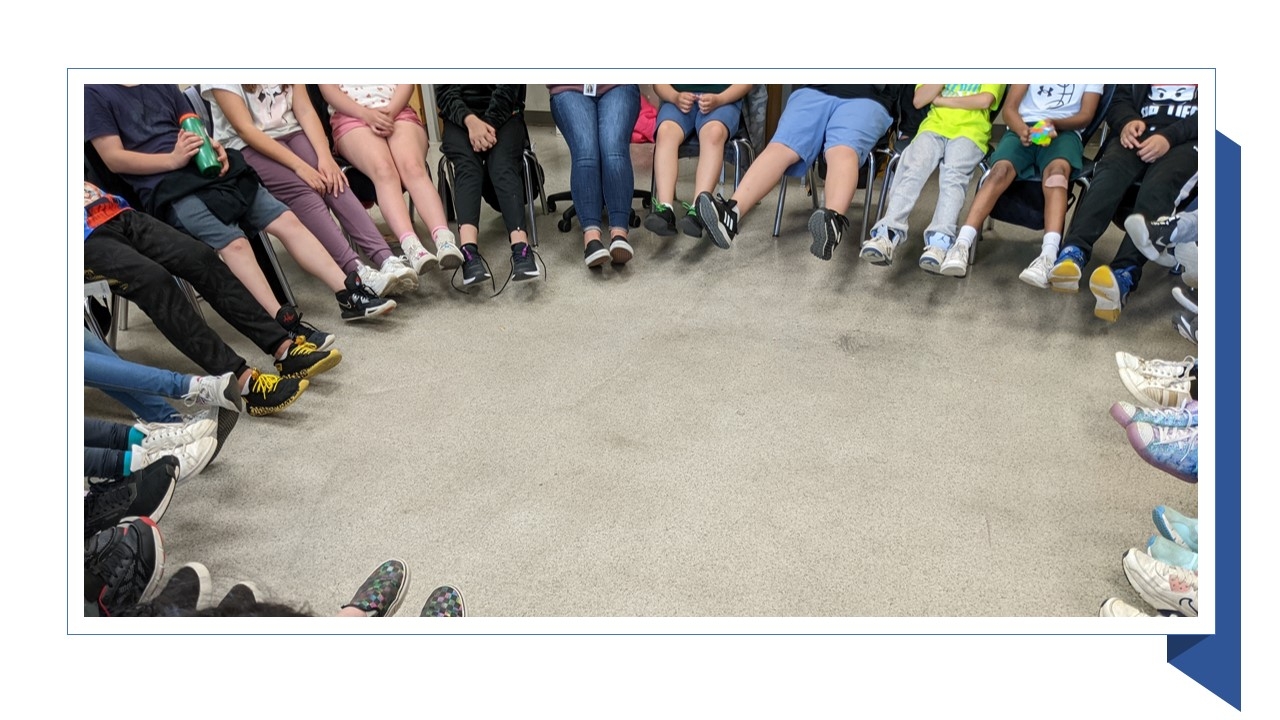
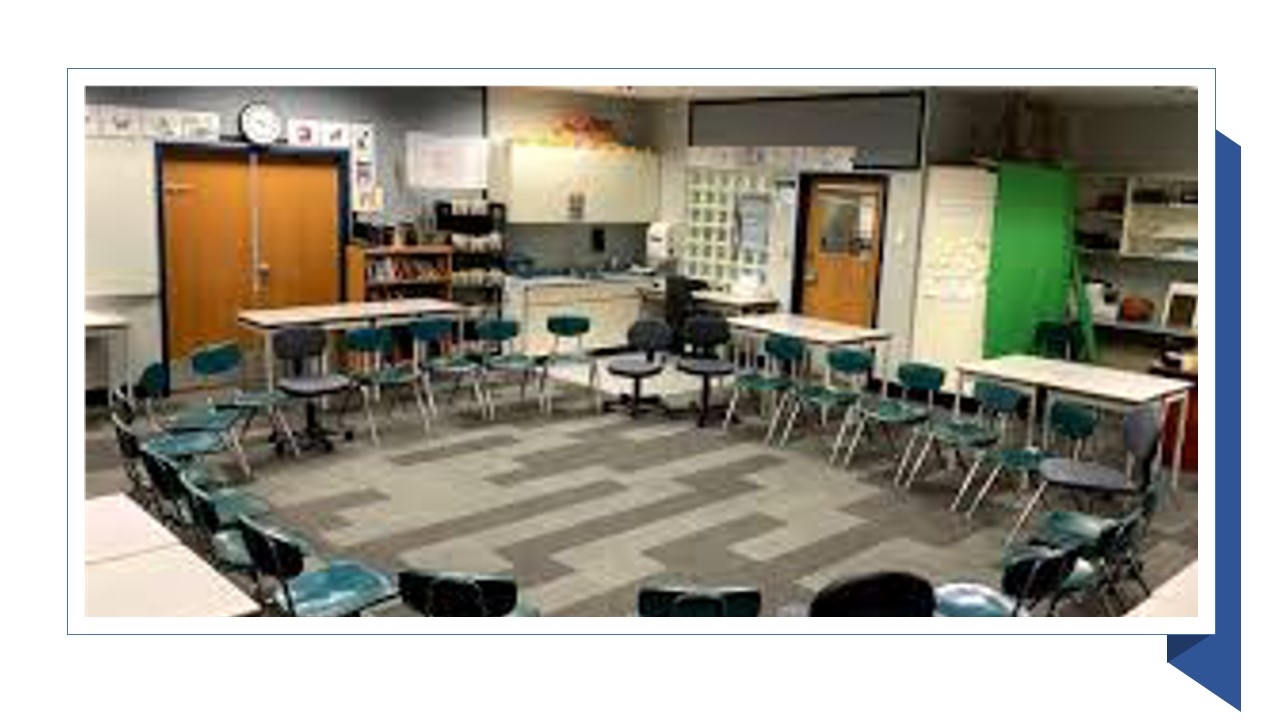
Many of our classes have incorporated the use of morning meetings, regular check-ins, and community circles to help students to develop a better understand of one another and themselves. They are provided opportunities to share their perspectives and to listen to other points of views. Our students have also been learning the difference between having a growth and fixed mindset.
Our students are learning to understand their emotions and to manage their actions and reactions.
Throughout the year our students have been using the Second Step digital program to help develop goals and to understand their emotions. Through using this program, students have been learning to understand their emotions and have learned about strategies they can use to manage their actions and reactions. They are better able to understand the brain and the ways they can change their mindset to enable learning to take place.

Our learners are learning to find purpose and motivation in their learning by learning about who they are as learners and understanding what they need to learn best. They are able to develop and plan goals for their learning.
Our students have been developing goals throughout the school year to help them better understand the type of learner they are and to understand what they need in order to learn best. Teachrs have been learning about our learners through their goals, reflections, and discussions about their learning. Using core competency and Freshgrade reflections, we have been able to support student goals and understand their perceptions of who they are as learners.

OUR FOCUS
Each and every day our team of educators at Cambridge Elementary weave social emotional learning into their day-to-day lessons. Working with our students we have been focusing on developing our student’s self-management skills. Using the core competency, Personal Awareness and Responsibility, we wanted our students to become personally aware and responsible individuals who are able to take steps to regulate their emotions, monitor their progress, to be able to set and adjust learning goals, and able to recognize and advocate for their own rights.
Our team focused on students learning important skills to demonstrate personal awareness and responsibility through developing the ability to;
- Express needs and seek help
- Find purpose and motivation using self-setting goals
- Persevere in difficult situations
- Understand that learning takes time
- Understand that learning involves recognizing the consequences of one’s actions
Students’ reflections is what has guided us on our journey towards our focus of self-management. We have used the MDI (Middle Years Development Instrument) from last year, as well as surveys from this year to help us with gathering evidence from our student learners.
From the BC Curriculum Core Competency; “Students who are personally aware and responsible take ownership of their choices and actions. They set goals, monitor progress and understand their emotions, using that understanding to regulate actions and reactions. They are aware that learning involves patience and time. They can persevere in difficult situations, and to understand how their actions affect themselves and others."
As part of our exploration of student learning, we compared the 2021 Grade 4 MDI results regarding Personal and Social Awareness and Responsibility to a 2022 Student Survey, asking the same questions. Below are samples of responses from our cohort with regards to self regulation (long term).
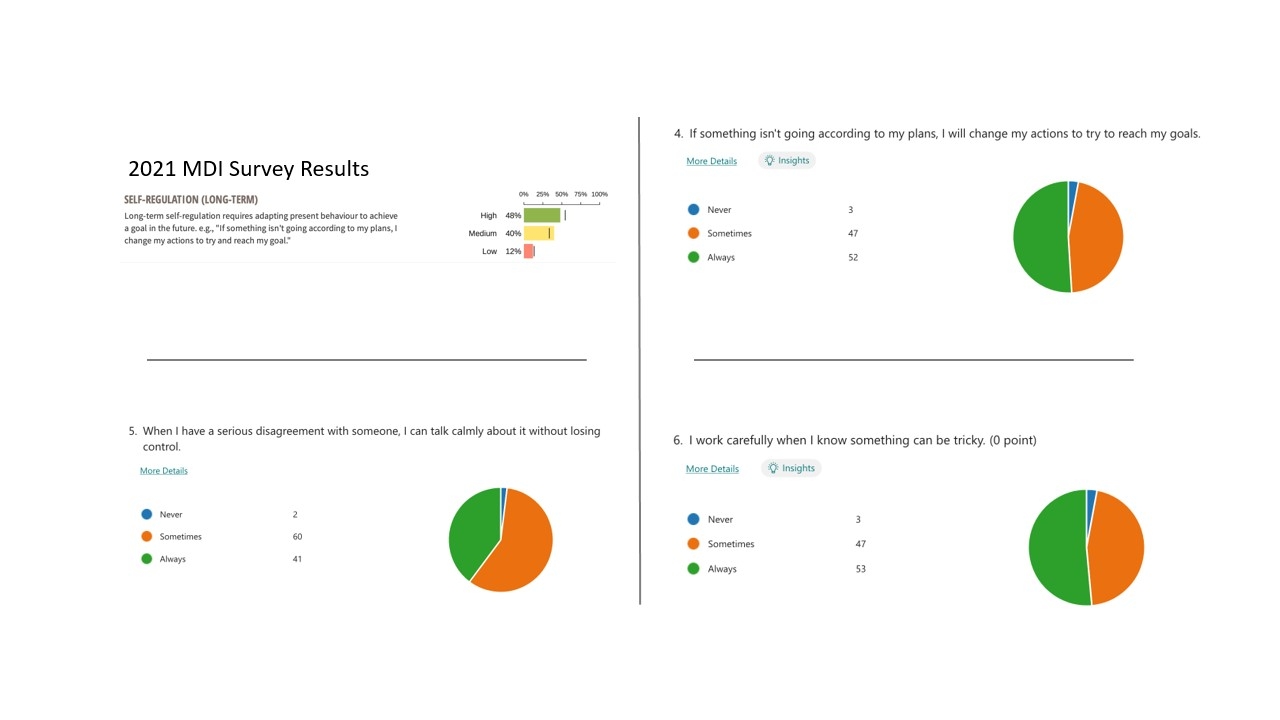 Below are collections of writing samples that exemplify our students’ learning experiences as they relate to Personal and Social Awareness and Responsibility as it pertains to long-term self regulation.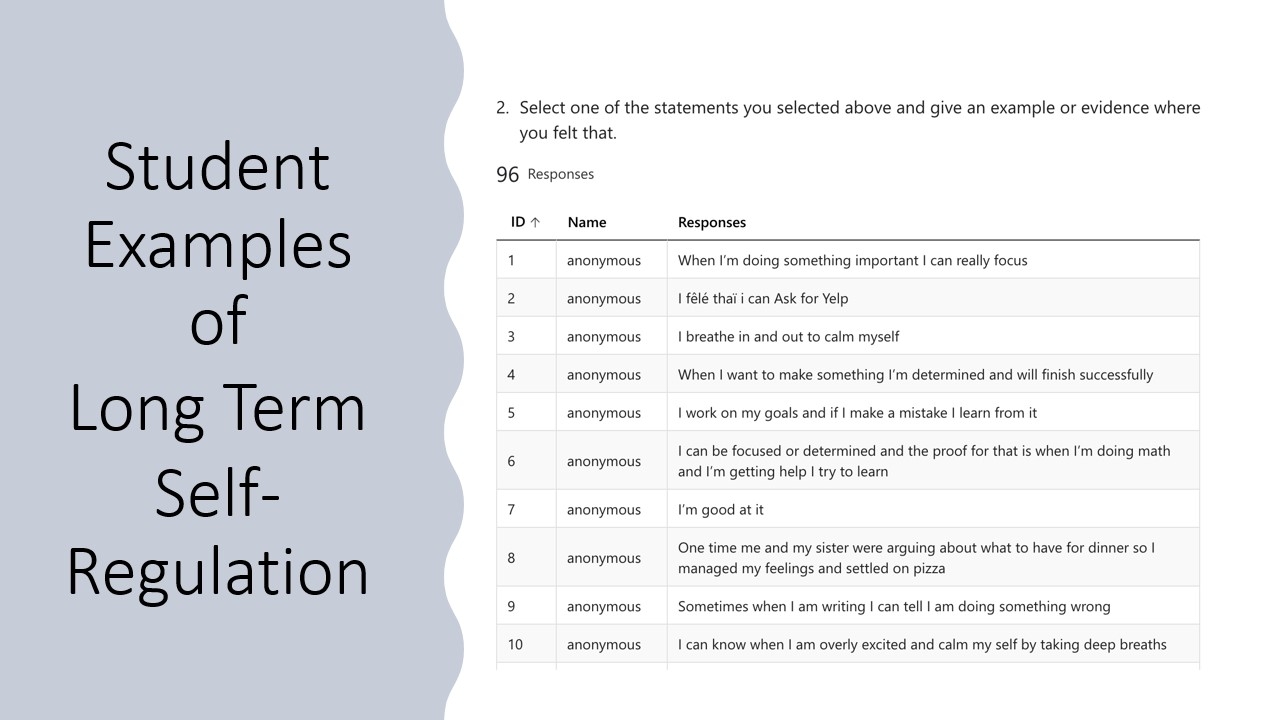
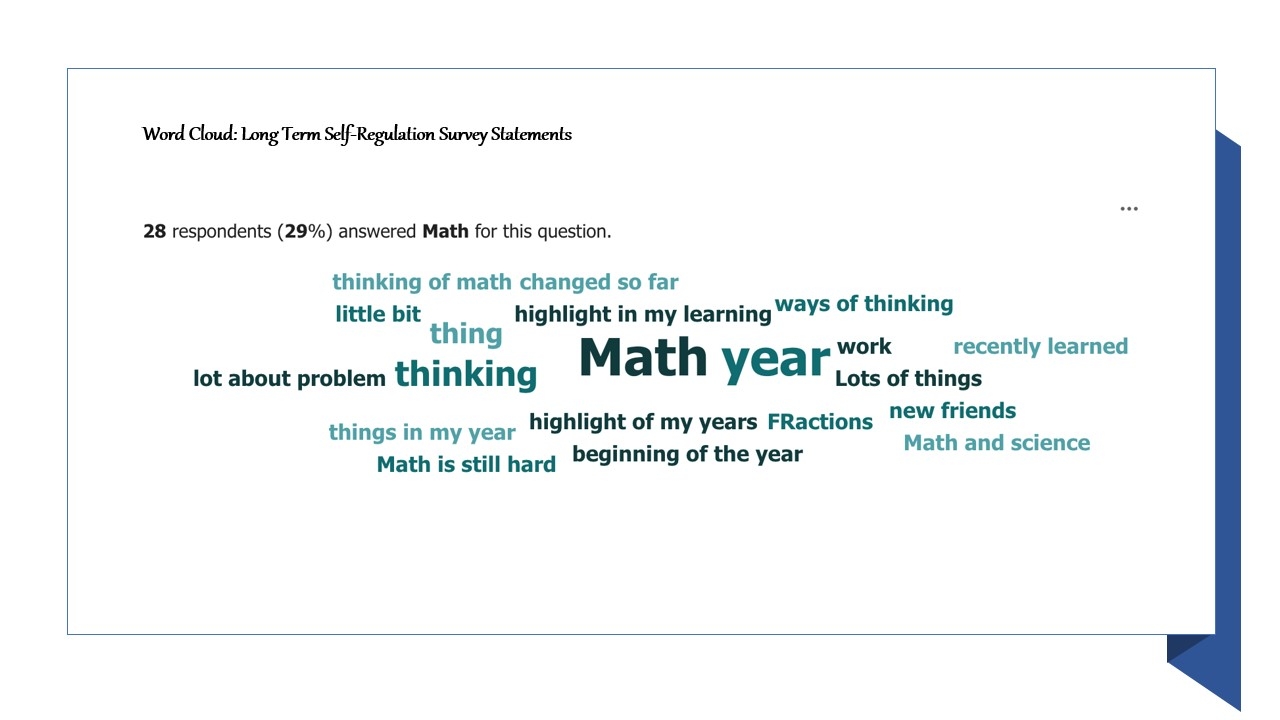
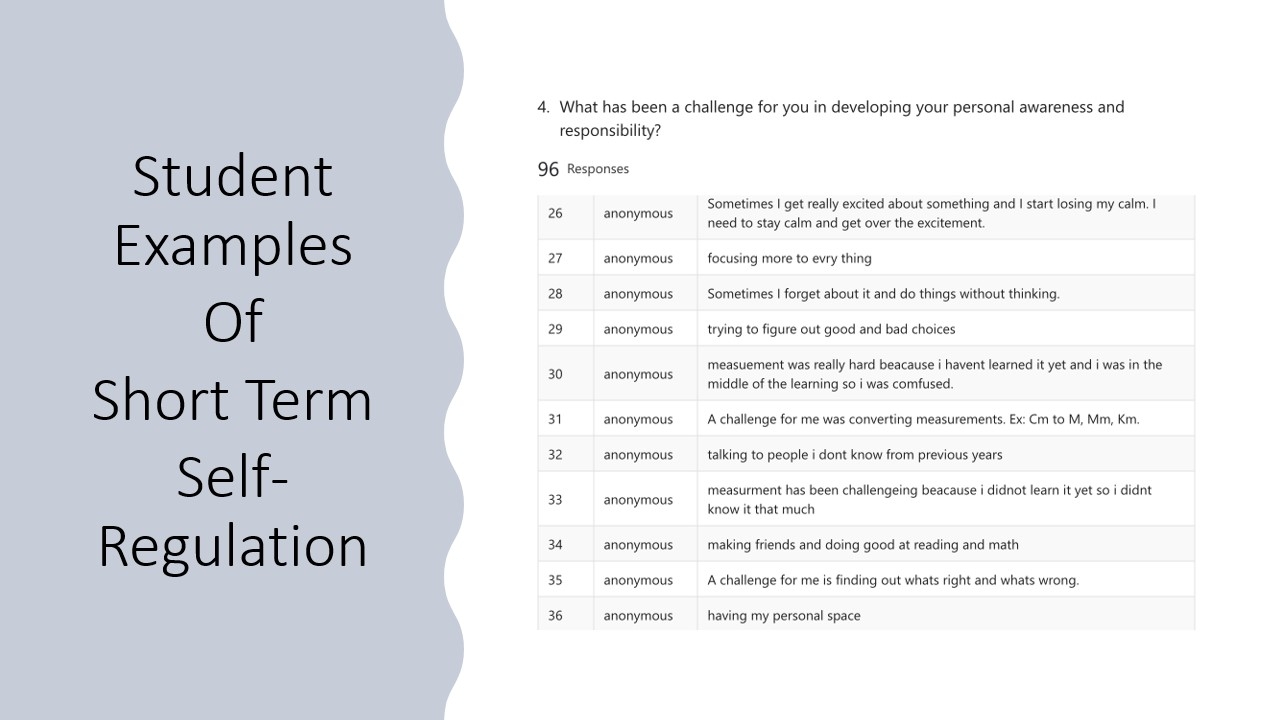
As part of our exploration of student learning, we compared the 2021 Grade 4 MDI results regarding Personal and Social Awareness and Responsibility to a 2022 Student Survey of students, asking the same questions. Below are samples of responses from our cohort with regards to self regulation (short term)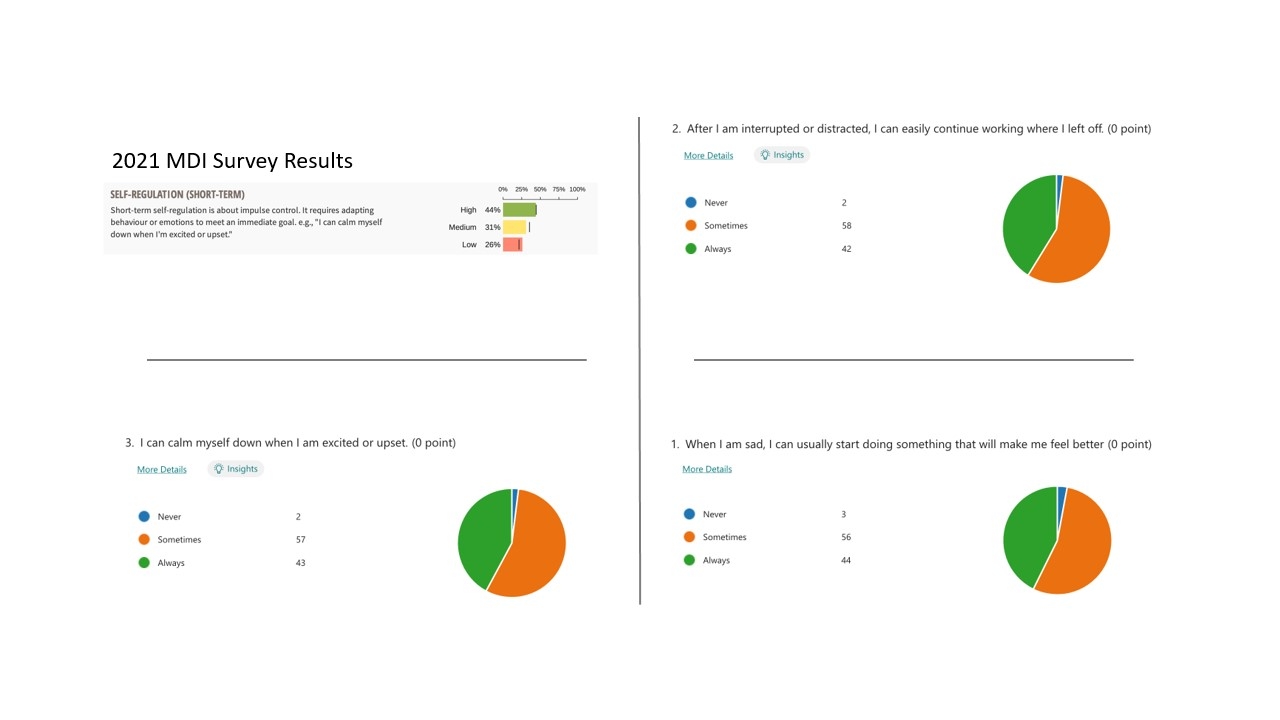 Below are collections of writing samples that exemplify our students’ learning experiences as they relate to Personal and Social Awareness and Responsibility as it pertains to short term self-regulation.

OUR NEXT STEPS
Working with our students we have been focusing on developing our student’s self-management skills. Using the core competency, Personal Awareness and Responsibility, we wanted our students to become personally aware and responsible individuals who are able to take steps to regulate their emotions, monitor their progress, to be able to set and adjust learning goals, and able to recognize and advocate for their own rights. We have collected a variety of data to inform us in regards to student progress.
We believe this data tells us:
a) Students are beginning to understand their feelings and emotions.
b) Students are beginning to name, explain and use strategies that have been taught in classes on how they can help themselves and respond to their emotions.
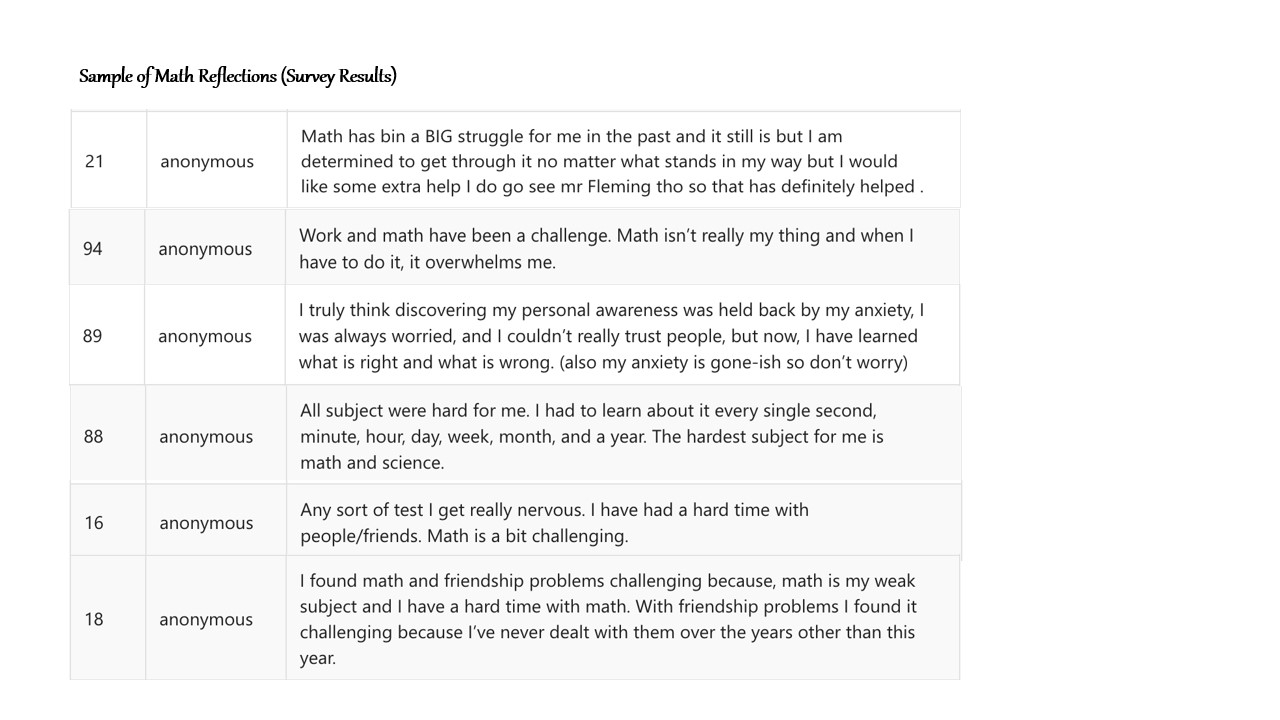
c) Students are beginning to understand the process of setting goals to further their learning. In particular, many students were able to recognize the need for goal setting in the area of Numeracy as they found that Math was an academic stretch vs. a strength.
We feel it leads us to the following next steps:
a) We plan to follow the existing co-hort next year, with a specific focus on self-awareness. Students are currently at a developing level in the exploration of self-awareness as evidenced by their student survey self-reflections:

We want to continue to focus on developing how students name, explain, and use strategies to help them self-regulate while understanding their emotions.
b) As the cohort moves into a new year, a focus for the fall will be looking at the Physical and Health Education curriculum, with a focus on the big idea, "We experience changes in our lives that influence how we see ourselves and others."
c) Students will focus on goal setting in Numeracy, giving consideration to the curricular competency of reflecting upon their mathematical thinking, while understanding the importance of creating a step by step plan to achieve their goal.
Surrey Schools
Formed in 1906, the Surrey School District currently has the largest student enrolment in British Columbia and is one of the few growing districts in the province. It is governed by a publicly elected board of seven trustees.
The district serves the cities of Surrey and White Rock and the rural area of Barnston Island.