Bridgeview Elementary 25-26

OUR CONTEXT

Bridgeview Elementary is located in North Surrey’s City Centre and serves a diverse, vibrant community of learners with a wide range of strengths, lived experiences, and learning needs. As a designated Inner City School, Bridgeview benefits from enhanced staffing and targeted supports that help reduce barriers related to poverty, language acquisition, and access to services. These additional resources allow us to provide equitable learning opportunities and foster student success both academically and socially.

Literacy is a central focus of teaching and learning at Bridgeview. From Kindergarten through Grade 7, students engage in purposeful reading, writing, and oral language experiences that build skills, confidence, and independence. Instruction is responsive to student needs and includes explicit teaching, differentiated small-group instruction, and ongoing formative feedback to support continuous growth for all learners.
Student well-being, belonging, and connection are foundational to our school culture. Our learning environments are intentionally designed to honour student identity, promote positive relationships, and support social-emotional development. Strong partnerships among students, staff, and families help ensure that every child feels safe, valued, and supported as they work toward reaching their full potential.
OUR LEARNERS
Bridgeview Elementary is a vibrant and diverse learning community that reflects the global nature of our neighbourhood. With over 28 languages spoken at home, more than 50% of students designated as English Language Learners, and approximately 9% of learners self-identifying as Indigenous (First Nations and Métis), our diversity is a defining strength. This richness informs our commitment to equity, inclusion, and culturally responsive literacy instruction.
At Bridgeview literacy is a key focus because we recognize that strong reading, writing, speaking, and communication skills are essential for our learners’ success throughout their educational journey.
Literacy is central to student engagement, belonging, and achievement. We intentionally select texts and design learning experiences that reflect students’ cultures, identities, and lived experiences, supporting meaningful connections to reading, writing, and oral language. Our literacy programming is responsive and inclusive, meeting learners where they are while promoting ongoing growth across all grades. Students are encouraged to share their stories, explore multiple perspectives, and use language to communicate, think critically, and deepen understanding across subject areas.
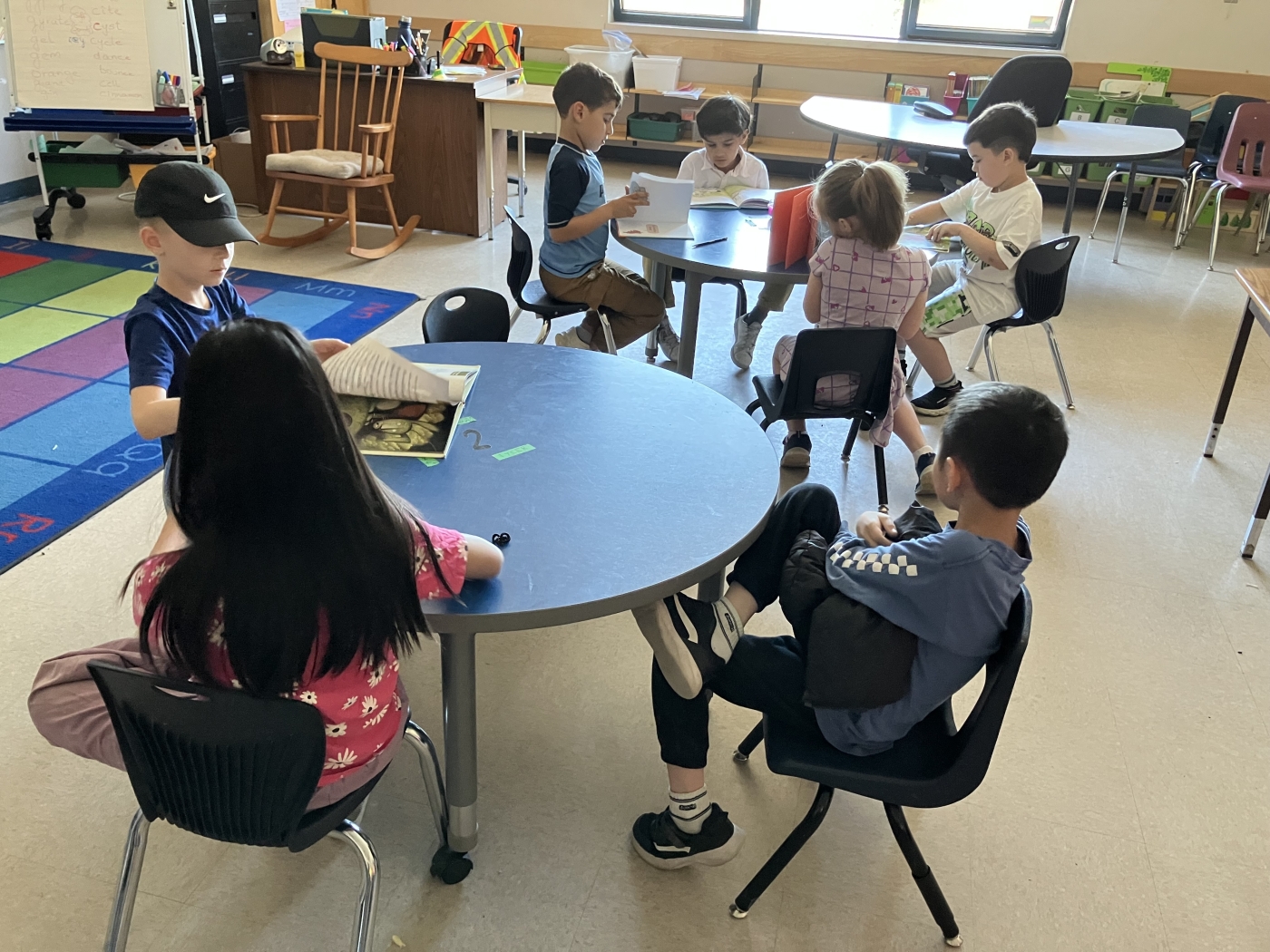


In the BC English Language Arts curriculum for Kindergarten to Grade 7 (K–7), reading fluency is a vital component of building strong foundational literacy. While the curriculum is designed to be flexible and competency-based, it includes universal learning standards related to reading fluency that apply across all grades.
These fluency standards support the core literacy goals outlined in BC’s curriculum and align with key curricular competencies such as “access and process information” and “use strategies to understand text.”
Through intentional teaching, inclusive practices, and ongoing assessment, Bridgeview Elementary continues to strengthen literacy outcomes while nurturing confident, capable readers, writers, and communicators prepared to engage thoughtfully with an interconnected world.
OUR FOCUS
Bridgeview Students Are Becoming Stronger Readers
Literacy is essential for learning, personal development, and well-being. It is our intention to collect evidence of learning from primary learning and our intermediate students to give us insight into how we are meeting our literacy goals across different grade levels.
Across all grades, students are working toward key goals from the BC English Language Arts curriculum, including:
Accessing and understanding a range of texts for different purposes
Using strategies before, during, and after reading to support comprehension
Making personal, cultural, and social connections to texts
Responding in creative, critical, and personal ways through writing, drawing, speaking, or performing
Kindergarten and Grade 1 Focus: Building the Foundations of Reading
Students explored the sounds of language through songs, rhymes, and games. They learned to isolate beginning and ending sounds, identify letters and their sounds, and blend phonemes to read simple words. They engaged in shared reading, storytelling, and oral language activities that supported the development of print awareness and sound-symbol relationships.
Students used tools like story pictures, retell mats, and phonemic awareness games to build confidence and joy in reading. Books that reflected students’ families, cultures, and languages helped learners see themselves in stories and develop personal connections to text.


Grades 2–7: Deepening Comprehension and Voice
In the intermediate grades, students are expanding their reading strategies and engaging with more complex texts. They use comprehension strategies such as predicting, inferring, visualizing, and summarizing to make sense of what they read. Through literature circles, book clubs, and reading conferences, students share their thinking and learn from different perspectives.
Reading instruction supports students in selecting texts that matter to them—from novels and nonfiction to graphic texts and digital media. Students reflect on themes, characters, and identity, and respond using sketch notes, discussion, and personal writing.
Students were asked to reflect on what strategies had the most impact on their learning. This is what some of our students had to say:
During our novel study, I liked working in a group because if I do not understand something my group partners help me understand.
I can use strategies like sounding out and breaking up words when I get stuck.
Reading takes me to special places.
Sometimes when you read you find special treasures.
Now I ask questions while I read. It helps me understand the story better.
Using Epic makes me interesting in reading now
Overall, classroom self-assessments, reading journals, and goal-setting conversations help students reflect on their progress and build ownership of their learning. Many students are noticing improvements in their comprehension, confidence and are setting new goals for themselves.
What We Noticed
Students across all grades are becoming more confident, engaged readers. Kindergarten students are developing phonemic awareness and foundational literacy habits, while older students are thinking critically about texts, sharing ideas, and connecting reading to their own lives. Whether through oral storytelling, visual notes, or written reflections, students are using language to make sense of the world and express who they are.
At Bridgeview, students are learning that reading is not just about finding the right answer—it’s about connection, expression, and growth. They are becoming readers who think deeply, celebrate diversity, and carry their learning beyond the page.
OUR NEXT STEPS
At Bridgeview, our literacy focus centered on supporting students across all grade levels in their reading development.
Language from the provincial assessment scales was used to identify successes and remaining challenges. There was a noted improvement for all students identified in school wide in relation to the literacy reading goals. These goals included:
Comprehend and connect (reading, listening, viewing):
Students are expected to understand and interpret texts of various types (fiction, nonfiction, visual, digital, etc.) and make connections between texts and their own experiences or other knowledge.Use strategies to understand text:
Students learn to apply before-, during-, and after-reading strategies—such as predicting, questioning, visualizing, summarizing, and inferring—to support their understanding of what they read.Think critically about texts:
Learners are encouraged to analyze and evaluate texts, considering things like author’s purpose, bias, perspective, and text features, to deepen their understanding and develop critical literacy.
In the primary grades, we prioritized the development of strong phonemic awareness skills through the Early Literacy Phonemic Awareness Program. Students engaged in daily opportunities to explore and play with the sounds of language, building essential early reading skills such as oral language, phoneme isolation, segmentation, and blending. These foundational skills are critical stepping stones for future reading success.
From the beginning of the year, students were encouraged to listen closely to sounds, break words apart, and experiment with combining sounds in playful and meaningful ways. Through a balance of structured instruction and play-based learning, students made steady progress in recognizing and working with individual phonemes, which are key components of early decoding.
In the intermediate grades, the focus shifted toward expanding reading strategies and engaging with increasingly complex texts. Students applied comprehension strategies such as predicting, inferring, visualizing, and summarizing to deepen their understanding. Through literature circles, book clubs, and reading conferences, students shared their thinking and learned from diverse perspectives, strengthening both their comprehension and communication skills.
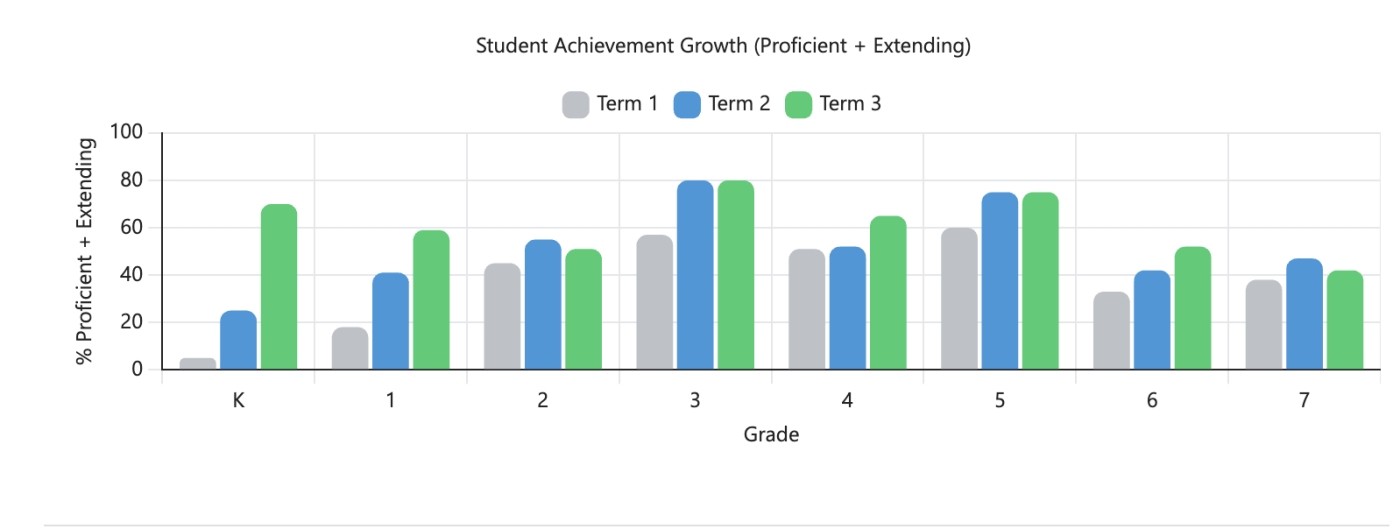
The chart below highlights reading proficiency levels across grade groups using the BC Provincial Proficiency Scale. We monitored student growth across three points in the year—Fall, Spring, and the End of the School Year—to track progress and inform our next steps in literacy instruction.


What We Noticed From The Data Collected:
Overall, we are seeing strong growth across all grades, with the average percentage of students at Proficient or Extending increasing from roughly 38% in Term 1 to over 60% by Term 3.
Early learners are making the biggest gains, with Kindergarten increasing from 5% to 70% Proficient or higher, and Grade 1 rising from 18% to 59%.
By Term 3, the majority of students in most grades are meeting expectations, with several grades such as Grade 5 reaching 75% Proficient or higher, demonstrating strong progress across the school.
Next Steps
To continue supporting readers, we will:
Create daily opportunities for primary students to play with sounds and strengthen phonemic awareness through songs, games, and routines.
Use ELPATS early in the year to identify where each student is at and provide the right support.
Expand the Acadience Reading Screener Tool across grade levels to help target reading strategies, support and groups throughout the school year.
Connect oral language to reading through storytelling and classroom sharing.
Share simple literacy strategies with families so students can practice in both English and their home languages.
These steps will help all students continue growing into confident, joyful readers.
Surrey Schools
Formed in 1906, the Surrey School District currently has the largest student enrolment in British Columbia and is one of the few growing districts in the province. It is governed by a publicly elected board of seven trustees.
The district serves the cities of Surrey and White Rock and the rural area of Barnston Island.